Where to buy
Check the latest price, availability and delivery on Amazon. Orders are placed on Amazon. We may earn a commission from qualifying purchases.
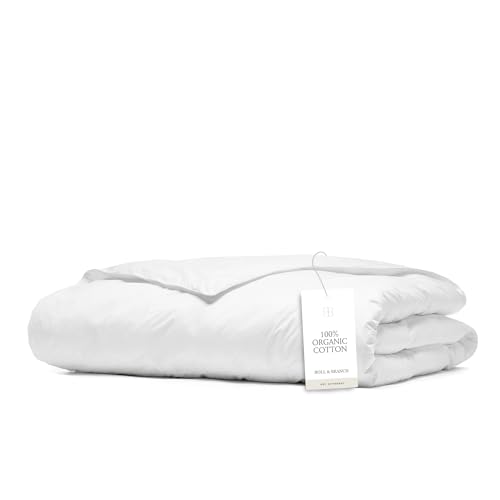
- Best overall: Boll & Branch Down Duvet Insert, Full/Queen, All Season — Check on Amazon
- puredown Goose Down Comforter, 800 Fill Power, Full/Queen Oversized — Check on Amazon
- Continental Bedding Siberian Goose Down Comforter, Queen, 800 Fill Power — Check on Amazon
- CUDDLE DREAMS Classic Wool Comforter, Midweight, Queen — Check on Amazon
See 2 more Amazon options
- DAPU 100% Linen Duvet Cover Set, Queen — Check on Amazon
- puredown Goose Feathers and Down Pillows, Set of 2, Queen — Check on Amazon
Read the full guide ↓
Disclosure: As an Amazon Associate, topratedkitchenware.com earns from qualifying purchases. Links to Amazon on this page are affiliate links; they cost you nothing extra. Listing details such as price and availability change often, so check the current Amazon listing before you buy.
Two thousand dollars is not a comforter budget, and this guide will not pretend otherwise. There is no single comforter on Amazon — no down duvet, no wool quilt, no made-to-order luxury insert we could verify — that honestly costs $2,000. Amazon’s verifiable single-comforter ceiling sits far below that figure: the most expensive queen comforter we could tie to a live Amazon listing sits at the top of the mainstream premium range, the genuine high-fill-power down comforters cluster well below it, and the one listing whose price reaches highest — the Continental Bedding Siberian — moves so widely over time that even it spends most of its life far below this guide’s title figure. Comforters at the very top of the luxury market exist, but they are sold direct by the luxury down houses through their own sites, not on Amazon, and this guide names them unlinked rather than borrowing their positioning.
So a $2,000 comforter budget is a whole-bed budget, and spent honestly it buys a system rather than a blanket: a certified flagship down insert for most of the year, a true winter-weight down comforter for the cold months, a wool comforter for the shoulder seasons and temperature-swing sleepers, a real French linen duvet cover set to put against the skin — two sets, so laundry day never strips the bed — and genuine goose feather and down pillows, for the main bed and the guest bed alike. Built that way, the entire bed still lands well under the $2,000 budget, and a meaningful remainder should stay unspent. This guide shows the plan, piece by piece, and explains where Amazon’s comforter offer truly ends.
Every pick in this guide is the queen size — full/queen where a brand sells a combined size — because comforter pricing climbs steeply by size and a king figure quoted in a queen guide helps nobody. For the flagship we would begin with the Boll & Branch down duvet insert: responsibly sourced down in an organic cotton baffle-box shell from a brand that publishes its certifications — check price on Amazon. If you want the clearest spec sheet instead — down percentage, fill power and fill weight all printed — the puredown below it states 93% goose down at a maker-rated 800 fill power — check the current price on Amazon. Below you will find the six components in detail, the full whole-bed allocation, a buying checklist, the mistakes shoppers make most at this level, and answers to the questions that come up again and again.
In this guide
Quick Picks
Short on time, or comparing several options at once? Each row below names the job in the bed and the product that does it, with a link to the listing. All picks are queen size; premium comforter prices move with sales and stock, so check the current price on Amazon before you buy.
| Job in the bed | Pick | Why it stands out | Link |
|---|---|---|---|
| Best overall — the flagship | Boll & Branch Down Duvet Insert, Full/Queen, All Season | Responsibly sourced down, organic cotton baffle-box shell, published certifications — check price on Amazon | Check on Amazon |
| Best winter weight | puredown Goose Down Comforter, Full/Queen, 800 Fill Power | 93% goose down and a 700-thread-count cotton shell, oversized at 98 x 90 — check price on Amazon | Check on Amazon |
| Best ceiling pick | Continental Bedding Siberian Goose Down Comforter, Queen | 800 fill power Siberian white goose down; the price moves widely — buy only on a low reading, check price on Amazon | Check on Amazon |
| Best natural alternative to down | CUDDLE DREAMS Classic Wool Comforter, Midweight, Queen | 240 GSM Australian wool in a quiet cotton shell, OEKO-TEX certified — check price on Amazon | Check on Amazon |
| Best cover set | DAPU 100% Linen Duvet Cover Set, Queen | Real French flax linen at 170 GSM with a zipper closure and eight corner ties — check price on Amazon | Check on Amazon |
| Best pillows | puredown Goose Feathers and Down Pillows, Set of 2, Queen | Real goose feather and down fill in a cotton cover, machine washable — check price on Amazon | Check on Amazon |
How These Picks Were Chosen
The first filter was verification, and at this budget it eliminated most of the obvious candidates. Every product below is a real Amazon listing we could verify through the listing itself or through independent coverage of the line — and every pick that carries a link asks you to check the current price on Amazon, because that live figure is the only one that counts at checkout. Anything whose only presence was an inflated marketplace listing, a record with no live offer behind it, or a claim we could not source at all was excluded as a pick however famous the name. That is why the genuine top-tier comforter discussed later in this guide — a European down duvet sold direct by its maker — appears by name but without a link: we verified the product, and we could not verify an Amazon listing for it.
The second filter was the budget, applied honestly rather than aspirationally. We did not go looking for expensive bedding to fill a $2,000 frame; we built a whole bed the way a careful buyer would — one flagship comforter, a second weight for winter, a natural-fill alternative for the shoulder seasons, covers worth putting against the skin, and pillows made of the same materials as the comforters — and let the total land where it landed. It landed well under $2,000, and the guide says so rather than padding the list with a second flagship or a pricier badge. Where a component’s price is volatile — and the ceiling pick’s price moves widely — the allocation uses the stable flagship and treats the volatile listing as the opportunistic swap it is.
We did not sleep under these comforters ourselves. We read maker listings and specification pages, compared fill materials, down percentages, fill weights, shell fabrics, dimensions and care instructions, and favored products that publish the numbers premium positioning is supposed to rest on: a down percentage, a fill weight in ounces, a shell you can identify. Where a maker prints a warmth, loft or fill-power figure, this guide reports it as a maker claim, because fill power in particular is a lab measure of one ounce of down under controlled conditions — it grades the down, not the comforter, and a high number on a thin fill can sleep colder than a modest number on a heavy one. The allocation section below shows how the six components combine.
The 6 Best Comforters Under $2000
Boll & Branch Down Duvet Insert, Full/Queen, All Season
Who it suits: Buyers spending flagship money who want the certifications and the company to be as verifiable as the comforter — and who will use a duvet cover.
This is the pick the premium tier is supposed to look like, and it anchors the allocation because its position at the top of Amazon’s market is the stable one. The fill is responsibly sourced, triple-washed white down held in baffle boxes — fabric walls between the layers, so the down keeps its loft instead of being pinched flat at every stitch — inside a down-proof shell of certified organic long-staple cotton. The brand is Fair Trade Certified, the down carries International Down Standard sourcing certification, and the finished textile is OEKO-TEX Standard 100 certified, per the brand and review coverage. The insert comes in three weights — lightweight, midweight and ultraweight — and for the full/queen all-season version, check price on Amazon. The lightweight full/queen is listed at about 6.6 lb, which tells you the design priority: loft and drape, not bulk.
Now the honesty this pick requires, because it is the most instructive in the guide. Boll & Branch does not publish the fill power of its own duvet on its own product page. The 650 fill-power figure attached to this insert comes from review coverage — Sleep Foundation’s testing roundup — not from the maker, and at this level that omission is worth naming: fill power is the number buyers are taught to compare, and the flagship brand in this guide declines to state it. Judge the insert on what is verifiable instead — certified sourcing, an organic shell, baffle-box construction, three honest weight options — and it earns its place. Judge it as a fill-power purchase and you are buying a number the seller would not print. The brand’s published warranty, per the same coverage, covers its mattresses and foundations rather than bedding, and its trial on bedding is 30 nights; at this level, read the current terms on the listing before ordering.
- Responsibly sourced, triple-washed down in baffle boxes, per the brand — loft without stitched-flat squares.
- Certified organic long-staple cotton shell; Fair Trade Certified, with IDS and OEKO-TEX marks reported in coverage.
- Full/queen all-season — check price on Amazon; three weight options across the same range.
Honest limitation: The maker does not publish a fill-power figure for this duvet — the 650 figure in circulation comes from reviewers, not Boll & Branch — and the brand’s warranty coverage of bedding is limited, so the premium buys certified materials and construction rather than a stated spec or a long guarantee.
Choose it if traceable sourcing, an organic shell and a choice of weights matter more to you than a headline fill-power number. Skip it if you shop by fill power, or you want a warranty that treats a flagship comforter like a flagship purchase.
puredown Goose Down Comforter, Full/Queen, 800 Fill Power, Winter Oversized (98 x 90 Inch)
Who it suits: Cold sleepers and spec shoppers — anyone who wants the down percentage, the fill power and the fill weight all printed where they can be checked — and the winter half of this guide’s rotation.
If the Boll & Branch is the flagship by reputation, the puredown is the flagship by spec sheet, and in this guide it plays the winter role. The listing states the fill plainly: 93% white goose down — a genuinely high down share, well above the 75% minimum a fill must meet to be labeled simply “down” in the US — at a maker-rated 800 fill power, with 40 ounces of fill in the full/queen. The shell is 100% cotton at a stated 700 thread count, the construction is a pinch-pleat baffle style, and the dimensions are honestly oversized at 98 by 90 inches, so it drapes a queen bed instead of merely covering it. The down is RDS and OEKO-TEX Standard 100 certified per the maker. For the full/queen, check the current price on Amazon — real, high-share down that leaves most of this guide’s budget unspent, which is exactly why a $2,000 plan buys it as the second comforter rather than the only one.
Read the warmth words carefully, because this is a winter comforter wearing year-round marketing. Forty ounces of 800-fill-power down is a lot of insulation: the maker itself labels this version winter weight and “extra warmth,” and in a heated bedroom or a mild climate it will be too much blanket for much of the year. That is not a flaw — it is the product, and it is the reason the rotation exists. Cold sleepers in cold houses are exactly who high-fill-power winter down exists for, and pairing this as the winter half, with the Boll & Branch covering most of the year and the wool below covering the shoulder seasons, is the allocation this guide recommends at the end. Note also that 800 is the maker’s fill-power rating: treat it as a strong claim from a brand that at least publishes its percentages, and weigh the 40-ounce fill weight alongside it — together they describe a warm comforter by any measure.
- 93% white goose down per the listing — a down share most listings in this category never state.
- Maker-rated 800 fill power with 40 oz of fill in the full/queen; RDS and OEKO-TEX certified per the maker.
- Oversized 98 x 90 inches in a 700-thread-count cotton shell — check price on Amazon.
Honest limitation: It is a winter-weight comforter: 40 oz of high-loft down will overheat warm sleepers and heated bedrooms outside the cold months, and care is dry clean only per roundup coverage of this model — a real running cost at this size.
Choose it if you sleep cold, your winters are real, and you want the clearest spec sheet in this guide. Skip it if you want one comforter for July and January alike, or your bedroom is warm year-round — make the wool your second comforter instead.
Continental Bedding Siberian Goose Down Comforter, Queen, 800 Fill Power
Who it suits: Patient, price-watching buyers who want the highest-ceiling down Amazon sells — and are willing to buy it only when its price behaves.
This is the listing that defines Amazon’s verifiable comforter ceiling, and it is included with its volatility stated plainly rather than hidden behind a single friendly number. The product is a Siberian white goose down comforter at a maker-rated 800 fill power, model CB-Siberian-800FP-Duvet-Q. Its Amazon price is the unstable one in this guide: it has moved across a very wide range over time, at points sitting comfortably inside a mid-range budget and at others climbing toward the top of what any single Amazon comforter costs. Continental Bedding’s wider range supports the positioning — its Serenity line of 700 fill-power Hungarian white goose down comforters, minimum 90% down per the brand’s retail listings, sits in the same premium tier at other retailers — but this Siberian queen’s Amazon price is the one to watch, and the guide treats it accordingly: check the current price on Amazon before you judge it.
The buying rule is therefore the review: this is a price-watching purchase, not a cart purchase, and it is an alternative flagship rather than a second one — nobody needs both this and the Boll & Branch. Set a price alert, buy it only when the live price sits at the low end of its recent range — ideally on one of its dips, where it can undercut the flagship while out-speccing it — and walk away without regret when the live price climbs, because at that point the Boll & Branch plus the wool below cover more of the year for the same bed. What the money buys when the price cooperates is the top of the Amazon down market: Siberian down is prized because birds raised in severe cold grow larger clusters, and larger clusters are what 800 fill power is measuring. What it never buys is price stability, and any guide that quoted you one fixed number for this listing would be quoting you a coin toss.
- Siberian white goose down at a maker-rated 800 fill power — the ceiling specification on Amazon.
- The price moves widely over time — buy only on a low reading; check price on Amazon.
- The brand’s Hungarian-down Serenity line sits in the same premium tier at other retailers, corroborating the positioning.
Honest limitation: The price is the limitation. This listing’s price has climbed to the very top of Amazon’s single-comforter range within the last year — and nothing about the product changes when it does. Buy the price, not the product, and only on a low reading.
Choose it if you can wait for a dip and want the highest-specification down Amazon lists, in place of the flagship above. Skip it if you need a comforter this week at a predictable price — the Boll & Branch is the flagship at a steadier position in the tier, and the puredown gives you a stated 93% down at 800 fill power in a lower part of the premium range.
CUDDLE DREAMS Classic Wool Comforter, Midweight for All Season, Queen (88 x 88 Inch)
Who it suits: Sleepers who run hot and cold in the same night, couples who disagree about temperature, and anyone whose down comforter feels like a sealed plastic bag by 3 a.m.
Every premium guide needs the pick that is not down, because down’s one genuine weakness is moisture: it insulates superbly in dry air and sulks when damp. Wool is the opposite specialist, and in a whole-bed plan it is the shoulder-season comforter — the one on the bed in spring and autumn, and the one that stays there year-round for warm sleepers. This comforter carries 240 GSM of Australian wool — the brand’s midweight, all-season fill weight, with lighter 120 GSM summer and heavier winter versions in the same line — inside a soft, noiseless jacquard cotton shell, with eight ties for a duvet cover, double-stitched edges, and an OEKO-TEX Standard 100 certification. A short zipper in the shell lets you inspect the wool itself, a small transparency gesture more brands should copy. For the midweight queen, check price on Amazon — it sits at the accessible end of this guide’s premium range and, pound for pound, may be the most useful pick here.
Wool’s comfort claim is temperature regulation, and it is a comfort claim, not a medical one: wool fibers absorb and release moisture vapor, which is why a wool comforter feels less clammy across a night of temperature swings than either down or polyester. It will not loft like the down picks — wool sleeps flatter and heavier, with a drape rather than a puff — and that is the honest trade. As a single all-season comforter in a temperate climate it is a complete answer; in this guide’s allocation it is the rotation’s third weight, the comforter that covers the months when the flagship is too warm and the winter puredown is absurd. Care is the friction: coverage of this line describes dry-clean-only handling, and owners report a mild natural wool scent on opening that fades with airing.
- 240 GSM Australian wool fill — the midweight of a three-weight line — in a quiet jacquard cotton shell.
- OEKO-TEX Standard 100 certified, eight duvet ties, and an inspection zipper to verify the fill.
- Midweight queen — check the current price on Amazon.
Honest limitation: Wool does not loft: expect a flatter, heavier drape than any down pick here, plus dry-clean-style care and a faint wool scent at first. Cold sleepers in cold houses will find the midweight a three-season comforter, not a winter one — that is the puredown’s job.
Choose it if you sleep hot, share a bed with someone who does not, or want the natural-fill rotation partner for a down flagship. Skip it if the cloud-like puff of down is the whole point of the purchase, or you need machine-washable care.
DAPU 100% Linen Duvet Cover Set, Queen (90 x 90 Inch, 3 Pieces)
Who it suits: Anyone whose flagship comforter deserves a cover made of a real natural fiber — and anyone who has learned that the layer against your skin decides how the night feels more than the fill does.
A $2,000 bed does not put a flagship insert inside an inexpensive microfiber cover. The DAPU set is the honest premium cover on Amazon: 100% French linen, woven from Normandy-grown flax per the brand, at a substantial 170 GSM — heavier and drapier than the light linen sets that dominate the category — with a hidden zipper closure instead of buttons, eight interior corner ties to keep the insert from migrating, and two pillowcases in the same fabric. The set is OEKO-TEX Standard 100 certified. For the queen set, check price on Amazon — and buy two sets, as the allocation below does, because a cover you cannot change on laundry day is a cover that does not get washed.
Judge linen on its own terms. It is not smooth like sateen and it is not soft like flannel on night one; it has a dry, textured hand that softens with every wash and outlasts cotton by years, and it moves moisture better than any other cover fabric, which is why warm-climate hotels make beds with it. Against the down picks in this guide it is also the practical choice: linen breathes over down instead of sealing it, and the zipper-and-ties construction is what keeps an oversized insert like the puredown spread to its corners. The honest cautions are fit and feel. The queen cover measures 90 by 90 inches, so the puredown’s oversized 98 by 90 insert will bunch unless you size the cover to it or fold the excess deliberately — measure both before ordering — and sleepers who want a slick, cool-to-the-touch surface should buy cotton sateen instead and put the difference elsewhere in the plan.
- 100% French linen at 170 GSM — real flax with weight and drape, OEKO-TEX Standard 100 certified.
- Zipper closure and eight interior corner ties — the insert stays spread instead of migrating.
- Queen set — check price on Amazon.
Honest limitation: Linen’s textured hand is an acquired taste, the queen cover is a standard 90 x 90 inches that will not swallow the oversized puredown without bunching, and a colorway child on this listing has at times shown no featured offer — confirm a live offer in your color before ordering.
Choose it if you want the natural-fiber layer against your skin and a cover built to outlast the insert. Skip it if you want a smooth sateen feel, or your insert is oversized and you are not willing to match the cover size to it.
puredown Goose Feathers and Down Pillows, Set of 2, Queen (20 x 30 Inch)
Who it suits: Anyone completing the bed honestly — sleepers who have upgraded the comforter twice over and are still resting their head on a flattened polyester pillow from a multipack.
A whole-bed budget that ends at the comforter is a plan half finished, and this is the pillow line in it: a pair of queen pillows, 20 by 30 inches each, filled with goose feathers and goose down — independent roundups that checked the live listing put the fill at about 90% goose feather and 10% goose down, so read these as feather pillows with a down component, the same honest labeling this guide demands of comforters — inside a 100% cotton cover. The listing states the pair is machine washable in cold water on a gentle cycle, a genuine practical advantage over the dry-clean down elsewhere in this guide. For the queen pair on this listing, check price on Amazon, because pillow prices move by size on a single page.
Read the feel honestly, the way the reviews do. A feather-rich pillow is moldable and substantial rather than lofty: you punch it into shape, it holds a valley for your head, and it asks for a daily fluff that a down-cluster pillow does not. Owners are split in the way feather-pillow owners always are — many call them the best pillows they have owned, while a vocal minority report them going flatter than expected and the occasional quill through the 233-thread-count cover, which a pillow protector mostly solves. They are not the luxury end of the pillow market — Lincove’s Canadian down pillows, named in the ceiling section below, sit in a far higher tier — but they are real goose fill from the same maker as this guide’s winter comforter, washable at home, and positioned low enough in the range that the allocation buys a second pair for the guest bed without touching the remainder.
- Real goose feather and down fill — about 90/10 per roundup checks of the listing — in a 100% cotton cover.
- Machine washable per the listing — a practical advantage over the dry-clean picks in this guide.
- Queen 2-pack — check the current price on Amazon.
Honest limitation: Feather-rich pillows sleep flatter and heavier than down-cluster pillows, need daily fluffing, and can let an occasional quill through the cover; and the exact queen price on this listing moves — check the current price on Amazon rather than relying on any figure quoted elsewhere.
Choose it if you want real goose fill, home washing and a moldable, hotel-style pillow at a sane position in the range. Skip it if you want high, springy loft that resets itself — that is a true down pillow in a far higher tier, and the ceiling section names where those live.
Comparison Table
| Product | Type | Best use | Link |
|---|---|---|---|
| Boll & Branch Down Duvet Insert, Full/Queen | Down, organic cotton shell, baffle box | Certified flagship for duvet-cover users — check price on Amazon | Check on Amazon |
| puredown Goose Down Comforter, Full/Queen | 93% goose down, 800 fill power (maker) | The winter weight of the rotation — check price on Amazon | Check on Amazon |
| Continental Bedding Siberian Comforter, Queen | Siberian goose down, 800 fill power (maker) | The ceiling pick — buy only on a price dip, check price on Amazon | Check on Amazon |
| CUDDLE DREAMS Classic Wool Comforter, Queen | Australian wool, 240 GSM | Shoulder seasons and temperature swings — check price on Amazon | Check on Amazon |
| DAPU 100% Linen Duvet Cover Set, Queen | French linen, 170 GSM, 3 pieces | The layer against the skin — check price on Amazon | Check on Amazon |
| puredown Goose Feather and Down Pillows, Queen, Set of 2 | Goose feather and down, cotton cover | Completing the bed — check price on Amazon | Check on Amazon |
How to Choose a Comforter Under $2000
- Do the allocation first. No single Amazon queen comforter verifiably costs $2,000, so decide whether you are buying a flagship plus a rotation, the pattern this guide recommends, before you fall for any one listing.
- Read fill power and fill weight together. Fill power grades the down; fill weight decides the warmth. An 800-fill-power comforter with 40 oz of fill (the puredown) is a winter blanket; the same rating on half the fill is a summer one.
- Demand the down percentage. US labeling lets a fill be called “down” at 75% clusters. The puredown states 93%; where a maker will not state a fill power at all, like the Boll & Branch, buy it for its certifications and construction — or do not buy it.
- Separate clusters from fiber. Down clusters, down fiber and feather fiber are three different products in three different parts of the range. The pillows in this guide are feather-rich and say so; trouble starts when fiber wears cluster language, in pillows exactly as in comforters.
- Interrogate the missing spec. At this level, what a listing omits is information: the flagship publishes certifications but not fill power; the value lines publish fill power but not always their ratio. Buy the product whose omissions you can live with.
- Match weights to seasons, not to marketing. “Winter” and “all-season” are maker words. Use fill ounces and GSM: around 40 oz of high-loft down is seriously warm, 240 GSM of wool is a temperate all-season, and a midweight flagship covers the middle of the year.
- Price-watch the volatile listings. The Continental Siberian’s price moves across a very wide range. On listings like that, a price alert and patience are worth more than any coupon — and a low reading can swap it in for the flagship outright.
- Size the cover to the insert. Queens in this guide run from 88 x 88 to an oversized 98 x 90 inches. Measure your insert before ordering the linen set, or the flagship will bunch inside it — the most common premium-bed mistake of all.
- Buy the second cover set. A duvet cover is the layer you wash weekly. Two sets are the difference between a rotation that survives laundry day and one that quietly stops happening.
- Budget the care, not just the bedding. Real down and wool want professional-style cleaning; the pillows here wash at home. A cover washed weekly is the cheapest care upgrade for every comforter in the plan.
The $2,000 Allocation: A Whole Bed, Piece by Piece
Here is the budget spent properly, piece by piece. The example bed is a queen in the primary bedroom, with a guest bed included because a plan at this level should finish the house’s sleeping, not just one mattress. Nothing is padded to reach the number on the guide’s title — check the current price on Amazon for each linked piece before you order.
| Piece of the bed | Component | Price |
|---|---|---|
| Flagship, most of the year | Boll & Branch Down Duvet Insert, Full/Queen All Season | Check price on Amazon |
| Winter weight | puredown Goose Down Comforter, 800 fill power | Check price on Amazon |
| Shoulder seasons / warm sleepers | CUDDLE DREAMS Classic Wool Comforter, queen | Check price on Amazon |
| Guest bed | APSMILE Down Comforter, queen all-season — the proven mid-tier guest-bed pick from our lower-tier guides | Mid-tier guest-bed pick |
| The layer against the skin, x2 | 2 × DAPU 100% Linen Duvet Cover Sets, queen | Check price on Amazon |
| Pillows, main bed | puredown Goose Feather and Down Pillows, queen 2-pack | Check price on Amazon |
| Pillows, guest bed | Second puredown queen 2-pack | Check price on Amazon |
| The whole bed, done properly | Well under the $2,000 budget, with a remainder deliberately unspent |
Read the shape of that table, because the shape is the finding. The two down comforters — the flagship and the winter weight — take the largest share of the money, and everything else, the wool, the guest bed, both linen sets and four pillows, costs far less combined. The guest-bed line uses the APSMILE all-season queen, the feather-and-down-fiber comforter our under-$200 and under-$700 guides review in full; we name it here rather than as a seventh pick, because six components are what this guide set out to verify, and the guest bed deserves a proven mid-tier comforter rather than a second flagship. The Continental Siberian is deliberately not a line: it is the flagship’s understudy, swapped in when its live price dips — on a low reading it can undercut the flagship, and on a high reading it would push the plan upward, which is why the plan is built on the flagship’s steadier position instead. And a meaningful remainder of the $2,000 is deliberately unspent. It is not a shortfall; it is the correct outcome of building a real bed honestly.
Scale moves the total less than shoppers fear. A single bed with no guest room and one cover set runs the same plan for noticeably less. A colder house that swaps the wool for a second winter weight, or a Continental caught at a high reading in place of the flagship, pushes the total up — still inside the budget, which is the point: for a queen bed, $2,000 is not a tight ceiling to squeeze under. It is more money than Amazon’s bedding offer can honestly absorb, and the most expensive mistake is treating it as a target.
Where the Money Stops: Amazon’s Real Comforter Ceiling
It is worth knowing exactly where Amazon’s comforter offer ends, because a $2,000 budget invites listings to pretend otherwise. Warmth tops out first: a winter-weight down comforter in the Globon class our lower-tier guides review — maker-rated at the same 800 fill power as the flagships here — has already delivered most of the insulation physics can deliver, and no comforter at any price warms a room whose heating is off. From there, money buys verified things: higher down percentages printed on the label, certified sourcing, organic and high-thread-count shells, oversized dimensions, a company with a trial period. And above the flagship end of Amazon’s range, the verifiable offer effectively stops. The Continental Siberian is the highest-ceiling single comforter we could verify on Amazon — and its price moves so widely that much of that ceiling is weather.
The names above that ceiling are real, and they are named here unlinked for a stated reason. Lincove’s Batiste European goose down comforter is a genuine top-tier product: the brand’s own site presents the queen in a lightweight batiste shell with published fill weights by size. We verified that product on the maker’s site; we could not verify an Amazon listing for the comforter, so it is not a pick and carries no link — if your heart is set on that tier, buy it direct with the maker’s trial and warranty attached, and let this Amazon budget do the rest of the bed. The heritage end of the market sits in the same position: 900 fill power Hungarian and Hutterite fills and made-to-order European duvets sit in the premium direct tier through the down houses’ own channels, and silk-filled comforters — the one premium fill family our research could not tie to a verifiable Amazon listing at all — live at specialty retailers for the same reason. None of those are presented here as Amazon picks, because none of them are.
What the gap between Amazon’s ceiling and the direct luxury tier actually buys is also worth stating plainly, because it is narrower than the positioning suggests. It buys provenance you can audit, shells woven finer than any listing here, fill sorted to grades Amazon’s market does not stock, and companies that answer the phone for a decade. It does not buy a different category of warmth: the warmth equation — fill power multiplied by fill weight, inside a shell that keeps the fill dry and distributed — is identical at the flagship end of Amazon’s range and at the direct luxury tier, and the puredown in this guide states its side of that equation more completely than the flagship does. Spend past Amazon’s ceiling when you know exactly which upgrade you are buying. Spend within it when you want the bed, finished, this month.
Two Comforters Beat One: Why the Rotation Is the Real Purchase
The quiet assumption under every single-comforter guide is that one fill weight can serve a bed in January and July, and at the premium end that assumption costs the most money, because it pushes buyers toward ever more expensive “all-season” compromises. A rotation dissolves the problem instead of solving it. The winter puredown — 40 ounces of 800-fill-power down — is honestly too warm for a heated bedroom in October, and the flagship is honestly too light for an unheated one in February; owned together, each is used only in the months it is right for, which is also how down lasts: fill that rests half the year, aired and stored loosely, keeps its loft far longer than fill that is compressed nightly through all four seasons. The wool covers the shoulder months and the guests who sleep hot, and it is the comforter that stays on the bed when a partner’s temperature and yours disagree.
The rotation also changes the care arithmetic that quietly attaches to premium down. A comforter inside a washed-weekly linen cover needs professional cleaning rarely — once a year is the usual guidance — and with two down comforters alternating, neither is ever rushed back onto the bed damp or half-fluffed. Storage is the one discipline the plan demands: off-season down goes into a breathable cotton storage bag, never a vacuum bag, because clusters crushed flat for six months recover slowly and sometimes incompletely. Buy the bags out of the remainder if you like; they are a small line next to the comforters themselves. What the rotation will not survive is improvisation — a winter comforter left on into May “because it was expensive” sleeps worse than an inexpensive summer quilt, and the most common premium-bed complaint we encountered in owner reviews is exactly that: the right comforter, in the wrong month, blamed for the calendar.
Common Buying Mistakes
- Treating the budget as a target, and hunting for a $2,000 comforter that does not honestly exist on Amazon instead of building the bed you actually have.
- Paying a marketplace listing’s inflated price for a luxury name — a record with no live featured offer behind it is not a price, it is a rumor.
- Buying the volatile ceiling listing at its high. The Continental Siberian’s price swings widely; the difference is patience, not product.
- Buying on fill power alone and receiving a beautifully graded wisp of down — always find the fill weight, and the down percentage beside it.
- Judging the flagship by a number its maker will not publish, or skipping it for the same reason — at this level, buy the verifiable package: certifications, construction, weights, terms.
- Putting a premium insert in a bargain cover, or one cover only, so the weekly-washed layer is the one that was never bought.
- Sizing the cover from the bed instead of the insert — an oversized 98 x 90 comforter in a standard 90 x 90 cover bunches from the first night.
- Storing the off-season comforter vacuum-packed, and meeting next winter’s flattened fill as a surprise.
- Skipping the pillows. A flagship comforter over multipack polyester pillows is a finished bed with an unfinished head.
- Ignoring the care budget: dry-clean-only down and wool carry a running cost the sticker does not show, and the cover rotation is what keeps it small.
Final Recommendation
- The flagship: Boll & Branch Down Duvet Insert, Full/Queen, All Season.
- The winter weight: puredown Goose Down Comforter, Full/Queen, 800 Fill Power.
- The opportunistic swap: Continental Bedding Siberian Goose Down Comforter, Queen — on a price dip only.
- Shoulder seasons and hot sleepers: CUDDLE DREAMS Classic Wool Comforter, Midweight, Queen.
- The layer against the skin: DAPU 100% Linen Duvet Cover Set, Queen — buy two.
- Completing the bed: puredown Goose Feathers and Down Pillows, Set of 2, Queen.
Our top two are the Boll & Branch and the puredown, because between them they answer the two searches that bring shoppers to this budget: the certified, responsibly sourced flagship that asks nothing of you but a cover, and the genuine high-loft winter down comforter with the most complete spec sheet on Amazon. But the finding of this guide is that they are the center of a system whose whole costs less than the title promises. The wool covers the shoulder seasons, the linen goes against the skin and into the wash weekly, the pillows finish the bed, the guest room gets a proven mid-tier comforter — and the whole bed lands well under the $2,000 budget with money honestly left over. Check the queen size is selected, check the current price on Amazon, set one price alert for the Siberian, and let the rest of the budget stay unspent. A $2,000 comforter project is not a bigger blanket. It is a better bed, in every month of the year.
Frequently Asked Questions
Can you really spend $2,000 on a comforter on Amazon?
Not on one comforter, and not honestly on one bed unless the plan grows to several rooms. No single comforter on Amazon verifiably costs $2,000; the Continental Siberian is the highest-ceiling single comforter we could verify, and the stable flagship of this guide sits below it in the premium tier. What $2,000 buys is a whole-bed system — flagship and winter down comforters, a wool third weight, linen cover sets, pillows and a guest-bed comforter — which lands well under the budget, with the remainder deliberately unspent. Comforters at the very top of the luxury market, like Lincove’s Batiste, are sold direct by their makers, not on Amazon.
Is a two-comforter rotation really better than one expensive all-season?
For most bedrooms, yes. Warmth needs swing further across a year than any single fill weight covers well: a winter fill that is right in January is a complaint in May, and an all-season fill is a compromise in both. A flagship plus a winter weight, each used in its months, sleeps better at both ends of the year and ages more slowly, because each comforter rests half the year. The wool third weight is the luxury the budget adds — it covers the shoulder seasons and the hot sleeper in a two-temperature bed.
What fill power should I look for at this level?
For cluster down, 750 is excellent and 800 is the top grade Amazon’s market stocks; the puredown and the Continental both claim it, as maker figures. But never read fill power alone: warmth is fill power multiplied by fill weight, so the puredown’s stated pairing — 800 fill power with 40 oz of fill and a 93% down share — is the complete claim, and it is why this guide prints all three numbers wherever a maker publishes them. Note the honest exception: the flagship Boll & Branch publishes no fill power at all, and is bought here for its certifications and construction instead.
Why is the Continental Siberian’s price range so wide?
Because single-seller premium listings on Amazon reprice aggressively. Its price has moved across a very wide range over time — the same queen comforter, unchanged. The correct response is procedural, not emotional: set a price alert, define your buy point in advance — this guide suggests the low end of its recent range — and let the flagship, at its steadier position in the tier, be the default the dip has to beat. Check the current price on Amazon before you decide either way.
Should the duvet cover really cost as much as a budget comforter?
The cover is the layer against your skin, the layer that takes the weekly washing, and the layer that decides whether a dry-clean-only comforter needs cleaning twice a year or twice a season — at this level it is working equipment, not decoration. A real French linen set, bought twice so the rotation survives laundry day, is one of the highest-value lines in the allocation — check price on Amazon. What it should not be is an afterthought bought by color alone: match its dimensions to your insert first, especially if the insert is oversized.
How do I store the comforter that is out of rotation?
Loosely, in a breathable cotton storage bag, clean and completely dry, in a cool dry place — never vacuum-packed, because down clusters crushed flat for months recover slowly and sometimes incompletely, and wool deserves the same air. Air the returning comforter for a day and give it a shake or a gentle low-heat tumble, where the care label allows, before its first night back. Judge its loft on the second night, not the first hour.
Are feather pillows a step down from down pillows?
They are a different feel in a different part of the range, and this guide labels them as precisely as it labels comforter fills. The puredown pair is feather-rich — about 90% feather, 10% down per roundup checks — so it is moldable, substantial and flatter than a down-cluster pillow, and it sits at the accessible end of the pillow range. True down pillows, like the Canadian down pillows Lincove sells, sit in a far higher tier and give back high, self-resetting loft. Neither is a scam; buying one while expecting the other is the mistake, and it is made in the cart.
What should I do with the money left over?
First, the unglamorous items that make the system work: breathable storage bags for the off-season comforters, pillow protectors for the feather pillows, and the first professional cleaning, budgeted rather than resented. After that, the honest answer is that the leftover belongs to a different purchase entirely — sheets, a mattress topper, or nothing. Premium warmth is cheaper than this budget assumes and everything else is a choice; a remainder is the sign the choices were made well.
