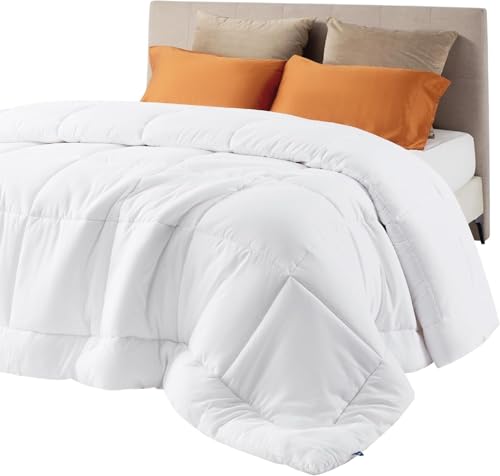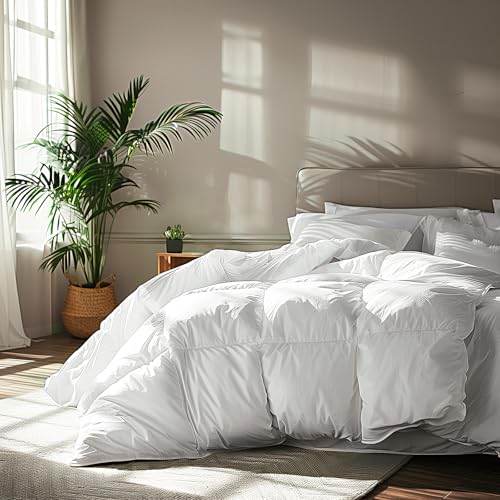
Where to buy: All six comforters in this guide are sold on Amazon, and every price reference below is for the queen size (full/queen where the maker sells a combined size). Prices move constantly, so check price on Amazon for the live figure before you order.
Disclosure: topratedkitchenware.com is a reader-supported site. As an Amazon Associate, we earn from qualifying purchases made through links on this page, at no extra cost to you. That is how we keep our guides free. We do not accept payment for placement, and every pick below had to clear the same bar: a verified listing, a queen-size price at or under $75 at the time we checked, and specs we could confirm from the maker’s own listing rather than from roundup sites.
Seventy-five dollars is the most interesting budget in bedding, because it is exactly where comforters stop being disposable. Under $30 you get thin polyester puffs that sleep fine for a season or two. Under $75, the shelf changes character: you can have a 100% cotton shell instead of microfiber, real goose feather and down fiber instead of anonymous polyfill, published fill weights, and brand names with actual warranty desks behind them. The Serta Goose Feather Down Fiber Comforter at the top of this guide — cotton shell, real feather and down fiber, sitting comfortably under the cap in queen — simply does not exist as a category at $30.
But honesty matters more at this tier, not less, because $75 is also where marketing starts borrowing words it has not earned. You will see “goose down” in headlines for comforters whose own spec sheets admit the fill is 90% feather fiber — short, processed feather pieces, not the fluffy clusters that make true down expensive. You will see “750 fill power” attached to comforters that cost three times this budget. And you will see deal prices presented as if they were everyday prices. So here is the plain version up front: at $75, you can buy excellent down-alternative comforters, a few genuinely good cotton-shell feather-and-down-fiber comforters, and — only when a sale cooperates — a lightweight blanket filled with a majority of real down. You cannot buy a premium down comforter. The cheapest true high-loft down we verified during this research, a 93% goose down, 800-fill-power model from the same brand as one of our picks, costs several times this entire budget in full/queen. Anyone who tells you $75 buys that experience is selling something.
What follows is a six-comforter shortlist built entirely from listings we could verify: maker, ASIN, queen dimensions, fill and shell specs, and pricing at or under the cap. Two of the six are cotton-shell natural-fill comforters from the same manufacturer (Blue Ridge Home Fashions makes both the Serta and several rival labels), one is a real-down lightweight blanket that only fits the budget at its deal price — flagged as such, in the open — and three are the down-alternative workhorses that most households will honestly be happiest with, because they go in the washing machine. After the reviews we explain the fiber vocabulary, what this budget does and does not buy, and the mistakes that waste money at exactly this price point.
In this guide
Quick Picks: The 6 Best Comforters Under $75
| Pick | Product (Queen) | Best For | Fill | Price | Link |
|---|---|---|---|---|---|
| Best Overall | Serta Goose Feather Down Fiber Cotton Comforter, Full/Queen 90×90 | A cotton shell and real feather/down fiber under budget | 90% white goose feather fiber, 10% white goose down fiber (listing spec) | Check price on Amazon | Check on Amazon |
| Best Real Down (Deal-Dependent) | puredown Lightweight Down Blanket, Queen 90×90 | Hot sleepers who want majority real down | Minimum 75% white down (line spec) | Check price on Amazon (deal-dependent) | Check on Amazon |
| Best Down Alternative | Bedsure Comforter Duvet Insert, Queen 88×88, Cream | Easy-care warmth with a softer hand feel | GentleSoft polyester fill | Check price on Amazon | Check on Amazon |
| Best Soft-Touch Budget Pick | EASELAND Down Alternative Comforter, Queen 88×88, White | Brushed-soft cover, whole-piece fill, huge review base | 300 GSM whole-piece polyester fill (maker figure) | Check price on Amazon | Check on Amazon |
| Best Warranty for the Money | Linenspa All-Season Down Alternative Comforter, Queen, White | Buyers who want a named brand and a 3-year warranty | Microfiber down-alternative fill (maker rates it 300 GSM) | Check price on Amazon | Check on Amazon |
| Best Rock-Bottom Price | Utopia Bedding Queen Comforter Duvet Insert, White 88×88 | Guest rooms, rentals, dorms, spares | Polyester down-alternative fill | Check price on Amazon | Check on Amazon |
A note on the four comforters you will not find linked above: during research we verified queen prices at Amazon for the Bare Home Duvet Insert, the Hotel Grand Luxury White Goose Feather Down Fiber Comforter, the Martha Stewart Luxury White Goose Feather Down Fiber Comforter, and the Cosybay Feather and Down Fiber Comforter Insert — all under $75, all plausible mid-range picks. What we could not verify, despite repeated attempts, was the exact Amazon ASIN for the standard queen listing of each. Bedding listings splinter into dozens of size, color, and warmth variants, and a wrong ASIN sends you to the wrong product. Rather than guess, we name them here unlinked: if you search those exact names on Amazon and confirm the queen size and price on the page, all four are reasonable buys in the same class as our Serta pick. We would rather lose the commission than send you to the wrong listing.
How These Picks Were Chosen
Every comforter in this guide had to pass four checks. First, a verifiable identity: a live Amazon listing whose product-information block names the maker, model, dimensions, and ASIN, so the product we describe is the product the link opens. Second, a verifiable queen price: a price checked on Amazon itself or through a price-tracking source, at or under $75 for the queen or full/queen size. Third, confirmable construction: fill composition, shell material, and stitch pattern taken from the maker’s listing or specification sheet — never from a roundup site’s summary, because roundup summaries at this tier routinely garble fill percentages. Fourth, a role: each pick had to be the best answer to a distinct question, so the list is not six versions of the same polyester puff.
Two exclusions are worth explaining because they show the bar working. The APSMILE Lightweight Goose Feather Comforter, a legitimate cotton-shell queen, was priced just over the cap, so it is out; a budget guide that rounds its own ceiling up is not a budget guide. And several famous-name feather comforters were excluded because their Amazon listings showed no featured offer during our checks, which usually means third-party sellers at unpredictable prices. Where a strong product failed only the link check, we named it unlinked in the Quick Picks note above rather than pretending it does not exist.
One more methodological note: warmth ratings, fill weights in GSM, and loft claims in this guide are the makers’ figures, and we say so where they appear. There is no independent lab testing comforters at this price, and any guide that speaks about a budget comforter’s warmth in the language of certainty is inventing it. What we can verify is construction — and construction predicts comfort better than adjectives do.
The Six Picks in Detail
1. Serta Goose Feather Down Fiber Cotton Comforter, Full/Queen — Best Overall
Who it suits: Anyone who wants the under-$75 tier’s one genuinely “hotel” build — a breathable cotton shell over real goose feather and down fiber — from the biggest name in American bedding, at a price that sits comfortably inside this budget for the full/queen — check price on Amazon.
The Serta Goose Feather Down Fiber Comforter is what this budget is for. The listing’s own specification block (model SE003025, made for Serta by Blue Ridge Home Fashions) states the construction plainly: a 100% cotton shell filled with 90% white goose feather fiber and 10% white goose down fiber, in a full/queen measuring 90 by 90 inches, rated by the maker for medium, all-season warmth. Read that fill line twice, because it is both the appeal and the caveat. Feather fiber is real goose material — the soft, quill-less pieces separated out during feather processing — and it behaves much more like down than whole feathers do: no stiff quills poking through the shell, a flatter and denser hand than polyfill, and warmth that comes from a heavy blanket’s hug rather than a puffy cloud’s loft. Roundups that weighed this comforter put the queen at roughly seven pounds, which tells you the character immediately: substantial, drapey, quiet.
The cotton shell is the second half of the value. Every down-alternative comforter in this guide wears polyester microfiber, which is soft and washable but sleeps warmer and can feel slightly slick. Cotton breathes, feels crisp rather than slippery, and takes a duvet cover gracefully — and this listing includes corner loops to keep one in place. The brand also prints OEKO-TEX certification on this line and a “hypoallergenic” label on the listing; we report those as the maker’s labels, not as medical claims, because no comforter at any price treats allergies. What we can say from construction alone: a cotton shell over processed feather fiber is the build most people picture when they say “hotel comforter,” and under $75 it is remarkably hard to find from a brand with a real warranty desk.
- 100% cotton shell — breathes better than the microfiber shells on every cheaper pick here
- Real goose feather fiber and down fiber fill (90/10 per the listing spec) — no quill poke-through, dense drapey warmth
- 90×90-inch full/queen gives proper drape on a queen mattress, unlike the 88-inch inserts below
- Corner loops for use as a duvet insert; end-to-end box construction keeps fill distributed
- Comfortably under the budget cap in queen (check price on Amazon) — the strongest specs-per-dollar in this guide
Honest limitation: This is a feather-fiber comforter, not a down comforter, and the difference is loft. It will never puff up like the cloud in the product photos of premium down comforters; it sleeps flatter and warmer-by-weight. Care is the other compromise: this family of natural-fill cotton comforters is not a weekly machine-wash product, so budget for a duvet cover from day one and expect professional cleaning or careful spot cleaning over its life. If your household washes bedding hot and often, the polyester picks below will serve you better even though they feel less special on night one. Owners of this Serta line also report it arrives vacuum-packed and needs a day or two of airing and shaking to reach full body — normal for natural fill, but plan for it.
Choose it if: you want the best construction $75 buys, you sleep cool-to-average, and you are happy using a duvet cover. Skip it if: you need machine-washable bedding, you run hot at night and want loft without weight, or anyone in the bed avoids animal-based fill. When the live price sits comfortably under the cap, as it did throughout our research, the Serta on Amazon is the first buy in this guide.
2. puredown Lightweight Down Blanket, Queen — Best Real Down, Only on Deal
Who it suits: Hot sleepers and warm-climate households who want a majority of genuine down — the real cluster fill the rest of this guide honestly cannot offer — in a deliberately light layer, and who are willing to buy it at its deal price.
The puredown Lightweight Down Blanket is the exception that proves this guide’s ceiling rule. puredown’s lightweight line is specified with a minimum of 75% white down fill — actual down clusters, the material whose price is the whole reason “best comforter under $75” is a constrained question — inside a 100% cotton cover with a satin trim and box stitching, in a queen measuring 90 by 90 inches. Its pricing is the catch: this blanket typically sells above this guide’s cap, and it only fits the budget when a limited-time deal is running on the queen in light grey. That distinction matters. On deal, it belongs in this guide and near the top of it. At its typical price it does not belong at all, and no amount of affection for real down changes the arithmetic of a budget cap. Check price on Amazon before anything else.
So we include it with the condition printed in the headline: this is a deal-dependent pick, and we flag it as the first thing to re-check before publishing or purchasing. What the money buys, when the deal is live, is a specific and genuinely useful thing — a summer-weight down layer. This is a blanket, not a winter comforter: the fill weight is sized for warm sleepers, air-conditioned bedrooms, and households in the South and Southwest that find even “all-season” comforters too much blanket ten months a year. Layered over a sheet it is a complete summer sleep setup; layered under a heavier comforter in January it adds real insulation without bulk. The cotton shell keeps it quiet and breathable, and the brand is a down specialist rather than a general bedding label — its premium lines (including the 93% goose down, 800-fill-power comforter, priced at several times this budget, that we used as this guide’s ceiling evidence) are built on the same fill supply chain.
- Minimum 75% real white down fill (line specification) — the only majority-down product verified under the cap
- 100% cotton cover with satin trim and box stitching; 90×90-inch true queen
- Lightweight warmth profile that suits hot sleepers and warm climates year-round
- Works as a standalone summer layer or a warmth booster under a heavier comforter
- Only fits this budget on a limited-time Amazon deal — check price on Amazon
Honest limitation: Two, and both are disqualifying if they apply to you. First, the price: its typical price is over budget, so this pick exists only while a deal holds — check before you fall in love. Second, the warmth: “lightweight” is not marketing modesty, it is the product. Cold sleepers in unheated northern bedrooms will be disappointed by February, and no honest reviewer should let the word “down” talk you into a blanket-weight fill for a winter-weight job. Treat it as the best summer down layer under $75, not as a cheap route to a winter down comforter, because that route does not exist.
Choose it if: you sleep hot, live warm, or want a real-down layer for summer and shoulder seasons — and the live price is under $75. Skip it if: you need one comforter to handle deep winter, or the deal has lapsed. The listing to watch is the puredown blanket on Amazon; when a deal brings it under the cap, it is the most fill quality this budget can buy.
3. Bedsure Comforter Duvet Insert, Queen, Cream — Best Down Alternative
Who it suits: Households that want the softest, easiest polyester comforter in this guide — machine washable, generously tabbed for duvet covers, and priced in the budget tier of this guide for the queen — check price on Amazon.
The Bedsure Comforter Duvet Insert in queen (88 by 88 inches, cream) is the down-alternative pick we would hand to most people, most of the time. Bedsure’s GentleSoft line uses a fine polyester fill that owners consistently describe as softer and less “crinkly” than the bargain inserts, held in a box stitch so it does not migrate into one corner by February. The detail that earns it this slot over cheaper rivals is the attachment system: eight corner tabs, double the usual four, which genuinely matters if you use a duvet cover — an insert that stays squared inside its cover is the difference between a made bed and a nightly wrestling match. Bedsure also prints OEKO-TEX certification on this line (reported here as the maker’s certification, as with all such labels), and the whole thing is machine washable, which for families, pet households, and anyone who eats toast in bed is not a footnote but the headline.
Pricing on this listing tells a useful story: it sits in the budget half of this guide’s range, and it is almost always on some kind of sale, dipping lower still at deal times. In other words, check price on Amazon, and if the live figure looks high for this pick, waiting for the next sale cycle is the smart move. Even at its regular price it undercuts the natural-fill picks by a wide margin while asking nothing of you in care — no dry cleaning, no special handling, no worrying about a spilled coffee. What you give up is the cotton shell and the dense, drapey hand of the Serta: this is a lighter, puffier, more synthetic-feeling blanket, and it sleeps a touch warmer than its weight suggests because polyester fill and microfiber shells breathe less than cotton.
- Eight corner tabs — the best duvet-cover attachment in this guide
- Machine washable end to end; the practical pick for kids, pets, and guest beds
- Box-stitched GentleSoft polyester fill with a softer hand than bargain inserts
- Budget-tier pricing for the queen — check price on Amazon; frequently on sale
- Cream colorway hides wear better than stark white and suits warm-toned bedding
Honest limitation: It is still a polyester comforter, with polyester’s two known taxes: it traps more heat than cotton-shell natural fills, and its loft slowly compresses over a couple of years of washing in a way feather fiber does not. The 88-inch width is also two inches narrower than the Serta and puredown queens — on a thick modern mattress, expect a slightly shorter side drape. None of that stops it being the right answer for most buyers; it just defines the answer it is.
Choose it if: you want one washable, cover-friendly comforter for everyday family use at a budget-tier price. Skip it if: you run hot and want a cotton shell, or you dislike synthetic fill on principle. At its usual sale pricing, the Bedsure insert on Amazon is the value center of this entire guide.
4. EASELAND Down Alternative Comforter, Queen, White — Best Soft-Touch Budget Pick
Who it suits: Buyers who prioritize a soft, brushed fabric feel and a proven, massively reviewed product — and who catch it at one of its frequent sales for the queen.
The EASELAND Down Alternative Comforter (queen, white, 88 by 88 inches) has been one of Amazon’s default bedding recommendations for years, with an enormous owner base behind it. The construction is a step more deliberate than the rock-bottom tier. The maker specifies a 105 g/m² brushed polyester cover — brushing raises the surface fibers, which is why this shell feels velvety rather than slick — over a whole-piece polyester fill the maker rates at 300 GSM, box-stitched with corner tabs for duvet use. Whole-piece fill is a real distinction at this price: instead of loose chopped fiber that can clump into lumps and cold spots, a continuous batt keeps the warmth map even, and it is the main reason this comforter reads “fluffier for longer” in owner reports than its price peers.
Its warmth profile is honestly middle-of-the-road: the maker sells it as all-season, and in a normally heated home that is fair — substantial enough for winter with a blanket layered over it in cold rooms, light enough for spring and fall alone. Summer in an un-air-conditioned room is where it will feel like too much, as will any 300 GSM polyester comforter. On price, this listing cycles on and off sale, and the pattern matters more than any single figure: it is a buy at its sale pricing in the budget tier, and a wait when it drifts up toward mid-range — check price on Amazon.
- Brushed 105 g/m² polyester shell (maker figure) with a noticeably soft, non-slick hand
- Whole-piece 300 GSM polyester fill (maker figure) resists the clumping of chopped-fill rivals
- Box stitching and corner tabs; machine washable
- Budget-tier pricing for the queen when on sale — check price on Amazon
Honest limitation: The brushed polyester shell that feels so soft also sleeps warm and can pill over years of washing, and “all-season” is a maker’s label, not a promise — genuinely hot sleepers should look at the puredown blanket’s lighter build instead. This pick’s price also swings more than most in the guide, so treat its sale pricing as “the price to aim for” rather than a guaranteed live figure — always check the listing.
Choose it if: you want the softest-feeling budget insert and a product with an unusually deep owner track record. Skip it if: you sleep hot, want a cotton shell, or find it priced up in mid-range territory — at that money the Bedsure above is the better buy. When it is on sale, the EASELAND on Amazon is the plushest budget buy you can put on a queen bed.
5. Linenspa All-Season Down Alternative Comforter, Queen, White — Best Warranty for the Money
Who it suits: Practical buyers who want a named brand, a published fill weight, duvet loops at all eight points, and a three-year warranty — at a budget-tier price in queen; check price on Amazon.
The Linenspa All-Season Comforter (queen, white; model LS70QQMICO) is the guide’s old reliable. Linenspa publishes what the bargain tier usually hides: the maker rates the microfiber down-alternative fill at 300 GSM, the construction is a sewn box stitch, and the insert carries eight duvet loops — the same attachment count as the Bedsure — so it works bare as a clean white comforter or anchored inside a cover. The queen sits at the budget end of this guide’s range — check price on Amazon — and the detail that lifts it above the anonymous rock-bottom inserts is standing behind the product: a three-year warranty from a bedding company with a real customer-service operation. At this price, a warranty is mostly a signal — but it is a signal that the maker expects the stitching to survive your washing machine, and owner history on this long-running listing backs that up.
Character-wise it sits between the EASELAND and the Utopia: a medium all-season weight, a smooth microfiber shell (less brushed-soft than the EASELAND, less basic than the Utopia), and loft that fluffs back well after a tumble dry. It is also one of the few comforters at this price sold in a genuinely wide size and color range, which matters if you are outfitting more than one room and want them to match. Nothing about it is exciting, and that is precisely its market: it is the comforter equivalent of a well-made white t-shirt.
- Maker-published 300 GSM fill weight — transparency the bargain tier rarely offers
- Eight duvet loops and box stitching; machine washable and dryer friendly
- Three-year manufacturer warranty, unusually concrete support at this price
- Budget-tier pricing for the queen — check price on Amazon
- Long-running listing with deep owner history from a known bedding brand
Honest limitation: The microfiber shell is smooth rather than soft, and like all polyester fills it will gradually lose loft across a few years of laundering — the warranty covers defects, not the slow flattening of age. Its all-season weight is also a compromise by design: cold sleepers in cold houses will layer a blanket over it in January, and hot sleepers will kick it off in July. It is the middle of the road, well built.
Choose it if: you want maximum predictability per dollar and bedding you can wash without thinking. Skip it if: hand-feel is your top priority (the EASELAND’s brushed shell wins) or you want natural fill (the Serta wins). For a spare room or a first apartment, the Linenspa on Amazon at its budget-tier price is very hard to beat.
6. Utopia Bedding Queen Comforter Duvet Insert, White — Best Rock-Bottom Price
Who it suits: Anyone outfitting a guest room, rental, dorm, or spare bed who wants a legitimate, washable queen comforter for the least money possible — at the lowest price point in this guide; check price on Amazon.
The Utopia Bedding Queen Comforter (white, 88 by 88 inches; model UB0063) is the floor of the respectable market, and it is a higher floor than you might expect. The build is the category standard done without corner-cutting that matters: a microfiber shell, polyester down-alternative fill, box stitching with piped edges to keep the fill from shifting, and corner tabs for duvet covers. It is machine washable, it has sold in enormous volume for years, and at its rock-bottom price point — check price on Amazon — it costs less than the duvet cover many people will put over it.
What you do not get is specification depth. Utopia does not publish a fill weight for this insert, and we flag that rather than papering over it: with no GSM figure, warmth comparisons against the 300 GSM EASELAND and Linenspa are guesswork, and the honest summary from the owner record is “medium-light all-season” — fine for guest beds and heated homes, thin for a cold sleeper’s only blanket. The shell is a plain microfiber, soft enough but unremarkable, and the whole product is built to a price in a way you can feel at the edges: adequate piping, adequate stitching, adequate loft. Adequate, at this price, is a compliment.
- The lowest queen price point in this guide — check price on Amazon
- Box stitching with piped edges and corner tabs — the full basic feature set
- Machine washable; the default choice for rentals, dorms, and guest rooms
- 88×88-inch queen from a high-volume bedding brand
Honest limitation: No published fill weight, a plain microfiber hand, and loft that owners report flattens sooner than the pricier quilts in this guide. This is a comforter you buy by the room, not by the decade — which is exactly the job it is priced for.
Choose it if: the bed is a guest bed, a rental, or a temporary setup, or you need several queens at once. Skip it if: it is your own every-night bed and you can stretch to the Bedsure or EASELAND — the small step up in price buys noticeably better fill behavior. As a bulk buy, the Utopia insert on Amazon is the sensible floor.
Comparison Table
| Product (Queen) | Size | Fill | Shell | Warmth (Maker) | Attachment | Care | Price |
|---|---|---|---|---|---|---|---|
| Serta Goose Feather Down Fiber | 90×90 in | 90% goose feather fiber / 10% goose down fiber | 100% cotton | Medium / all-season | Corner loops | Duvet cover advised; professional cleaning | Check price on Amazon |
| puredown Lightweight Down Blanket | 90×90 in | Min. 75% white down | 100% cotton | Lightweight | — (blanket, used bare or layered) | Follow maker label | Check price on Amazon (deal-dependent) |
| Bedsure Duvet Insert, Cream | 88×88 in | GentleSoft polyester | Polyester | All-season | 8 corner tabs | Machine washable | Check price on Amazon |
| EASELAND Down Alternative | 88×88 in | 300 GSM whole-piece polyester (maker) | Brushed polyester | All-season | Corner tabs | Machine washable | Check price on Amazon |
| Linenspa All-Season | 88×88 in | 300 GSM microfiber fill (maker) | Microfiber | All-season | 8 duvet loops | Machine washable | Check price on Amazon |
| Utopia Bedding Insert | 88×88 in | Polyester (weight not published) | Microfiber | All-season | Corner tabs | Machine washable | Check price on Amazon |
How to Choose the Right Comforter Under $75
Start with fill, because fill is the budget. At $75 your three real options are down-alternative polyester, feather/down fiber, and — on deal — lightweight true down. Polyester is the care-free choice: washable, consistent, and warm for its weight, at the cost of breathability and long-term loft. Feather and down fiber is the feel choice: denser, drapier, quieter, usually wrapped in cotton, at the cost of fussier care. True down is the loft choice, and at this budget it only exists in blanket weight. Pick by how you live first and how you sleep second; a comforter you are afraid to wash will not stay comfortable for long.
Read fill percentages like a lawyer. “Goose down comforter” in a headline can legally describe a product whose spec block says 90% feather fiber and 10% down fiber — our top pick is exactly that, and it is a good product, but only because we priced it as what it is. The spec block, not the title, is the product. For down-alternative comforters, look for a published fill weight (GSM or ounces): a maker who prints 300 GSM is telling you something checkable, while a maker who prints nothing is telling you something too.
Match warmth to your room, not the season name. “All-season” spans a wide band. If your bedroom sits at 65°F in winter and you sleep cold, an all-season polyester insert plus a throw will beat a “winter” comforter you overheat under in October. If you sleep hot, buy the lightest honest option — the puredown blanket’s entire existence is justified by hot sleepers who kept buying all-season comforters and kicking them off.
Size up on drape. Queen mattresses are 60 inches wide, and modern ones are thick. An 88×88 insert leaves about 14 inches of drape per side before mattress depth eats into it; a 90×90 like the Serta and puredown drapes noticeably better, and oversized queens (92–98 inches) exist precisely for deep mattresses. Measure your mattress depth before ordering, not after.
Decide the duvet-cover question before you buy. If you will use a cover, attachment points matter — eight tabs or loops genuinely outperform four. If you will not, shell fabric matters more, because it is against your skin: cotton and brushed polyester feel best bare; plain microfiber is the most clammy. Natural-fill comforters effectively require a cover to stay clean, so price one into the Serta’s true cost.
What $75 Actually Buys in 2026 — and What It Does Not
Let us be exact about the ceiling, because this is the section most budget guides fake. Seventy-five dollars, spent well, buys: cotton shells (two of our six picks), real goose feather and down fiber from a major brand, published fill weights, eight-point duvet attachment, three-year warranties, and — at deal prices — a lightweight blanket filled with a minimum of 75% genuine down, like the puredown blanket when a deal brings it under the cap. That is a genuinely good shelf of bedding, and for most households the Serta or the Bedsure is not a compromise at all — it is simply the right product.
What $75 does not buy is equally definite. It does not buy a premium down comforter: a 93% goose down, 800-fill-power full/queen from an established down brand costs several times this entire budget, and even a 750-fill-power queen from another down label sits over the cap — before you ask about shell quality. It does not buy high fill power in any meaningful quantity, because fill power is a property of mature down clusters and mature down clusters are the expensive ingredient. It does not buy baffle-box construction with high thread-count cambric shells, hand-finished in small batches. And it does not buy the ten-to-fifteen-year service life those products deliver; the honest lifespan expectation at this tier is three to seven good years, with polyester loft fading first. Spend $75 knowing you are buying the top of the value market — not the bottom of the luxury market wearing a costume.
Feather Fiber, Down Fiber, and Down Alternative: The Vocabulary That Decides This Tier
Three terms do all the work in under-$75 listings, and they are not interchangeable. Down is the soft cluster that grows under a bird’s outer feathers — no quill, enormous loft per ounce, and priced accordingly. Down fiber is the small, soft fiber separated from down during processing; it insulates like a milder down and costs far less. Feather fiber is the soft portion of feathers with the quill removed or broken down — denser and flatter than down fiber, but free of the poking quills that give cheap whole-feather comforters their crunch. When a listing says “90% feather fiber, 10% down fiber,” as our Serta does, expect a heavy, drapey, warm blanket with modest loft. When it says “minimum 75% down,” as the puredown blanket does, expect lightness and puff at a fraction of the fill weight. Down alternative is polyester engineered to imitate down’s loft; the best versions (whole-piece batts, siliconized fibers) come respectably close in warmth while beating natural fills on washability — and losing to them on breathability and drape. None of these is “fake.” The only fake thing in this market is a headline that blurs them.
Making a Budget Comforter Last: Care and Fluffing
Every comforter in this guide arrives compressed, and the first hour matters. Shake it out, lay it flat, and give it a day of air before judging loft — natural fills especially can take 24 to 48 hours to fully expand. A short tumble on low heat with clean dryer balls restores loft faster and is safe for the polyester picks; check the care label before doing this with natural fill. Wash the machine-washable picks in a large-capacity machine, on gentle, less often than your sheets — every wash costs a little loft — and dry them completely, because polyester fill stored damp is a mildew invitation. For the natural-fill picks, the duvet cover is not decoration, it is the care plan: it takes the weekly washing so the comforter only needs occasional professional attention. Finally, store any comforter loosely in a breathable bag, never vacuum-sealed long-term; crushed fill, natural or synthetic, remembers the insult.
Common Buying Mistakes
Believing the headline instead of the spec block. “Goose down” titles sit on top of 90%-feather-fiber spec sheets all over this tier. The fill percentages in the product-information block are the product; the title is advertising.
Paying the non-sale price on a permanently-on-sale product. Half this guide’s picks cycle through deals monthly — the Bedsure’s price swings noticeably within a single season. If a listing shows a high “typical” price and a deal culture, wait a week or set a price alert rather than paying the ceiling.
Buying winter weight for an all-year bed. The most returned comforters are the warmest ones. If your home is heated and you own a throw blanket, all-season or lightweight is the honest buy; heavy winter fills at this price are also the most likely to use cheap, clumping fiber to fake loft.
Ignoring the two inches. An 88-inch insert on a 14-inch-deep queen mattress leaves your shoulders negotiating with the sheet. Measure mattress depth, and favor 90-inch or oversized queens if yours is thick.
Skipping the cover on natural fill. A feather-fiber comforter without a duvet cover becomes a dry-cleaning subscription. Budget the cover into the purchase, or buy a washable polyester pick and skip the pretense.
Treating “hypoallergenic” as a medical promise. On bedding labels it is a maker’s marketing label for processed or synthetic fill. It says nothing clinical, and no comforter treats allergies or dust-mite problems — if those are your concern, an allergen-barrier encasement and a conversation with your doctor are the real purchases.
Final Recommendation
For most people reading a guide with “$75” in the title, the answer is the Serta Goose Feather Down Fiber Comforter: it is the only pick here that combines a cotton shell, real goose feather and down fiber, true 90-inch queen sizing, and a major brand’s backing at a price comfortably under the cap — check price on Amazon — the fullest expression of what this budget can do. If your household runs on washability, take the Bedsure at its budget-tier price and never think about your comforter again; it is the best appliance-style buy in the guide. Hot sleepers should watch the puredown down blanket and buy it when a deal brings it under the cap, accepting its light weight as the feature it is. And if the bed is a guest bed, the Utopia, the cheapest pick in this guide, is all the comforter it needs. What we would not do with $75 is chase the word “down” into an unverifiable listing with no spec block — at this budget, the verified spec sheet is the luxury.
Frequently Asked Questions
Can you really buy a down comforter for under $75?
You can buy a lightweight down blanket under $75 when it is on sale — our puredown pick, specified at a minimum of 75% white down, only fits the budget when it is on sale, since its typical price sits above the cap. A full-weight, high-loft down comforter is a different product class: genuine high-fill-power queens start above this budget, and premium models cost several times more. Under $75, “down” in a headline usually means down fiber or feather fiber, which are real materials with flatter, denser warmth — good products, honestly labeled in their spec blocks, but not the cloud-like loft of true down.
What is the difference between feather fiber and down fiber?
Both are processed natural fills. Down fiber is the small, soft fiber separated from down clusters; feather fiber is the soft, quill-free portion of feathers. Down fiber lofts more and feels closer to down; feather fiber is denser, drapes more, and costs less. A 90/10 feather-fiber/down-fiber blend like the Serta’s sleeps like a heavy hotel blanket — warm and substantial rather than puffy.
Is a $75 comforter warm enough for winter?
For a heated home, yes, with the right pick: the Serta’s dense natural fill and the 300 GSM polyester picks are all rated all-season by their makers and handle typical winter bedrooms, especially layered with a throw. For unheated rooms, cold sleepers, or genuine northern winters, this budget is the wrong shelf for a single-layer solution — layer a lightweight pick under a blanket, or raise the budget.
Which of these comforters is best for hot sleepers?
The puredown lightweight down blanket, and it is not close: it has the least fill by design, a breathable cotton shell, and real down’s warmth-to-weight efficiency. Among the everyday picks, the cotton-shell Serta breathes better than any polyester option. Avoid thick polyester “winter” fills entirely if you run hot.
How long will a comforter under $75 last?
Plan on three to seven years of good service. Polyester fills lose loft gradually with washing; natural feather-fiber fills hold their character longer but ask for gentler care. Using a duvet cover, washing less often in a large machine, drying fully, and storing loosely all push toward the top of that range.
Are these comforters machine washable?
The four down-alternative picks — Bedsure, EASELAND, Linenspa, and Utopia — are machine washable; follow each label and use a large-capacity machine. The natural-fill picks are cover-and-professional-care products: protect the Serta with a duvet cover from day one, and follow the puredown’s label for its lighter construction.
Why are some good comforters named in this guide but not linked?
Because we could verify their queen prices at Amazon but not the exact listing ASIN for the standard queen variant, and a wrong link is worse than no link. The Bare Home insert, Hotel Grand feather/down fiber comforter, Martha Stewart feather/down fiber queen, and Cosybay feather/down fiber insert are all mid-range picks within this budget and worth a direct search on Amazon — confirm size and price on the listing page before buying.
Related Guides
- Best Comforter Under $30
- Best Comforter Under $100
- Best Duvet Insert Under $75
- Best Cooling Comforter For Hot Sleepers
- Best Bed Sheet Set Under $75
- Best Weighted Blanket Under $75