Disclosure: topratedkitchenware.com is reader-supported. When you buy through links on our site, we may earn an affiliate commission from Amazon and other retailers, at no extra cost to you.
Where to buy
The six models below are the picks in this guide to best commercial grade air fryers. Only two carry direct listing links, and the reason is the subject of the guide itself: a commercial grade claim should be earned by what a machine’s verified listing title actually states, and only two of these six titles state a large, service-scale capacity, one as an extra-large oven specified by pan size and one as an XL fourteen-quart machine. The other four are reviewed in full and kept prose-only, with the gap between their domestic grade and a commercial grade described honestly in each review.
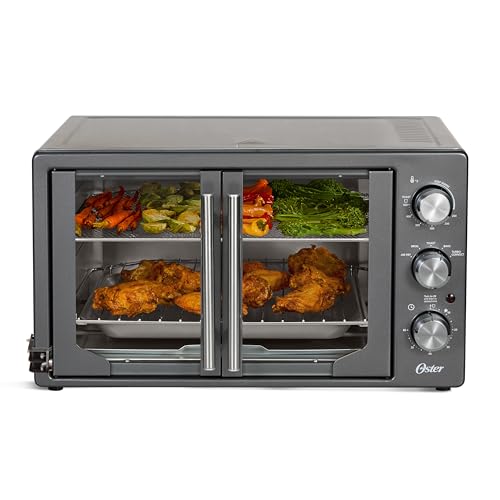
- Oster Extra-Large French Door Air Fryer Oven
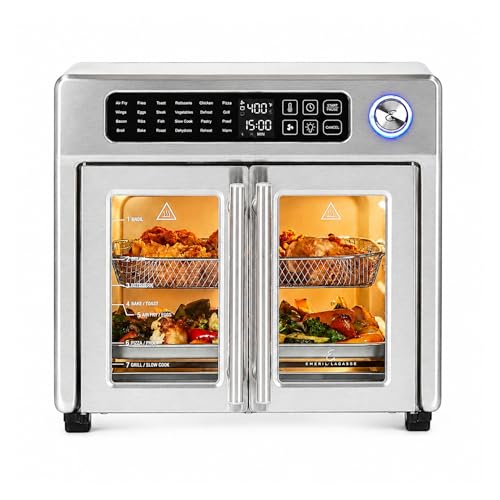
- Emeril Lagasse Everyday 360 Air Fryer Oven — no large capacity or heavy-duty grade stated in its title, reviewed prose-only below
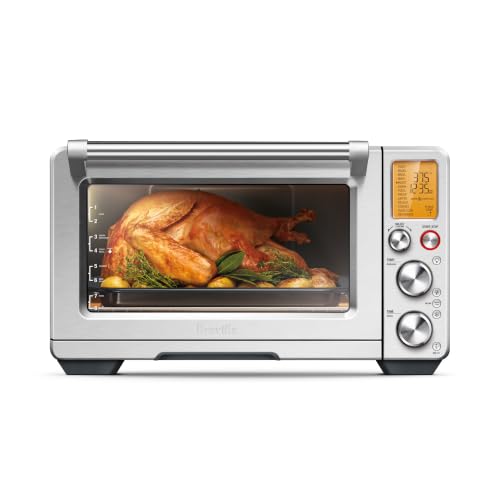
- Breville Smart Oven Air Fryer Pro — premium domestic build, no commercial grade or large capacity stated in its title, reviewed prose-only below
- Chefman XL 14-Quart Air Fryer
- Cuisinart French Door Air Fryer Toaster Oven TOA-FD70 — standard domestic oven size, no large capacity stated in its title, reviewed prose-only below
- Cuisinart Air Fryer Toaster Oven Combo TOA-55 — mid-size domestic oven, reviewed prose-only below
Read the full guide ↓ for what commercial grade should actually mean, how each machine measures against it, and where the honest boundary between heavy domestic and true commercial equipment sits.
The phrase best commercial grade air fryers is one of the most abused in the category, because grade is a claim about build, duty, and service life that a headline can assert far more easily than a machine can prove. Shoppers who type it usually want something specific and sensible: an air fryer built harder than the domestic average, able to work longer days, survive heavier use, and be cleaned and maintained like a tool rather than cosseted like a gadget. This guide takes that want seriously and the phrase literally. A pick is linked only where its verified listing title states the physical foundation of grade, a large capacity of the kind service and heavy household use demands. Everything else, however refined, however famous, is reviewed prose-only and graded in words.
That discipline produces an unfashionable but useful result: two linked picks and four honest reviews of machines that are, in different ways, not commercial grade. A flagship domestic oven with beautiful build is not commercial grade. A versatile oven with no stated capacity is not commercial grade. Two capable mid-size ovens are not commercial grade. Naming those distinctions is the entire value of the guide, because the alternative, linking everything and letting the keyword do the persuading, is how buyers end up running a light-duty machine on a heavy-duty schedule. Readers planning an actual working station rather than grading build quality should also read the service-side companion, and the restaurant analysis that sits behind this one, before spending.
Key Takeaways
- Commercial grade is a claim about capacity, build, and duty; in this guide a pick is linked only where its verified title states a large, service-scale capacity.
- Only the Oster Extra-Large and the Chefman XL 14-Quart meet that stated-capacity bar among the six verified picks.
- Premium domestic build, however excellent, is not the same thing as commercial grade, and the Breville review explains the difference in full.
- Four picks are prose-only, reviewed completely, because their titles state no large capacity or heavy-duty grade.
- No prices are printed; check the latest price on Amazon for the two linked picks and confirm configurations on the listings.
- If your use is genuinely commercial in volume, treat these machines as the top of the domestic range and check certification requirements for your premises.
In this guide
Quick Picks
| Pick | Badge | Why it earns its place | Listing |
|---|---|---|---|
| Oster Extra-Large French Door Oven | Best Overall Grade Candidate | Extra-large design stated by pan fit, with a short, service-shaped preset list. | Check on Amazon |
| Emeril Lagasse Everyday 360 | Most Versatile Prose-Only Pick | Nine functions and rotisserie, but no large capacity stated in its title. | See review |
| Breville Smart Oven Air Fryer Pro | Best Domestic Build | Flagship refinement and thirteen functions, graded domestic rather than commercial. | See review |
| Chefman XL 14-Quart Air Fryer | Best Compact Grade Candidate | XL fourteen stated quarts with rotisserie and a wipe-clean touchscreen. | Check on Amazon |
| Cuisinart TOA-FD70 | Best Design-Led Domestic Oven | French doors and seven functions at a standard domestic size. | See review |
| Cuisinart TOA-55 | Best Domestic All-Rounder | Convection capability and a crumb tray in a mid-size domestic oven. | See review |
The moving-air system every machine here relies on is graded from another angle in Best Convection Air Fryers, for readers who want the performance side of the grade question separated from the build side.
How These Picks Were Chosen
This guide is research-led, with the strictest linking screen in this wave. The six picks come from a verified pool for this product group, each included only where its identity, brand, and listing details could be confirmed. The grade screen was then applied to the listing titles themselves: a pick could be linked only if its title states a large capacity suited to heavy, service-style use. Two titles pass, one by declaring an extra-large oven and the pan size it fits, one by declaring an XL fourteen-quart capacity. Four titles do not state a large capacity at all, or state only a standard domestic oven size, and those four are prose-only regardless of their other merits.
Beyond the screen, each machine was assessed against the components of grade that a title and a specification can support: capacity, the simplicity or complexity of the working interface, the cleaning architecture, and the maker’s standing behind the product. Where grade would require evidence a title cannot provide, duty ratings, certifications, service networks, the guide says so rather than implying it. No specifications were invented, no certifications are claimed for any pick, and no hands-on testing is asserted. The spec boxes contain only what the verified titles state, which is precisely the standard the keyword deserves.
The 6 Best Commercial Grade Air Fryers

Oster Extra-Large French Door Air Fryer Oven
Badge: Best Overall Grade Candidate
Strengths
- Extra-large capacity stated in the most plannable form, the fifteen by twelve inch pans it fits.
- Six presets: a short working list that suits repetitive, heavy use better than a deep library.
- French doors and an auto-shutoff timer, practical details for a machine that works all day.
Trade-offs
- Still a domestic-built machine; grade candidate in this guide means top of the domestic range, not certified commercial equipment.
- Six presets offer little guided help for varied work.
- Extra-large footprint, permanently allocated wherever it works.
Spec box
- Design: extra-large French door
- Pan fit: fits 15 x 12 inch pans
- Presets: 6 cooking presets
- Oil claim: maker describes low-oil cooking
- Safety: auto-shutoff timer
The Oster leads this guide because its title makes the one claim grade begins with, size you can plan around, and makes it in the unit heavy users actually plan in: pans. An oven specified by the fifteen by twelve inch pans it fits can be matched to trays, portions, and workflows before it is bought, and that verifiability is the difference between a grade claim and a grade fact. Around that foundation the design is sensibly workmanlike: French doors for fast loading, six presets that map to repeated jobs rather than culinary tourism, and an auto-shutoff timer that suits a machine running long days in a busy room. Nothing about it is theatrical, and theatrical is what grade is not.
The honesty paragraph is essential, because the Oster’s badge says candidate. It is the strongest commercial grade candidate in this verified pool, which is a statement about the pool and about domestic equipment generally: the top of the domestic range is a real and useful place, occupied by large, simple, plannable machines, and it is still not the certified commercial tier. A heavy household, a small operation, or a supplementary station will get genuine service from it. A buyer whose premises or volume require certified equipment should take this guide as a map of where domestic ends, and shop beyond it with the criteria in the buying section below.
Best for: heavy households and small operations wanting the most plannable large domestic oven / Not suited for: premises requiring certified commercial equipment
Emeril Lagasse Everyday 360 Air Fryer Oven
Badge: Most Versatile Prose-Only Pick
Strengths
- Nine functions including rotisserie, a broad working repertoire in one oven.
- Three hundred sixty degree convection in the maker’s description, aimed at even results.
- An established line with wide domestic familiarity behind it.
Trade-offs
- No capacity is stated in its verified title, so no grade judgement based on scale can be verified, and it is prose-only here.
- Versatility is a domestic virtue; grade asks first about size, duty, and serviceability.
- Domestic build and expectations throughout.
Spec box
- Functions: 9-in-1
- Air circulation: 360° convection, as described by the maker
- Rotisserie: included in the function description
- Capacity: not stated in the verified listing title
The Everyday 360 is a good oven caught by a strict rule, and its review is where the rule earns its keep. Nine functions and a rotisserie make it one of the more versatile countertop ovens in the pool, and in a domestic guide it links without argument. A commercial grade guide asks a colder question first: how large is it, in figures a buyer can verify? Its verified title does not say, and grade cannot be awarded on a figure the guide cannot show its readers. That is not a suspicion about the machine; it is a refusal to convert a keyword into a certification. Buyers who verify the full specification themselves and find the scale their work needs will find a capable, versatile oven waiting.
For this guide’s purposes the 360 stands as the clearest example of the gap between versatile and graded. Heavy use punishes machines in a specific order: capacity runs out first, then cleaning patience, then moving parts. A machine whose first answer cannot be checked from its own title asks its buyer to take the whole sequence on trust. Professional and heavy household buyers should decline that offer politely, as this guide does, while recognising the machine’s genuine domestic worth, which its function set amply proves.
Best for: domestic buyers who will verify the full specification themselves / Not suited for: grade-led buying from the listing title alone
Breville Smart Oven Air Fryer Pro
Badge: Best Domestic Build
Strengths
- Thirteen functions in a brushed stainless flagship build, the finest fit and finish in this guide.
- Convection described by the maker as reducing cooking time by up to thirty percent.
- Controls and refinement that reward careful, varied domestic cooking.
Trade-offs
- No large capacity or commercial grade is stated in its title; its excellence is domestic, and it is prose-only here.
- Premium tier pricing buys refinement, not duty rating.
- Its strengths, precision and polish, are the ones heavy service values least.
Spec box
- Model: BOV900BSS
- Functions: 13, including roast, bake, and dehydrate
- Convection: yes, described as reducing cook time by up to 30%
- Finish: brushed stainless steel
- Capacity: not stated in the verified listing title
The Breville forces the most instructive distinction in this guide: the difference between best built and commercial grade. By domestic standards it is the finest machine here, with the broadest function set, a convection system its maker quantifies, and a build that feels engineered rather than assembled. Commercial grade, however, is not a compliment about finish. It is a prediction about behaviour under volume: trays loaded all day, cleaning at speed, parts replaced rather than mourned, capacity stated in figures a planner can use. On the evidence its own title offers, the Breville does not make that prediction, because it does not state the capacity the prediction starts from, and its design brief is precision for a home rather than throughput for a service.
None of this diminishes the machine for its actual purpose, and heavy domestic cooks who bake, roast, and dehydrate daily may find it the most satisfying oven in this entire wave of guides. The methodology-minded reader will recognise the pattern from Best Convection Oven Air Fryers Consumer Reports: a product can lead on measured quality and still not answer a question about grade, because quality and grade are different measurements. Buy the Breville for excellence at domestic scale, proudly. Do not buy it as commercial grade, because neither its maker, in the verified title, nor this guide will certify that it is.
Best for: discerning domestic cooks wanting flagship build / Not suited for: buyers needing a verifiable commercial grade claim

Chefman XL 14-Quart Air Fryer
Badge: Best Compact Grade Candidate
Strengths
- XL fourteen-quart capacity stated plainly in its title, the compact end of verifiable heavy-use scale.
- Rotisserie and dehydrator functions widen the working day of a single machine.
- Windowed door and touchscreen: monitoring without opening, and a front that wipes clean in seconds.
Trade-offs
- Fourteen quarts is the floor of this guide’s grade conversation, not its centre.
- Domestic build, like the Oster; a candidate at the top of the domestic range.
- Window shows splatter and demands the wiping its touchscreen makes easy elsewhere.
Spec box
- Capacity: XL 14-quart
- Functions: 6-in-1, including rotisserie, food dehydrator, convection oven, bake, broil, and reheat
- Controls: touchscreen
- Door: windowed
- Colour: black
The Chefman is the second linked pick because its title does the essential thing in the essential way: it states a size, XL fourteen quarts, that a heavy user can plan around. Around that stated foundation it assembles a working set of service virtues. The window lets a busy cook judge a batch at a glance instead of breaking the cooking to check it. The touchscreen removes the greasy-knob problem from a machine that will be touched with working hands all day. The rotisserie and dehydrator stretch one machine across a longer menu than its footprint suggests, which is how compact heavy-use equipment earns its counter.
Its place in the grade conversation is the entry point, and the review should not pretend otherwise. Fourteen quarts serves a compact station, a food truck, or a heavy household superbly and a growing operation briefly. Buyers whose volumes are rising should read that as a sizing instruction rather than a criticism: grade is partly the discipline of matching stated capacity to proven demand, and the Chefman’s stated figure makes the matching possible, which is more than the prose-only picks allow. The craft of running such a machine at its best, layering, timing, finishing, is covered for cooks in Best Cookig Air Fryers, and it applies unchanged at this end of the market.
Best for: compact heavy-use stations and demanding households / Not suited for: high-volume operations beyond fourteen-quart planning
Cuisinart French Door Air Fryer Toaster Oven TOA-FD70
Badge: Best Design-Led Domestic Oven
Strengths
- French-door design with seven functions in a composed stainless build.
- Fits a twelve-inch pizza, a real domestic dinner capability.
- Artisan styling that suits a visible, customer-adjacent counter.
Trade-offs
- A standard domestic oven size; no large capacity is stated in its title, so it is prose-only in a grade guide.
- Part of its tier buys design, which grade does not reward.
- No dehydrate function is listed for slow work.
Spec box
- Model: TOA-FD70
- Design: artisan French-door
- Functions: 7 — air fry, toast, bake, broil, roast, pizza, warm
- Capacity note: fits a 12-inch pizza
- Finish: stainless steel
The TOA-FD70 is a handsome, capable domestic oven, and its prose-only status here follows from a single fact: the largest figure its title offers is a twelve-inch pizza, which describes a standard domestic cavity, not a large service-scale one. In a grade guide that distinction is decisive, and it is no insult to the machine. Its French doors open beautifully, its seven functions cover a domestic week, and its design would flatter a café counter visually while its scale quietly limited the same café’s service. That combination, attractive and undersized for the claim, is exactly the trap the keyword sets for unwary buyers, and the review exists to spring it harmlessly.
For domestic buyers the calculus reverses, and the FD70’s earlier appearances in this wave’s guides link it gladly for home kitchens. The lesson the grade guide adds is about language: a machine can be premium, artisan, and excellent while being none of the things the word commercial asserts. Readers who keep that separation clear will read every future grade claim in this category with the right scepticism, including the claims made during the price events discussed in Best Cyber Prices For Air Fryers, where grade language tends to inflate precisely when scrutiny relaxes.
Best for: domestic kitchens valuing design and French doors / Not suited for: grade-led or service-scale buying
Cuisinart Air Fryer Toaster Oven Combo TOA-55
Badge: Best Domestic All-Rounder
Strengths
- Convection capability stated in its own title, with a four hundred fifty degree Fahrenheit ceiling.
- Removable crumb tray, a genuine maintainability feature.
- Balanced mid-size interior that fits a twelve-inch pizza.
Trade-offs
- Its stated interior is a mid-size domestic figure, not a large service capacity, so it is prose-only here.
- Single-level cooking limits batch scale.
- Eighteen hundred watts is domestic power, strong for a home and unremarkable for service.
Spec box
- Model: TOA-55
- Functions: 7-in-1
- Power: 1800W
- Interior: 0.6 cu. ft.
- Convection: capability stated
- Maximum temperature: 450°F
- Cleaning: removable crumb tray
- Capacity note: fits a 12-inch pizza
The TOA-55 closes the reviews as the guide’s most balanced domestic oven and its most borderline grade case, which is why it deserves a precise explanation. Unlike the two picks above it, its title does state an interior figure, nought point six cubic feet. That figure describes a respectable mid-size domestic oven, the centre of the home market, and not the large capacity this guide’s screen requires for a commercial grade link. The distinction is not a quibble about arithmetic; it is the difference between an oven planned for family dinners and one planned for service loads, and the TOA-55’s own specification places it, honourably, in the first group.
Within that group it is exemplary: stated convection, a proper temperature ceiling, a crumb tray that shows maintainability was designed in rather than added on. A heavy household that cooks at family scale and wants one oven to do everything well could choose it and never feel the absence of grade, because grade was never its question. The guide’s discipline is simply to keep the questions separate. Domestic excellence is a complete answer to a domestic brief, and the TOA-55 provides it; the commercial grade brief asks for stated large scale first, and on that question this fine machine’s own title gives a mid-size answer.
Best for: households wanting the most balanced domestic oven here / Not suited for: service-scale or grade-led requirements
Comparison Table
| Pick | Badge | Capacity as stated in title | Grade reading | Listing |
|---|---|---|---|---|
| Oster Extra-Large | Best Overall Grade Candidate | Extra-large; fits 15 x 12 inch pans | Linked: large stated capacity | Check on Amazon |
| Emeril Everyday 360 | Most Versatile Prose-Only Pick | Not stated | Prose-only: scale unverifiable | Prose-only |
| Breville Smart Oven Air Fryer Pro | Best Domestic Build | Not stated | Prose-only: premium domestic | Prose-only |
| Chefman XL 14-Quart | Best Compact Grade Candidate | XL 14-quart | Linked: large stated capacity | Check on Amazon |
| Cuisinart TOA-FD70 | Best Design-Led Domestic Oven | Fits a 12-inch pizza | Prose-only: standard domestic size | Prose-only |
| Cuisinart TOA-55 | Best Domestic All-Rounder | 0.6 cu. ft. | Prose-only: mid-size domestic | Prose-only |
How to Choose When Grade Is the Question
Grade decomposes into five testable parts, and a buyer should test each one rather than accepting the phrase whole. Capacity: is a large figure stated, in a unit you can plan with? Interface: does the machine reduce to a few repeatable settings, or does it demand scrolling and judgement at speed? Cleaning architecture: can the cavity, trays, and door be returned to neutral quickly, by tired hands, every day? Serviceability: does the maker stand behind the product with parts and a range, so a worn tray is an order rather than an ending? And duty honesty: does anything, anywhere in the verified information, actually claim the machine is built or certified for commercial work, or is the grade purely an inference from size? The two linked picks pass the first four tests as far as a listing can establish them and make no false claim on the fifth. That combination, verified scale plus no invented certification, is the most a buyer should accept from this end of the market, and it is genuinely useful.
Apply the tests in order and stop at the first failure, because grade failures compound: an unverifiable capacity makes the cleaning question moot, and an unserviceable machine makes its capacity a loan rather than an asset. The Oster and the Chefman XL survive the sequence, at different scales, which is why they hold this guide’s only links. Then make the final, separate check that no guide can make for you: whether your premises, insurer, or local rules require certified commercial equipment. If they do, the correct conclusion from this entire guide is that your machine is not in it, and the criteria above become your shopping list for the certified market, where they will serve you exactly as well. Keep the written schedule from the section that follows close at hand in that market too, because certified sellers respond to buyers who arrive with loads, timings, and cleaning gaps already specified, and the conversation changes from persuasion to engineering the moment those figures are on the table.
How to Run a Heavy-Use Countertop Oven
Heavy use is a technique before it is a purchase. Load in single layers with air gaps, because crowding is the fastest way to make a large machine perform like a small one, and standardise loads so that a batch means the same weight and arrangement every time. Work in planned blocks with brief cooling intervals rather than running the cavity as a continuous furnace; domestic machines repay the rhythm with longer life. Use the simplest settings that produce the result, saved or labelled at the machine, so that performance does not depend on who is standing in front of it.
Maintenance scales with duty. Wipe the cavity and door while warm after heavy sessions, wash trays and racks daily under a heavy schedule, and inspect seals, hinges, and crumb paths weekly for the wear that announces itself quietly before it fails loudly. Keep residue from ever becoming a layer, because residue is insulation, flavour contamination, and smoke in one. Keep a simple log of settings and results when the machine is new to its work; heavy use standardises fast when it is written down.
Troubleshooting follows the heavy-use pattern. Problem: browning drifts uneven across a tray → loads have crept larger or residue is disturbing airflow; return to the standard load and clean fully. Problem: cook times lengthen across weeks → surfaces are insulating with build-up or a seal is tiring; deep-clean and inspect the door seal. Problem: smoke on fatty loads → fat is reaching a hot surface; arrange rack and tray so drips land away from the element and empty the tray between batches. None of these require a technician; all of them require the discipline that the word grade, properly understood, actually describes.
What Commercial Grade Should Mean, and What It Should Never Mean
Commercial grade should mean a machine whose maker has engineered and stated it for heavier work: capacity in plannable figures, an interface built for repetition, cleaning designed for speed, parts available for replacement, and, at the true commercial tier, certification that a premises can rely on. It should describe a relationship between a machine and a workload that can be checked before money moves. Used that way, the phrase is a useful filter, and this guide has used it that way, linking two machines whose titles state the scale the filter requires and reviewing four that do not meet it in full view of the reader.
It should never mean a mood. It should not be inferred from stainless steel, from a famous name, from a high domestic tier, or from the confidence of a headline, because every one of those inferences is represented among this guide’s prose-only picks, each of them a good machine and none of them a verified grade claim. The wider cooking conversation in Best Cooking Air Fryers makes the same point from the home side: quality is real, grade is specific, and confusing them is how good machines get bought for the wrong work and blamed for it. Hold the distinction, and the phrase becomes what it should be, a standard you apply rather than a spell a listing casts. Apply it in the order this guide applies it, capacity before interface, interface before cleaning, cleaning before serviceability, and duty honesty over everything, because a claim that fails early cannot be rescued late.
Grading the Prose-Only Four Against the Five Tests
It is worth running the four prose-only machines through the buying section’s five tests explicitly, because the exercise shows how a grade judgement is built rather than merely announced. Capacity first. The Emeril 360 states none, the Breville states none, the Cuisinart FD70 states a pizza diameter, and the Cuisinart TOA-55 states a mid-size interior. Against a screen that asks for a large stated figure, all four stop at the first test, which is why none of their remaining virtues, considerable as they are, can rescue the link. Interface second: the Breville and the two Cuisinarts would pass comfortably, being clear domestic interfaces, while the Emeril’s versatility would need the usual training down to house settings. Cleaning third: the TOA-55’s crumb tray is the strongest single answer among the four, and the Breville’s domestic design assumes domestic cleaning time. Serviceability fourth: all four come from established makers with ranges behind them, the strongest collective answer in this paragraph. Duty honesty fifth: none of the four claims commercial duty in its title, which is to their makers’ credit and is precisely why this guide’s complaint is with the keyword’s loose usage, not with the machines.
Read as a table of judgements, that exercise delivers the guide’s real conclusion. The prose-only four are not failed machines; they are machines that fail one specific, stated test while passing several others, and a buyer whose own brief weights the other tests more heavily, a heavy domestic cook above all, may choose any of them with this guide’s blessing and its reviews as the evidence. Grade, applied properly, is not a wall between good and bad. It is a sequence of questions with the order fixed by the work the machine must do, and the order is what the keyword, left to itself, would never tell you.
Duty, Heat, and Time: The Physics Behind Grade
Grade sounds like a marketing word until it is translated into physics, where it becomes three concrete pressures. The first is thermal endurance. A domestic oven is designed around sessions: heat, cook, cool, rest. Heavy use compresses the rests, and components that were specified for a life of sessions begin a life of shifts instead. Fans run longer at temperature, seals cycle without fully cooling, and coatings meet their hundredth hot, greasy hour in a month rather than a year. Nothing about this is mysterious, and nothing about it is a defect; it is specification meeting schedule, and grade is the name for a specification written with the heavier schedule in mind.
The second pressure is mechanical repetition. Doors, hinges, drawers, and latches are rated in cycles, and heavy use spends cycles at service speed, with trays in both hands and no patience for a stiff hinge. The machines that survive repetition best are usually the simplest in their moving parts, which is one reason this guide’s linked picks favour straightforward doors and short interfaces over elaborate mechanisms. The third pressure is cleaning chemistry and frequency. A cavity wiped weekly lives a different life from a cavity degreased daily, and materials, coatings, and printed controls all age under the second regime in ways the first never reveals. When a buyer asks whether a machine is commercial grade, these three pressures are the honest content of the question, and a title that states capacity while a design keeps its moving parts simple and its surfaces wipeable is giving the best answer the domestic market can give, which is exactly the answer the Oster and the Chefman give and the standard the prose-only four were measured against.
There is a final, practical sense in which grade can be tested before any purchase, and it belongs in a guide that has insisted on verification throughout. Take the work you actually intend, your heaviest recurring cooking day, and write it as a schedule: loads, times, cleaning gaps, the hands available. Then read each candidate’s stated specification against that schedule line by line, and mark every place the schedule asks for a figure the title does not give. The machine with no marks against your schedule is your grade machine, whatever any headline calls it, and the machine with marks is a gamble at exactly the lines where the marks appear. The linked picks in this guide were chosen because their stated figures leave the fewest marks against the heavy schedules this keyword implies, and the prose-only reviews tell you, for each of the others, precisely where its marks would fall. That is the most useful thing a grade guide can hand a buyer: not a verdict to borrow, but a test to run. Run it on paper before the machine arrives and once more, honestly, after the first heavy week, because the schedule you wrote in advance becomes the maintenance log the machine deserves. Buyers who keep both documents rarely argue with their equipment, since every disagreement between a kitchen and a machine is visible in one of them, in figures, where it can be settled by an adjustment rather than by a replacement.
Common Buying Mistakes
The first mistake is treating commercial grade as a compliment instead of a specification, and buying the most premium domestic machine for the heaviest work. The second is accepting a grade claim with no stated capacity behind it. The third is ignoring the certification question until an insurer or an inspector raises it. The fourth is choosing a deep, complex interface for repetitive heavy use. The fifth is neglecting cleaning architecture, the component of grade felt most often. The sixth is oversizing into a large machine for work that is merely frequent, when frequency at family scale is a domestic brief that several prose-only picks here answer beautifully.
Final Recommendation
Take the Oster Extra-Large if your heavy work is tray-shaped and planned in pans; take the Chefman XL if it is compact, varied, and monitored through a window. Both are linked because their titles state the scale grade begins with, and both should be bought as what they are: the top of the domestic range, honestly labelled. If your requirement is certified commercial equipment, let this guide’s five tests become your criteria in that market instead. Check the latest price on Amazon for the linked picks, confirm the configurations, and let stated figures, not adjectives, make the decision. Then run the machine you choose on the written schedule from its first day, because grade is proven in the running, and a buyer who has done the verification this guide describes has nothing left to prove, to an inspector, to an insurer, or to the crew who will run the machine after you.
Frequently Asked Questions
What does commercial grade actually mean for an air fryer?
Properly used, it means the machine is built and specified for heavier work than a domestic appliance: large stated capacity, an interface suited to repetition, cleaning designed for speed, replaceable parts, and at the true commercial level, certification for commercial premises. In this guide the phrase is applied strictly, which is why only two of six verified picks are linked: their titles state the large capacity the claim must start from.
Why is the Breville not commercial grade if it is the best built?
Because build quality and grade are different measurements. The Breville is a flagship domestic oven whose title states no large capacity and no commercial claim; its excellence is precision and finish for a home. Grade is a prediction about volume work, and predictions need figures. The Breville’s own listing does not offer them, so this guide grades it, accurately and respectfully, as premium domestic.
Are the two linked picks certified commercial equipment?
No such certification is stated in their verified listing titles, and this guide claims none. They are linked as the strongest grade candidates in the verified pool, large domestic machines whose stated capacities suit heavy household and small supplementary service use. Premises that require certified equipment should shop the certified market, using the five tests in the buying section as criteria.
Why is the Cuisinart TOA-55 prose-only when its title states an interior size?
Because the size it states, nought point six cubic feet, is a mid-size domestic figure. The guide’s screen requires a large, service-scale capacity stated in the title, and the TOA-55’s own specification places it in the centre of the home market. It is an excellent domestic all-rounder, reviewed in full above; it simply does not state the scale a commercial grade link requires.
How can I verify a grade claim before buying?
Demand the figures in order: a large capacity stated in a plannable unit, the included accessories, the cleaning design, parts availability from the maker, and any certification stated in writing. Confirm each on the listing itself rather than in surrounding marketing. A claim that survives that sequence is a specification; a claim that dissolves under it was an adjective, and should be priced as one.
Does stainless steel construction make an air fryer commercial grade?
No. Stainless finishes appear across every tier of this category, including the lightest domestic machines, because the material is attractive, cleanable, and expected by buyers. Grade is established by the sequence this guide applies: stated large capacity, a repetitive interface, cleaning architecture, serviceability, and, at the true commercial tier, certification. A stainless machine can fail the first test, as two prose-only picks in this guide demonstrate, and a plainly finished machine can pass the tests that matter. Judge the specification, not the surface, and be especially wary of any listing where the finish is described in more detail than the capacity.
Can a heavy household treat these candidates as buy-it-for-years machines?
Yes, with the maintenance rhythm this guide describes treated as part of the purchase. A large domestic oven at the top of its range, loaded within its stated capacity, cleaned on schedule, and rested between heavy blocks, is a rational years-long answer for a demanding home, a large family, or a household that cooks in bulk weekly. The years are earned by the rhythm rather than guaranteed by the badge, and owners who keep the log, wipe the cavity while warm, and replace a tray when it tires rather than after it fails are the ones who report the long service the keyword promises. Grade, in the end, is a collaboration between a machine’s specification and its owner’s habits, and the linked picks are the two whose specifications give good habits the most to work with.
Is a large domestic oven a sensible step before buying commercial equipment?
Often, yes. A heavy household or small operation can learn its true volumes, its peak pattern, and its cleaning rhythm on a large domestic machine at the top of that range, then buy certified equipment sized by evidence rather than by guess. The linked picks suit exactly that role. The step fails only when it is mistaken for the destination by a premises whose rules or volumes already require the real thing.