Disclosure: As an Amazon Associate, topratedkitchenware.com earns from qualifying purchases. Links to Amazon on this page are affiliate links; they cost you nothing extra. Listing details such as price and availability change often, so check the current Amazon listing before you buy.
A break room cooler lives a harder life than a kitchen one. It serves dozens of cups a day, gets bumped by carts and chairs, and is expected to deliver cold water at four in the afternoon as reliably as at nine in the morning. That is why shoppers look for the best commercial grade water coolers, meaning dispensers from brands that sell mainly to offices, clinics, workshops and schools. Most of them are bottled floor standing units, and a few connect straight to a water line.
This guide is for office managers, small business owners, church and club volunteers, and households that simply drink a lot of water. You will find a side by side table, five coolers from Oasis and Brio, an explanation of how the list was built, advice on capacity and placement, and a set of practical questions. We describe each unit using the maker’s listings, so please confirm the details, including whether a model is bottled or plumbed in, on the product page before you buy.
In this guide
Quick Picks
- Oasis Aquarius BAEB1SHSK Bottom Load Tri-Temp Water Cooler
- Oasis MaxxFill Flex BXM1SHS Bottom Load Hot and Cold Cooler
- Oasis Atlantis BPO1SHS Contemporary Top Load Cooler in Black
- Oasis Artesian PSWSA1SHS Stainless Point of Use Hot and Cold Cooler
- Brio Moderna CLBL720SC Bottom Load Water Cooler Dispenser
Quick Comparison
| Product | Best for | Main point | Link |
|---|---|---|---|
| Oasis BAEB1SHSK Aquarius | Offices that want three temperatures | Bottom load tri-temp cabinet | Oasis Aquarius Bottom Load Tri-Temp Water Cooler BAEB1SHSK |
| Oasis BXM1SHS MaxxFill Flex | Shared spaces with heavy jug traffic | Bottom load hot and cold unit | Oasis MaxxFill Flex Bottom Load Hot Cold Water Cooler BXM1SHS |
| Oasis BPO1SHS Atlantis | Teams that prefer to drop the jug on top | Top load hot and cold in black | Check on Amazon |
| Oasis PSWSA1SHS Artesian | Sites with a water line available | Stainless point of use hot and cold | Oasis Artesian Stainless Steel Hot Cold Point of Use Water Cooler PSWSA1SHS 504540C |
| Brio CLBL720SC Moderna | Reception areas where looks count | Bottom load with a modern cabinet | Brio Moderna Bottom Load Water Cooler Dispenser CLBL720SC |
How These Options Were Chosen
None of these coolers has been used by us in a workplace. Our shortlist comes from manufacturer pages, distributor listings and published specifications. We looked for brands that serve offices and institutions, for model codes that appear consistently across several sellers, and for cabinets that come in different loading styles so that the list helps a reader with a different building layout.
The phrase commercial grade is a marketing term and not a legal standard. For that reason we treat it as a hint about who the maker sells to, and we encourage you to read the listing for warranty terms, intended use and electrical details.
5 Best Commercial Grade Water Coolers
Oasis Aquarius BAEB1SHSK Bottom Load Tri-Temp Water Cooler
The Aquarius is a name that shows up often in supplier catalogs. The BAEB1SHSK is a freestanding bottom loading cooler with cold, room temperature and hot options. The bottom compartment keeps a full five gallon jug out of sight and means no one has to lift forty pounds over their head in a corridor.
Retail listings mention an energy efficiency label and a lead free statement, which is worth checking because it affects operating costs and compliance paperwork in some workplaces. It suits an office with a regular delivery service, where a staff member swaps jugs on a weekly rhythm.
The trade-off is the usual one for bottom loaders: a built in pump pulls the water, so pump life matters. Read the warranty terms on the listing. It is not the pick for sites that want to avoid jug storage altogether.
Oasis Aquarius Bottom Load Tri-Temp Water Cooler BAEB1SHSK
Oasis MaxxFill Flex BXM1SHS Bottom Load Hot and Cold Cooler
The MaxxFill Flex belongs to Oasis’s bottom loading family and offers hot and cold water, not a third temperature. If your staff mainly want cold water in summer and hot water for tea and instant soup in winter, the two temperature layout is simpler and easier to explain to a team.
Supply houses list it as a five gallon, bottom load unit, and some sellers have shown it as limited stock, so confirm availability before you plan a purchase around it. The name suggests a design aimed at easy jug changes, and the cabinet is built for upright floor use.
It gives up the room temperature option that a tri-temp cabinet provides, which matters if people use the cooler for filling pitchers or mixing drinks. Keep the hot tap clear of walkways and follow the maker’s guidance on placement.
Oasis MaxxFill Flex Bottom Load Hot Cold Water Cooler BXM1SHS
Oasis Atlantis BPO1SHS Contemporary Top Load Cooler in Black
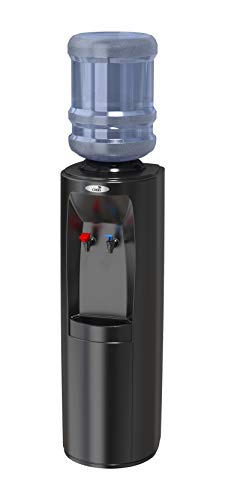
Distributors list the Atlantis under part numbers such as 504238 for the black version and 504236 for white, both sharing the BPO1SHS code. It is a top loading cooler with hot and cold taps, which means you lift the jug up and invert it over the cabinet.
Top loaders are usually the simplest to understand. There is no pump pulling the water up from below, so the design has fewer moving parts. A listing detail mentions a feature meant to limit spills during bottle changes, which is helpful in a busy room.
The cost is physical effort. Someone has to raise the jug, so it is a poor match for a team where nobody wants the job. Also check whether the seller lists the unit as bottled or plumbed, since Oasis sells both styles under similar names.
Oasis Artesian PSWSA1SHS Stainless Point of Use Hot and Cold Cooler
The Artesian PSWSA1SHS, also listed as 504540C, is a stainless steel freestanding cooler of the point of use type. Instead of taking a jug, it connects to the building’s water supply. In a busy workplace that removes the delivery contract and the storage closet.
Listings describe it with hot and cold water. A stainless cabinet resists scuffs better than painted sheet steel, which is helpful where carts and mops pass by. It is also the unit to consider if you serve a large team and want no interruptions when a jug runs out.
On the other hand, a plumbed unit needs a supply connection, possibly a licensed plumber, and a filter plan. If your lease does not allow plumbing changes, one of the bottled Oasis models is the more realistic path.
Oasis Artesian Stainless Steel Hot Cold Point of Use Water Cooler PSWSA1SHS 504540C
Brio Moderna CLBL720SC Bottom Load Water Cooler Dispenser
Brio’s Moderna line is aimed at buyers who want a cooler that looks like a designed object. The CLBL720SC is a bottom load model, and retailers also sell an ice dispensing variant with a longer code, so double check the code you add to your cart.
It makes sense for a reception desk, a showroom or a small clinic where clients see the cooler as much as staff do. The listing describes a modern cabinet and tri-temperature use, though you should confirm the exact controls on the product page.
Because it comes from a brand that sells widely to homes, it may feel lighter duty than an Oasis cabinet in a very busy kitchen. Think of it as the style led choice and read the warranty before using it in a high traffic space.
Brio Moderna Bottom Load Water Cooler Dispenser CLBL720SC
Best for Small Offices
For a team of ten to twenty, the Oasis Aquarius BAEB1SHSK covers all the common requests with its three temperatures and a hidden jug. It keeps the break room tidy, and the delivery routine stays simple.
Best for Busy Shared Kitchens
Where dozens of people refill bottles and mugs all day, the plumbed Oasis Artesian is the one that never waits for a replacement jug. Plan for filter changes and keep the maker’s service schedule near the unit.
Best for Waiting Rooms
The Brio Moderna CLBL720SC brings a softer look to a space that clients visit. Choose it when appearance matters as much as capacity, and keep spare jugs in a closet out of view.
Best for Workshops and Garages
A simple top loader such as the Oasis Atlantis BPO1SHS has fewer parts to fail, which suits a dusty workshop. Mount it on a level floor away from sawdust, spray and direct sun.
How to Choose a Commercial Grade Cooler
Begin your decision by counting people, not square feet. A cooler that serves five people can be almost any model, while one that serves fifty needs a plumbed unit or a firm routine for jug changes. Ask how many cups the busiest hour produces and compare it to the hot and cold reservoir sizes mentioned on the listing.
Decide between bottled and plumbed. A bottled cabinet needs a supplier, storage and someone who owns the job. A plumbed cabinet needs a supply line, a filter plan and maybe a drain. Facilities teams usually prefer plumbed units for large groups and bottled units for flexibility, but your lease and the money you can set aside for installation may decide the matter.
Look closely at the loading style. Bottom loading reduces lifting and keeps the jug out of sight. Top loading is simpler and has less to repair. If anyone on the team has back trouble, think carefully before choosing a top loader.
Check power and space too. Measure the doorway and the spot where the cooler will stand, and leave the clearance the manual asks for. Read the listing for hot water controls, because shared spaces need hot taps that are clearly marked and kept away from foot traffic.
Think about noise as well. A cooler in an open plan office is heard by everyone, and compressor cabinets cycle on and off through the day, so avoid placing one next to a desk. A corridor niche or a break room wall is usually kinder to the people nearby.
Finally, ask about service. A commercial brand often has a distributor who can supply parts, so find out who handles repairs before you need them.
Installation, Safety and Legal Notes
Follow the manual for assembly, bottle changes and sanitizing steps. Plumbed models should be connected by a licensed plumber who knows local code, and any electrical work beyond plugging into a suitable outlet belongs to a licensed electrician. Public buildings may have their own rules for drinking water equipment, so ask your facilities contact or your local authority. We do not know your local requirements, and we will not guess at them.
Keep the hot tap away from children and visitors, and place a sign if the building is open to the public.
Care and Troubleshooting
Make one named person responsible for the cooler. Shared appliances drift into neglect when nobody owns them, and a short checklist taped inside a cupboard door fixes that quickly. Wipe the drip tray daily in a busy room, and follow the maker’s schedule for internal cleaning. Heavy use means filters and bottle connectors wear faster, so keep spares on hand.
| Symptom | Likely area to check |
|---|---|
| Water is only lukewarm | Clearance at the back, room heat, power switch |
| Jug will not empty | Seating of the bottle, pump, tubing |
| Dripping under the cabinet | Drip tray, fittings, supply line |
| Hot tap does not work | Hot switch, lock setting, outlet |
A Site Checklist Before You Choose a Cooler
A commercial cooler works hard, so it needs the right location as much as the right model. Before comparing the Oasis Aquarius, MaxxFill Flex, Atlantis, Artesian or the Brio Moderna, walk the site with this list.
- Choose a spot with a nearby outlet that matches the cooler’s electrical needs, and check that it is not shared with heavy equipment.
- Decide whether you want bottled water or a point-of-use model that connects to a water line.
- Measure the width, depth and height available, and allow clearance at the back and sides for airflow.
- Check the floor, which should be level and strong enough for a full bottle where applicable.
- Think about traffic, so users can reach the unit without crowding a doorway or a desk.
- Plan for a drain or a drip tray position that is easy to inspect and clean.
Putting a cooler in a poor location is a common reason for dissatisfaction later, and a quick walk-through avoids most of those problems.
Mistakes That Shorten a Cooler’s Working Life
Several habits lead to avoidable trouble. Pushing the cooler against a wall without gaps can cause the unit to run hot. Skipping regular cleaning allows buildup in the reservoir and on the faucet area. Using the wrong bottle type or failing to seat a bottle properly can lead to leaks or air in the system.
Ignoring the manufacturer’s sanitization schedule is a further error, especially in shared workplaces where many people use the same dispenser. Leaving hot water settings accessible in places where children or visitors are present can be a risk, so check the unit’s safety features, such as child locks, and follow the maker’s guidance.
Finally, avoid moving a full unit without help, and do not tilt a cooler without checking the manual, since some parts need time to settle before being switched on again.
Comparing Bottle and Point-of-Use Models
| Type | Good for | Think about |
|---|---|---|
| Bottom load | Avoiding lifting a heavy bottle overhead | Space for the bottle compartment and a supply of bottles |
| Top load | Simple design and straightforward bottle changes | Lifting effort and spill risk |
| Point of use | Continuous supply from a water line | Plumbing, filters and professional installation |
| Hot and cold | Offices and kitchens with a range of drinks | Safety around hot water and electrical use |
| Tri-temp | Rooms that also want room-temperature water | Extra controls and care to learn |
Each category suits different workplaces. Think about how many people will use the unit, what they drink and how often supplies can be restocked.
Installation, Plumbing and Electrical Notes
Bottle models are plug-and-play in many cases, but point-of-use models need a water connection, and some need a drain. Water and electrical work must follow local codes and the manufacturer’s installation guide. If your plan involves tapping into a supply line, adding a filter or running a new outlet, hire a licensed plumber or electrician.
Check that the supply pressure and water quality meet the maker’s requirements, and keep records of filter changes and service. Before putting the unit into regular use, flush it as the manual instructs. Document the installation date and keep the manual and warranty in a safe location so they are easy to find for the next maintenance visit.
Cleaning and Maintenance Routines
A written routine keeps a busy cooler hygienic. Daily tasks include wiping the dispensing area and emptying and wiping the drip tray. Weekly tasks may include cleaning the exterior and checking for leaks. Periodically, follow the maker’s instructions for sanitizing the reservoir and replacing filters, with the interval depending on usage and water quality.
Assign responsibility to a named person or team, and keep a simple log with dates. Use only cleaning products approved by the manufacturer, and rinse thoroughly as instructed. If you notice an odd taste, smell or slow flow, stop and check the manual. Contact the manufacturer or an authorized service provider for repairs, and avoid opening panels on a powered unit.
Matching the Cooler to the Space
A small office, a busy shared kitchen, a waiting room and a workshop have different needs. In small offices, a compact model with simple controls may be enough. In busy kitchens, a unit that handles frequent use and has an easy-to-clean surface helps. In waiting rooms, a quiet, tidy and safe design matters. In workshops and garages, think about dust, temperature and the cooler’s tolerance for rough conditions, and check the maker’s recommended environment.
Consider also the supply chain. Bottled models need regular deliveries and storage space for spare bottles, while point-of-use models need less storage but more setup. Weigh these factors honestly before choosing.
Location and Set-Up Checklist
A heavy-use cooler works best when it is placed with traffic and servicing in mind. Walk through this checklist before the unit arrives.
- Choose a spot near a grounded outlet, and avoid running the cord across a walkway.
- Leave clearance around the back and sides so the cooling system can breathe, as stated in the manual.
- Keep the unit away from heaters, direct sun, and damp areas.
- For bottom-load models, check that you have room to lift and slide bottles in comfortably.
- Make sure the floor is level and strong enough for the weight of the cooler plus a full bottle.
Sanitizing and Upkeep Notes
Water coolers need regular cleaning to stay pleasant to use in an office or shop. Follow the maker’s cleaning schedule and approved cleaning agents, and follow official guidance on drinking water handling where you live.
- Unplug the unit before any internal cleaning.
- Wipe the dispensing area, drip tray, and exterior on a regular basis.
- Replace filters, if the model uses them, on the schedule printed in the manual.
- Keep a log of cleaning dates in a visible place.
- Report any leaks or unusual noises to a qualified service technician.
Top Load or Bottom Load: Quick Comparison
| Feature | Top load | Bottom load |
|---|---|---|
| Bottle changing | Lift overhead | Slide in at floor level |
| Look | Bottle is visible | Bottle is hidden inside the cabinet |
| Fit | Needs headroom | Needs floor space in front |
Ask the supplier about bottle delivery or filter service plans, and confirm that a spare part supply is available, because a cooler that sits broken is no help to your team.
Planning for Peak Demand, Not Average Demand
Commercial coolers rarely fail at average moments. They fail at the peaks: the start of a shift when a whole team arrives thirsty, the break window when a queue forms, the hot afternoon when a waiting room empties the cold tank faster than it can recover. Choosing and siting a cooler for those peaks, rather than for the quiet average, is the central skill in getting commercial water right.
- Count the peak, not the day: estimate how many people will want water within the busiest short window, and judge a cooler’s recovery against that burst rather than against a daily total spread evenly across hours that never happen evenly.
- Watch the queue, not the tank: if people regularly wait, shuffle and give up, the provision is undersized or badly placed, whatever the specifications say. A second, smaller unit in another spot often serves a site better than one large unit everyone must travel to.
- Hot demand has its own peak: tea rounds and morning drinks concentrate hot use into short periods. A site that runs on hot drinks needs its hot recovery judged as carefully as its cold.
- Peaks move with the calendar: summer, events, visitors and seasonal work all shift demand. A cooler that copes in spring may struggle in August, and planning should use the hardest month, not the kindest.
- Recovery is a behaviour too: staff who fill large personal bottles at the cooler during the peak drain it for everyone behind them. A gentle norm about filling big bottles at quieter times protects the queue.
Sites that think in peaks tend to buy once and settle. Sites that think in averages tend to buy twice, and to spend the interval apologising for warm water.
Hygiene in Shared Spaces: the Unwritten Specification
In a workplace, a cooler is a shared food surface, and it should be managed like one. Hands touch the taps, cups and bottles touch the outlets, and the drip tray collects whatever misses. None of this is a reason for alarm; it is a reason for a routine, visibly kept, that staff and visitors can trust.
Assign the routine to a named role rather than to everyone in general, which in practice means no one. The tasks are small: wiping taps and touch points with a suitable cleaning method on a regular schedule, emptying and washing the drip tray before it becomes unpleasant, checking the bottle store, and keeping cups, where provided, clean, dry and sensibly stored rather than stacked damp beside the machine. A simple log on the wall or in a facilities folder, initialled when done, turns hygiene from an assumption into a record.
Placement supports hygiene more than effort does. A cooler beside a bin encourages people to linger and discard; a cooler crammed against a wall cannot be cleaned behind; a cooler in a dusty workshop area needs more frequent attention than one in an office. Where food is prepared or clinical work happens nearby, local rules may govern what can stand where, and those rules outrank convenience every time.
Finally, communicate. A small sign with the cleaning schedule, the person responsible and what to do if the bottle runs out or the machine misbehaves prevents both neglect and improvisation. Shared equipment fails socially before it fails mechanically, and clear ownership is the fix for both.
Bottles, Storage and Deliveries: the Logistics Behind the Cooler
For bottled commercial models, the cooler itself is only half the system. The other half is a flow of heavy bottles arriving, being stored, being swapped and being taken away, and sites that plan that flow find the cooler effortless, while sites that improvise it find bottles in corridors, empties in fire exits and swaps that nobody wants to perform.
- Storage near, but not in the way: full bottles should live close to the cooler on a firm, shaded surface, close enough that swapping is a short carry, far enough that they never narrow a walkway or an exit route.
- A standing delivery rhythm: agree quantities and timing with the supplier based on the peak weeks, and review after the first busy season rather than discovering the pattern by running dry.
- Empties have a home too: a defined spot for empty bottles awaiting collection keeps them out of offices and cupboards, and makes the supplier’s visit quick.
- Who swaps, and how: bottle changing is a manual handling task. Name who does it, make sure they know a safe lifting method, and treat a bottom-loading model as a legitimate accessibility choice where lifting is a concern.
- A buffer for the unexpected: one spare bottle beyond the expected need absorbs a late delivery, a hot week or a site event without a dry cooler and a round of complaints.
Point-of-use models trade this logistics for plumbing and filtration, which is why the comparison elsewhere in this guide matters. The honest question is which ongoing burden the site is better organised to carry: bottles and storage, or installation and filter care.
Accessibility and Considerate Placement
A commercial cooler serves everyone who uses the building, including people the buyer may never have pictured at it: wheelchair users, visitors with limited grip strength, children in waiting areas, staff carrying items, and people who simply cannot lift, reach or see as easily as the person who chose the machine. A few placement decisions decide whether the cooler genuinely serves them.
Approach space comes first. A cooler tucked behind a door or at the end of a narrow gap may be technically present and practically unusable for anyone who needs room to manoeuvre. Tap height and the force needed to operate the taps matter next; controls that require a strong pinch or a two-handed squeeze exclude more people than designers expect. Where a choice exists between models, trying the taps with accessibility in mind is a fair and simple test.
Hot water needs its usual respect, sharpened in public settings. Locks should be used as designed, signage should be clear where a site serves children, and the hot side should never be the easiest tap for a small hand to reach by accident. Drips and small spills are also an accessibility issue: a cooler that leaves the floor in front of it wet creates a hazard exactly where people stand still and concentrate on a tap. A tray that is emptied, a mat where appropriate and prompt attention to leaks keep the area safe.
None of this requires specialist equipment. It requires the buyer to spend two minutes standing at the proposed spot imagining the full range of people who will use it, which is time well spent before the unit is plumbed, loaded or fixed in place.
Downtime, Faults and the Backup Plan
Even the best commercial cooler will occasionally be out of action: a fault, a late delivery, a plumbing issue or a deep clean. Sites that have thought about that day in advance treat it as a minor inconvenience. Sites that have not discover how completely a workplace depends on water it never thinks about.
- Know the first checks: power, switches, bottle seating and obvious leaks resolve a large share of apparent failures. A laminated card near the machine, listing those checks and the service contact, prevents both panic and well-meant tinkering.
- Keep the service route clear: record who supplies the unit, who services it and what the arrangement covers, in the same place as other facilities contacts. Hunting for a supplier’s number while a cooler leaks is a self-inflicted problem.
- Have a water fallback: a kettle, a stored spare bottle for a plumbed unit’s downtime, or a simple arrangement with a nearby kitchen covers short gaps without drama.
- Isolate safely when needed: anyone responsible for the machine should know how to switch it off and, for plumbed models, where its water supply can be turned off. That knowledge should not live in one person’s head.
- Log recurring faults: a note of dates and symptoms turns a vague complaint into evidence a service engineer can act on, and reveals when a unit is asking to be replaced rather than repaired again.
The goal is not to expect failure. It is to make failure boring, handled by a card, a contact and a kettle, while the repair takes whatever time it takes.
End of Life, Moves and Handing Over
Commercial coolers outlast office layouts, leases and sometimes the businesses that bought them, so the end of a cooler’s time at a site deserves the same order as its arrival. Whether the occasion is an upgrade, a relocation or a closure, a planned handover avoids the familiar outcome of a machine abandoned in a corridor, still holding water.
Drain and clean the unit before it moves, following the maker’s instructions, and transport it upright where the design requires it. Bottles, full and empty, belong to a supply arrangement that should be closed or transferred explicitly, so deliveries stop arriving at an empty unit and empties are collected rather than inherited by the next occupant. For plumbed models, the supply should be isolated and capped properly by someone qualified, not merely switched off and forgotten behind the machine.
Pass the paperwork on. Manuals, service history and any warranty or contract details are worth real money to whoever takes the unit next, and worth nothing in a drawer that is being cleared. If the cooler is being retired entirely, ask the supplier or local authority about appropriate disposal or recycling routes for appliances of this type, since refrigeration components are not ordinary waste in many places.
Handled this way, the whole life of the machine, from the peak-demand planning at purchase to the logbook of its cleaning years later, reflects the same principle this guide has applied throughout: commercial water provision succeeds on organisation, and the cooler is simply where that organisation becomes visible.
Zoning: Where Multiple Coolers Beat One Large One
Larger sites face a choice that smaller ones never meet: one prominent cooler, or several distributed where people actually are. The distributed answer wins more often than buyers expect, because water provision is a walking-distance business. A cooler that requires a corridor, a staircase and a queue is a cooler that staff quietly replace with a personal bottle filled at home, and the investment sits underused in the wrong place.
- Follow the natural pauses: coolers belong where breaks already happen: kitchens, break rooms, reception edges and the ends of long floor plates. Placed there, they join a routine instead of demanding a detour.
- Match the unit to the zone: a busy shared kitchen may justify the strongest model in this guide, while a small satellite office or a meeting floor needs only a modest unit that will be used gently.
- Keep the system uniform where you can: zones served by the same bottle type and similar machines simplify deliveries, swaps and the instructions that accompany them.
- Do not forget visitors: a waiting area cooler serves people who cannot be directed to a staff kitchen. Its hygiene and presentation standards are the public face of the site.
- Review after occupation: the right zones reveal themselves once a building is in use. A cooler that nobody passes should be moved without sentimentality; the plan serves the people, not the reverse.
Zoning also spreads risk. One unit out of action among several is a minor rerouting of thirsty people; a single central unit out of action is a site-wide complaint by mid-morning.
Cups, Personal Bottles and the Culture Around the Cooler
What people drink from shapes a cooler’s life as much as the machine itself. Disposable cups are simple and hygienic but generate a constant stream of waste and a recurring supply task, and they need a bin beside the cooler that is emptied as part of the same routine. Reusable cups and personal bottles remove the waste and the errand, and introduce their own etiquette.
The rule that matters most with personal bottles is contact: the mouth of a bottle should never touch the tap or outlet. A cooler used by dozens of people stays hygienic when each person’s container stays their own, and a small sign expressing that expectation, placed where it will be read while filling, is standard practice in well-run sites. Filling large bottles at quiet times, mentioned earlier in this guide, belongs to the same culture of consideration.
Where cups are provided, store them protected from dust and splashes, replenished by the same named person who owns the cleaning routine. Where a site provides neither cups nor encouragement, visitors and new staff are left improvising with whatever is at hand, which serves nobody. The cooler is a small piece of workplace culture made visible: organised, considerate provision tells people the site is run with care, and the opposite is equally eloquent.
What Good Looks Like: a Well-Run Cooler, Described
It can help a buyer or facilities manager to hold a picture of the finished state in mind, since commercial water provision is a system rather than a purchase. A well-run cooler stands level in a sensible place with air around it, its taps clean, its drip tray empty and washed, and a bottle in service with a filled spare stored neatly nearby. The cleaning log is current. A small sign names the responsible person and the service contact. The floor in front is dry.
Behind that picture sits an equally tidy arrangement: deliveries arriving on a rhythm matched to real use, empties collected from their proper place, a service route that has been used at least once and therefore is known to work, and a record of the machine’s age and history that makes the eventual repair-or-replace decision a matter of reading rather than guessing. Staff use the cooler without thinking about it, which is the true measure of success, and visitors form a good impression without knowing why.
None of the elements in that picture is expensive or difficult. They are the compound interest of the small decisions this guide has covered: choosing for peaks, placing for people, naming an owner, and keeping the routine. A commercial grade cooler, the subject of all this organisation, is simply the machine sturdy enough to reward it.
Buying for a Sector: Notes for Particular Settings
Different workplaces load a cooler in characteristically different ways, and a buyer who recognises their sector’s pattern can weight the criteria in this guide accordingly.
- Offices: demand peaks at arrival, lunch and the afternoon slump; hot water matters where tea culture is strong. Quiet running counts near desks, and presentation counts near meeting rooms.
- Healthcare and care settings: hygiene routines and local rules dominate every other consideration, and placement, cleaning responsibility and cup arrangements should be settled with whoever owns those standards on site.
- Workshops, warehouses and garages: dust, knocks and thirsty physical work define the duty. Sturdiness, easy wiping and generous cold recovery matter more than elegance, and the cooler should stand where it is visible but out of the path of vehicles and materials.
- Schools and youth settings: supervision, hot water safety and robust taps lead the list, alongside placement that avoids corridor congestion at break times.
- Hospitality and waiting areas: appearance and silence carry unusual weight, since the cooler is part of the welcome. A machine that looks neglected undermines the room around it.
- Gyms and sports settings: cold volume and fast, hygienic filling of personal bottles dominate, and floor drainage and slip awareness around the unit deserve explicit thought.
The models in the shortlist distribute their strengths across exactly these patterns, which is why the guide resists naming a single winner. The right commercial cooler is the one whose strengths meet your sector’s ordinary day.
The Decision, Compressed
For the buyer who has read this far and wants the whole argument on one card: decide bottled or plumbed by the logistics your site can genuinely sustain. Size the provision for the busiest short window of the hardest month, not the average day. Place the unit where people already pause, with air around it, a level floor beneath it and everyone, including visitors and wheelchair users, able to reach it. Choose the model whose strengths match your sector’s pattern, using the maker’s own details to confirm the fit. Then, before the first bottle is opened, name the person who owns the routine, write the cleaning schedule down, and record the service contact where it can be found.
Do those things and the cooler will repay the organisation for years, in the unremarkable currency of cold water on hot days, hot water on busy mornings and an appliance nobody ever has to discuss. In commercial settings, that silence is the sound of a purchase made properly.
Reviewing Provision After the First Season
The wisest step in commercial water provision happens a few months after installation, when the first busy season has tested every assumption made at purchase. A short, honest review at that point converts the guesses in the original plan into knowledge, and it is the step most often skipped by sites that go on to struggle with the same problems for years.
The review asks simple questions with observable answers. Did the cooler keep up at the peaks, or did queues and warm glasses appear, and at what times? Is the unit where people actually pause, or has an informal pattern formed around a different spot? How did the bottle rhythm hold: were deliveries well matched, did the store ever overflow or run dry, and did the named owner of the routine find it workable or quietly hand it to someone else? What did the cleaning log actually look like against the schedule on paper?
Each answer has a proportionate response. A peak problem may need a second unit in a new zone rather than a bigger replacement for the first. A location problem is solved by moving the machine, not by exhorting people to walk further. A logistics problem belongs in a conversation with the supplier. A routine problem belongs in a clearer assignment of responsibility. What the review should not produce is resignation: every one of these faults is organisational, and organisational faults can be fixed in a week.
Sites that build this review into their facilities calendar, alongside other seasonal checks, find that water provision quietly stops generating comments at all. That silence, earned by one honest look back, is the final proof that the cooler, the placement and the system around them were chosen as this guide recommends: for the real building, the real peaks and the real people who use it every day.
Procurement Notes: Reading the Commercial Offer Carefully
Commercial buyers are often choosing not only a machine but an arrangement around it: supply, rental, service cover or outright purchase, and the distinctions matter more over a machine’s life than small differences between models. Reading any offer well means separating three questions that sellers naturally blend. What exactly is the machine, and does it match the shortlist criteria in this guide? What happens when it faults: who attends, how quickly, and is a temporary replacement part of the arrangement? And what is the ongoing obligation: bottle supply terms, service intervals, and the conditions under which the arrangement can be changed or ended?
None of these questions requires suspicion; they require the same clarity this guide has applied to hygiene rotas and delivery rhythms. An arrangement that answers all three plainly, in writing, is the commercial equivalent of a well-run cooler: organised, owned and boring in the best sense. An arrangement that is vague about the second and third questions will be paid for later in downtime and disputes, whatever the machine’s virtues. Facilities buyers who keep a one-page record of the answers, filed with the cleaning log and service contacts, give their successors the rarest gift in building management: a system that can be understood in five minutes by someone who was not there when it was bought.
Frequently Asked Questions
What makes a cooler commercial grade?
There is no official definition. It usually means a brand that supplies offices and institutions, with parts and service channels behind it.
Is a bottled or a plumbed cooler better for an office?
Plumbed units remove jug handling, while bottled units need no plumbing. Choose by headcount, space and lease terms.
How many people can one cooler serve?
That depends on reservoir size and habits. Compare the listing’s capacity with your busiest hour.
Can a commercial cooler sit in a home kitchen?
Yes, though it is bigger than most households need. Measure the space first.
Who should install a plumbed cooler?
A licensed plumber is the safest route, and the maker’s manual must be followed.
Do I need to wipe the cooler if it has a cleaning feature?
Yes. Spouts, trays and the exterior still collect residue in heavy use.
Bottom Line
For most workplaces the Oasis Aquarius BAEB1SHSK is the balanced pick, and the Oasis Artesian PSWSA1SHS is the one to choose if you can connect to a water line. Pick the Brio Moderna CLBL720SC when appearance matters, and the Atlantis when you want a simple top loader. Confirm the code on the listing, then read the manual before first use.