A compressor ice cream maker has its own freezer, so you do not need to pre-freeze a bowl. You pour in a chilled base, turn it on, and it churns and freezes in one machine.
The six machines below range from a countertop Cuisinart to Italian gelato machines. Size, bowl capacity and weight differ a lot, so check the listing for dimensions before ordering. Compressor machines cost more than bowl-style makers and take up real counter space, so think about how often you will really churn. They shine when you want to make several flavors in one afternoon or decide on a whim. Cold, well-chilled bases give smoother results, and many recipes call for an overnight rest in the fridge before churning. Let the machine stand upright for a while after moving it, as makers often advise, so the compressor settles before use. We have not used these products ourselves, so please confirm sizes, materials and what is included on the current listing before buying.
As an Amazon Associate we earn from qualifying purchases. Links below are affiliate links, and they do not change the product information we give.
What to Look For
| Feature | Why it matters |
|---|---|
| Compressor | A built-in compressor freezes the bowl, so you can make back-to-back batches |
| Capacity | Check the quart size on the listing |
| Bowl | A removable bowl makes cleanup easier |
| Footprint | Compressor machines are heavy and large |
In this guide
Specs at a Glance
| Product | Type | Best for | Notes |
|---|---|---|---|
| Cuisinart ICE-100 | Compressor | Everyday batches | Timer and motor |
| Whynter ICM-201SB | Compressor | Quick batches | Stainless exterior |
| Whynter ICM-15LS | Compressor | Compact use | Smaller footprint |
| Breville Smart Scoop | Compressor | Customized texture | Sensing hardness settings |
| Lello Musso Lussino 4080 | Compressor | Gelato lovers | Italian build |
| Lello Musso Pola 5030 | Compressor | Larger batches | Gelato style |
The 6 Best Compressor Ice Cream Makers

Top pickBest for everyday batches
1. Cuisinart ICE-100 Compressor Ice Cream and Gelato Maker
A popular countertop compressor machine with a timer and a removable bowl, aimed at home ice cream and gelato. Check the current listing for the exact size and what is included before you order.
Suits: everyday batches. Strengths: no pre-freezing. Weaknesses: large and loud. Skip it if you have little counter space.
View Cuisinart ICE-100 on Amazon
Best for quick batches
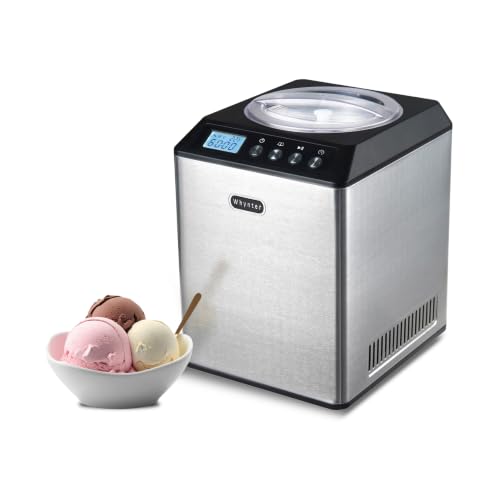
2. Whynter ICM-201SB Automatic Ice Cream Maker
A stainless steel compressor machine with a removable bowl and a timer, well known among home ice cream makers. Check the current listing for the exact size and what is included before you order.
Suits: quick batches. Strengths: a stainless body and automatic freezing. Weaknesses: heavy to move. Skip it if you want a lightweight machine.
View Whynter ICM-201SB on Amazon
Best for compact use
3. Whynter ICM-15LS Ice Cream Maker
A smaller-capacity compressor machine from Whynter for tighter spaces. Check the current listing for the exact size and what is included before you order.
Suits: compact use. Strengths: a smaller footprint. Weaknesses: less capacity. Skip it if you make big batches.
View Whynter ICM-15LS on Amazon

Best for custom texture
4. Breville Smart Scoop Ice Cream Maker
A compressor machine with sensors that adjust to the hardness you choose. Check the current listing for the exact size and what is included before you order.
Suits: custom texture. Strengths: hardness settings. Weaknesses: a higher price tier. Skip it if you want a simple machine.
View Breville Smart Scoop on Amazon

Best for gelato lovers
5. Lello Musso Lussino 4080 Ice Cream Maker
An Italian compressor machine with a stainless steel build and a bowl in the 1.5-quart class, popular for gelato. Check the current listing for the exact size and what is included before you order.
Suits: gelato lovers. Strengths: a premium build. Weaknesses: high price tier. Skip it if you want a budget option.
View Lello Musso Lussino on Amazon
Best for larger batches
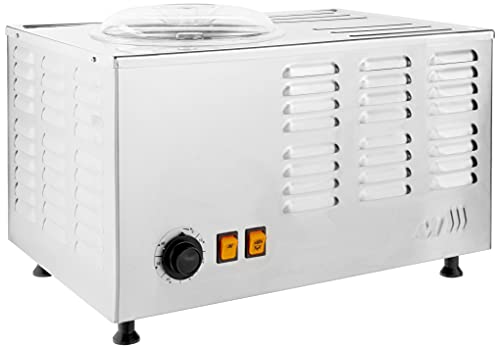
6. Lello Musso Pola 5030 Ice Cream Maker
A larger Lello gelato machine with a compressor, suited to bigger batches. Check the current listing for the exact size and what is included before you order.
Suits: larger batches. Strengths: greater capacity. Weaknesses: heavy. Skip it if you want a small machine.
View Lello Musso Pola on Amazon
Care and Setup
- Freeze the base overnight in the fridge first.
- Wash the bowl and paddle by hand.
- Wait before restarting after a batch.
- Keep the vents clear for the compressor.
Mistakes to Avoid
- Moving the machine right after use.
- Using a warm base.
- Overfilling the bowl.
- Ignoring the weight.
Is a Compressor Machine Worth It for You?
A built-in compressor is a real convenience, but it is also a real commitment of money and space, so it is worth asking honestly whether you will use it enough. The big advantage is that there is no bowl to pre-freeze. You can decide in the afternoon that you want ice cream after dinner, pour in a chilled base and have a finished batch without planning a day ahead. You can also run batch after batch, which suits entertaining, testing recipes or making several flavors in one session.
The downsides are weight, size, noise and cost. Compressor units are heavy and take up permanent counter space or a cabinet that can hold them. They hum while running, and many people find them louder than a bowl-style machine. If you only churn a few times a year, a freezer-bowl or attachment model may be enough, and the money saved can go toward good ingredients.
- Choose a compressor machine if you make ice cream or gelato regularly and want freedom from planning.
- Choose it if you like to make multiple flavors in a single day.
- Skip it if you have little storage space or churn only occasionally.
The six machines here share the compressor feature, so the rest of the decision rests on capacity, texture control, build and how much you want to spend. Check the listing for exact dimensions and weight, and think about where the machine will live between uses. If you must lift it in and out of a cupboard every time, you may stop using it.
Capacity and Batch Planning
Capacity is listed in quarts or liters, and it describes the bowl size, not how much finished ice cream you will get. Ice cream expands as it is churned, because air is whipped in, so you should fill the bowl only to the level the maker recommends, often leaving room for the volume to grow. Overfilling is one of the mistakes in the post and can leave a base that spills or freezes unevenly.
Think about how much you want to make at a time. A smaller bowl is fine for one or two people and for testing flavors without wasting ingredients. A larger bowl suits families and parties, but it takes a bigger base and more time to chill. Some larger machines churn a bigger batch but are also heavier and more expensive. The Lello Pola in this list is described as suited to larger batches, while the Whynter ICM-15LS is a smaller option.
Plan batches around your freezer too. A fresh batch is soft, and most people transfer it to a container and harden it in the freezer for a while. Check that you have a freezer shelf for storage containers. If you will make multiple flavors back to back, have clean containers ready and a way to keep the bowl from absorbing flavors, such as washing it between batches. Some machines have a keep-cool function that holds the finished batch at a low temperature for a period; check the listing for whether this is included.
Texture Controls, Timers and Settings
Machines differ in how much control they give. Basic models run on a timer and a start button, leaving you to decide when to stop. That is fine once you learn how long your recipe takes to set. Others have sensing features that adjust to the firmness you want, as described for the Breville in the list, which can help beginners get consistent results. More hands-on controls suit people who like to experiment with soft-serve consistency, sorbets or gelato, which typically has a denser texture than ice cream.
Check what the machine offers for pre-cooling. Some units let you cool the empty bowl before pouring in the base, which improves the result since the base starts freezing at once. Look for a timer that can run long enough for your recipes and a shutoff that stops the paddle if the mixture is too hard, protecting the motor. Check the listing for whether the paddle is metal or plastic, and whether it can be removed for washing.
- Look for a clear window or lid you can open to check progress.
- Check if the machine has a pause or continue option.
- Read the manual for the maker’s guidance on churning times for different recipes.
For gelato and sorbet, check whether the machine is suited to dense mixtures, since they can be harder on the motor. The listing or manual should say what recipes it is intended for.
Base Preparation and Recipe Tips
A good machine still needs a good base. Chill the base thoroughly in the refrigerator before churning, ideally overnight, since a cold base freezes faster and gives a smoother result. The post tells you to chill first, and that advice holds for custard bases made with eggs, which should be cooked gently and cooled before you start. If you are using raw eggs, be aware of food safety, and follow guidance from a reliable source for your region.
Fat and sugar affect texture. Too little fat tends to give an icier result, and too much sugar can keep the mix soft and slow to freeze. Alcohol also lowers the freezing point, so add it in small amounts. Mix-ins like chocolate chips, nuts or cookie pieces should go in near the end of the cycle so they do not break down or clog the paddle.
Strain custard bases to remove any cooked egg bits, and add flavorings like vanilla or fruit puree after chilling for fresher taste. For fruit sorbets, make sure the puree is cold and fully blended. Taste the base before churning, because freezing dulls sweetness and flavors, so a base that tastes slightly sweet often ends up balanced. Write down your recipes and the results so that you can adjust ratios and get consistent batches. When ingredient prices matter, you can start with simple recipes before trying complex ones.
Cleaning, Placement and Care
Compressor machines need room to breathe. Place the unit on a flat, stable surface with the recommended clearance around the vents, as the post notes to keep vents clear. Do not push it tight against a wall or cram it into a cabinet while it is running. After moving the machine, many makers recommend letting it stand upright for a period before you start it, so the refrigerant settles. The post lists moving the machine right after use as a mistake, so check the manual for the waiting time.
Wash the bowl, paddle and lid by hand with warm soapy water, as the post advises, and dry them fully. Do not put the bowl in the dishwasher unless the manual says it is safe. Wipe the inside of the freezing chamber with a damp cloth once it has warmed and dried, being careful not to scratch it. Keep the exterior clean, and wipe spills quickly. Check the power cord and plug for damage.
Over time, watch for signs that something is wrong: the bowl is not getting cold, the paddle stalls with normal bases, the machine makes unusual noises, or it shuts off early. Check the manual’s troubleshooting steps first, and then contact the maker or seller. Look at the warranty terms before buying, because a heavy appliance with a compressor can be expensive to repair or ship. If you store it for a long period, clean and dry it fully so no odors develop.
Compressor Ice Cream Maker FAQ
What does a compressor do?
It chills the bowl, so no pre-freezing is needed.
Is it better than a pre-freeze bowl?
It is more convenient but larger and costs more.
How long does a batch take?
Check the listing. Most take under an hour.
Do I need to wait between batches?
Many machines can run back-to-back after a short rest.
Do compressor ice cream makers make gelato as well?
Many can, since they chill the bowl consistently, and some are marketed for gelato. Gelato is denser than ice cream, so check the listing or manual for whether the machine is meant for it.
How long should I wait between batches?
Many machines allow back-to-back batches after a short rest, as the post notes, but the time varies. Check the manual and wash the bowl and paddle between flavors.
Why is my ice cream icy?
Common causes include a base that was not cold enough, too little fat or too much water, or freezing too slowly. Chill the base thoroughly and review your recipe's ratios.
Can I leave finished ice cream in the machine?
Some models have a keep-cool function, but it is meant for short periods. For longer storage, move the ice cream to a covered container in the freezer.
Are compressor machines noisy?
They tend to be louder than freezer-bowl styles because of the compressor and motor. Check recent customer feedback for noise comments on the model you like.
What should I do before first use?
Read the manual, wash the removable parts, and let the machine stand upright for the time the maker recommends before turning it on. Place it on a level surface with clear vents.
Can I make dairy-free ice cream in these machines?
In general yes, if the base has enough fat and solids to freeze smoothly. Results vary by recipe, so start with a proven recipe and adjust.
Ice Cream, Gelato, Sorbet and Frozen Yogurt: What Each Needs
A compressor machine can make several frozen desserts, but each style asks different things of the base and the churn. Ice cream is typically a custard or cream-based mixture with a moderate amount of air whipped in during churning. Gelato uses more milk than cream, is churned more slowly and takes in less air, giving a denser, silkier texture. Sorbet is fruit, sugar and water with no dairy, and frozen yogurt sits somewhere between.
Machines with a gelato mode or an adjustable paddle speed give you more control, but you can get good results from a basic setup by adjusting your recipe. Sorbet, in particular, depends heavily on sugar balance: too little and it freezes hard, too much and it never sets.
- Custard-based ice cream rewards a thorough chill of the base before churning.
- Gelato tends to be served slightly warmer than ice cream, so soften it before scooping.
- Sorbet benefits from a smooth, well-strained puree with enough sugar for softness.
- Frozen yogurt works best with a full-fat yogurt base, which resists iciness.
If you want to make several styles, look for a machine with a removable bowl or good paddle design and enough power to handle thicker mixtures without stalling.
Mix-Ins, Swirls and Adding Flavor
Mix-ins make a home batch special, but timing matters. Chocolate chips, cookie pieces, nuts and candy should go in near the end of the churn, when the ice cream is thick enough to hold them. Adding them too early can crush them or leave them stuck to the paddle. Some machines have a mix-in chute or a lid opening for this purpose, while others require you to open the lid briefly.
Chill your mix-ins first. Warm pieces melt the surrounding ice cream and create ice crystals. For ripples such as caramel or fruit sauce, layer them into the container as you transfer the finished ice cream rather than churning them in.
- Cut large pieces small so they do not jam the paddle.
- Toast nuts and let them cool completely before adding.
- Use alcohol sparingly, since a splash lowers the freezing point and can keep the batch soft.
Flavor also changes when frozen. Cold dulls sweetness and aroma, so a base that tastes right at room temperature may taste mild once frozen. Season slightly bolder than you think you need.
Hardening, Scooping and Storing the Finished Batch
Straight from the machine, ice cream has a soft-serve texture. Many people enjoy it that way, but if you want scoopable ice cream you need to harden it in the freezer for a few hours. Transfer it to a shallow, airtight container and press parchment or plastic wrap against the surface to limit ice crystals and freezer odors.
Homemade ice cream has no commercial stabilizers, so it hardens more firmly and keeps best within a couple of weeks. Let it sit on the counter for a few minutes before scooping, or run a spoon under warm water. A narrow, deep container produces harder ice cream than a shallow one because the surface-to-volume ratio changes, so choose a container that fits your habits.
- Label the container with the flavor and date.
- Store at the back of the freezer, away from the door, where temperature swings are smaller.
- Do not refreeze ice cream that has fully melted.
Where a Compressor Machine Lives in Your Kitchen
These machines are bulkier than bowl-style makers. They need a flat, stable surface, a nearby outlet and clearance around the vents so the compressor can shed heat. Check the dimensions and weight in the listing, and plan where it will sit and whether you can move it easily. If you will store it in a cabinet between uses, measure the shelf height.
Let the machine rest upright for a period after moving it, since tilting a compressor can shift the oil. Many manufacturers recommend waiting several hours before starting after transport, so check the manual. Keep it away from direct sunlight and heat sources, which make it work harder.
- Leave open space on the sides and back for ventilation.
- Wipe the exterior and check the vents occasionally for dust.
- Keep the power cord out of the way of spills and splashes.
Noise is worth thinking about as well. A compressor makes a humming sound similar to a small refrigerator, and the paddle adds a low motor sound during churning. In an open-plan living space this can be noticeable for the thirty minutes or so a batch takes, so consider running it when the household is busy or placing it where the sound will not interfere. Power draw is modest for a countertop appliance, but avoid sharing an outlet with other high-draw devices such as a microwave or kettle, which can trip a breaker.
Lastly, keep the instruction manual handy. Details such as pre-cooling time, minimum and maximum fill lines and recommended rest periods vary by model, and following them protects both the machine and the texture of your ice cream.
Related guides
- 6 Best Electric Ice Cream Makers for Home
- 6 Best Home Ice Cream Makers with Compressor (2026)
- 6 Best Ice Cream Makers for Home Use (2026)
Frequently Asked Questions
Can I make sorbet in a compressor ice cream maker?
Yes, most machines handle sorbet well. Use a smooth, strained fruit puree with enough sugar to keep the texture soft, and chill the base before churning. Sorbet comes out of the machine as a soft slush and firms up in the freezer. Check your manual for any limits.
When should I add mix-ins to ice cream?
Add them in the last minute or two of churning, once the ice cream is thick. Chill them first so they do not melt the base. Large chunks should be chopped small to avoid jamming the paddle. Swirls like caramel are better layered in by hand after churning.
How long does homemade ice cream last in the freezer?
Homemade ice cream is best within about one to two weeks, since it lacks commercial stabilizers and develops ice crystals over time. Store it in an airtight container with plastic pressed on the surface, and keep it toward the back of the freezer.
Why is my homemade ice cream too hard to scoop?
Homemade batches harden more than store-bought because they have less air and no stabilizers. Let the container sit at room temperature for several minutes, use a warm scoop, and consider adjusting sugar or adding a small amount of alcohol or corn syrup in future batches to keep it softer.
Matching a Compressor ice cream maker to the Way You Actually Work
Plenty of guides stop at listing features, but choosing a compressor ice cream maker well means matching it to the rhythm of your home kitchen. The picks above were selected for different kinds of users, and the differences between them matter most once the equipment is part of a daily routine rather than a novelty. This section walks through the situations these products actually live in, so you can place your own needs alongside them and see which end of the list deserves your closest attention.
Picture a family kitchen, where ice cream is a weekend project and the machine must turn out batch after batch through the summer. When demand arrives in a rush rather than a trickle, the gap between a well-matched choice and a merely adequate one becomes obvious, because there is no spare minute to work around an awkward routine. Think about who is standing in front of the equipment at that moment, how much guidance they have had, and what happens to the line of people waiting behind them. When you read the reviews above with that picture in mind, the right shortlist usually becomes obvious: look for the pick whose strengths line up with the busiest, least forgiving version of your routine, not the quietest one.
Picture a keen home cook’s kitchen, where gelato, sorbet and frozen yoghurt are all in rotation and texture control is the whole point. Consistency matters more here than novelty. The option that produces a dependable result on an ordinary Tuesday, with ordinary supplies and a tired operator, will serve you better than one that only shines when everything is done perfectly. Build the routine around the busiest realistic day, not the quietest one. When you read the reviews above with that picture in mind, the right shortlist usually becomes obvious: look for the pick whose strengths line up with the busiest, least forgiving version of your routine, not the quietest one.
Picture a household that entertains, where dessert for a dinner party is planned around a machine that needs no pre-frozen bowl. It also helps to picture the unglamorous moments: refilling, wiping down, emptying, and explaining the process to someone new. A choice that makes those small tasks quick and obvious will be used properly far more often than one that depends on everyone remembering a long list of exceptions. When you read the reviews above with that picture in mind, the right shortlist usually becomes obvious: look for the pick whose strengths line up with the busiest, least forgiving version of your routine, not the quietest one.
How the Picks Compare in Day-to-Day Use
Specifications only tell half the story with compressor ice cream makers. The other half is emphasis: each pick in this guide leans in a different direction, and the reviews above describe those leanings in terms of who each one suits. The comparisons below draw only on those stated strengths, and they are meant to help you choose between neighbouring picks on the list rather than to crown an overall winner.
Set the Cuisinart ICE-100 beside the Whynter ICM-201SB and the trade-off is one of emphasis. The guide above puts the Cuisinart ICE-100 forward for everyday batches, while the Whynter ICM-201SB is the one it highlights for quick batches. If your routine matches the first description, the Cuisinart ICE-100 will feel like the natural fit from the first week; if the second sounds more like your home kitchen, start with the Whynter ICM-201SB instead. In practice, the deciding factor is rarely a single headline feature. It is the accumulation of small things: how intuitive the controls feel to a first-time user, how forgiving the process is when supplies vary, and how much attention the cleanup demands at the end of a long day. Read the two full reviews above back to back with your own routine in mind, and note which review’s cautions sound like problems you would actually meet.
Set the Whynter ICM-15LS beside the Breville Smart Scoop and the trade-off is one of emphasis. The guide above puts the Whynter ICM-15LS forward for compact use, while the Breville Smart Scoop is the one it highlights for custom texture. If your routine matches the first description, the Whynter ICM-15LS will feel like the natural fit from the first week; if the second sounds more like your home kitchen, start with the Breville Smart Scoop instead. Think about the operator as much as the equipment. A confident, experienced user can coax the best from a more hands-on option, while a rotating cast of beginners usually does better with the choice that makes the correct routine the easy routine. Read the two full reviews above back to back with your own routine in mind, and note which review’s cautions sound like problems you would actually meet.
Set the Lello Musso Lussino 4080 beside the Lello Musso Pola 5030 and the trade-off is one of emphasis. The guide above puts the Lello Musso Lussino 4080 forward for gelato, while the Lello Musso Pola 5030 is the one it highlights for larger batches. If your routine matches the first description, the Lello Musso Lussino 4080 will feel like the natural fit from the first week; if the second sounds more like your home kitchen, start with the Lello Musso Pola 5030 instead. Also weigh what happens on the second and third use of the day, not just the first. Heat, residue, and simple fatigue all change the picture, and the option that stays consistent across repeated use is usually the one people end up recommending to each other. Read the two full reviews above back to back with your own routine in mind, and note which review’s cautions sound like problems you would actually meet.
One final filter applies across the whole list: support and consumables. Whichever compressor ice cream maker you choose, you will live with its supplies, its cleaning routine and its maker’s support for years. A pick that is slightly less exciting but easy to feed, clean and get help with will usually make its owner happier than a more dramatic choice that fights the routine at every step.
Setup and a Routine That Gets Consistent Results
Good results with a compressor ice cream maker are mostly a matter of routine. The steps below describe a sensible order of work that applies whichever pick from this guide you end up with; adapt the details to your manual, but keep the order, because each step sets up the next.
Step: Chill the base thoroughly before it goes into the machine, ideally overnight. Take a moment at this stage rather than rushing, because small shortcuts early on tend to surface later as inconsistent results that are hard to diagnose. If something looks or feels off, it is far easier to correct it now than after the process is fully under way. Done consistently, this step stops being something you think about and becomes simply how the job is done in your home kitchen, which is exactly where reliable results come from.
Step: Set the machine running and let the bowl or compressor get cold before adding the base if the maker directs it. This is also the point where a simple habit pays off: keep the supplies for this step in one place, in the order you use them. Fumbling around mid-task is how mistakes creep in and how a routine that should feel easy starts to feel like a chore. Done consistently, this step stops being something you think about and becomes simply how the job is done in your home kitchen, which is exactly where reliable results come from.
Step: Add mix-ins at the end of churning, when the ice cream can hold them. If more than one person will be doing this, agree on one shared way of handling this step and write it down where the work happens. Consistency between operators matters more than any individual’s personal twist on the technique. Done consistently, this step stops being something you think about and becomes simply how the job is done in your home kitchen, which is exactly where reliable results come from.
Step: Judge doneness by texture: it should be thick and soft-serve like when you stop. Notice what a good result looks like at this stage and use it as your reference next time. Building that mental picture is how beginners become reliable, and it is the fastest way to spot when something has changed and needs attention. Done consistently, this step stops being something you think about and becomes simply how the job is done in your home kitchen, which is exactly where reliable results come from.
Step: Transfer to a chilled container, smooth the top, cover the surface and freeze to firm up. Take a moment at this stage rather than rushing, because small shortcuts early on tend to surface later as inconsistent results that are hard to diagnose. If something looks or feels off, it is far easier to correct it now than after the process is fully under way. Done consistently, this step stops being something you think about and becomes simply how the job is done in your home kitchen, which is exactly where reliable results come from.
Cleaning, Care and Making It Last
Care is where the lifespan of a compressor ice cream maker is decided. None of the tasks below is difficult, but all of them are easy to postpone, and postponement is what turns a good purchase into a disappointing one.
Wash the bowl, dasher and lid straight after use, because frozen residue sets like cement. Cleaning little and often beats the occasional heroic deep clean, both for hygiene and for the life of the equipment. Residue that is removed while it is fresh comes away easily; left for days, it hardens, flavours linger where they are not wanted, and parts begin to wear or stick.
Wipe the exterior and vents, and keep the area around the compressor clear. Always let things cool and follow the maker’s guidance for which parts can be washed, which should only be wiped, and which cleaning products are safe for the surfaces involved. The wrong product can damage finishes and seals, and damage of that kind is rarely covered by any warranty.
Check seals and the dasher fit if churning times start to drift. Build the routine into the end of the session rather than treating it as a separate job. When wiping down, emptying, and checking for wear become the natural final steps, they actually happen; when they rely on someone remembering later, they quietly stop happening.
As for the supplies that support all of this, keep them together and keep them stocked: cream, milk, sugar and flavourings for your regular recipes, containers with lids sized for the freezer you have, a spatula and a scoop that suit the dasher and bowl, labels and a marker for flavours and dates, a thermometer for custard bases. Having the right supplies within reach is what turns good intentions about care and consistency into a routine that survives busy weeks.
Troubleshooting Common Problems
Most problems with compressor ice cream makers announce themselves gradually and have ordinary causes. Work through the relevant entry below before concluding that anything is broken.
Ice cream is icy or grainy
Iciness usually means the base was too warm going in, the churning was interrupted, or the recipe is short on fat or sugar for the style you want. Chill the base properly, churn in one continuous run, and review the recipe balance before blaming the machine. Start with the simplest explanations before assuming a fault. Check that everything is seated, filled, emptied, and connected as it should be, and run the standard cleaning or reset routine the manual describes, because a large share of everyday problems trace back to a skipped basic rather than a broken part.
The batch will not thicken
Check that the machine was given time to get fully cold, the base quantity suits the bowl, and the room is not unusually warm. Custard bases must also be properly chilled and not overcooked. If thickening has slowed over months, have the machine checked. If the problem appeared suddenly, think about what changed: new supplies, a different operator, a moved machine, or a cleaning step that was rushed. Reversing the most recent change is often the quickest diagnostic you have, and it costs nothing to try.
Flavours taste flat the next day
Cold dulls flavour, so bases often need to taste slightly stronger before churning than you expect in the bowl. Sweeten and flavour with that in mind, store the finished ice cream with the surface covered, and eat it within a sensible time rather than keeping it for weeks. When a problem keeps returning after the basics are covered, stop forcing the equipment and contact the maker or a qualified service provider. Continuing to run something that is struggling tends to turn a small, fixable issue into a larger and more expensive one.
Planning Mistakes Worth Avoiding
Finally, a few patterns account for most of the disappointment people report with compressor ice cream makers. They are all avoidable, and none of them requires spending more money.
Choosing on the headline feature alone. The feature that dominates a product listing is not always the one that decides daily satisfaction. Decide which two or three jobs the equipment must do well every single day, and judge every candidate against those jobs first. Features outside that list are bonuses, not reasons to buy.
Skipping the unglamorous setup checks. Many disappointments blamed on a product actually begin before it is ever switched on or used: the space was never measured, the supporting supplies were never bought, or the surface, power, or water it depends on was never checked. Ten minutes of checking beforehand prevents weeks of working around a poor fit.
Letting the cleaning routine slide. Almost every piece of equipment in this guide performs well when it is clean and drifts when it is not. If the honest truth is that nobody will maintain a complicated routine, choose the option whose upkeep is simplest, because a modest choice that is cared for will outlast and outperform a premium one that is neglected.
Buying for the biggest imaginable day. Sizing for the single busiest event of the year leaves you with equipment that is oversized, awkward, or underused the rest of the time. Size for the busy end of normal, and have a simple plan — a second smaller unit, a borrowed backup, or a adjusted menu or routine — for the rare exceptional day.
Never writing the routine down. In any setting with more than one user, unwritten routines drift within weeks. A short, plain list of the agreed steps, kept where the work happens, keeps results consistent, makes training new people painless, and makes troubleshooting far easier because everyone is working from the same baseline.
More Questions About Owning One
The main FAQ above covers the most common questions about this category. The answers below go a step further into ownership: the decisions and habits that matter once your compressor ice cream maker is actually in use.
How long should it last with regular care?
There is no single honest answer, because lifespan depends far more on use and upkeep than on the badge on the front. Equipment that is cleaned on schedule, used within the workload it was designed for, and stored sensibly will generally serve for years, while the same equipment run hard and cleaned rarely will show wear quickly. Treat the care routine in the manual as part of the purchase: if you follow it, you are giving the equipment its best chance, and if a part does wear, check whether it can be replaced before replacing the whole unit.
What should I double-check before ordering?
Confirm the physical size against the space you actually have, including room to open, fill, empty, and clean it, and confirm exactly what is included in the box, because accessories shown in photos are not always supplied. Check any compatibility requirements that apply to your situation, such as the supplies it uses or the fittings it expects, and read the current listing rather than relying on an older description. Finally, confirm the returns position in case the fit is wrong, since size and workflow mismatches are the most common reason equipment like this goes back.
Is bigger always better?
Rarely. A larger option brings capacity you may use only occasionally, and it usually costs you counter or storage space every day, takes longer to clean, and can be less efficient with small loads or batches. The better question is what your typical session looks like, not your biggest one. Choose the size that handles an ordinary busy day comfortably, and keep a simple workaround for the exceptional day, rather than paying a daily penalty for capacity you seldom need.
Which extras are worth having from the start?
The worthwhile extras are the ones that support the routine itself rather than decorate it: the supplies the process consumes, the tools that make cleaning quick, and somewhere sensible to store both. Buy those alongside the equipment so the routine works properly from the first day. Decorative or highly specialised extras can wait until you have lived with the equipment for a while and know, from experience rather than guesswork, which gap is actually worth filling.
The Short Version
For everyday batches, the Cuisinart ICE-100. For quick batches, the Whynter ICM-201SB. For compact use, the Whynter ICM-15LS. For custom texture, the Breville Smart Scoop. For gelato, the Lello Musso Lussino 4080. For larger batches, the Lello Musso Pola 5030.

