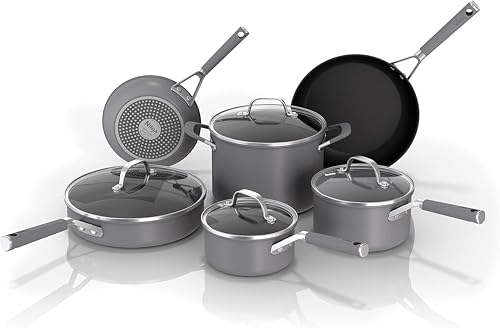
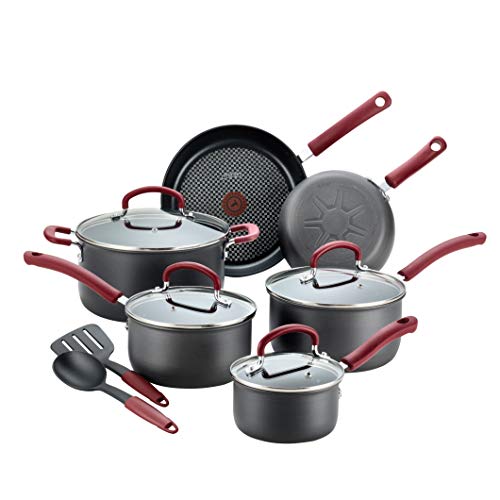
You do not need to spend a lot to equip a kitchen. Budget-friendly cookware sets can cover everyday cooking, as long as you pick a line with sturdy handles, flat bases and a coating you will treat gently.
The six sets below are well-known budget-friendly options, mostly nonstick, with a couple of stainless picks. We have not used these products ourselves, we state no prices, and the details here come from general product knowledge, so confirm prices, piece counts and materials on the current listing before buying.
As an Amazon Associate we earn from qualifying purchases. Links below are affiliate links, and they do not change the product information we give.
Where to buy
Hunting for best cookware sets under 100 dollars means judging tiers, not pricetags: this guide never prints a static price, so each pick is positioned by the tier it occupies in the verified pool — and the one flagship set is prose-only, because no honest reading puts it in this band.
- Cuisinart Chef’s Classic Stainless Steel Pots and Pans Set, 11 pc, 77-11G — Best Overall
- Cuisinart MultiClad Pro 12-Piece Stainless Steel Cookware Set, MCPS-12N — Best Premium Upgrade (prose-only pick: reviewed in full below, no purchase link)
- Cuisinart Chef’s Classic Stainless Steel Pots and Pans Set, 17 pc, 77-17N — Best for Big Families
- Calphalon Classic Stainless Steel Cookware Set, 10-Piece — Best Value Stainless
- Cuisinart Chef’s Classic Stainless Steel Pots and Pans Set, 7 pc, 77-7P1 — Best Compact Set
- CAROTE 30 PCS Tri-Ply Stainless Steel Cookware Set — Best High-Count Set
Start with the pick most readers choose first: Check on Amazon. Read the full guide ↓
The best cookware sets under 100 dollars are not found by hunting a number — prices move too fast for any guide to print one honestly, which is why this site never publishes static prices at all. They are found by understanding tiers. Within any verified pool of cookware, some lines are built as flagships, some as the mainstream workhorses, and some as value plays, and a band like $100 is really a line drawn between those tiers: everything at or below the mainstream belongs in the conversation, and the flagship does not, however good it is.
That is exactly how this guide was built. Five of the six picks sit in the pool’s mainstream and value tiers and are linked: Cuisinart’s Chef’s Classic stainless line in three sizes — the 11-piece as the all-rounder, the 17-piece for families, the 7-piece for small households — Calphalon’s bonded-base Classic, and CAROTE’s 30-piece tri-ply assortment from the value end of the pool. The sixth pick, Cuisinart’s MultiClad Pro, is the finest clad set in the pool and is reviewed in full — but prose-only, because its flagship tier sits clearly above this band and pretending otherwise would make the whole guide worthless. Use its Check on Amazon counterparts on the linked picks to confirm today’s positioning before you buy; the tier reading is this guide’s, the live price is Amazon’s.
What the $100 band buys well, it turns out, is stainless steel. Every linked pick here is bare stainless — no coating lifecycle, no replacement cycle — which is why this band is kinder than most: the mainstream stainless lines are mature products whose cost has settled, while their cooking surfaces have not compromised at all. If your budget can stretch, the next tier up is mapped in Best Cookware Sets Under $150; if it cannot, this guide’s five linked sets are the honest place to land.
Key Takeaways
- This guide prints no static prices: picks are placed by tier within the verified pool, and the linked sets occupy the mainstream and value tiers.
- The flagship MultiClad Pro is prose-only — a deliberate exclusion that shows where the band’s ceiling sits.
- All five linked picks are bare stainless steel, so the band buys permanence: no coating to replace on a cycle.
- The Chef’s Classic line appears in 7-, 11- and 17-piece sizes; choose by household, since the material and tier are the same.
- Always confirm the live price on Amazon before ordering — a set’s tier is stable, its daily price is not.
In this guide
Quick Picks
| Pick | Badge | Why it made the list | Link |
|---|---|---|---|
| Cuisinart Chef’s Classic 11-Piece Set | Best Overall | A long-running stainless line with non-toxic, PFAS-free billing — the mainstream tier at its best. | Check on Amazon |
| Cuisinart MultiClad Pro 12-Piece Set | Best Premium Upgrade | The finest clad construction in the pool — and clearly a flagship above this band. | Prose-only — see review below |
| Cuisinart Chef’s Classic 17-Piece Set | Best for Big Families | Seventeen pieces of the same stated non-toxic stainless line — family depth at a mainstream tier. | Check on Amazon |
| Calphalon Classic Stainless Steel 10-Piece Set | Best Value Stainless | Bonded-base stainless with a printed oven limit — the pool’s sensible mid-tier design. | Check on Amazon |
| Cuisinart Chef’s Classic 7-Piece Set | Best Compact Set | Seven essential pieces of the same stainless line — nothing wasted. | Check on Amazon |
| CAROTE 30-Piece Tri-Ply Stainless Steel Set | Best High-Count Set | Thirty pieces of tri-ply stainless from the pool’s value-oriented brand. | Check on Amazon |
How These Picks Were Chosen
The pool for this guide is the verified cookware-set pool checked on 2026-11-20, and the band filter was applied as a tier judgement, documented in each article’s source notes. Lines were ranked by their position in the pool: flagship clad lines at the top, established mainstream lines in the middle, value-oriented brands at the base. A pick was linked when its tier placed it at or below the mainstream — the level a $100 band can honestly contain — and the flagship was held prose-only as the visible definition of ‘above this band’. If every pick had been a flagship, this article would not exist; the band has to mean something.
Within the band, sets were compared on construction, surface, assortment usefulness and stated compatibilities such as induction and oven use. Two judgements deserve spelling out. First, piece counts were read by shape, not headline: a 30-piece set earns its place here only because its core is tri-ply stainless vessels, not because thirty is a big number. Second, no price appears anywhere in this guide, deliberately — a printed price would be wrong within weeks, while a tier reading stays useful. This is a research-led guide; it does not claim hands-on testing, and it tells you exactly how its central judgement was made so you can disagree with it intelligently.
Comparison Table
| Pick | Badge | Pieces | Construction | Surface | Link |
|---|---|---|---|---|---|
| Cuisinart Chef’s Classic 11-Piece Set | Best Overall | 11 | Stainless, encapsulated base style | Bare stainless | Check on Amazon |
| Cuisinart MultiClad Pro 12-Piece Set | Best Premium Upgrade | 12 | Tri-ply clad stainless | Bare stainless | Prose-only |
| Cuisinart Chef’s Classic 17-Piece Set | Best for Big Families | 17 | Stainless, encapsulated base style | Bare stainless | Check on Amazon |
| Calphalon Classic Stainless Steel 10-Piece Set | Best Value Stainless | 10 | Impact-bonded aluminum base | Bare stainless | Check on Amazon |
| Cuisinart Chef’s Classic 7-Piece Set | Best Compact Set | 7 | Stainless, encapsulated base style | Bare stainless | Check on Amazon |
| CAROTE 30-Piece Tri-Ply Stainless Steel Set | Best High-Count Set | 30 | Tri-ply stainless | Bare stainless | Check on Amazon |
What to Look For
| Feature | Why it matters |
|---|---|
| Flat base | Cheaper pans can warp, so a thick, flat base matters |
| Handle attachment | Riveted handles are sturdier than glued or screwed ones |
| Coating | Nonstick eases cleanup but wears faster on lower-cost sets |
| Piece count | Lids and utensils pad the number, so check the pans |
| Stove match | Confirm gas, electric or induction compatibility |
Specs at a Glance
| Set | Material | Type | Notes |
|---|---|---|---|
| T-fal Easy Care | Aluminum, nonstick | Multi-piece set | Simple everyday set |
| Farberware Dishwasher Safe Nonstick | Aluminum, nonstick | Multi-piece set | Marked dishwasher safe |
| GreenLife Soft Grip | Aluminum, ceramic nonstick | Multi-piece set | Soft-touch handles |
| Cook N Home Stainless Steel | Stainless steel | Multi-piece set | Encapsulated base |
| Utopia Kitchen Nonstick | Aluminum, nonstick | Multi-piece set | Basic budget set |
| Rachael Ray Brights | Aluminum, nonstick | Multi-piece set | Colorful rubberized handles |
The 6 Best Cookware Sets Under 100

Top pickBest for casual daily cooking
1. T-fal Easy Care Nonstick Cookware Set
A simple aluminum nonstick set built for everyday cooking, with lids and handles that are easy to hold. It is a familiar budget-friendly choice from a well-known maker, and the plain design makes it easy to live with. Confirm the exact piece count on the listing.
Suits: casual daily cooking. Strengths: easy cleanup and a trusted brand. Weaknesses: lighter build. Skip it if you want pans for decades.


Best for cooks who want easy cleanup
2. Farberware Dishwasher Safe Nonstick Cookware Set
An aluminum nonstick set that the maker describes as dishwasher safe, with a simple design and glass lids. The easy-clean claim is the main selling point.
Suits: cooks who want easy cleanup. Strengths: a dishwasher-friendly design. Weaknesses: repeated dishwashing can age coatings. Skip it if you prefer hand washing.


Best for light, colorful cooking
3. GreenLife Soft Grip Ceramic Nonstick Cookware Set
A lightweight aluminum set with a ceramic nonstick coating and soft-touch handles, finished in bright colors. It suits cooks who want a ceramic option without a big spend.
Suits: light, colorful cooking. Strengths: a soft grip and easy release. Weaknesses: ceramic loses slickness over time. Skip it if you cook on high heat.

Best for a basic stainless starter
4. Cook N Home Stainless Steel Cookware Set
A stainless set with an encapsulated aluminum base and glass lids. It gives budget-minded cooks a coating-free option that can last longer than nonstick.
Suits: a basic stainless starter. Strengths: no coating to chip. Weaknesses: basic finish details. Skip it if you want a premium name.


Best for a basic first kitchen
5. Utopia Kitchen Nonstick Cookware Set
A basic aluminum nonstick set from a value-focused brand, covering the standard pots and pans for a simple kitchen. Read the listing closely for the piece list, since bundles often add utensils and lids to the count.
Suits: a basic first kitchen. Strengths: a straightforward piece list. Weaknesses: light construction. Skip it if you cook heavily every day.


Best for cooks who like color
6. Rachael Ray Brights Nonstick Cookware Set
A colorful nonstick set with rubberized handles and glass lids that shows up in many kitchens. The cheerful finish is a big draw.
Suits: cooks who like color. Strengths: comfortable handles and easy cleanup. Weaknesses: nonstick wears over time. Skip it if you want a neutral look.

Care and Setup
- Use wood, nylon or silicone tools on nonstick.
- Keep heat at low to medium for longer coating life.
- Wash gently with a soft sponge.
- Do not stack nonstick pans without a liner.
Mistakes to Avoid
- Preheating an empty nonstick pan.
- Using metal tools on nonstick surfaces.
- Expecting budget sets to last as long as clad lines.
- Buying without checking what the set includes.
What a Lower-Budget Set Gives and Gives Up
A set at the lower end of the price range is a practical way to equip a first kitchen or replace worn pans, but it comes with trade-offs. Bases are often thinner and use fewer layers, so heat spreads less evenly and pans may warp sooner. Nonstick coatings are usually thinner and wear faster than those on more expensive pans. Handles, lids and rivets may be simpler. None of this means these sets are unusable; it means expectations should match the price.
What you get in return is variety and convenience. A set typically gives you a skillet or two, saucepans and a pot with lids, so you can cook most everyday meals straight away. Many sets also include a few utensils, which are handy if you are starting from nothing.
- Expect to replace nonstick pans sooner than stainless ones.
- Treat the pieces as everyday workhorses, not heirlooms.
- Check the warranty or return policy on the current listing.
- Read the care instructions, because they matter more on a thin pan.
Spending carefully means choosing sets with the pieces you will really use, and avoiding sets padded with small items. The best value usually comes from cooking sensibly, not from the number of pieces.
Reading Piece Counts Honestly
Listings often advertise a large number of pieces, and the count can be misleading. A lid counts as a piece, as does each spoon, spatula and sometimes a pan protector. A 12-piece set may contain only a few real pans. To compare sets fairly, list the actual pots and pans and their sizes, then ignore the lids and tools.
Ask what you cook. A household that fries eggs, boils pasta and simmers sauces needs a skillet, a medium saucepan and a stockpot. A larger family may want a second skillet or a saute pan. A small set that fits your cooking is better than a large set that fills a cabinet with unused pieces.
- Check the sizes in inches or centimeters for each pan.
- Look at whether lids are included for every pan.
- Decide whether you want a pan that goes in the oven, and check the temperature limit.
- See what tools come with the set and whether they are safe for your pan’s surface.
Small sets can also be supplemented later with a single better pan, such as a good skillet, so you can spend more where it matters most.
When comparing, write the real pans and sizes side by side for each candidate set. The differences often become obvious and make the decision far simpler.
Nonstick, Ceramic or Stainless at a Tight Budget
At this level you are mostly choosing between three surfaces. Traditional nonstick is easy to use and clean, and good for eggs and delicate food, but the coating wears and needs moderate heat. Ceramic-style nonstick is sold as a coating alternative and often markets a bright look, but its release can fade over time, so follow the care advice carefully. Stainless steel has no coating to wear out and tolerates higher heat, but food sticks unless you use enough heat and fat.
Think about your cooking style. A beginner who wants no fuss may prefer nonstick. Someone who likes to brown and make pan sauces may enjoy stainless. Some people buy a nonstick set and later add one stainless skillet.
- Check that the coating is described as free of specific substances, if that matters to you, and read the listing for the maker’s statement.
- Use wood, silicone or nylon tools on coated pans.
- Avoid high heat and empty preheating on coated pans.
- For stainless, preheat the pan, then add oil, then food.
Whatever you choose, learn the right heat level for the surface. Most early failures come from heat that is too high rather than from the pan itself.
Whichever surface you choose, give the pan a gentle first wash and a light seasoning or oiling if the instructions suggest it. Early care sets the pattern for how long it lasts.
Checking Quality When You Unbox
Inspect a budget set as soon as it arrives, while returns are still easy. Place each pan on a flat surface and check that it sits level without rocking. Look at the inside surface for scratches, bubbles or uneven coating. Check that handles are firmly attached, that rivets or screws are tight and that lids fit snugly. Run a finger around the rims for rough edges.
Wash the pans before first use as the instructions say, and test them with a simple task such as heating water to see how even the base is. A pan that wobbles or has a visibly uneven base may be a poor performer. Photos in the listing can differ slightly from what you receive, so verify the details against the description.
- Keep packaging and receipts until you are sure you are happy.
- Check that the set fits your stove type, including induction if you have it.
- Look at weight, as extremely light pans may warp more easily.
Catching a defect in the first days is much easier than arguing about it months later. If a piece is faulty, contact the seller promptly, following the listing’s return instructions.
Consider keeping the original box for the first weeks. If a problem such as a warped base shows up early, a complete return is much easier with the packaging.
Making an Inexpensive Set Last
Habits matter more than price when it comes to pan life. Use medium heat for most cooking, and let pans cool before washing to avoid warping. Hand wash coated pans with a soft sponge even if the listing says dishwasher safe, since this tends to protect coatings. Do not stack pans directly on each other; put a cloth or a paper towel between them.
Cook with enough oil or butter and avoid cooking sprays on nonstick pans, since they can leave a residue that builds up. Remove any food stuck on stainless with warm water and a soft scrubber rather than steel wool on coated pans. Check lids and handles occasionally and tighten screws.
- Do not use metal tools on nonstick surfaces.
- Never heat an empty nonstick pan.
- Replace pans with flaking coating, deep scratches or loose handles.
- Store pans so the surfaces do not rub against each other.
When a nonstick pan starts to stick no matter what, it is time to replace it. A budget set used well can serve reliably for several years, though the exact life depends on use and care.
If you can, keep one pan for high-heat tasks and another for gentle ones, so you are not tempted to push a coated pan too hard.
What a Modest Cookware Set Can and Cannot Do
A well-chosen set at a modest cost can handle everyday cooking. The pans may be lighter and thinner than premium ones, and the finish may wear sooner, but eggs, pasta, sauces and weeknight meals are well within reach. The key is to understand what the set is designed for and to treat it accordingly.
- Lighter pans: heat up quickly but can have hot spots, so stir and adjust heat.
- Thinner bases: respond fast to changes, and may warp if heated empty on high.
- Coated surfaces: need gentle tools and hand washing to last.
- Basic handles and lids: perfectly fine for daily use, though oven limits may be lower.
Plan to replace pieces over time. Nonstick pans in particular are wear items. If you accept that, a modest set is a sensible way to equip a first kitchen or a second home.
Which Pieces Do the Most Work
| Piece | Everyday job |
|---|---|
| 10 to 12 inch skillet | Eggs, sauteing, pan meals |
| Medium saucepan with lid | Rice, sauces, vegetables |
| Large saucepan or small pot | Soups, pasta for a few people |
| Stockpot | Boiling pasta, stock, big batches |
| Small skillet | Single eggs, toasting spices |
| Saute pan with high sides | Braising, shallow frying |
Count how many of these you would actually use. A set with a dozen pieces may include lids, utensils and small items that count toward the total. Check what is truly in the box.
Mistakes That Shorten the Life of Affordable Cookware
- Heating an empty pan on high heat.
- Using metal tools on a coated surface.
- Cooking on heat that is too high for the pan’s materials.
- Washing hot pans in cold water, which can warp them.
- Stacking pans without protection.
- Putting pans in the dishwasher when the maker advises hand washing.
- Ignoring the oven-safe temperature printed in the manual.
With gentle use, many modest sets will last a long time. Treat them as tools to be cared for rather than disposable items.
Checking Compatibility With Your Stove
Before buying, confirm the cookware suits your cooktop. Induction needs a magnetic base. Glass-top stoves need flat bases to avoid scratching and uneven heating. Gas stoves work with most pans, but check the handle material and avoid flames wrapping up the sides. Look for statements about oven-safe temperature and lid limits if you plan to finish dishes in the oven.
If a listing does not clearly mention your cooktop type, ask the seller or the maker before ordering.
Cleaning and Storage on a Budget
Wash with warm soapy water and a soft sponge, and dry thoroughly. Avoid abrasive cleaners, which damage coatings. A soak loosens most stuck food, and a paste of baking soda can help with stains on stainless steel. Store pans nested with a cloth or pan protector between them, or hang them if you have the space.
Check for signs of wear, such as flaking coatings, loose handles or warped bases, and replace individual pieces as needed. Buying a single replacement skillet is often a good way to refresh a set without spending on a whole new one.
Building a Kitchen Set Step by Step
If funds are tight, you do not need to buy everything at once. Begin with a skillet, a saucepan with a lid and a stockpot. Add a second skillet or a saute pan when you find a need. Mixing materials can work well: a nonstick skillet for eggs, a stainless pot for sauces and a cast iron pan for searing, bought separately over time, may serve you better than a large boxed set. Whatever you choose, read the care instructions and keep the receipt in case of problems.
Reading a Set Listing Without Being Fooled by Piece Counts
Piece counts on cookware sets are often inflated. A fourteen piece set might contain only five pans, with the lids counted individually and a few utensils or a rack added. Before you compare, count the actual pans and lids, and write them down.
- Count the pans, and note their sizes.
- Count the lids, and check whether they are shared between pans.
- Check the utensils, and decide whether you will use them.
- Look for the oven-safe temperature and the cooktop compatibility.
- Look at the care instructions and the warranty terms from the maker.
- Check the weight of the largest pan when full.
A smaller set of good pans often serves better than a big set with filler. Choose the sizes you will use, and add more later if needed.
Finishes and Coatings in Plain Terms
Modest sets often feature nonstick coatings, which help food release with less oil, and some use ceramic-style coatings or stainless steel. Each has different care needs. Coated pans need gentle tools and lower heat, stainless steel tolerates more but may need oil and a little technique, and enameled pieces require care to avoid chipping. Read the maker’s care instructions for your chosen finish, and follow them.
If a listing makes strong claims about safety or materials, look for the specific statement in the specification section. A general phrase on the front of the box is not the same as a detailed statement from the maker. Where details matter to you, contact the maker.
Head-to-Head: How the Six Budget Sets Differ Where It Counts
At this tier the differences between sets are not about luxury; they are about which compromises each maker chose. The T-fal Easy Care, the Farberware Dishwasher Safe Nonstick, the GreenLife Soft Grip, the Utopia Kitchen set and the Rachael Ray Brights are all nonstick in one form or another, while the Cook N Home Stainless Steel set stands apart as the coating-free option. Understanding that single split, coated convenience against uncoated endurance, explains most of what follows and most of what owners of these sets praise or regret a year later.
The T-fal Easy Care is the straightforward mainstream choice: aluminum nonstick from a maker that has built its name on exactly this category, with a plain design that does nothing surprising. In daily use it heats quickly, releases eggs and pancakes reliably, and asks only for moderate heat and soft tools. Its lighter build is the honest trade; the pan will not hold heat like a heavy skillet, so browning is gentler, and a crowded pan steams more than it sears. For the everyday cooking most households do, that trade is barely noticeable.
The Farberware Dishwasher Safe Nonstick set sells one idea above all: cleanup that fits a busy life. The maker describes the set as dishwasher safe, and for cooks who know they will not hand wash, buying the set designed to tolerate the machine is more sensible than buying a delicate set and ruining it. The caution in the original review stands: repeated dishwashing ages any coating faster than hand washing, so the honest expectation is convenience now at some cost to lifespan. Used with open eyes, it is a rational trade rather than a flaw.
The GreenLife Soft Grip takes the ceramic nonstick route, with a lightweight aluminum body, soft-touch handles and bright colours. Ceramic coatings feel very slick when new and suit cooks who prefer to avoid conventional nonstick. Their known pattern is that the slickness fades sooner, especially if the pans are regularly heated high or washed harshly. Kept to low and medium heat and treated gently, a GreenLife set gives pleasant, easy cooking; treated like a searing pan, it will disappoint quickly. The handles, meanwhile, are genuinely comfortable, which matters in a pan you lift every day.
The Cook N Home Stainless Steel set is the endurance play at this tier. With an encapsulated base and no coating anywhere, it cannot peel, and it tolerates high heat, metal tools and hard scrubbing that would finish the other sets here. What it asks in return is technique: preheating before food goes in, enough fat, and patience while food releases as it browns. Its finish and details are basic, as the original review notes, but a basic stainless pan in year five is usually in better shape than a basic nonstick pan in year five, and that is the whole argument for it.
The Utopia Kitchen and Rachael Ray Brights sets round out the group as the bundle and the personality picks. The Utopia set covers the standard pots and pans plainly, with bundles that may include utensils, so read the piece list carefully. The Rachael Ray Brights brings colour and rubberized handles to the same basic aluminum nonstick formula, and for cooks who want a cheerful kitchen it is the one that makes them smile. Both are light in construction and should be bought as honest, short-to-medium-term tools rather than heirlooms, a framing that makes them satisfying instead of disappointing.
What to Check in the Shop So a Budget Set Does Not Disappoint
The most useful in-listing check at this tier is the base. Look for language about thickness, an encapsulated or reinforced base, and a flat bottom, because thin bases are where budget pans fail first: they warp, and a warped pan spins on a glass top, heats unevenly and, on induction, may stop being detected. You cannot measure a base from a photograph, but you can weigh the description honestly; a set that says nothing about its base is telling you something. When the set arrives, set each pan on a flat counter and check for rocking before the return window closes.
Handles are the second check, and they matter more than beginners expect. Riveted handles, where you can see the round rivet heads inside the pan, are generally sturdier over time than handles that are only screwed or glued. At this tier both kinds appear, sometimes within one set. Grip each handle with a cloth, as you would when the pan is hot and full, and judge whether it feels secure and balanced. A budget pan with a good handle is a pleasure; a budget pan with a wobbly handle is a hazard with a full load of pasta water, so this check is about safety as much as comfort.
The third check is the piece list read properly. Count pans, not pieces. Lids that fit several pans may be counted several times in some listings, and utensils pad the total further. Write down the fry pans, saucepans and pots with their sizes if given, and compare that list with what you cook. A household that makes rice and sauces needs the medium saucepan more than a second small skillet. This ten-minute exercise prevents the most common budget regret, which is not poor quality but a set whose pieces do not match the household’s food.
Finally, check the stove match and the care demands against your real life. Induction owners must confirm a magnetic base, which many aluminum nonstick sets lack. Dishwasher-dependent households should favour the Farberware’s dishwasher positioning or the Cook N Home stainless, which shrugs off the machine. Cooks who know they use high heat for stir-fries should lean stainless. A budget set succeeds when its demands match the household’s habits; it fails when it asks for a lifestyle change, because at this tier nobody changes their lifestyle for a pan.
Cooking Well on Lightweight, Lower-Cost Pans
Budget pans reward a slightly adjusted technique, and the adjustment is mostly about heat management. Aluminum bodies heat fast and cool fast, which is genuinely useful: a T-fal or GreenLife pan is ready quickly and responds the moment you lower the setting. The flip side is that there is little stored heat, so adding a large amount of cold food drops the temperature sharply. Cook in smaller batches than the pan’s size suggests, let each batch brown, and the results match what heavier pans produce, just in more, quicker rounds.
For eggs, pancakes and other delicate work, these sets are in their element. A gentle preheat at a low to medium setting, a small amount of butter or oil, and the food releases cleanly from the T-fal, Farberware, GreenLife, Utopia and Rachael Ray surfaces alike. The mistake to avoid is the fierce empty preheat borrowed from steak cooking; an empty nonstick pan on high heat ages its coating and, with ceramic, can dull the slickness in a handful of uses. Warm the pan with the fat in it and delicate food will behave beautifully.
For browning meat and vegetables, set expectations and use the stainless option if you have it. The Cook N Home pans, preheated properly, will sear and will leave the browned residue that makes a pan sauce. The nonstick sets can brown in batches at moderate heat, accepting a gentler crust. What none of the budget sets loves is a packed pan on maximum heat: the food steams, the coating suffers, and dinner is pale. Space in the pan is the cheapest seasoning there is, and it costs nothing to leave some.
Sauces, grains and soups are where a budget set quietly shines, because liquid cooking is forgiving of thin bases as long as the heat is moderate and the cook stirs now and then. Rice in a lidded saucepan, oats in the morning, a tin of tomatoes becoming a sauce: these everyday jobs make up most of home cooking, and every set in this guide does them well. Reserve your care and attention for the few high-heat jobs, and the set will feel far more capable than its tier suggests. Good technique is the upgrade that does not cost anything.
Making a Budget Set Last as Long as It Can
The lifespan of a lower-cost set is decided less by its construction than by five habits. First, keep the heat moderate; most coating damage and most warping trace back to high, empty or prolonged heat. Second, use soft tools everywhere, not just in the fry pan, because the one metal spoon used in a saucepan does the same damage as in a skillet. Third, let pans cool a little before washing, and wash with a soft sponge; thermal shock and abrasive pads are the twin enemies of every surface in this guide, including the ceramic and the conventional nonstick alike.
Fourth, store the set like you mean it. Budget pans stored in a rattling stack pick up scratches and rim dents quickly, and a scratched coating then fails at the scratch. A few cloths or paper sheets between stacked pans, lids stored separately or upright, and the heaviest pot at the bottom of any stack will add visible life to the set. Fifth, use the whole set in rotation. The favourite skillet in a budget set often dies years before its siblings because it does all the work; spreading breakfasts and reheats across two pans evens the wear and delays the day any single piece gives up.
Stainless owners in this group have a simpler path. The Cook N Home set can be scrubbed, soaked and put through the dishwasher without drama, and its enemies are only cosmetic: water spots, heat tint and the occasional browned patch that a gentle stainless cleanser removes. If a base ever warps from an overheated dry pan, the pan may still serve for oven work. This is why, in long-horizon households, the stainless set at this tier so often ends up the last one standing, still cooking while coated sets have been replaced around it.
Know the signs that a coated pan is finished so you replace it at the right time rather than fighting it. When eggs stick in the centre despite gentle heat and fat, when the surface looks dull and patchy, or when the coating is visibly damaged, the pan has given its service. Replace the single piece if the line is still sold, or treat it as the moment to step the most-used pan up a tier while the rest of the set carries on. Budget cookware bought with this plan in mind is not a compromise at all; it is a sensible, staged way to equip a kitchen.
Which Households Each Budget Set Suits Best
A first apartment or a student kitchen is the natural home of the broad nonstick bundles. The Utopia Kitchen set and the Amazon-style bundles like it cover the standard shapes at once, and the cooking they will face, pasta, eggs, stir-fries, reheats, sits squarely in nonstick’s comfort zone. The Rachael Ray Brights adds colour and comfortable handles for a cook furnishing a place they want to enjoy looking at. In both cases the honest expectation of a few good years, not decades, makes the purchase feel right rather than risky.
A busy family kitchen that runs on the dishwasher should look first at the Farberware Dishwasher Safe set or step sideways to the Cook N Home stainless. The Farberware accepts the household’s real routine instead of fighting it, and its easy-clean positioning is the feature that will be appreciated nightly. The stainless set suits the same household if someone is willing to learn the preheating habit, because it removes the coating question entirely and tolerates family-scale use, metal tools and all, without complaint.
A cook who prefers ceramic nonstick has one clear candidate, the GreenLife Soft Grip, and should buy it with its pattern understood: lovely slickness and light weight now, gentler treatment required, and a surface that will gradually lose its release over time. Kept for eggs, vegetables, grains and gentle sautés, it is a pleasant set. Asked to sear steaks weekly, it is the wrong tool, and no sale or bundle changes that. Matching the set to the menu is the whole skill at this tier.
A holiday home, a rental kitchen or a temporary setup is served well by any of the six, and here the simplest sets make the most sense because the cooking is occasional and the horizon is short. The T-fal Easy Care is the balanced default for that job, familiar and undemanding. Whichever set is chosen for a part-time kitchen, store it clean and dry, and it will be ready each visit. Budget cookware, matched honestly to its household and its horizon, is not the poor relation of expensive cookware; it is the right tool bought at the right scale.
Making the Final Call Under a Tight Budget
If you can only remember one distinction, remember this: the Cook N Home Stainless Steel set is the one that cannot wear out its surface, and the other five are the ones that make cooking and cleaning easiest while their surfaces last. Households that cook gently and value easy mornings should take a nonstick set without hesitation. Households that cook hard, use high heat and hate replacing things should take the stainless and spend one week learning to preheat. Both decisions are respectable; the only poor decision is buying a coating for a high-heat life or stainless for a cook who will never preheat it.
Within the nonstick group, let one feature decide. Dishwasher reliance points to the Farberware. A preference for ceramic points to the GreenLife. A wish for the plainest, most familiar option points to the T-fal Easy Care. Colour and handle comfort point to the Rachael Ray Brights. The broadest simple bundle points to the Utopia Kitchen. Each is a coherent answer to a different household, which is why this tier, for all its compromises, serves so many kitchens perfectly well.
Before ordering, run the short checklist this guide has built: flat, sturdy-feeling bases; handles that inspire confidence; a piece list counted in pans; a confirmed match with your stove; and care demands you will actually meet. A budget set that passes those five checks will cook dinner tonight, next month and for a good while after, and it will do so without the buyer needing to think about cookware again for a long time. That peace of mind, not the low number on the listing, is what a good budget set really buys.
Three Budget Kitchens, Three Different Right Answers
The first kitchen belongs to a student or a first renter: little money, little space, simple food and a real chance of moving again within a couple of years. For this cook the Utopia Kitchen set or the T-fal Easy Care is the proportionate answer, covering eggs, pasta, stir-fries and soups without pretending to be a lifetime purchase. The money not spent on cookware goes to food, which is the correct priority at this stage of life. When the set eventually wears, its owner will replace it with the knowledge of exactly how they cook, which is the most valuable thing a first set can teach, more valuable than any construction it might have had.
The second kitchen is a family kitchen run on a tight budget, where the set will be used hard by several people and put through the dishwasher because life allows nothing else. This household should look hardest at the Farberware Dishwasher Safe set, bought for its tolerance of the routine, and at the Cook N Home Stainless Steel set, which removes the coating question entirely and can absorb family treatment indefinitely. Between them the choice is temperament: nonstick ease with a planned replacement, or stainless endurance with a small technique investment. Either serves the family honestly; what would fail them is a delicate set bought for its looks and then blamed for the household’s real life.
The third kitchen is a light-use one: a couple who eat out often, cook gently when they cook at all, and want the kitchen to look pleasant. The GreenLife Soft Grip, with its colours and comfortable handles, or the Rachael Ray Brights, cheerful in the same spirit, suits this home perfectly, because gentle use is exactly what ceramic and conventional nonstick ask for, and these pans may last far longer here than the same sets in a hard-working kitchen. Lifespan is not a property of a pan alone; it is a property of a pan in a household, and matching the two is the budget buyer’s real skill.
Notice what none of these sketches required: spending more. Each household’s right answer sits inside this tier, provided the match is made carefully. That is the encouraging truth about budget cookware, and it is worth stating because the category is often discussed as if it were only a waiting room for better pans. For a great many kitchens, a well-chosen budget set is not a compromise at all; it is the correct tool at the correct scale, and the money saved is available for the ingredients, which are, after all, the part of dinner that gets eaten.
Before ordering for any of these kitchens, spend five minutes on the unglamorous confirmations: the stove type, including an induction check; the storage the set must fit; the sizes of the pans against the household’s usual meals; and the care the household will genuinely give. A budget set that passes those checks and matches its household’s sketch will be remembered fondly. One bought on count and colour alone, however little it cost, will be remembered as clutter. The difference is not the money. It is the five minutes, and they are available to every buyer at every tier.
A Note on Cooking for Guests With a Budget Set
A budget set does not have to hide when guests come; it has to be used within its talents. Serve the dishes these pans do best: a big pasta from the stockpot, a curry or chili that simmered gently, pancakes or eggs cooked to order in the nonstick skillet at moderate heat. What a budget set should not be asked to do is a fierce, crowded sear for eight people, and no guest has ever judged a dinner by the absence of one. Cook two courses the set enjoys, present them in the pans if the table is informal, and the evening will be remembered for the food and the company. Confidence, at this tier as at every tier, is the ingredient the cookware cannot supply and the cook always can.
One further habit costs nothing and helps every set in this guide: dry each pan before it is put away, and put it away in its own place rather than in a general pile. Budget pans stored dry and unstacked keep their surfaces, rims and handles in noticeably better shape over the months, and a kitchen where every pan has a place is faster and calmer to cook in. It is a small, unglamorous discipline, but at this tier, where the equipment asks a little more of its owner than premium equipment does, small disciplines are exactly what close the gap.
Cookware Sets Under 100 FAQ
Are cheap sets worth it?
For many households, yes. They cover daily cooking well, though coatings and thin bases will wear sooner than premium lines.
Is stainless or nonstick better on a tight budget?
Nonstick is more forgiving for beginners, while stainless can last longer if you cook with care.
How can I make a budget set last?
Use moderate heat, soft tools and gentle cleaning, and avoid thermal shock from cold water on a hot pan.
Can budget sets go in the oven?
Some can, with limits that vary by handle and lid material. Check the maker’s guidance before roasting or broiling.
How many pieces do I really need?
Most cooks manage with a skillet, a medium saucepan, a larger pot and lids. Anything beyond that depends on how many dishes you cook at once.
Is ceramic nonstick better than traditional nonstick?
They are different coatings with different care needs. Ceramic can lose release over time, and traditional nonstick can wear out too, so use moderate heat and gentle tools with either.
Are lids counted as pieces?
Often yes. Check the list of actual pots and pans to see what you are getting.
Can I use these sets on induction?
Only if the listing says they are induction compatible. A magnet sticking to the base is a simple test.
Should I put a budget set in the dishwasher?
Check the care sheet, but hand washing generally protects coatings and handles. Dishwasher detergent can be harsh on thin finishes.
What should I upgrade first?
Many cooks replace the skillet first, since it is used most. A single sturdier pan can sit alongside a budget set.
How do I know a pan is worn out?
Flaking or deeply scratched coating, a warped base, loose handles or food that sticks despite proper use are common signs.
The Short Version
For a familiar everyday set, the T-fal Easy Care. For easy cleanup, the Farberware. For ceramic, the GreenLife Soft Grip. For stainless, the Cook N Home. For a basic bundle, the Utopia Kitchen. For color, the Rachael Ray Brights.
Related Guides
- 6 Best Cookware Sets: What Is Really in the Box (2026)
- 6 Best Cookware for Induction Cooktops: Pans That Work (2026)
- 6 Best Small Stainless Steel Cookware Sets: 5 to 8 Pieces (2026)
- 6 Best Calphalon Cookware Sets: Nonstick and Stainless (2026)
- 6 Best Camp Kitchen Sets: Cookware Kits for Camping (2026)