Where to buy
Check the latest price, availability and delivery on Amazon. Orders are placed on Amazon. We may earn a commission from qualifying purchases.
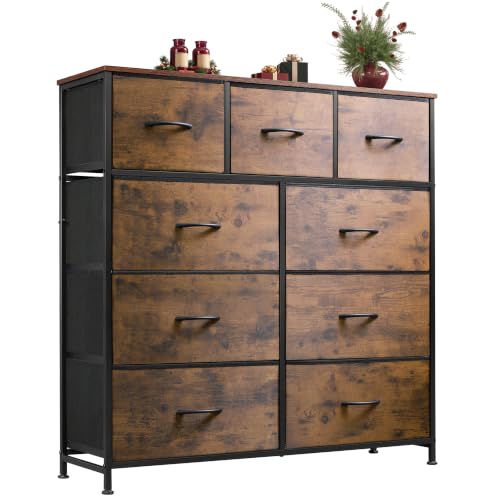
- Best overall: WLIVE 9-Drawer Dresser, Rustic Brown — Check on Amazon
- Huuger 63-Inch Dresser with 9 Drawers, Rustic Brown — Check on Amazon
- SONGMICS BELLAH 5-Drawer Dresser, Rustic Brown and Ink Black — Check on Amazon
- DUMOS Dresser with 9 Drawers, Brown — Check on Amazon
See 2 more Amazon options
- YITAHOME 10-Drawer Dresser, Cool Gray — Check on Amazon
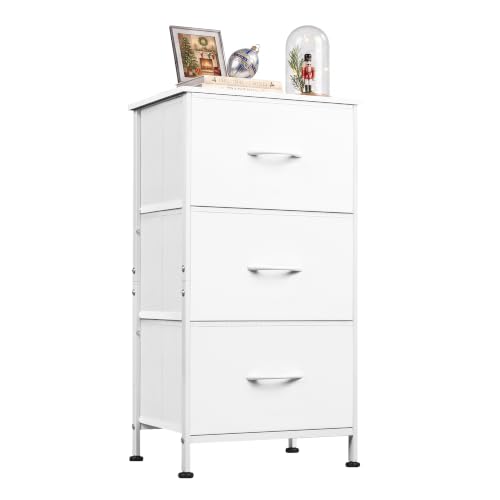
- Sorbus Narrow Dresser with 4 Drawers — Check on Amazon
Read the full guide ↓
Disclosure: As an Amazon Associate, topratedkitchenware.com earns from qualifying purchases. Links to Amazon on this page are affiliate links; they cost you nothing extra. Listing details such as price and availability change often, so check the current Amazon listing before you buy.
A small bedroom changes the dresser question completely. In a generous room you shop by drawer count, finish and whether the top will hold a mirror. In a 9-by-11 you shop by inches — depth first, then width, then height — because every piece of furniture in the room is competing with the bed for the same few square feet of floor. The good news, and it is genuinely good news, is that the under-$100 dresser category is accidentally built for small rooms. Every verified pick in this guide is a fabric-drawer unit around 11.8 inches deep, roughly four to six inches shallower than a traditional wooden dresser at 16 to 18 inches deep. In a small bedroom, those recovered inches are the difference between squeezing sideways past the dresser and walking past it like a person.
Honesty first, because this budget needs it. Under $100 on Amazon you are not buying a solid-wood chest, and you are not buying a rigid particleboard dresser from an established furniture brand either — those sit well above this budget, and this guide will say so where it matters. What $100 buys is a steel tube frame, a rigid top panel and a set of collapsible fabric drawers. Built well, that formula holds a surprising amount of clothing, assembles in under an hour and can be carried up the stairs by one person. The trade-offs are just as real: the drawers are shallower than a traditional dresser’s, every load figure a maker prints is a maker claim rather than a test result, and wall anchoring is not an optional accessory at this price — in a small room, where the dresser stands closer to the bed and to everyone who climbs, it matters more, not less. This category also has a public safety record: the US Consumer Product Safety Commission recalled several fabric dresser models sold on Amazon in 2025 and 2026 for tip-over hazards. No recalled model appears as a pick here, and the safety section below covers the recalls in full.
So this guide re-judges the six verified sub-$100 dressers by the numbers a small bedroom actually runs on: floor footprint in square feet, depth against the wall, height against your sightlines, and the clearance the drawers need to open into the room. One pick goes wide and low to replace two pieces of furniture with one. One stacks ten drawers onto the smallest full-size footprint we verified. One is eight inches wide and exists purely to colonize the gap beside your bed. And where even the smallest dresser would crowd the room, the final section is a fallback ladder — closet interiors, under-bed storage, merged furniture — for spending the money somewhere smarter. Below you will find a quick picks table, detailed notes on each of the six, a comparison table with floor footprints, a measuring routine, the mistakes small-room shoppers make most, and answers to the questions that come up again and again.
In this guide
Quick Picks
| Pick | Product | Drawers | Dimensions (D × W × H) | Price | Best for |
|---|---|---|---|---|---|
| Best overall | WLIVE 9-Drawer Dresser, Rustic Brown | 9 fabric | 11.8 × 39.6 × 40.2 in | Check price on Amazon | Most storage on a standard small-room footprint |
| Best for one long wall | Huuger 63-Inch Dresser, Rustic Brown | 9 fabric | 13.8 × 63 × 26.8 in | Check price on Amazon | Replacing a dresser and a TV stand with one low unit in a studio |
| Best under a window | SONGMICS BELLAH 5-Drawer Dresser | 5 fabric | 11.8 × 38.9 × 20.6 in | Check price on Amazon | A low chest that doubles as a wide nightstand |
| Best compact tower | DUMOS Dresser with 9 Drawers, Brown | 9 fabric | 11.8 × 39.4 × 39.4 in | Check price on Amazon | Nine drawers on a near-square footprint |
| Most storage per square foot | YITAHOME 10-Drawer Dresser, Cool Gray | 10 fabric | 11.8 × 33 × 47.2 in | Check price on Amazon | Ten drawers on the narrowest full-size footprint |
| Best for tight gaps | Sorbus Narrow Dresser with 4 Drawers | 4 fabric | 16.5 × 7.8 × 29.25 in | Check price on Amazon | Filling the eight-inch gap beside the bed |
*Check the current price on Amazon before you buy — listing prices and availability change often.
How These Picks Were Chosen
The first filter was verification, inherited from the same research behind our general dresser guide. Every product below is a real Amazon US listing with a stable ASIN, stated dimensions and a drawer count confirmed from the listing or the maker’s own documentation, priced within this guide’s under-$100 budget when researched. Products whose price we could not verify are named without a link rather than guessed at. We also checked the safety record before anything else: this category’s CPSC recalls in 2025 and 2026 cover taller fabric dressers from WLIVE, Furnulem and Yitahome, and no recalled model appears as a pick in this guide. One brand is absent entirely on that context: Furnulem dressers were recalled twice on tip-over grounds, so no Furnulem model is linked anywhere in this guide — the brand appears only in the safety section, as a warning.
The second filter is the one this guide exists for: the room filter. Each pick had to earn its place in a small bedroom on measurements, not vibes. We compared floor footprint (width times depth, converted to square feet), depth against the wall, height against the sightlines of a room where you can see every piece of furniture from the doorway, and the working clearance in front — a drawer that cannot open past the foot of the bed is not storage, it is a rumor of storage. We favored the shapes small rooms reward: shallow bodies, vertical stacks that trade floor for height, low chests that slide under windows, and one genuine gap-filler for the slivers of floor that standard furniture ignores.
Two honesty notes before the reviews. Every load and stability figure in this guide — pounds per drawer, pounds on the top, TVs supported — is a maker’s claim printed on a listing or in a manual. We attribute those figures to the maker every time, because no independent lab has load-tested these units, and owner experience routinely lands below the printed numbers. Pricing changes often on Amazon, so this guide points you to check the current price on Amazon for each pick rather than printing a figure that can go stale.
The 6 Best Dressers for Small Bedrooms Under $100
WLIVE 9-Drawer Dresser, Rustic Brown
Who it suits: Anyone whose small bedroom still needs one real dresser — a full wardrobe’s worth of folded clothes — on the most standard footprint in the category.
The WLIVE 9-Drawer Dresser is the shape this category does best, and in a small room its key number is not the nine drawers, it is the 11.8 inches of depth. Per the maker’s manual it measures 39.6 inches long by 11.8 inches wide by 40.2 inches tall — a floor footprint of about 3.2 square feet, roughly the footprint of a traditional chest of drawers, except that a traditional chest would reach four to six inches further into your room. Nine fabric drawers in mixed sizes sit on a steel tube frame, topped with a wood-grain MDF top you can actually put things on. Check the current price on Amazon for its listing, sold by a third-party seller and shipped from Amazon — it offers the most storage we verified at this tier, which is why it leads the guide.
The drawers are the honest compromise, and it is the same compromise everywhere in this guide: reinforced fabric bins with rigid front panels and a flat base insert, not wooden boxes on runners. For folded clothing — t-shirts, underwear, gym clothes, kids’ outfits, spare bedding — they work well, and they lift out completely, which in a small room is a quiet superpower: carry the drawer to the bed, pack or sort on the mattress, carry it back, instead of ferrying armfuls across a room with no spare surface. The mixed drawer sizes suit a small wardrobe’s reality: small drawers up top for socks and accessories, deeper ones below for sweaters and jeans. Assembly is the standard fabric-dresser routine — frame, crossbars, fold the drawers open, drop in the base inserts — well under an hour, alone, with no power tools. Build it in the room it will live in; a 40-inch tower is awkward to angle through a doorway once built.
- 11.8-inch depth: stands about five inches closer to the wall than a traditional dresser, on a footprint of roughly 3.2 square feet.
- Nine drawers in mixed sizes — small ones for accessories, deep ones for sweaters and jeans.
- Rigid MDF top gives a small room a usable surface for a lamp, photos or folded laundry.
- Drawers lift out completely, which makes sorting and packing on the bed far easier.
Honest limitation: Two things, stated plainly. The drawers are about 11.8 inches deep front to back, so bulky hoodies and thick sweaters fit folded but snug, and nothing about this unit will feel like furniture-store wood — because it isn’t. And the brand context matters: WLIVE’s taller 12-, 15- and 16-drawer fabric dressers were recalled by the CPSC in 2025 because they are unstable when not anchored to the wall. This 9-drawer model is not one of the recalled models, and its wider, lower stance is inherently steadier — but treat the wall anchor as mandatory, not optional, and read the safety section of this guide before it goes in a child’s room.
Choose it if you want the default recommendation: the most verified storage under $100 in a normal dresser shape that respects a small room’s floor. Skip it if your wall run is under 40 inches, you need deep drawers for bulky knitwear, or any dresser in your home will go unanchored around climbing children — in that case, save for a heavier rigid dresser instead.
Huuger 63-Inch Dresser with 9 Drawers, Rustic Brown
Who it suits: Studio and one-room-living shoppers with a single long wall, who need one piece of furniture to do the work of two — and couples sharing a small bedroom.
Most dressers under $100 go up; the Huuger 63-Inch Dresser goes sideways, and in a small room that is a strategy, not a quirk. Amazon’s spec block for this listing gives 13.8 inches deep by 63 inches wide by 26.8 inches tall, with nine fabric drawers and an item weight of about 43 pounds. Huuger markets the long top as a TV stand for sets up to 70 inches, and that is the small-room play: instead of a dresser footprint plus a separate TV stand footprint, one low unit along the wall does both jobs. Its 26.8-inch height also keeps sightlines open — in a small room, low furniture makes the space feel larger in a way no tall tower can. Check the current price on Amazon for the 63-inch 9-drawer listing, and confirm you are on that version rather than a sibling 10-drawer listing.
The extra depth matters more than it sounds: at 13.8 inches, the drawers are roughly two inches deeper than the standard 11.8-inch fabric-dresser format, and folded jeans, sweaters and bedding sit noticeably more comfortably. The low, wide stance is also genuinely the steadiest shape here: a 26.8-inch-tall unit with a 63-inch base is far harder to tip than a tall tower, which is a real safety argument in its favor. It still ships with anchoring hardware and should still be anchored — a child can climb a low dresser too, and a television on top raises the stakes — but physics is on this one’s side. As a dresser, the nine drawers split naturally into his-and-hers columns plus shared drawers in the middle.
- One footprint does two jobs: dresser below, TV stand or folding surface on top — the footprint you save is the stand you no longer need.
- 13.8-inch-deep drawers — the deepest in this guide — take bulky folded clothes more easily.
- Low 26.8-inch height keeps a small room’s sightlines open and is inherently the most tip-resistant shape of the six.
- 63-inch width is the only pick here that truly replaces a full-size double dresser for two people.
Honest limitation: This is the largest floor claim in the guide — about 6 square feet — and it needs a genuine 63 inches of clear wall, which many small bedrooms simply do not have; measure before ordering, because it will not squeeze into a standard 48-inch dresser nook. At 26.8 inches tall, every drawer is also at knee height or below: you will bend for everything you own, and there is no tall storage at all. And note the listing family is confusing: Huuger sells near-identical 63-inch units in 9-, 10- and 12-drawer versions, so confirm the drawer count on the listing you land on.
Choose it if your small room has one long wall and the dresser can absorb the TV stand’s job too. Skip it if no wall in the room runs five feet clear, or bending to low drawers all day will annoy you.
SONGMICS BELLAH 5-Drawer Dresser, Rustic Brown and Ink Black
Who it suits: Small rooms where the only free wall is a short one — under a window, at the foot of the bed — and anyone who would rather merge the nightstand and the dresser than fit both.
The SONGMICS BELLAH 5-Drawer Dresser (model ULGS322B02S) is the value anchor of this guide, positioned at the lower end of this tier — check price on Amazon for the current listing. It measures 11.8 inches deep by 38.9 inches wide by 20.6 inches tall — wide but low, a chest rather than a tower, on a footprint of about 3.2 square feet that it makes unusually easy to place. At 20.6 inches tall it slides under most windowsills, sits at the foot of a bed without looming, and works as an oversized nightstand with five real drawers instead of one shallow slot — in a room too small for a nightstand and a dresser both, that merger is the whole point. SONGMICS publishes unusually specific maker figures for it: the particleboard top is rated by the maker to 88 pounds, each large drawer to 22 pounds and each small drawer to 11 pounds. Treat those as maker claims, not test results — but even halved, they describe a unit sensibly matched to folded clothes.
Two practical details matter in small rooms. It ships with an anti-tip kit — use it — and adjustable feet let you level it on uneven floors. Assembly is the usual quick fabric-dresser build.
- Positioned at the lower end of the budget, leaving room for under-bed bins or a second unit later.
- Low 20.6-inch height fits under windows and doubles as a wide nightstand, merging two footprints into one.
- Maker publishes per-drawer load figures (22 lb large, 11 lb small) instead of vague claims.
- Anti-tip kit included, and adjustable feet for leveling on uneven floors.
Honest limitation: Five drawers at this size is a supplement, not a wardrobe: roughly one person’s folded basics, or a child’s clothes, and then it is full. The 20.6-inch height also means the top sits low for a lamp beside a taller bed. If this will be your only dresser and your wardrobe is a full adult one, one of the 9- or 10-drawer picks is the honest buy; this one is for topping up storage you mostly already have, or for rooms where low is the only shape that fits.
Choose it if your free wall is short and low — under a window, at the bed’s foot — and you want a lower-priced option within the budget. Skip it if this is your only dresser for a full wardrobe; you will outgrow five drawers fast.
DUMOS Dresser with 9 Drawers, Brown
Who it suits: Buyers with a compact square patch of floor — a closet wall, the corner by the door, the end of a short wall — who want nine separate drawers without a wide dresser’s wall run.
The DUMOS 9-Drawer Dresser stacks its nine fabric drawers into a near-square tower: 11.81 inches deep by 39.37 inches wide by 39.36 inches tall per the Amazon listing, at roughly 29 to 31 pounds — a footprint of about 3.2 square feet, the same floor area as the WLIVE, spent on a squarer face that fits spots a wide dresser cannot. Three smaller drawers sit on top with six larger ones below, per the maker’s manual, which also states a 66-pound capacity for the wooden top and 13 pounds per drawer, and confirms an anti-tilt device is included. Check the current price on Amazon before ordering — finishes vary, and one older crawl of this listing showed no featured offer, so confirm a live offer is showing.
The DUMOS earns its place on drawer organization: nine genuinely separate compartments is the joint-highest count among the standard-format picks, and in a small room — where the dresser often absorbs the overflow jobs a bigger home spreads across three pieces of furniture — separate small drawers for chargers, documents, accessories and seasonal bits are worth real money. It is also the pick where we most want to temper the maker’s numbers with tester experience. In one review site’s hands-on testing of this dresser, the fabric drawers began to sag when loaded past roughly 6 to 8 pounds — about half the printed 13-pound maker figure — and the fluted fabric trim on the tested unit started lifting at the corners after some weeks. Neither is a dealbreaker for folded clothes, which rarely reach 6 pounds a drawer; both are reasons not to store books, tools or dumbbells in it.
- Nine drawers in a compact, near-square 39.4 × 39.4-inch face — easy to place in corners and closet walls.
- Anti-tilt device included per the maker’s manual; wooden top rated by the maker to 66 lb.
- Three small top drawers are ideal for underwear, socks and the small clutter small rooms drown in.
- Assembly timed at roughly 38–50 minutes in independent testing — typical for the category.
Honest limitation: Plan around real-world drawer loads of about 6–8 pounds, not the maker’s 13, and expect the fabric fronts to age faster than the frame. Its position within the tier can vary by finish, so it is the pick most worth checking carefully on Amazon before you buy.
Choose it if you want maximum drawer separation on a compact square footprint and your loads are clothes-weight. Skip it if you need any drawer to hold genuinely heavy items, or if checking the current price on Amazon shows it positioned less favorably than the WLIVE that day — the WLIVE is the better buy then.
YITAHOME 10-Drawer Dresser, Cool Gray
Who it suits: Organizers who sort by category — one drawer per clothing type — and anyone whose small room has run out of width but still has height.
The YITAHOME 10-Drawer Dresser (model YHFST33) is the vertical-storage answer, and its small-room arithmetic is the best in this guide: 11.8 inches deep by 33 inches wide by 47.2 inches tall is a floor footprint of about 2.7 square feet — the smallest full-size footprint here — holding ten fabric drawers, the most drawers here. No other pick stores more per square foot of floor. Check the current price on Amazon — it sits at the lower-to-middle end of this tier, with strong value per drawer for a ten-drawer unit. Ten drawers is not a gimmick: it is the difference between “tops” and separate drawers for t-shirts, gym gear, sleepwear and seasonal pieces, which is how people who like systems actually stay organized. At about 34 pounds it is also easy to move and assemble solo — build it in place, though, because a built 47-inch tower is nobody’s friend in a doorway.
Now the part that decides whether this pick is right for you: a 47.2-inch-tall, 34-pound dresser is the most tip-sensitive shape in this guide, full stop. Height plus light weight plus drawers that slide out toward the climber is exactly the geometry behind the category’s recalls — and YITAHOME’s own 16-drawer fabric dressers were recalled by the CPSC in February 2026 for tip-over and entrapment hazards when unanchored. This 10-drawer model is not a recalled model, but the lesson transfers directly: this unit goes against a wall, gets anchored into a stud before a single drawer is loaded, and does not belong in a toddler’s room unanchored under any circumstances. Anchored and loaded heaviest-at-the-bottom, it is a lot of organized storage within this budget — and in a small room, where the tower will stand within arm’s reach of the bed, that anchoring discipline is the price of the vertical bargain.
- Ten drawers — the most in this guide — on the smallest full-size footprint, about 2.7 square feet of floor.
- Lower-to-middle positioning in the tier, with strong value per drawer for ten drawers.
- Narrow 33-inch width fits walls and closet ends the wider picks cannot.
- Light 34-pound build is easy to move and assemble solo.
Honest limitation: Tallest and lightest is a real trade-off, not a footnote: anchoring is absolutely non-negotiable here, and the top drawers sit high enough that shorter users will reach up for them. YITAHOME also sells lookalike 10-drawer listings under more than one ASIN, so confirm the listing you land on shows the 33 × 47.2-inch YHFST33 tower.
Choose it if you want maximum sorting capacity per square foot and will anchor it the day it arrives. Skip it if it cannot be anchored where it will live, or if it is destined for a young child’s room — pick the low, wide Huuger instead.
Sorbus Narrow Dresser with 4 Drawers
Who it suits: Anyone with a useless sliver of space — the gap beside the bed, the end of a closet, the strip between the door and the wall — that no standard dresser can touch.
Every other pick in this guide assumes you have at least 33 inches of wall. The Sorbus Narrow Dresser assumes you have about eight. Its listing dimensions are 16.5 inches deep by 7.8 inches wide by 29.25 inches tall — a slim vertical tower with four fabric drawers, a steel frame and a wood top, with its current price available to check on Amazon, claiming under one square foot of floor. Read the dimensions carefully, because they define the product twice over: this is not a small dresser, it is a gap-filler — and note that it trades width for depth, reaching 16.5 inches front to back where the other picks are 11.8. That is exactly why its natural home is beside the bed: the bed’s own depth gives the gap room to be deep, and at 29.25 inches tall the wood top lands at nightstand height for a lamp, a phone or an alarm clock.
Within that brief, it does the job properly: the drawers pull out fully, fold flat when not needed, and hold the small stuff that otherwise colonizes every surface in a small room — chargers, medications, socks, underwear, toiletries, the bedside clutter that has nowhere else to go. Sorbus markets several colorways of this tower at children, and the pastel versions do look like kids’ furniture; the neutral finishes read fine in an adult room. What it will not do is hold a wardrobe: four narrow drawers take a few stacks of small clothing each, and that is the honest ceiling.
- 7.8-inch width and under one square foot of floor — fits gaps no other pick can use.
- Four drawers at nightstand height, with a wood top for a lamp, phone or alarm clock.
- Fabric drawers fold flat, so the unit stores away easily between uses or moves.
- Mid-pack positioning in the tier for a problem few other products solve.
Honest limitation: The drawers are small in every direction, and a tall, narrow, light tower is tip-prone by geometry — anchor it, especially since its natural homes (bedside, kids’ rooms) are exactly where anchoring matters most. Its 16.5-inch depth also means it needs a deep gap, not just a narrow one; a shallow alcove will leave it protruding. If you have room for a standard-width dresser, every other pick here holds several times more for similar money.
Choose it if you have a specific narrow, deep gap and small-item clutter to fill it with. Skip it if you are shopping for actual clothing capacity — this is a supplement, not a dresser substitute.
Comparison Table
| Product | Drawers | Dimensions (D × W × H) | Floor footprint | Top surface | Price |
|---|---|---|---|---|---|
| WLIVE 9-Drawer Dresser | 9 fabric | 11.8 × 39.6 × 40.2 in | ≈3.2 sq ft | MDF wood-grain top | Check price on Amazon |
| Huuger 63-Inch Dresser | 9 fabric | 13.8 × 63 × 26.8 in | ≈6.0 sq ft | Wood-grain top, TV-stand length | Check price on Amazon |
| SONGMICS BELLAH 5-Drawer | 5 fabric | 11.8 × 38.9 × 20.6 in | ≈3.2 sq ft | Particleboard top, maker-rated 88 lb | Check price on Amazon |
| DUMOS 9-Drawer Dresser | 9 fabric | 11.8 × 39.4 × 39.4 in | ≈3.2 sq ft | Wooden top, maker-rated 66 lb | Check price on Amazon |
| YITAHOME 10-Drawer Dresser | 10 fabric | 11.8 × 33 × 47.2 in | ≈2.7 sq ft | Wood top | Check price on Amazon |
| Sorbus Narrow Dresser | 4 fabric | 16.5 × 7.8 × 29.25 in | ≈0.9 sq ft | Wood top | Check price on Amazon |
*Check the current price on Amazon for each pick before you buy. Floor footprints are width × depth from the listings’ stated dimensions. Load figures are maker claims.
How to Choose a Dresser for a Small Bedroom
- Measure the floor, not the room. A “10-by-12 bedroom” tells you nothing; the number that decides your dresser is the clear wall run and the depth from that wall to the bed. Tape the footprint on the floor with painter’s tape and live with it for a day before ordering.
- Depth is the small-room number. Nearly every fabric dresser at this price is 11.8 inches deep, against 16 to 18 inches for a traditional wooden dresser — that four-to-six-inch saving is walkway you get back. The one exception here is the Sorbus, which is narrow but 16.5 inches deep; it needs a deep gap, not a shallow one.
- Budget the space in front, not just the footprint. A fabric drawer pulls out toward you by roughly its depth, and you have to stand somewhere. Allow around 24 inches of clear space in front of the dresser; if the gap between your bed and the wall is less than the dresser depth plus that clearance, the drawers will open into the bed — measure that gap specifically.
- Check the door swing and the doorway. A dresser that fits the wall but sits inside the door’s swing arc will be hit every day. And while the flat-pack box passes any doorway, an assembled 40-inch tower often will not — plan to build the unit in the room.
- Go vertical when the width runs out. Height is the one dimension a small room usually has spare. The YITAHOME stores ten drawers on 2.7 square feet by spending height instead of floor — the right trade, provided it is anchored.
- Count usable drawers, not headline drawers. A “12-drawer” unit often means twelve small bins; a 9-drawer unit with six large drawers can hold more clothing. Match the layout — how many large, how many small — to what you actually own.
- Read load figures as marketing, then halve them. Makers print per-drawer capacities from about 11 to 22 pounds in this category; fabric drawers stay happy at roughly 6 to 10 pounds of clothing, which is what a drawer of folded clothes weighs anyway. The figures only mislead if you plan to store books, vinyl or tools in fabric bins. Do not.
- Confirm the anchor point before you order. You need a wall stud within reach of the strap, or proper drywall anchors rated for furniture restraint. In a small room the dresser often ends up inside the closet or against a wall with no stud access — if anchoring is impossible where it will stand, choose the lowest, widest pick and keep heavy items out of the top drawers, or rethink the spot entirely.
Measure First: Footprint, Depth and Swing Space
Every dresser mistake in a small bedroom is a measuring mistake: shoppers measure the wall, forget the depth, and never think about the space in front. Do it in the opposite order. Start with the gap the dresser must live in — most often the stretch between the side or foot of the bed and the wall. That gap has to contain three things: the dresser’s depth (11.8 inches for most picks here), the drawer pulled open toward you (roughly another 11 inches for a fabric drawer), and enough of you to stand there and use it. In practice, about 24 inches of clear floor in front of the dresser is the working minimum; below that, drawers open into the bed or into your shins, and storage you cannot open is decoration.
The reliable routine is low-tech: painter’s tape. Tape the candidate’s footprint on the floor — 39.6 by 11.8 inches for the WLIVE, 33 by 11.8 for the YITAHOME — then live around the tape for a day. Walk the route you walk at 2 a.m. Open the bedroom door through its full swing and check the tape is outside the arc. Check the closet door the same way. Then measure the doorway and any turn on the stairs, not for the dresser — every pick arrives flat-packed — but as a reminder to assemble the unit in the room, because a built 40-inch tower is awkward through a 30-inch doorway.
One more measurement small rooms punish you for skipping: height against the windowsill and the light. A 47-inch tower under a low window blocks light a small room cannot spare and may foul the sill or the radiator beneath it; a 20.6-inch chest like the SONGMICS slides under both. Height also decides reach — the YITAHOME’s top drawers sit at chest height or above for shorter users. Ten minutes with a tape measure before ordering beats a return label after it.
Tip-Over Safety: The Most Important Section in This Guide
Dressers tip over, and light dressers full of drawers that slide out are the highest-risk furniture in the category. This is not theoretical, and it is not ancient history. In 2025, the CPSC announced recalls of WLIVE fabric dressers — the 12-drawer model (about 76,500 units), plus 15- and 16-drawer models — sold on Amazon, because they are unstable if not anchored to the wall and pose tip-over and entrapment hazards to children. In December 2025 and February 2026, Furnulem dressers sold on Amazon were recalled on the same grounds — an 8-drawer model (about 16,800 units) and a 5-drawer wooden model; that recall record is why no Furnulem dresser is recommended anywhere in this guide. In February 2026, Yitahome’s 16-drawer fabric dressers (about 6,800 units, also sold under sibling brand names) joined the list. You will notice two of those brand names among the picks. The recalled models are not our picks — we checked — but the recalls tell you something essential about the whole category: the hazard is the shape and the weight, not one bad factory. Any tall, light drawer tower can tip when a child climbs it or several loaded drawers open at once.
A small bedroom raises the stakes in one specific way: everything is closer. The dresser stands nearer the bed where children climb and play, nearer the door where it gets bumped, and there is rarely an alternative wall to move it to. So the rules are simple and non-negotiable. Anchor the dresser to a wall stud with the included kit before you load it — not this weekend, not when you get around to it; if the kit is missing, use furniture restraint straps instead. Put the heaviest items in the bottom drawers, always. Teach children that drawers are not ladders or steps, and do not store toys, remotes or anything a child wants on top of the dresser, where it invites climbing. Open one drawer at a time yourself, too — several open loaded drawers shift any dresser’s balance forward. And never place a television on an unanchored dresser. Follow those rules and a fabric dresser is a reasonable, widely used piece of furniture; skip them and the recall notices above describe the risk precisely. If a dresser in your room genuinely cannot be anchored — rented walls you cannot drill, a placement with no stud access — the honest advice is to buy the lowest, widest unit you can (the Huuger or SONGMICS shape), keep it lightly loaded, or choose different storage altogether from the ladder below.
When Even a Mini Dresser Crowds the Room: The Fallback Ladder
Sometimes the correct dresser for a small bedroom is no dresser. If the tape test fails for every footprint in this guide — if the drawers cannot open, the door cannot swing, or the only wall is already doing another job — work down this ladder before forcing a tower into a room that has voted against it.
Move the dresser into the closet. The standard closet is about 24 inches deep, and an 11.8-inch-deep tower inside it leaves the hanging rail and floor usable while removing the dresser from the room entirely. The YITAHOME’s narrow 33-inch width and the DUMOS’s square face both fit many closet ends, and the Sorbus was practically designed for the strip beside the hanging rail. Measure the closet door’s swing or slide path first — the tower must clear it — and remember the anchor rule still applies in there.
Split the wardrobe by season and go under the bed. In a small room, the dresser only needs to hold what you wear this month. Off-season clothes in flat bins under the bed can cut the drawer count you need from ten to five — which is how a supplement like the SONGMICS becomes a whole solution. Any low bin works for this.
Merge jobs instead of adding furniture. A low chest that serves as the nightstand (the SONGMICS pattern), or a long low dresser that absorbs the TV stand (the Huuger pattern), removes an entire footprint from the room. In small bedrooms, the winning move is rarely a smaller dresser; it is one fewer piece of furniture.
Use the wall above, not the floor below. Shelves above a low chest hold folded stacks and baskets in space that costs no floor at all. Keep them for light, soft things — never heavy items above a bed — and let the low unit below carry the drawers.
One honest note about construction before you climb down the ladder: every pick in this guide has fabric drawers because rigid particleboard drawer units from established makers like Sauder and Prepac sit above this budget, full stop. HOMCOM sells a 5-drawer particleboard-and-MDF dresser that is the only rigid-drawer design we found near this tier, but when we checked, its listing showed no featured offer and we could not verify it was available within this budget, so it is named here without a link rather than recommended on a guess. If a live offer within this budget is showing when you shop, it is the one rigid alternative worth comparing against the WLIVE — and if your small room can wait while you save, the next tier up of entry particleboard dressers is where this category’s fabric compromises end.
Common Buying Mistakes
- Measuring the wall but not the depth. Width decides whether the dresser fits the wall; depth decides whether you can still walk past it. In a small room the depth is the number that matters, and 11.8 inches versus 17 is a hallway’s worth of difference.
- Forgetting the drawer has to open. A dresser that fits its footprint but whose drawers open into the side of the bed is storage you cannot use. Measure the bed-to-wall gap and budget roughly 24 inches of clear space in front.
- Placing it inside the door’s swing. The tape test catches this in ten seconds; discovering it after assembly means a door that bangs the dresser every day, forever.
- Buying by drawer count alone. Ten small drawers can hold less than six large ones. Check the layout and the drawer sizes, and plan which clothes go where before you order.
- Treating the anchor strap as packaging. It is the single most important part in the box. The 2025–2026 recall wave exists because unanchored light dressers tip; install the strap the day the dresser arrives.
- Loading fabric drawers like wooden ones. Books, tools, vinyl records and weights will sag or tear fabric bins rated — by their makers — for clothes-weight loads. Keep fabric drawers for fabric-weight things.
- Believing the word “wood” in a title. At this price, “wood dresser” almost always means a wood-grain top panel on a steel-and-fabric unit. That is fine — our picks are exactly that — as long as you know it before the box arrives.
- Assembling it in the hallway. The flat-pack box passes any doorway; the built tower often does not. Build in the room, tighten the frame fully before loading, and make anchoring the last step of assembly rather than a separate chore.
- Skipping the wall measurement entirely. A 63-inch dresser does not fit a 55-inch wall, and a 47-inch tower does not fit under a sloping ceiling or a low windowsill. Measure the space, including baseboards, before choosing a shape.
Final Recommendation
For most small bedrooms, the answer is the WLIVE 9-Drawer Dresser: nine drawers on about 3.2 square feet of floor, an 11.8-inch depth that hugs the wall, a usable rigid top — check price on Amazon, anchor it, respect the shallow drawers, and it will quietly do a dresser’s job for years. If your room is a studio with one long wall, the Huuger 63-Inch Dresser is the smarter footprint: it absorbs the TV stand’s job, holds the deepest drawers here, and stands steadiest of the six. Short of wall width, go vertical with the YITAHOME’s ten drawers on 2.7 square feet — anchored, always. Short of money, the SONGMICS BELLAH is the honest lower-priced option, positioned at the lower end of the tier, that doubles as a nightstand, and the Sorbus exists for the eight-inch gap nothing else can use. And if the tape test says no dresser fits, believe it: put a tower in the closet or the off-season clothes under the bed, and spend the money where the room can actually hold it. Whichever you choose, the purchase is not finished when the last drawer slides in. It is finished when the anchor strap is in the stud.
Frequently Asked Questions
How much floor space does a dresser actually take up in a small bedroom?
Less than you fear, if you buy this category: the tower-style picks here occupy about 2.7 to 3.2 square feet of floor (width times depth from their stated dimensions), the Sorbus gap-filler under one square foot, and the wide, low Huuger about 6 square feet — though the Huuger also replaces a separate TV stand, which usually makes its net cost to the room negative. The figure that matters more than footprint is working space: add roughly 24 inches of clear floor in front for the drawers to open and for you to stand in.
What is the narrowest dresser that still works as a real dresser?
The YITAHOME at 33 inches wide is the narrowest pick here that still does a full dresser’s job — ten drawers, a whole wardrobe’s folded clothes, category-by-category sorting. Below that, you are in supplement territory: the Sorbus at 7.8 inches wide is a genuine product for a genuine gap, but its four small drawers hold bedside and small-item storage, not a wardrobe. If your wall run is between those numbers, a standard 39- to 40-inch tower (WLIVE or DUMOS) is the honest fit.
How much clearance do I need in front of the drawers?
Plan on about 24 inches of clear floor in front of the dresser: roughly 11 inches for the drawer to travel toward you, plus room to stand. Measure the specific gap the dresser will live in — in small bedrooms it is usually the distance from the bed’s edge to the wall. If that gap minus the dresser’s 11.8-inch depth leaves less than about two feet, expect the drawers to open awkwardly against the bed, and consider the closet-interior placement instead.
Can I put one of these dressers inside the closet?
Yes — it is one of the best small-room moves there is. A typical closet is about 24 inches deep, so an 11.8-inch-deep tower leaves room for the hanging rail and shoes, and narrow units like the YITAHOME (33 inches wide) or the Sorbus fit closet ends neatly. Check that the closet door — swinging or sliding — clears the unit, and anchor the tower inside the closet just as you would in the room; the tip-over physics do not care which side of the door it stands on.
Is a tall, narrow dresser safe in a small room?
Anchored to a wall stud, loaded heaviest at the bottom, yes — that is the condition, not a footnote. Tall, light fabric dressers are the exact shape behind the CPSC’s 2025–2026 recalls of taller WLIVE, Furnulem and Yitahome models sold on Amazon; none of the recalled models is a pick in this guide, but the geometry lesson applies to every tower here. If the unit cannot be anchored where it will stand, choose a low, wide pick instead — or skip the dresser and use the fallback ladder in this guide.
My room is too small for any dresser. What should I do instead?
Work the ladder: put a narrow tower inside the closet; split the wardrobe by season and store the off-season half in flat bins under the bed so a five-drawer chest becomes enough; merge the nightstand into a low dresser or the TV stand into a long one; and put shelves on the wall above a low unit for light, soft storage. Each rung removes floor pressure without removing storage — and each is cheaper than the return shipping on a dresser the room rejected.
Will it fit through my doorway?
The box will: every pick here arrives flat-packed and passes standard doorways easily, which is one of the category’s real advantages over assembled furniture. The built unit is the problem — a 40- to 47-inch tower is awkward to angle through a doorway and up stairs. Assemble it in the room where it will live, and if you move house, the fabric drawers fold flat and the frame breaks down far more easily than a wooden dresser.
Are the drawers deep enough for adult clothes?
Mostly, with one honest squeeze. These drawers are about 11.8 inches deep front to back, and folded adult clothes typically run 10 to 14 inches — so t-shirts, underwear, gym clothes and most jeans fit well, while thick sweaters and hoodies sit snug or ride up the drawer front. If your wardrobe is mostly bulky knitwear, the Huuger’s 13.8-inch drawers are the only real relief in this guide, and a traditional deeper dresser at the next price tier may be worth saving for.