Disclosure: topratedkitchenware.com is reader-supported. When you buy through links on our site, we may earn an affiliate commission from Amazon and other retailers, at no extra cost to you.
Where to buy
The six models below are the verified picks for this guide to best drip coffee makers consumer reports. Each name links to its Amazon listing, where you can check the latest price on Amazon, confirm the current configuration, and read current owner feedback before you decide.
- BLACK+DECKER CaféCraft 12-Cup Thermal Coffee Maker
- Cuisinart 12-Cup PerfecTemp Thermal Coffee Maker
- BUNN CSB3T Speed Brew Platinum Thermal
- Hamilton Beach FlexBrew Advanced 5-in-1
- KRUPS 12-Cup Programmable Thermal Carafe
- Cuisinart 10-Cup Thermal Classic Coffeemaker
Read the full guide ↓ for the detailed review of every pick, the honest limitations, and the buying checks that matter more than any headline feature.
If you are shopping for best drip coffee makers consumer reports, the useful question is not which machine has the longest feature list, but which design fits how independent lab-style testing evaluates drip coffee makers, and how to use those criteria yourself. This guide compares six verified drip coffee makers side by side, explains how the picks and badges were decided, and gives every machine a detailed review with strengths, trade-offs, a spec box drawn only from its verified listing, and a plain statement of who should skip it. You will also find a comparison table, a full how-to section with troubleshooting, and direct answers to the questions buyers in this category ask most.
Shoppers who search with a testing mindset want method, not marketing. Independent evaluators of drip coffee makers tend to measure the same core things: the temperature the water reaches during brewing, how evenly the grounds are extracted, how long the carafe holds serving temperature, how consistent repeat pots are, and how easy the machine is to fill, pour, and clean. This guide applies those criteria to six verified drip brewers and explains the reasoning openly, without printing scores of our own or borrowing anyone else’s numbers.
That honesty matters. This is a research-led guide, not a laboratory report, and it does not claim hands-on testing it did not perform. What it does is show you how a testing organisation would look at each design, which verified features predict good results on each criterion, and where each machine’s honest limits sit. Readers who want the community view alongside the criteria view can compare with our guide to Best Drip Coffee Makers Reddit once it is published in this series.
One thread runs through every section: honesty about limits. Where a design trades something away, the review says so. Where a feature shoppers assume is present is not in a verified listing, that absence is stated rather than smoothed over. Shoppers weighing a neighbouring question can also see how the same machines fare in our guide to Best Drip Coffee Makers Delonghi, which approaches the category from a closely related angle.
Key Takeaways
- Start with the pick whose trade-offs you mind least: in this guide the lead recommendation is the BLACK+DECKER CaféCraft 12-Cup Thermal Coffee Maker, for reasons its review explains in full.
- Carafe choice shapes daily satisfaction more than extra modes: thermal designs protect flavour across long mornings, glass designs trade holding quality for visibility and light weight.
- Capacity is measured in small maker cups, not mugs; match the pot to your biggest regular day and use small-batch settings for small days.
- Descaling on a schedule is the highest-value maintenance habit in this category; it protects temperature, speed, and flavour together.
- No prices or fixed scores are printed in this guide, deliberately; check the latest price on Amazon for each pick and judge value against the tier positioning in its review.
- Every pick here was verified against its listing details for this guide to best drip coffee makers consumer reports; only details present in those listings appear in the spec boxes.
In this guide
Quick Picks
| Pick | Badge | Why it earns its place | Listing |
|---|---|---|---|
| BLACK+DECKER CaféCraft 12-Cup Thermal Coffee Maker | Best for Hot and Iced | Leads this guide on the strength of its fit for the headline need. | Check on Amazon |
| Cuisinart 12-Cup PerfecTemp Thermal Coffee Maker | Best for Small Batches | A distinct strength that suits a clear type of household. | Check on Amazon |
| BUNN CSB3T Speed Brew Platinum Thermal | Best for Speed | Covers the long-morning use case with the least fuss. | Check on Amazon |
| Hamilton Beach FlexBrew Advanced 5-in-1 | Most Versatile | Right-sized design for smaller daily batches. | Check on Amazon |
| KRUPS 12-Cup Programmable Thermal Carafe | Best for Long Mornings | Covers the fresh-beans routine in a single appliance. | Check on Amazon |
| Cuisinart 10-Cup Thermal Classic Coffeemaker | Best Compact Thermal | Modern controls and a flexible design round out the set. | Check on Amazon |
The badges are consistent throughout this guide: the badge beside a pick here is the badge in its detailed review below, so you can track a favourite from this table to its full assessment without confusion. If two picks share your shortlist, the comparison table further down isolates the differences that actually decide between them.
How These Picks Were Chosen
This guide is research-led. The six picks come from a verified pool for the drip coffee maker group, and each model is included only where its identity, brand, and listing details could be confirmed through the verification process used across this site. We compared the designs on the factors that decide ownership satisfaction: carafe type and holding behaviour, batch capacity, programmability, strength and small-batch controls, special modes such as iced brewing or built-in grinding where the listing confirms them, and the daily work of filling, pouring, and cleaning.
We did not invent specifications. The spec boxes in the reviews contain only details present in each model’s verified listing information, and where a detail was not confirmed, it was left out rather than guessed. Prices are not printed because they change; ratings and review counts are not printed because fixed numbers go stale and mislead. Instead, each review positions its pick qualitatively by tier and points you to the live listing for the current facts. Hands-on limits are stated plainly: this is structured research and comparison, not a claim of laboratory testing.
The lens of this guide, best drip coffee makers consumer reports, shaped the ordering and the badges. A machine can be excellent in general and still sit lower here if its strengths serve a different household than the one this keyword describes. That is why the reviews emphasise fit so heavily, and why the final recommendation names a first choice for the headline need plus the alternatives for the neighbouring needs, including the shoppers arriving from our notes on Best Drip Coffee Makers Fleet Farm.
The 6 Best Picks for Best drip coffee makers consumer reports

BLACK+DECKER CaféCraft 12-Cup Thermal Coffee Maker
Badge: Best for Hot and Iced
Strengths
- Hot and iced modes cover both winter pots and summer pitchers
- Thermal carafe suits hot coffee held across a morning
- Programmable start keeps the weekday routine hands-free
Trade-offs
- Iced mode brews hot coffee to pour over ice, which is not the same as cold brew
- Two drinking styles mean two routines to learn and clean for
- No strength or grinder extras are listed in its verified details
Key specs (from the verified listing)
- Capacity: 12-cup batch size
- Carafe: thermal
- Modes: hot and iced coffee
- Programmable controls
In daily use, this machine suits households that switch between hot pots and iced coffee with the seasons. The design centres on what its verified listing actually promises, and the review judges it on exactly that: how the pot brews, how the coffee holds, and how much work the routine demands on an ordinary morning. Within this guide to best drip coffee makers consumer reports, its badge marks the job it does best, and households whose priorities match that job will find it the most natural fit in the set.
Set against its five companions, the character of this pick is its balance of strengths and trade-offs rather than any single headline feature. The strengths above are the reasons owners keep machines like this for years; the trade-offs are the frictions to accept with open eyes. On balance, the honest limitation is expectation-setting: iced here means brewed for ice, not a slow-steeped cold brew, and naming that limit plainly is what lets the right buyer choose it confidently and the wrong buyer choose better elsewhere in this list.
Best for: households that switch between hot pots and iced coffee with the seasons / Not suited for: households whose priorities clash with the trade-offs listed above
Check on Amazon to confirm the current configuration and the latest price on Amazon for this pick.

Cuisinart 12-Cup PerfecTemp Thermal Coffee Maker
Badge: Best for Small Batches
Strengths
- The 1-4 cup setting makes small batches taste intentional, not diluted
- Brew Pause lets you pour a first cup before the cycle ends
- Strength control and PerfecTemp brewing cover a wide taste range
Trade-offs
- White finish shows coffee splashes sooner than black or steel
- Brew Pause works best as a brief pour, not a long interruption
- Full twelve-cup thermal pot is heavy when filled to the top
Key specs (from the verified listing)
- Capacity: 12-cup batch size
- Carafe: thermal, PerfecTemp design
- Small-batch: 1-4 cup setting
- Brew strength control
- Brew Pause feature
- Finish: stainless steel, white
In daily use, this machine suits households that brew both solo small batches and full family pots. The design centres on what its verified listing actually promises, and the review judges it on exactly that: how the pot brews, how the coffee holds, and how much work the routine demands on an ordinary morning. Within this guide to best drip coffee makers consumer reports, its badge marks the job it does best, and households whose priorities match that job will find it the most natural fit in the set.
Set against its five companions, the character of this pick is its balance of strengths and trade-offs rather than any single headline feature. The strengths above are the reasons owners keep machines like this for years; the trade-offs are the frictions to accept with open eyes. On balance, the honest limitation is discipline: small-batch settings help, but measuring for two cups still matters, and naming that limit plainly is what lets the right buyer choose it confidently and the wrong buyer choose better elsewhere in this list.
Best for: households that brew both solo small batches and full family pots / Not suited for: households whose priorities clash with the trade-offs listed above
Check on Amazon to confirm the current configuration and the latest price on Amazon for this pick.

BUNN CSB3T Speed Brew Platinum Thermal
Badge: Best for Speed
Strengths
- Speed-oriented design suits rushed mornings when a full pot is needed quickly
- Thermal carafe holds heat without a warming plate, so the last cup avoids cooked flavours
- Stainless steel and black finish fits most kitchens and wipes down easily
Trade-offs
- Ten-cup capacity is smaller than the twelve-cup rivals in this guide
- No programmable start or brew-strength control is listed in its verified details
- Thermal carafes are heavier to pour than glass, especially when full
Key specs (from the verified listing)
- Capacity: 10-cup batch size
- Carafe: thermal, stainless steel
- Finish: black with stainless steel
- Design focus: Speed Brew fast-brewing format
In daily use, this machine suits households that value speed and a thermal carafe over timers and settings. The design centres on what its verified listing actually promises, and the review judges it on exactly that: how the pot brews, how the coffee holds, and how much work the routine demands on an ordinary morning. Within this guide to best drip coffee makers consumer reports, its badge marks the job it does best, and households whose priorities match that job will find it the most natural fit in the set.
Set against its five companions, the character of this pick is its balance of strengths and trade-offs rather than any single headline feature. The strengths above are the reasons owners keep machines like this for years; the trade-offs are the frictions to accept with open eyes. On balance, the honest limitation is control: if you want to wake to a programmed pot or dial in strength, the listing does not promise either, and naming that limit plainly is what lets the right buyer choose it confidently and the wrong buyer choose better elsewhere in this list.
Best for: households that value speed and a thermal carafe over timers and settings / Not suited for: households whose priorities clash with the trade-offs listed above
Check on Amazon to confirm the current configuration and the latest price on Amazon for this pick.
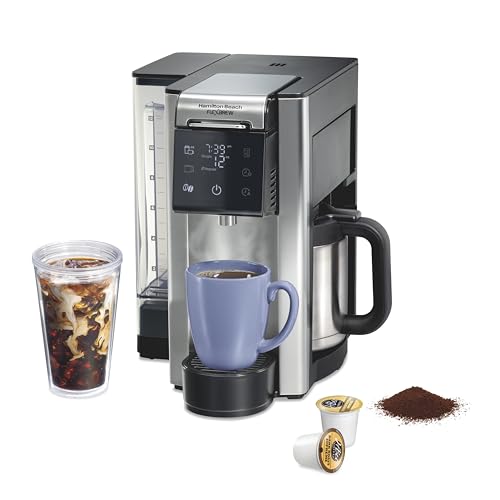
Hamilton Beach FlexBrew Advanced 5-in-1
Badge: Most Versatile
Strengths
- Two brewing styles in one footprint: a full thermal pot or a single cup
- Pods and grounds both work on the single-serve side, so guests are covered either way
- Removable reservoir is easier to fill and clean than a fixed tank
Trade-offs
- Two systems mean more parts to rinse and more to learn on day one
- Single-serve convenience can tempt you away from the fresher drip side
- The footprint is larger than a drip-only machine of the same pot size
Key specs (from the verified listing)
- Capacity: 12-cup drip side with thermal carafe
- Modes: drip and single serve, hot and iced
- Compatible inputs: pods and ground coffee
- Reservoir: removable, 60 oz
- Programmable drip side
In daily use, this machine suits mixed households where one person drinks pots and another drinks single cups. The design centres on what its verified listing actually promises, and the review judges it on exactly that: how the pot brews, how the coffee holds, and how much work the routine demands on an ordinary morning. Within this guide to best drip coffee makers consumer reports, its badge marks the job it does best, and households whose priorities match that job will find it the most natural fit in the set.
Set against its five companions, the character of this pick is its balance of strengths and trade-offs rather than any single headline feature. The strengths above are the reasons owners keep machines like this for years; the trade-offs are the frictions to accept with open eyes. On balance, the honest limitation is complexity: every added mode is another path for water and grounds to clean, and naming that limit plainly is what lets the right buyer choose it confidently and the wrong buyer choose better elsewhere in this list.
Best for: mixed households where one person drinks pots and another drinks single cups / Not suited for: households whose priorities clash with the trade-offs listed above
Check on Amazon to confirm the current configuration and the latest price on Amazon for this pick.

KRUPS 12-Cup Programmable Thermal Carafe
Badge: Best for Long Mornings
Strengths
- Three strength settings let you adjust extraction without changing your coffee dose
- Thermal carafe keeps coffee hot without a plate scorching it
- Full-day programming window makes wake-up brewing simple to set
Trade-offs
- No warming plate means no reheat option once the carafe cools
- Thermal carafe adds weight and needs hand care around the lid seal
- Strength settings cannot fix stale beans or the wrong grind size
Key specs (from the verified listing)
- Capacity: 12-cup batch size
- Carafe: double-wall thermal, no warming plate
- Programming: 24-hour programmable start
- Brew strengths: 3 strength settings
- Heat retention: thermal carafe keeps coffee hot for hours after brewing
In daily use, this machine suits planners who program the night before and drink the pot over a long morning. The design centres on what its verified listing actually promises, and the review judges it on exactly that: how the pot brews, how the coffee holds, and how much work the routine demands on an ordinary morning. Within this guide to best drip coffee makers consumer reports, its badge marks the job it does best, and households whose priorities match that job will find it the most natural fit in the set.
Set against its five companions, the character of this pick is its balance of strengths and trade-offs rather than any single headline feature. The strengths above are the reasons owners keep machines like this for years; the trade-offs are the frictions to accept with open eyes. On balance, the honest limitation is holding time: thermal heat fades, so a pot brewed at dawn will not taste fresh at noon, and naming that limit plainly is what lets the right buyer choose it confidently and the wrong buyer choose better elsewhere in this list.
Best for: planners who program the night before and drink the pot over a long morning / Not suited for: households whose priorities clash with the trade-offs listed above
Check on Amazon to confirm the current configuration and the latest price on Amazon for this pick.

Cuisinart 10-Cup Thermal Classic Coffeemaker
Badge: Best Compact Thermal
Strengths
- Ten-cup thermal format suits one or two coffee drinkers without waste
- Programmable controls cover the wake-up routine most homes actually use
- Compact batch size means coffee is brewed fresh more often
Trade-offs
- Smaller pot is a stretch when guests arrive
- Fewer headline extras than the most feature-loaded rivals here
- Thermal carafe needs pre-warming in cold kitchens for best heat retention
Key specs (from the verified listing)
- Capacity: 10-cup batch size
- Carafe: thermal
- Programmable controls
- Model: DCC-1170BKNAS
- Finish: black
In daily use, this machine suits smaller households that want a straightforward programmable thermal machine. The design centres on what its verified listing actually promises, and the review judges it on exactly that: how the pot brews, how the coffee holds, and how much work the routine demands on an ordinary morning. Within this guide to best drip coffee makers consumer reports, its badge marks the job it does best, and households whose priorities match that job will find it the most natural fit in the set.
Set against its five companions, the character of this pick is its balance of strengths and trade-offs rather than any single headline feature. The strengths above are the reasons owners keep machines like this for years; the trade-offs are the frictions to accept with open eyes. On balance, the honest limitation is headroom: this is a right-sized daily machine, not a party brewer, and naming that limit plainly is what lets the right buyer choose it confidently and the wrong buyer choose better elsewhere in this list.
Best for: smaller households that want a straightforward programmable thermal machine / Not suited for: households whose priorities clash with the trade-offs listed above
Check on Amazon to confirm the current configuration and the latest price on Amazon for this pick.
Comparison Table
| Pick | Badge | Capacity | Carafe | Listing |
|---|---|---|---|---|
| BLACK+DECKER CaféCraft 12-Cup Thermal Coffee Maker | Best for Hot and Iced | 12-cup batch size | thermal | Check on Amazon |
| Cuisinart 12-Cup PerfecTemp Thermal Coffee Maker | Best for Small Batches | 12-cup batch size | thermal, PerfecTemp design | Check on Amazon |
| BUNN CSB3T Speed Brew Platinum Thermal | Best for Speed | 10-cup batch size | thermal, stainless steel | Check on Amazon |
| Hamilton Beach FlexBrew Advanced 5-in-1 | Most Versatile | 12-cup drip side with thermal carafe | See spec box in review | Check on Amazon |
| KRUPS 12-Cup Programmable Thermal Carafe | Best for Long Mornings | 12-cup batch size | double-wall thermal, no warming plate | Check on Amazon |
| Cuisinart 10-Cup Thermal Classic Coffeemaker | Best Compact Thermal | 10-cup batch size | thermal | Check on Amazon |
Read the table as a filter, not a ranking. Eliminate the carafe type that does not suit your mornings, then the capacities that miss your household size, and the survivors are the reviews worth re-reading closely. Full controls, modes, and honest limitations live in the detailed reviews above, because a table cell cannot carry a trade-off fairly.
How to Choose the Right Machine for Best drip coffee makers consumer reports
Start with the pot, because the pot decides your mornings. Decide how much coffee your household drinks in its biggest regular session, convert mugs to maker cups generously, and choose the smallest capacity that covers that session without strain. Then decide the carafe: thermal for long, staggered mornings and the best held flavour; glass for short windows, visible levels, and lighter pouring. Only after those two decisions should features enter the conversation, because a timer cannot fix the wrong pot.
Next, list the features your routine will genuinely touch weekly. Programmable starts serve anyone with a fixed wake-up time. Strength controls serve mixed-taste households. Small-batch settings serve variable households. Iced modes serve seasonal drinkers. Built-in grinders serve whole-bean households willing to clean a grind path. Every feature beyond your list is weight, cost, and cleaning you carry for someone else’s routine, so buy your own list and not the longest one. Shoppers comparing this shortlist with our guide to Best Drip Coffee Makers For High Altitude will find the same discipline applied there.
Then check the physical fit. Measure the counter space, confirm the reservoir can be filled without dragging the machine out from under the cabinets, and think about the sink routine: carafe shape, basket removal, and lid design decide whether cleaning is a rinse or a project. Finally, judge tiers qualitatively. In this category, spending more buys carafe quality, build, and extraction-focused design before it buys miracles, and the reviews mark each pick’s tier so you can stop at the rung your routine actually needs.
Close the decision with a verification habit that will serve you beyond this purchase: read the listing for the exact model, confirm the features you are counting on are named in it, and skim recent owner feedback for patterns about the parts you will touch daily. A machine chosen this way rarely disappoints, because the disappointment in this category almost always comes from a mismatch between the household and the design, not from a bad machine.
How to Brew, Clean, and Troubleshoot: testing your own drip brewer at home
Daily brewing, step by step. Fill the reservoir with fresh, good-tasting water to the level your batch needs. Add a filter and level, medium-ground coffee at a consistent dose. Pre-warm a thermal carafe with a hot-water rinse on cold mornings. Start the cycle, let it finish completely before pouring, and serve promptly. Empty the basket soon after brewing rather than leaving wet grounds to sit, rinse the carafe, and leave parts open to dry. That five-minute rhythm, repeated, is most of what good drip coffee requires.
Weekly and monthly care. Wash the carafe, lid, and basket with warm soapy water weekly, paying attention to the lid seal and the basket rim where oils collect. Wipe the exterior and the area under the carafe. Descale on a schedule matched to your water: monthly for hard water, less often for soft, always following the manual for the approved method and finishing with plain-water rinse cycles. Grind-and-brew owners add one task: brush and wipe the grind path weekly so old grounds and oils never season the next pot.
Troubleshooting.
Problem: the pot tastes weak or sour → check the grind first (go a step finer), then the dose (add a little), then freshness; at altitude, also pre-heat everything and see the altitude guidance in this guide where it applies.
Problem: brewing has slowed down or the machine gurgles and spits → suspect scale in the heating path; descale fully, then brew a plain-water cycle and taste the next pot before changing anything else.
Problem: coffee overflows the basket or grounds appear in the pot → the grind is likely too fine, the basket was overfilled, or the carafe was not seated to open the drip stop; coarsen the grind, reduce the dose, and reseat the carafe before the next cycle.
Keep notes as you troubleshoot. One change at a time, tasted honestly, teaches you your machine faster than any forum thread, and the notes become the routine that makes best drip coffee makers consumer reports a solved question in your kitchen rather than a recurring search.
The Criteria That Matter in Drip Coffee Maker Testing
Brewing temperature and extraction sit at the top of every serious evaluation, because they decide flavour before any other feature gets a vote. Designs that advertise hotter brewing, such as the Cuisinart PerfecTemp models, or even-saturation showerheads, such as the BLACK+DECKER VORTEX design in the wider pick pool, are making claims aimed squarely at these criteria. Carafe performance comes next: thermal designs are judged on heat retention across hours, glass designs on how gracefully the warm plate treats the coffee. Finally, evaluators time the brew, test the small-batch behaviour, and score the unglamorous work of filling, pouring, and cleaning, because a machine that frustrates daily use fails its owners regardless of its brew numbers.
How should you use published evaluations, including this guide? Treat them as a filter, not a verdict. Use the criteria to eliminate designs whose trade-offs clash with your habits, then read owner feedback for the survivors with an eye for patterns about lids, carafes, and baskets. Be wary of any source, anywhere, that prints precise scores without explaining its method, and be equally wary of your own first impression: the second month of ownership, not the second day, is what testing tries to predict.
What best drip coffee makers consumer reports style checks reveal about carafes
Carafe testing exposes the clearest split in this category. Thermal carafes win on held flavour because insulation replaces reheating, and the double-wall steel designs in this guide are built for exactly that test. Their costs show up in other criteria: pour weight, a hidden fill level, and lid seals that need care. Glass carafes win on visibility and lightness and lose points the longer coffee sits on the plate. A testing-led buyer therefore starts with a personal fact, how long a pot lasts in their house, and lets that fact choose the carafe before comparing anything else.
However you weigh these points, keep the comparison grounded in the verified facts: the spec boxes and reviews above contain only what each listing confirms, and the listings themselves, one click from every pick via Best Drip Coffee Makers For Home readers’ shared shortlist habits, remain the place to confirm the current configuration before you buy.
Common Buying Mistakes
Buying capacity for the party, not the week. The oversized machine brews thin small batches for years to host one good afternoon. Buy for the regular day and borrow capacity thinking for the rare one.
Choosing glass for a thermal household. If your pot sits for hours, a warm plate will slowly cook it. Match the carafe to the real holding time, not the showroom look.
Paying for features the routine never touches. Modes you use twice a year still demand cleaning every week. Buy your own weekly list.
Ignoring the fill path. A reservoir you cannot fill in place turns every morning into a small chore; check clearance and access before the machine is yours. In plain terms: if filling is awkward, mornings will be too.
Skipping descaling until symptoms appear. By the time brewing slows, scale is well established. A schedule prevents the problem; symptoms announce it late.
Assuming a feature that was never listed. If a listing does not name the mode, the grinder, or the setting you are counting on, the machine does not have it. Verify, then buy.
Final Recommendation
For most readers of this guide to best drip coffee makers consumer reports, start with the BLACK+DECKER CaféCraft 12-Cup Thermal Coffee Maker (Check on Amazon). It carries the lead badge because its strengths serve the headline need with the fewest compromises for the widest range of households described here. If its trade-offs clash with your routine, the Cuisinart 12-Cup PerfecTemp Thermal Coffee Maker (Check on Amazon) is the natural second look, and the BUNN CSB3T Speed Brew Platinum Thermal (Check on Amazon) covers the long-morning case especially well.
Beyond the top three, choose by the badge that names your household: the reviews are written so that each badge is a promise the review then examines honestly, trade-offs included. Whichever pick you land on, confirm the current configuration and the latest price on Amazon at the listing, set the machine up with the routine in the how-to section, and descale on schedule. Do those things and the search that brought you here stays solved.
Water deserves more attention than it usually gets in drip brewing. Coffee is almost entirely water, so a machine can only work with what you pour in. If your tap water tastes strongly of chlorine, the pot will carry that note no matter which brewer made it. A simple jug filter or a day of rest in an open pitcher can soften the worst of it. Very hard water brings the opposite problem: mineral scale builds inside the heating path, slows the brew, and drags the temperature down over months. That is why descaling on a schedule, rather than when the machine complains, is the single habit that most extends a drip maker’s useful life.
Grind size is the quiet variable behind most disappointing pots. Too fine, and water lingers in the basket, over-extracting bitter compounds and sometimes overflowing the filter. Too coarse, and water rushes through, leaving a thin, sour cup that no strength button can fully rescue. For flat-bottom and cone baskets alike, a medium grind close to coarse sand is the reliable starting point. Change one thing at a time: adjust the grind a single step, brew the same dose, and taste before touching anything else. Keeping brief notes for a week teaches you more about your machine than any preset list.
Pre-warming a thermal carafe is a small ritual with an outsized payoff. A cold stainless interior steals heat from the first pot of the day, and the coffee pays for it in both temperature and flavour. A quick rinse with hot tap water while the machine fills brings the carafe closer to brewing temperature, so the coffee holds its heat for the drinkers who arrive an hour later. Glass carafes benefit less from the ritual, but they reward a different habit: take the pot off the warm plate once the household has had its fill, because held heat keeps cooking the coffee.
Filter choice shapes both flavour and cleanup. Paper filters trap oils and fine sediment, giving a cleaner, brighter cup and a basket that rinses in seconds. Reusable metal or mesh filters let more oils through, which some drinkers love for body, but they demand a thorough wash to avoid stale residue building up. Neither is objectively better; they are different cups from the same machine. If your brewer includes a reusable filter, try both styles for a week each with the same beans before deciding. The comparison costs almost nothing and settles the question for your own palate.
Storage is where good beans go to fade. Whole beans keep best in an airtight container away from heat, light, and the steam that rises every time the brewer runs, which rules out the decorative jar beside the machine for anything you plan to keep beyond a few days. Ground coffee fades faster still, so grinding in small amounts, or buying smaller bags more often, protects the pot more than any machine feature. None of the brewers in this guide can restore freshness that storage has already taken away, and honest buying means saying so plainly.
Serving order matters more than hosts expect. The first cup poured from a finished pot is not identical to the last: the brew concentrates as it sits, and a pot that stands for hours drifts toward bitterness even in a good thermal carafe. For gatherings, brew closer to serving time, pour the pot into a pre-warmed second vessel if it must wait, and consider two smaller batches instead of one giant one for events that stretch across an afternoon. The machines here handle the brewing; timing the brew to the people is the part only you can do.
Counter placement sounds trivial until a steamy brew cycle fogs the underside of a low cabinet for the five hundredth time. Give any drip maker clearance above for steam to escape, keep the reservoir fill path reachable without dragging the machine forward, and think about where wet filters and drips will land during a half-awake morning routine. A machine that is awkward to fill gets filled carelessly, and careless filling is behind a surprising share of leaks, spills, and grounds in places grounds should never be.
Finally, judge a brewer by the second month, not the second day. New machines impress with features; owned machines earn their place through quiet reliability, predictable cleaning, and a pot that tastes the same on a tired Tuesday as it did on the first Saturday. When you read owner feedback for any pick in this guide, weight the comments from people describing months of daily use more heavily than unboxing enthusiasm, and look for patterns about the carafe, the lid, and the basket, because those touchpoints decide whether a machine stays loved.
Temperature stability across the cycle is easy to overlook and hard to fake. A brewer that starts hot and fades leaves the second half of the basket under-extracted, and the pot tastes like two different coffees mixed together. You cannot see this from a spec sheet, which is why this guide leans on design signals that predict it: heating designs that advertise hotter brewing, showerheads that distribute water evenly instead of funnelling it through the centre, and cycles that finish in a sensible window rather than dragging on. When you read owner feedback, comments about consistent pot-to-pot flavour are quietly describing exactly this quality.
Hosting exposes a drip maker differently than daily use does. Guests arrive in waves, cups are different sizes, and someone always wants a top-up just as the pot runs dry. The habits that save a host are simple: brew as close to serving as the gathering allows, warm the mugs if the kitchen is cold, and know in advance whether your machine handles a second consecutive cycle gracefully or needs a pause. A twelve-cup thermal pot covers most tables; for larger groups, two staggered batches beat one giant batch that sits and stews while the conversation runs long.
Descaler choice is simpler than the shelf of products suggests. What matters is that the method is approved for your machine, that it runs through the full heating path, and that plain-water rinse cycles follow it until no taste remains. Vinegar is traditional and cheap but leaves an aroma that needs thorough rinsing; purpose-made solutions rinse cleaner and carry clear dosing. Either works when the schedule holds. What never works is waiting for the machine to slow down and then descaling in a panic, because by then the scale layer is thick enough to need repeated treatments.
The night-before setup is the unsung feature test of any programmable brewer. Filling water, adding the filter and grounds, and setting the timer should take two calm minutes with dry hands and good light. If a design makes any of those steps fiddly, the timer will quietly stop being used, and the household will conclude that programmable brewing is overrated when really the interface was. When you compare the picks in this guide, picture that evening routine with each machine: the one you can set up half-asleep, correctly, is the one whose timer you will still be using next year.
Noise and steam are the two qualities nobody lists and everybody lives with. A brewer under a low cabinet breathes steam onto the same wood every morning; a grinder section announces itself to the whole house at dawn. Neither fact disqualifies a machine, but both belong in an honest decision. Place the brewer where steam can escape, think about who sleeps nearest the kitchen before choosing a grind-and-brew routine, and remember that the quietest specification in this entire category is a thermal carafe clicking shut instead of a warm plate cycling for hours.
Frequently Asked Questions
What do independent testers measure in a drip coffee maker?
Serious evaluations focus on brewing temperature, extraction evenness, brew time, carafe heat retention, consistency across repeated pots, and ease of filling, pouring, and cleaning. Features such as timers and strength settings are checked for whether they work as claimed, but the core score always returns to the coffee in the cup and the work the machine demands daily.
Does this guide reproduce lab test scores?
No. This guide is research-led and prints no invented scores, ratings, or review counts. It explains the criteria independent testers use, maps each verified pick against them using confirmed listing details, and states each machine’s honest limitations, so you can apply the same method to your own shortlist.
How long should a drip coffee maker last?
With scheduled descaling and ordinary care, a home drip maker should serve for years of daily use. Lifespan depends more on water hardness and cleaning habits than on any single feature. Machines that are descaled on schedule, kept with dry baskets between uses, and not left sitting with wet grounds age far better than neglected machines at any tier.
How often should I descale a drip coffee maker?
A monthly rhythm suits hard-water homes, while softer water allows a longer interval; the honest rule is to descale on a schedule rather than waiting for slow brewing or off flavours. Follow the machine manual for the approved method, run plain-water rinse cycles afterwards, and treat descaling as heater maintenance, not deep cleaning theatre.
Can I brew a half pot in a full-size drip maker?
Yes, but do it deliberately. Use the small-batch setting if your machine lists one, keep the coffee-to-water ratio the same as a full pot, and spread the grounds evenly so the thinner bed still extracts properly. Several picks in this guide list small-batch or strength controls that make partial pots taste intentional rather than diluted.
What grind size works best for drip coffee makers?
A medium grind, close to coarse sand, is the reliable starting point for drip baskets. Too fine slows the flow and turns the pot bitter; too coarse rushes the water through and leaves the cup thin and sour. Adjust one step at a time, keep the dose constant, and taste before changing anything else.
Still weighing two picks? The fastest tiebreak is the carafe question, followed by capacity, followed by the feature your routine touches weekly. Readers comparing across this series can also see the neighbouring shortlist at Best Drip Coffee Makers For Home Brew, where the same verification standard applies.


