Disclosure: topratedkitchenware.com is reader-supported. When you buy through links on our site, we may earn an affiliate commission from Amazon and other retailers, at no extra cost to you.
Where to buy
The six machines below are the verified picks for this guide to the best drip coffee makers reddit discussions keep coming back to. Each name links to its Amazon listing, where you can check the latest price on Amazon, confirm the current configuration, and read the newest owner feedback before you decide.
- KRUPS 12-Cup Programmable Thermal Carafe Coffee Maker
- BUNN 55200 CSB3T Speed Brew Platinum Thermal Coffee Maker
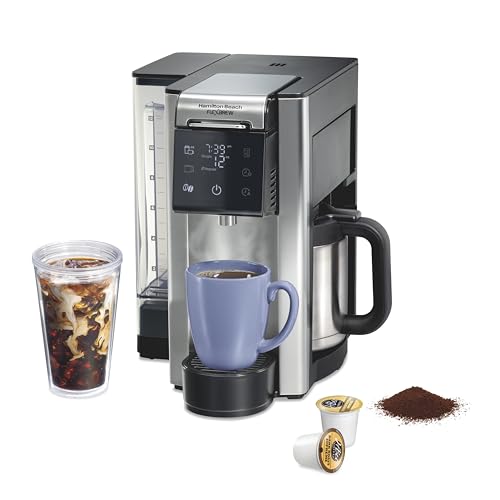
- Hamilton Beach Flexbrew Advanced 5-in-1 Drip and Single Serve Coffee Maker
- Cuisinart 10-Cup Thermal Classic Coffeemaker
- SECPOEDR Grind and Brew Coffee Maker with Built-In Grinder
- Gevi 10-Cup Grind and Brew Coffee Maker
Read the full guide ↓ for the ranking logic, the honest limitations of every pick, and the checks that community threads repeat far more often than any product page mentions them.
Searching for the best drip coffee makers reddit users actually recommend is a different exercise from reading a retail roundup, because forum posters are not selling anything. They are comparing notes after months of ownership, admitting which machine they returned, which carafe chipped, which brewer started tasting like plastic, and which one they would buy again with their own money. That honesty changes what matters. Marketing pages lead with preset counts and touchscreen size. Discussion threads lead with brew temperature, carafe quality, cleaning reality, and whether the machine still works two winters later. This guide is built in that spirit: it takes the questions that surface again and again in community conversations about drip coffee and tests six verified machines against them.
Three debates dominate those conversations. The first is thermal carafe versus glass carafe on a warming plate, and thread after thread lands in the same place: coffee held in a thermal carafe tastes fresher for longer, while coffee sitting on a hot plate slowly cooks. The second is speed versus control, where fast brewers earn praise from households that need a pot before a commute, while slower, programmable machines win over people who want coffee waiting when they wake up. The third is grind-and-brew convenience versus cleaning burden, because a built-in grinder sounds wonderful until you are the person washing oily grounds out of it every morning. The six picks below were chosen to represent each side of those debates honestly, with their trade-offs stated plainly rather than hidden.
You will find a quick picks table with badges, a full explanation of how the picks were chosen, and a detailed review of each machine covering who it suits, where it performs, and one honest limitation you should accept before buying. After the reviews there is a comparison table, a buying guide that explains capacity math and carafe types, a practical how-to section on brewing, descaling, and troubleshooting, and a section devoted to what community discussions surface that listings never mention. Readers comparing neighbouring questions will also find our notes on Best Drip Coffee Makers Sca useful, since the shoppers asking about certification standards and the shoppers reading forum threads are usually chasing the same thing: a brewer that gets the water hot enough and keeps it there.
Key Takeaways
- Community consensus favours thermal carafes over glass carafes on warming plates for flavour over a long morning, and four of the six picks here use thermal carafes.
- Brew temperature consistency is the complaint that appears most often in owner threads; every pick here was chosen partly for a design that takes hot, even extraction seriously.
- Grind-and-brew machines trade daily cleaning effort for fresher grounds; two picks offer that trade, and both reviews state the cleaning cost plainly.
- Speed is a real feature, not a gimmick: one pick here is built around a fast brew cycle for households that cannot wait through a long programmable cycle.
- Check the latest price on Amazon for each pick before deciding, and measure your under-cabinet clearance, because thermal carafes and grind-and-brew bodies run tall.
- No fixed scores are printed in this guide, deliberately; ratings shift constantly, so the guide explains how to read owner feedback instead of freezing a number in print.
In this guide
Quick Picks
| Pick | Badge | Why it made the list | Listing |
|---|---|---|---|
| KRUPS 12-Cup Programmable Thermal Carafe | Best Overall | Twelve-cup thermal capacity, three brew strengths, and full 24-hour programming without a warming plate cooking the coffee. | Check on Amazon |
| BUNN 55200 CSB3T Speed Brew Platinum Thermal | Best for Speed | A ten-cup thermal brewer from the brand community threads cite most for fast cycles and long service life. | Check on Amazon |
| Hamilton Beach Flexbrew Advanced 5-in-1 | Most Versatile | Brews a full thermal pot or a single serving, hot or iced, from pods or grounds, with a large removable reservoir. | Check on Amazon |
| Cuisinart 10-Cup Thermal Classic | Best Compact Thermal | A straightforward programmable ten-cup thermal machine for households that want no learning curve. | Check on Amazon |
| SECPOEDR Grind and Brew | Best Grind-and-Brew Value | Built-in grinder and ten-cup programmable brewing in a stainless body, positioned as one of the lower-cost routes into grind-and-brew. | Check on Amazon |
| Gevi 10-Cup Grind and Brew | Best Modern Controls | Touch screen controls, built-in grinder, glass carafe with a warm plate, and a reusable filter in a 1.5-litre design. | Check on Amazon |
Badges here are consistent through the whole guide: the badge beside a pick in this table is the same badge in its detailed review heading area, so you can scan either section and keep your bearings. If you already know your household drinks coffee across a long morning, start with the thermal picks. If your household argues about pods versus grounds, start with the versatile pick. If freshness of grounds is your whole reason for upgrading, start with the two grind-and-brew machines and read their cleaning trade-offs twice.
How These Picks Were Chosen
This is a research-led guide, not a lab report, and it does not pretend otherwise. No one here claims to have brewed hundreds of pots side by side under controlled conditions. What the research did do is cross-check three sources against each other: the verified product data for each machine, including its confirmed title, capacity, carafe type, and feature set; the recurring themes in owner discussions, where long-term complaints and praise carry more weight than first-week impressions; and the category knowledge that separates a meaningful specification from a decorative one. A pick only stayed on the list if all three sources told a consistent story about what the machine is and who it suits.
Only products confirmed through the verified pick pool for this guide received Amazon links and product images. That discipline matters more than it might sound. Coffee maker listings change configurations, bundle different carafes, and reuse model names across years, so every linked pick in this guide corresponds to a specific confirmed listing rather than a vague memory of a model line. Where a feature could not be confirmed from the verified data, the review simply does not claim it. You will notice the spec boxes are short. That is deliberate: they contain only what the verified data supports, and the prose around them explains how to judge the rest when you check the listing yourself.
The ordering reflects the keyword. Because this guide answers a community-driven question, the ranking weighs what owner threads weigh: flavour across a morning, temperature consistency, cleaning burden, and durability signals, ahead of novelty features. A machine with a beautiful touchscreen but a glass carafe cooking coffee on a plate for hours ranks below a plain thermal machine in this list, and the reviews explain why each time. Readers whose priority is pure shopping convenience rather than community verdicts may prefer to browse Best Drip Coffee Makers Reddit Walmart alongside this guide, since that angle weights in-store availability and returns more heavily.
The 6 Best Drip Coffee Makers Reddit Threads Keep Recommending

KRUPS 12-Cup Programmable Thermal Carafe Coffee Maker
Badge: Best Overall
Strengths
- Double-wall thermal carafe holds heat for hours with no warming plate, which is exactly the configuration community threads recommend for flavour.
- Three brew strengths let a household tune extraction instead of accepting one fixed profile for every bean.
- Full 24-hour programming means coffee can be ready at wake-up, the single most praised convenience in owner discussions of programmable machines.
Trade-offs
- Twelve-cup capacity is wasted on a one-person household that brews small amounts and reheats.
- A thermal carafe hides the coffee level, so you judge remaining coffee by weight rather than sight.
- No built-in grinder, so peak freshness still depends on a separate grinder or pre-ground coffee.
Key specs: 12-cup capacity; double-wall thermal carafe; 3 brew strengths; 24-hour programmable; no warming plate.
This is the machine the rest of the list is measured against, because it answers the three community debates cleanly. On the carafe question it sides with the consensus: the double-wall thermal carafe keeps coffee hot for hours without a plate slowly stewing it, which is why owners who drink across a whole morning defend thermal designs so strongly in threads. On the control question it offers three brew strengths, a simple, honest way to adjust for a light roast that tastes thin or a dark roast that turns bitter, without burying the setting in a menu. On the convenience question the 24-hour timer covers the weekday use case that sells most drip machines: fill it the night before, wake up to a finished pot.
In daily use, the KRUPS suits households of two to four coffee drinkers who brew once and drink over time. The absence of a warming plate also removes a whole category of forum complaints, since there is no plate to scorch the last cup, no auto-shutoff anxiety about a plate left on, and no glass carafe to crack against a sink edge. The honest limitation is the one thermal owners always mention: you cannot see how much coffee is left, and the carafe pours more deliberately than a glass jug. Accept that small ritual and this is the most complete answer to the keyword in the guide.
Best for: households that brew a full pot and drink it across the morning / Not suited for: single-cup drinkers who want pod convenience

BUNN 55200 CSB3T Speed Brew Platinum Thermal Coffee Maker
Badge: Best for Speed
Strengths
- Built around a fast brew cycle, the design priority community posters praise when mornings are short and patience is shorter.
- Thermal carafe in stainless steel and black, so speed does not come at the cost of coffee sitting on a hot plate.
- BUNN is the brand owner threads most often describe as a buy-it-once purchase, with a commercial heritage behind the home line.
Trade-offs
- Speed-first designs typically keep water ready, which is a design philosophy some households question for energy use.
- Ten-cup capacity trails the twelve-cup picks for large households and guests.
- The feature set is deliberately plain next to programmable rivals; this is a brewer, not a command centre.
Key specs: 10-cup capacity; thermal carafe; stainless steel and black finish; Speed Brew design.
Ask a coffee forum for a fast drip machine and this name surfaces with unusual consistency. The Speed Brew concept is simple: the machine is engineered so a full ten-cup pot arrives quickly, which matters in households where the gap between waking and leaving is measured in minutes. Owners in discussion threads tend to describe this brewer in the language of appliances that disappear into a routine, and that is high praise in a category where many machines generate a steady drip of small annoyances. The thermal carafe keeps the result honest after the fast brew, holding heat without a plate.
The trade-off to accept is philosophy. A speed-first machine optimises the brew moment, not the feature list: there is less programming theatre here than on the KRUPS or the grind-and-brew picks, and the ten-cup ceiling is real if you regularly serve a table of guests. Households that treat coffee as a slow weekend ritual may also find the whole premise unnecessary. But for the weekday household that wants a full pot, fast, in a thermal carafe, from the brand community memory trusts most in this niche, this is the pick, and it is not close.
Best for: busy households that need a full pot quickly / Not suited for: feature hunters who want timers, strengths, and screens
Hamilton Beach Flexbrew Advanced 5-in-1 Drip and Single Serve Coffee Maker
Badge: Most Versatile
Strengths
- One machine covers a full twelve-cup thermal pot and single servings, ending the pods-versus-grounds argument in mixed households.
- Brews hot and iced, from pods or grounds, so the same counter footprint serves summer and winter routines.
- The removable 60 oz reservoir is the largest water capacity in this guide, which means fewer refills for heavy drinkers.
Trade-offs
- Versatility means more parts, more seals, and more cleaning surfaces than a dedicated drip machine.
- A combination machine rarely matches a specialist at either job; purists on both sides will find compromises.
- The footprint and complexity are hard to justify if your household only ever brews one way.
Key specs: 12-cup thermal drip side; single-serve for pods and grounds; hot and iced brewing; removable 60 oz reservoir; black finish.
Every community thread about combination machines contains the same argument: one poster calls them the only sensible purchase for a mixed household, another calls them a compromise at everything. Both are describing this machine accurately. The Flexbrew Advanced earns its place because the compromise is well judged. The drip side is a genuine twelve-cup thermal programmable brewer, not a token pot, and the single-serve side handles both pods and grounds, which matters because pod households and grounds households often share one kitchen and one outlet. The iced function is not a gimmick either; brewing for iced coffee is a real summer routine in many homes.
The large removable reservoir deserves emphasis, because water capacity is the quiet specification that decides whether a machine feels effortless or needy. Sixty ounces removable means filling at the sink instead of pouring into a fixed tank with a jug and a prayer. The honest limitation is upkeep: a five-function machine has five functions’ worth of parts to rinse, descale, and keep track of, and owner threads about combo machines return to cleaning more than any other topic. If your household truly uses at least three of its five modes weekly, the trade is worth it. If not, a simpler pick above will serve you better.
Best for: mixed households split between pots, pods, and iced coffee / Not suited for: minimalists who want one job done with the fewest parts

Cuisinart 10-Cup Thermal Classic Coffeemaker
Badge: Best Compact Thermal
Strengths
- A classic, uncomplicated thermal design from a brand with a long drip-coffee track record.
- Programmable brewing covers the wake-up-to-coffee routine without extra modes to learn.
- Ten-cup thermal format suits smaller households better than the twelve-cup machines here.
Trade-offs
- No strength selection headline feature, so tuning a brew leans on coffee dose and grind.
- Thermal carafe level is invisible, the standard trade of the format.
- No grinder and no single-serve side; it is a focused drip machine only.
Key specs: 10-cup capacity; thermal carafe; programmable; black finish; model DCC-1170BKNAS.
There is a type of buyer community threads quietly respect: the one who buys the plain thermal machine from the established brand, uses it daily, and never posts about it again because nothing goes wrong. This Cuisinart is built for that buyer. The Thermal Classic formula is mature — a ten-cup programmable brewer with a thermal carafe — and its appeal is the absence of novelty. Controls are the kind a guest can operate without instructions, programming covers the weekday morning, and the ten-cup size matches the real consumption of a two-person household far better than an oversized pot that gets half wasted.
Where does it give ground? Against the KRUPS it offers less tuning, with no multi-strength headline feature, and against the Hamilton Beach it offers no second personality as a single-serve machine. Those are acceptable losses for its audience, because every omitted feature is also an omitted failure point and an omitted cleaning task. The honest limitation is capacity headroom: households that regularly host brunch should look at the twelve-cup picks instead. For everyone else who wants the thermal-carafe consensus answer in a compact, classic package, this is the calm choice.
Best for: smaller households wanting a classic programmable thermal brewer / Not suited for: large households or anyone wanting strength presets

SECPOEDR Grind and Brew Coffee Maker with Built-In Grinder
Badge: Best Grind-and-Brew Value
Strengths
- Built-in grinder means whole beans ground moments before brewing, the freshness step pre-ground coffee cannot match.
- Ten-cup programmable brewing with a two-hour keep warm function covers the standard morning routine.
- Stainless steel body, positioned as one of the lower-cost designs in the grind-and-brew class.
Trade-offs
- Grind-and-brew machines demand regular cleaning of the grinder path; oily grounds punish neglect quickly.
- A newer brand name carries less long-term owner history than the established names in this guide.
- Keep-warm holding means the last cup will never taste like the first, whatever the machine.
Key specs: 10-cup capacity; built-in grinder; programmable; 2-hour keep warm function; stainless steel.
The freshness argument is the strongest one in drip coffee, and it is simple: coffee stales fastest after grinding, so grinding seconds before brewing protects aroma in a way no carafe design can. This SECPOEDR builds the whole machine around that argument at a tier of the market where grind-and-brew is usually far more expensive in positioning. Ten cups, full programming, and a two-hour keep warm window make it a complete morning system in one stainless body, with no separate grinder claiming counter space beside it.
Community threads are the right place to learn the cost of that convenience, and they are blunt: the grinder section must be cleaned, regularly, or old oils and stuck grounds will flavour every pot. Owners who build a quick rinse-and-brush habit report good results; owners who expected a sealed, maintenance-free box report disappointment. Treat the cleaning as part of the product, because it is. The second honest note is brand history: this is a newer name than BUNN or Cuisinart, so long-term durability evidence is thinner, and buyers who weight decade-long track records heavily should weigh that. Buyers who weight fresh grounds per dollar of positioning will find this the most interesting machine in the guide.
Best for: freshness-focused buyers who will keep up with grinder cleaning / Not suited for: set-and-forget buyers who dislike maintenance

Gevi 10-Cup Grind and Brew Coffee Maker
Badge: Best Modern Controls
Strengths
- Touch screen controls give the grind-and-brew format a modern, legible interface.
- Built-in grinder with programmable brewing, so fresh-ground coffee can still be ready at wake-up.
- Reusable filter included, cutting the ongoing paper filter routine, with a 1.5-litre tank.
Trade-offs
- Glass carafe on a 90-minute warm plate is the holding method community consensus ranks below thermal.
- Same grind-and-brew cleaning obligation as any integrated grinder design.
- Touch controls divide opinion; some households simply prefer physical buttons with wet hands.
Key specs: 10-cup capacity; built-in grinder; touch screen; glass carafe; 90-minute warm plate; reusable filter; 1.5L tank.
The Gevi takes the same freshness premise as the SECPOEDR and wraps it in a more contemporary package. The touch screen is the headline: grind-and-brew machines ask you to coordinate two processes, and a clear screen genuinely helps a half-awake user set the right programme the night before. The reusable filter is a quieter virtue that forum posters mention with approval, since it removes a recurring consumable and the small morning fumble of a paper filter folding into the basket. Programmable timing means the grinder can do its loud work as the alarm, which households either love or banish to manual mode.
Its honest limitation sits in the carafe. A glass carafe on a warm plate, held for up to ninety minutes, is exactly the arrangement the thermal consensus argues against for flavour over time, so this machine is at its best when the pot is drunk promptly rather than grazed across a morning. The grinder cleaning duty applies here just as it does to its rival. Choose the Gevi if you value the interface and the reusable filter and your household finishes a pot quickly; choose the SECPOEDR if holding coffee longer matters more than the screen.
Best for: households that drink a pot promptly and like modern touch controls / Not suited for: slow grazers who need coffee to hold for hours
Comparison Table
| Model | Capacity | Carafe / holding | Standout trait | Listing |
|---|---|---|---|---|
| KRUPS Programmable Thermal | 12-cup | Double-wall thermal, no plate | 3 strengths, 24-hour timer | Check on Amazon |
| BUNN Speed Brew Platinum | 10-cup | Thermal carafe | Fast brew cycle | Check on Amazon |
| Hamilton Beach Flexbrew Advanced | 12-cup plus single serve | Thermal carafe | Pods and grounds, hot and iced | Check on Amazon |
| Cuisinart Thermal Classic | 10-cup | Thermal carafe | Classic programmable simplicity | Check on Amazon |
| SECPOEDR Grind and Brew | 10-cup | 2-hour keep warm | Built-in grinder, stainless body | Check on Amazon |
| Gevi Grind and Brew | 10-cup | Glass carafe, 90-minute warm plate | Touch screen, reusable filter | Check on Amazon |
How to Choose the Right Drip Coffee Maker
Start with honest capacity math. A coffee maker’s “cup” is a small serving, not a mug, so a ten-cup pot fills roughly four to five generous mugs. Count the mugs your household actually drinks on a weekday, then buy the smallest machine that covers that number plus one guest. Oversized pots tempt you to brew more than you drink, and coffee brewed and abandoned is the most common waste in the category. Households still comparing capacities across the whole category may find Best Drip Coffee Makers Under $100 a useful neighbouring reference for how features scale across tiers, though this guide deliberately keeps its focus on design rather than price bands.
Next, decide the carafe question, because it shapes flavour more than any electronic feature. Thermal carafes hold heat with insulation, so coffee stays hot without continuing to cook; they suit slow mornings and second cups hours later. Glass carafes on warm plates suit households that empty a pot within the hour and prefer to see the level at a glance. Neither is wrong, but buying the wrong one for your rhythm is the mistake owner threads describe most regretfully, so decide by your actual morning, not by which looks better in a photo.
Then weigh the water and heat side of the machine, the part listings describe least clearly. Consistent, sufficiently hot water spread evenly over the grounds is what separates a sweet, balanced pot from a sour or bitter one. This is the territory certification programmes measure, and readers who want that formal lens should continue to Best Drip Coffee Makers That Brew Hotenough after this guide, since brew temperature is the single variable forum posters test with kitchen thermometers more than any other. In practical buying terms, favour established heating designs and shower-style water distribution over novelty features, and treat any machine whose owners repeatedly call its coffee lukewarm as disqualified, whatever its screen can do.
Finally, audit the daily friction: how the lid opens under your cabinets, whether the reservoir lifts out or must be filled in place, how the carafe pours the last cup, and what cleaning the design demands weekly. A drip machine is used half-asleep, in the dark, more than almost any appliance you own. The right choice is the one whose small rituals fit your kitchen and your patience, which is why the detailed reviews above spend as much time on trade-offs as on strengths.
How to Brew, Clean, and Troubleshoot Your Drip Coffee Maker
Good drip coffee is mostly repetition of a few sound habits. Fill with fresh, cold water to the level that matches the mugs you actually want, remembering the maker’s cup markings run small. Dose grounds consistently — a level tablespoon or two per marked cup is the usual starting range — and then adjust one variable at a time on later pots rather than changing dose, grind, and strength settings all at once. For grind-and-brew owners, let the machine’s grinder do its work and resist opening the lid mid-cycle to peek, since heat and aroma escape every time. Once brewing finishes, give the pot a gentle swirl before the first pour so the stronger early coffee and weaker late coffee mix into an even cup.
Cleaning decides how the machine tastes in month six. Rinse the carafe and basket daily, wash removable parts with warm soapy water weekly, and wipe the grinder path on grind-and-brew models before oils build up. Descale on the schedule your water hardness demands: hard-water households may need it far more often than the manual’s gentle suggestion. Use the descaling approach the manufacturer describes for your model, run plain-water rinse cycles afterwards, and never ignore the early warning signs of scale, which are slower brewing, louder gurgling, and coffee that tastes dull even from fresh beans.
Problem: coffee tastes sour or thin → the usual causes are under-extraction from too-coarse grounds, too little coffee, or water that is not hot enough; tighten the dose first, then grind finer if your setup allows it. Problem: coffee tastes bitter or harsh → suspect over-extraction or coffee held too long on heat; brew a smaller pot, serve from a thermal carafe, and check that old grounds are not lingering in the basket or grinder path. Problem: the machine brews slowly or overflows the basket → think scale and blockage before failure; descale, confirm the filter sits flat, and check that the carafe lid and drip-stop are aligned so coffee can actually leave the basket.
What Community Discussions Surface That Listings Do Not
Read enough owner threads and a pattern emerges: the things that decide long-term satisfaction are rarely the things on the box. Listings talk about programmes and finishes. Owners talk about the carafe lid that is awkward to wash, the water marks that are hard to read in a dark kitchen, the drip-stop that dribbles when the carafe is pulled early, and the way a machine’s beep carries through a quiet house. None of those details sells a coffee maker, and all of them decide whether you still like it in year two. This is also why thread veterans advise new buyers to read the critical owner feedback first and the praise second: complaints repeat in patterns, and a pattern of the same complaint is data, while a single angry post is weather.
Another community habit worth copying is the update post, where an owner returns months later to report whether the machine survived. Those follow-ups are the closest thing drip coffee has to durability data, and they consistently reward simple thermal designs and established brands while punishing neglected grinder mechanisms and fragile hinges. If you are torn between two picks in this guide, weight the one whose design has fewer moving parts in contact with water and grounds, and read Best Drip Coffee Makers That Blooming if the pre-infusion stage of brewing is the detail you want to explore next, since bloom behaviour is another topic where thread discussion runs far ahead of product pages.
Reading Owner Feedback Without Being Mislead
Because this keyword begins with a community’s name, it is worth stating plainly how this guide treats ratings and reviews: it does not print fixed scores or counts, because those numbers change constantly and a frozen figure in an article goes stale almost immediately. Instead, judge feedback the way experienced thread readers do. Look at the distribution of complaints rather than the average, check whether negative reports cluster on one fixable issue like descaling or on something structural like a leaking reservoir, and prefer feedback from owners describing months of use over first-day impressions. A machine with a fixable, well-understood complaint pattern is often a safer buy than a newer machine with a thin, entirely cheerful record.
Apply the same scepticism to your own shortlist. If a pick in this guide tempts you, open its listing, read the newest critical feedback, and check whether the complaints match the trade-offs already named in its review above. When they do, you are buying with open eyes. When you find a complaint pattern this guide did not name, trust the pattern and choose differently. That habit, more than any single model choice, is what the community behind this keyword actually has to teach.
Thermal Carafe Versus Glass Carafe: Settling the Debate With Your Own Morning
No topic in drip coffee generates longer threads than the carafe, so it deserves a direct treatment here. The thermal side argues from flavour: coffee is a brewed beverage that keeps changing after extraction, and holding it at serving temperature with a heating element accelerates the changes nobody likes, which is why the last cup from a warm plate tastes cooked compared with the first. The glass side argues from visibility and ritual: you can see exactly how much is left, the carafe is lighter, replacement glass is simple to find, and a household that empties a pot in forty minutes never meets the problem the thermal side is solving. Both arguments are correct, and they apply to different mornings.
The practical test is a single question: how long does a pot live in your house? If a brew regularly survives past the one-hour mark — slow weekends, work-from-home grazing, a partner on a different schedule — the thermal picks in this guide, the KRUPS, the BUNN, the Hamilton Beach, and the Cuisinart, will serve that pot better, and the difference is large enough that owners describe it as the whole purchase. If a pot is poured out within the hour, glass and a warm plate are perfectly respectable, and the Gevi’s glass arrangement stops being a limitation and becomes a non-issue. What you should not do is buy thermal for a fast household and then complain the carafe is heavy, or buy glass for a slow household and blame the beans. The carafe is a lifestyle decision disguised as a hardware decision.
One more thread-tested detail: thermal carafes reward a quick pre-warming rinse with hot water before brewing on cold mornings, a small ritual owners swear by for keeping the last cup genuinely hot. Glass carafes reward the opposite discipline — turning the plate off once serving is done. Neither ritual is in the manual’s headline features, and both are the kind of lived detail that community discussion exists to pass along.
Matching the Machine to Your Household’s Actual Routine
The early-morning household, where two people leave for work within the same hour, should weight speed and programming above everything else in this guide. That points to the BUNN for pure pace or the KRUPS for a pot that is already brewed when the alarm goes off, and in both cases the thermal carafe protects the second person’s cup from the first person’s head start. The work-from-home household, where coffee is grazed between calls until midday, should weight holding quality first and capacity second, which is the KRUPS again or the Cuisinart for smaller volumes, with the Hamilton Beach entering the picture the moment one person wants a single afternoon cup without brewing a pot.
The freshness-obsessed household, the one already buying whole beans and talking about roast dates, should start at the grind-and-brew end of the list and choose between the SECPOEDR and the Gevi by carafe style and cleaning temperament, accepting that the grinder’s upkeep is now part of the hobby. The mixed household, split between a pot drinker, a pod drinker, and someone who wants iced coffee in summer, is the one case where the versatile machine is not a compromise but the correct answer, because three separate appliances would cost more counter and more patience than one Flexbrew. Naming your household honestly, before looking at a single feature list, is the shortcut experienced thread readers recommend most, and it is the logic behind the order of this guide.
Common Buying Mistakes
- Buying capacity for the biggest gathering of the year instead of the ordinary Tuesday, then wasting half of every pot.
- Choosing a glass carafe and warm plate for a household that drinks slowly across the morning, then blaming the beans for cooked flavour.
- Buying a grind-and-brew machine while expecting never to clean the grinder, the fastest route to a pot that tastes of old oils.
- Ignoring under-cabinet clearance and lid swing, then filling the reservoir with a jug at an angle every single day.
- Judging by a frozen score in an article instead of reading the pattern of recent owner complaints on the listing itself.
- Skipping descaling until the machine slows down, by which point scale is already flavouring every pot.
Final Recommendation
For most households behind this search, the first choice is the KRUPS 12-Cup Programmable Thermal Carafe Coffee Maker: it combines the thermal holding the community consensus prefers, three strengths for tuning, and a full timer, with no warming plate undoing its own work. If mornings at your house are a sprint, choose the BUNN Speed Brew Platinum instead and let speed be the feature. If your household is split between pots and pods, the Hamilton Beach Flexbrew Advanced is the honest compromise. Freshness-first buyers should pick between the two grind-and-brew machines by carafe style and cleaning commitment, and smaller households wanting the classic route will be well served by the Cuisinart Thermal Classic.
Frequently Asked Questions
Why do community threads prefer thermal carafes so strongly?
Because insulation holds heat without continuing to cook the coffee. A warm plate keeps applying heat, which steadily dulls and embitters a pot, while a double-wall thermal carafe simply slows cooling. For anyone who drinks a pot across more than an hour, that difference is the largest flavour variable in the whole purchase.
Is a grind-and-brew machine worth the extra cleaning?
It is worth it if fresh-ground flavour is the reason you are upgrading and you accept a short, regular cleaning routine for the grinder path. It is not worth it if you know you will skip that routine, because neglected grinder residue flavours every pot. Both grind-and-brew picks in this guide state that trade plainly in their reviews.
How much coffee will a 10-cup or 12-cup machine really make?
Maker cups are small servings rather than mugs, so expect roughly four to five generous mugs from a ten-cup pot and a little more from a twelve-cup. Count your household’s real mugs, add one for a guest, and buy the smallest capacity that covers that number.
What matters more, the machine or the beans?
The beans set the ceiling and the machine decides how close you get. Fresh beans brewed through a consistent, hot, well-maintained machine will beat expensive beans through a scaled-up, lukewarm one. If budget forces a choice, buy the reliable machine first and improve the beans later.
How often should I descale a drip coffee maker?
It depends on your water. Hard-water households should descale far more often than soft-water ones, and the practical triggers are slower brewing, more noise, and dull flavour from fresh beans. Follow the manufacturer’s described method for your model and rinse with plain water cycles afterwards.
Can one machine really do drip, pods, and iced coffee well?
A well-designed combination machine can do all three credibly, which is why the Flexbrew Advanced is in this guide, but specialists still hold an edge at each single job. Buy the combo if your household genuinely uses several modes every week; buy a dedicated drip machine if it does not. The deciding evidence is your own counter history: if a second appliance would sit unused, consolidation wins; if one mode would dominate ninety percent of mornings, the dedicated machine’s simplicity, easier cleaning, and longer track record in that single job usually win instead. Combination machines also concentrate risk, since one failure can take out several routines at once, which is worth weighing if the machine will be the household’s only way to make coffee.


