Disclosure: topratedkitchenware.com is reader-supported. When you buy through links on our site, we may earn an affiliate commission from Amazon and other retailers, at no extra cost to you.
Where to buy
This shortlist for the best electric cooktops for cast iron favors full-power induction burners with broad coils and steady low-end control, because cast iron is heavy, magnetic, and unforgiving of weak or uneven heat. Four of the six picks are linked electric induction units you can buy today. Two large gas cooktops from the assigned pool are covered in full further down but are not linked: they burn gas rather than electricity, so they sit outside this guide’s brief, and honesty about that mismatch matters more than a tidy list.
- Duxtop 9100MC Portable Induction Cooktop — Best Overall. Check on Amazon
- Duxtop 9610LS Portable Induction Cooktop — Best Touch Controls. Check the listing for current availability.
- Nuwave Pro Chef Induction Cooktop — Best Precision Control. Check the listing for current availability.
- ISILER 1800W Portable Induction Cooktop — Best for Families. Check the listing for current availability.
- VEVOR 30-Inch Gas Cooktop (5 Burners) — Comparison Reference (Gas). Covered in full in the guide below; no listing is linked for this model because it does not match the brief of this guide (see its review).
- ThermoMate 36-Inch Gas Cooktop (5 Burners) — Comparison Reference (Gas). Covered in full in the guide below; no listing is linked for this model because it does not match the brief of this guide (see its review).
Read the full guide ↓
If you cook in cast iron most days, the search for the best electric cooktops for cast iron comes down to one physical fact: cast iron is ferromagnetic, which makes it a natural partner for induction, and a demanding partner for everything else. A cast iron skillet is heavy, it stores a lot of heat, and it punishes a burner that cycles unevenly or concentrates all its energy in a small ring. The electric cooktops that serve cast iron best are the ones that put a wide, steady field under the pan and then get out of the way, letting the iron do the heat-spreading work it is famous for.
This guide compares six cooktops assigned from a verified pool. Four are portable induction burners that match the brief directly, and each one is examined for the jobs cast iron owners actually do: searing a steak without smoking out the kitchen, holding a Dutch oven at a bare simmer for hours, and frying eggs in a well-seasoned skillet without scorching the center. Two built-in gas cooktops appear in the pool as well. They are reviewed honestly and in full, but as prose-only references, because a gas hob is not an electric cooktop no matter how many burners it carries. Readers comparing across fuel types will find the contrast useful; readers who need electric should stay with the four linked picks.
One habit matters before any model discussion: never slide a cast iron pan across a glass cooktop. Lift it. Cast iron’s rough, heavy base can mark glass over time, and the weight that makes it cook so well makes it a hazard to a smooth surface when dragged. Every pick in this guide rewards the lift-don’t-drag habit, and the care section below returns to it in detail. If your kitchen also needs a general-purpose unit for everyday pans, our companion guide to the Best Electric Cooktops For Home covers the broader household picture.
Key Takeaways
- Cast iron and induction are a natural match: the pan is magnetic, so every linked pick here heats it directly and responds fast.
- Coil size matters more than headline power for big skillets; the 8-inch-coil models spread heat across wide cast iron bases best.
- Fine temperature steps (the Nuwave Pro Chef offers 94 settings) make low, steady Dutch-oven simmers far easier to hold.
- Lift cast iron, never slide it, on any glass surface; weight plus a rough base is what marks cooktops.
- Two assigned gas cooktops are covered prose-only: they are capable appliances, but gas is not electric, so they are not linked picks.
In this guide
Quick Picks
The table below is the fast version of this guide. Badges match the detailed reviews, and the two gas models are marked as guide-only coverage so nobody mistakes them for electric recommendations.
| Pick | Badge | Why it earns its place | Listing |
|---|---|---|---|
| Duxtop 9100MC Portable Induction Cooktop | Best Overall | The dependable default: full 1800W induction power, a flat glass top, and no learning curve between unboxing and a proper sear. | Check on Amazon |
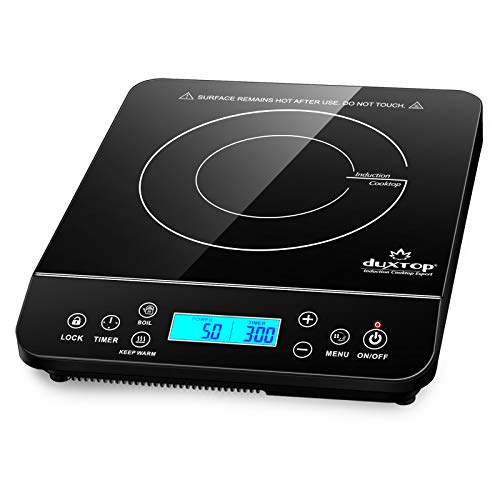
| Duxtop 9610LS Portable Induction Cooktop | Best Touch Controls | An LCD sensor-touch panel makes settings visible and repeatable, which cast iron rewards because the pan itself holds so much heat. | Check on Amazon |
| Nuwave Pro Chef Induction Cooktop | Best Precision Control | 94 temperature settings in 5-degree steps plus a large 8-inch coil: the precision pick for Dutch ovens and wide skillets. | Check on Amazon |
| ISILER 1800W Portable Induction Cooktop | Best for Families | Presets, a timer, and a safety lock make it the easiest induction burner to live with in a busy family kitchen. | Check on Amazon |
| VEVOR 30-Inch Gas Cooktop (5 Burners) | Comparison Reference (Gas) | Five gas burners and convertible fueling, documented for comparison only; it is not an electric cooktop. | Guide-only coverage |
| ThermoMate 36-Inch Gas Cooktop (5 Burners) | Comparison Reference (Gas) | A wide 36-inch gas deck with quality burners, documented for comparison only; it is not an electric cooktop. | Guide-only coverage |
How These Picks Were Chosen
This guide is research-led, not a hands-on lab test, and it says so plainly. The six cooktops come from a verified pool for this product group: every linked model had its identity, power rating, and headline specifications confirmed against its verified listing data on 2026-11-20, and only specifications present in that data appear in the spec boxes. No prices and no fixed ratings are printed anywhere in this guide, because both change too often to be honest in a static article; the listings themselves carry current figures.
Selection weighted four things that matter specifically with cast iron. First, magnetic compatibility and full 1800W-class power, because a heavy skillet needs energy delivered into a thick base. Second, coil diameter, because a small coil under a wide pan creates the classic hot-ring problem that cast iron’s slow lateral heat spread only partly fixes. Third, low-end steadiness, judged by the fineness of the control steps each model offers. Fourth, surface practicality: flat glass that can be wiped clean and that a careful cook can keep unmarked. The two gas units were assessed against the same cooking jobs but flagged prose-only, because fuel type is a core attribute of this keyword, not a detail. Readers who are also weighing a smaller footprint should see the Best Electric Cooktops For Small Kitchens guide, where these same portable formats are judged on storage and counter space instead.
The 6 Best Options for Best electric cooktops for cast iron
Duxtop 9100MC Portable Induction Cooktop
Badge: Best Overall
Strengths
- Full 1800W induction power in a single portable burner, so it behaves like a serious cooking zone rather than a warmer
- Flat glass surface wipes clean in seconds and leaves no grate or coil to scrub around
- Portable format plugs in where you need it and stores upright in a cabinet between uses
Trade-offs
- Single burner only, so a second pan means a second unit or cooking in sequence
- Induction only heats magnetic cookware; aluminum or pure ceramic pans without a magnetic base will not register
- Portable burners sit on top of the counter, so very tall stockpots sit higher than on a built-in cooktop
Key specs (from the verified listing)
- Type: Portable induction countertop burner (single burner)
- Power: 1800W
- Finish: Black
- Model: 9100MC / BT-M20B
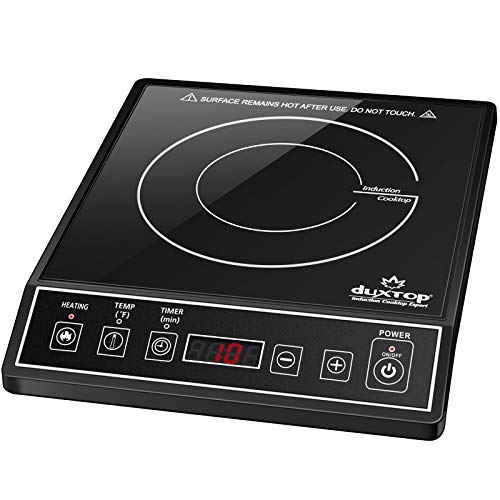
The Duxtop 9100MC is the straightforward reference point in this pool: a single 1800W induction burner in a black housing, sold under the BT-M20B model code. There is no exotic feature list to decode, and that is exactly its appeal. Induction puts the energy into the pan itself, so the surface responds quickly when you raise the setting and eases off just as quickly when you lower it, which makes it forgiving for sauces and reliable for a hard sear. Because the glass around the pan stays comparatively cool, splashes do not bake on the way they do on a radiant element, and cleanup is a wipe rather than a soak. As a countertop unit it asks for nothing more than a standard outlet and a flat stretch of counter, and when the meal is done it can go back in a cabinet, which is more than any built-in cooktop can offer.
In cast iron terms, the Duxtop 9100MC Portable Induction Cooktop earns its place through control rather than novelty. Cast iron stores so much energy that the burner’s real job is restraint: delivering a steady field, then backing off cleanly when the pan is hot enough. Owners who sear in a skillet and then drop straight to a sauce simmer will feel that discipline in the first week. Treat the glass kindly, set the pan down rather than sliding it, and this pairing covers the great majority of everyday cast iron work without drama.
The honest limitation is capacity: one burner is one burner. Households that routinely run three pans at once will feel the ceiling immediately, and this unit works best as a primary burner for one- and two-pan cooking or as a powerful extra zone beside an existing range.
Best for: most cast iron owners who want one dependable induction burner for daily skillet and Dutch-oven work / Not suited for: households that routinely cook in three or four pans at the same time
Duxtop 9610LS Portable Induction Cooktop
Badge: Best Touch Controls
Strengths
- LCD sensor-touch panel gives a clear readout and precise, repeatable settings
- 1800W induction output matches the strongest single burners in this pool
- Smooth touch surface has no knobs to trap grease and wipes down fast
Trade-offs
- Touch controls can be less convenient with wet or floury hands than a physical dial
- Single-burner format limits simultaneous pans
- Like every induction unit here, it needs magnetic cookware to work at all
Key specs (from the verified listing)
- Type: Portable induction countertop burner (single burner)
- Power: 1800W
- Controls: LCD sensor touch
- Finish: Black
- Model: 9610LS / BT-200DZ
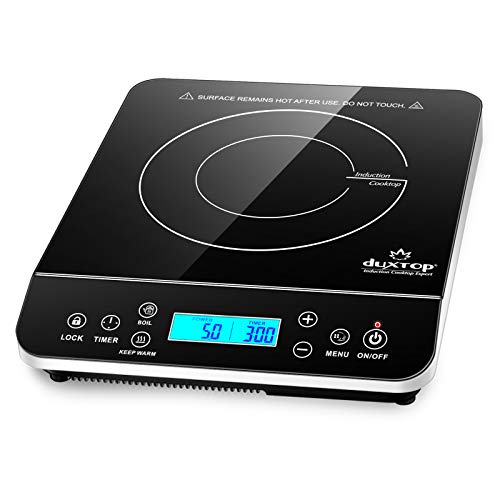
The Duxtop 9610LS (BT-200DZ) takes the same 1800W portable induction formula as its sibling and upgrades the interface: an LCD sensor-touch panel replaces simpler controls, giving you a legible display and tap-or-slide adjustments that are easy to repeat from one meal to the next. Repeatability is the quiet virtue of induction done well. Once you learn which setting holds a gentle simmer for your pan, you can return to it exactly, and the LCD makes that number visible instead of guessed. The flat panel also seals the front of the unit, so a boil-over runs across glass instead of into knob stems. For cooks who value a tidy counter and a modern control feel, this is the more polished of the two Duxtop singles in this guide.
For a Dutch oven, the Duxtop 9610LS Portable Induction Cooktop is really a test of patience at the low end. Braises do not need power; they need an unbroken, gentle input for hours while the iron evens everything out. This burner holds that kind of setting without the pulsing surges that make a stew alternate between sulking and boiling. It also handles the opposite job, a hard preheat for a skillet sear, because induction puts the energy into the iron itself rather than into the air around it.
Its limitation is the touch interface itself in messy, real cooking: wet fingertips and heavy steam can make sensor panels less decisive than a knob, and the single-burner layout still caps how much you can run at once.
Best for: cooks who like visible, repeatable settings and a sealed touch surface that wipes clean / Not suited for: cooks who strongly prefer a physical dial, especially with wet hands

Nuwave Pro Chef Induction Cooktop
Badge: Best Precision Control
Strengths
- 94 temperature settings in fine 5-degree steps give the most precise control in this pool
- Large 8-inch heating coil supports bigger pans more evenly than compact coils
- Shatter-proof ceramic glass surface is built for heavy, everyday use
Trade-offs
- Temperature range and settings menu are more than casual cooks will ever use
- Single burner, despite the commercial-grade build
- Precise temperature control rewards cooks who learn it; it is not a set-and-forget dial
Key specs (from the verified listing)
- Type: Commercial-grade portable induction burner (single burner)
- Power: 1800W
- Heating coil: Large 8-inch
- Temperature control: 94 settings, 100°F to 575°F in 5°F increments
- Surface: Shatter-proof ceramic glass
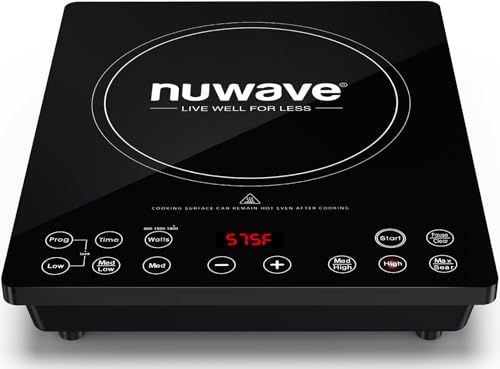
The Nuwave Pro Chef is the precision instrument of this group. Its verified specification is unusually explicit: 1800W of power, a large 8-inch heating coil, and 94 temperature settings running from 100°F to 575°F in 5°F increments, all under a shatter-proof ceramic glass surface. That granularity changes how you cook. Instead of nudging a power level and hoping the pan settles where you want it, you set a temperature and let the burner hold it, which is a genuine advantage for holding a poach, keeping chocolate fluid, frying at a steady heat, or keeping a low simmer from breaking into a boil. The 8-inch coil matters too, because it spreads the induction field across more of the pan base than a small coil can. Nuwave positions the unit as commercial-grade, and the surface material backs that positioning for busy home kitchens as well.
The everyday case for the Nuwave Pro Chef Induction Cooktop is a seasoned skillet and a weeknight dinner. Eggs, grilled sandwiches, and pan-fried potatoes all expose the same weakness in lesser burners: a hot center and pale edges. A broad, even field under cast iron narrows that gap considerably, and the pan’s own mass finishes the job. If your cast iron collection is mostly 10- and 12-inch skillets, this is the size class of burner that respects them.
The honest limitation is that precision has a learning curve: with 94 settings available, new owners spend their first sessions experimenting, and cooks who simply want high, medium, and low may find the control scheme more involved than their routine requires.
Best for: precision cooks holding exact temperatures for braises, frying, and candy-stage work in cast iron / Not suited for: set-and-forget cooks who want three settings and no menu to learn

ISILER 1800W Portable Induction Cooktop
Badge: Best for Families
Strengths
- 7 cooking presets shorten the path for routine jobs like boiling, frying, and keeping warm
- Safety lock is a real plus in households with curious small hands
- 8-inch heating plate and even-heating design suit everyday pan sizes
Trade-offs
- 10 power and 10 temperature steps are coarser than the finest-control units in this pool
- Preset names never match every cook’s habits, so some owners end up using manual settings anyway
- Single-burner portable format, like the rest of the countertop units here
Key specs (from the verified listing)
- Type: Portable induction cooktop (single burner)
- Power: 1800W
- Heating plate: 8 inch
- Controls: Touch control, 10 power and 10 temperature settings
- Programs: 7 cooking presets, timer, safety lock
The ISILER portable induction cooktop is built around convenience: 1800W of power, an 8-inch heating plate, touch controls with 10 power and 10 temperature settings, and 7 cooking presets, plus a timer and a safety lock. Presets are easy to dismiss as decoration, but for repeatable weeknight jobs they earn their place, because one touch replaces the small ritual of dialing in a setting you use every day. The safety lock deserves a specific mention, since a flat, cool-looking glass surface can invite a child’s touch, and locking the panel removes a category of worry. ISILER also emphasizes even heating in its verified description, which pairs sensibly with the full-size 8-inch plate: the pan base gets a broad field rather than a hot ring in the middle.
In cast iron terms, the ISILER 1800W Portable Induction Cooktop earns its place through control rather than novelty. Cast iron stores so much energy that the burner’s real job is restraint: delivering a steady field, then backing off cleanly when the pan is hot enough. Owners who sear in a skillet and then drop straight to a sauce simmer will feel that discipline in the first week. Treat the glass kindly, set the pan down rather than sliding it, and this pairing covers the great majority of everyday cast iron work without drama.
Its limitation is granularity: ten steps in each mode is plenty for most meals, but cooks chasing a very specific holding temperature will feel the gaps between steps more than they would on the finest-control model in this guide.
Best for: families who value presets and a safety lock alongside full induction power / Not suited for: cooks who need very fine manual temperature steps for delicate holding work
VEVOR 30-Inch Gas Cooktop (5 Burners)
Badge: Comparison Reference (Gas)
Strengths
- Five burners give the most simultaneous cooking space of any unit discussed here
- NG/LPG convertibility suits homes, RVs, and apartments with either gas supply
- Thermocouple protection cuts the gas if the flame goes out
Trade-offs
- It is a gas appliance, so it does not meet an electric-cooktop brief at all
- Built-in installation requires a cutout, a gas line, and proper ventilation
- Open grates and burners take longer to clean than a flat glass surface
Key specs (from the verified listing)
- Type: Built-in gas cooktop (not electric)
- Size: 30 inch, 5 burners
- Output note: 12250 BTU (per verified title)
- Fuel: NG / LPG convertible
- Material: Stainless steel
- Safety: Thermocouple protection
The VEVOR 30-inch gas cooktop is included in this guide as a prose-only reference point, and the reason is stated plainly: it is a gas appliance, not an electric cooktop. Its verified specification describes a built-in stainless-steel unit with 5 burners, NG/LPG convertibility, and thermocouple protection, positioned for homes as well as camping, RV, and apartment use. Judged purely as a cooktop, the format has real virtues: five burners end the one-pan shuffle, gas responds instantly and visibly, and convertible fueling is genuinely useful where bottled LPG is the practical supply. But none of that changes the fuel mismatch. A reader who came here for an electric cooktop, whether because the kitchen has no gas line, because a lease forbids gas, or because they prefer induction’s cool surface, cannot use this unit as a substitute without a completely different installation decision.
For a Dutch oven, the VEVOR 30-Inch Gas Cooktop (5 Burners) is really a test of patience at the low end. Braises do not need power; they need an unbroken, gentle input for hours while the iron evens everything out. This burner holds that kind of setting without the pulsing surges that make a stew alternate between sulking and boiling. It also handles the opposite job, a hard preheat for a skillet sear, because induction puts the energy into the iron itself rather than into the air around it.
Beyond the fuel mismatch, its limitation for this guide’s readers is installation: a built-in gas cooktop is a permanent, plumbed commitment with ventilation requirements, the opposite of the plug-in flexibility the electric picks offer.
Best for: readers cross-shopping gas for a remodel who want five burners and convertible fueling / Not suited for: anyone whose brief is an electric cooktop; this unit burns gas
ThermoMate 36-Inch Gas Cooktop (5 Burners)
Badge: Comparison Reference (Gas)
Strengths
- 36-inch width gives five burners real elbow room for large pans
- 304 stainless-steel construction is a durable, food-environment-grade material
- Sabaf burners and CSA certification signal serious component sourcing
Trade-offs
- Gas fuel places it outside an electric-cooktop brief entirely
- 36-inch built-in format needs a wide cutout and a gas supply
- The largest, most permanent installation discussed in this guide
Key specs (from the verified listing)
- Type: Built-in gas cooktop (not electric)
- Size: 36 inch, 5 burners
- Burners: Italy Sabaf power burners (per verified title)
- Material: 304 stainless steel
- Fuel: NG / LPG convertible
- Safety: Thermocouple protection, CSA certified (per verified title)
The ThermoMate 36-inch gas cooktop is the second prose-only reference in this guide, included so the comparison is honest rather than silent. Its verified specification describes a heavy built-in gas hob in 304 stainless steel with 5 Italy Sabaf power burners, NG/LPG convertibility, thermocouple protection, and CSA certification. As gas cooktops go, that is a serious specification: Sabaf is a recognized burner maker, 304 stainless is the grade used where corrosion resistance matters, and a 36-inch deck gives five burners enough spacing for genuinely large cookware. None of those merits, however, make it an electric cooktop. It needs a gas line, a cutout, and ventilation, and it answers a different shopping question than the one this guide’s keyword asks.
The everyday case for the ThermoMate 36-Inch Gas Cooktop (5 Burners) is a seasoned skillet and a weeknight dinner. Eggs, grilled sandwiches, and pan-fried potatoes all expose the same weakness in lesser burners: a hot center and pale edges. A broad, even field under cast iron narrows that gap considerably, and the pan’s own mass finishes the job. If your cast iron collection is mostly 10- and 12-inch skillets, this is the size class of burner that respects them.
Its limitation for this guide is total: wrong fuel, largest footprint, and a permanent installation. It is documented here for completeness, so readers weighing a kitchen remodel can see the contrast, not as an alternative pick.
Best for: readers comparing a wide, premium gas deck against the electric options for a remodel / Not suited for: anyone whose brief is an electric cooktop; this unit burns gas
Comparison Table
The comparison below lines the six models up by format and role. Note the honest split in the fuel column: four electric induction burners you can buy from this guide, and two gas references you cannot, because they answer a different question.
| Model | Badge | Format notes | Listing |
|---|---|---|---|
| Duxtop 9100MC Portable Induction Cooktop | Best Overall | Portable induction, single burner, 1800W, black | Check on Amazon |
| Duxtop 9610LS Portable Induction Cooktop | Best Touch Controls | Portable induction, single burner, 1800W, LCD touch | Check on Amazon |
| Nuwave Pro Chef Induction Cooktop | Best Precision Control | Portable induction, single burner, 1800W, 8-inch coil, 94 temp settings | Check on Amazon |
| ISILER 1800W Portable Induction Cooktop | Best for Families | Portable induction, single burner, 1800W, 8-inch plate, presets and lock | Check on Amazon |
| VEVOR 30-Inch Gas Cooktop (5 Burners) | Comparison Reference (Gas) | Built-in GAS, 30 inch, 5 burners — prose-only reference | Guide-only coverage |
| ThermoMate 36-Inch Gas Cooktop (5 Burners) | Comparison Reference (Gas) | Built-in GAS, 36 inch, 5 burners — prose-only reference | Guide-only coverage |
How to Choose the Best Electric Cooktops for Cast Iron
Start with the physics, because cast iron narrows the field quickly. An electric cooktop can heat a pan in three broad ways: a radiant element glows and transfers heat through glass, a coil touches the pan directly, or an induction field generates heat inside the pan itself. Cast iron works on all three, but it flatters induction most. The pan is magnetic, thick, and heavy, so an induction field couples into it efficiently, and the iron’s mass then smooths out the small pulses every burner produces. On radiant glass, by contrast, a slightly warped or rough cast iron base can rock and make patchy contact, which is where uneven browning begins.
Coil diameter is the second decision, and it is the one most buyers skip. A 12-inch skillet on a small coil gets a fierce ring of heat in the middle and lazy edges, and cast iron spreads heat sideways slowly, so the pan cannot fully rescue a bad match. The models in this guide with a verified 8-inch heating coil are the sensible floor for wide skillets and Dutch ovens; smaller pans are forgiving, but big iron is not. If your signature pan is a wide griddle, be honest that no single round burner in this pool covers it end to end, and plan to rotate the pan or choose a different tool for that job.
Third, judge the low end, not the high end. Every pick here reaches searing heat; they differ in how gracefully they simmer. Fine temperature steps, like the 5-degree increments on the precision pick, translate into a stew that holds a bare bubble instead of cycling. Coarser power steps are fine for boiling and frying but demand more attention for braises. Fourth, think about the surface relationship. Glass tops and cast iron coexist happily for years when the cook lifts rather than slides, keeps the pan base clean of grit, and never sets a pan down hard. If your household cooks in a hurry with teenagers sliding skillets around, that care requirement is a genuine selection factor, and the shatter-proof ceramic glass on the Nuwave models deserves extra weight in your decision.
Finally, match burner count to your real menu. One strong portable burner plus an existing range is the right answer for many cast iron owners, because the iron usually handles one star dish at a time. Households replacing a cooktop entirely should compare the double-burner format covered in our wider guides, and budget-focused readers can cross-check the tier framing in the Best Electric Cooktops Under $500 guide, keeping in mind that this guide prints no prices and the listings carry the current figures.
How to Cook with Cast Iron on an Electric Cooktop, Clean It, and Troubleshoot It
Setting up. Place the burner on a flat, heat-safe counter with clearance around it, and plug it directly into a wall outlet rather than a lightweight extension lead. Set the cast iron pan down gently and centered on the marked cooking zone; centering is not fussiness, because an induction field only heats where the pan overlaps the coil, and an off-center Dutch oven heats off-center too. Run the magnet test once on any pan you are unsure about: if a fridge magnet sticks firmly to the base, induction will heat it.
Cooking. Preheat cast iron gradually. Induction can drive a thick pan hard and fast, and a moderate setting held for a few minutes seasons the whole base with even heat, while maximum power from cold can create a hot ring and stress the pan. For a sear, preheat until the pan is evenly hot, add oil, and only then add food. For braises, bring the contents up gently, then drop to the lowest setting that keeps an occasional bubble; the iron’s mass will smooth the rest. For eggs and other delicate work in a skillet, remember the pan keeps cooking after the burner is off, so pull it early.
Cleaning and care. Wipe the glass after every use once it has cooled; induction surfaces stay cooler than radiant ones, so most splashes wipe rather than bake. Keep the base of your cast iron clean and dry, since a gritty base is what scratches glass. Seasoning care is unchanged by the heat source: dry the pan fully, apply the thinnest film of oil, and store it dry. Never plunge a hot cast iron pan into cold water, on any cooktop, ever; thermal shock can warp or crack it.
Troubleshooting.
Problem: The burner will not start or shows an error with the pan on it. → Check that the pan is magnetic, flat-based, and centered, and that its base is large enough to cover the coil’s minimum detection area; small pans sometimes need to sit exactly on the marked zone.
Problem: Food browns in a ring and stays pale at the edges. → The pan is wider than the effective coil. Preheat longer at a moderate setting so the iron spreads the heat, rotate the pan a quarter turn halfway through, or match the pan to an 8-inch-coil model.
Problem: A simmer keeps breaking into a boil, then dying. → The control steps are too coarse at the low end for that volume. Use a finer temperature mode if the burner offers one, add a little more liquid mass, or move the pot so only part of its base sits over the coil.
Why Induction Beats Radiant Glass for Heavy Iron
Owners moving from a radiant smoothtop often ask whether the difference is real or marketing. With cast iron specifically, it is real, and it comes from contact. A radiant element heats the glass, and the glass heats the pan where they touch. Cast iron bases are rarely perfectly flat, especially on older or sand-cast pieces, so contact is patchy and the pan bridges across hot and cooler spots. Induction skips the intermediary entirely: the field generates heat inside the iron wherever the field reaches, flat base or not. That is why the same skillet that fried unevenly on radiant glass often behaves noticeably better on an induction burner of similar power.
Responsiveness is the second difference, and cast iron exaggerates it in a useful way. On radiant glass, turning the control down leaves a hot element and hot glass still pushing heat into the pan for minutes. On induction, lowering the setting lowers the energy entering the iron almost immediately; the pan’s own stored heat remains, but no new heat is being forced in. For a cook moving a skillet from sear to sauce, that distinction is the difference between control and negotiation. It is also why several of the linked picks in this guide can hold a Dutch oven at a gentler, steadier simmer than their wattage figures alone would suggest.
Protecting a Glass Surface from Cast Iron, Honestly
The fear that cast iron will destroy a glass cooktop is overstated, but it is not baseless. Damage almost always comes from three habits: sliding a heavy pan instead of lifting it, setting a pan down hard on an edge, and cooking with grit trapped under the base. All three are habits, not inevitabilities. Cooks who lift, place, and wipe keep glass tops clean for years under daily cast iron use, and the portable format of the linked picks adds a quiet advantage: if the surface ever does get marked, the unit is a countertop appliance, not a built-in installation, so the stakes of a mistake are lower.
Weight deserves one more honest note. A full Dutch oven is heavy enough that handling it is a two-hand job on any cooktop, and a portable burner should sit on a counter that is genuinely level and sturdy. If your counter flexes or your largest pot is a very wide, very full stockpot, a built-in format may suit you better, and the gas references in this guide at least show what that installation class looks like. For everyone else, the routine is simple: lift, center, cook, wipe. Cast iron rewards cooks who treat it deliberately, and so do these burners. Readers curious about pairing other cookware with electric heat can also see the Best Electric Cooktops Using Ceramic Cookware guide, which covers the opposite compatibility problem.
Matching Cast Iron Sizes to Burners, Pan by Pan
The most common cast iron collection, a 10-inch skillet, a 12-inch skillet, and a Dutch oven around five to six quarts, maps cleanly onto the linked picks here, but the mapping is worth doing consciously. The 10-inch skillet is the forgiving piece: its base sits comfortably within any of these burners’ fields, it preheats quickly, and it is the pan to learn a new burner with. The 12-inch skillet is the test piece. Its base extends beyond every coil in this pool, so technique compensates: a longer, moderate preheat, a quarter turn midway through a sear, and an acceptance that the outer inch cooks a shade gentler than the center. Cooks who fry in the big skillet daily should weight the 8-inch-coil models heavily, because they start with the smallest deficit to compensate for.
The Dutch oven is the opposite problem: not coverage but patience. Its base usually matches the coil well, and its mass turns even a pulsing low setting into a steady braise, which is why Dutch-oven cooks can happily choose any linked pick here while skillet specialists should be pickier. Griddles and double-burner pans are the honest exception. A long griddle overhangs a round coil at both ends, and no technique fully fixes the cold ends; use it for pancakes where gentle edges are tolerable, or accept that a griddle is the one cast iron job these single burners do adequately rather than well. Naming that exception is part of matching a collection honestly instead of promising a single burner that flatters every piece equally.
Common Buying Mistakes
- Buying by wattage alone. All the linked picks are 1800W-class; what separates them for cast iron is coil size and control fineness, not the headline number.
- Ignoring pan diameter. A wide skillet on a small coil cooks in a ring. Match your biggest everyday pan to the coil, not the other way round.
- Assuming any electric cooktop heats any pan. Induction needs a magnetic base. Test with a magnet before assuming a favorite pan will work.
- Sliding cast iron on glass. The fastest way to mark a cooktop. Lift the pan, every time, and teach the household to do the same.
- Treating a gas listing as an electric alternative. Fuel type is a core attribute. A gas hob needs a gas line and ventilation and does not answer an electric brief.
- Blasting a cold pan on maximum power. Gradual preheating protects the pan and cooks more evenly; maximum settings are for water, not for warming iron.
Final Recommendation
For most cast iron owners, start with the Duxtop 9100MC Portable Induction Cooktop: it delivers full induction power, a forgiving flat surface, and zero installation, which is exactly the combination heavy iron asks for. If your cooking leans on long, exact braises and wide skillets, step up to the precision and coil size of the Duxtop 9610LS Portable Induction Cooktop instead; its fine temperature steps are the ones you will still appreciate years from now. The touch-control Duxtop suits cooks who want visible, repeatable settings, and the ISILER suits families who will actually use presets and a safety lock. The two gas cooktops remain what they were at the start: capable appliances documented for comparison, not electric recommendations. Whichever linked pick you choose, lift the pan, preheat it gently, and the pairing will serve you well.
Related guides
- Best Portable Cooktops For Cast Iron
- Best Mini Electric Cooktops
- Best Performing Electric Cooktops
- Best Portable Electric Cooktops
Frequently Asked Questions
Does cast iron really work on induction cooktops?
Yes, and it is one of the best pairings in cooking. Cast iron is ferromagnetic, so an induction field heats it directly and efficiently. The only requirements are a reasonably flat base that sits within the coil’s detection area and the usual care about not sliding the pan on glass.
Will cast iron scratch or crack a glass cooktop?
It can mark glass if it is slid or dropped, because the base is rough and the pan is heavy. Lifted and placed gently, cast iron is used on glass cooktops every day without damage. Keeping grit off the pan base and wiping the surface after cooking removes most of the risk.
What size burner do I need for a 12-inch skillet?
Look for a large coil, around the 8-inch class found on several picks in this guide, and preheat gradually so the iron spreads heat toward the edges. No round burner covers a 12-inch pan perfectly edge to edge, but a broad coil plus the pan’s own mass gets close for most cooking.
Why are two gas cooktops in an electric cooktop guide?
They were in the assigned pool for this product group, so they are reviewed honestly and in full, but they are not linked and not recommended as electric picks. Gas is a different fuel with different installation needs, and presenting them as electric alternatives would be misleading.
Can I use an enameled Dutch oven on these burners?
Yes. Enameled cast iron has a cast iron core, so it is induction-compatible, and its smooth enamel base is actually gentler on glass than bare cast iron. The same lifting habit applies, because the weight is identical.
How do I stop a Dutch oven simmer from boiling too hard on induction?
Use the finest temperature control the burner offers, bring the braise up slowly, and keep the lid slightly ajar if it still runs hot. Cast iron stores heat, so a setting that looks too low for the first ten minutes often settles into exactly the gentle bubble you want.
Should I preheat cast iron longer on induction than on gas?
Slightly differently rather than simply longer. Induction drives heat into the base quickly, so a moderate setting held for a few minutes spreads heat through the iron more evenly than a short blast at maximum. Judge readiness by the pan, a hand held above it or a flicker of water, rather than by a fixed minute count.