An espresso machine forces hot water through finely ground coffee under pressure to make a small, concentrated shot. Home machines range from semi-automatic models that need a grinder to bean-to-cup machines that handle everything for you.
The six machines below cover semi-automatic, grinder-equipped and automatic styles. We have not used these products ourselves, so confirm every detail on the current listing before you buy. Think about your grinder, counter space and how much you want to control by hand.
As an Amazon Associate we earn from qualifying purchases. Links below are affiliate links, and they do not change the product information we give.
What to Look For
| Feature | Why it matters |
|---|---|
| Machine style | Semi-automatic gives control; automatic gives convenience |
| Grinder | Built-in grinders save space; separate ones give more choice |
| Steam wand | Needed for lattes, cappuccinos and flat whites |
| Footprint | Measure your counter and cabinet clearance |
In this guide
Specs at a Glance
| Machine | Type | Grinder | Notes |
|---|---|---|---|
| Breville Barista Pro | Semi-automatic | Built-in grinder | Digital temperature control |
| Gaggia Classic Pro | Semi-automatic | No grinder | Commercial-style portafilter |
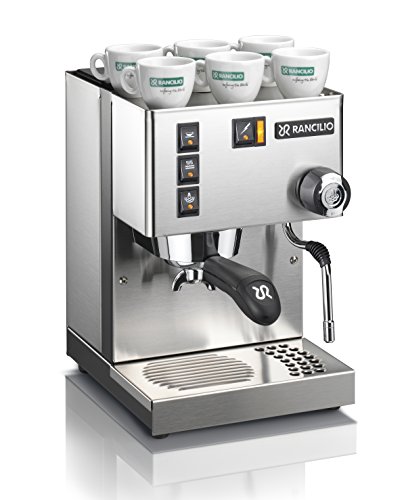
| Rancilio Silvia | Semi-automatic | No grinder | Commercial-style group head |
| Ninja Luxe Cafe | Semi-automatic with grinder | Built-in grinder | Multi-drink design |
| Philips 3200 LatteGo | Fully automatic | Built-in grinder | Easy-clean milk system |
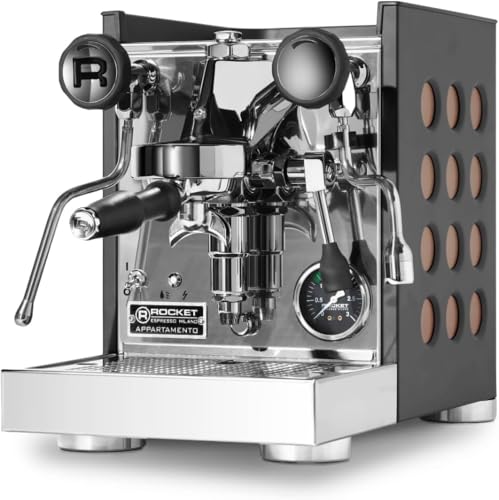
| Rocket Appartamento | Heat exchanger | No grinder | Compact Italian build |
The 6 Best Espresso Machines
Top pickBest for users who want an all-in-one
1. Breville Barista Pro
A semi-automatic machine with an integrated conical burr grinder and digital temperature control. It is a widely sold choice for home users who want a grinder and machine in one. It also offers adjustable grind size and a steam wand for milk, so it covers most drinks. Check the listing for the water tank capacity.
Suits: users who want an all-in-one. Strengths: built-in grinder and quick heat-up. Weaknesses: the integrated grinder limits upgrades. Skip it if you already own a grinder.
View Breville Barista Pro on Amazon

Best for learners who like to tinker
2. Gaggia Classic Pro
A long-running semi-automatic with a commercial-style portafilter and a brass-based build. It is a favorite of hobbyists who like to modify and learn. Its simple controls make the process easy to understand, and parts are widely available. Check the current listing for the version you are buying.
Suits: learners who like to tinker. Strengths: simple, durable design. Weaknesses: it needs a separate grinder. Skip it if you want push-button convenience.

Best for committed home baristas
3. Rancilio Silvia
A long-lived Italian single-boiler machine with a sturdy metal frame and a commercial-style group head. It rewards practice. Because it is built from sturdy parts, owners often keep it for many years. Check the current listing for the exact version and what is included.
Suits: committed home baristas. Strengths: robust build and repairability. Weaknesses: it demands patience and a good grinder. Skip it if you want an automatic machine.
View Rancilio Silvia on Amazon
Best for households wanting variety
4. Ninja Luxe Cafe
A grinder-equipped machine that handles espresso and other coffee drinks in one body. It is built for home users who want a variety of drinks from one appliance. It combines grinding, brewing and frothing in a single body, which saves counter space compared with separate gear. Check the listing for the drinks it supports.
Suits: households wanting variety. Strengths: many drinks from one machine. Weaknesses: its features add complexity. Skip it if you want a classic espresso-only setup.
View Ninja Luxe Cafe on Amazon

Best for busy mornings
5. Philips 3200 Series LatteGo
A fully automatic bean-to-cup machine with a simple milk system that rinses clean quickly. It targets people who want one-touch drinks. Cleanup is quick, and milk drinks come out with a single touch. Check the current listing for the water tank size and milk options.
Suits: busy mornings. Strengths: one-touch drinks and easy cleanup. Weaknesses: there is less manual control. Skip it if you enjoy dialing in shots.
View Philips 3200 LatteGo on Amazon
Best for design-minded enthusiasts
6. Rocket Appartamento
A compact Italian heat exchanger machine with a copper-clad body and an E61 style group head. It is aimed at home users who want a classic build. It heats quickly for its type and looks at home in an open kitchen. You will need a separate grinder. Check the current listing for details.
Suits: design-minded enthusiasts. Strengths: steaming and brewing at the same time. Weaknesses: it is a premium purchase. Skip it if you want a budget-friendly start.
View Rocket Appartamento on Amazon
Care and Setup
- Descale on the maker’s schedule.
- Backflush semi-automatic machines regularly.
- Wipe the steam wand right after steaming.
- Empty and clean the drip tray daily.
Mistakes to Avoid
- Using stale or poorly ground coffee.
- Ignoring the grinder when budgeting.
- Never descaling in hard water.
- Buying a machine too big for your counter.
Boiler Types Explained
The heating system inside an espresso machine shapes how it behaves in daily use, and it is one of the least visible details on a product page. Three designs come up most often in home machines, and the picks in this guide touch more than one of them.
A single-boiler machine uses one heating chamber for both brewing and steaming. It runs at brewing temperature for shots and has to be switched to a hotter mode, then cooled back down, to make steam. That means a short wait between a shot and a milk drink, which is fine for one or two cups but slows things down when you are serving several people. Machines of this kind are often simple, repairable and friendly to learners.
A heat exchanger machine keeps a larger boiler hot for steam and passes brewing water through a tube inside it. You can pull a shot and steam milk at the same moment, which is the main reason people choose them. They take longer to warm up and usually need a short cooling flush before a shot to keep the water temperature steady.
Automatic and bean-to-cup machines often use a fast-heating thermoblock instead of a boiler. These warm up quickly and keep the body compact, though they give you less control over temperature stability. When reading a listing, look for which of these systems the maker describes, and think about whether you make mostly black espresso or a run of milk drinks.
Water Quality and Descaling
Water makes up almost all of what ends up in your cup, and it also decides how long the machine lasts. Hard water leaves mineral scale inside boilers, pipes and valves, which can slow flow, reduce heat transfer and eventually cause failures. Very soft or heavily filtered water can have the opposite problem, giving flat-tasting coffee and, in some machines, interfering with level sensors. A middle path is usually best.
Start by finding out how hard your tap water is. Your local water supplier often publishes this, and inexpensive test strips can give a rough idea. If your water is hard, use a filter or a water treatment product that the machine maker approves, and check the manual for what is recommended. Some machines have a built-in filter cartridge slot, while others rely on a separate pitcher or inline filter.
Descaling should follow the maker’s schedule and use a descaler the manual allows. Different machines tolerate different acids, and the wrong product can harm seals. Run the full cycle, rinse thoroughly, and discard the first drinks afterward. If the machine has a descale indicator, do not ignore it for long. Keeping notes of the date you last descaled helps. Lastly, empty the water tank when you will be away for several days, rinse it often, and refill it with fresh water rather than topping up stale water.
Budgeting for the Whole Setup
A machine is only one part of what produces a good espresso. Many first-time buyers spend their entire budget on the machine and then struggle because the rest of the equipment is an afterthought. Before you choose, list everything you will need and divide your spending sensibly.
If you are buying a semi-automatic model without a built-in grinder, the grinder deserves a real share of the budget. A machine paired with a weak grinder will give inconsistent shots, no matter how good the machine is. Look for a grinder with fine, repeatable adjustment rather than a handful of coarse steps.
Next come the small tools that make a routine work: a tamper that fits your basket, a scale that reads in small increments, a milk pitcher, a knocking container for spent grounds and clean cloths. Fresh beans from a roaster you trust matter more than many expensive upgrades. Add in descaler, cleaning tablets and replacement gaskets over time. Think of these as running costs rather than one-time purchases.
Finally, consider the budget tiers qualitatively. Entry-level machines are good for learning and occasional use. Mid-range machines usually offer steadier temperature, sturdier parts and better steam. Premium machines add durability, serviceability and capacity for frequent use. Match the tier to how often you will actually pull shots rather than to how ambitious you hope to become.
Learning Curve and Daily Workflow
Different machines ask different things of you every morning, and it is worth picturing that routine before you buy. With a semi-automatic machine, you grind, dose, level, tamp, lock in, start the shot, time it, and then clean the portafilter. That is satisfying for people who enjoy the craft and frustrating for people who just want a coffee before work. A fully automatic machine reduces the sequence to a button press and a bit of maintenance.
If you pick a manual setup, expect the first few weeks to include some bad shots. Sour, thin shots usually mean the grind is too coarse or the dose too low. Bitter, harsh shots often mean the opposite. Change one variable at a time, write down what you did, and use a scale so you can repeat what worked. Most people improve quickly once they treat the process as a series of small experiments.
Milk work adds another layer. A steam wand rewards practice with smoother texture, while an automatic frother trades control for convenience. If you only drink straight espresso or americanos, you can ignore that whole skill and pay less attention to steam power. If you plan to make several milk drinks in a row, choose a design that recovers quickly between them. Be honest about your patience level, because the best machine is the one you will actually use every day.
Space, Power and After-Sale Checks
Practical checks save returns. Measure your counter and, more importantly, the space above it. Many machines need clearance to open a lid, fill the tank or pull out a portafilter, and a cabinet overhead can make a tall machine awkward to use. Check the depth as well, since a long machine can stick out past the edge.
Look at power requirements in the listing. Larger machines draw significant current, and putting one on a shared circuit with a kettle or toaster can trip a breaker. Plug it directly into a wall outlet rather than a power strip, and leave room for the cord.
Think about weight and where the water tank sits. A tank at the back that you must pull out to refill is less convenient than one on the side, and a small tank means frequent top-ups. Check whether the drip tray is large enough for your routine.
Finally, look at support. Read the warranty terms, find out whether replacement parts such as gaskets, shower screens and steam tips are available, and see whether the maker or a local service center repairs the machine. A machine that can be repaired is a better long-term purchase than one that has to be replaced when a small part wears out. Keep the box and receipt through the return window, and test the machine thoroughly in that period.
Which Pick Fits Which Household
The six machines in this guide serve different kinds of people, so the quickest way to narrow the list is to describe your household first. A single person who drinks one or two milk drinks before work has different needs from a family that wants coffee for several people on a weekend morning, and both differ from a hobbyist who enjoys the routine itself.
If you want grinding, brewing and steaming in one body and have limited counter space, the Breville Barista Pro and the Ninja Luxe Cafe are the two built-in grinder, semi-automatic options in the table. If you want the least effort possible, the Philips 3200 LatteGo is the fully automatic choice and removes most of the manual steps.
If you like learning and already own a grinder, or are willing to buy one, the Gaggia Classic Pro and the Rancilio Silvia are the simple, repairable semi-automatic picks. The Rocket Appartamento is for people who care about the look of the machine and want to brew and steam at the same time, and who accept a premium purchase and a separate grinder.
A useful test is to imagine a rushed Monday and a relaxed Sunday. If you would be annoyed by a long routine on Monday, lean toward automatic or all-in-one designs. If Sunday is when you want to experiment, a manual machine will reward you.
Features That Separate the Top Picks
On a spec sheet these machines can look similar, yet a few differences decide how they feel to use. The first is the grinder. Two picks include one that is described as built in, the automatic Philips also grinds for you, and the other three need separate equipment. That changes both the budget and the counter footprint.
The second is the heating design. The Gaggia Classic Pro and the Rancilio Silvia are described here as semi-automatic machines, and the Rancilio is called a single-boiler design. The Rocket Appartamento is a heat exchanger, which the guide explains lets you steam and brew together. Check each listing for the heating system of the version you are buying instead of assuming.
The third is how much the machine decides for you. The Breville offers digital temperature control, while the Philips handles most steps automatically. More automation means less to learn, but also fewer settings to adjust when a shot tastes off.
The fourth is the milk system. A steam wand needs practice but gives control. The Philips uses a simple milk system that is described as easy to rinse clean. The fifth is serviceability: simple, widely supported designs tend to be easier to keep running for years.
What to Check on the Listing Before You Buy
Because this guide is built from product descriptions rather than hands-on use, the listing is where you confirm what you are actually getting. Start with the exact model name and version, since similar names can refer to different generations with different features.
- What is in the box: look for the portafilter, baskets, tamper, milk pitcher and any cleaning tools. Some machines ship with few extras.
- Water tank size and position: a small or rear tank means more refilling.
- Voltage and plug type: make sure it matches your outlet and region.
- Dimensions and weight: compare them with your counter, shelf and cabinet height.
- Warranty length and what it covers: read who handles repairs and whether the seller or the maker backs it.
- Return policy: confirm the window and any restocking conditions.
Read the questions and answers on the listing as well, because buyers often raise issues about fit, noise and included parts there. Treat any single comment cautiously, but patterns across several comments are worth noting. If a detail is missing, ask the seller before ordering rather than guessing.
Milk Drinks Versus Straight Espresso
What you drink most should shape the choice more than almost any other factor. If you mainly make straight shots or americanos, steam performance barely matters, and you can put your attention on temperature stability, grinder quality and ease of cleaning. A simple machine with a good grinder will serve you well.
If you mostly drink lattes, cappuccinos or flat whites, the milk system deserves close attention. A manual steam wand lets you control texture, but it takes practice to avoid large bubbles or scalded milk. Use cold milk in a cold pitcher, keep the tip just below the surface at the start, and wipe and purge the wand straight away so milk does not dry inside it.
Automatic milk systems save effort and keep results consistent, but they add parts to rinse. Check how many pieces come apart for cleaning and whether they are dishwasher safe according to the manual. Milk residue is the usual cause of bad smells and off tastes, so a design you will really clean is better than one that is theoretically more capable.
If you serve several milk drinks in a row, think about recovery time between them. A machine that can brew and steam together, or heats quickly between modes, will keep up better.
Pairing a Grinder and Getting the Dose Right
For the machines without a built-in grinder, the grinder is half of the system. Espresso needs a fine, even grind that can be adjusted in small steps, because a small change can move a shot from sour to bitter. Look for a grinder designed for espresso, with a way to repeat your setting, rather than one meant mainly for drip or press brewing.
Basket type matters too. Some machines ship with a pressurized basket that is forgiving of uneven grinding, and others use a standard basket that exposes every flaw. A pressurized basket can help a beginner get acceptable results, while a standard basket gives more control once your grinder and technique improve. Check which comes with the model you choose and whether the other type is available.
Dose consistently. Weigh the beans before grinding and weigh the drink in the cup, so you can repeat a good result. Level the grounds, tamp evenly and avoid pressing at an angle. Use fresh beans from a roaster that shows a roast date, and store them airtight away from heat and light.
If your shots run far too fast or too slow even after adjusting, suspect the grinder, the beans or the basket before blaming the machine.
Signs It Is Time to Repair or Replace
Espresso machines are wear-and-tear appliances, and many problems are fixed with small parts. Weak flow, leaks at the group head and steam that sputters are often traced to worn gaskets, blocked screens or scale. Try a proper descale and a cleaning cycle first, and check the manual for how to replace the parts it lists as user serviceable.
Repair is more sensible when the machine is built to be serviced and parts are available. That is one reason the guide values simple designs with a commercial-style build. Ask the maker or a local service center what common repairs involve before you commit.
Consider replacing the machine if it leaks internally, trips the breaker, will not heat, shows persistent error codes after cleaning, or if the cost of repair approaches the price of a new unit. Corrosion inside the boiler or heavy scale that will not clear are also warning signs. Never open a machine while it is plugged in, and leave electrical or pressure repairs to qualified technicians.
If you replace it, use what you learned: note which features you used daily and which you ignored, and choose a model that matches that real pattern.
Espresso Machines FAQ
Do I need a grinder?
Most semi-automatic machines work best with a good grinder. Some models include one.
What is the difference between semi-automatic and automatic?
Semi-automatic machines need you to grind, tamp and stop the shot. Automatic machines handle most of that for you.
Is a built-in grinder better?
It saves space and money, but a separate grinder gives more room to upgrade later. Choose by how much counter space you have.
How long do espresso machines last?
With regular cleaning and descaling, many last for years. Check the listing for the warranty.
What is the difference between a heat exchanger and a single-boiler machine?
A single boiler brews and steams from one heating chamber, so you wait between a shot and steaming milk. A heat exchanger keeps a hot steam boiler and passes brew water through it, so you can do both at once. Heat exchangers are usually larger and take longer to warm up.
How often should I descale my espresso machine?
Follow the maker's schedule, which depends on water hardness and how much you use it. Harder water means more frequent descaling. Use a descaler the manual approves and rinse thoroughly afterward.
Is filtered water better for espresso machines?
Often yes, because it reduces scale. Very soft or heavily stripped water can cause flat flavor or sensor issues, so check what the maker recommends for your model.
Why does my espresso taste sour or bitter?
Sour shots usually point to a grind that is too coarse, too little coffee or too short a shot. Bitter shots often come from a grind that is too fine or a shot that runs too long. Change one variable at a time.
How much counter space do I need?
Measure width, depth and height, including clearance to open lids and remove the tank. Check the dimensions on the listing, and leave room for a grinder and a knock box.
Can I plug an espresso machine into a power strip?
It is better to use a wall outlet directly, because machines can draw a lot of power and some makers advise against strips or extension cords. Check the manual.
Should I buy a machine with a warranty and spare parts?
Yes. Gaskets, shower screens and steam tips wear over time, so confirm that replacements and service are available before you buy.
Can a beginner start with a semi-automatic machine?
Yes, if you accept a learning period with some poor shots. A pressurized basket, a scale and a decent grinder make the first weeks easier. If you want drinks with no learning curve, an automatic machine is the better fit.
Do I need to warm up the machine before pulling a shot?
Most machines benefit from a warm-up period so the group head and portafilter reach a steady temperature. The time needed varies by design, so follow the manual. Running a little water through before the first shot also helps.
What is a pressurized basket?
It is a filter basket that builds pressure with a small outlet hole, which makes shots more forgiving of uneven grinding. Standard baskets give more control but need a better grinder. Check which type is included with your machine.
How do I keep milk residue out of the steam wand?
Wipe the wand with a damp cloth right after steaming and purge a short burst of steam. Soak the tip occasionally if the manual allows. Dried milk is hard to remove later.
Is it worth buying a machine with a built-in grinder?
It is worth it if you value saving space and having one purchase to manage. The trade-off is that you cannot upgrade the grinder separately. Check whether the burrs can be replaced or serviced.
How should I store coffee beans for espresso?
Keep them in an airtight container away from heat, light and moisture. Buy amounts you will use within a few weeks of the roast date. Avoid storing beans in a container that is opened constantly.
Why does my machine make noise during a shot?
A pump hum is normal, but loud rattling, grinding or sputtering can point to an empty tank, a poorly seated tank or air in the lines. Refill and reseat the tank first, then check the manual. Persistent noise is worth raising with the maker.
Going Deeper: What This Guide Means by a Good Espresso Machine
This article was written for a home espresso machine chosen as a long-term fixture, where build, workflow and support matter as much as the shot. Keep that long-term test in mind as you re-read the six machines, because a model that suits a small flat today can be the wrong answer for a family kitchen in three years, even when both households are looking at a well-made machine. The honest way to use this guide is to decide what your espresso session must deliver over years, not weekends, then judge each machine against that rather than an abstract best. It is worth pausing here, because this is the point where a considered purchase becomes a daily pleasure and a rushed one becomes expensive clutter.
Start with real weekly use. A machine used twice a day lives a different life from one used twice a month, and the features that matter over years change with that rhythm. Frequent use rewards straightforward cleaning, predictable behaviour and wear parts you can replace without a struggle. Occasional use rewards simplicity and forgiving operation, because an infrequent user never builds daily muscle memory. Be honest about which user you are: many disappointed owners bought for the enthusiast they hoped to become, then resented a routine their ordinary mornings could not support.
Next, think about the whole system around the machine, not the machine alone on the counter. The coffee corner it sits in, beans from a roaster whose roast dates you can see and buy little and often, the water you fill it with, and the time you genuinely have all shape the result as much as the headline machine does. A modest setup used carefully over years outperforms an ambitious one used in a rush. When you compare the picks, keep asking what each one demands of the rest of your setup over its whole life, because that demand is part of the real cost of ownership.
Comparing the Picks With Each Other, Not With Perfection
Set the Breville Barista Pro beside the Gaggia Classic Pro and ask what each assumes about you. The Breville Barista Pro makes most sense as a long-term buy when its way of working matches yours: the pace it sets, and the decisions it leaves in your hands. Trust the feeling the Breville Barista Pro routine above produced; it is real information about how you will use it. If it sounded like homework, believe that too, and look again at the Gaggia Classic Pro, whose appeal may be precisely that it asks less of you when you have least to give, year after year. A machine you use happily and often beats a theoretically finer one that gathers dust by spring.
Set the Gaggia Classic Pro beside the Rancilio Silvia and ask what each assumes about you. Judged over years, the Gaggia Classic Pro earns its place when its routine fits your life — its tempo, its upkeep and the choices it hands back to you. If the Gaggia Classic Pro routine above sounded like something you would repeat happily, file that as real information. If it sounded like homework, believe that as well, and revisit the Rancilio Silvia, which may serve you better by asking less on the mornings you have least to spare. Over a machine’s life, daily enjoyment compounds; a finer machine you avoid is worth nothing.
Set the Rancilio Silvia beside the Ninja Luxe Cafe and ask what each assumes about you. The Rancilio Silvia rewards owners whose habits mirror its own: the rhythm it keeps and the decisions it leaves to you, season after season. If the Rancilio Silvia routine above sounded pleasant rather than chore-like, that reaction is real information. If it read like homework, trust it and look again at the Ninja Luxe Cafe: over years, the machine that asks less often wins. The machine still in use after five years is the one that was pleasant in week five.
Set the Ninja Luxe Cafe beside the Philips 3200 Series LatteGo and ask what each assumes about you. The Ninja Luxe Cafe makes most sense as a long-term buy when its way of working matches yours: the pace it sets, and the decisions it leaves in your hands. If working through the Ninja Luxe Cafe routine above felt easy, trust it — that reaction is real information. If it sounded like homework, believe that too, and look again at the Philips 3200 Series LatteGo, whose appeal may be precisely that it asks less of you when you have least to give, year after year. Long-term value lives in the machine you reach for, not the one with the grander specification.
Set the Philips 3200 Series LatteGo beside the Rocket Appartamento and ask what each assumes about you. Judged over years, the Philips 3200 Series LatteGo earns its place when its routine fits your life — its tempo, its upkeep and the choices it hands back to you. Notice your reaction to the Philips 3200 Series LatteGo routine above: pleasure there is real information, not a distraction. If it sounded like homework, believe that as well, and revisit the Rocket Appartamento, which may serve you better by asking less on the mornings you have least to spare. A machine that fits your mornings will outlast a theoretically finer one that fights them.
Set the Rocket Appartamento beside the Breville Barista Pro and ask what each assumes about you. The Rocket Appartamento rewards owners whose habits mirror its own: the rhythm it keeps and the decisions it leaves to you, season after season. If the Rocket Appartamento routine above left you keen rather than daunted, that is real information about fit. If it read like homework, trust it and look again at the Breville Barista Pro: over years, the machine that asks less often wins. Choose for the tenth year, not the first weekend: the used machine wins.
A Careful Espresso Session, Step by Step
Technique advice is easy to give and hard to use in the abstract, so here is the espresso session broken into the order that experienced long-term owners actually follow. There is no need to memorise the sequence. Run through it deliberately a few times and it becomes a rhythm, and rhythm is what makes results repeatable year after year. While you work, watch the stream slow and change colour, listen to the pump settle, and taste for balance rather than chasing one gauge number. Those senses, trained over a handful of espresso sessions, will tell a long-term owner more than any single gadget or guess.
Work on building a repeatable morning routine around the machine you chose, not the one you nearly bought. Done deliberately rather than roughly, building a repeatable morning routine makes the rest of the session easy to judge. When a result disappoints, a routine built on building a repeatable morning routine lets you name the step that drifted; without one, every session is a fresh mystery and progress is mostly luck. The extra moments on building a repeatable morning routine are repaid in results you can repeat.
Work on keeping grind, dose and yield steady while you learn its particular temperament. Take care with keeping grind, dose and yield steady instead of rushing it, because that care makes the session readable. A steady approach to keeping grind, dose and yield steady means a poor result points at a step you can name, instead of leaving every session a guessing game. Time spent keeping grind, dose and yield steady buys results you can reproduce deliberately.
Work on pulling back-to-back drinks to learn how it recovers between shots. Handled on purpose instead of approximately, pulling back-to-back drinks is what makes the rest of the session legible. Consistency in pulling back-to-back drinks turns improvement into method: a bad result identifies its own culprit rather than leaving you to luck. Extra care with pulling back-to-back drinks pays back in drinks you can repeat.
Work on steaming with intent, purging before and wiping after, every time. Done deliberately rather than roughly, steaming with intent every time makes the rest of the session easy to judge. When a result disappoints, a routine built on steaming with intent every time lets you name the step that drifted; without one, every session is a fresh mystery and progress is mostly luck. The extra moments on steaming with intent every time are repaid in results you can repeat.
Work on keeping a simple log of beans, settings and results for the first month. Take care with keeping a first-month log instead of rushing it, because that care makes the session readable. A steady approach to keeping a first-month log means a poor result points at a step you can name, instead of leaving every session a guessing game. Time spent keeping a first-month log buys results you can reproduce deliberately.
Work on scheduling the small maintenance jobs before they announce themselves. Handled on purpose instead of approximately, scheduling maintenance early is what makes the rest of the session legible. Consistency in scheduling maintenance early turns improvement into method: a bad result identifies its own culprit rather than leaving you to luck. Extra care with scheduling maintenance early pays back in drinks you can repeat.
Finally, end the session properly, every time. Clear up while things are still easy to clean, note anything you changed and what it did, and leave the coffee corner ready for the next session. That habit separates owners who improve steadily from owners who plateau: the next espresso session starts from knowledge instead of a vague memory. Within a few months those brief notes outrank any guide you can buy, because they describe your machine, your water and your taste, not a stranger’s.
Troubleshooting: When the Result Is Not What You Expected
Every owner of an espresso machine meets the same handful of disappointments sooner or later. The good news is that each one has a short list of likely causes, and working through that list calmly fixes most problems without new purchases or a service call. Change one thing at a time, and give the change a fair chance across several drinks before changing another. Change two things together and the result moves without telling you why, which is how owners end up chasing their tails for weeks.
Consider a machine that delights on Sundays and frustrates on workday mornings. Before blaming the equipment, check the basics in order — bean freshness and quality, quantities, temperatures, and whether everything was properly prepared and clean — because the Sunday-versus-weekday machine usually starts there. One of the four usually explains the Sunday-versus-weekday machine. If the basics are sound, change the one variable the reviews above link most closely to the Sunday-versus-weekday machine, and repeat the session otherwise identically. If the Sunday-versus-weekday machine survives several honest attempts, consult the manual’s troubleshooting pages or the maker’s support, notes in hand.
Consider great shots at home that you cannot repeat for guests. Resist blaming the machine until you have checked freshness, quantities, temperatures and cleanliness in that order, since the unrepeatable great shot rarely begins with the hardware. Usually one of the four sits behind the unrepeatable great shot. With the basics confirmed, adjust only the factor the reviews above tie to the unrepeatable great shot, keeping the rest of the session identical. Should the unrepeatable great shot persist through a few fair attempts, take your notes to the maker’s support.
Consider heat or pressure behaviour that changes as the machine warms through. Work through the basics first: fresh, suitable ingredients, honest quantities, proper temperatures and a clean, prepared machine, because the shifting heat and pressure is usually one of them in disguise. Mostly, one of the four explains the shifting heat and pressure. Once the basics check out, vary just the variable the reviews connect with the shifting heat and pressure and rerun the session unchanged otherwise. When several careful attempts leave the shifting heat and pressure unchanged, consult the manual or the maker, notes ready.
Consider accessories multiplying while the basic technique stays shaky. Before blaming the equipment, check the basics in order — bean freshness and quality, quantities, temperatures, and whether everything was properly prepared and clean — because the multiplying accessories usually starts there. One of the four usually explains the multiplying accessories. If the basics are sound, change the one variable the reviews above link most closely to the multiplying accessories, and repeat the session otherwise identically. If the multiplying accessories survives several honest attempts, consult the manual’s troubleshooting pages or the maker’s support, notes in hand.
Consider small leaks or drips ignored until they become a service visit. Resist blaming the machine until you have checked freshness, quantities, temperatures and cleanliness in that order, since the ignored leaks and drips rarely begins with the hardware. Usually one of the four sits behind the ignored leaks and drips. With the basics confirmed, adjust only the factor the reviews above tie to the ignored leaks and drips, keeping the rest of the session identical. Should the ignored leaks and drips persist through a few fair attempts, take your notes to the maker’s support.
Ownership Over Months and Years, Not Just the First Week
The first week with a new machine is the worst guide to owning it for years. Novelty hides friction, and early enthusiasm covers for routines that will not survive a busy month, let alone a busy year. Judge your purchase again after a season of ordinary use, not after the honeymoon. Are you still reaching for it daily? Is cleaning still happening properly, or has it become a wipe and a promise you make to yourself? Are its consumables easy to restock? Good ownership over years is mostly small, regular attention: seals, filters, tubes, surfaces and moving parts all age better cleaned little and often than rescued occasionally.
Before You Buy: A Final Round of Questions
More Questions Readers Ask
What separates a machine you keep for years from one you outgrow?
The honest answer on keepers versus outgrown machines depends on your routine, but owners report a consistent pattern. Start from the basics emphasised throughout this guide — fresh, suitable ingredients, a clean, properly prepared machine, one routine repeated — and keepers versus outgrown machines gets easier to judge. Most disappointment over keepers versus outgrown machines traces to a basic, not the machine. Give a change a few sessions before judging; single results mislead, patterns are evidence, on keepers versus outgrown machines as elsewhere.
How important is local servicing when choosing a machine?
Your routine frames local servicing when choosing, but owners report a consistent pattern. Anchor on the basics this guide repeats: fresh ingredients, a clean machine, the same routine each time, and local servicing when choosing usually answers itself. Usually local servicing when choosing goes wrong because a basic slipped, not because the machine failed. Judge a change over several sessions: single results mislead, patterns do not, especially on local servicing when choosing.
Should I buy the grinder or the machine first?
No universal answer exists on grinder first or machine first, yet owners report a consistent pattern. The reliable starting point is the one used throughout: fresh, suitable ingredients, everything clean and prepared, one routine, applied to grinder first or machine first. Most frustration with grinder first or machine first starts with a basic, not the equipment. Let changes run a handful of sessions before ruling; patterns beat one-off results on grinder first or machine first.
How do I judge a machine for making several drinks in a row?
The honest answer on several drinks in a row depends on your routine, but owners report a consistent pattern. Start from the basics emphasised throughout this guide — fresh, suitable ingredients, a clean, properly prepared machine, one routine repeated — and several drinks in a row gets easier to judge. Most disappointment over several drinks in a row traces to a basic, not the machine. Give a change a few sessions before judging; single results mislead, patterns are evidence, on several drinks in a row as elsewhere.
What daily habits most extend a machine’s life?
Your routine frames habits that extend machine life, but owners report a consistent pattern. Anchor on the basics this guide repeats: fresh ingredients, a clean machine, the same routine each time, and habits that extend machine life usually answers itself. Usually habits that extend machine life goes wrong because a basic slipped, not because the machine failed. Judge a change over several sessions: single results mislead, patterns do not, especially on habits that extend machine life.
Is a bigger machine wasted on one coffee a day?
No universal answer exists on a big machine for one coffee a day, yet owners report a consistent pattern. The reliable starting point is the one used throughout: fresh, suitable ingredients, everything clean and prepared, one routine, applied to a big machine for one coffee a day. Most frustration with a big machine for one coffee a day starts with a basic, not the equipment. Let changes run a handful of sessions before ruling; patterns beat one-off results on a big machine for one coffee a day.
The Short Version
For an all-in-one, the Breville Barista Pro. For tinkering, the Gaggia Classic Pro. For a rugged build, the Rancilio Silvia. For variety, the Ninja Luxe Cafe. For one-touch drinks, the Philips 3200. For a compact classic, the Rocket Appartamento.
Related Guides
- 6 Best Compact Espresso Machines for Small Kitchens
- 6 Best Espresso Machines for Small Kitchens (2026)
- 6 Best Commercial-Style Espresso Machines for Home
- 6 Best Dual Boiler Espresso Machines for Home Use
- 6 Best Espresso Machines for Beginners


