Disclosure: topratedkitchenware.com is reader-supported. When you buy through links on our site, we may earn an affiliate commission from Amazon and other retailers, at no extra cost to you.
Where to buy
The six machines below are the verified picks in this guide to the best expensive automatic drip coffee makers. Each name links to its Amazon listing, where you can check the latest price on Amazon, confirm the current configuration, and read the newest owner feedback before you decide.
- BUNN 55200 CSB3T Speed Brew Platinum Thermal Coffee Maker
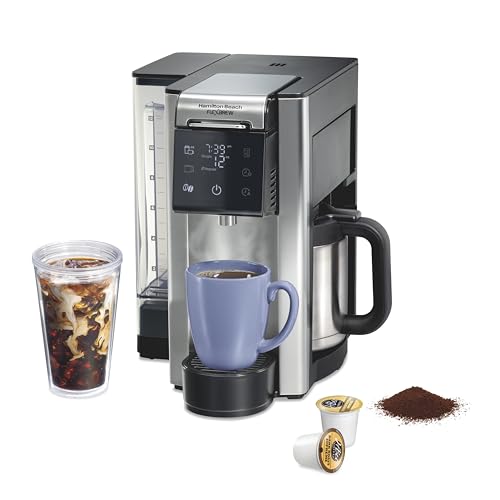
- Hamilton Beach Flexbrew Advanced 5-in-1 Drip and Single Serve Coffee Maker
- KRUPS 12-Cup Programmable Thermal Carafe Coffee Maker
- Cuisinart 10-Cup Thermal Classic Coffeemaker
- SECPOEDR Grind and Brew Coffee Maker with Built-In Grinder
- Gevi 10-Cup Grind and Brew Coffee Maker
Read the full guide ↓ for what the premium tier of drip brewing actually buys, where it stops mattering, and which of these six machines matches the way your household really drinks.
Looking for the best expensive automatic drip coffee makers means accepting a question first: what does money actually buy in a drip machine? Not magic. A drip brewer heats water and passes it over ground coffee; the physics is humble at every tier. What the premium end buys is control and endurance around that simple act — thermal carafes that hold heat without cooking the coffee, programmability that has your pot ready when you wake, brew-strength choices, integrated grinding, larger and better-sealed water systems, and construction that still feels tight after years of daily thermal cycles. This guide ranks six premium-positioned automatic drip machines on exactly those terms, and it is honest about the point where spending more stops improving the cup.
Two of the six integrate a grinder, three keep coffee in thermal carafes rather than on warming plates, one doubles as a single-serve machine, and capacities run from 10 to 12 cups. That spread is the premium drip category in miniature: there is no single “best” specification, only different answers to how a household brews. Readers whose premium budget is aimed at single-serve machines instead will find the neighbouring question framed in Best Expensive Coffee Makers; this guide is specifically about the batch brewer, the machine that makes a pot and keeps a household caffeinated all morning.
Key Takeaways
- In premium drip brewing, the thermal carafe is the single biggest quality upgrade: coffee held in an insulated carafe stays hot without the stewed flavour a hot plate creates.
- Programmability is the second real upgrade. A 24-hour programmable machine changes your morning more than any exotic brew mode.
- Built-in grinders, on the SECPOEDR and Gevi picks, trade a separate appliance and counter space for one integrated routine — fresh grounds with no extra machine to clean.
- Capacity math should use your household’s real morning, in mugs, not the “cups” printed on the box, which are smaller than a standard mug.
- Speed is a premium trait too: the BUNN Speed Brew design is built around keeping hot water ready so a full pot brews fast when the household is waiting.
- Premium pricing cannot fix stale beans, a wrong grind, or skipped descaling. Spend on the machine, then respect the basics.
In this guide
Quick Picks
| Pick | Badge | Capacity and carafe | Why it earns a premium slot | Check |
|---|---|---|---|---|
| BUNN Speed Brew Platinum Thermal | Best Overall | 10-cup, thermal, stainless steel | Speed-focused design plus a thermal carafe — fast pot, no hot-plate stewing | Check on Amazon |
| Hamilton Beach Flexbrew Advanced 5-in-1 | Most Versatile | 12-cup thermal programmable drip, plus single serve | A batch brewer and a pod-and-grounds single-serve machine sharing one reservoir system | Check on Amazon |
| KRUPS Programmable Thermal Carafe | Best for Long Mornings | 12-cup, double-wall thermal carafe | Thermal carafe keeps coffee hot for hours with no warming plate, plus 3 brew strengths and 24-hour programming | Check on Amazon |
| Cuisinart Thermal Classic | Best Classic Design | 10-cup thermal, programmable | A restrained, proven-format thermal brewer for households that want premium without novelty | Check on Amazon |
| SECPOEDR Grind and Brew | Best Integrated Grinder, Stainless | 10-cup, programmable, built-in grinder | Grinds and brews in one stainless steel machine with a 2-hour keep warm function | Check on Amazon |
| Gevi Grind and Brew | Best Touch-Screen Grind and Brew | 10-cup, glass carafe, 1.5L tank | Touch-screen programmable grind-and-brew with reusable filter and a 90-minute warm plate | Check on Amazon |
How These Picks Were Chosen
This is a research-led guide. The six machines come from a verified product pool for premium automatic drip brewers, and every capacity, feature, and material named in the reviews is taken from the manufacturer’s own listing information for that exact model. If a specification is not in the listing data, it does not appear here as fact — the reviews work with what is verified and say so where a listing is brief. No hands-on testing is claimed, and no prices or ratings are printed, because both change constantly and neither survives contact with a calendar.
The ranking weights what the premium tier is actually for. First, heat management after brewing: thermal retention without a scorching plate counts heavily, which is why thermal carafes dominate the top of the list. Second, morning automation: programmability that genuinely removes work. Third, integration value: a built-in grinder or a second brewing format earns its place only if it removes an appliance or a step, not merely because it lengthens a feature list. Fourth, household fit: 10-cup and 12-cup machines serve different kitchens, and the reviews name the fit rather than pretending bigger is automatically better. Finally, honesty about limits: every pick carries a real trade-off, stated in its review, because a premium guide that finds no faults is an advertisement wearing a guide’s clothes.
The 6 Best Expensive Automatic Drip Coffee Makers

BUNN 55200 CSB3T Speed Brew Platinum Thermal Coffee Maker
Badge: Best Overall
Strengths
- Speed Brew design philosophy: the machine is built around delivering a full 10-cup pot quickly, which is what a waiting household actually feels.
- Double advantage on heat: a thermal carafe in stainless steel holds the brewed coffee hot without a warming plate cooking it.
- Black and stainless presentation suits the premium brief — a serious appliance look rather than a novelty design.
Trade-offs
- No built-in grinder, so fresh-ground brewing means owning and cleaning a separate grinder.
- At 10 cups it is the joint-smallest batch here; households that regularly drain a 12-cup pot should look at the KRUPS or Hamilton Beach.
- Speed-focused designs reward owners who keep the machine ready — water topped up, carafe in place — rather than treating setup as a morning task.
Mini spec box: Capacity: 10-cup · Carafe: thermal, stainless steel · Design: Speed Brew Platinum · Colour: Black.
The BUNN takes the top badge because it understands the premium drip brief in the right order: brew the pot fast, then protect it. Many machines do one or the other. A fast brewer with a glass carafe on a hot plate gives you speed followed by slow stewing; a thermal machine that takes forever to brew protects coffee you are still waiting for. The Speed Brew Platinum pairs a speed-centred design with a stainless thermal carafe, so the pot arrives quickly and then simply stays hot, held by insulation rather than by continued cooking.
In a household routine, that pairing shows up as calm. The pot is ready when people are, the last cup tastes like the first batch rather than like the bottom of a diner warmer, and the carafe can travel to a table or desk without a cord. The honest limits are capacity and grinding: 10 cups is a medium household’s morning, not a brunch party’s, and bean-to-cup freshness requires your own grinder beside it. Buyers who rank raw pace above all else are asking the narrower question explored in Best Fast Brewing Coffee Makers; within the premium drip brief, the BUNN’s balance of pace and protection is why it leads this list.
Best for: households that want a fast full pot that stays good to the last cup / Not suited for: buyers who need 12-cup batches or an integrated grinder
Hamilton Beach Flexbrew Advanced 5-in-1 Drip and Single Serve Coffee Maker
Badge: Most Versatile
Strengths
- Two machines in one footprint: a 12-cup thermal programmable drip brewer and a single-serve brewer for pods and grounds.
- The largest water system here, a removable 60 oz reservoir, feeds both formats without constant refilling.
- Hot and iced coffee across formats, so the machine covers the morning pot and the afternoon single glass.
Trade-offs
- Versatility brings complexity: two brew paths mean more to learn, more parts, and more cleaning surfaces than a pure drip machine.
- Households that will never use single-serve are paying, in money and counter complexity, for a second machine they do not need.
- As with all combo designs, doing two jobs well is a harder brief than doing one job perfectly; purists on either side should compare carefully.
Mini spec box: Formats: drip and single serve, 5-in-1 · Drip capacity: 12-cup thermal, programmable · Single serve: pods and grounds · Drinks: hot and iced · Reservoir: 60 oz, removable · Colour: Black.
The Flexbrew Advanced 5-in-1 is the premium pick for households that refuse to choose. Its drip side is a full participant in this guide — 12 cups, thermal carafe, programmable — not a token pot bolted onto a pod machine. Its single-serve side takes pods and grounds, so the person who wants one quick cup at 6 a.m. does not have to brew, or waste, a pot. One removable 60 oz reservoir serves both, which keeps the counter to one water system and one descaling routine instead of two.
The household it suits best is the genuinely mixed one: pot drinkers on weekdays, single cups at odd hours, iced coffee in summer, guests with pod preferences. For that household, the alternative to this machine is two machines, and two machines cost more counter, more upkeep, and usually more money than one well-chosen combo. The buyer it does not suit is the single-format household, which should take the simpler machine and enjoy the simpler life. Premium spending is justified by use, and this machine’s premium is entirely about breadth of use.
Best for: mixed households wanting a programmable thermal pot and single-serve freedom in one machine / Not suited for: single-format households that value simplicity over range

KRUPS 12-Cup Programmable Thermal Carafe Coffee Maker
Badge: Best for Long Mornings
Strengths
- Double-wall thermal carafe keeps coffee hot for up to 4 hours with no warming plate — the longest unhurried morning in this guide.
- Three brew strengths let the household tune the pot instead of arguing about the scoop.
- Full 24-hour programmability plus the joint-largest batch here at 12 cups.
Trade-offs
- No grinder and no single-serve side: it is a dedicated batch brewer and makes no apology for it.
- A 12-cup thermal carafe is a substantial object to lift, pour, and wash — smaller households may find it more machine than their mornings need.
- Thermal retention is finite; the 4-hour figure is a working morning, not an all-day guarantee.
Mini spec box: Capacity: 12-cup · Carafe: double-wall thermal, keeps coffee hot 4 hours, no warming plate · Programming: 24-hour programmable · Strengths: 3 brew strengths.
The KRUPS is built for the household whose morning is not a moment but a stretch: someone up at six, someone else at eight, a third cup poured at nine-thirty by a person working from the kitchen table. A glass carafe on a plate punishes that pattern, cooking the coffee a little more with every hour. This machine’s double-wall thermal carafe simply holds the heat, and the listing’s own figure — coffee kept hot for 4 hours, with no warming plate involved — is the specification that defines the whole product. Add 24-hour programming, so the pot can be brewed before the first alarm, and three strength settings, so the pot itself can be tuned to the household rather than to one person’s scoop habits.
What it deliberately does not do is diversify. There is no pod side, no grinder, no iced programme in the verified listing; it is a batch brewer that has spent its entire budget on the batch. For the right household that focus is the premium: every design dollar went into the thing you do every day. If your mornings are short and synchronised, the BUNN’s speed serves you better; if they are long and staggered, this is the machine in the guide shaped like your life.
Best for: larger households and staggered mornings that drink a pot over hours / Not suited for: solo drinkers or pod users

Cuisinart 10-Cup Thermal Classic Coffeemaker
Badge: Best Classic Design
Strengths
- Thermal carafe heat retention in a classic, restrained 10-cup format that suits traditional kitchens.
- Programmable operation covers the wake-up-to-coffee routine without feature clutter.
- A named, established model line (DCC-1170BKNAS) rather than a novelty design — parts, filters, and owner knowledge are easy to find.
Trade-offs
- The verified listing is comparatively brief, so buyers wanting long feature lists to compare will find less to read here than on rival listings.
- No integrated grinder and no second format: a focused, single-job brewer.
- Classic styling is a matter of taste; kitchens chasing a statement appliance may find it deliberately plain.
Mini spec box: Capacity: 10-cup · Carafe: thermal · Programming: programmable · Model: DCC-1170BKNAS · Colour: Black with thermal carafe.
The Cuisinart Thermal Classic is the premium pick for buyers who distrust novelty. Its proposition is a proven shape of machine — 10-cup batch, thermal carafe, programmable start — executed as a named model in an established coffeemaker line. In a category filling up with touch screens and multi-format experiments, there is a real argument that the best expensive drip machine is the one whose design was settled years ago and has simply been kept in production because it works.
Daily life with it is the classic thermal routine: set the programme the night before or brew on waking, pour from an insulated carafe that keeps the pot honest, wash a carafe that has no burnt-on plate residue to scrub. The trade-offs are focus and flash. It will not grind, it will not brew a single pod, and its listing does not compete on specification theatre. Buy it when your premium brief reads “the standard, done properly” — and if your brief instead reads “the standard, but make it a centrepiece,” the design-led end of the category is the territory of Best Fancy Coffee Makers.
Best for: households wanting a proven, programmable thermal brewer without novelty features / Not suited for: buyers wanting grinding, pods, or a statement design

SECPOEDR Grind and Brew Coffee Maker with Built-In Grinder
Badge: Best Integrated Grinder, Stainless
Strengths
- Built-in grinder feeding a 10-cup programmable brew: whole beans in the evening, fresh-ground pot in the morning, one machine.
- Stainless steel construction matches the premium brief and wipes clean easily.
- A 2-hour keep warm function covers a normal household morning without rushing the last cup.
Trade-offs
- Grind-and-brew machines have the most involved cleaning in this guide: ground coffee and moisture meet inside one appliance, and the grind path needs regular attention.
- Keep-warm via a warming function is not the same as thermal carafe holding; coffee held hot for the full 2 hours will taste more cooked than a thermal pot’s.
- An integrated grinder is a single point of commitment — if your grinding preferences outgrow it, the whole machine is the upgrade path.
Mini spec box: Capacity: 10-cup · Grinder: built-in · Programming: programmable · Keep warm: 2-hour keep warm function · Construction: stainless steel.
The SECPOEDR makes the freshness argument in its purest form. Ground coffee stales measurably faster than whole beans, so a machine that grinds moments before brewing is not a gimmick; it is the one integration that changes what is in the cup rather than how the cup is scheduled. Set it up with beans and water, programme it, and the morning pot is ground and brewed by one appliance while you sleep. For households currently running a separate grinder, it also returns counter space and removes a whole cleaning job from the kitchen.
The price of integration is internal housekeeping. Any grind-and-brew owner will tell you the type’s secret: the chute and brew basket area, where fresh grounds meet steam, need regular wiping or the machine gradually seasons itself with old coffee. That chore is the honest cost of the freshest pot in this guide, and buyers should accept it knowingly. Accept it, and this stainless 10-cup machine delivers the bean-to-pot routine with the least equipment of any pick here.
Best for: whole-bean households wanting one programmable machine from bean to pot / Not suited for: owners who will not keep up a grind-path cleaning routine

Gevi 10-Cup Grind and Brew Coffee Maker
Badge: Best Touch-Screen Grind and Brew
Strengths
- Touch-screen programmable controls give the grind-and-brew routine a modern, legible interface.
- Built-in grinder plus a reusable filter trims both equipment and paper-filter running costs.
- A defined 1.5L tank and glass carafe make water and coffee levels visible at a glance.
Trade-offs
- Glass carafe on a 90-minute warm plate is the classic arrangement thermal converts have moved away from; long-held coffee will stew sooner than in the thermal picks.
- Same grind-and-brew housekeeping as the SECPOEDR: the grind path wants regular cleaning.
- Touch controls are a preference, not an upgrade, for everyone — some households genuinely prefer physical buttons with wet morning hands.
Mini spec box: Capacity: 10-cup · Grinder: built-in · Carafe: glass · Controls: touch screen, programmable brew · Warming: 90-minute warm plate · Filter: reusable · Tank: 1.5L.
The Gevi is the second grind-and-brew in the guide, and its differences from the SECPOEDR are genuine rather than cosmetic. Where the SECPOEDR is stainless with a keep-warm function, the Gevi pairs its built-in grinder with a glass carafe on a 90-minute warm plate, a reusable filter, and a touch-screen interface over a 1.5L tank. That combination suits the household that drinks its pot promptly — within the warm plate’s window, glass-and-plate is a perfectly civilised arrangement, and the glass carafe lets you see exactly how much coffee remains, which thermal carafes never do.
Its buyer is the bean-to-cup household that finishes a pot in a sitting or a short morning, values a modern interface, and would rather not buy paper filters. Its non-buyer is the slow, staggered household, which should take the KRUPS or BUNN thermal route instead and let insulation, not a plate, guard the last cup. Premium drip buying is mostly this discipline: matching the heat strategy to the drinking pattern, then letting everything else be secondary.
Best for: bean-to-cup households that drink a pot promptly and like touch controls / Not suited for: households holding coffee for hours
Comparison Table
| Pick | Capacity | Heat strategy | Grinder | Programmable | Check |
|---|---|---|---|---|---|
| BUNN Speed Brew Platinum Thermal | 10-cup | Thermal carafe, stainless | No | See listing | Check on Amazon |
| Hamilton Beach Flexbrew 5-in-1 | 12-cup drip + single serve | Thermal carafe | No — pods and grounds | Yes | Check on Amazon |
| KRUPS Programmable Thermal | 12-cup | Double-wall thermal, hot up to 4 hours, no plate | No | Yes, 24-hour | Check on Amazon |
| Cuisinart Thermal Classic | 10-cup | Thermal carafe | No | Yes | Check on Amazon |
| SECPOEDR Grind and Brew | 10-cup | 2-hour keep warm | Yes, built-in | Yes | Check on Amazon |
| Gevi Grind and Brew | 10-cup | Glass carafe, 90-minute warm plate | Yes, built-in | Yes, touch screen | Check on Amazon |
How to Choose an Expensive Automatic Drip Coffee Maker
Choose the heat strategy first, because it cannot be changed later. If your household drinks a pot across two to four hours, only insulation protects the last cup: thermal carafe machines — BUNN, KRUPS, Cuisinart, and the Hamilton Beach drip side — are your shortlist, and the KRUPS states the longest verified holding figure at 4 hours. If your household drinks a pot within the hour, a glass carafe on a warm plate, as on the Gevi, is entirely respectable and buys you visible coffee levels in exchange. The expensive mistake is the mismatch: a plate machine serving a staggered household will disappoint daily, however premium its badge.
Second, decide the grinding question as a kitchen-system question. Pre-ground coffee plus a simple brewer is the lowest-maintenance premium system. A separate grinder plus a simple brewer is the most flexible. A grind-and-brew machine is the most compact and the most cleaning-intensive. All three can make an excellent pot; they differ in where the work lives. Third, do the capacity maths in mugs. Drip “cups” are small measures, not mugs, so a 10-cup pot is roughly five generous mugs and a 12-cup pot roughly six. Count your household’s real morning in mugs, add one for the person who always wants a top-up, and buy the size that covers it without brewing a second pot.
Finally, treat programmability as a morning-quality feature rather than a gadget. A 24-hour programmable start, used nightly, is the closest thing drip brewing has to a superpower: the pot is done when you are vertical. If you will never set it, discount it honestly and weight build and carafe quality instead. And whatever you choose, reserve a little of the premium budget for the unglamorous partners of a good pot — fresh beans bought in sensible quantities and a descaling rhythm — because they influence the cup more than the difference between any two machines on this page.
How to Set Up and Maintain a Premium Drip Brewer
Setup, step by step. One: wash the carafe, filter basket, and any removable water parts with warm soapy water before the first brew, and run one full water-only cycle to clear the system. Two: if your machine is programmable, set the clock first — every programme error in drip history is a clock error wearing a disguise. Three: add water to the level your household actually drinks, not automatically to maximum; smaller, fresher pots beat large pots brewed from habit. Four: dose grounds consistently. Use the same scoop or, better, the same weighed amount each time while you learn the machine, changing one variable at a time — strength setting, dose, grind — until the pot matches your taste, then stop changing things. Five: for grind-and-brew models, load beans the night before only if the hopper seals well; otherwise grind fresh in the morning and let the machine do the rest.
Maintenance is three habits. After each pot: discard grounds promptly, rinse the basket and carafe, and leave the carafe lid open to dry so yesterday’s coffee aroma does not move into tomorrow’s pot. Weekly: wash carafe and basket with soap, wipe the warming plate or carafe base, and — for grind-and-brew machines — brush and wipe the grind chute and brew chamber, where damp grounds accumulate. Seasonally, or when flow slows: descale exactly as your model’s manufacturer directs. Troubleshooting in the usual pattern. Problem: coffee tastes stewed or bitter by the second hour → the heat strategy is the suspect; on a plate machine, pour the pot into a pre-warmed insulated server after brewing, and on any machine, brew a smaller pot more often. Problem: the pot tastes weak at the same dose as last month → check the grind has not drifted finer or coarser with a new bag, confirm the strength setting, and descale before blaming the machine. Problem: a grind-and-brew machine’s coffee tastes stale despite fresh beans → clean the grind path; old grounds retained inside are the classic cause.
Thermal Carafe Versus Warming Plate, Honestly
Because four of these six picks turn on it, the carafe question deserves its own honest section. A warming plate keeps coffee at drinking temperature by continuing to apply heat, and heat applied to brewed coffee keeps extracting bitterness from the liquid and driving off the aromatics you paid for in good beans. The effect is gradual — a pot is fine at thirty minutes, tired at two hours. A thermal carafe applies no heat at all; it simply slows heat loss, so the coffee cools very gradually without being cooked, and flavour degrades far more slowly. That is the entire technical case, and it is decisive for slow households and nearly irrelevant for fast ones.
Thermal carafes have their own honest costs. You cannot see the level without lifting or opening, they are heavier, and a carafe that is not pre-warmed with hot water on a cold morning will steal a few degrees from the first pot. Plates have one more virtue worth naming: they are simple, and simple fails less. Choose with your drinking pattern, not with ideology — and if your pattern is “pot brewed at dawn, finished by a partner at ten,” the plate is the wrong tool at any price. Households whose premium interest is really about milk drinks should also be honest that no drip machine, however expensive, steams milk; that job belongs to the category covered by Best Expresso Coffee Makers Steam Milk, and a drip pot plus a separate milk solution is the realistic premium setup for latte households.
When Premium Drip Is Worth It — and When It Is Not
Premium drip pricing is easiest to justify in cups per week. A household brewing a pot daily is running the machine hundreds of times a year, and the upgrades in this guide — thermal holding, programmability, integrated grinding — pay their dividend in daily quality and saved minutes, compounded across every one of those brews. The same machine in a household that brews twice a month is mostly an ornament with a warranty. There is also a timing honesty worth stating: premium appliances are a classic seasonal purchase, and readers who plan purchases around sales events often watch Best Expresso Coffee Makers Black Friday Cyber Monday Deals season for the category’s deals rhythm — the sensible version of premium buying is deciding the machine calmly first, then letting the calendar help with the transaction, rather than letting a discount choose the machine.
Premium drip is not worth it in three situations. When the household actually wants single cups at scattered hours, a pot machine of any price is the wrong format and a single-serve or combo design serves better. When the water is very hard and no one will descale, an expensive machine simply becomes an expensive machine with scale in it; fix the habit or the water first. And when the beans are an afterthought — stale, pre-ground months ago, stored by the stove — the honest upgrade is the coffee, not the brewer. Spend in the order the cup notices: beans, then routine, then machine.
One more situation deserves a straight answer: the household replacing a machine that died. Replacement buyers often shop in a hurry and anchor on whatever is promoted that week, in whatever colour happens to be sitting at the top of the page. Resist the hurry if you can. Your old machine taught you your real pattern — how big your pots actually were, whether the programme ever got set, whether the carafe or the plate did the holding — and that lived experience is worth more than any comparison chart, including this one. Buy the machine your old machine’s life argues for, at the premium tier if the use justifies it, and the replacement will feel less like a purchase and more like a correction.
Brewing a Better Pot on Any Machine in This Guide
Whatever premium machine you choose, the pot itself obeys the same handful of variables, and they are worth learning once. Water is the first: coffee is mostly water, so water that tastes off will brew coffee that tastes off, and heavily mineralised water will scale a premium machine faster than a cheap one forgives. Dose is the second: pick a consistent measure of coffee per full pot and hold it steady for a week before judging the machine, because most “this brewer tastes weak” verdicts are actually “this household changed two variables at once” verdicts. Grind is the third: drip brewing wants a medium grind, and the two grind-and-brew picks automate it, while owners of the other four should treat grind consistency as their one recurring craft task.
Timing is the fourth variable and the one premium features exist to serve. Coffee is at its best in the first stretch after brewing, which is why programmable starts and thermal carafes matter: they arrange for the pot’s best minutes to coincide with people being awake and present. The fifth variable is temperature discipline after brewing — get the pot off a plate and into insulation, or drink it promptly, but do not let it sit cooking while the household drifts. Master those five and the difference between the six machines in this guide becomes what it should be: a matter of fit, features, and taste in design, rather than a desperate search for the one machine that rescues bad habits. No machine in this guide, at any tier, rescues bad habits; the premium ones simply reward good ones more visibly.
The Premium Drip Morning, Hour by Hour
It helps to picture the purchase as a morning rather than a product. At the programmed hour, a KRUPS or Cuisinart household’s pot is already brewing; the first person downstairs pours a cup that has been ready for minutes, not made in a rush, and the thermal carafe keeps the rest honest for the partner who appears an hour later. In a BUNN household the ritual is inverted: nobody programmes anything, but the pot brews fast enough on demand that “coffee?” and coffee are nearly the same event, and the carafe then does the same quiet holding work. In a grind-and-brew household the morning starts the night before, with beans loaded and a timer set, and the first sensory event of the day is the grinder’s brief noise followed by the smell of coffee ground seconds before water touched it.
None of these mornings is objectively superior; they are different theories of what a household wants to feel at 7 a.m. — readiness, speed, or freshness. The expensive mistake is buying one theory while living another: the household that will never set a programme gains nothing from the finest 24-hour timer, and the household that prizes fresh grinding will taste the compromise in every pre-ground pot, however fine the carafe. Read the six reviews above as six mornings, choose the one you recognise, and the machine attached to it is very probably your pick. That recognition, more than any specification, is what premium buying is for.
Common Buying Mistakes
The classic premium mistake is buying the feature list instead of the heat strategy, then discovering the last cup is stewed every day. Second: treating “12-cup” as twelve mugs and under-buying capacity — or the reverse, brewing cavernous pots for two people that sit and spoil. Third: choosing a grind-and-brew machine for its freshness promise while knowing, privately, that the grind path will never be cleaned; the freshness promise expires within a month. Fourth: ignoring carafe handling — a heavy double-wall thermal carafe is a daily object, and anyone in the household who finds it awkward will route around the machine. Fifth: setting the programme once, wrongly, and concluding programmability is useless, when the clock was simply never set. Sixth: spending the entire budget on the machine and nothing on beans, filters, and descaling supplies, which is like buying a premium oven and cooking with stale ingredients forever.
Final Recommendation
For most premium buyers, start with the BUNN Speed Brew Platinum Thermal: a fast 10-cup pot protected by a stainless thermal carafe is the combination that improves the most mornings. If your mornings are long and staggered, choose the KRUPS 12-Cup Programmable Thermal instead, whose carafe holds coffee hot for up to 4 hours without a plate. Households split between pots and single cups should take the Hamilton Beach Flexbrew Advanced 5-in-1 and run one machine instead of two. Bean-to-cup households divide by interface and carafe taste: the stainless SECPOEDR for keep-warm holding, the touch-screen Gevi for prompt drinking from glass. The Cuisinart Thermal Classic remains the calm choice for buyers who want the proven format, programmed, with nothing to prove. In premium drip, you are not buying a better beverage so much as a better morning system — pick the system shaped like your mornings, set it up carefully on day one, keep its water path clean, and it will repay the tier every single day it serves.
Related guides
Frequently Asked Questions
What actually makes a drip coffee maker “expensive” in a useful way?
Useful premium traits are thermal carafes, full programmability, brew-strength control, integrated grinding, generous reservoirs, and durable construction. Expensive machines earn their tier by changing daily quality or daily effort, not by adding modes nobody uses twice.
Is a thermal carafe really better than a glass carafe?
For coffee held beyond about an hour, yes: insulation holds heat without continuing to cook the coffee, while a warming plate gradually stews it. For pots drunk promptly, glass is fine and has the advantage of a visible level.
How many “cups” does my household need?
Count in mugs, not box cups. Drip cups are small measures, so a 10-cup pot pours roughly five generous mugs and a 12-cup pot roughly six. Buy for your real morning count plus one top-up mug.
Are grind-and-brew machines worth the extra cleaning?
If you drink whole-bean coffee daily and will keep the grind path clean, yes — grinding immediately before brewing is a genuine freshness upgrade and removes a separate appliance. If the cleaning will not happen, a simpler brewer plus a separate grinder, or good pre-ground coffee, will honestly taste better within a month.
Does programmability change coffee quality?
Not the extraction itself, but it changes freshness timing: a pot brewed to finish as you wake spends no time sitting before the first cup. Used nightly, it is one of the premium tier’s most practical features.
Can an expensive drip maker make espresso-style or milk drinks?
No. Drip brewers make filter coffee, at any price. Espresso extraction and milk steaming are different mechanisms requiring different machines; premium drip money is better spent on the pot you will actually drink, with milk handled separately if your household wants it.
What should I check in the first week with a premium drip machine?
Three things, in order. First, the programme: set the clock, run one programmed brew, and confirm the pot is finishing when the household actually wakes — most early disappointment with premium drip is a mistimed programme, not a brewing fault. Second, the dose: hold your coffee measure steady across the first several pots and change it only once, deliberately, so you learn the machine rather than your own inconsistency. Third, the heat strategy in practice: pour the last cup at the hour your household really drinks it and judge the carafe or plate by that cup, since that is the cup the premium was bought for. A week of that attention calibrates the machine to the house for years.
Should I replace a working basic brewer with a premium one?
Only if the upgrade solves a named problem you can describe in one sentence without mentioning a brand: coffee stewing on a plate, no programmable start for an early household, a second format needed, or capacity that forces double brewing on ordinary mornings. If your current pot tastes good and fits the morning, premium spending buys little. If one of those problems greets you daily, the upgrade pays for itself in removed friction surprisingly quickly.
Is a 10-cup or a 12-cup machine the better premium buy?
Whichever matches your household’s real morning, counted in mugs. A 12-cup machine brewed half-full every day wastes coffee and counter; a 10-cup machine forced into a second pot on guest mornings is merely inconvenient a few times a year. Regular daily fit beats occasional maximum capacity, so size for the normal week and let rare big mornings borrow a second brew cycle.
Does a stainless steel finish change anything besides looks?
Practically, it changes cleaning and longevity at the surface: stainless wipes clean readily and resists the staining that light plastics accumulate around coffee splashes, and on a thermal carafe, stainless construction pairs naturally with double-wall insulation. It does not change the coffee. Treat it as a durability and upkeep preference, which at the premium tier is a legitimate reason to choose one model over another.
How do I keep a premium drip machine performing?
Prompt grounds disposal, weekly washing of carafe and basket, grind-path cleaning on integrated models, and descaling on the manufacturer’s schedule. Premium construction tolerates use well, but no tier of machine tolerates neglect.


