Disclosure: topratedkitchenware.com is reader-supported. When you buy through links on our site, we may earn an affiliate commission from Amazon and other retailers, at no extra cost to you.
Where to buy
If you want the best fan cooling on portable induction cooktops — because your burner will run for hours, in a hot kitchen, without cooking its own electronics — the four linked portable induction models below are the picks whose duty ratings and builds suit sustained work, each verified against its manufacturer listing. Two built-in gas units that surface in this search follow in prose only: they have no induction electronics to cool, which is rather the point.
- Nuwave Pro Chef Induction Cooktop — Best for Sustained Precision · Check on Amazon
- ISILER Portable Induction Cooktop — Best Accessible Long-Runner
- VEVOR 30-Inch 5-Burner Gas Cooktop — Gas Alternative — Prose-Only (reviewed in full below; no purchase link — see the review for why)
- ThermoMate 36-Inch 5-Burner Gas Cooktop — Gas Alternative — Prose-Only (reviewed in full below; no purchase link — see the review for why)
- Duxtop 8100MC Gold Portable Induction Cooktop — Best Proven Platform
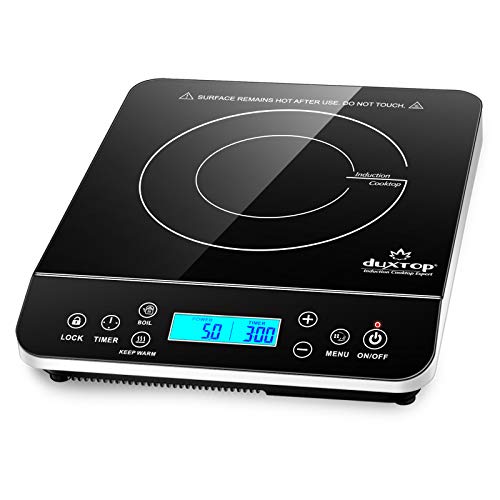
- Duxtop 9600LS Silver Portable Induction Cooktop — Best Touch-Control Option
Read the full guide ↓
Every portable induction burner has a fan inside it, and almost no buyer thinks about that fan until it decides their evening. Here is why it matters. An induction burner converts a wall socket’s worth of electricity into a magnetic field through power electronics that generate real heat of their own — heat that has nothing to do with your dinner and everything to do with the unit’s survival. The cooling fan is what moves that heat out. The best fan cooling on portable induction cooktops is therefore not a luxury feature; it is the difference between a burner that holds full power through a four-hour stock and one that quietly throttles itself, cycles, or shuts down to protect its own circuits.
Manufacturers rarely publish fan specifications — no airflow figures, no decibel ratings in the listings we verified — so this guide does the honest thing instead: it ranks the verified portable models by the evidence that predicts cooling performance. Sustained-duty design (commercial builds, long timer ceilings, steady-output power control) is the visible signature of a cooling system engineered for endurance. Session length is the buyer’s side of the same equation, and the guide’s second half covers the habits — vent clearance, ambient heat, load management — that let any fan do its job. Two gas built-ins are reviewed prose-only at the end of the picks: they appear in this search, but a gas hob has no induction electronics, no cooling fan, and no business being linked from this keyword.
Key Takeaways
- The cooling fan protects the burner’s electronics, not your food — and sustained full-power cooking is impossible without it.
- Listings do not publish fan specs, so judge cooling by duty evidence: commercial builds, 10-hour-class timers, and steady-output power control.
- The Nuwave Pro Chef leads here on precision plus sustained design; the Duxtop pair suit standard sessions with proven platforms.
- Half of “fan cooling” is the owner’s job: clear vents, sane ambient heat, and no oversized pans at maximum for hours.
- A fan that runs on briefly after cooking is finishing its job, not malfunctioning — it is cooling the electronics down safely.
- Gas cooktops have no induction cooling fans; the two reviewed below are prose-only for exactly that category reason.
In this guide
Quick Picks
Four induction portables ranked for sustained, well-cooled running — then two gas built-ins, prose-only, whose presence in this search is a category error we explain rather than exploit.
| Pick | Badge | Why it stands out | Link |
|---|---|---|---|
| Nuwave Pro Chef Induction Cooktop | Best for Sustained Precision | 94 temperature settings held exactly, a large 8-inch coil, and a commercial-grade build — the pick for long, exact, cooled running. | See review below |
| ISILER Portable Induction Cooktop | Best Accessible Long-Runner | Presets, a timer, and a safety lock in a compact 1800W body — friendly features over a design made for repeatable daily sessions. | Check on Amazon |
| VEVOR 30-Inch 5-Burner Gas Cooktop | Gas Alternative — Prose-Only | A 30-inch built-in gas hob. It needs no cooling fan because it has no induction electronics — which is why it cannot be a pick in this guide. | Prose-only pick |
| ThermoMate 36-Inch 5-Burner Gas Cooktop | Gas Alternative — Prose-Only | A wide 36-inch built-in gas hob with Italy Sabaf burners — serious flame hardware with zero relevance to induction cooling. | Prose-only pick |
| Duxtop 8100MC Gold Portable Induction Cooktop | Best Proven Platform | Duxtop’s 8100MC in gold: a mature 1800W platform whose long market life is itself evidence of thermal design that works. | See review below |
| Duxtop 9600LS Silver Portable Induction Cooktop | Best Touch-Control Option | The 9600LS in silver: a flush LCD touch panel over Duxtop’s 1800W platform — modern interface, proven thermal base. | See review below |
How These Picks Were Chosen
Candidates were verified against their manufacturer listings first: electric induction technology and a portable format were non-negotiable, which removed the gas built-ins from linked contention before cooling was even discussed. They remain in the guide as prose-only reviews because readers meet them in this search and deserve to know why they do not belong in it.
Ranking for cooling specifically required judgement about evidence, and we state our reasoning openly: since no listing in the verified pool publishes fan airflow or noise figures, we ranked by sustained-duty signals — the length of the timer ceiling (a 10-hour timer is a manufacturer’s own statement that the unit can run, cooled, for 10 hours), commercial-grade build language, power-control architecture designed for steady output, and the model’s history in the market. Where we infer, the reviews say we infer; where the listing states, we quote. That distinction is the spine of this guide.
As with every guide in this series, the work is research-led rather than test-bench theatre: no invented decibel numbers, no fabricated airflow claims, no prices or ratings printed to decay. If a future listing publishes genuine fan specifications, the framework here — duty evidence plus owner habits — will still tell you how to read them. The same evidence discipline shapes Best Freestanding Oven Cooktops.
Our 6 picks for best fan cooling on portable induction cooktops, reviewed one by one
Read the ranking as a session-length ladder: the precision instrument built for sustained exact work first, then the accessible long-runner, then the two proven Duxtop platforms for standard sessions — with the gas pair closing under their flag.

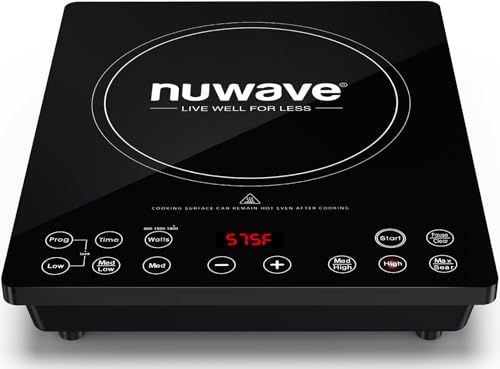
Nuwave Pro Chef Induction Cooktop
Badge: Best for Sustained Precision
Strengths
- Commercial-grade portable build — the sustained-duty class in this guide
- 94 temperature settings in 5°F steps reward long, controlled sessions
- Large 8-inch coil spreads the cooking load under wide pans
Trade-offs
- Listings do not publish fan airflow or noise figures — cooling is judged by duty design, as this guide explains
- Single zone
- Precision features are wasted on short, simple jobs
Key specs (from the manufacturer listing)
- Power: 1800W
- Heating coil: large 8-inch
- Temperature settings: 94, from 100°F to 575°F in 5°F increments
- Surface: shatter-proof ceramic glass
- Grade: commercial-grade portable burner
Long precision cooking is a cooling problem in disguise. Holding a sauce at an exact temperature for three hours means the electronics work continuously, at moderate load, with no rest — precisely the duty cycle that separates a well-cooled design from a marginal one. The Nuwave Pro Chef is specified for that life: a commercial-grade portable body, a large 8-inch coil, and 94 temperature settings from 100°F to 575°F in 5°F increments, so the long hold is a set number rather than a supervised negotiation.
We place it first for this keyword on duty evidence, and we are explicit about the reasoning: a manufacturer that designs a burner around sustained, exact, commercial-grade work engineers its thermal path — fan, vents, and component layout — for endurance, because a precision burner that throttles at hour two has failed its only promise. What we cannot do, honestly, is quote you an airflow figure the listing does not publish. Buyers for whom marathon sessions are the main event should pair this pick with the vent and ambient-heat habits in the how-to section; buyers running twenty-minute weeknight jobs will never stress any cooling system in this guide — the opposite end of the duty spectrum from the built-in world surveyed in Best Gas Cooktops 30 Inch With 5 Burner, where no cooling fan is needed at all.
Best for: long precision sessions — sauces, braises, and exact holds measured in hours / Not suited for: buyers who only ever cook short and simple

ISILER Portable Induction Cooktop
Badge: Best Accessible Long-Runner
Strengths
- 7 presets encourage steady, moderate sessions rather than maximum-power abuse
- Timer discipline prevents the forgotten-burner overheating scenario
- Safety lock and compact body suit family kitchens where the burner lives out
Trade-offs
- 10 temperature levels are coarse for delicate long holds
- Compact body concentrates heat in a smaller chassis — vent clearance matters doubly
- Cooling specifications, as across this guide, are not published in the listing
Key specs (from the manufacturer listing)
- Power: 1800W
- Heating plate: 8-inch
- Settings: 10 power and 10 temperature levels
- Presets: 7 cooking presets
- Safety: timer and safety lock
- Format: compact portable design
The ISILER portable induction cooktop earns second place in a cooling guide through an unexpected door: behaviour design. Its 7 cooking presets, timer, and safety lock all push the unit toward the usage pattern cooling systems love — deliberate sessions at sensible settings, started and stopped on purpose — and away from the pattern that cooks electronics, which is a forgotten burner at maximum under an oversized pan. Features that shape habits are thermal features, whether or not the marketing department knows it.
The unit itself is the familiar accessible specification: 1800W, an 8-inch heating plate, 10 power and 10 temperature settings, in a compact portable body. That compactness carries the honest caveat of this review: a smaller chassis has less internal air volume, so the owner’s side of cooling — clear vents, space around the unit, no storage of tea towels against its sides — matters more here than with the commercial builds. Observe those habits and the ISILER will run its daily sessions contentedly for years; ignore them and no fan in this guide can save any unit from its own cupboard.
Best for: families and daily cooks whose sessions are steady and preset-led / Not suited for: fine-step precision work or careless vent-blockers
VEVOR 30-Inch 5-Burner Gas Cooktop
Badge: Gas Alternative — Prose-Only
Strengths
- Five burners in a 30-inch built-in stainless format
- NG/LPG convertible with thermocouple protection stated in the listing
- No electronics to cool — flame’s one thermal simplicity
Trade-offs
- No induction, no fan, no portability: it fails every term of this keyword
- Permanent installation with a gas supply
- Its heat management problem is the room’s, not a fan’s — it warms your kitchen, not itself
Key specs (from the manufacturer listing)
- Fuel: gas, NG/LPG convertible
- Size: 30 inch, built-in
- Burners: 5, 12250 BTU (per listing title)
- Body: stainless steel
- Safety: thermocouple protection
The VEVOR 30-inch gas cooktop is reviewed here, without a link or image, to make the category boundary concrete. It is a five-burner built-in gas hob in stainless steel, NG/LPG convertible, with thermocouple protection — a coherent product whose thermal story is the opposite of this guide’s subject. A gas hob has no power electronics converting current into a magnetic field, so it has no cooling fan and needs none; its waste heat simply leaves into your kitchen, which is the cook’s comfort problem rather than the appliance’s survival problem.
A reader who arrived here wanting fan-cooled induction gains nothing from this unit except clarity, and clarity is what we are selling: if your project is a gas installation, Best Five Burner Gas Cooktops is your guide. If your project is what this page’s title says — a portable induction burner that can run long and cool — the four electrics in this section are the entire honest shortlist.
Best for: gas installations, assessed in our gas coverage / Not suited for: fan-cooled portable induction in any sense
ThermoMate 36-Inch 5-Burner Gas Cooktop
Badge: Gas Alternative — Prose-Only
Strengths
- Five Italy Sabaf burners across a generous 36-inch body
- 304 stainless steel with CSA certification stated in the listing
- Flame technology sidesteps electronic thermal limits entirely
Trade-offs
- Gas: no induction electronics, no cooling fan, no portability
- A 36-inch cut-out renovation, not a countertop decision
- All its considerable heat goes into the room
Key specs (from the manufacturer listing)
- Fuel: gas, NG/LPG convertible
- Size: 36 inch, built-in
- Burners: 5 Italy Sabaf power burners
- Body: 304 stainless steel
- Safety: thermocouple protection, CSA certified (per listing title)
The ThermoMate 36-inch gas cooktop completes the prose-only pair, and its review doubles as the guide’s clearest illustration of why fuel categories matter. Its credentials are real — five Italy Sabaf burners, 304 stainless steel, thermocouple protection, CSA certification in the listing — and in a flame kitchen it would be the centrepiece. But set it beside this keyword and every term misses: not portable, not induction, and with no cooling fan because there is nothing electronic to cool.
We include it, as with the VEVOR, so that the contrast teaches. Induction’s cooling fan exists because induction moves its waste heat problem inside the appliance, where engineering can solve it; gas leaves its waste heat in the room, where only ventilation and the cook’s endurance address it. Readers who prefer the flame settlement should take Best Gas Cooktops 30 Inch as their next page. Readers who prefer the engineered settlement — a fan, a vent path, and a burner that protects itself — already have their four picks above.
Best for: large gas kitchens, assessed in our gas guides / Not suited for: this keyword’s brief on every axis
Duxtop 8100MC Gold Portable Induction Cooktop
Badge: Best Proven Platform
Strengths
- Mature Duxtop platform — years of owner use behind its design
- Full 1800W in a compact, easily ventilated body
- Compact format is simple to place with proper vent clearance
Trade-offs
- Listing states a straightforward feature set without long-timer headlines
- Single zone
- Gold finish shows the dust that vent hygiene is meant to prevent
Key specs (from the manufacturer listing)
- Power: 1800W
- Model: 8100MC (BT-180G3)
- Finish: gold
- Format: portable countertop burner
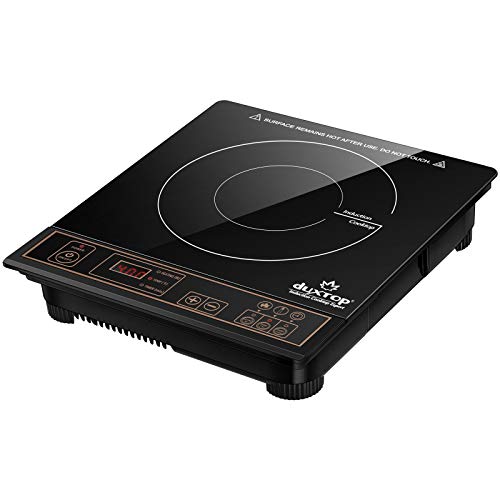
There is a form of cooling evidence no specification sheet can match: time. The Duxtop 8100MC platform has been sold and used for years, in gold here, which means its thermal design — fan, vent path, component layout — has survived the only test that finally counts, millions of ordinary cooking sessions in ordinary kitchens. A design with a chronic overheating flaw does not accumulate that history; the market quietly removes it.
Within this guide’s framework, that makes the 8100MC the low-anxiety choice for standard sessions: weeknight cooking, overflow duty, the second burner that must simply work. Its compact body is also easy to place correctly — on an open counter with air around it, rather than wedged into a corner — which is the owner’s half of the cooling equation. It does not advertise the marathon timers of the commercial class, and a buyer planning four-hour stocks should weigh the Pro Chef’s duty design instead. For the centre of cooking life, proven beats promised.
Best for: standard sessions and buyers who trust track records over spec sheets / Not suited for: marathon unattended cooking
Duxtop 9600LS Silver Portable Induction Cooktop
Badge: Best Touch-Control Option
Strengths
- Flush LCD sensor-touch panel — one wipeable plane, easy to keep vent-adjacent areas clean
- 1800W platform from the category’s specialist maker
- Silver finish hides the dust that reveals neglected vents
Trade-offs
- Touch controls prefer dry fingers
- Single zone
- Interface-led feature set rather than marathon timers
Key specs (from the manufacturer listing)
- Power: 1800W
- Model: 9600LS (BT-200DZ)
- Controls: LCD sensor touch
- Finish: silver
- Format: portable countertop burner
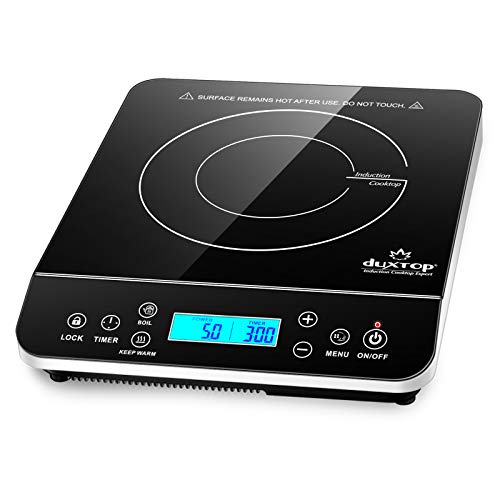
The Duxtop 9600LS closes the linked picks by pairing the modern interface with the proven base: an LCD sensor-touch panel set flush in a silver top, over the same 1800W portable induction platform philosophy as its gold sibling. For a cooling-focused guide, its contribution is practical rather than electronic — a flush surface that wipes clean in one pass makes the surrounding hygiene, including dust-free vent surrounds, a thirty-second habit instead of a disassembly project.
Cooking performance is the class standard delivered with induction’s usual immediacy, and the platform’s maturity carries the same time-tested reassurance as the 8100MC. The caveats are the familiar pair: touch controls ask for dry fingers, and a single zone with a standard session profile should not be dressed up as marathon equipment. Chosen for weeknight-and-weekend duty in a design-led kitchen — and given air to breathe — it will repay the choice quietly, which is what good cooling sounds like. The interface comparison continues in Best Flat Cooktops.
Best for: modern kitchens wanting touch controls on a proven platform / Not suited for: button loyalists or marathon-session cooks
Comparison Table
The comparison that matters for this keyword is not in any single column — it is the pattern: duty class, timer ceiling, and platform history, read together, predict cooled endurance.
| Pick | Type | Power / Output | Controls & standout feature | Link |
|---|---|---|---|---|
| Nuwave Pro Chef Induction Cooktop | Portable induction, single zone | 1800W | 94 temp settings in 5°F steps, ceramic glass, commercial-grade | Check on Amazon |
| ISILER Portable Induction Cooktop | Portable induction, single zone | 1800W | 10 + 10 settings, 7 presets, safety lock | Check on Amazon |
| VEVOR 30-Inch 5-Burner Gas Cooktop | Built-in GAS cooktop, 5 burners | 30 inch, NG/LPG | Thermocouple protection, stainless steel | Prose-only pick |
| ThermoMate 36-Inch 5-Burner Gas Cooktop | Built-in GAS cooktop, 5 burners | 36 inch, NG/LPG | Italy Sabaf burners, CSA certified in listing | Prose-only pick |
| Duxtop 8100MC Gold Portable Induction Cooktop | Portable induction, single zone | 1800W | Duxtop 8100MC platform, gold finish | Check on Amazon |
| Duxtop 9600LS Silver Portable Induction Cooktop | Portable induction, single zone | 1800W | LCD sensor-touch panel, silver finish | Check on Amazon |
How to Choose a Portable Induction Cooktop That Stays Cool Under Pressure
What the fan is actually doing
Inside every portable induction burner, power electronics switch heavy currents to generate the magnetic field that heats your pan. Those electronics warm up in proportion to how hard and how long they work. The cooling fan draws room air across them and expels it through vents, holding component temperatures inside their safe envelope. When the envelope is exceeded, a well-designed unit protects itself — reducing power, cycling, or shutting down — which owners experience as a burner that “won’t stay on full” during a long, hard session. That behaviour is the cooling system’s report card, delivered mid-recipe.
Two consequences follow for buyers. First, cooling quality is a session-length specification: it barely matters for a ten-minute boil and decides everything about a four-hour stock. Second, because listings do not publish fan data, the honest proxies are duty signals — commercial build language, long timer ceilings, steady-output control design, and platform longevity — which is exactly how this guide’s ranking was built.
Fan noise: the other side of airflow
Moving air makes sound, and a cooling fan’s note changes with load: quiet at a simmer, present at full power, and often running on for a short while after cooking ends while it brings the electronics down to a safe resting temperature. That run-on is correct behaviour, not a defect — unplugging the unit the second you finish cooking defeats it. Judge noise in context: a fan audible in a silent studio at midnight may be irrelevant in a family kitchen at six. No listing in our verified pool publishes a decibel figure, so treat any review that quotes one for these models as invention, and weight the duty evidence instead.
Placement changes perceived noise as much as design does. A unit on a hollow surface or boxed into a corner reflects and amplifies its own fan; the same unit on a solid, open counter sounds like what it is — a small appliance breathing.
Timers as thermal promises
A timer ceiling is a manufacturer’s signed statement about sustained running. A unit offering a 10-hour timer is asserting that its thermal design — fan included — is rated to work, cooled, for ten hours; a unit capped at three or four hours is making a smaller claim, usually in a smaller, cheaper chassis. Neither is dishonest, but they are different promises, and a buyer whose cooking includes stocks, long braises, or canning days should buy the promise that covers the session. Match the ceiling to your longest real recipe, with headroom, and the cooling question is half answered before the unit arrives.
The other half is load shape: an hour at a moderate simmer is gentle duty; an hour at maximum under an oversized pan is the hardest work the fan will ever do. Long-and-moderate is what these machines are built for.
Vents, placement, and the owner’s half of cooling
Every cooling system in this guide breathes room air, and the owner controls the room. Keep vents unobstructed — no tea towels, no stored boards, no wall pressed against the exhaust side. Allow a hand’s width of air around the unit in use. Keep the ambient sane: a portable working beside a roaring oven in a small closed kitchen is breathing pre-heated air, and its fan must work harder for the same result. Dust is the slow enemy — a soft brush across the intakes every few months preserves the airflow the design promised. None of this is maintenance theatre; it is the difference between the cooling system the manufacturer built and the one your cupboard lets it be. Readers comparing formats will find the same placement logic in Best Frameless Glass Cooktops.
Reading a listing like an engineer: the duty-evidence checklist
Since fan data is not published, read listings for the fingerprints of thermal seriousness. One: the timer ceiling — long ceilings are sustained-running claims, and manufacturers do not claim what the cooling cannot cash. Two: build language with content — commercial-grade construction and metal bodies signal a chassis designed as a heat path, not just a container. Three: power-control architecture — designs that advertise steady, regulated output are describing electronics managed as a system, cooling included. Four: market history — a platform sold unchanged for years has passed the thermal audit no laboratory publishes, the one conducted in a million kitchens.
Apply the checklist in order and distrust any single signal alone: a long timer on a featherweight chassis is a promise looking for its cooling, and a heavy body with a three-hour ceiling is stamina the maker declined to certify. The picks in this guide were ranked by the pattern of all four, which is the closest thing to a fan specification the honest market currently offers.
How to Run Long Sessions Without Cooking Your Burner
The long-session protocol
Step by step, for a stock, braise, or any session past the hour mark. One: place the unit on an open, solid surface with clear air on all sides, away from the oven’s exhaust. Two: choose a pan whose base matches the coil — an oversized pan at full power is the hardest thermal load there is. Three: bring the contents to temperature at a strong setting, then settle to the working setting; the long phase should be moderate, not maximal. Four: set the timer for the session so the unit’s own discipline backs yours. Five: when the session ends, let the fan run on until it stops by itself before unplugging or storing.
Followed once, this protocol becomes habit; followed habitually, it is most of what separates owners whose burners last a decade from owners shopping again in year two.
Heat management during ordinary cooking
Short sessions forgive almost everything, but two habits still pay. Preheat progressively — a minute at medium before high — so neither pan nor electronics take a thermal slap. And give the unit a breath between back-to-back heavy jobs on a very hot day: five idle minutes with the fan’s path clear resets the thermal ledger more than any other small act. In summer kitchens, moving the portable away from the sunlit window and the oven’s side is worth more than any feature on any spec sheet in this guide.
Cleaning the air path
Monthly, with the unit unplugged and cool: brush the intake and exhaust vents with a soft brush, wipe the surrounds, and check that storage has not crept against the vent sides. Kitchen air carries grease, and grease plus dust mats into exactly the felt that airflow hates. Never wash a portable burner under a tap and never open the case — the air path is maintained from outside, with a brush, in two minutes.
Troubleshooting: three common problems
Problem: the burner reduces power or shuts down during long, hard cooking → it is protecting its electronics. Check vent clearance, reduce the load (smaller pan or lower setting), let it cool fully, and restart with the long-session protocol.
Problem: the fan seems louder than when the unit was new → audit the air path before fearing the worst. Dust-matted intakes make fans work harder and sound it. A thorough external clean restores most units to their original note.
Problem: the fan runs after cooking stops → this is the designed cool-down, and it is protecting the electronics you paid for. Let it finish; unplug afterwards if you wish, not before.
Cooling, Longevity, and the Real Cost of a Burner
A portable induction burner’s purchase price is paid once; its thermal life is paid out over years, in whether the electronics age gracefully or cook slowly from within. Heat is the great ager of electronics — capacitors, solder joints, and control boards all live shorter, hotter lives. That is the economic translation of this entire guide: duty-class design and owner vent discipline are not fussiness, they are the mechanism by which a mid-priced burner outlasts a cheap one by years, and by which a well-kept unit’s cost per meal falls toward the trivial.
Buyers deciding between the proven platforms and the commercial builds are really deciding a time horizon. Occasional duty forgives the lighter design; daily, lengthy duty compounds small thermal advantages into years of extra service.
Why the Gas Pair Keeps Appearing — and the Lesson in It
Search engines file by kitchen project, so a query about cooling fans on induction burners still attracts built-in gas hobs, whose thermal story is simpler: no electronics, no fan, and all waste heat delivered to the room. The contrast clarifies what induction’s fan signifies — a technology that internalised its waste-heat problem and solved it with engineering, at the price of a component that must be fed with air and kept clean. Neither settlement is foolish; they are different distributions of the same physics.
The practical lesson is to shop inside your settlement. Once you have chosen induction — for its precision, its cool surfaces, its plug-in freedom — the cooling question becomes the ranking question this guide answers, and gas listings become what they are in this search: noise with good burners attached.
Climate, Season, and the Hot-Kitchen Problem
A cooling fan can only move the air it is given, and kitchens conspire to give it bad air. Summer afternoons, a working oven, a sunlit counter, a small closed room — each raises the intake temperature and shrinks the margin between the electronics and their limits. The burner’s response is the protective one: earlier throttling, longer fan runs, a louder working note. None of it is malfunction; all of it is physics presenting its invoice.
The owner’s countermeasures are unglamorous and effective. Give the portable the coolest seat in the kitchen — away from the oven’s side and the window’s afternoon sun. Run the long sessions in the day’s cooler hours when the recipe allows it; stocks, historically, began in the morning for reasons that predated electronics but suit them perfectly. And treat the room’s own ventilation — an open window, the extractor — as part of the burner’s cooling system, because thermally, it is.
When Portables Multiply: Two Burners, One Kitchen’s Air
Households that outgrow one zone often add a second portable instead of installing a hob, and the thermal arithmetic changes when they do. Two units double the room’s appliance heat, draw on circuits that may be shared, and — placed side by side, as they naturally are — each breathes the other’s exhaust. The arrangement that works is deliberate: space the units so their vents face open air rather than each other, stagger their hardest work where the menu allows, and respect the circuit map you drew when the first burner arrived.
Done properly, the two-portable kitchen is a genuinely capable settlement — flexible, redundant, and cool-headed. Done carelessly, it is two fans arguing over the same hot air. The difference, as everywhere in this guide, is not the equipment; it is the air you agree to give it.
Winter’s Different Problem: Cold Kitchens and Condensation
Cooling discussions assume heat, but the fan’s year has another season. In a cold kitchen — the unheated annex, the winter RV, the farmhouse at dawn — the electronics start cold and the first minutes are the gentlest the unit will ever know. The subtler winter risk is condensation: a burner stored in a cold space and brought into warm, steamy air can gather moisture on and in itself, and the correct response is patience — let it acclimatise, dry on the outside, before its first session. The fan, moving room air, is part of that drying once running.
None of this changes the ranking; it completes the owner’s picture. A cooling system is really an air-management system, and air has seasons. The habits that serve it — clearance, cleanliness, patience at the extremes — are the same in January as in July, which is the closest thing to a maintenance philosophy this guide has to offer.
What “Commercial-Grade” Should Mean Before You Pay for the Words
“Commercial-grade” is the most abused phrase in this category, and a cooling guide is the right place to audit it. Used honestly, it describes a design brief: sustained duty, steady output, components chosen for hours rather than minutes, and a build that expects cleaning crews rather than careful owners. The evidence that a claim means it is the same duty evidence this guide ranks by — timer ceilings that imply thermal stamina, certifications that audit the claim, platforms with service histories. Used dishonestly, the phrase is a font choice.
The buyer’s defence is the checklist in our buying guide, applied without sentimentality: if the words are not corroborated by the ceiling, the certification, and the track record, they are decoration, and decoration is not worth a premium in a machine whose virtue is endurance. The models in this guide that carry the commercial brief carry its evidence too — which is precisely why they carry this keyword’s top badges.
Altitude: Cooling in Thin Air
One environment quietly taxes every cooling fan in this guide: altitude. Air at elevation is thinner, and thinner air carries less heat per fan revolution — the same fan, moving the same volume, cools less effectively in a mountain home than at sea level. Water also boils at a lower temperature up there, which changes cooking times but not the electronics’ burden during long, hard sessions. RV and mountain-cabin owners — a real constituency for portable burners — should read this guide’s duty evidence with altitude in mind: the commercial builds’ thermal headroom is worth more at two thousand metres than at two.
The owner’s compensations are the familiar ones, applied with extra sincerity: maximum vent clearance, moderate long-phase settings, and no heroic oversized-pan sessions back to back. Physics is not negotiable, but it is predictable — and a burner whose limits you understand at your altitude will serve as faithfully as any sea-level unit serves its own kitchen.
Listening to Your Burner: A Short Field Guide to Fan Sounds
A healthy cooling fan has a repertoire, and learning it turns anxiety into information. The soft rise as a hard session begins is the system meeting load. The steady note during a long simmer is the system holding its temperature. The brief run-on after switch-off is the cool-down doing its final work. Each of these is the sound of the design functioning, and owners who know the repertoire stop hearing a problem where there is only a report.
The sounds that earn attention are changes: a new rattle or grind where smoothness lived, a fan that races at trivial loads, or silence where the run-on used to be. Each says the same thing in a different accent — the air path or the fan itself needs the audit this guide describes: brush the vents, check the clearance, and let the unit prove itself on a moderate session. Machines that are listened to rarely fail without warning; the warning is the whole point of the repertoire.
Common Buying Mistakes
Storing the burner with its vents against the cupboard wall — then cooking that way too. The fan breathes the room you give it. Air on all sides, every session, is the whole secret.
Unplugging the instant cooking ends. The fan’s run-on is a designed cool-down. Let it finish; the electronics you save are your own.
Running an oversized pan at maximum for hours. That is the hardest thermal load in the category. Match pan to coil and let the long phase run moderate.
Believing invented fan specifications. The verified listings publish none. Any precise airflow or decibel figure attached to these models by a review is fabricated — judge by duty evidence instead.
Letting dust and grease mat the intakes. Two minutes with a soft brush, monthly, preserves the airflow the design promised. Skipping it slowly strangles the cooling you paid for.
Final Recommendation
For sustained, well-cooled induction work, the Nuwave Pro Chef is this guide’s answer: commercial-grade duty design wrapped around the finest temperature control in the set. The ISILER is the accessible long-runner whose features coach good thermal habits; the Duxtop pair — gold 8100MC and silver 9600LS — are the proven platforms for the standard sessions most kitchens actually run. The gas pair remains what it was: respectable flame hardware with no fan, no induction, and no claim on this keyword, reviewed so the boundary is understood rather than blurred.
Before your next long session, run the owner’s checklist: vents brushed, air on all sides, pan matched to coil, timer set, and patience reserved for the fan’s cool-down at the end. Cooling is a partnership between the machine and the kitchen — hold up your half, and any pick here will hold up its own.
Start with our top pick here: Check on Amazon
Related guides
Frequently Asked Questions
Why does a portable induction cooktop need a fan at all?
Its power electronics generate heat while creating the magnetic field that heats your pan. The fan moves room air across those components to keep them within safe temperatures. Without it, sustained cooking would force the unit to throttle or shut down — the fan is what makes long sessions possible.
Is a louder fan a sign of a better or worse cooktop?
Neither, by itself. Fan sound rises with load and falls with it, and listings for these models publish no decibel figures — so precise noise claims should be distrusted. Judge cooling by duty evidence: build class, timer ceiling, control design, and platform history.
Why does the fan keep running after I finish cooking?
It is cooling the electronics down to a safe resting temperature — a designed behaviour that extends the unit’s life. Let it stop on its own before unplugging or storing the burner.
Can blocked vents really damage the unit?
Yes. The cooling system breathes through those vents; towels, boards, walls, or dust mats all restrict airflow, forcing the electronics to run hotter, throttle sooner, and age faster. Clear air is the cheapest performance feature in this entire guide.
Why are gas cooktops reviewed in a guide about induction cooling fans?
Because they dominate the same search results. They have no induction electronics and no cooling fans, so they are reviewed honestly as prose-only context — with no links — rather than presented as answers to a keyword they cannot satisfy.
How long can I run a portable induction burner continuously?
Within the promise its timer makes: models differ, and the timer ceiling is the manufacturer’s statement of rated sustained running. Match that ceiling to your longest recipe, run the long phase at a moderate setting with a coil-matched pan, and keep the vents clear.