Disclosure: topratedkitchenware.com is reader-supported. When you buy through links on our site, we may earn an affiliate commission from Amazon and other retailers, at no extra cost to you.
Where to buy
If you are shopping for the best food processors for pureeing, the six picks below are the shortlist this guide is built around. Pureeing is a texture skill before it is a power contest: the smoothest result comes from the right liquid ratio, the right load size and a blade that keeps the mixture folding over itself. The six machines below span mini choppers for a single serving of baby food to full-size bowls for a pot of soup, and each is judged on the fineness and evenness of what comes out of it.
- Cuisinart Elemental 4-Cup Chopper/Grinder — Best for Single-Serving Purees · Check on Amazon
- KitchenAid 3.5 Cup Food Chopper (Empire Red) — Best Controls for Texture
- BLACK+DECKER 1.5-Cup Electric Food Chopper — Best for the Smallest Servings
- KitchenAid 3.5 Cup Food Chopper (Contour Silver) — Best Controls in Contour Silver
- Cuisinart 14-Cup Food Processor — Best for Soup-Pot Purees
- Cuisinart FP-1400 14-Cup Food Processor — Best Sealed Bowl for Liquid Purees
Read the full guide ↓
Choosing among the best food processors for pureeing is really choosing how smooth you need dinner to be. A rustic bean dip forgives everything. A baby’s first sweet potato puree, a velvety soup for a grandparent who eats soft foods, or a silky hummus for a table of skeptics forgives nothing: one fibrous thread or gritty lump defines the whole bowl. Pureeing is the processor job where technique and machine design meet most intimately, because the blade can only smooth what the liquid and the load allow it to reach.
This guide approaches pureeing as a craft of small decisions. Load size decides whether the mixture circulates or spins in place. Liquid, added gradually, decides whether the blade catches the solids or cavitates in a puddle. The shape of the bowl and the patience of the cook decide whether the last pea or chickpea skin ever meets the blade. The six machines below are judged on exactly those terms, from 4-cup minis that puree a single serving beautifully to 14-cup bowls that smooth a family pot of soup in one load.
Two audiences shaped the picks especially. Parents making baby and toddler food need small, even batches that freeze in portions and reheat without graininess. Caregivers cooking for older adults, or anyone eating soft foods for a while, need purees that are genuinely smooth and still taste like dinner. Both audiences will find their machines here, and the technique sections are written with their standards in mind. For the related high-volume question, making pureed food for a crowd or a freezer, see Best Food Processors For Pureeing Food.
Key Takeaways
- Smoothness comes from circulation: the mixture must keep folding over the blade, which load size and liquid control.
- Add liquid gradually. Too much at once and the blade spins in soup while solids ride above it.
- Mini bowls puree single servings most evenly; big bowls need a minimum load to circulate at all.
- For baby food and soft diets, texture is the requirement, not a preference: process longer and strain if needed.
- Warm ingredients puree smoother than cold ones, and fibrous foods want cooking before they meet the blade.
- Every pick here is linked; the set runs from 1.5-cup single servings to a 14-cup soup pot.
In this guide
Quick Picks
Read this list by serving size. The top picks are the small-batch texture specialists; the two 14-cup machines at the end are for cooks whose pureeing happens a pot at a time.
| Product | Badge | Why it is here | Amazon |
|---|---|---|---|
| Cuisinart Elemental 4-Cup Chopper/Grinder | Best for Single-Serving Purees | The small-batch texture specialist, with locked-blade pouring. | Check on Amazon |
| KitchenAid 3.5 Cup Food Chopper (Empire Red) | Best Controls for Texture | Named speeds and pulse for staged puree textures. | Check on Amazon |
| BLACK+DECKER 1.5-Cup Electric Food Chopper | Best for the Smallest Servings | The single-serving puree tool: 1.5 cups, one-touch pulse. | Check on Amazon |
| KitchenAid 3.5 Cup Food Chopper (Contour Silver) | Best Controls in Contour Silver | The silver twin: same staged controls for small purees. | Check on Amazon |
| Cuisinart 14-Cup Food Processor | Best for Soup-Pot Purees | Puree named in the listing; 14 cups and 720 watts for pot-size work. | Check on Amazon |
| Cuisinart FP-1400 14-Cup Food Processor | Best Sealed Bowl for Liquid Purees | Sealed 14-cup bowl for soups and liquid purees. | Check on Amazon |
How These Picks Were Chosen
Picks were chosen from verified listings for pureeing aptitude: blade design, controls that allow sustained running and pulsing, and bowl sizes spanning single servings to family pots. Listings were checked on 2026-11-20, and every specification in this guide comes from the listing text. Where a listing names puree explicitly, that is noted; where it names only chopping and grinding, the review reasons honestly about what that blade behavior means for texture rather than assuming a puree pedigree.
This is a research-led guide with no hands-on testing claims and no medical advice. Where the guide discusses baby food or soft diets, it discusses texture and preparation only; questions about what a particular person should eat belong with their clinician. Texture claims here are framed as technique: what a given bowl size, blade and loading pattern can reasonably achieve with cooked ingredients and sensible liquid.
All six picks are linked with listing photos. The spread is deliberate: pureeing is the rare processor job where the smallest machine often beats the largest, because a cup of mixture in a small bowl circulates completely while the same cup in a 14-cup bowl smears across the base and hides from the blade. Matching bowl to batch is the first lesson of this guide, and the reviews repeat it because it matters more than any specification.
The 6 Best Food Processors for Pureeing
Each review below judges its machine on texture: how fine and even a puree it can reasonably produce, at the batch sizes its bowl suits, with the ingredients puree cooks actually use.

Cuisinart Elemental 4-Cup Chopper/Grinder
Badge: Best for Single-Serving Purees
Strengths
- 4-cup bowl keeps a small load in constant contact with the blade
- BladeLock system secures the blade when pouring a finished puree
- SmartPower blade handles the sustained running purees need
Trade-offs
- 4 cups is the ceiling; family soups need a bigger bowl
- No puree program named in the listing
- Silver finish shows colorful purees until washed
Key specs (from the listing)
- Capacity: 4-cup
- Blade: SmartPower blade
- Safety detail named in the listing: BladeLock system secures the blade for pouring
- Finish: silver
- Model: ECH-4SV
The Cuisinart Elemental 4-Cup Chopper/Grinder, the ECH-4SV, pairs a SmartPower blade with a BladeLock system that locks the blade for pouring, in a 4-cup bowl. For pureeing, the bowl size is the argument: one to three cups of cooked vegetables, beans or fruit fill it to the depth where the mixture folds over the blade continuously, which is the physical condition of a smooth puree. A single serving of baby food, a small batch of hummus for two, or a portion of soup for someone eating soft foods all sit in this bowl’s natural range.
Technique in a small bowl is mostly about sequence. Start with the solids and just enough liquid to let the blade catch, run until the mixture moves as one mass, then add liquid in small additions to walk the texture from thick to silky. The BladeLock earns its mention at the end: a finished puree pours cleanly into a jar, a bowl or ice-cube trays for freezing baby portions, without a loose blade sliding toward your fingers. For fibrous ingredients like sweet potato or squash, cook until fully soft first; no 4-cup blade redeems an undercooked fiber.
This is also the kindest machine here for the daily rhythm of baby-food making: a few cubes’ worth at a time, in a bowl that rinses in seconds, with portions frozen the same evening. Parents quickly learn that the best baby-food machine is the one that does not make the job feel like a project, and a 4-cup bowl that lives on the counter and washes instantly is exactly that machine.
Best for: baby food, single servings and small batches where texture matters most / Not suited for: family-size soups and sauces, which exceed a 4-cup bowl

KitchenAid 3.5 Cup Food Chopper (Empire Red)
Badge: Best Controls for Texture
Strengths
- 2 speeds plus pulse named in the listing for staged texture work
- Low speed suits gentle finishing of delicate purees
- Stainless steel multi-purpose blade and dishwasher-safe bowl
Trade-offs
- 3.5-cup bowl is compact for family quantities
- No dedicated puree preset in the listing
- Empire Red finish is a bold counter presence
Key specs (from the listing)
- Capacity: 3.5 cup
- Blade: stainless steel multi-purpose blade
- Controls named in the listing: 2 speeds plus pulse
- Work bowl: dishwasher-safe
- Storage detail named in the listing: easy cord wrap
- Model: KFC3516ER
- Color: Empire Red
The KitchenAid 3.5 Cup Food Chopper, model KFC3516ER in Empire Red, lists a stainless steel multi-purpose blade, 2 speeds plus pulse, a dishwasher-safe work bowl and an easy cord wrap. Pureeing rewards exactly this control set. The high speed does the breakdown work, the low speed finishes delicate mixtures without whipping in air, and pulse lets you approach a texture in steps when the goal is not maximum smoothness but a specific, even consistency, as with a rustic bean puree or a salsa that should stay this side of soup.
For the smoothest results here, work warm and work in the bowl’s comfort zone: one to two and a half cups of cooked ingredients, liquid added gradually, and a scrape at the halfway point to return the wall-clingers to the blade. Baby and toddler foods are a natural fit, since the quantities match and the low-speed finish keeps fruit and vegetable purees dense rather than foamy. The honest limit is scale: a family’s soup night will have this chopper working in relays, and cooks who puree by the pot should read the 14-cup reviews at the end of this guide first.
The pulse control also serves the in-between textures that define good cooking: a white bean puree that should be mostly smooth with a little body, a roasted pepper mixture that should pour but not run. Machines with a single speed force a choice between chunky and liquid; staged control lets a cook stop at the texture the dish actually wants, which is a more valuable feature than any preset for this job.
Best for: small batches with deliberate, staged texture control / Not suited for: pot-size pureeing for a family
BLACK+DECKER 1.5-Cup Electric Food Chopper
Badge: Best for the Smallest Servings
Strengths
- 1.5-cup bowl is sized to a single serving or a baby portion
- One-touch pulse keeps operation to a single button
- 150W motor and stay-sharp blade stated plainly in the listing
Trade-offs
- Tiny capacity; even a two-person sauce may need two loads
- Pulse-only control means texture is managed in bursts
- Not a candidate for fibrous or large-quantity purees
Key specs (from the listing)
- Capacity: 1.5-cup
- Motor: 150W
- Controls named in the listing: one-touch pulse
- Blade: stay-sharp blade
- Parts: dishwasher safe
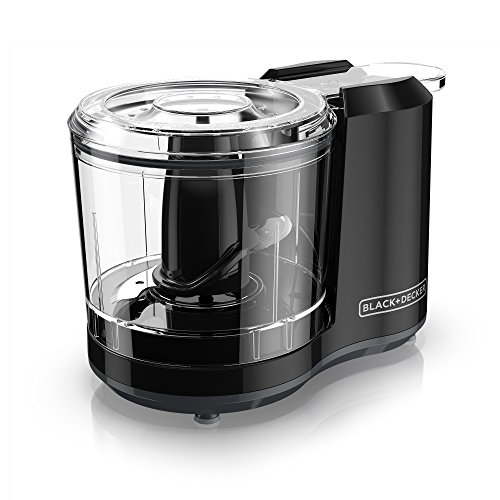
The BLACK+DECKER 1.5-Cup Electric Food Chopper lists a 150W motor, one-touch pulse, a stay-sharp blade and dishwasher-safe parts. It is the smallest machine in this guide, and for pureeing its virtue is proportion: a half-cup to a cup of cooked food, the size of a baby meal or a single soft-diet serving, fills its bowl to circulating depth. In a large bowl that same serving would be a smear; here it is a working load, and the puree that comes out is correspondingly even.
Work it in bursts, because pulse is its only language: several short pulses to break the food down, a scrape, then longer pulses as liquid is added a spoonful at a time. Soft, well-cooked ingredients are its territory, banana and avocado at one end, steamed carrot and squash at the other. Fibrous or raw ingredients are not; they belong in a bigger bowl with sustained running. Judged at its scale, though, this is an honest little puree tool, and for a household making one small serving at a time, its rinse-in-seconds cleanup may make it the most-used machine in the kitchen.
There is a dignity argument for the smallest machine in caregiving kitchens: a fresh, single serving made in two minutes tastes like food in a way a reheated batch sometimes does not. For an older adult eating small, frequent soft meals, a fresh puree of the same vegetables the family is having, made in this chopper while the plates are served, is a genuinely better experience than a frozen cube, and it asks almost nothing of the cook.
Best for: single servings, baby portions and fresh small soft meals / Not suited for: any puree quantity beyond a cup or two

KitchenAid 3.5 Cup Food Chopper (Contour Silver)
Badge: Best Controls in Contour Silver
Strengths
- Same 2 speeds plus pulse control as its Empire Red sibling
- Multi-purpose blade handles breakdown and finishing in one bowl
- Dishwasher-safe bowl and cord wrap keep it counter-ready
Trade-offs
- 3.5-cup capacity caps batch size for families
- A color variant in function; choose on kitchen fit
- No puree-specific program named in the listing
Key specs (from the listing)
- Capacity: 3.5 cup
- Blade: stainless steel multi-purpose blade
- Controls named in the listing: 2 speeds plus pulse
- Work bowl: dishwasher-safe
- Storage detail named in the listing: easy cord wrap
- Model: KFC3516CU
- Color: Contour Silver
The KitchenAid 3.5 Cup Food Chopper KFC3516CU in Contour Silver is the same chopper as the Empire Red model above, with the same listing: stainless steel multi-purpose blade, 2 speeds plus pulse, dishwasher-safe work bowl and easy cord wrap. It appears as its own pick because it is its own listing in the verified pool, and its pureeing character is identical: staged control in a small bowl, well suited to baby food, small sauces and single soft servings, with texture managed by speed choice and pulse discipline rather than by presets.
Everything about technique said for its red sibling holds: warm, well-cooked ingredients; loads between one and two and a half cups; liquid in gradual additions; a scrape at halfway. The silver finish is the only decision between them, and it is not trivial: a machine that suits the kitchen gets left out, and a machine left out gets used, and pureeing for babies and soft diets is a daily job where the used machine is the best machine. Kitchens with a second cook or a second location sometimes keep one of each, which is a more rational duplication than it first appears.
For households splitting duties, two small choppers can be a system: one lives with the baby-food routine, one with the everyday sauces and soft servings, and neither queue blocks the other at the busiest hour. That is a pattern large families discover with many appliances, and at this size and simplicity it is an inexpensive one to adopt deliberately rather than by accident.
Best for: the same staged small-batch pureeing as the red variant, in a neutral finish / Not suited for: pot-size batches and fibrous bulk work

Cuisinart 14-Cup Food Processor
Badge: Best for Soup-Pot Purees
Strengths
- 720-watt motor stated in the listing for sustained pureeing
- Listing explicitly names puree among its functions
- 14-cup bowl smooths a family pot of soup in one load
Trade-offs
- Needs a generous minimum load to circulate; small servings smear
- Large bowl is slower to wash after a small job
- Stainless build is heavy to handle when full of soup
Key specs (from the listing)
- Capacity: 14-cup work bowl
- Motor: 720-watt
- Functions named in the listing: mincing, dicing, shredding, puree and kneading dough
- Finish: stainless steel
- Model: DFP-14BCNY
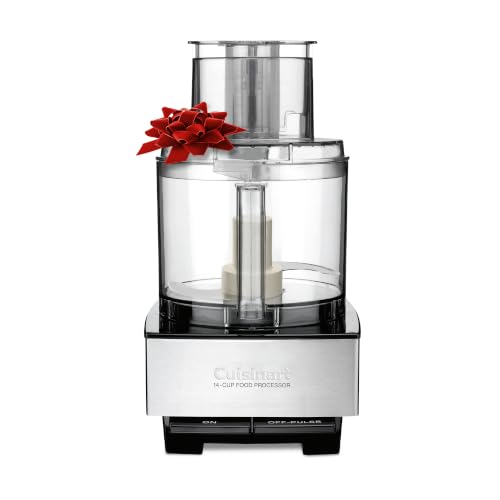
The Cuisinart DFP-14BCNY is a 14-cup processor with a 720-watt motor whose listing names mincing, dicing, shredding, puree and kneading dough. Puree is printed in its own job description, and the bowl and motor suit the largest pureeing work in a home kitchen: a pot of squash or tomato soup, a double batch of hummus for a gathering, a freezer session of baby food made in bulk. Sustained running is where this machine lives; a thick, hot mixture can be processed continuously until the texture turns, without the burst-and-rest rhythm the minis require.
The discipline here is the minimum load. Below roughly four cups, a 14-cup bowl cannot maintain the folding circulation a smooth puree needs, and the cook ends up scraping a thin layer around an empty center. At proper loads, the technique is luxurious: add most of the liquid early, run continuously, and let the vortex do the work, scraping once near the end for the corners. For baby-food freezer sessions, this is the production machine: one large batch, portioned into trays, with a texture as even as the minis produce at their scale.
Hot soup deserves its safety sentence: fill the bowl no more than about halfway with hot liquid, hold the lid firmly, and start on a lower setting or in pulses so the first surge does not climb the feed tube. Processors handle hot purees well when respected, and a 14-cup bowl respected this way replaces the transfer-and-blend shuffle that makes soup night a mess in smaller kitchens.
Best for: soups, bulk baby-food sessions and gathering-size purees / Not suited for: single servings, which cannot circulate in a 14-cup bowl


Cuisinart FP-1400 14-Cup Food Processor
Badge: Best Sealed Bowl for Liquid Purees
Strengths
- Leak-proof SealTight lid suits liquid purees and soups
- 14-cup capacity for the largest home batches
- Dishwasher-safe parts and in-bowl storage after big sessions
Trade-offs
- Listing states no wattage figure
- Sealed lid has more surfaces to wash
- Same minimum-load discipline as any 14-cup bowl
Key specs (from the listing)
- Capacity: 14-cup large work bowl
- Lid: leak-proof SealTight design
- Slicing range named in the listing: 1 to 7 mm, plus shredding
- Also named: kneads dough
- Parts: dishwasher-safe, with in-bowl storage
- Model: FP-1400
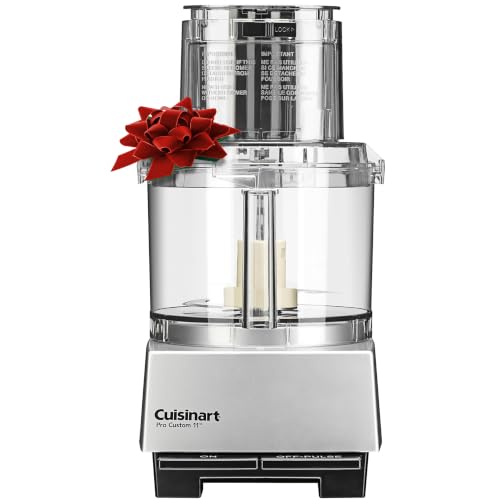
The Cuisinart FP-1400 is a 14-cup processor with a leak-proof SealTight lid, slicing from 1 to 7 mm, shredding, dough kneading, dishwasher-safe parts and in-bowl storage. Its pureeing case rests on the lid and the bowl: liquid purees and hot soups are the mixtures most likely to find a lid seam and decorate a counter, and a lid designed to seal is a functional advantage at exactly the moment a puree turns thin and fast. The listing states no wattage, so this guide positions it by class and design rather than by a power number.
Use the seal with confidence but the same load discipline as the other 14-cup pick: generous batches, liquid added with the solids rather than after them, and continuous running while the vortex holds. The in-bowl storage matters more than it sounds after a soup session, when every part is wet and the cook wants the whole machine corralled in one place to dry. For households whose pureeing is mostly soups, sauces by the quart and freezer prep, this is a thoroughly considered design; for a baby-food household working in cups, the minis at the top of this guide remain the honest recommendation.
One more soup-night virtue: a sealed, large bowl lets you puree in the same vessel you will carry to the table or the freezer containers, cutting the transfer steps where hot purees spill and cool. Fewer transfers also means fewer dishes, and on the nights when a pot of soup is dinner plus tomorrow’s lunch plus a freezer bag, that economy is felt immediately.
Best for: liquid purees, soups and large freezer-prep batches / Not suited for: small daily servings, which belong in the minis above
Comparison Table
Pureeing inverts the usual bigger-is-better logic. Read this table from your serving size outward: the smallest bowls make the smoothest small purees, and the 14-cup machines only earn their place when the batch is genuinely large.
| Product | Capacity | Standout for this job | Amazon |
|---|---|---|---|
| Cuisinart Elemental 4-Cup Chopper/Grinder | 4-cup | Small loads circulate fully for even texture | Check on Amazon |
| KitchenAid 3.5 Cup Food Chopper (Empire Red) | 3.5 cup | Best control set for texture in a mini bowl | Check on Amazon |
| BLACK+DECKER 1.5-Cup Electric Food Chopper | 1.5-cup | Smallest bowl, matched to single servings | Check on Amazon |
| KitchenAid 3.5 Cup Food Chopper (Contour Silver) | 3.5 cup | Color variant with identical puree controls | Check on Amazon |
| Cuisinart 14-Cup Food Processor | 14-cup work bowl | Largest scale, puree named in listing | Check on Amazon |
| Cuisinart FP-1400 14-Cup Food Processor | 14-cup large work bowl | Leak-proof lid for liquid work at scale | Check on Amazon |
How to Choose a Food Processor for Pureeing
Circulation is the whole science
A puree smooths because the mixture keeps passing through the blade. That circulation needs a vortex: enough depth of mixture for the center to be drawn down as the edges climb. Too little load and the blade spins beneath a static smear; too much liquid too early and the blade cavitates, spinning in a thin pool while solids float untouched above it. Every technique in this guide, load sizing, gradual liquid, scraping, is in service of that one physical requirement.
This is why bowl-to-batch matching outranks specifications for pureeing. A 4-cup bowl with two cups of cooked squash maintains a vortex effortlessly. A 14-cup bowl needs several cups before the same thing happens. Decide your typical batch honestly, a baby portion, a sauce for two, a pot of soup, and the right bowl size chooses itself from the table above.
Liquid is an ingredient, not an afterthought
The liquid in a puree, cooking water, stock, milk, a sauce’s own juices, is what carries solids into the blade and sets the final texture. Add it in stages: enough at the start to let the blade catch, then small additions as the mixture smooths, stopping before the texture you want rather than at it, since a puree keeps loosening slightly as it runs. Reserved cooking liquid is the professional choice for vegetable purees, because it returns flavor and nutrients the cooking water borrowed.
Fat is the other texture lever. A spoonful of olive oil, butter or tahini emulsified into a puree changes it from watery to silky more surely than another minute of running. Add fats near the end and process briefly to emulsify. For baby food, keep additions simple and appropriate to the child’s stage, and let texture, not richness, be the goal.
Fibrous, starchy and delicate: ingredient classes
Fibrous ingredients, celery, green beans, corn, undercooked squash, must be cooked fully soft before processing, and even then may want straining for the smoothest diets. Starchy ingredients, potato above all, turn gluey if over-processed; pulse them gently or mash them and fold a puree through, rather than running them hard. Delicate ingredients, soft fruits, avocado, banana, need the least work of all and are best finished on a low speed or with pulses so they stay dense and fresh-tasting.
Skins and seeds are the texture saboteurs: chickpea skins in hummus, pepper skins in a sauce, berry seeds in a fruit puree. The processor reduces them; it does not remove them. For the finest results, especially for babies and soft diets, pass the puree through a sieve as a final step and treat the processor’s job as doing ninety-five percent of the work. The related discussion of smooth mixtures at family scale continues in Best Food Processors For Pureeing Food, and the nut-butter end of the texture spectrum lives in its own guide within this cluster.
Controls: sustained run versus pulse
Maximum smoothness wants sustained running, which favors machines comfortable being run continuously and bowls that hold a vortex. Deliberate textures, rustic purees, chunky sauces, baby food advancing to mashed stages, want pulse and speed control, which is why the KitchenAid choppers’ named 2 speeds plus pulse earn their place here. Match the control style to your texture goals: silk, or control. Many households, honestly assessed, want both at different times of the week, which is another argument for the two-size pattern this guide keeps returning to.
How to Puree in a Food Processor, Step by Step
The method below produces a smooth vegetable or bean puree in any pick in this guide. The principles, cooked ingredients, right load, gradual liquid, sustained running, a final strain for the finest textures, transfer to soups, sauces, baby food and soft-diet cooking without change.
- Cook the ingredients until fully tender; undercooked fibers will not puree smoothly in any machine.
- Load the bowl to its circulating depth: roughly half to two-thirds full for minis, and at least several cups for a 14-cup bowl.
- Add a small amount of warm cooking liquid or stock, just enough for the blade to catch the solids.
- Run the machine, in bursts at first if it is a mini, then continuously, until the mixture moves as a single mass.
- Scrape the walls and corners down once, returning every unprocessed piece to the center.
- Add liquid in small additions, running between each, and stop just before the texture reaches your goal.
- For the finest texture, pass the puree through a sieve, pressing with a spatula, and return any stubborn bits for one more short run.
- Taste, season, and add any fat, a little oil, butter or tahini, with a final brief run to emulsify.
For baby food, portion the finished puree into ice-cube trays or small containers, freeze, and transfer the cubes to labeled bags; a cube or two thaws into a meal, and textures can advance from fully smooth to slightly mashed as the child grows, using the same machine and shorter running. For soft-diet cooking, serve purees warm and freshly seasoned, and puree the same foods the household is eating whenever possible; a serving of the family’s soup, smoothed, is a better meal than a separate, plainer preparation.
Cleanup after pureeing is easiest immediately, before starches and bean skins dry onto the bowl. Warm soapy water processed for a few seconds lifts most residue, and the dishwasher-safe parts named in several listings here finish the job. Dry blades carefully; a blade stored wet dulls its welcome in every future batch.
Troubleshooting
Problem: The puree is gritty or fibrous no matter how long it runs → The ingredients were undercooked, or skins and fibers need removing rather than more running. Cook softer next time, and strain the current batch through a sieve; the texture will improve immediately and the strained liquid can thin the puree to silk.
Problem: The blade spins but the mixture does not move → The load is too small for the bowl or too dry for the blade to catch. Add a spoonful of warm liquid, scrape everything to the center, and restart. In a large bowl, the real fix is a larger batch; in a mini, a smaller one.
Problem: The puree is watery and bland → Too much liquid went in too early, or the ingredients were waterlogged. Drain cooked vegetables before processing, add liquid gradually, and finish with seasoning and a little fat, which restore body and flavor more effectively than longer running.
Pureeing for Babies and Toddlers: Texture as a Progression
Baby food is where pureeing standards are highest and quantities are smallest, which is why the minis lead this guide. The first textures should be completely smooth and thin enough to fall from a spoon, made from single, well-cooked ingredients: sweet potato, carrot, pear, squash. The processor’s job is total evenness, because a baby encountering texture for the first time should meet it on the cook’s schedule, not as a surprise lump. Straining is not failure at this stage; it is the correct final step, and the sieve belongs beside the processor in a baby-food kitchen.
As weeks pass, the same machines produce the progression: slightly thicker purees, then mashed textures made with pulses instead of runs, then soft chopped foods as chewing develops. The 4-cup and 3.5-cup bowls cover that whole arc in the quantities a baby actually eats, and the freezer-cube system turns one cooking session into a week of varied meals. What and when to feed a baby are questions for the child’s clinician; this guide’s province is only that whatever is served can be made genuinely smooth, fresh and economical at home.
Pureeing for Soft Diets and Older Appetites
Cooking for an older adult, or anyone eating soft foods after illness or dental work, asks the same smoothness with a different emotional brief: the food must still taste like dinner. The processor technique that serves this best is parallel cooking, pureeing the household’s own well-seasoned food rather than preparing a separate bland menu. The family’s squash soup, the braised vegetables, the bean pot: each yields a portion that purees beautifully, seasoned as the table likes it, needing only texture adjustment and perhaps a little extra liquid or fat to glide.
Presentation is part of the craft. A puree served warm, in a real bowl, with a swirl of oil, a spoonful of sauce or a contrasting smooth element, respects the eater in a way a beige scoop does not. Small fresh servings, the little BLACK+DECKER’s specialty, often beat reheated batches for exactly this reason. Texture requirements vary by person and condition, and anyone cooking to a medical texture specification should follow their clinician’s guidance on thickness; the machine work here simply delivers whatever smoothness is asked of it. The small-kitchen logic that keeps these little machines at hand is explored further in Best Food Processors For Small Kitchens.
Hummus, Bean Purees and the Thick End of the Spectrum
The thickest purees, hummus above all, are where small bowls quietly outperform big ones for home quantities. A batch of hummus is two to three cups of chickpeas, tahini, lemon and ice water, and in a 4-cup bowl that mass stays in the blade’s reach the whole time, folding and smoothing without a single stranded layer. The technique is patience and temperature: warm chickpeas, liquid added in a slow stream, and a run longer than instinct suggests, because hummus smooths in the final minute, not the first.
Skins decide the ceiling. A processor can take hummus very smooth, but the last degree of silkiness lives in removing chickpea skins, a few minutes of soaking and rubbing that no machine replaces. For everyday hummus, most cooks accept the processor’s finish happily; for a special batch, the skin step plus a mini bowl’s complete circulation produces a result that surprises people who think they do not like homemade hummus. Bean purees follow the same rules with less drama: white beans need no skin step and puree to a silk that suits soups, dips and soft diets alike.
These thick purees are also the bridge to the rest of this cluster’s cooking: a bean puree becomes a soup base, a hummus thins into a dressing, a leftover puree folds into the riced-vegetable dishes covered in Best Food Processors For Riced Veggies. Learning to judge a puree’s texture in the bowl, how it falls from a spoon, how it holds a swirl, is a transferable kitchen sense that pays off across all of them.
Common Buying Mistakes
Processing raw or undercooked ingredients. Fibers do not surrender to blades alone. Cook vegetables and beans fully tender first; the processor finishes texture, it does not create tenderness from raw material in any reasonable time.
Dumping in all the liquid at once. The blade cavitates in a thin pool and the solids never process. Add liquid gradually, in stages, and let each addition be absorbed into the mass before the next.
Using a huge bowl for a tiny batch. A cup of food in a 14-cup bowl smears and hides from the blade. Match bowl to batch; for small purees, the minis in this guide are not a compromise but the correct tool.
Running starchy potatoes like other vegetables. Potato turns gluey under sustained processing. Treat it gently, in pulses, or mash it and fold it through a puree rather than pureeing it outright.
Skipping the sieve for the smoothest diets. For babies and strict soft textures, the sieve is the finishing step that removes the last skins and fibers. The processor does most of the work; the sieve guarantees the standard.
Final Recommendation
For the way pureeing is most often done at home, in small, texture-critical batches, the Cuisinart Elemental 4-Cup is this guide’s first recommendation: a bowl that circulates small loads completely, a blade suited to sustained running, and a locking design that pours the finished puree cleanly. It is the machine most likely to make baby food and small soft servings a routine rather than a project.
Start with the Cuisinart Elemental 4-Cup Chopper/Grinder if it matches your kitchen, or the KitchenAid 3.5 Cup Food Chopper (Empire Red) as the closest alternative — check the latest price on Amazon for either before you decide.
Choose the KitchenAid choppers when staged control over texture is the priority, the little BLACK+DECKER for fresh single servings, and step up to the 14-cup Cuisinart machines when your pureeing is soups and freezer sessions at family scale, with the FP-1400’s sealed lid the pick for liquid work. Whichever bowl you choose, the technique is the constant: cooked ingredients, the right load, liquid in stages, and the patience to run the mixture until it truly turns.
Frequently Asked Questions
What is the difference between pureeing and chopping in a food processor?
Chopping cuts food into pieces with short bursts. Pureeing runs the blade continuously until the food becomes a smooth, uniform mass, which requires enough liquid and the right load for the mixture to circulate. The same machine does both; the technique and the time are what change.
Why does my puree still have lumps after minutes of running?
Usually circulation has failed: the load is too small for the bowl, too dry to fold, or pieces are riding the walls above the blade. Scrape everything to the center, add a spoonful of warm liquid, and run again. A final pass through a sieve guarantees smoothness for the most demanding uses.
Can I puree hot soup directly in a food processor?
Yes, with care: fill the bowl no more than about halfway, hold the lid firmly, and begin with pulses or a low speed so the first surge settles. A sealed-lid design like the FP-1400 in this guide is the most comfortable choice for hot, liquid work.
Is a food processor or a blender better for pureeing?
For thick purees, baby food, hummus and bean mixtures, a processor’s wide bowl and blade handle low-liquid mixtures a blender would stall on. For thin, pourable drinks and very liquid soups, a blender’s vortex is excellent. Many kitchens use both; this guide covers the processor’s territory, which is the thicker half of the map. The smoothie-adjacent end of that territory is covered in Best Food Processors For Smoothies.
How smooth can a food processor get baby food?
With fully cooked ingredients, the right load and sustained running, a processor produces a smooth puree suitable for early feeding, and a final pass through a sieve removes any remaining skins or fibers. As the child grows, shorter running gives the thicker, mashed textures that follow. Feeding decisions themselves belong with the child’s clinician.
Can I puree meat in these machines?
Cooked meats puree for soft diets and pâtés when they are warm, cut small, and processed with enough of their cooking liquid or a sauce to circulate. Raw meat is minced rather than pureed, a different technique; in this list the two 14-cup machines are the mincing workhorses, while the minis return to their pureeing strength once the meat is cooked.
How do I fix a puree that came out too thin?
First, run it a little longer; some mixtures body up as starches and fibers hydrate. If it is still loose, return a portion of the solids, a few spoonfuls of the main ingredient, and process them in, or simmer the puree briefly to reduce it. Next time, drain the ingredients more thoroughly and add the liquid in smaller stages.