Disclosure: topratedkitchenware.com is reader-supported. When you buy through links on our site, we may earn an affiliate commission from Amazon and other retailers, at no extra cost to you.
Where to buy
If you are shopping for the best food processors for shredding cheese, the six picks below are the shortlist this guide is built around. Shredded cheese is a disc product: strands come from a shredding disc, full stop. Of the six machines in this pool, two listings name shredding capability, and those two are linked. The other four are blade choppers, reviewed in full and prose-only, for the cheese jobs they genuinely do, crumbling, chopping and grating-adjacent workarounds, with the line between shredding and chopping drawn in plain sight.
- Hamilton Beach 10-Cup Food Processor — Best Overall for Shredding Cheese · Check on Amazon
- BLACK+DECKER 8-Cup Food Processor — Best Mid-Size Shredder
- Cuisinart Mini Food Processor 3-Cup — Prose-Only: Best for Cheese Crumbles (reviewed below as a prose-only pick; see the notes in its review)
- Cuisinart Core Custom 4-Cup Mini Chopper — Prose-Only: Best for Dips and Spreads (reviewed below as a prose-only pick; see the notes in its review)
- Cuisinart Elemental 4-Cup Chopper/Grinder — Prose-Only: Best for Small Hard-Cheese Jobs (reviewed below as a prose-only pick; see the notes in its review)
- KitchenAid 3.5 Cup Food Chopper (Empire Red) — Prose-Only: Best Pulse Control for Cheese Mixtures (reviewed below as a prose-only pick; see the notes in its review)
Read the full guide ↓
The best food processors for shredding cheese solve a problem every home cook knows: the bag of pre-shredded cheese costs more, melts worse because of its anti-caking coatings, and never tastes as fresh as a block shredded at home. But shredding a block by hand on a box grater is slow, knuckle-threatening work, and the food processor’s shredding disc turns a pound of cheddar into strands in under a minute. That disc is the entire subject of this guide, and this guide is strict about it: a machine is recommended for shredding here only if its listing names shredding.
That strictness produces an unusual list. Two machines qualify and are linked: the Hamilton Beach 10-Cup, whose listing names shredding among its core functions, and the BLACK+DECKER 8-Cup, whose listing names shred among its attachments. The other four machines in the pool are blade choppers. They cannot shred cheese. They can chop it into crumbles, and crumbles have real uses, but a cook who buys one picturing pizza strands will be disappointed, and this guide would rather prevent that disappointment than collect the click. Their reviews are full, fair and prose-only.
Cheese itself is the other half of the subject. Shredding succeeds or fails on temperature and cheese choice as much as on machinery: cold, firm cheese shreds into strands, warm or soft cheese smears into the disc, and the guide’s technique sections treat the cheese with the same seriousness as the machines. If your cheese work is mostly grating hard cheese for pasta or crumbling feta for salads, the prose-only reviews may actually describe your machine; read them before deciding the disc picks are your only options.
Key Takeaways
- Strands come from a shredding disc; no blade technique produces shredded cheese.
- Two picks in this pool name shredding in their listings and are linked; four are prose-only choppers.
- Cold cheese shreds, warm cheese smears: chill blocks well, and freeze soft cheeses briefly before shredding.
- Low-moisture mozzarella and firm cheeses shred cleanly; soft, high-moisture cheeses are disc hazards.
- Home-shredded cheese melts more smoothly than bagged shreds, which carry anti-caking coatings.
- Shred in batches for the freezer and cheese work becomes a monthly session instead of a nightly chore.
In this guide
Quick Picks
Two linked disc machines at the top, four honest choppers below. The badge column tells you at a glance which machines make strands and which make crumbles, and both products have their uses.
| Product | Badge | Why it is here | Amazon |
|---|---|---|---|
| Hamilton Beach 10-Cup Food Processor | Best Overall for Shredding Cheese | Shredding named in the listing, 10-cup collection bowl. Linked pick. | Check on Amazon |
| BLACK+DECKER 8-Cup Food Processor | Best Mid-Size Shredder | Named shred attachments plus stated 450W, in an 8-cup bowl. Linked pick. | Check on Amazon |
| Cuisinart Mini Food Processor 3-Cup | Prose-Only: Best for Cheese Crumbles | Prose-only: crumbles and spreads, no shredding capability named. | Prose-only pick |
| Cuisinart Core Custom 4-Cup Mini Chopper | Prose-Only: Best for Dips and Spreads | Prose-only: the spread and dip specialist, not a shredder. | Prose-only pick |
| Cuisinart Elemental 4-Cup Chopper/Grinder | Prose-Only: Best for Small Hard-Cheese Jobs | Prose-only: small hard-cheese work, securely poured. | Prose-only pick |
| KitchenAid 3.5 Cup Food Chopper (Empire Red) | Prose-Only: Best Pulse Control for Cheese Mixtures | Prose-only: mixture control, not a shredder. | Prose-only pick |
How These Picks Were Chosen
Picks were assessed from verified listings against one strict rule for this keyword: a machine is linked only if its listing names a shredding disc, shredding function or grating capability. Two machines met the rule. The other four were reviewed prose-only rather than discarded, because their listings are legitimate and their cheese-adjacent work, chopping firm cheese into crumbles, processing cheese into spreads and dips, is real. Listings were checked on 2026-11-20, and every capability claim in this guide traces to listing text.
This is a research-led guide with no hands-on testing claims. Technique guidance, chilling times, pressure, batch handling, reflects the settled practice of disc shredding rather than any manufacturer’s promise. Where a listing is silent, this guide is silent too, and the reader should treat that silence as information: a manufacturer with a shredding disc says so, prominently, the way the two linked picks here do.
The result is a shorter recommendation list and a longer honesty section than most roundups offer. That trade is deliberate. Shredding cheese is a weekly job in many households, tacos, pizza, gratins, casseroles, and a machine bought wrong for it is a weekly irritation. A machine bought right, or a chopper bought with clear eyes for crumbling work, is a weekly pleasure.
The 6 Best Food Processors for Shredding Cheese — Discs First, Honestly
The first two reviews are the disc machines and the only linked picks. The four that follow are prose-only blade choppers, each judged on the cheese work it can genuinely do.

Hamilton Beach 10-Cup Food Processor
Badge: Best Overall for Shredding Cheese
Strengths
- Shredding named first among its listed functions, alongside slicing, mincing and puree
- 10-cup bowl receives a family batch of shredded cheese without packing
- Bowl scraper helps recover cheese strands that cling to the walls
Trade-offs
- Listing states no wattage figure
- Cheese fat films the parts; prompt washing is part of the deal
- Stainless styling over a value-oriented build
Key specs (from the listing)
- Capacity: 10 cups
- Functions named in the listing: slicing, shredding, mincing and puree
- Accessory named in the listing: easy-clean bowl scraper
- Finish: stainless steel
- Model: 70730
The Hamilton Beach 70730 is a 10-cup processor whose listing names slicing, shredding, mincing and puree, includes an easy-clean bowl scraper, and wears a stainless steel finish. Shredding sits at the front of its own function list, which is where a cheese cook wants to see it. The 10-cup bowl matters more than it might seem: shredded cheese is bulky and light, and a family batch, a pound or two of cheddar for taco night or a casserole, needs room to collect without being compressed by the next handful feeding through the disc.
Technique with this machine is the standard disc liturgy, done cold. Chill the block thoroughly, trim it to fit the chute in pieces that stand upright, and feed with steady, moderate pressure, letting the disc shave rather than forcing the cheese through. The bowl scraper earns an unusual mention for cheese: strands cling to bowl walls with static and fat, and a shaped scraper gathers a batch out nearly completely, which matters when the batch is an expensive aged cheddar. For pizza quantities, shred low-moisture mozzarella straight from a deep chill, and use it or freeze it promptly, since fresh shreds clump as they warm.
The slicing function riding alongside shredding widens the cheese board considerably: the same machine slices cheese for sandwiches and gratins and shreds it for toppings, which is the complete weekly cheese workflow in one footprint. Households that buy cheese in blocks, as this guide recommends for both economy and melt quality, will find the pair of functions working together constantly, and the machine’s accessible positioning in the range makes that workflow easy to adopt.
Best for: weekly shredding for tacos, pizza, gratins and casseroles at family scale / Not suited for: shoppers who want a stated wattage figure before buying

BLACK+DECKER 8-Cup Food Processor
Badge: Best Mid-Size Shredder
Strengths
- Attachments named to shred and slice among five listed functions
- 450W power stated, useful for firm, cold cheese blocks
- 8-cup bowl suits couples and small families
Trade-offs
- 8 cups batches the largest pizza-night quantities
- Disc feeding technique still decides strand quality
- Mid-size bowl fills quickly with bulky shreds
Key specs (from the listing)
- Capacity: 8-cup
- Power named in the listing: 450W
- Blade: stainless steel
- Attachments named in the listing: shred, slice, mince, grind and puree
The BLACK+DECKER 8-Cup Food Processor lists 450W of power, a stainless steel blade, and attachments to shred, slice, mince, grind and puree. Shred is printed in its own attachment list, which qualifies it here, and the stated power figure is a genuine asset for cheese work specifically: a cold, firm block is a dense load, and a machine that starts the disc decisively produces cleaner strands than one that hesitates. Eight cups is the small-family collection size, a pizza’s worth of mozzarella or a gratin’s worth of gruyère in one session.
Use the same cold discipline as the larger pick: well-chilled cheese, upright pieces, steady pressure. Firm cheeses, cheddar, aged gouda, pecorino for coarse grating-style shreds, are this machine’s home ground. For softer cheeses, a brief partial freeze until the block firms at the edges transforms the result from smear to strand. The honest limit is batch rhythm: bulky shreds fill 8 cups quickly, so a true crowd quantity means emptying once midway, a small price for the machine’s storable size and stated power.
There is a storage argument for this size in cheese households specifically: an 8-cup machine lives within reach, and shredding is a job done in the moment, while the pasta water boils or the oven heats. A shredder that must be fetched from a high shelf loses to the bag of pre-shredded cheese on busy nights; a shredder on the counter wins, and winning on busy nights is the entire economic case for shredding at home.
Best for: couples and small families shredding weekly / Not suited for: crowd-scale batches in a single load
Cuisinart Mini Food Processor 3-Cup
Badge: Prose-Only: Best for Cheese Crumbles
Strengths
- Chop mode reduces firm cheese to even crumbles for salads and toppings
- Grind mode handles small amounts of hard cheese toward a grated texture
- 24 oz bowl matches a single dish’s cheese quantity
Trade-offs
- Cannot produce shredded strands of any kind
- Blade heat and friction can smear softer cheeses quickly
- 3-cup bowl is a single-dish quantity only
Key specs (from the listing)
- Capacity: 3-cup (24 oz)
- Blade: reversible, auto-reversing SmartPower blade
- Modes named in the listing: chop and grind
- Finish: brushed chrome
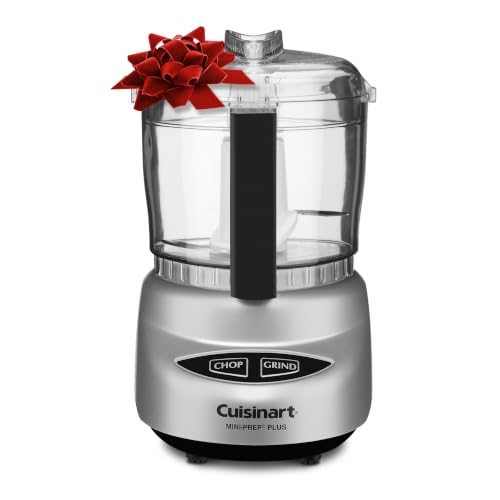
The Cuisinart Mini Food Processor is a 3-cup, 24 oz chopper with a reversible, auto-reversing SmartPower blade for chop and grind modes, in brushed chrome. It is prose-only in this guide because its listing names no shredding capability, and no honest review can call its output shredded cheese. What it produces is crumbles and, on the grind side, a coarse grated-style result from very hard cheese in small quantities. For feta over a salad, blue cheese for a dressing, or a few tablespoons of pecorino worked toward a topping, that output is genuinely useful.
Work cheese in this bowl cold and in short bursts. Firm cheese cut into small cubes, pulsed briefly, crumbles evenly; soft cheese warms under the blade and smears within seconds, so chill it hard and pulse minimally. The distinction to hold onto is culinary, not mechanical: crumbled cheese tops, sprinkles and folds; shredded cheese melts in strands, layers and stretches. Recipes that want the first are this machine’s territory, and recipes that want the second belong to the disc picks above, without exception or apology.
Its spreads deserve a sentence: cream cheese and feta whipped with herbs, blue cheese worked into a dressing base, and similar mixtures are blade work that this mini does well, and they are cheese work too. A household whose cheese life is mostly salads, spreads and crumbles may find this prose-only pick, or one of its siblings below, is the machine it actually needs, provided it buys with the shredding line clearly in view.
Best for: crumbled cheese toppings, small hard-cheese quantities and spreads / Not suited for: any recipe that specifies shredded cheese
Cuisinart Core Custom 4-Cup Mini Chopper
Badge: Prose-Only: Best for Dips and Spreads
Strengths
- 4-cup bowl suits a family-size cheese dip or spread batch
- Auto-reversing blade blends cheese mixtures evenly
- Dishwasher-safe parts after fatty cheese cleanup
Trade-offs
- No shredding capability named in the listing
- Blade processing warms cheese; soft mixtures need cold starts
- Cannot help with pizza, taco or gratin shredding at all
Key specs (from the listing)
- Capacity: 4-cup mini bowl
- Blade: auto-reversing stainless steel SmartPower blade
- Functions named in the listing: chops and grinds
- Parts: dishwasher-safe
- Model: MCH-4
- Finish: white and stainless steel
The Cuisinart Core Custom 4-Cup Mini Chopper, the MCH-4, chops and grinds with an auto-reversing stainless steel SmartPower blade and offers dishwasher-safe parts in white and stainless. It is prose-only here on the same terms as the other choppers: no shredding is named in its listing, so none is claimed. Its cheese territory is the processed mixture: pimento-style cheese spreads, whipped feta, cheese balls in the making, and dips where cheese is an ingredient to be blended rather than a topping to be stranded.
For those mixtures, its 4-cup bowl is the best-sized in the prose-only group: a full batch of spread fits with room to fold, and the auto-reversing blade keeps a dense mixture moving instead of carving a cavity in it. Start with cold cheese and process in stages, scraping once, because friction warms cheese mixtures toward greasiness if they are run continuously. What this machine will never do is stand between you and a bag of pre-shredded cheese on pizza night; for that decision, the disc picks at the top of this guide are the whole conversation.
There is a party logic to owning this bowl alongside a disc machine: the disc shreds the cheddar, and this mini turns part of it into a spread with peppers and seasoning, so one block of cheese becomes two dishes. Cheese boards and game-day tables run on exactly that kind of doubling, and it is the most charitable and accurate frame for a prose-only pick in a shredding guide: not a failed shredder, but a different cheese tool entirely.
Best for: cheese spreads, dips and whipped cheese mixtures / Not suited for: shredded cheese for melting and topping
Cuisinart Elemental 4-Cup Chopper/Grinder
Badge: Prose-Only: Best for Small Hard-Cheese Jobs
Strengths
- BladeLock system secures the blade when tipping out processed cheese
- 4-cup bowl handles a modest crumble or spread batch
- SmartPower blade works hard cheese in short, cold bursts
Trade-offs
- No disc, so no strands, by its own listing
- Hard cheese in quantity will take many small loads
- Silver finish shows cheese fat until washed
Key specs (from the listing)
- Capacity: 4-cup
- Blade: SmartPower blade
- Safety detail named in the listing: BladeLock system secures the blade for pouring
- Finish: silver
- Model: ECH-4SV
The Cuisinart Elemental 4-Cup Chopper/Grinder, the ECH-4SV, uses a SmartPower blade with a BladeLock system that secures the blade for pouring, in a silver 4-cup bowl. Prose-only, like its fellow choppers, because its listing names no shredding disc or grating function. Its cheese work is the small hard-cheese job: a chunk of parmesan or pecorino broken down toward a coarse grated texture for a single pasta night, firm cheese crumbled for a gratin’s topping layer where crumbles are acceptable, and small spread batches.
Hard cheese in a blade bowl is a noise-and-patience exercise: cut the cheese into small cubes, chill them, and pulse in short bursts, letting the blade’s impacts do the work rather than running continuously, which warms and clumps the result. The texture ceiling is real; a blade gives a coarse, uneven grate compared with a disc’s or a hand grater’s fine snow, and for a dish where parmesan is the finish, many cooks will still prefer the hand tool. The BladeLock pouring at least makes emptying the bowl a one-handed, blade-safe motion, which anyone who has fished crumbles around a loose blade will appreciate.
Judge this pick, and all the prose-only picks, by whether your cheese cooking actually centers on shredding. A household that grates a little hard cheese, crumbles feta, and blends the occasional spread, but buys its pizza cheese in blocks for a hand grater it enjoys, may be honestly served here. A household picturing weekly taco-night strands should not let any prose in this section talk it out of the disc picks above.
Best for: small hard-cheese and crumble jobs in a 4-cup bowl / Not suited for: shredding of any cheese in any quantity
KitchenAid 3.5 Cup Food Chopper (Empire Red)
Badge: Prose-Only: Best Pulse Control for Cheese Mixtures
Strengths
- 2 speeds plus pulse named in the listing for controlled cheese mixtures
- Low speed suits folding shredded cheese into other mixtures
- Compact 3.5-cup bowl with dishwasher-safe parts
Trade-offs
- Pulse control cannot create a shred where no disc exists
- 3.5-cup bowl is single-dish scale
- No role in producing shredded cheese, only in using it
Key specs (from the listing)
- Capacity: 3.5 cup
- Blade: stainless steel multi-purpose blade
- Controls named in the listing: 2 speeds plus pulse
- Work bowl: dishwasher-safe
- Storage detail named in the listing: easy cord wrap
- Model: KFC3516ER
- Color: Empire Red
The KitchenAid 3.5 Cup Food Chopper, model KFC3516ER in Empire Red, lists a stainless steel multi-purpose blade, 2 speeds plus pulse, a dishwasher-safe work bowl and an easy cord wrap. It closes this guide prose-only, its listing naming no shredding capability. Its cheese role is downstream of shredding: folding already-shredded cheese through fillings and mixtures, chopping firm cheese for egg dishes, and blending small cheese mixtures with the best control in the prose-only group, thanks to that named pulse and low speed.
That downstream role is larger than it sounds. Cheese fillings for pasta, cheese mixtures for stuffed vegetables and peppers, and the even distribution of cheese through a savory bake all benefit from brief, controlled pulsing that distributes without melting the cheese into the mixture with friction heat. The low speed is the right tool for folding, and the small bowl matches the quantities those jobs use. None of it makes this a shredder, and this review’s honesty on that point is the guide’s whole method in miniature: credit each machine with its real work, and let the disc picks carry the keyword’s core job alone.
If this chopper already lives in your kitchen, the shredding question becomes a purchasing one rather than a technique one: add a disc machine when your shredding volume justifies it, and let this bowl keep the mixture work it does well. Kitchens are systems, and a prose-only pick in this guide can be a permanent, valued part of the system, so long as nobody asks it to make strands. The same disc-versus-blade line decides the compact picks in Best Food Processors For Small Kitchens, where several of these choppers do their daily work.
Best for: folding and mixing cheese mixtures with controlled pulses / Not suited for: producing shredded cheese in the first place
Comparison Table
This table draws the guide’s line in its starkest form: two rows that shred, four rows that do not. Choose your row by the cheese product your recipes actually specify, strands for melting and topping, or crumbles and mixtures for everything else.
| Product | Capacity | Standout for this job | Amazon |
|---|---|---|---|
| Hamilton Beach 10-Cup Food Processor | 10 cups | Named shredding function, family capacity | Check on Amazon |
| BLACK+DECKER 8-Cup Food Processor | 8-cup | Shred attachments with stated power | Check on Amazon |
| Cuisinart Mini Food Processor 3-Cup | 3-cup (24 oz) | Prose-only: crumble and spread work only | Prose-only pick |
| Cuisinart Core Custom 4-Cup Mini Chopper | 4-cup mini bowl | Prose-only: mixtures and spreads only | Prose-only pick |
| Cuisinart Elemental 4-Cup Chopper/Grinder | 4-cup | Prose-only: hard-cheese crumbles, no disc | Prose-only pick |
| KitchenAid 3.5 Cup Food Chopper (Empire Red) | 3.5 cup | Prose-only: folding and mixing only | Prose-only pick |
How to Choose a Food Processor for Shredding Cheese
The disc is the decision
Everything in this category follows from one component: a shredding disc, a flat disc whose raised cutting edges shave cheese into strands as it passes through the feed chute. If a listing names a shredding disc, shredding function or shredding attachments, the machine shreds. If it names only blades, it chops, and no technique converts chopping into shredding. Apply that rule without sentiment, the way this guide applied it to its own pool, and you will never buy the wrong cheese machine.
Within disc machines, judge the chute and the bowl. A chute that takes a standard block in upright pieces saves pre-cutting; a bowl of 8 to 10 cups or more collects a family batch without compression. Stated power, like the BLACK+DECKER’s 450W, helps with cold, firm blocks. The two linked picks here split those virtues between them, and either will out-shred a hand grater by a factor that changes weekly cooking habits.
Cheese selection: what shreds and what smears
Firm and semi-firm cheeses are the disc’s home ground: cheddar, aged gouda, gruyère, Swiss-style cheeses, provolone and low-moisture mozzarella all shred into clean strands when cold. Hard cheeses, parmesan and pecorino, shred into a coarse, sandy strand that suits gratins and toppings, though a fine grating for pasta finishing is still a hand tool’s or a dedicated grater’s finer work. Soft and high-moisture cheeses, fresh mozzarella, brie, soft goat cheese, are disc hazards: they smear, clog and waste themselves against the disc, and are better torn, crumbled or sliced.
The partial freeze is the bridge technique: twenty to thirty minutes in the freezer firms a borderline cheese, including mozzarella intended for pizza, until it shreds instead of smearing. The cheese should be firm at the edges and cold throughout, not frozen solid, which would strain the disc and shatter rather than shave. That one habit expands the disc’s repertoire more than any accessory.
Shredding as a freezer system
Blocks bought in quantity, shredded in one session and frozen in portions, convert cheese from a nightly chore into a monthly system. Freeze shreds spread on a tray until firm, then bag them in meal-size portions with the air pressed out; frozen this way, the strands stay loose and can go straight onto pizza, tacos and casseroles without thawing. The melt quality of home-shredded cheese, free of the anti-caking coatings used on bagged shreds, is the system’s reward: smoother, stretchier, and noticeably fresher in flavor.
Label bags with the cheese and the month, and rotate oldest forward. Hard and semi-firm shreds keep their quality for a few months frozen; delicate cheeses are better shredded fresh. The session itself takes minutes per block with a disc machine, which is why the economics work: the labor that made home shredding impractical by hand is exactly the labor the disc removes. The same batch-and-freeze logic governs the soup systems in Best Food Processors For Soup.
Where the choppers honestly fit
A household’s cheese work is never only shredding. Feta and blue cheese are crumbled, and a mini chopper crumbles them evenly in seconds. Spreads, dips and whipped cheeses are blade work entirely. Hard cheese in small quantities can be pulsed toward a coarse grate. The prose-only picks in this guide cover that territory well, and a kitchen with a disc machine for strands plus a mini for crumbles and spreads owns the complete cheese toolkit. Buy the choppers for those jobs with clear eyes, and they will never disappoint you the way a chopper bought for shredding will.
How to Shred Cheese in a Food Processor
The method below is the disc liturgy, five minutes of discipline that produces a bowl of clean strands. It assumes one of the two linked disc machines; the notes after the steps cover the borderline cheeses and the freezer finish.
- Chill the cheese thoroughly; for mozzarella or other soft-leaning blocks, give it a brief partial freeze until firm at the edges.
- Trim the block into pieces that fit the feed chute and stand upright, with a flat side down for stability.
- Fit the shredding disc and lock the lid and chute assembly before switching the machine on.
- Feed one piece at a time with steady, moderate pressure on the pusher, letting the disc shave rather than forcing the cheese.
- If strands begin to smear, stop: the cheese has warmed. Return it to the freezer briefly and resume with the next cold piece.
- Empty the bowl before it packs down; compressed shreds clump and melt unevenly later.
- Use the cheese promptly, or spread it on a tray to freeze before bagging in portions.
- Wash the disc and parts promptly in hot soapy water; cheese fat left to dry becomes a stubborn, odorous film.
Two refinements separate good home shredding from great. First, shred in the order the meal needs the cheese: the cheese for the top of a dish last, so it is freshest where it will be seen and tasted. Second, for pizza specifically, shred low-moisture mozzarella as cold as the disc will accept and scatter it from frozen or near-frozen; the strands keep their separation in the oven’s first minutes and melt into an even layer instead of pooling.
Cleanup is part of the method, not an afterthought: cheese fat is the most clinging residue a processor meets, and a disc left unwashed will greet the next job with rancid reminders. Hot water, detergent and prompt attention keep the machine neutral, and the dishwasher-safe parts named across this category’s listings finish the work.
One more storage refinement for the shredding session: if you shred several cheeses in one sitting, work from mildest to strongest and rinse the disc only when a strong cheese would haunt a mild one’s delicate dish. A single session that stocks cheddar, gruyère and parmesan in sequence, with the bowl emptied and the strands bagged between each, takes little longer than a single-cheese session and stocks the freezer in one washing of the parts.
Troubleshooting
Problem: The cheese smears across the disc instead of shredding → It is too warm or too soft. Chill the block thoroughly, or partially freeze it until firm at the edges, and feed with lighter pressure. Very soft cheeses should leave the disc repertoire entirely and be torn or crumbled instead.
Problem: Strands come out uneven, with thick slabs mixed in → The pieces are tilting in the chute or pressure is uneven. Trim pieces to fit snugly and stand upright, keep steady pressure, and let the disc set the pace rather than pushing the cheese through faster than it can shave.
Problem: Shredded cheese clumps into a solid mass in storage → It was packed warm or stored in a deep, compressed pile. Cool the shreds, spread them shallow, and for freezer storage, tray-freeze them loose before bagging so the strands stay individual.
Cheese by Cheese: A Shredding Field Guide
Cheddar is the benchmark: cold, it shreds into clean, separate strands that melt evenly, and it freezes beautifully in shredded form. Aged cheddars shred slightly more crumbly, which gratins forgive and tacos welcome. Gruyère and Swiss-style cheeses shred almost as cleanly and bring a nutty depth to gratins and French onion applications. Provolone and low-moisture mozzarella are the pizza and sandwich cheeses, with mozzarella’s partial freeze as the one technique to master. Monterey Jack and its peppered variants shred well cold and melt generously, suiting them to the whole Tex-Mex repertoire.
At the hard end, parmesan and pecorino through a shredding disc give a coarse strand for gratins, soups and toppings; for the fine, snowy finish on pasta, a hand grater or microplane remains finer, and this guide says so rather than overselling the disc. At the soft end, fresh mozzarella should be torn, brie sliced with a warm knife, goat cheese crumbled, and feta either crumbled by hand or pulsed in a mini, which is where the prose-only picks rejoin the story as the right tools for those cheeses.
Why Home-Shredded Melts Better: The Coating Question
Bagged shredded cheese is coated, typically with cellulose or similar anti-caking agents, to keep the strands separate in the bag. Those coatings are safe and legal and also noticeably interfere with melting: bagged shreds melt into a grainier, less unified layer, and sauces built on them can turn slightly gritty. A block shredded at home carries no coating, so it melts into the smooth, stretchy layer cooks picture when they choose a recipe. That difference, more than price, is why cheese-forward households convert to home shredding and rarely convert back.
The conversion has a rhythm: blocks on the grocery list, a shredding session when the cheese arrives or on the week’s prep day, portions in the freezer, and strands on demand thereafter. The disc machine is what makes the rhythm cheap in time. Everything else in this guide, the cold discipline, the partial freeze, the prompt washing, is in service of keeping that rhythm pleasant enough to sustain, because a system that survives February is worth ten that shine in the first week of January. The vegetable version of the same system thinking appears in Best Food Processors For Vegans, and the two systems together cover most of a processor’s weekly work.
Cheese Work Beyond the Shredder: The Weekly Round
A cheese household’s week touches the processor in more places than the shredding session. Monday’s soup wants a handful of strands and a crumbled finish; the guide to Best Food Processors For Soup covers the machines that make those soups, and the cheese that crowns them comes from this guide’s system. A grain bowl or salad night wants feta crumbled and a hard cheese shaved or coarsely grated, split between a mini and the disc. A pasta night wants the fine grate that a hand tool still does best, an honesty this guide maintains because a kitchen equipped truthfully cooks better than one equipped hopefully.
Plant-based cooks run a parallel system worth naming: firm vegan cheeses and cheese-style preparations shred, crumble and blend by the same disc-versus-blade logic, with the same cold discipline deciding success, a topic the cluster develops in Best Food Processors For Vegans. The machinery does not care about the ingredient’s origin; it cares about firmness, temperature and whether a disc is present, which is why this guide’s strict listing rule travels so well across diets and repertoires.
The weekly round, then, is a system with three stations: the disc for strands, the mini for crumbles and spreads, the hand grater for the finest finishes. Households that assemble that system once stop thinking about cheese prep entirely, which is the highest compliment kitchen equipment can earn. Cheese becomes an ingredient again instead of a task, and the block in the refrigerator is a promise rather than a project.
Common Buying Mistakes
Buying a blade chopper to shred cheese. The category’s defining error, and the one this guide’s prose-only reviews exist to prevent. Strands require a shredding disc named in the listing. Check for those words before anything else.
Shredding warm or room-temperature cheese. Warm cheese smears, clogs and wastes itself. Chill every block thoroughly and partially freeze the soft-leaning ones. Temperature is half the technique.
Forcing the pusher. Heavy pressure tilts pieces, thickens strands and strains the disc. Steady, moderate pressure and snug, upright pieces produce the even strands the machine was bought for.
Leaving the disc unwashed. Cheese fat dries into a stubborn, odorous film that flavors the next job. Hot soapy water immediately after shredding is not optional housekeeping; it is part of the method.
Freezing shreds in one warm, compressed bag. They will thaw as a single cheese brick. Tray-freeze the strands loose, then bag them in portions, and frozen cheese stays as convenient as the bagged kind with better melt.
Final Recommendation
For shredding cheese at home, the recommendation is the Hamilton Beach 10-Cup: shredding named at the front of its own function list, a 10-cup bowl that collects a family batch without compression, and a bowl scraper that recovers the strands that cling. It is the complete weekly cheese machine in this pool.
Start with the Hamilton Beach 10-Cup Food Processor if it matches your kitchen, or the BLACK+DECKER 8-Cup Food Processor as the closest alternative — check the latest price on Amazon for either before you decide.
Choose the BLACK+DECKER 8-Cup if your household is smaller and you value its stated 450W behind the disc, and consider the prose-only choppers only for what they honestly are: crumbling, spread and mixture tools that complement a shredder or serve a household whose cheese work never asks for strands. Buy the disc for the dishes you cook, keep the cheese cold, and the bagged-shredded era of your kitchen is over.
Frequently Asked Questions
Can a food processor blade shred cheese if I pulse carefully?
No. A blade chops cheese into crumbles and, with soft cheese, into a smear. Shredded strands are produced only by a shredding disc. Careful pulsing gives better crumbles, which have their uses, but it does not change the category of the result, and recipes specifying shredded cheese need the disc’s product.
Why does my shredded cheese melt better than the bagged kind?
Bagged shreds carry anti-caking coatings that keep them separate in the package and interfere slightly with melting, giving a grainier finish. Home-shredded cheese has no coating, so it melts into a smoother, stretchier layer and tastes fresher. The difference is most obvious on pizza and in sauces.
How do I shred mozzarella without it smearing?
Use low-moisture mozzarella, chill it thoroughly, and give it a brief partial freeze until it firms at the edges. Feed it in snug, upright pieces with steady pressure. Fresh, high-moisture mozzarella should be torn by hand instead; it is not a disc cheese.
Can I freeze shredded cheese?
Yes, and it is the system that makes home shredding practical. Tray-freeze the strands loose, then bag them in meal-size portions labeled with the cheese and month. Firm and semi-firm cheeses keep their quality for a few months and can be used from frozen on cooked dishes.
Is a shredding disc the same as a grating disc?
Listings use the terms loosely, and for this guide’s purposes a named shredding disc, shredding function or grating capability all indicate the disc that produces strands and coarse grates. What matters is that a disc function is named at all; a listing naming only blades has no disc of either name. The disc-equipped machines here also slice, a pairing explored for vegetables in the cluster’s other guides.
How much cheese can I shred at once?
As much as the bowl collects without packing: roughly a pound or two in the 10-cup pick, somewhat less in the 8-cup, emptying before the shreds compress. Compressed shreds clump and melt unevenly, so batch rhythm beats batch size. For very large quantities, shred in sessions with the cheese kept cold between rounds.
How long does home-shredded cheese keep in the refrigerator?
About as long as the block it came from would keep once cut, several days well wrapped or in a sealed container, with quality best in the first days. Shredding exposes surface area, so refrigerated shreds dry and age faster than a block; for keeping beyond a few days, the freezer system in this guide is the better home.