Disclosure: topratedkitchenware.com is reader-supported. When you buy through links on our site, we may earn an affiliate commission from Amazon and other retailers, at no extra cost to you.
Where to buy
The six models below are the verified picks for this guide to best grills for steak cooking. Each name links to its Amazon listing, where you can check the latest price on Amazon, confirm the current configuration, and read the newest owner feedback before you decide.
- Weber Spirit E-425 Gas Grill
- Monument Grills Mesa II 4-Burner Gas Grill
- Nexgrill 4-Burner Gas Grill, 52,000 BTU
- IdeaMaxx 3-Burner Gas Grill with Cast Iron Grates
- AMERLIFE 6-Burner Gas Grill with Side Burner
- Char-Broil Portable 1-Burner Gas Grill
Read the full guide ↓ for the ranking logic, the honest limitations of every pick, and the buying checks that matter more than any headline claim.
The best grills for steak cooking are judged by one event that lasts about ninety seconds per side: the sear. A great steak needs a grate hot enough to build a deep, even crust before the interior overcooks, grate material with enough mass to hold that heat when cold meat lands on it, and a cooler zone to finish thick cuts gently once the crust is set. Everything else, size, side burners, storage, is secondary to that sequence, and this guide ranks six verified grills by how well they perform it, from a dedicated sear-zone flagship down to a portable that cooks an honest steak for one.
Two design ideas dominate the top of the list. The first is the dedicated high-heat zone, Weber’s Sear Zone with Boost Burners and Monument’s Advanced Broil Zone, which concentrates extra firepower on part of the grate so the rest of the grill can stay moderate. The second is grate mass: cast iron, plain or porcelain-enamelled, stores heat and delivers it on contact, producing the dark, lacy crust and clean marks that thin steel grates rarely match. If your wider menu leans toward mixed grill nights, Best Grills For Steaks And Burgers applies the same standards with burgers sharing the grate.
We will also be honest about the physics working against the smaller picks. Total output figures in listings are sums across burners, not a searing score, and a compact grill asked to sear four thick ribeyes at once will lose heat faster than it can replace it. That does not disqualify the little grills; it defines their jobs. Matched to the right number of steaks and the right thickness, every pick here can produce a steak worth serving, and the reviews below say exactly where each one’s ceiling sits.
Key Takeaways
- Crust is a heat-and-mass problem: dedicated sear zones and cast iron grates are the two features that matter most.
- Sear hot and fast, then finish thick steaks on a cooler zone; one temperature for the whole cook rarely wins.
- Dry surfaces sear and wet surfaces steam: pat steaks dry and salt ahead whenever you can.
- Total BTU figures are sums, not searing scores; heat per square inch and grate material tell the real story.
- Resting is part of steak cooking: a few quiet minutes keep the juices in the meat instead of on the board.
- Preheat longer than feels necessary; a fully saturated grate is the difference between marks and grey.
In this guide
Quick Picks
| Pick | Badge | Why it earns its place | Listing |
|---|---|---|---|
| Weber Spirit E-425 Gas Grill | Best Overall for Steaks | Sear Zone with Boost Burners plus enamelled cast iron: the crust specialist. | Check on Amazon |
| Monument Grills Mesa II 4-Burner Gas Grill | Best Broil Zone | Advanced Broil Zone and a fast preheat built for weeknight steaks. | Check on Amazon |
| Nexgrill 4-Burner Gas Grill, 52,000 BTU | Best Value Searer | Cast iron grates and strong output at a mid-pool tier. | Check on Amazon |
| IdeaMaxx 3-Burner Gas Grill with Cast Iron Grates | Best Compact Searer | Cast iron in a compact three-burner that stores small. | Check on Amazon |
| AMERLIFE 6-Burner Gas Grill with Side Burner | Best for Steak Nights for a Crowd | Six burners sear a crowd’s steaks in one round. | Check on Amazon |
| Char-Broil Portable 1-Burner Gas Grill | Best Portable Option | Travel steak for one or two, with honest heat limits. | Check on Amazon |
How These Picks Were Chosen
Selection for this guide started from the sear and worked outward. We looked first for dedicated high-heat engineering, sear zones and broil zones with named hardware behind them, then for grate material, favouring cast iron in both its enamelled and matte forms, then for zone architecture, because a steak grill that cannot also cook gently cannot finish a thick cut properly. Output ratings and cooking areas from the verified listings were used as supporting evidence, never as the ranking itself.
We were equally careful about what the verified data does not say. Where a listing does not state a cooking area or an output figure, the review leaves it out instead of borrowing a number from a sibling model. Our research is desk-based and comparative, built from verified specifications, maker documentation, and owner reports; we do not claim hands-on testing. That restraint matters for steak cooking in particular, where marketing language about extreme temperatures is common and verifiable figures are rare, and where an honest ‘the listing does not say’ protects your money better than a confident guess.
The list deliberately spans formats: two sear-zone flagships, two cast-iron mid-sizers, a six-burner crowd machine, and one portable. That spread reflects how people actually cook steak, from a Tuesday ribeye for two to a Saturday spread for twelve. Readers whose steak nights always include a burger contingent should read this alongside Best Grills For Tailgai, which covers the portable end of the family in more depth.
The 6 Best Options for Best grills for steak cooking

Weber Spirit E-425 Gas Grill
Badge: Best Overall for Steaks
Strengths
- Sear Zone with Boost Burners creates a genuinely hotter zone for crusts on steaks and chops
- Porcelain-enamelled cast-iron grates balance searing mass with easier cleaning
- Strong brand support and parts availability suit buyers keeping a grill for the long term
Trade-offs
- Premium-tier positioning in this pool, so it asks the biggest commitment of the six
- Four-burner footprint is more grill than a couple or a small balcony needs
- Accessory rails tempt add-on spending that is nice to have, not essential
At a glance
- Fuel: propane gas
- Burners: 4
- Searing: Sear Zone with Boost Burners
- Grates: porcelain-enamelled cast iron
- Extras: Weber Works accessory rails
The Weber Spirit E-425 is the premium four-burner in this pool, and its headline feature is a dedicated Sear Zone with Boost Burners, built to push one section of the grate far hotter than the rest for steakhouse-style crusts. The cooking grates are porcelain-enamelled cast iron, the combination most experienced grillers ask for by name: cast iron mass for searing, enamel for easier release and cleaning. Weber Works rails along the front accept the brand’s snap-on accessories, and behind the badge sits the practical advantage Weber owners talk about most, which is a deep spare-parts and support ecosystem that keeps a grill cooking for many seasons instead of a few.
The Spirit E-425 is the most complete steak tool here because it solves both halves of the cook. The Sear Zone with Boost Burners lays the crust quickly and evenly, and the standard burners beside it give you the moderate zone where a thick ribeye finishes to temperature without burning its exterior. The porcelain-enamelled cast-iron grates are the ideal surface for the job: heavy enough to mark deeply, enamelled enough to release the steak cleanly when the crust is set. For a household that cooks steak weekly and cares about the result, this is the benchmark the others chase.
Best for: Thick ribeyes and strip steaks / Not suited for: anyone whose needs run against that job — see the trade-offs above before you buy.

Monument Grills Mesa II 4-Burner Gas Grill
Badge: Best Broil Zone
Strengths
- Advanced Broil Zone gives a dedicated high-heat area for steaks and burgers
- Maker-claimed fast preheat suits weeknight cooking on a schedule
- Foldable shelves and highlighted fast assembly reduce the usual setup friction
Trade-offs
- Broil-zone designs reward learning; the hot area is intense and unforgiving of distraction
- Stainless finish needs regular wiping to look its best outdoors
- As with any feature-led model, confirm shelf and grate dimensions on the listing for your pans and trays
At a glance
- Fuel: propane gas
- Burners: 4
- Searing: Advanced Broil Zone
- Body: stainless steel
- Maker claim: reaches 500°F in 5 minutes
- Extras: foldable side shelves, fast assembly
- Model: Mesa II 410FBZ
The Monument Mesa II 410FBZ is a stainless steel four-burner built around an Advanced Broil Zone, the brand’s take on a high-heat searing area, and the maker claims the grill reaches 500°F in five minutes, which is a preheat speed claim worth noting because weeknight grilling lives and dies on how fast the grate is ready. Foldable side shelves keep the storage footprint smaller than the cooking capacity suggests, and the listing highlights fast assembly, a small mercy anyone who has spent a Saturday with a parts tray will appreciate. In this pool it is the design-forward stainless option for cooks who care about sear first and footprint second.
The Monument’s steak case rests on its Advanced Broil Zone and speed. A grill that reaches cooking temperature in minutes, by the maker’s claim, turns steak from a planned event into a weeknight option, and the broil zone gives that steak a properly aggressive finish. It suits the cook who wants steakhouse theatre on a Tuesday: fast preheat, hard sear, brief rest, eat. The discipline it asks in return is attention, because a dedicated hot zone does not forgive a forgotten minute, and thin steaks in particular should be watched rather than timed by habit.
Best for: Fast weeknight searing / Not suited for: anyone whose needs run against that job — see the trade-offs above before you buy.
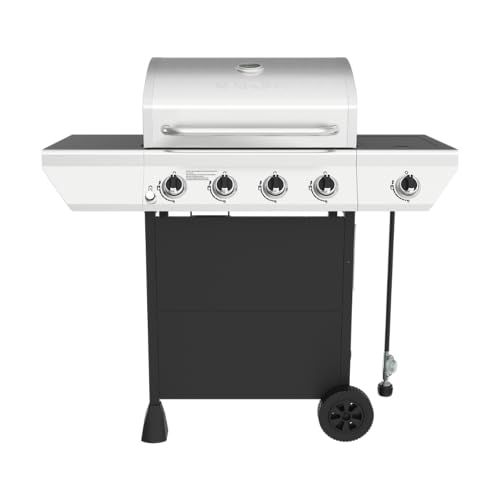
Nexgrill 4-Burner Gas Grill, 52,000 BTU
Badge: Best Value Searer
Strengths
- Cast iron grates and strong output make it a confident searing grill
- 526 sq. in. is a genuine family-plus-guests capacity without the largest footprint here
- Electronic ignition and built-in thermometer simplify the daily routine
Trade-offs
- Cast iron grates need oiling and care to avoid surface rust
- Less cooking room than the biggest Nexgrill when the whole street comes over
- Stainless lid still needs wiping to keep water spots and fingerprints at bay
At a glance
- Fuel: propane gas
- Burners: 4, plus side burner
- Total output: 52,000 BTU (maker rating)
- Cooking space: 526 sq. in.
- Grates: matte-finish cast iron
- Extras: built-in thermometer, electronic ignition, stainless steel lid
This second Nexgrill pairs four burners and a side burner with a maker rating of 52,000 BTU and 526 square inches of cooking space. The grates are matte-finish cast iron, which puts real searing mass under the food, and the lid is stainless steel over a cart the listing describes as portable, a combination aimed at owners who may need to wheel the grill in and out of a garage or around a patio. Electronic ignition and a built-in thermometer are both present, so the everyday routine is push-button lighting and lid-closed cooking with a temperature reference instead of guesswork. It sits in the middle of this pool on size, which for many households is exactly the point.
This Nexgrill is the value searer: matte cast-iron grates with real mass, a strong total output across four burners, and 526 square inches so a family steak night cooks in one round instead of two. It lacks a named sear zone, so technique does the work: preheat the whole grate thoroughly, sear over the burners at full power, and slide finished steaks to a low corner to rest in the warmth. Judged purely on crust per commitment, it is the pick most buyers in this pool will be happiest with, and its side burner quietly handles the garlic butter.
Best for: Family steak nights / Not suited for: anyone whose needs run against that job — see the trade-offs above before you buy.

IdeaMaxx 3-Burner Gas Grill with Cast Iron Grates
Badge: Best Compact Searer
Strengths
- Cast iron grates hold searing heat and produce strong grill marks
- Foldable side shelves shrink the storage footprint between cooks
- Strong output for a three-burner makes preheats quick
Trade-offs
- Cast iron needs seasoning and a light oil routine to stay rust-free
- Three burners and a compact box limit how much you can cook at once
- Fold-down shelves are less sturdy as work surfaces than fixed cabinet shelves
At a glance
- Fuel: propane gas
- Burners: 3
- Total output: 38,200 BTU (maker rating)
- Grates: cast iron
- Extras: foldable side shelves
The IdeaMaxx three-burner runs cast iron grates, which is the detail steak and burger cooks care about most, because cast iron holds heat through contact with cold food and lays down the deep, dark marks that thin steel grates struggle to match. Total output is rated at 38,200 BTU across the three burners, a healthy figure for a grill of this size, and the side shelves fold down, which makes the grill easier to store against a wall, in a garage corner, or under a cover between sessions. The format suits smaller households and tighter spaces that still want real grate material rather than the lightest possible build.
The IdeaMaxx proves a compact grill can sear seriously when the grate is right. Cast iron over three burners concentrates its 38,200 BTU rating onto a smaller area, which is exactly the arithmetic a steak wants, and the result is proper marks and a real crust on the one or two steaks a small household usually cooks. Its ceiling is batch size: four thick ribeyes at once will crowd it and cool the grate. Cook in two rounds, resting the first batch, and it performs like a much larger grill for couples and small families.
Best for: Couples, small patios / Not suited for: anyone whose needs run against that job — see the trade-offs above before you buy.

AMERLIFE 6-Burner Gas Grill with Side Burner
Badge: Best for Steak Nights for a Crowd
Strengths
- 650 sq. in. and six burners cook for a crowd in one round, with zones to spare
- Cast iron grates give the big surface proper searing ability
- Warming rack and side burner keep finished food and sides moving together
Trade-offs
- The largest, heaviest format here; it needs a big patio and is effectively a fixed installation
- Six burners burn through propane quickly when everything runs at once
- Far more grill than a small household will use, and more to clean after every cook
At a glance
- Fuel: propane gas
- Burners: 6, plus side burner
- Total output: 60,000 BTU (maker rating)
- Cooking area: 650 sq. in.
- Grates: cast iron
- Extras: warming rack, built-in thermometer, regulating valve
The AMERLIFE is the capacity play: six main burners, a side burner, a maker rating of 60,000 BTU, and 650 square inches of cooking area, the largest surface in this pool. Six burners change the cooking maths completely. You can hold three distinct temperature zones at once, cook burgers for a team in a single round, and keep a warming rack loaded with finished food while the next batch sears. The grates are cast iron, a built-in thermometer and a regulating valve are listed, and the whole machine is unapologetically aimed at people who cook for crowds often enough that batch two and batch three have become the enemy. It needs a big, level home and an owner who will actually use the space.
Six burners and 650 square inches make the AMERLIFE the steak-night-for-everyone pick: a whole tray of steaks sears at once, at staggered doneness if you arrange zones thoughtfully, with cast-iron grates doing the marking. It is the grill for the cook who hosts, the one whose Saturday regularly involves a dozen eaters and a reputation. The costs are the obvious ones: a long preheat for the full surface, serious propane use, and a big clean afterwards. For two steaks on a Tuesday it is machinery in search of a problem; for a crowd it is the answer.
Best for: Steak for a crowd / Not suited for: anyone whose needs run against that job — see the trade-offs above before you buy.

Char-Broil Portable 1-Burner Gas Grill
Badge: Best Portable Option
Strengths
- Truly portable format that travels in a car and stores in a cupboard or garage corner
- Single burner is simple to light, simple to control, and economical on propane
- Fast setup suits spontaneous cooks, small households, and travel use
Trade-offs
- One heat zone only, so indirect cooking and mixed menus are very limited
- Small grate means cooking in batches for more than a few people
- Low total output struggles with thick steaks and windy, cold conditions
At a glance
- Fuel: propane gas
- Burners: 1
- Total output: 11,000 BTU (maker rating)
- Body: aluminised steel
- Format: portable, model 465133010
The Char-Broil Portable is a single-burner convective gas grill rated at 11,000 BTU, built from aluminised steel in a compact black format designed to travel. One burner means one heat zone and honest limits, and within those limits this is a proven little design: it lights fast, sips propane, fits in a car boot or a truck bed, and cooks burgers, dogs, sausages, and skewers for a small group without ceremony. It is the only pick in this pool you would genuinely carry to a stadium car park, a campsite, or a balcony with a strict size rule, and that portability is a feature no amount of burner count can substitute for.
Honesty first: a single 11,000 BTU burner is not a steakhouse. What the little Char-Broil can do, preheated patiently with the lid down and cooking one or two modest steaks at a time, is produce a respectable crust and a properly juicy interior, at a campsite, on a balcony, or in a stadium car park. Choose thinner steaks, dry them well, and do not crowd the grate. As a travel steak tool it earns its place; as a household’s only steak grill it would frustrate anyone who loves a thick cut.
Best for: Solo travel steaks / Not suited for: anyone whose needs run against that job — see the trade-offs above before you buy.
Comparison Table
| Pick | Format | Best use | Listing |
|---|---|---|---|
| Weber Spirit E-425 Gas Grill | Gas, sear zone, enamelled cast iron | Thick ribeyes and strip steaks | Check on Amazon |
| Monument Grills Mesa II 4-Burner Gas Grill | Gas, broil zone | Fast weeknight searing | Check on Amazon |
| Nexgrill 4-Burner Gas Grill, 52,000 BTU | Gas, cast iron, 526 sq. in. | Family steak nights | Check on Amazon |
| IdeaMaxx 3-Burner Gas Grill with Cast Iron Grates | Gas, cast iron, 3 burners | Couples, small patios | Check on Amazon |
| AMERLIFE 6-Burner Gas Grill with Side Burner | Gas, 6 burners, 650 sq. in. | Steak for a crowd | Check on Amazon |
| Char-Broil Portable 1-Burner Gas Grill | Gas, 1 burner, portable | Solo travel steaks | Check on Amazon |
How to Choose the Right Grill for Best grills for steak cooking
Grate material is the first decision
Cast iron stores heat and returns it on contact, which is why it dominates this list. Porcelain-enamelled cast iron adds easier release and simpler care, and is the better choice for most households. Bare or matte cast iron marks beautifully and asks for oiling discipline. Thin steel and chrome grates can cook a fine steak with a long preheat, but they shed heat the moment cold meat lands, which shows up as pale, steamed patches instead of crust. When a listing names its grate material proudly, that is usually a good sign; when it hides the material, assume the lightest option.
Heat per area beats total output
A headline output figure sums every burner, including any side burner, across the whole cooking area. Searing depends on how much heat arrives under your steak, so a compact grill with strong output can out-sear a large grill whose power is spread thin. Use the figures in the spec boxes as context, then weigh grate material and the presence of a dedicated sear or broil zone, which are the features engineered specifically to concentrate heat where the steak sits.
You need two temperatures, not one
The reliable steak method is a hard sear followed by a gentler finish, especially for cuts over an inch thick. That means the grill must offer a genuinely cooler zone: burners turned low or off on gas, or a coal-free area on charcoal. Four-burner grills give the most flexible zoning; three-burners manage it well; a single-burner portable asks you to finish by timing and resting instead. Judge any steak grill by its cool zone as carefully as by its hot one, because the finish is where doneness is decided.
Thickness matching prevents disappointment
Match the grill to the steaks you actually buy. Thin steaks, under an inch, want maximum heat and seconds of cooking; almost any pick here handles them. Thick, premium cuts want sear-plus-finish architecture and a thermometer habit. If your household’s steak is usually a modest supermarket cut for two, the compact cast-iron picks will delight you; if you buy thick, dry-aged centrepieces, the sear-zone flagships earn their tier. Shoppers balancing steak ambitions against a firm budget should also scan Best Grills For Under $300 Dollars before deciding where the money works hardest.
How to Cook a Steak on a Grill: The Sear-and-Finish Method
This method works on every pick in the guide, with the portable asking for thinner steaks and a little more patience. It assumes a steak at least an inch thick, a fully preheated grill, and an instant-read thermometer, which is the difference between hoping and knowing.
- Take the steak out of the fridge ahead of cooking, salt it, and pat the surface thoroughly dry just before it cooks; surface moisture is the enemy of crust.
- Preheat the grill with the lid down until the grates are fully heat-soaked, then set up two zones: maximum heat for searing, moderate or off for finishing.
- Sear the steak over the hottest zone without moving it until a deep crust forms, then flip once and sear the second side the same way.
- Move the steak to the gentle zone, lid down, and let it climb to your target doneness, checking with the thermometer rather than the clock.
- For very thick steaks, consider the reverse order: gentle zone first until nearly done, then a final hard sear for the crust.
- Rest the steak, loosely tented, for several minutes before slicing; slice against the grain on flank-style cuts.
- Finish with butter, flaky salt, or nothing at all, and serve promptly; a rested steak waits for no one.
- Clean the grates while they are still warm, because steak fat and seasoning bake on hard by the next session if left.
Problem: Steak is grey instead of crusted → The grate was not hot enough, the steak was wet, or it was moved too early. Preheat longer, dry the surface, and commit to the sear before flipping.
Problem: Outside is burnt, inside is raw → The steak stayed over maximum heat too long. Sear for crust only, then finish in the gentle zone; for very thick cuts, use the reverse-sear order in the steps above.
Problem: Steak sticks and tears → It was lifted before the crust released, or the grates were dirty. Clean grates, proper preheat, and patience solve it; a set crust lets go on its own.
Two or three steaks cooked this way will teach you your grill’s personality: how fast its hot zone recovers, where its cool corner sits, and how its thermometer reads against reality. After that, steak night becomes a pleasure rather than a performance. For the burger half of the classic pairing, Best Grills For Tailgaitings looks at the portable formats that travel to where the game is.
Reverse Sear Versus Classic Sear
The classic method sears first and finishes gently; the reverse method cooks gently first and sears at the end. Reverse searing gives the most even interior on very thick steaks, because the meat approaches its target temperature slowly and the final sear is purely cosmetic, quick and dramatic. It needs a grill with a trustworthy gentle zone and a thermometer, and it takes longer overall. The classic method is faster and more forgiving of thin steaks, and on the sear-zone picks here it produces a crust the reverse method struggles to match.
Our practical advice: classic for steaks up to about an inch and a quarter and for weeknight cooking, reverse for the thick centrepiece cuts you bought on purpose. Either way, the same grill features decide success, grate mass, zone control, and preheat discipline, which is why this guide ranks hardware by those qualities rather than by accessory counts.
Steak Cuts Ranked by Grill Friendliness
Ribeye is the most forgiving premium cut: its marbling bastes it from inside and tolerates a degree of overcooking. Strip steak is the searing showcase, with a clean beefy flavour and a fat cap that crisps beautifully. Filet is the precision test: lean, thick, and easy to overshoot, best finished gently and checked early. Flank and skirt are the value heroes: thin, intensely flavoured, cooked fast and hot, rested, and sliced against the grain.
Match the cut to the grill you own. The portable and compact picks shine with flank, skirt, and modest ribeyes; the sear-zone flagships come into their own with thick ribeyes and strips; the big AMERLIFE exists for the night when every cut is on the menu at once. Buying the cut your grill cooks best is the cheapest upgrade in all of steak cooking.
How Butchers’ Cuts Change Your Grill Choice
The recent fashion for thick, shareable steaks, tomahawks, cowboy ribeyes, and two-inch strips, quietly changed what a steak grill must do. A two-inch steak cannot be cooked over full heat alone; it needs a long, gentle finish, which means zone architecture matters as much as searing power. Households that buy these cuts should weight the four-burner picks and their finishing space heavily, and should treat an instant-read thermometer as part of the grill purchase, not an accessory.
At the other end, the value cuts reward the opposite virtues: skirt and flank want ferocious, brief heat and suit the compact cast-iron grills perfectly. There is no universal best steak grill, only the best match between the cuts on your shopping list and the heat map of the grill on your patio, and the reviews above are written to make that match easy to see.
Maintaining Cast-Iron Grates for a Lifetime of Sears
Cast iron rewards a small, consistent routine. After cooking, brush the grates while warm, and once cool, wipe them with the thinnest film of cooking oil if they are uncoated; enamelled grates need only the brush and an occasional wash. Never leave uncoated iron wet, and never soak any cast-iron grate in soapy water and walk away. Surface rust, if it appears, is a maintenance event, not a death sentence: scrub it back, oil, and heat the grate through.
Once or twice a season, give the whole grill the deeper clean: grates out, burners checked for blocked ports, drip tray emptied and scraped, interior brushed down. Steak cooking is hard on a grill, dripping fat and high heat, and the machines in this guide will repay an hour of care with years of reliable sears.
The Thermometer Habit That Separates Good From Great
Every steak argument worth having ends at internal temperature, and the cooks who win those arguments own an instant-read thermometer and use it without ceremony. Grill thermometers tell you the weather inside the box; only a probe in the meat tells you the steak. Check in the thickest part, away from bone and fat seams, and pull the steak a few degrees before your target, because carryover heat during the rest will finish the job. This is not pedantry; it is the entire difference between a method and a hope.
The habit also liberates you: with a probe, thickness, grill quirks, and weather stop mattering, because you are measuring the result instead of predicting it. The sear-zone picks in this guide make the crust; the thermometer makes the centre. Buy them together and your steak cooking changes level in a single weekend.
Dry Brining and Other Free Upgrades
The cheapest steak upgrade costs a teaspoon of salt and a day of patience. Salting a steak a day ahead, the dry brine, seasons it to the centre, dries its surface for a better sear, and firms its texture in a way last-minute seasoning cannot. Keep the steak uncovered on a rack in the fridge, pat it dry, and cook it straight from cold for maximum contrast between crust and centre on thick cuts. Every grill in this guide performs visibly better with a dry-brined steak, because surface moisture was always the crust’s first enemy.
Other free upgrades stack behind it: bringing the chill off the steak before cooking for evenness on thinner cuts, resting on a warm plate so the juices stay in the meat, and slicing against the grain with a sharp knife rather than sawing with the table cutlery. None of these appears in a spec box, and together they are worth more than a burner upgrade.
Steak Night Economics: Where the Money Goes
A household that loves steak faces a pleasant allocation problem: the budget can go to the grill or to the meat, and the honest answer is that after a capable grill, it should go to the meat. The picks in this guide reach capable quickly, even the compact cast-iron models sear a supermarket ribeye beautifully, and beyond that point an extra increment spent on better beef, thicker cuts, and an occasional dry-aged treat returns more pleasure than the same increment spent on a larger firebox.
This is why the guide’s value pick matters: the mid-list Nexgrill leaves budget for the butcher, while the flagship Weber earns its tier for households whose steak ritual is weekly and whose standards are set by restaurants. Know which household you are, buy once at that level, and then let the butcher, not the catalogue, absorb the steak budget from then on.
Fat Caps, Bones, and Other Steak Variables
A fat cap is a self-basting edge and a flare risk in one: trim it to a modest, even layer, score it lightly if it is thick, and give it a moment of direct attention at the end for crispness. Bone-in steaks cook a touch slower near the bone and reward the probe placed carefully beside it, not against it, because bone lies to thermometers.
None of these variables changes the method in this guide; they change the margins. The sear stays the sear, the finish stays gentle, and the probe, placed with a little thought, keeps the variables from becoming surprises.
Marinades: When They Help and When They Hide
Marinades flavour surfaces and tenderise slightly, and they suit flank, skirt, and other hardworking cuts that bring more chew than marbling. On a premium ribeye or strip, a marinade mostly hides the beef you paid for and wets the surface your sear needs dry. If you marinate, pat the steak thoroughly dry before it meets the grate, and accept a softer crust as the price of the flavour.
The middle path is the post-sear glaze or butter: compound butter melting over a resting steak gives you garlic, herb, and chilli notes with the crust intact. It is the restaurant’s trick, it costs nothing, and every grill in this guide supports it.
Slicing and Serving Like a Steakhouse
Rest the steak on a warm surface, slice it with a sharp knife in confident strokes, and fan the slices so the interior shows. Salt the cut faces lightly at the table, because slicing exposes unseasoned interior that a flake of salt wakes up instantly. Serve on warm plates, which is not fussiness but thermodynamics: a cold plate is a heat thief with a pattern on it.
If the steak is shared, slice it all at once and let people take pieces; if it is individual, present it whole and let the eater do the honours. Either way, the cook’s last job is speed: a rested steak’s perfect moment is measured in minutes.
Leftover Steak Without Sadness
Leftover steak reheated badly is a small tragedy with a known prevention: never recook it through. Slice it cold for sandwiches and salads, where its doneness is a virtue, or warm slices gently in a pan with butter for the shortest possible time. The microwave is where good steak goes to be mourned, and it should be refused politely.
Plan for leftovers at the buying stage: an extra steak cooked to rare on grill night is tomorrow’s lunch at a standard no shop sandwich reaches. The compact picks in this guide make that extra steak a trivial addition to the cook.
Steak Sauces: A Short, Honest Guide
A great steak needs no sauce, and a good sauce on a great steak is still a pleasure, so the honest position is hospitality: offer, never impose. Chimichurri brings acid and herbs that cut richness; a pan sauce from the resting juices respects the meat’s own flavour; the bottled classics bring nostalgia, which is also a flavour. Keep sauces warm, in small bowls, at the table rather than on the grill.
What sauces should never do is rescue a badly cooked steak at the planning stage. Cook the steak properly with the method in this guide, and let sauce be a choice among pleasures instead of an apology with a label.
Common Buying Mistakes
- Searing on a half-heated grate. A rushed preheat steams the surface; give cast iron time to saturate and the crust will follow.
- Cooking a wet steak. Moisture is crust’s enemy; pat dry, salt ahead, and keep sauces for after the sear.
- Using one temperature throughout. All-hot cooking burns exteriors before centres finish; zones exist to be used.
- Cutting immediately to check doneness. That check costs the juices you cooked to keep; use a thermometer and let the steak rest.
- Buying by total BTU alone. Output sums mislead; grate material and heat concentration decide searing quality.
Final Recommendation
Buy the Weber Spirit E-425 if steak is a weekly ritual and you want the most complete sear-and-finish tool in the pool. Choose the Nexgrill 52,000 BTU model for family steak nights at a mid-pool commitment, or the IdeaMaxx if your household is small and your patio smaller. The Monument is the weeknight sprinter, and the AMERLIFE is the crowd machine.
Every pick here will cook a steak you are proud of when matched to the right cut and cooked with the method above. If your budget is the first constraint rather than the second, Best Grills For Under $300 Dollard sorts the same family of grills by price tier instead of by crust.
Quick links to the top three: Weber Spirit E-425 Gas Grill, Monument Grills Mesa II 4-Burner Gas Grill, Nexgrill 4-Burner Gas Grill, 52,000 BTU.
Frequently Asked Questions
What temperature should a grill be for steak?
For searing, you want the grate as hot as your grill will reliably make it, fully preheated with the lid down; the exact dial reading matters less than a heat-soaked grate, which you can judge by how quickly a steak begins to crust on contact. The finishing zone should be moderate. Steak doneness itself is judged by the meat’s internal temperature with a thermometer, not by grill temperature or cooking time.
Is cast iron really better for steaks?
Yes, for the sear specifically. Cast iron’s mass stores heat and delivers it on contact, so the surface crusts instead of steaming, and marks form deeply and evenly. Porcelain-enamelled cast iron keeps most of that performance with easier cleaning. Skilled cooks can sear well on other grates with long preheats, but cast iron makes the result repeatable, which is why five of the six picks here use it.
How long should I rest a grilled steak?
Several minutes, loosely tented, as a minimum; thick steaks benefit from longer. Resting lets the juices, driven toward the centre by the heat, redistribute through the meat, so the slice is juicy throughout instead of leaking onto the board. A steak rested properly will still be hot when served, especially if the plates are warm.
Can a small grill really cook a great steak?
A small grill with cast-iron grates and strong output per area, like the IdeaMaxx here, can sear one or two steaks beautifully, because the heat is concentrated rather than spread. Its limits are batch size and thick-cut finishing space. The truly limited format is the single-burner portable, which handles modest steaks well and thick centrepieces poorly; choose cuts accordingly and it will not disappoint.
Should I oil the steak or the grate?
Oil the steak, lightly, just before cooking. Oil on a ripping-hot grate mostly burns off before the food arrives, while oil on the meat seasons the surface and helps release. Keep the oil thin and high-smoke-point, pat the steak dry first, and remember that a clean, fully preheated grate prevents most sticking before oil enters the discussion.
What is a sear zone actually doing?
A sear zone concentrates extra burner power under one section of grate, so that section runs significantly hotter than the rest of the grill. That lets you crust steaks aggressively while the neighbouring zone stays moderate for finishing, without running the entire firebox at maximum. It is the single most steak-specific feature in modern gas grills, and the top two picks here are built around their versions of it.


