Disclosure: topratedkitchenware.com is reader-supported. When you buy through links on our site, we may earn an affiliate commission from Amazon and other retailers, at no extra cost to you.
Where to buy
Every pick below was checked against its verified listing before this guide was written. If you already know what you want, these are the fastest routes to the shortlist for best heat capturing blankets — each link goes straight to the product page, where you can confirm the current size, color and configuration before you buy.
- Bedsure GentleSoft Sherpa Fleece Twin Blanket, Grey — check the latest price on Amazon
- Bedsure GentleSoft Sherpa Throw Blanket, Beige — check the latest price on Amazon
- Bedsure Soft Beige Throw Blanket — check the latest price on Amazon
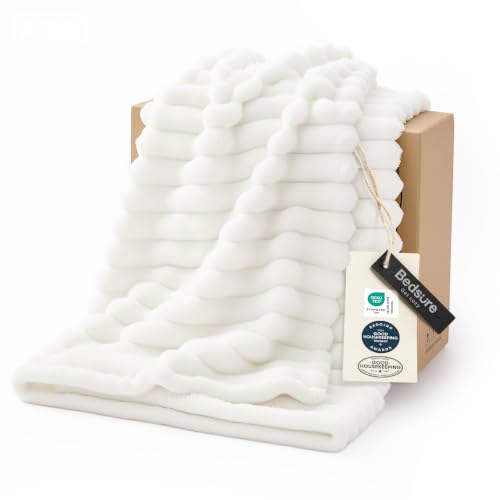
- blunique Ultra Soft Faux Fur Bubble Throw Blanket — check the latest price on Amazon
- Bedsure GentleSoft White Throw Blanket — check the latest price on Amazon
- Bedsure Soft Fleece Throw Blanket, Grey — check the latest price on Amazon
Read the full guide ↓
Every unheated blanket warms you the same way: it does not make heat, it keeps yours. The best heat capturing blankets are the ones whose construction traps the most still air against your body and loses the least of it to the room — deep pile, dense loft, enough coverage that warm air is not leaking out at the shoulders and feet all night. Shoppers comparing active options in Best Heat Reflecting Emergency Blankets are asking a different question; this guide is about passive insulation done well.
That distinction matters because marketing language blurs it. A thin, flat fleece and a thick sherpa blanket are both ‘warm blankets’ in a listing title, but in a cold room they behave like different products. Pile depth is the main lever: the fuzzy surface of sherpa and faux fur creates a thicket of tiny air pockets, and still air is one of the best insulators in any house. Coverage is the second lever — a twin-size blanket that reaches past your feet captures heat a throw leaves behind. This guide ranks six verified blankets on exactly those mechanics.
We also flag the honest ceiling of the category. A heat capturing blanket can only slow the loss of warmth your body produces; on the coldest nights, in the coldest rooms, some sleepers will still want active heat or a heated layer underneath, which is where guides like Best Heated Blankets For Beds take over. But for the large middle of winter — cool rooms, autumn evenings, energy-conscious households turning the thermostat down — a well-chosen insulating blanket is the simplest warmth there is: no cord, no controller, no running cost.
Key Takeaways
- Heat capturing is insulation: pile depth and loft trap still air, and still air is what keeps you warm.
- Sherpa and faux-fur piles capture the most heat per layer; flat fleece captures the least and suits milder cold.
- Coverage multiplies insulation — a 60 x 80 inch twin blanket seals in warmth that a 50 x 60 throw lets escape at the edges.
- Layering two medium blankets can outperform one thick one, because the interface between layers traps additional air.
- No passive blanket creates heat; for pre-warming a bed or very cold rooms, an electric layer is the complementary tool.
In this guide
Quick Picks
| Pick | Badge | Size | Link |
|---|---|---|---|
| Bedsure GentleSoft Sherpa Fleece Twin Blanket, Grey | Best Overall | 60 x 80 inches (twin) | Check on Amazon |
| Bedsure GentleSoft Sherpa Throw Blanket, Beige | Best Throw for Warmth | 50 x 60 inches (throw) | Check on Amazon |
| Bedsure Soft Beige Throw Blanket | Most Versatile | 50 x 60 inches (throw) | Check on Amazon |
| blunique Ultra Soft Faux Fur Bubble Throw Blanket | Best Deep-Pile Throw | 50 x 60 inches (throw) | Check on Amazon |
| Bedsure GentleSoft White Throw Blanket | Best for Layering | 50 x 60 inches (throw) | Check on Amazon |
| Bedsure Soft Fleece Throw Blanket, Grey | Best Lightweight Option | 50 x 60 inches (throw) | Check on Amazon |
How These Picks Were Chosen
Our shortlist started from the verified product pool for this category, and every pick in this guide had its listing details — size, fabric, control type, timer range and care instructions — checked against the manufacturer’s own product information before it earned a place. We compared picks on the factors buyers feel every day: how much of the body or bed the blanket actually covers, how the warmth is delivered, how much control you get over that warmth, and how much effort the blanket asks for in washing and storage.
We read these products the way a careful shopper would: listing specifications first, then the patterns in owner feedback — which features people mention after a month of use, which complaints repeat, and which marketing claims survive contact with real bedrooms and living rooms. This is research-led guidance, not a laboratory test program, and we say so plainly: nobody on this team slept under all six blankets for a winter. What we can do is compare verified specifications honestly and flag where each design’s strengths and limits really sit.
Blankets are a category where the specification sheet tells most of the truth. Coverage is geometry, warmth delivery is physics, and care burden is written in the washing instructions. Our method leans on that: we lined up the verified dimensions, fabrics, heat or insulation mechanisms and safety features side by side, then weighted them for the specific job named in this guide’s title rather than for blankets in general. A pick that is excellent at one job and mediocre at another is described that way, not averaged into a vague thumbs-up.
For this shortlist we ranked by insulation mechanics first — pile type, pile depth as described in the verified listings, and dimensions — and only then by hand feel and care. That ordering is deliberate: in a cold room, a beautiful thin blanket loses to an ordinary thick one every night of the week. We also kept one lightweight fleece in the six, honestly labelled, because heat capturing is a spectrum and mild-weather readers deserve a pick that will not roast them in October.
Detailed Reviews: Best heat capturing blankets

Bedsure GentleSoft Sherpa Fleece Twin Blanket, Grey
Badge: Best Overall
Strengths
- Twin size covers a whole sleeper, unlike 50 x 60 throws
- Sherpa loft traps body heat effectively through the night
- Grey is forgiving for everyday bed use
Trade-offs
- Larger size takes more washer and dryer capacity
- Non-heated — no active warmth on demand
- Too bulky to double as a travel or couch throw for most people
Key specs
- Size: 60 x 80 inches (twin)
- Color: Grey
- Build: sherpa fleece, thick warm design
- Type: non-heated
Size is the headline here: at 60 by 80 inches, this GentleSoft sherpa blanket is a true twin-size bed blanket rather than a couch throw, so it covers shoulders to feet with drape to spare. The thick sherpa fleece traps body heat in its loft, which is exactly what an unheated bed blanket is supposed to do, and the grey color suits daily use. It is non-heated, so it warms by insulation alone — pair it with decent bedding and it performs; expect it to replace a duvet on its own in a cold room and it will disappoint. Washing needs a machine with room for the bulk.
For pure heat capturing, this twin sherpa wins on both levers at once: the deepest insulating pile in the group and 60 by 80 inches of coverage that seals a sleeper in rather than covering a lap. On a bed it behaves the way the physics says it should — warm air stays in the loft and under the drape instead of leaking away. If your cold problem is a whole cold night rather than a chilly hour on the couch, this is the pick.
Best for: cold sleepers and cold rooms wanting maximum passive warmth on a bed / Not suited for: couch-only use, where its size is more blanket than anyone needs

Bedsure GentleSoft Sherpa Throw Blanket, Beige
Badge: Best Throw for Warmth
Strengths
- Sherpa side adds loft that traps warm air close to the body
- Thick build feels substantial compared with single-layer fleece
- Neutral beige pairs with most sofas and bedding
Trade-offs
- Thicker sherpa takes longer to dry after washing
- Non-heated — warmth depends entirely on insulation
- Beige shows dirt faster than mid-tone colors
Key specs
- Size: 50 x 60 inches (throw)
- Color: Beige
- Build: sherpa fleece, thick warm design
- Type: non-heated
The GentleSoft sherpa throw is built around loft: the fuzzy sherpa face creates thousands of tiny air pockets, and still air is what actually keeps you warm. At 50 by 60 inches it is sized for one person on a couch, a reading chair or the foot of a bed, and the thick hand feel makes it read as a winter blanket rather than a decorative accent. It is a non-heated design, so there is no cord, no controller and nothing to unplug — just insulation. The trade-off for that simplicity is drying time; dense sherpa holds water in the wash and benefits from a full, patient dry cycle.
In throw size, this is the heat-capturing champion: the same sherpa principle as the twin, sized for one person in a chair or on a couch. It is the blanket to keep where you sit in the evening, because sitting still is when the body produces the least spare heat and good insulation matters most. Beige limits it to tidier rooms, but the warmth-per-layer is the best in this size class.
Best for: evening couch and reading-chair warmth in cool rooms / Not suited for: full-bed coverage or messy, pet-heavy sofas

Bedsure Soft Beige Throw Blanket
Badge: Most Versatile
Strengths
- Soft, fluffy hand feel that works as a decor layer as well as a wrap
- Throw size is easy to fold, carry and store between uses
- Machine washable, which keeps everyday care simple
Trade-offs
- Throw size will not cover a bed or fully wrap a tall adult
- Light beige shows spills and pet hair quickly
- Fluffy pile needs gentle washing to stay soft
Key specs
- Size: 50 x 60 inches (throw)
- Color: Beige
- Use listed: couch, sofa, room decor
- Care: machine washable
This is the crowd-pleasing all-rounder of the Bedsure throw line: a soft, fluffy 50 by 60 inch blanket in a neutral beige that sits comfortably on a couch arm and disappears into most living-room color schemes. The pile feels plush rather than flat, so it reads as a decor piece during the day and a genuine warmth layer in the evening. Because it is machine washable, it suits households where the throw gets daily use from kids, guests and pets rather than living as a display item. The honest limitation is coverage: a throw this size covers a lap and torso, not a whole bed, and taller users will find their feet negotiating for territory.
The beige fluffy throw captures a respectable middle tier of heat: more pile than a flat fleece, less depth than the sherpas. Its value is range — couch, foot of the bed, guest chair — and easy washing, which keeps its loft honest over time because a clean pile traps air better than a dusty, compressed one. Choose it when the blanket will move around the house rather than live in one cold spot.
Best for: households wanting one warm throw that moves between rooms / Not suited for: the coldest rooms, where the sherpa picks pull clearly ahead

blunique Ultra Soft Faux Fur Bubble Throw Blanket
Badge: Best Deep-Pile Throw
Strengths
- Bubble texture adds visual interest beyond flat fleece
- Thick faux-fur pile feels luxurious for lounging
- Cream white works as a statement decor piece
Trade-offs
- Textured pile can trap crumbs and pet hair
- Faux fur needs gentler washing than plain fleece
- Cream white shows marks — better for adult spaces
Key specs
- Size: 50 x 60 inches (throw)
- Color: Cream white
- Build: faux fur, thick bubble texture
- Use listed: couch, sofa, bedroom, living room
The blunique throw is the texture play: a thick faux-fur blanket with a raised bubble surface that catches light and gives a plain sofa instant depth. At 50 by 60 inches in cream white, it is sized and styled for living rooms and bedrooms where the blanket is part of the look, not hidden in a closet. The pile is genuinely plush, so it doubles as a nap blanket on cool afternoons. Care is the honest caveat — textured faux fur holds onto crumbs and hair, and it rewards a gentle wash cycle and a shake outdoors rather than rough treatment.
The bubble faux fur traps air in a textured, three-dimensional pile, and it looks like decor while doing it. As a heat capturer it sits just behind the sherpas — the pile is thick, though the textured surface seals at the edges less completely than a uniform sherpa face. It earns its place for cool living rooms where the blanket is always on display and always within reach.
Best for: cool living rooms where the throw doubles as decor / Not suited for: buyers who wash blankets roughly or often

Bedsure GentleSoft White Throw Blanket
Badge: Best for Layering
Strengths
- Clean off-white color brightens sofas and guest rooms
- Fleece face is smooth and easy to layer over bedding
- Throw size folds neatly for baskets and ottomans
Trade-offs
- Off white is the least forgiving color for spills and pets
- Fleece alone is a moderate warmth layer, not the thickest here
- Best kept as an indoor blanket rather than a rugged outdoor one
Key specs
- Size: 50 x 60 inches (throw)
- Color: Off white
- Build: fleece
- Use listed: couch, home and room decor
This off-white GentleSoft throw is the decor-first option: a smooth fleece blanket that brightens a sofa, photographs well in a guest room and layers neatly across the foot of a bed. The fleece face feels soft without the deep pile of a faux-fur design, which makes it easier to fold, store and wash in a normal rotation. Warmth is honest mid-level fleece warmth — right for cool rooms and shoulder seasons. The limitation is the color itself: off white shows coffee, pet hair and everyday life faster than any other pick here, so it suits tidier households or rooms where the blanket is more accent than workhorse.
Judged alone, this off-white fleece is a moderate heat capturer — and that is precisely its role. As the smooth top layer over a sherpa or a duvet, it adds a second trapped-air interface and a clean, bright finish. Layering systems beat single blankets across a season because they adjust; this is the adjustable component. Keep it for bedrooms and tidy spaces where its color stays an asset.
Best for: layering over other bedding and bright, tidy rooms / Not suited for: standing alone against serious cold

Bedsure Soft Fleece Throw Blanket, Grey
Badge: Best Lightweight Option
Strengths
- Lightweight build packs small for travel and outdoor use
- Grey fleece hides everyday marks better than pale colors
- Listed for camping and travel as well as couch use
Trade-offs
- Lightweight fleece is a mild-weather layer, not deep-winter insulation
- Single-layer construction feels less plush than sherpa options
- Throw size only — no bed coverage
Key specs
- Size: 50 x 60 inches (throw)
- Color: Grey
- Build: lightweight fleece
- Use listed: couch, travel, camping
This lightweight fleece throw is the minimalist of the group: a single, smooth fleece layer in grey that folds down small, shakes out fast and asks very little of a washing machine. The listing explicitly positions it for travel and camping alongside couch duty, and that is exactly where a light fleece earns its keep — as the layer you grab without thinking. It will not match a sherpa blanket for trapped warmth on a cold night, and it is not trying to. Judged as a portable, low-fuss wrap for mild weather, car trips and cool evenings, it is one of the most sensible designs in this pool.
Honesty first: this lightweight fleece captures the least heat in the guide, and we include it because October exists. For mild cold, for warm sleepers, and as the under-layer in a two-blanket system, a light fleece is the correct tool — a sherpa would simply be too much. Its portability is a bonus: it is the one pick here that also travels. Buy it with clear eyes and it will not disappoint.
Best for: mild weather, warm sleepers and travel / Not suited for: anyone whose core problem is a genuinely cold room
Comparison Table
| Pick | Badge | Size | Key detail | Link |
|---|---|---|---|---|
| Bedsure GentleSoft Sherpa Fleece Twin Blanket, Grey | Best Overall | 60 x 80 inches (twin) | Build: sherpa fleece, thick warm design | Check on Amazon |
| Bedsure GentleSoft Sherpa Throw Blanket, Beige | Best Throw for Warmth | 50 x 60 inches (throw) | Build: sherpa fleece, thick warm design | Check on Amazon |
| Bedsure Soft Beige Throw Blanket | Most Versatile | 50 x 60 inches (throw) | Use listed: couch, sofa, room decor | Check on Amazon |
| blunique Ultra Soft Faux Fur Bubble Throw Blanket | Best Deep-Pile Throw | 50 x 60 inches (throw) | Build: faux fur, thick bubble texture | Check on Amazon |
| Bedsure GentleSoft White Throw Blanket | Best for Layering | 50 x 60 inches (throw) | Build: fleece | Check on Amazon |
| Bedsure Soft Fleece Throw Blanket, Grey | Best Lightweight Option | 50 x 60 inches (throw) | Build: lightweight fleece | Check on Amazon |
How to Choose the Right Blanket for This Job
Next, think about how the warmth reaches you. Insulating blankets — fleece, sherpa and faux fur — work by trapping still air in their loft, so thickness and pile matter more than any label. Heated blankets add active warmth on top of that insulation, and there the control system becomes the product: the number of heat levels decides how precisely you can match your comfort, dual controls decide whether a partner’s preference becomes your problem, and the auto-off timer decides whether the blanket fits your routine or fights it.
Fabric choice is a daily-life decision disguised as a comfort decision. Flannel feels smooth and washes without drama. Sherpa feels warmer at the same weight because of its loft, but holds more water in the wash and dries slower. Faux fur looks and feels luxurious and asks for the gentlest care of the three. Match the fabric to your laundry reality, not to the photograph: the blanket you wash happily is the blanket that stays soft for years.
Finally, weigh the ownership details that listings bury: whether the blanket is machine washable and what must be detached first, how much storage space the folded blanket needs in summer, cord length and controller placement for heated models, and the safety certifications behind the product. None of these decide a purchase alone, but together they decide whether a blanket is still in daily use next winter or folded away in a closet by February.
Do the layering math before you buy a second blanket. Your body warms the air trapped in a blanket’s pile; two blankets trap two piles plus a bonus layer of air between them, which is why a medium throw over a medium bed blanket often beats a single very thick blanket of the same total weight. The practical rule: if you already own a decent fleece, adding a sherpa layer on top usually buys more warmth than replacing the fleece with a marginally thicker one. Sleepers who run cold all night should also check the heated side of the family in Best Heated Blankets Queen before doubling down on insulation alone.
How to Get the Most Warmth From an Insulating Blanket
Unfold the blanket fully before first use and give it a gentle shake outdoors; new fleece and sherpa shed loose fibers in the first days, and a shake now means less lint on your clothes later. For heated models, lay the blanket flat, connect the controller until it clicks, and route the cord so it cannot be trapped under a mattress edge or pinched by a bed frame — pinched cords are the quiet enemy of every electric blanket.
Wash before the first serious use if the fabric smell of new packaging bothers you, and wash the way the care label directs: cool or warm water, gentle cycle, mild detergent, and no fabric softener on fleece and sherpa, because softener coats the fibers and flattens the loft that does the insulating. Heated blankets must have their controllers detached before washing and must be completely dry — including the connector area — before they are plugged in again.
Dry low and patient. High dryer heat is the fastest way to turn plush pile into a matted, scratchy surface, and it is hard on heating elements too. If the blanket comes out slightly damp, drape it over a rack or shower rail for an hour rather than sending it through a second hot cycle. Store folded loosely in a breathable bag or on a shelf; vacuum-sealed compression is fine for plain throws but is best avoided for heated blankets, whose internal wiring prefers gentle folds.
- Put the highest-loft blanket closest to your body if you sleep cold, or on top if you prefer a smooth layer against your skin — either arrangement works; consistency matters more than theory.
- Tuck the blanket’s foot under the mattress or under your feet so warmed air cannot escape at the bottom of the bed.
- Fluff sherpa and faux-fur piles with a shake before bed; pile that has been sat on all day is compressed pile, and compressed pile insulates less.
- Close the gaps: shoulders and neck are the biggest leak in most beds, so draw the blanket up and, if needed, add a folded throw across the shoulder line.
- Air the blanket on a line or over a chair weekly; loft recovers when fibers are not permanently compressed by storage or seating.
Problem: The blanket feels warm at first, then cold spots appear → Warm air is escaping at the edges or the pile is compressed where you lie. Re-tuck the foot, add a second layer over the torso, and fluff the pile before bed.
Problem: You wake up too hot in the first half of the night and cold later → Your insulation is fine but static. Use two lighter layers instead of one thick one so you can peel a layer back early and pull it up later without fully waking.
Problem: The sherpa pile has gone flat and less warm → Wash cool and gentle, dry low with patience, and shake the blanket out while it dries. Heat and softener flatten pile; a careful wash often restores much of the loft.
The Physics of a Warm Blanket, in Plain Terms
Your body is a small, constant heat source, and a blanket’s job is to slow that heat’s escape into the room. It does so mainly by holding air still: air that cannot move cannot carry heat away efficiently, which is why every good insulator — down, wool, sherpa pile, foam — is mostly trapped air held in a fiber structure. The thicker and less compressed that structure, the slower the heat loss. This is also why a blanket feels warmer after ten minutes than at first touch: you are feeling the trapped air reach your temperature.
Conduction through the fibers themselves, radiation, and air leaks at the edges account for the rest of the story, and they explain most buying mistakes. A blanket with wonderful pile but poor coverage leaks at the shoulders all night. A dense blanket stored compressed loses loft. Understanding the mechanism turns shopping into engineering: maximize loft, protect it from compression, and seal the edges. Readers interested in the reflective branch of this science — emergency designs that bounce radiant heat back — will find that very different category covered in Best Heat Reflecting Emergency Blankets, while this guide stays with the fleece-and-sherpa mainstream.
When Insulation Is Not Enough: Pairing With Active Heat
Passive insulation has a real ceiling, and pretending otherwise helps nobody. If your bedroom drops to genuinely cold temperatures, if you are warming a bed for someone who feels the cold intensely, or if you want warmth in minutes rather than after your body has heated a pile of fleece, an electric blanket does something no insulating blanket can: it adds heat. Many households end up with both — an electric layer to pre-warm and take the edge off, and a good insulating blanket on top to hold that warmth in so the electric layer can run low or switch off.
That pairing is worth planning rather than stumbling into. Choose the insulating blanket first, by the standards in this guide, and let it be the everyday workhorse. Then, if winter proves the ceiling is real in your house, add the active layer sized for your bed — the winter-focused shortlist in Best Heated Blankets For This Winter and the durability-focused one in Best Heated Blankets That Last approach that purchase from two useful directions. Insulation first also protects the budget: a great passive blanket is useful twelve months a year in some role, while a heated blanket earns its keep in one season.
Common Buying Mistakes
- Buying by photograph instead of dimensions: Product photos show blankets draped generously on beds and sofas, but a 50 by 60 inch throw is a one-person couch blanket no matter how it is styled. Read the stated dimensions, compare them with your bed or your seated height, and let the numbers overrule the picture.
- Ignoring the auto-off pattern on heated blankets: A blanket whose timer does not match your routine will annoy you nightly — too short and you wake up cold, set-and-forget with no shut-off and you lose the safety habit. Match the timer range to how you actually sleep or lounge before you buy.
- Washing everything on hot with softener: Hot water and fabric softener are the two fastest ways to ruin fleece loft and stress heating elements. Cool, gentle cycles with mild detergent keep pile soft and insulation intact for years longer.
- Expecting one blanket to do every job: A throw, a bed blanket and a travel blanket are three different tools. The buyer who picks the right size and weight for the main job, and accepts a second blanket for the secondary job, ends up warmer than the buyer hunting for one product that does everything adequately.
- Storing a heated blanket folded tight or plugged in: Sharp folds stress internal wiring, and a blanket left connected invites accidental switch-ons. Detach controllers, fold loosely, and store the controller with the blanket so nothing is lost by next winter.
Final Recommendation
If you buy one blanket from this list, buy the twin-size sherpa: it is the only pick that combines maximum loft with full-body coverage, and coverage is where most blankets quietly lose their warmth. Everything else on the list is a refinement for a specific room, season or layering plan.
Start with the Bedsure GentleSoft Sherpa Fleece Twin Blanket, Grey if its badge — Best Overall — matches your situation. Start with the Bedsure GentleSoft Sherpa Throw Blanket, Beige if its badge — Best Throw for Warmth — matches your situation. Start with the Bedsure Soft Beige Throw Blanket if its badge — Most Versatile — matches your situation. Layering households should pair the sherpa throw with the lightweight fleece rather than buying two heavy blankets — the combination adjusts across the whole cold season. And if your real problem is a bed that is cold when you get into it, no amount of insulation solves that; look at a heated pre-warming layer and keep the insulating blanket on top to hold the warmth in.
More to Know Before You Decide
Energy habits belong in the decision too. A heated blanket warms the person rather than the room, so many households find they can turn the thermostat down at night and let the blanket do the work — a comfort choice that also changes the running-cost picture of a winter. Unheated insulating blankets cost nothing to run at all. Neither fact should bully you out of the blanket you will actually enjoy, but both are worth a moment’s thought in a season when heating bills are part of everyone’s mental furniture.
Finally, plan for the second winter, not just the first night. The blankets that stay in service are the ones whose care routine fits the household: washed without ceremony, dried without damage, stored where they can be found in October. When two picks look equal on warmth, choose the one you will maintain happily. Longevity in this category is less about exotic materials than about ordinary care repeated calmly, season after season.
Sizing deserves one more pass, because it is the decision buyers get wrong most often and the hardest to fix after purchase. A blanket’s stated dimensions are its flat, unstretched measurements. In use, drape over a body or a mattress consumes several inches in each direction, a partner consumes more, and tucking consumes the rest. When your measurements land between two sizes, the larger one is almost always the right answer for beds, and the smaller one is often right for single-person throws, where excess fabric becomes bunching rather than comfort.
Materials in this category are nearly all polyester-family fibers — fleece, microplush, flannel and sherpa are different constructions of similar yarns — and that is a practical advantage for most households. These fabrics wash easily, dry faster than natural fibers, resist mildew in storage and hold their softness through many cycles when heat is kept low. Their weakness is high dryer heat, which can glaze the pile surface and leave it feeling rougher than when it went in. Care, more than fiber choice, is what separates a blanket that feels new in year three from one that feels tired by spring.
Storage is the unglamorous half of blanket ownership. Before any blanket is put away for a season, it should be washed and dried completely — storing a blanket with body oils and dust in the fibers invites odors that are hard to remove later. Fold loosely rather than compressing tightly, keep heated blankets’ controllers with the blanket they belong to, and store everything somewhere dry and out of direct sunlight. Ten minutes of care in spring saves a replacement purchase in October.
For heated models, build one simple habit: glance at the cord and connector each time you make the bed. Cords should run free, not pinched between mattress and frame, not trapped under heavy objects, and the connector should sit where it cannot be crushed by the bed frame when the bed is adjusted or moved. These checks take seconds, they are the substance behind the safety certifications on the listing, and they are how electric blankets stay boring — in the best sense — for years.
Think about the room as part of the system. A blanket that is perfect in a well-insulated bedroom can feel inadequate in a drafty one, and the cheapest warmth upgrade is often stopping the draft: a door sweep, a window checked for gaps, the bed moved a foot away from an exterior wall. Buyers who fix the room first often find the mid-weight blanket they already own suddenly performs like the heavier one they were about to purchase.
A word about buying for someone else, since blankets are a classic gift. When the recipient’s preferences are unknown, the safest choices are mid-tone colors, mid-range warmth and the simplest control scheme that does the job — the blanket that fits unobtrusively into an existing home. Keep the packaging until the recipient has tried the blanket on their own bed or couch, because size and hand feel are personal in ways no specification sheet settles.
Seasonal rotation extends the life of every blanket you own. The blanket that works all winter benefits from a genuine rest in summer — washed, dried, folded and stored — rather than spending hot months compressed at the foot of the bed being sat on and kicked aside. Households that rotate two blankets through the year typically get more total years from the pair than from either blanket used continuously, and the rotation gives every wash cycle a less urgent deadline.
Noise and texture are small factors that loom large at 3 a.m. Some fabrics rustle, some piles feel clammy against bare skin in a warm room, and some people simply cannot sleep under a texture they love on the couch. If you are sensitive to such things, buy the blanket whose fabric you already know you like from a throw or garment you own. Familiarity is an underrated specification, and it is the one most likely to decide whether a blanket is used nightly or exiled to the guest room.
It is worth understanding what warmth ratings in this category do and do not mean. Unlike sleeping bags, household blankets carry no standardized temperature rating, so one brand’s ‘extra warm’ is another brand’s ordinary winter weight. The reliable signals are physical: pile depth, fabric density, total coverage and, for heated models, the number of levels and the stated temperature behavior. When a listing gives you measurable facts, trust them over adjectives; when it gives only adjectives, treat the blanket as unproven until owner feedback fills the gap.
Layering beats thickness more often than shoppers expect. A medium blanket over a flat sheet traps a pocket of still air that a single heavy blanket pressed flat cannot match, and two lighter layers let you adjust through the night by peeling one back. This is why several picks in this guide pair well with bedding you already own, and why the most comfortable setup in a cold room is often a system — sheet, blanket, and a throw at the foot of the bed for the coldest hours — rather than one heroic product.
Consider who else will use the blanket before you finalize a choice. Guest rooms reward forgiving colors and simple controls. Homes with pets reward mid-tone colors, tight weaves that release hair in the wash, and fabrics that forgive claws. Households with kids reward machine washability above almost everything. The ‘best’ blanket in a specification table can be the wrong blanket in a real house, and the right question is never just ‘which is warmest?’ but ‘which fits the way this home actually lives?’
Frequently Asked Questions
What makes a blanket ‘heat capturing’?
Its ability to trap still air against your body and slow heat loss. Deep, lofty piles like sherpa and faux fur trap more air than flat fleece, and generous coverage stops warm air escaping at the edges. No unheated blanket generates warmth — it preserves the heat your body produces, which is why the same blanket feels warmer after you have been under it for a while.
Is sherpa warmer than fleece?
Per layer, generally yes: sherpa’s deep, fuzzy pile holds a thicker blanket of still air than smooth fleece of similar weight. Fleece fights back through layering — two fleece layers with air between them can match a single sherpa — and fleece washes and dries more easily. The practical answer is sherpa for maximum single-layer warmth, fleece for flexible layering and easy care.
Why does a bigger blanket feel warmer than a smaller one of the same fabric?
Because heat escapes at edges. A blanket that reaches past your feet and tucks at the sides seals the warm air in; a throw that ends at your ankles or slips off a shoulder leaks constantly. In side-by-side feel, coverage differences often matter more than fabric differences, which is why this guide’s top pick is a twin-size blanket rather than a throw.
Can a heat capturing blanket replace a heated blanket?
In a cool room, for a warm sleeper, often yes. In a cold room, or when you want the bed warm before you get in, no — insulation cannot pre-warm anything. The two categories complement each other: many people run a heated layer briefly, then let a good insulating blanket hold the warmth. Shoppers working to a firm budget for the heated half of that pairing can start with Best Heated Blankets Under $60.
How do I keep a sherpa blanket fluffy and warm?
Wash cool on a gentle cycle with mild detergent, skip fabric softener, dry on low with patience, and shake the blanket out as it dries. Store it folded loosely rather than compressed. Pile that is kept clean, uncoated and uncompressed keeps its loft — and its loft is its warmth.
Do dark colors capture more heat from the sun?
Indoors, blanket color has no meaningful effect on warmth — insulation is about trapped air, not color. Outdoors in direct sun, dark fabrics do absorb more radiant heat, which is a curiosity for picnics rather than a buying strategy. Choose color for your room, your laundry habits and how visibly it shows hair and dust.