Disclosure: topratedkitchenware.com is reader-supported. When you buy through links on our site, we may earn an affiliate commission from Amazon and other retailers, at no extra cost to you.
Where to buy
The best home propane cooktops share one non-negotiable trait: they must actually burn propane. That sounds obvious, yet cooktop search results are crowded with electric induction burners that cannot be connected to a gas bottle at all. This guide applies the test strictly. Of the six products in the verified research pool, two are genuine gas cooktops whose listings state NG/LPG convertibility — meaning they can be configured for propane — and those two are linked below. The four induction models are reviewed in full as prose-only entries, with no link and no photo, because no adapter, hose or wish can make an electric burner burn gas.
- VEVOR Gas Cooktop 30 Inch 5 Burners — Best Overall for Home Propane. Thirty-inch built-in, five burners, NG/LPG convertible with thermocouple protection.
- ThermoMate Heavy 36 Inch Gas Cooktop — Best Wide Propane Option. Thirty-six inches, five Sabaf burners, 304 stainless, NG/LPG convertible.
- Duxtop 1800W Portable Induction Cooktop 9100MC — Prose-only: an electric burner; it cannot use propane.
- Duxtop Portable Induction Cooktop 9610LS — Prose-only: electric induction, not a gas appliance.
- Nuwave Pro Chef Induction Cooktop — Prose-only: a precision electric burner; no gas connection exists.
- ISILER 1800W Portable Induction Cooktop — Prose-only: electric and portable; not a propane cooktop.
Read the full guide ↓ for the detailed reviews, the comparison table, and the propane-specific safety and installation guidance that matters more here than in any other cooktop category.
Propane at home is a deliberate choice, made for good reasons. Rural properties beyond the natural gas network cook on it. Off-grid and partially off-grid households depend on it because a bottle or a tank stores energy on site, independent of the electricity grid. Cabins, workshops, outdoor kitchens and serious backup-cooking setups all lean on propane’s portability and its ability to work through a power cut. People searching for the best home propane cooktops are therefore not browsing casually; they are usually equipping a specific place with a specific fuel already decided. This guide respects that decision completely. It judges the two genuine propane-capable cooktops in the pool on their merits, explains the conversion and safety essentials that propane ownership involves, and deals honestly with the four electric products that search engines insist on mixing into this conversation — including the situations, covered in Best Inductin Cooktops, where an electric burner is a sensible companion rather than a mistaken purchase.
Key Takeaways
- Only two of the six researched products can burn propane at all — the VEVOR 30-inch and the ThermoMate 36-inch, both NG/LPG convertible — so only those two are linked.
- Convertible does not mean ready: an NG/LPG cooktop must be physically configured for propane at installation, with the correct jets and pressure setup.
- Width is the main choice between the two linked picks: 30 inches for standard kitchens, 36 inches for spacious, multi-pan cooking.
- Both linked picks name thermocouple flame-failure protection, a feature propane households should treat as essential.
- Propane is heavier than air and pools at floor level when it leaks, which shapes storage, ventilation and leak-response rules.
- Induction burners cannot be converted to gas. If your fuel is propane, an electric listing is a wrong purchase however good the burner is.
In this guide
Quick Picks
| Pick | Badge | Format | Fuel | Link |
|---|---|---|---|---|
| VEVOR Gas Cooktop 30 Inch 5 Burners | Best Overall for Home Propane | 30-inch built-in, 5 burners | Gas, NG/LPG convertible | Check on Amazon |
| ThermoMate Heavy 36 Inch Gas Cooktop | Best Wide Propane Option | 36-inch built-in, 5 burners | Gas, NG/LPG convertible | Check on Amazon |
| Duxtop 9100MC | Best Established Electric Alternative | Portable single burner | Induction (electric) | Prose-only — no link |
| Duxtop 9610LS | Best Touch-Control Electric Alternative | Portable single burner | Induction (electric) | Prose-only — no link |
| Nuwave Pro Chef | Best Precision Electric Alternative | Portable single burner | Induction (electric) | Prose-only — no link |
| ISILER Portable | Best Compact Electric Alternative | Portable single burner | Induction (electric) | Prose-only — no link |
Two linked picks may look like a short list until you consider what it replaces: the usual page of ten “propane cooktops” of which half are electric. Here, every linked product can be connected to your propane supply by a qualified installer, and every unlinked product is labelled with the exact reason it cannot.
How These Picks Were Chosen
These picks were chosen by research, not hands-on testing. Every product in the pool was verified through Creators API listing data, and then screened against the keyword’s core attribute: the ability to burn propane in a home setting. A product passed the screen only if its verified listing stated gas fuel with LPG capability — in practice, the NG/LPG convertible designation on the two built-in gas cooktops. Products that failed the screen, however excellent in their own category, became prose-only with the reason stated plainly in their reviews and in the sources file.
The two survivors were then compared on the criteria that matter to propane households: format and width, burner count and components, construction material, named safety protection, and certification. Facts not present in a listing were not invented — you will find no output figures in this guide beyond those the listings themselves state, and no claims about regulator, hose or bottle compatibility that the data does not support, because propane setups vary and that compatibility must be confirmed for your specific installation. Prices and ratings played no part in the selection; both change constantly, and neither tells you whether an appliance can burn your fuel.
A note on the word “home” in the keyword. This guide reads it as fixed domestic cooking — a kitchen, cabin or outdoor kitchen installation — rather than camping stoves or travel burners. Both linked picks are built-in cooktops suited to that reading, and the guidance below is written for a permanent propane installation in a home, with the respect that stored gas deserves.
The 6 Best Home Propane Cooktops, Reviewed in Detail
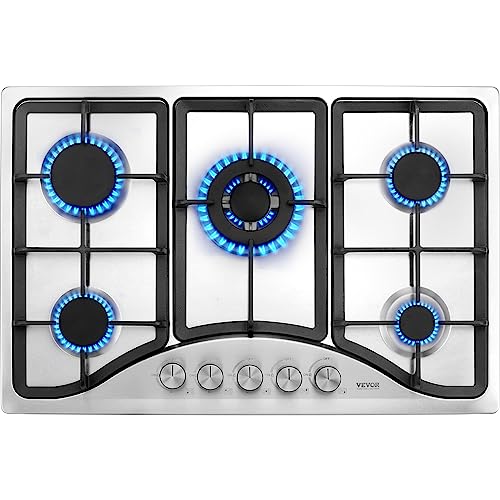
VEVOR Gas Cooktop 30 Inch 5 Burners
Badge: Best Overall for Home Propane
Strengths
- Genuinely propane-capable: the verified listing states NG/LPG convertible, so the unit can be configured for bottled gas at installation.
- Five burners in the standard 30-inch built-in format that most home kitchens — and most replacement projects — are built around.
- Thermocouple protection is named in the listing, cutting the gas supply if a flame fails.
Trade-offs
- Five burners across 30 inches is a snug layout when several large pans cook at once.
- Conversion to LPG is an installation task that must be done correctly; the unit does not arrive magically set for your bottle.
- Stainless steel needs a wiping habit to keep its appearance.
Mini spec box
- Format: 30-inch built-in gas cooktop
- Burners: 5
- Total output stated in listing: 12250 BTU
- Fuel: Natural gas / LPG convertible
- Surface: Stainless steel
- Safety: Thermocouple protection
For the typical propane household — a rural kitchen on bottled gas, a home whose natural gas line does not exist and never will — the VEVOR is the shape of the answer: a standard-width, five-burner, built-in cooktop that speaks both gas languages. The five-burner layout covers the real grammar of family cooking, from the big pan that anchors dinner to the small burner that minds a sauce, and the 30-inch format means it drops into the cabinetry dimensions most kitchens already have, including the kitchens of the older rural homes where propane is commonest.
The convertible designation deserves a full paragraph, because it is the most misunderstood phrase in gas appliances. It means the cooktop can be set up for either natural gas or LPG; it does not mean it burns both as delivered, and it does not mean a dial switches between them. Propane runs at a different pressure and needs different injector sizing, so conversion is a physical configuration performed at installation — exactly the kind of task the safety section below assigns to a qualified installer. A convertible unit bought knowingly is flexibility for life: mains gas today if your situation changes, propane now, and a resale story either way. A convertible unit bought unknowingly, connected unconverted, is a problem — which is why this guide repeats the point until it sticks.
Thermocouple protection completes the case for a propane home specifically. Propane households often cook in quieter, less trafficked kitchens — cabins, rural homes, outbuildings — where a flame killed by a draught or a boil-over might go unnoticed longer than in a busy family kitchen. A device that cools, notices and shuts the gas off is not a luxury in that setting; it is the difference between an incident and a non-event. For the standard-width propane kitchen, this is the guide’s first recommendation, and the wider alternative below is the only direction to look if your pans demand more room.
Best for: propane households with a standard 30-inch opening wanting five burners and certified conversion flexibility / Not suited for: kitchens needing wide pan spacing, or anyone unwilling to arrange proper LPG conversion at installation

ThermoMate Heavy 36 Inch Gas Cooktop
Badge: Best Wide Propane Option
Strengths
- Propane-capable with NG/LPG convertibility stated in the verified listing, in a spacious 36-inch built-in format.
- Five Italy Sabaf power burners — named, reputable components rather than anonymous hardware.
- 304 stainless steel construction, thermocouple protection and CSA certification complete a serious specification.
Trade-offs
- The 36-inch width demands a kitchen planned around it — cutout, counters and ventilation to match.
- A larger stainless surface is a larger cleaning commitment.
- Like its 30-inch counterpart, it must be correctly configured for LPG at installation.
Mini spec box
- Format: 36-inch built-in gas cooktop
- Burners: 5 Italy Sabaf power burners
- Fuel: Natural gas / LPG convertible
- Material: 304 stainless steel
- Safety: Thermocouple protection
- Certification named in listing: CSA Certified
Everything said about propane’s home territory applies doubly to the households this cooktop suits. Rural and off-grid kitchens are often the hardest-working kitchens in the country — preserving harvests, feeding large families and gatherings, running canners and stockpots that would humble a standard hob. Width is not vanity in that context; it is throughput. Five burners spread over 36 inches let a canner sit centred and stable, let two large pans work without stealing each other’s flame, and let a second cook join without a negotiation. If your propane kitchen is a production kitchen, this is the format that respects it.
The component story supports the workload. Sabaf burners are the kind of named hardware professionals ask about, 304 stainless is the grade that tolerates a working kitchen’s scrubbing and steam, and CSA certification states that the design has been examined against North American safety standards. Add the same thermocouple protection and fuel convertibility as the 30-inch pick, and the specification is coherent from end to end: built wide, built properly, and able to run on the gas your property actually has.
Its honest limitation is commitment. A 36-inch built-in is a decision a kitchen lives with for a decade or more, and it must be planned — the cutout, the gas line’s position, a hood wide enough to serve it, and counter space on both flanks for the big pans the width invites. Households mid-renovation with a rural brief should consider it the aspirational standard; households replacing a 30-inch unit should not let its virtues talk them into an unplanned remodel. The built-in electric comparison for off-grid-adjacent thinking appears in Best Induction 36 Cooktops, for readers whose properties mix gas and solar-electric cooking.
Best for: spacious rural, off-grid and production kitchens on propane wanting named burners and 304 stainless / Not suited for: standard 30-inch openings or unplanned replacements
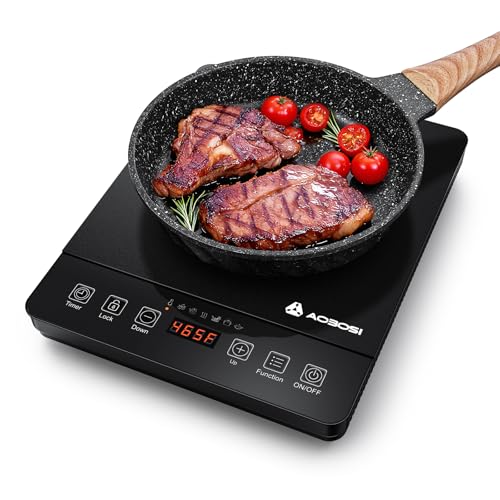
Duxtop 1800W Portable Induction Cooktop 9100MC
Badge: Best Established Electric Alternative
Strengths
- A proven, long-running portable induction design with full 1800W power.
- Useful as a supplementary burner in a propane home when a small electric task does not justify lighting the main cooktop.
- Compact and storable, with the flat, easy-clean surface of its category.
Trade-offs
- It is electric. It has no gas connection, cannot be converted, and cannot burn propane — the core mismatch that makes it prose-only here.
- It stops working in a power cut, precisely when a propane household values its cooktop most.
- A single burner cannot carry a household’s main cooking.
Mini spec box
- Format: Portable countertop single burner
- Fuel: Induction (electric)
- Power: 1800W
- Model: 9100MC / BT-M20B
- Finish: Black
The kindest accurate thing to say about the 9100MC in this guide is that it is a good appliance in the wrong search. As a portable induction burner it is the established benchmark of its category — responsive, flat-topped, widely understood. Propane households even have a legitimate use for one: the quick, small job — warming, melting, a single egg pan — where lighting a main burner feels like overkill and the house has reliable power for daily life. Many mixed-fuel kitchens run exactly this partnership.
But partnership is not substitution. A household that orders this believing it has bought a propane cooktop discovers the error at installation time, when there is no gas inlet to connect — only a power cord. Worse, the error inverts the household’s resilience logic: propane is often chosen precisely because it cooks through outages, and an electric burner is the first appliance an outage silences. That is why this review exists without a link: recognition now prevents a useless delivery later.
Its honest limitation, for this keyword, is total and simple — wrong fuel, permanently. Judged in its own category, in guides like Best Induction Cooktops 30 Inch for built-in context or the portable roundups, it earns its reputation. Here it is a clearly labelled electric alternative and nothing more.
Best for: a supplementary electric burner in a propane home with reliable power / Not suited for: any role that requires burning propane
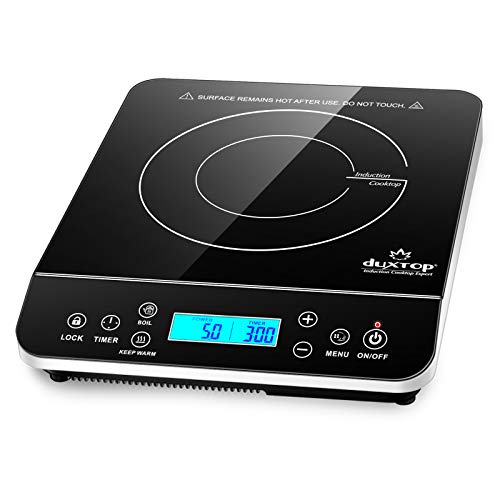
Duxtop Portable Induction Cooktop 9610LS
Badge: Best Touch-Control Electric Alternative
Strengths
- LCD sensor touch controls on a flat panel that wipes clean in one pass.
- The established Duxtop 1800W portable platform beneath the modern interface.
- Digital, repeatable settings suit methodical small-task cooking.
Trade-offs
- Prose-only for the same core reason: electric induction cannot burn propane and has no gas connection.
- Touch controls are awkward with wet hands and can misread steam.
- Single burner; a supplement, never a propane substitute.
Mini spec box
- Format: Portable countertop single burner
- Fuel: Induction (electric)
- Power: 1800W
- Controls: LCD sensor touch
- Model: 9610LS / BT-200DZ
- Finish: Black
The 9610LS repeats its sibling’s category error with a more modern face. Its flat touch panel and digital settings are genuinely pleasant for the small, precise, electric jobs — a sauce held at a noted level, chocolate melted without a bain-marie — and in a mixed-fuel kitchen it could earn a counter corner on those merits. The interface cleans beautifully, which matters in the hard-used kitchens propane households often run.
None of that changes what it is: a plug-in appliance. There is no conversion kit, no gas variant, no hose that makes an induction coil into a burner ring. The listing’s silence on gas is not an omission to be hopeful about; it is the product telling you its fuel. Guides that blur this point cost rural buyers — who often face the longest delivery distances and the hardest returns — the most.
So the 9610LS is reviewed here, honestly and without a link, as the touch-control expression of the electric alternative. Its honest limitation is identical to its sibling’s and worth stating identically: it cannot cook when the power is out, and it cannot cook with propane ever.
Best for: precise small electric tasks in a mixed-fuel kitchen / Not suited for: propane cooking in any form
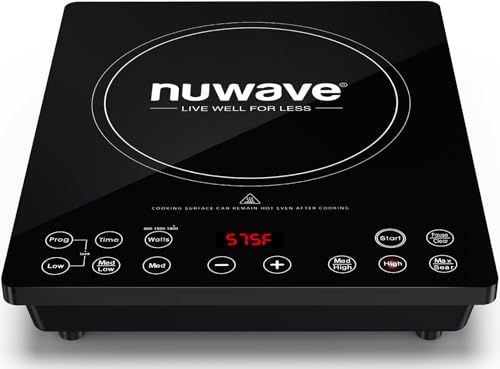
Nuwave Pro Chef Induction Cooktop
Badge: Best Precision Electric Alternative
Strengths
- The finest temperature control in this pool: 94 settings from 100°F to 575°F in 5°F steps.
- Commercial-grade build with a large 8-inch coil and shatter-proof ceramic glass.
- As a companion burner, its precision complements a gas cooktop’s strengths beautifully.
Trade-offs
- Electric, not gas: prose-only in a propane guide, with no conversion path of any kind.
- Its precision is exactly what a power cut takes away.
- A single burner with an 8-inch coil disciplines pan size.
Mini spec box
- Format: Portable countertop single burner, commercial-grade
- Fuel: Induction (electric)
- Power: 1800W
- Coil: Large 8-inch heating coil
- Temperature: 94 settings, 100°F–575°F in 5°F increments
- Surface: Shatter-proof ceramic glass
Of the four electric entries here, the Pro Chef makes the most interesting companion case. Gas is magnificent at power and immediacy and genuinely poor at one thing: holding a very low, exact temperature for a long time without attention. That is precisely the Pro Chef’s genius — ninety-four settings in fine steps, holding a delicate sauce, a custard or a slow melt at a named temperature while the gas burners do the heavy work beside it. A serious cook running a mixed kitchen could want this division of labour on purpose.
But a companion is not a candidate, and this guide’s keyword asks for propane cooktops. The Pro Chef has no gas inlet, no burner ring, no flame — it is a magnetic field in a handsome case. Presenting it as a propane option would not be a grey area; it would be a falsehood with a delivery charge. It therefore stands here prose-only, respected for what it is and excluded for what it is not.
Its honest limitation within a propane household is dependence: on power, on magnetic pans, on the grid that propane was chosen to be independent from. Within an electric kitchen, or as the precision station of a mixed one, it is among the finest tools in this entire research pool — a judgement explored in the electric context of Best Induction Cooktops 36 Inch.
Best for: the precision station in a mixed-fuel kitchen — sauces, custards, delicate holding / Not suited for: propane cooking or outage-proof cooking
ISILER 1800W Portable Induction Cooktop
Badge: Best Compact Electric Alternative
Strengths
- Compact, storable and beginner-friendly, with 10 power and 10 temperature settings plus 7 presets.
- Timer and safety lock suit small households and shared spaces.
- As a backup for tiny electric tasks, it asks almost nothing in space or learning.
Trade-offs
- Electric induction: it cannot burn propane, full stop — prose-only.
- The smallest-scale cooking in this pool: one burner, one modest pan.
- Useless in the outage scenarios where propane earns its keep.
Mini spec box
- Format: Portable countertop single burner
- Fuel: Induction (electric)
- Power: 1800W
- Heating plate: 8 inch
- Controls: Touch control, 10 power and 10 temperature settings
- Extras named in listing: 7 cooking presets, timer, safety lock
The ISILER closes the electric set as its smallest, friendliest member. In a propane household its conceivable role is narrow but real: a drawer-stored burner for the odd electric micro-task in a granny flat, a workshop with power, or a teenager’s first cooking experiments away from the gas flame. Its presets and safety lock suit exactly those low-stakes settings.
Beyond that role, honesty requires bluntness. This is a compact electric plate. It does not connect to a bottle, it does not light, and it does not cook when the grid fails. A buyer searching for home propane cooktops who somehow orders it has been failed by whatever page suggested it — which is why this page reviews it fully, labels it clearly and links it nowhere.
Its honest limitation is the set’s limitation, stated one final time for the reader who scrolled straight here: fuel is not a feature that can be added later. Choose the appliance that burns what your home stores.
Best for: tiny supplementary electric tasks in small spaces / Not suited for: propane cooking, main cooking, or outage cooking
Comparison Table
| Pick | Width / Format | Burns propane? | Burners | Standout verified feature | Link |
|---|---|---|---|---|---|
| VEVOR Gas Cooktop | 30-inch built-in | Yes — NG/LPG convertible | 5 | Thermocouple protection | Check on Amazon |
| ThermoMate Gas Cooktop | 36-inch built-in | Yes — NG/LPG convertible | 5 Sabaf | 304 stainless, CSA certified | Check on Amazon |
| Duxtop 9100MC | Portable | No — electric | 1 | Established 1800W design | Prose-only |
| Duxtop 9610LS | Portable | No — electric | 1 | LCD sensor touch | Prose-only |
| Nuwave Pro Chef | Portable | No — electric | 1 | 94 temp settings, 5°F steps | Prose-only |
| ISILER Portable | Portable | No — electric | 1 | 7 presets, safety lock | Prose-only |
The third column is this guide in miniature. Two yeses, four nos, and no ambiguity — which is exactly how a fuel decision should look on paper before it looks like anything in your kitchen. Readers whose homes run both fuels can explore the electric side properly in Best Induction 30 Inch Cooktops.
How to Choose a Home Propane Cooktop
Begin with your supply, because propane installations vary more than natural gas ones. Is your home fed by a large fixed tank, by exchangeable bottles, or by a setup you intend to build? The cooktop itself cares mainly about being configured for LPG and fed at the correct pressure through the correct regulator arrangement for your supply — details your installer confirms against the appliance’s requirements and your local code. What the buyer must not do is assume that “propane-ready” describes anything that arrives in the box; configuration is an act, performed once, correctly, at installation.
Next, choose width by kitchen and cooking, exactly as you would for any built-in: 30 inches for the standard opening and the standard family load, 36 inches when large pans, preserving work or two-cook meals are routine. Both linked picks offer five burners; the difference is the room those burners get. Then weigh the safety specification with propane-specific seriousness. Thermocouple flame-failure protection — present in both linked picks — matters everywhere and matters most where a kitchen is quiet, a home is a cabin, or a cooktop sits in an outbuilding. Certification, named in the ThermoMate’s listing, is the other evidence worth seeking.
Consider, too, the household’s resilience pattern. Propane’s great virtue is cooking through power cuts, storms and grid failures. Protect that virtue in your choices: a cooktop whose ignition depends on mains electricity may need a battery or manual-lighting fallback to be truly outage-proof, a detail worth confirming for any model you shortlist. And think about the mixed-fuel question honestly — many propane homes add one electric burner for precision or for summer cooking that does not heat the kitchen, and that is a rational design, provided each appliance is bought for its own fuel on purpose.
Finally, budget for the installation as part of the appliance: conversion configuration, regulator and line work, ventilation, and a leak-tested, commissioned finish. In propane, the installation is not an accessory to the product; it is half the product.
Propane Safety, Installation and Daily Care
Installation of a propane cooktop is professional work. The sequence a qualified installer follows includes confirming the appliance is configured for LPG — correct jets, correct pressure arrangement — connecting through approved fittings and regulator equipment suited to your supply, testing every joint for leaks, and verifying ignition and flame quality on every burner. Flames should burn blue and steady. Propane’s physical character shapes the safety rules around it: the gas is heavier than air, so leaked gas settles low and can accumulate in hollows, basements and bilges rather than dispersing upward. Storage of spare bottles belongs outdoors and upright, never in a basement or enclosed low space, and ventilation at low level matters in the rooms where propane is used.
Daily habits are simple and absolute. Keep the area around burners clear of towels and packaging. Never leave oil heating unattended. If a flame goes out, turn the knob off and let any gas disperse before relighting — thermocouple protection reduces the risk but does not repeal the habit. Know where your tank or bottle shut-off is, and make sure every adult in the house knows too; in an emergency, that knowledge is the appliance’s most important feature.
Care mirrors any gas cooktop: lift grates and caps for regular washing, keep burner ports clear with a soft brush or wooden pick, dry caps fully before refitting to avoid ignition trouble, and wipe stainless with the grain. Periodically, have the installation checked — connections, flexible lines and regulator equipment age, and a professional’s periodic inspection is cheap insurance on a stored-fuel system.
Troubleshooting follows the pattern. Problem: burners light weakly or flames look lazy as a bottle empties → the supply may be running low or the regulator may be limiting flow; check the supply first, and have the regulator assessed if a fresh supply does not cure it. Problem: one burner burns unevenly → clean and reseat its cap and clear its ports. Problem: you smell gas and cannot identify an unlit burner as the cause → do not operate switches or flames, ventilate if you can do so without entering a strong gas smell, leave the building, and contact your gas supplier or emergency services from outside. With stored gas, caution is not nervousness; it is competence.
Mixed-Fuel Kitchens: When the Electric Burners Earn Their Place
It would be a poorer guide that left the four electric products as mere warnings, because the households reading it often build the smartest kitchens of all: mixed ones. Propane carries the main load — powerful, outage-proof, independent — while a single induction burner handles the tasks electricity does better: the exact low hold, the fast boil that does not heat the room in summer, the small job in a flat or workshop with power but no gas line. Off-grid homes with solar arrays sometimes invert the logic seasonally, cooking electrically when the sun is generous and on propane when it is not.
The discipline that makes mixed kitchens work is the discipline of this entire guide: every appliance bought knowingly, for its own fuel, for a named job. The failures happen at the point of confusion — the electric burner ordered as a gas appliance, the gas cooktop expected to hold a custard like a precision plate. Buy each tool for what it actually is, and a propane home loses nothing by keeping an electric colleague in the drawer.
Running a Propane Kitchen Well: Habits That Save Gas and Trouble
Propane households feel waste more directly than mains-gas households, because the supply is visible — a gauge, a bottle that lightens, a delivery on the calendar. The habits that save gas are mostly the habits of good cooking wearing an economic hat. Match the burner to the pan’s base so flame heats cookware rather than the room. Use lids, which shorten boiling times dramatically and cost nothing. Let the pan’s mass work for you at the end of cooking, turning the flame off a minute early on dishes that coast — rice, grains, anything resting in a heavy pot. And keep burners clean: a port half-blocked by carbon is a burner converting your stored fuel into soot and uneven heat instead of dinner.
Supply management is the other household skill. Know roughly how long your tank or bottle set lasts in your cooking pattern, keep a sensible reserve rather than a heroic one, and treat the approach of an empty bottle as a scheduled errand rather than an emergency — because with propane, an empty supply discovered mid-meal cannot be fixed by the network; it is fixed by the spare you stored correctly, outdoors and upright, or it is not fixed at all. Households that run this rhythm barely think about their fuel, which is the highest compliment a stored-energy system can earn.
Propane Versus Natural Gas: What Actually Changes at the Cooktop
Households switching between the two gases — and convertible cooktops exist precisely for them — deserve a clear account of the differences that matter at the hob. The first is pressure and jetting: propane is delivered to the burner at a higher pressure through smaller injector openings, natural gas at lower pressure through larger ones, which is why conversion is a physical configuration and why an unconverted connection burns wrong — sooty, lazy or fierce in all the wrong ways. The second is energy density per volume: propane carries more energy in a given volume of gas, which is a property of the fuel, not a promise about any particular burner’s output; what you feel at the pan is the appliance’s design, not the fuel’s chemistry alone.
The third difference is logistical, and for many households it is the deciding one. Natural gas arrives by pipe, limitless and unbilled by the bottle, but only where the network reaches. Propane arrives by truck and lives in a tank or bottles on your property: finite, refillable, independent of any network, and priced and delivered on a schedule you manage. Cooking quality, properly installed, is a draw — a blue flame is a blue flame. The choice between them is therefore rarely about the cooking at all. It is about where your home is, what infrastructure it has, and how much independence you want from networks. Convertible appliances like both linked picks are the hedge that lets a household change its answer without changing its cooktop.
Beyond the Main Kitchen: Cabins, Outdoor Kitchens and Workshops
Propane’s home territory extends well past the main kitchen, and the installations there have their own logic. A cabin kitchen may sit unused for weeks and then feed twelve people for a weekend; it wants a cooktop that lights reliably after idle periods, tolerates enthusiastic amateur cooks, and shuts down safely in a building that will be locked and left. An outdoor kitchen wants materials that shrug off weather exposure at the edges — stainless construction earns its keep — and a supply arrangement that keeps bottles accessible, upright and outdoors by design rather than by afterthought. A workshop or studio kitchenette wants the minimum viable installation done to a non-negotiable safety standard, because utility is no excuse for casual gas work.
In each setting the same hierarchy applies: correct LPG configuration first, flame-failure protection second, ventilation and storage discipline third, and only then the pleasures of width and burner count. The two linked picks were chosen for main kitchens, but their specifications — convertibility, thermocouple protection, stainless builds — travel well into these secondary settings, which is no accident: propane households are usually multi-setting households, and consistency of standard across all of them is what keeps a fuel with real risks firmly in the category of servant rather than hazard.
Common Buying Mistakes
The first and worst mistake is ordering an electric induction burner as a propane cooktop — the mistake this guide’s prose-only reviews exist to prevent. The second is assuming a convertible cooktop arrives configured for propane; conversion is an installation act, and skipping it means wrong jets and wrong pressures. The third is storing spare propane bottles indoors or in low enclosed spaces, against the gas’s heavier-than-air nature. The fourth is neglecting ventilation because the kitchen “has a window.” The fifth is buying width by aspiration rather than by cutout and cooking load — in a propane home, where installation involves gas work, a wrong-size return is a heavier mistake than in any other category.
Final Recommendation
For the standard propane kitchen, start with the VEVOR Gas Cooktop 30 Inch 5 Burners (Check on Amazon): genuinely LPG-convertible, five burners, thermocouple protection, in the width most homes are built for. For the spacious, hard-working rural or off-grid kitchen, the ThermoMate Heavy 36 Inch Gas Cooktop (Check on Amazon) is the step up — Sabaf burners, 304 stainless and certification in a wide format. Whichever you choose, commission the conversion and installation professionally (Check on Amazon), and let the electric burners in this guide serve, if at all, as clearly understood companions — never as substitutes for the fuel your home runs on.
Frequently Asked Questions
What does NG/LPG convertible mean for a home cooktop?
It means the appliance can be configured to burn either natural gas or LPG — propane — but the configuration is physical: different injector jets and pressure settings for the two gases, set at installation. The cooktop does not switch fuels by itself, and it must be correctly set for the gas actually connected. Both linked picks in this guide carry that convertible designation in their verified listings.
Can an induction cooktop be converted to propane?
No. Induction is an electric technology with no burner, no gas inlet and no flame; there is nothing to convert. This is why the four induction models in this guide are prose-only: they are good appliances that cannot, under any circumstances, do the job this keyword describes.
Why is thermocouple protection especially important with propane?
Because it shuts off the gas if a flame dies — from a draught, a boil-over or a supply hiccup — instead of letting unburned gas accumulate. In quiet rural kitchens, cabins and outbuildings, where a dead flame might go unnoticed longest, that automatic protection carries particular weight. Both linked picks name it in their listings.
Where should spare propane bottles be stored?
Outdoors, upright, on a firm surface, away from ignition sources and building openings — never in a basement, garage low point or enclosed space. Propane is heavier than air and pools at low level when it escapes, so storage and ventilation decisions should always be made with that single physical fact in mind.
Will a propane cooktop work in a power cut?
The burners themselves need no electricity to produce heat, which is propane’s great resilience advantage. One caveat: some modern cooktops use electric ignition, so confirm how a model you shortlist lights during an outage — whether it offers a manual-lighting option — if outage cooking is a core reason for your purchase.
How often should a propane installation be checked?
Have connections, flexible lines and regulator equipment inspected periodically by a qualified professional, and immediately if you ever notice damaged lines, persistent gas smell, or burners that will not burn cleanly after ordinary cleaning. Stored fuel rewards scheduled respect far more cheaply than it punishes neglect.
Can I install a propane cooktop in an outdoor kitchen?
Yes, and propane is the natural fuel for it — no gas main required, and the supply lives outdoors by design. The same rules apply with extra emphasis: correct LPG configuration, protected and upright bottle storage, ventilation that outdoor settings mostly provide but covered patios can compromise, and materials that tolerate weather. Have the installation done professionally; outdoor settings tempt improvisation, and gas does not reward it.
What should I do if a burner will not light after a bottle change?
Work through the calm sequence: confirm the new supply’s valve is fully open, confirm the cooktop’s knobs are off before retrying, and allow a moment for gas to reach the burners through the line after a change — air in the line is a common, harmless cause of a delayed first light. If burners still will not light, or light weakly on a fresh supply, stop and have the regulator and connections checked rather than persisting; supply work is professional work.
How long will a bottle or tank last a cooking household?
It depends on the household’s cooking load, the number of other appliances sharing the supply, and the season — heating and water systems draw far more than cooking where they share a tank. The useful habit is not memorising a figure but learning your own pattern: note delivery or exchange dates for a few cycles and your household’s rhythm will reveal itself. Cooktop-only consumption is modest next to space and water heating, which is why many propane homes cook daily for a very long time on a supply sized mainly for other duties.
Is 30 inches or 36 inches better for a propane kitchen?
It depends on the kitchen, not the fuel. Thirty inches suits standard openings and family cooking; thirty-six suits large pans, preserving and canning work, and two-cook meals. Both linked picks offer five burners and the same fuel flexibility — the honest difference is room, and your largest pans should make the decision.