Disclosure: topratedkitchenware.com is reader-supported. When you buy through links on our site, we may earn an affiliate commission from Amazon and other retailers, at no extra cost to you.
Where to buy
The six picks below are the verified choices for best hot water pots in this guide, spanning compact one-person cookers, mid-size family pots and one large divided model for a full hot pot table. Each linked name takes you to its Amazon listing, where you can check the latest price on Amazon and confirm the current configuration before you decide.
- Olayks 3L Electric Hot Pot — Check on Amazon
- Food Party 6L Electric Hot Pot with Divider
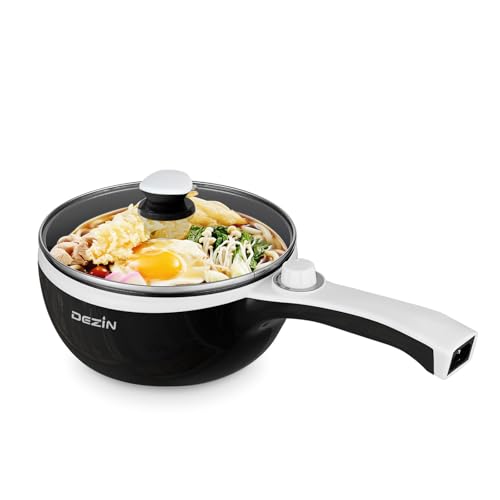
- Dezin 1.5L Electric Hot Pot
- Dezin 2L Electric Hot Pot
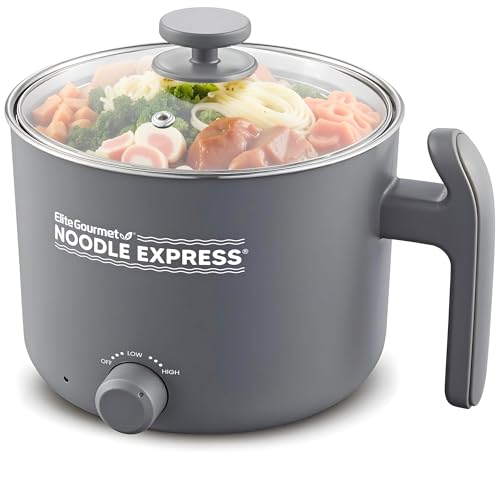
- Elite Gourmet 1.25Qt Noodle Express Hot Pot (EHP120)
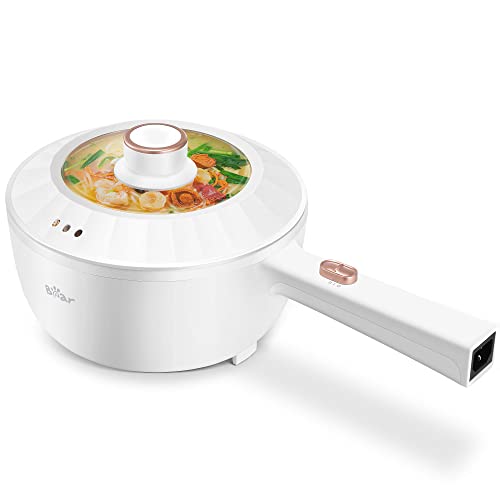
- Bear 2L Electric Hot Pot
Read the full guide ↓ for the ranking logic, the honest limitations of every pick, and the checks that matter more than any headline claim.
Shopping for the best hot water pots sounds simple until you open a few listings and realise the name covers at least three different appliances: the small electric pot that boils water and cooks a single bowl of ramen, the mid-size electric hot pot that anchors a family dinner, and the big divided shabu pot built for a table of friends. All six picks in this guide are electric pots that heat water and cook in it, but they are sized and shaped for very different households, and the most useful thing this guide can do is match each one to the job it genuinely does well.
A second confusion is vocabulary. Some listings say hot pot and mean the shared East Asian cooking style, where diners cook raw ingredients in simmering broth at the table. Others mean a general-purpose electric pot that happens to boil water quickly for noodles, eggs, oatmeal and soup. Both are legitimate products, and this guide includes both kinds, labelled honestly. If your main interest is the travel end of the category, our companion notes on Best Hot Water Pots For Camping take the same pool of ideas and judge them by packability instead.
What follows is a research-led comparison, not a hands-on lab test. Every pick was chosen from a verified pool, its listing title was read closely for capacity, power, material and named features, and anything the title does not state has been left out rather than guessed. You will find strengths and trade-offs for each model, a comparison table, a buying guide that explains the sizing maths, and a practical how-to section covering first use, cooking, cleaning and the problems owners most often run into.
Key Takeaways
- Capacity decides everything: 1.5–2L pots cook for one, 3–4.5L pots suit small families, and 5–6L divided pots are for shared hot pot nights.
- A divider is the single most valuable feature for mixed tables, because it lets a spicy broth and a mild broth run side by side.
- Power matters most after cold ingredients go in; higher wattage in this pool brings a big pot back to a simmer faster.
- Non-stick and ceramic coatings clean easily but need soft utensils; stainless steel tolerates anything but asks for stirring and soaking.
- Buy for the meal you cook weekly, not the party you host twice a year; the right best hot water pots choice is the one that earns its storage space.
- Check the latest price on Amazon for your shortlist, and confirm capacity and configuration on the listing, because titles in this category are often cluttered.
In this guide
Quick Picks
The table below is the short version of the whole guide. Badges are used consistently through the detailed reviews, so you can jump straight to the pick whose badge matches your household.
| Badge | Pick | Why it earns its place |
|---|---|---|
| Best Overall | Olayks 3L Electric Hot Pot | A balanced 3L ceramic-coated pot with dual power that covers family dinners and everyday boiling without dominating the counter. |
| Best for a Crowd | Food Party 6L Electric Hot Pot with Divider | Six litres and a divider make this the clear choice for two-broth hot pot nights with a full table of guests. |
| Best for One Person | Dezin 1.5L Electric Hot Pot | A true one-person cooker for dorms, desks and travel, honestly sized at 1.5L with dual power settings. |
| Best Compact All-Rounder | Dezin 2L Electric Hot Pot | Two litres, adjustable power and an included spatula make this the flexible compact option for one or two people. |
| Best Stainless Steel | Elite Gourmet 1.25Qt Noodle Express Hot Pot (EHP120) | Stainless steel and a glass lid for buyers who want a small pot with no coating to baby. |
| Best Fast Small Pot | Bear 2L Electric Hot Pot | A 2L pot with a strong 1000W element for its size, built for fast noodles and quick solo meals. |
How These Picks Were Chosen
These six models were chosen from a verified pool of electric hot pots, and every specification quoted in this guide comes from the listing information supplied for that pool: capacity, wattage where stated, coating or material, and the features and uses each title names. Where a title is silent, for example on exact temperature ranges or cord length, this guide stays silent too. That restraint matters in this category, because hot pot listings are famous for enthusiastic, cluttered titles that mix features from sibling models.
The shortlist was balanced deliberately across sizes and surfaces. A guide to this search that listed six near-identical 2L non-stick pots would be useless, so the pool here spans 1.5L to 6L, coated and stainless interiors, and both single-broth and divided formats. Each pick had to earn a distinct badge; if two models did the same job, the one with the clearer listing information and the more honest sizing kept its place. Readers comparing the value end of the category may also want our notes on Best Low Cost Electric Hot Pots, which weigh the same trade-offs with cost as the first filter.
One honesty note: this is research-led guidance. We did not cook on these pots in a test kitchen, and this guide makes no hands-on claims. What it does instead is read the verified data carefully, explain what each specification means in a real kitchen, and flag the limitation each design carries, including the ones marketing prefers to skip. Treat the badges as a well-reasoned starting point, then confirm the final configuration on the Amazon listing before ordering.
The 6 Best Hot Water Pots, Reviewed in Detail

Olayks 3L Electric Hot Pot
Badge: Best Overall
Strengths
- A mid-size 3L capacity that suits two to four diners without taking over the table
- Ceramic non-stick coating makes noodle and broth clean-up simpler than bare metal
- Dual power settings let you drop from a rolling boil to a gentle simmer
Trade-offs
- Ceramic coatings need non-metal utensils if they are to stay smooth
- No divider, so two different broths in one pot are not an option
- The listing title does not name a removable pot, so washing happens around the base
Key specs from the listing
- Capacity: 3L
- Coating: ceramic non-stick
- Power: dual power settings
- Safety: overheat protection
- Named uses in the listing title: steak, pasta, hot pot, ramen
The Olayks design sits in the middle of this pool on size, and that middle position is exactly its appeal. Three litres is enough broth and ingredients for a small family hot pot night, a generous pasta boil for two, or a shared ramen session, yet the pot still reads as a portable countertop appliance rather than a party centrepiece. The ceramic non-stick surface is the practical headline: starch-heavy foods such as noodles and dumpling wrappers release more willingly than they do from uncoated metal, and the dual power settings cover the two states hot pot cooking actually needs, a fast climb to the boil and a lower hold once everyone is eating. Overheat protection is named in the title, which matters in a category where pots are often left simmering at the table for an hour or more.
Judged as an all-rounder, the Olayks earns Best Overall because it makes the fewest enemies. It is big enough for a family hot pot night yet small enough to justify counter space on an ordinary Tuesday, when the job is boiling water for pasta or reheating soup. The ceramic surface suits buyers who are wary of conventional non-stick but still want easy release, and the dual power settings map neatly onto the two speeds daily cooking actually uses. If a household can only own one electric pot from this list, this is the one whose compromises are easiest to live with across the widest range of meals.
Best for: households of two to four who want one pot for hot pot nights and everyday boiling / Not suited for: buyers who need a divided pot for two broths at once

Food Party 6L Electric Hot Pot with Divider
Badge: Best for a Crowd
Strengths
- The largest capacity in this pool, built for a full table of diners
- A divider lets a spicy broth and a mild broth simmer side by side
- Five temperature levels give finer simmer control than a simple high-low switch
Trade-offs
- Six litres of broth is heavy to carry to the sink when full
- Too large for solo cooking; small meals rattle around in it
- The big footprint needs real storage space between uses
Key specs from the listing
- Capacity: 6L
- Divider: yes, for two broths
- Power: 1200W, 110V
- Temperature: 5-level control
- Coating: PFOA-free non-stick
Food Party builds the party-size option in this pool. Six litres with a divider is the classic shared hot pot format: one side can carry a fiery, oil-rich broth while the other stays mild for children or heat-shy guests, and thin-sliced meat, mushrooms and greens can move between them. The 1200W element and five-level temperature control suit that job, because a pot this size needs real power to return to a simmer after a plate of cold ingredients goes in, and it needs a low, steady setting once the table settles into eating rather than cooking. The PFOA-free non-stick claim is stated in the title, and the Chinese hot pot framing in the listing is honest about what this machine is for.
For the general buyer, the Food Party is a specialist that knows its occasion. It is the pot you bring out when the table is full and the meal is the event: two broths, plates of sliced meat and greens, and a long, social evening around a simmering centrepiece. Its 5-level control is more useful here than on a small pot, because a 6L divided pot cycles between a hard boil for cooking and a bare simmer for eating over several hours. Buyers whose real need is a lighter daily driver should look at the smaller picks, a point our notes on Best Light Weight Hot Water Pots explore from the carrying-and-storage angle.
Best for: hosts cooking shared hot pot for a full table, with mixed spice tolerances / Not suited for: solo cooks, who will find it oversized and slow to justify

Dezin 1.5L Electric Hot Pot
Badge: Best for One Person
Strengths
- The smallest footprint here, sized honestly for one person
- Dual power settings cover both boiling and gentler cooking
- The title names dorm, travel, camping and RV use outright
Trade-offs
- At 1.5L it cannot serve a group hot pot, whatever the marketing implies
- 700W boils more slowly than the larger models in this pool
- Non-stick surface calls for soft utensils and hand washing care
Key specs from the listing
- Capacity: 1.5L
- Power: 700W, dual power
- Coating: non-stick
- Colour: black pan
- Named uses in the listing title: steak, egg, oatmeal, soup, ramen; dorm, travel, camping, RV
Dezin pitches this 1.5L pot at one person and does not pretend otherwise, which makes it easy to recommend for the right buyer. It is a mini cooker in the true sense: ramen, a couple of eggs, a bowl of oatmeal, a single portion of soup, or a small steak cooked in the pan-style base. The 700W dual power arrangement matches that scale, with a higher setting to bring water up and a lower one to hold food without scorching the non-stick surface. The listing title names dorm rooms, travel, camping and RVs, and the compact black pan format fits all four settings because it stores like a saucepan rather than an appliance.
In a general guide, the smallest Dezin plays the role of the honest solo cooker. Many buyers searching this term live alone, study in a dorm, or want a desk-side pot for lunch, and for them a 6L party pot is not a better product, just a bigger one. This 1.5L model covers the solo repertoire completely, boils its modest volume without drama, and stores in a cupboard corner. Its limitation is absolute rather than relative: it will never serve a group, so buy it as a personal appliance and it will not disappoint.
Best for: students, solo dwellers and travellers who cook one portion at a time / Not suited for: anyone planning a shared hot pot meal

Dezin 2L Electric Hot Pot
Badge: Best Compact All-Rounder
Strengths
- A step up in capacity that still travels and stores easily
- Adjustable power suits everything from fried rice to a gentle soup simmer
- A spatula is included in the box, per the listing title
Trade-offs
- Still a small pot; family hot pot for four is beyond it
- 700W is modest when the pot is filled to the brim
- The included spatula is a basic accessory, not a full utensil set
Key specs from the listing
- Capacity: 2L
- Power: 700W, adjustable
- Coating: non-stick
- Included: spatula
- Named uses in the listing title: steak, egg, fried rice, ramen, soup; dorm, RV, family, travel, camping
The 2L Dezin is the slightly roomier sibling in this pool, and the extra half litre over the 1.5L model is the difference between cooking for one and cooking for one hungry person plus a side, or two modest portions. The title leans into pan cooking as much as boiling: steak, egg and fried rice are named alongside ramen and soup, and the adjustable 700W power supports that range, letting you sear at the top setting and then back off. A spatula is included, a small thing that matters in a dorm or RV kitchen where the utensil drawer may be nearly empty. The portable framing in the title names family use as well as travel and camping.
The 2L Dezin is the compact all-rounder of the set, and its generalist credentials come from the pan side of its personality. Fried rice, eggs and steak appear in its title alongside the boiling jobs, and adjustable power is what makes that breadth real rather than rhetorical. For a single person or a couple in a small kitchen, one appliance that boils, simmers, fries and reheats is worth more than a larger pot that only boils. The included spatula sounds minor until the first morning you cook eggs in a kitchen with one drawer.
Best for: one or two people who want one compact pot that boils, fries and simmers / Not suited for: families needing a main family-size hot pot

Elite Gourmet 1.25Qt Noodle Express Hot Pot (EHP120)
Badge: Best Stainless Steel
Strengths
- Stainless steel cooking surface avoids coating wear entirely
- Glass lid lets you watch noodles and broth without lifting and losing heat
- Compact quart-plus size suits single servings of ramen, rice and soup
Trade-offs
- No non-stick coating, so starchy foods need stirring and a soak before washing
- The title names no power settings, so expect simple operation rather than fine control
- Small capacity rules out shared hot pot meals
Key specs from the listing
- Capacity: 1.25Qt
- Material: stainless steel
- Lid: glass
- Model: EHP120
- Named uses in the listing title: ramen, rice, soups and stews
Elite Gourmet takes the opposite approach to most of this pool: instead of a coated pan, the EHP120 cooks in stainless steel, with a glass lid so the contents stay visible. That makes it the traditionalist option, a small electric pot for ramen, rice, soups and stews that behaves like a saucepan with its own heating base. Stainless steel tolerates metal utensils, does not carry a coating that can age, and browns and deglazes in a familiar way, at the cost of more attentive stirring when noodles or rice are involved. The 1.25-quart size is a single-serving format, aimed at one bowl at a time rather than a shared table.
The Elite Gourmet EHP120 represents the stainless steel position in this guide, and it deserves its place on principle as much as performance. Coatings divide opinion: some buyers prioritise easy release, others want a cooking surface with nothing to wear, chip or age. For the second group, this compact steel pot with a glass lid is the natural pick, behaving like the saucepans they already trust. It asks a little more of the cook, stirring noodles and soaking after rice, and in exchange removes an entire category of worry about surface lifespan.
Best for: buyers who prefer stainless steel and want a glass lid on a personal-size pot / Not suited for: cooks who hate stirring and soaking after starchy foods

Bear 2L Electric Hot Pot
Badge: Best Fast Small Pot
Strengths
- 1000W is strong for a 2L pot, so water returns to the boil quickly
- Adjustable power and dual power settings cover searing and simmering
- The title calls it a portable cooking pot, and the 2L format backs that up
Trade-offs
- White exterior shows broth splashes and turmeric stains more readily
- Non-stick coating needs the usual soft-utensil care
- No divider and no lid details are named in the title
Key specs from the listing
- Capacity: 2L
- Power: 1000W, adjustable
- Coating: non-stick
- Colour: white
- Named uses in the listing title: steak, egg, ramen, oatmeal; portable cooking pot with dual power
Bear pairs a compact 2L non-stick pot with a 1000W element, and that power-to-size ratio is the story here. Small pots with modest elements can take a long time to recover after cold noodles or frozen dumplings go in; this one is specified to push back to temperature briskly. The adjustable power and dual power wording in the title point to a cooker meant to move between jobs, frying an egg or a small steak at one end of the dial and holding oatmeal or soup at the other. The white finish gives it a cleaner, more appliance-like look on the counter, and the portable framing in the title matches its footprint.
Bear’s 2L pot earns its badge on recovery speed. In everyday terms, the most annoying moment in small-pot cooking is the long, lukewarm pause after frozen dumplings or a double portion of noodles hit the water. A 1000W element in a 2L body shortens that pause more than any preset could. For busy solo cooks and couples who use a pot like this several times a week, that briskness is a daily quality-of-life feature, and it is why this model stands out from the other compact options despite a similar footprint.
Best for: fast weeknight cooking for one or two, especially noodles and dumplings / Not suited for: buyers who need a divider or a large shared format
Comparison Table
Use this table to compare the six picks on the attributes the listing titles actually state. Where a title does not state a figure, the cell says so rather than guessing.
| Pick | Capacity | Surface / material | Standout trait | Listing |
|---|---|---|---|---|
| Olayks 3L Electric Hot Pot | 3L | Ceramic non-stick | Dual power with overheat protection | Check on Amazon |
| Food Party 6L Electric Hot Pot with Divider | 6L | PFOA-free non-stick | Divider plus 5-level temperature control | Check on Amazon |
| Dezin 1.5L Electric Hot Pot | 1.5L | Non-stick | Dual power; dorm, travel and camping named | Check on Amazon |
| Dezin 2L Electric Hot Pot | 2L | Non-stick | Adjustable power; spatula included | Check on Amazon |
| Elite Gourmet 1.25Qt Noodle Express Hot Pot (EHP120) | 1.25Qt | Stainless steel | Glass lid; no coating to maintain | Check on Amazon |
| Bear 2L Electric Hot Pot | 2L | Non-stick | 1000W in a compact body | Check on Amazon |
How to Choose the Right Hot Water Pot
Start with the headcount maths, because capacity is the decision everything else hangs on. For shared hot pot, allow roughly a litre of broth space per two diners once ingredients are in the pot, and remember that a pot should never be filled to the brim: a working fill of about two-thirds to three-quarters leaves room for a rolling boil and for ingredients to move. That puts one or two people comfortably in the 1.5–2L class, a family of three or four in the 3–4.5L class, and a party table in the 5–6L class, ideally with a divider.
Next, decide whether you need a divider. A divider is not a luxury feature; it changes what the meal can be. Two broths mean spicy and mild, meat-rich and vegetarian, or a rich bone broth beside a light dashi-style broth, all cooking at once. If your table regularly includes children, vegetarians or anyone heat-shy, a divided pot like the Food Party or the stainless designs discussed in our notes on Best Mongolian Hot Pots and other shared formats will earn its place. If everyone at your table eats the same broth, a single pot is simpler to fill, heat and wash.
Power and control come third. Wattage figures in this pool run from 700W in the compact Dezins to 1200W in the large Food Party and HYTRIC-class designs, and the right way to read them is relative to volume: watts per litre is what decides how fast the pot boils and how quickly it recovers after cold food goes in. Control style matters too. A simple two-setting or dual power arrangement is genuinely enough for boiling and simmering; multi-level control earns its keep on big pots that must hold a precise simmer for hours.
Finally, choose your surface with your washing habits in mind. Non-stick and ceramic coatings release noodles, dumpling wrappers and egg with minimal scrubbing, and they reward cooks who use soft utensils and wash by hand. Stainless steel asks for a stir and an occasional soak, and in exchange it tolerates metal tools, high heat and years of use without a coating to protect. Neither is better in the abstract; the better surface is the one that matches how you actually cook and clean, a point that also drives the lightweight discussion in Best Lifght Hot Water Pots.
How to Use, Clean and Look After an Electric Hot Pot
First use sets up everything that follows. Wash the pot and lid with warm soapy water before the first cook, even if they look clean, to remove manufacturing residues. For a coated pot, wipe the surface with a thin film of cooking oil on a paper towel before first use if the maker suggests seasoning; for stainless steel, a first boil of plain water, discarded, is a sensible start. Check that the base and cord are dry before plugging in, and always set the pot on a flat, heat-safe surface with room around it for steam to escape.
- Fill to no more than about three-quarters full, leaving headroom for boiling and ingredients.
- Bring the water or broth to a boil on the highest setting with the lid on; it is noticeably faster covered.
- Once boiling, drop the setting to a steady simmer before adding ingredients, so the broth stays hot without boiling over.
- Cook dense items first (root vegetables, frozen dumplings), then quick items (leafy greens, thin-sliced meat, noodles last if you want them springy).
- Keep the lid on between additions to help the pot recover temperature quickly.
- At the end of the meal, switch off, unplug, and let the pot cool before moving it to the sink.
- Wash the cooled pot with a soft sponge; soak stainless steel after starchy cooks instead of scrubbing.
- Dry the base connection area thoroughly before storing, and coil the cord loosely rather than wrapping it tight.
Cleaning is where the surfaces part ways. Coated interiors want a soft sponge, mild detergent and no scouring pads, and they should never go from hot to cold water suddenly. Stainless steel can take a proper soak and, for discoloured patches after long simmers, a paste of bicarbonate of soda worked gently with a sponge. In both cases the electrical base must never be immersed; wipe it with a damp cloth only, and make sure the socket area is completely dry before the next use.
Troubleshooting follows a few repeatable patterns. Problem: the broth will not come back to a boil after ingredients are added → the pot is overloaded or the setting dropped too far; cook in smaller batches and return the dial to high between rounds. Problem: noodles stick together in a clump → they went into water that was not yet at a full boil, or were not stirred in the first minute; stir immediately with chopsticks or a fork. Problem: the pot cycles off mid-meal → overheat protection may have triggered on a low liquid level; top up the broth, let the pot cool briefly, and restart at a lower setting.
One Pot or Two Broths? Reading the Divided-Pot Question
The divided pot deserves its own discussion because it is the format most buyers either over-buy or under-buy. A divider genuinely transforms the meal for mixed tables, and hosts who cook hot pot monthly will use it every time. But a divider also splits your volume: a 6L divided pot is really two 3L broths, each with less room for ingredients to move, and both sides must be filled, seasoned and washed. Occasional hot pot cooks with a spice-tolerant household usually get more from a simpler single pot and a second small saucepan on the stove for a mild side broth.
There is also a flavour argument for the single pot that purists make: one shared broth deepens as everything cooks in it, and the last bowl of the night tastes like the whole meal. Divided pots trade some of that depth for flexibility. Neither answer is wrong, and this guide’s badges reflect that: the big divided Food Party is Best for a Crowd, while the undivided Olayks takes Best Overall for the households in the middle.
Electric Hot Pots and the Kettle Question
A fair question for this search is why not simply buy a kettle for hot water and a saucepan for cooking. The answer is that an electric hot pot collapses both jobs into one appliance that also holds temperature at the table, which a saucepan on a portable burner does less safely and a kettle cannot do at all. For dorms, offices, RVs and small kitchens where a stove may be absent or shared, that collapse is the entire point: one plug, one vessel, and dinner happens where you eat it.
Where a kettle still wins is pure water speed for drinks, and where a saucepan wins is high-heat searing. The pots in this guide sit between those poles, and the pan-style models with adjustable power narrow the searing gap for eggs, gyoza and small steaks. Understanding that middle position helps set expectations: judged as table cookers and boilers combined, the best of them are excellent; judged as replacements for a full stove, they are not trying to be.
Broth, Ingredients and Timing: Getting More From the Same Pot
The difference between a good hot pot night and a chaotic one is rarely the pot; it is the order of operations. Broth first, and give it time: a plain water base with aromatics needs a proper simmer before the first ingredient goes in, or the early rounds taste washed out. Set out ingredients in cooking-time order, dense and frozen items nearest the pot, delicate greens and herbs furthest away, and the meal almost runs itself. Thin-sliced meat needs only a swish until it changes colour; leaving it to boil while you chat is how tender slices turn grey and tough.
Noodles deserve a decision before the meal starts. Cooked in the broth, they drink up flavour and thicken the soup, which many tables love as a finale; cooked from the start, they turn the broth starchy and can catch on the base of a stainless pot. Most experienced hosts cook noodles last, in the richest broth of the evening, and serve them as the closing course. Rice cakes, dumplings and fish balls sit in the middle order: after the broth has taken on some character from the first meat and vegetables, but with enough time left to cook through.
Sauces are the quiet half of the meal. A simple station of soy sauce, vinegar, chilli oil, garlic, sesame and fresh herbs lets every diner tune their own bowl, which is precisely why a single shared broth works even for mixed tastes when there is no divider. Set the station up before the pot boils, because once cooking starts nobody wants to leave the table to hunt for the sesame oil.
Energy, Table Safety and Living With a Simmering Pot
An electric hot pot spends much of its life at the centre of a table full of people, drinks and conversation, so placement matters more than with almost any other appliance. The cord should run off the table edge nearest the socket, never across a walkway or under a chair leg, and the pot itself wants a heat-safe mat under it on wooden or delicate surfaces. Steam rises from a simmering pot for hours; keep it clear of shelves, curtains and the underside of anything that dislikes moisture.
On energy, the honest picture is that holding a simmer is cheap and boiling is the expensive moment, which is another argument for the lid: a covered pot returns to the boil faster and holds it with less power. Filling from a kettle, where one is available, shortens the first boil, though it slightly spoils the one-appliance simplicity that makes these pots attractive in dorms and RVs. For long meals, topping up with hot rather than cold water keeps the simmer steady and the cooking times predictable.
Children at a hot pot table need the same briefing as adults get at a barbecue: the pot and the broth are genuinely hot, ladles go in handles-up, and nobody reaches across the pot. Divided pots help here too, since the mild side can be placed nearest younger diners. None of this is complicated, but it is worth saying in a buying guide, because the best pot for a household is partly the one whose size and shape make this kind of calm, safe table possible.
What the Wattage Numbers Actually Feel Like
Specifications only become useful when they are translated into minutes and moments. In this pool, the compact 700W pots are boiling a litre or so of water for one person, a job they do at a pace that suits a morning routine: fill, switch on, and the water is ready around the time you have found the noodles and a bowl. The 1000W Bear works in the same small volumes with noticeably more urgency, and the 1200W large pots are not really faster at a litre; their extra power exists to move four, five or six litres and to recover after a plate of frozen dumplings lands in the broth.
The practical lesson is to stop comparing wattage across sizes. A big pot with modest power would be a genuine problem, and a small pot with huge power would be a handful, quick to boil dry and eager to scorch. Every model in this guide pairs its power sensibly with its volume on paper, which is why the badges are decided by format, surface and use case rather than by the wattage race. When you read other listings outside this pool, run the same watts-per-litre sanity check before believing any fast-heating claim.
Common Buying Mistakes
- Buying the biggest pot for status. A 6L pot used for one person wastes energy, storage and washing effort on every single meal; size to your usual headcount.
- Ignoring the surface trade-off. Coated pots bought by metal-utensil households, and steel pots bought by cooks who hate soaking, both end up resented within a month.
- Filling to the brim. Broth expands, boils and receives ingredients; an overfilled pot boils over, cycles its protection and cooks unevenly.
- Skipping the divider question. Mixed tables without a divider end up cooking two meals in sequence, which doubles the evening’s work.
- Trusting a cluttered title blindly. Titles in this category borrow wording from sibling models; confirm capacity, material and configuration on the listing itself before ordering, the same caution we apply to searches like Best Propane Shabu Shabu Hot Pots where the fuel type in the title is the whole point.
Final Recommendation
For most households, the Olayks 3L is the recommendation to start from: mid-size, ceramic-coated, dual power, and equally plausible on a family hot pot night and a weekday pasta boil. It is the pick whose compromises point in the fewest directions at once.
Move away from it for a reason, not a whim. Hosts should step up to the divided Food Party 6L. Solo cooks should step down to one of the Dezins or the compact Bear, choosing the stainless Elite Gourmet instead if a coating-free surface matters more than easy release. Every one of those moves trades something real, and this guide has tried to name the trade plainly for each.
Start with the Olayks 3L Electric Hot Pot if you want the safest first choice for this search, and look closely at the Food Party 6L Electric Hot Pot with Divider if your priorities lean the other way. Check on Amazon to confirm the current configuration of either model before you order.
Frequently Asked Questions
What size hot water pot do I need for a family of four?
For shared hot pot, a 3L pot is the comfortable minimum for four and 4.5–6L is more relaxed, especially with a divider. For everyday boiling and cooking rather than table service, a 2–3L pot usually covers a family’s pasta, soup and noodle jobs without wasting counter space.
Can an electric hot pot replace a kettle?
For cooking, yes; for drinks alone, a kettle is faster and pours better. An electric hot pot earns its place when the hot water is also the cooking medium, or when you need to hold a simmer at the table, which a kettle cannot do.
Is a divider worth it?
If your table mixes spice levels, diets or broth styles, yes, a divider changes the meal rather than decorating it. If everyone eats the same broth, a single pot is simpler to heat, fill and wash, and the broth develops a deeper shared flavour.
Non-stick, ceramic or stainless steel: which interior is best?
Non-stick and ceramic release starchy foods easily and wash fast, but need soft utensils and gentle washing. Stainless steel tolerates any utensil and lasts indefinitely, at the cost of stirring and soaking after noodles or rice. Choose by your habits, not by headline claims.
Why does my hot pot keep switching itself off?
Usually the overheat or boil-dry protection has noticed a low liquid level or an empty pot on a high setting. Top up the broth, let the pot cool for a few minutes, and restart at a lower setting. If it happens with a full pot, stop using it and check the listing’s support route.
Can I cook rice in an electric hot pot?
Small steel and coated pots in this pool name rice or oatmeal among their uses, and a personal-size pot handles a small portion well if you keep the lid on and the setting low once the water is absorbed. For daily family rice, a dedicated rice cooker remains the better tool.
How do I stop noodles sticking to the pot?
Add noodles only at a full, rolling boil, stir them in the first minute, and avoid overloading the pot. In stainless steel, a brief soak in warm water after serving releases anything that did catch, without scrubbing.