Disclosure: topratedkitchenware.com is reader-supported. When you buy through links on our site, we may earn an affiliate commission from Amazon and other retailers, at no extra cost to you.
Where to buy
The six models below are the verified picks for this guide to best hybrid grills under 500. Two honest notes frame the whole list. First, “hybrid” in the strict sense means one unit burning both gas and charcoal, and none of these six is a dual-fuel combo — they are propane grills that form the gas side of a hybrid setup, which is where an under $500 budget does its best work anyway. Second, prices in this category move constantly, so this guide prints no prices at all: use each link to check the latest price on Amazon, and treat the under $500 figure as the budget band you are shopping in, not a promise about any single model on any single day. Read the full guide ↓ for where the value hides, which corners are safe to accept, and how the six picks divide the band between them.
- IdeaMaxx 3-Burner Propane Gas Grill — cast iron grates, 38,200 BTU and foldable side shelves in a compact, value-led frame.
- Weber Spirit E-425 Gas Grill — the premium-tier design in this pool, with a sear zone, boost burners and porcelain-enameled cast-iron grates.
- Nexgrill 4-Burner Propane Gas Grill with Side Burner and Stainless Steel Lid — 52,000 BTU, 526 sq. in. and matte cast iron grates.
- Monument Grills Mesa II 4-Burner Propane Gas Grill — Advanced Broil Zone, stainless body and foldable shelves.
- AMERLIFE 6-Burner Propane Gas Grill with Side Burner — 60,000 BTU and 650 sq. in. of cooking area with a warming rack.
- Charbroil Portable 1-Burner Propane Gas Grill — an 11,000 BTU aluminized-steel portable, the lowest-cost design in this class.
Shopping for the best hybrid grills under 500 is really an exercise in careful, honest allocation. A single dual-fuel combo at this band buys you two compromised halves; the smarter play — and the one this entire guide is built on, from the first pick to the last — is a strong propane grill now, chosen for sear power and zone control, with charcoal added later through an inexpensive kettle when the budget breathes again. Below, six propane grills are ranked for exactly that strategy: what each one gives a value shopper, where each one cuts its corners, and which corners are safe to accept. Readers whose homes have a gas line rather than tanks should also scan Best Hybrid Natural Gas Charcoal Grills, since piped fuel changes the shopping list entirely.
Key Takeaways
- Under $500, the winning hybrid strategy is staged: buy the gas side properly first, add charcoal later. Combo units at this band compromise both fuels.
- None of the six picks is a dual-fuel combo; all are propane grills, and one — the Weber Spirit E-425 — is a premium-tier design included as the aspirational benchmark. Verify its current price against your budget before falling for it.
- The IdeaMaxx 3-Burner is the value standout: cast iron grates and 38,200 BTU in a folding frame that stores anywhere.
- The AMERLIFE 6-Burner is the size standout: 650 sq. in. and 60,000 BTU, the most cooking room in this guide for hosts on a budget.
- The Charbroil Portable is the entry point — one burner, 11,000 BTU, genuinely portable — best understood as a starter or travel grill, not a two-zone cooker.
- In this tier, grate material and burner count matter more than brand badges: cast iron sears, three-plus burners enable indirect cooking, and everything else is negotiable.
- Judge every model by cost per season, not sticker drama: a maintainable grill with replaceable burners and heat plates will out-serve a slightly fancier sealed box, and the money you do not spend on day one is the money that buys the cover, the spare tank and eventually the charcoal kettle.
In this guide
Quick Picks
Best Value All-Rounder — IdeaMaxx 3-Burner. Cast iron grates, strong concentrated output and shelves that fold away; the most hybrid-ready cooking per unit of money and patio space here. Check on Amazon
Best Premium-Tier Pick — Weber Spirit E-425. Sear zone, boost burners and porcelain-enameled cast iron, with the deepest support network in the category — the benchmark to measure value picks against, and to grab when its price dips into your band. Check on Amazon
Best Family Size — Nexgrill 4-Burner (52,000 BTU). 526 sq. in., matte cast iron grates, thermometer and electronic ignition: the balanced four-burner for family batches. Check on Amazon
Best Fast Preheat — Monument Grills Mesa II. An Advanced Broil Zone and stainless build in a folding-shelf frame, designed to reach fierce heat quickly on weeknights. Check on Amazon
Best for Big Gatherings — AMERLIFE 6-Burner. Six burners, 60,000 BTU, 650 sq. in. plus a warming rack and side burner: maximum working room for hosts counting every dollar. Check on Amazon
Best Budget Pick — Charbroil Portable 1-Burner. A simple 11,000 BTU portable in aluminized steel for balconies, camping and first-grill households. Check on Amazon
How These Picks Were Chosen
This is a research-led guide built from verified manufacturer data, category norms and recurring owner-feedback themes — not a hands-on test. The filter was value within a hybrid plan. Each pick had to justify itself as the gas half of a two-fuel household at or around the under $500 band: enough burners for two-zone cooking (with one deliberate exception, the ultra-portable Charbroil, included as the entry point and labelled as such), grates with real thermal mass where the tier allows it, and construction that survives seasons rather than a single summer. The Weber was included knowingly as the premium-tier reference: value shopping goes wrong when you never see what the extra money buys, and its sear zone is the clearest illustration in the category.
Two disclosures belong here. The pool contains no dual-fuel combo and no charcoal grill, so the charcoal side of the hybrid plan is handled as strategy — including the total-cost section below — rather than as a product. And because prices fluctuate daily, no figure in this article should be read as a quote; the band in the keyword is a shopping frame, and each Amazon link is there so you can check the latest price on Amazon at the moment you buy. For the charcoal-heavy end of the same conversation, see Best Hybrid Outdoor Grills; for the fuel-type comparison, see Best Hydrid Fuel Grills.
The 6 Best Hybrid Grills Under 500 (Gas Side, Ranked for Value)

IdeaMaxx 3-Burner Propane Gas Grill
Badge: Best Value All-Rounder
Strengths
- Cast iron grates deliver sear quality the value tier rarely offers.
- 38,200 BTU concentrated in a three-burner box preheats fast and recovers well.
- Foldable side shelves collapse the footprint for renters and small patios.
Trade-offs
- Cast iron needs seasoning discipline and dry storage.
- Three burners mean a narrower indirect zone than four-burner rivals.
- Smaller brand; verify accessory availability in your region.
Mini spec box: Fuel: propane. Burners: 3. Output: 38,200 BTU. Grates: cast iron. Extras: foldable side shelves.
Value tiers usually force a choice between grate quality and everything else; the IdeaMaxx refuses it. Cast iron is the single feature that most changes how food tastes on a budget grill, because stored heat is what creates crust before the interior dries out. Wrapped in a three-burner frame with folding shelves, it becomes the rare budget grill that suits both a balcony and a base camp — and in a staged hybrid plan, it leaves the most money unspent for the charcoal kettle that completes the setup.
The ownership contract is maintenance. Brush the grates warm, oil them lightly, dry them before the cover goes on, and they will reward you for years. Neglect them and surface rust arrives within a season, as it does on any bare cast iron. Indirect cooking works — one burner off, food on the cool side — but the cool zone is a strip rather than a field, so whole chickens are a squeeze and ribs belong to the kettle’s shift. Judged as what it is, the most cooking per dollar and per square foot in this guide, it earns the top value badge comfortably.
A word about the folding shelves in daily life: they make this the only full-cooking pick here that a renter can store in a closet-adjacent corner or load into a car for a weekend site, and that flexibility quietly extends its season — a grill that travels gets used in October at a cabin, not just in July at home. Pair it with a pellet tube and you have a hybrid starter kit that fits in a corner of the garage, which is more than any combo unit at this band can claim.
Best for: value shoppers, renters and small patios that still want real sear / Not suited for: owners who will not maintain cast iron

Weber Spirit E-425 Gas Grill
Badge: Best Premium-Tier Pick
Strengths
- Sear zone with boost burners produces the best crust in this guide.
- Porcelain-enameled cast-iron grates balance heat retention and easier care.
- The category’s deepest parts, cover and accessory ecosystem.
Trade-offs
- Premium-tier design; confirm its current price sits within your budget before committing.
- More grill than a small household needs nightly.
- Smoke still requires a box or tube accessory.
Mini spec box: Fuel: propane. Burners: 4, with sear zone and boost burners. Grates: porcelain-enameled cast iron. Extras: Weber Works rails.
Why include a premium-tier grill in an under $500 guide? Because value is a comparison, and this is the comparison that matters. The E-425 shows exactly what stepping up buys: a dedicated sear zone that behaves like a separate appliance, grates that hold heat across the whole surface, temperature discipline that cheaper boxes imitate poorly, and a support network that keeps the grill cooking for a decade. If its current price lands within reach of your band — prices move, and this model’s street price moves with seasons and sales — it can be the smartest buy here, because cost per year of service beats sticker price every time.
If it sits above your band today, treat it as the measuring stick instead: the IdeaMaxx borrows its cast-iron logic, the Monument borrows its concentrated-heat logic, and both cost you less commitment. What you should not do is stretch a budget painfully for the badge alone; a hybrid plan needs money left for charcoal, a cover and a spare tank. The Weber is the best grill in this guide. Whether it is the best under-$500 decision depends on the price on the day you shop — which is why the link, not a printed figure, has the final word.
There is a resale and longevity angle value shoppers often miss. Premium grills hold their condition — and their secondhand appeal — because their burners, grates and igniters are replaceable from a deep catalogue. A value grill that cannot be re-burnered in year four is a disposable; the Weber’s parts shelf converts the same event into a modest maintenance bill. That does not make it automatically the right buy at this band, but it reframes the comparison from sticker price to cost per season, which is the comparison honest budgeting should use.
Best for: buyers whose band flexes for a decade-long grill / Not suited for: strict budgets that must also fund the charcoal half immediately
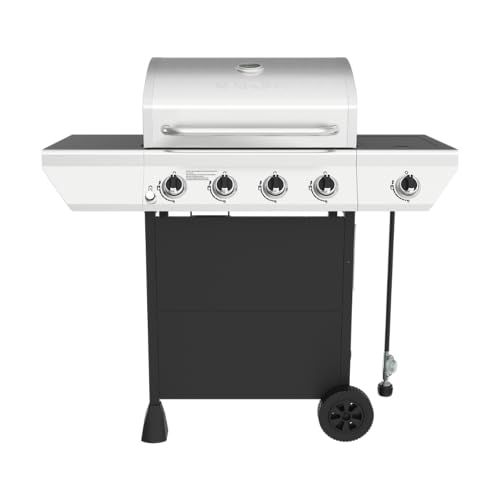
Nexgrill 4-Burner Propane Gas Grill with Side Burner and Stainless Steel Lid
Badge: Best Family Size
Strengths
- 526 sq. in. cooking space fits full family batches in one load.
- Matte cast iron grates hold heat for proper grill marks.
- Built-in thermometer and electronic ignition included.
Trade-offs
- Cast iron grate care applies after every cook.
- Less party headroom than the six-burner AMERLIFE below.
- Stainless lid shows heat tint over time.
Mini spec box: Fuel: propane. Burners: 4 plus side burner. Output: 52,000 BTU. Cooking space: 526 sq. in. Grates: matte cast iron. Ignition: electronic. Extras: built-in thermometer.
This Nexgrill is the family-shaped answer in the group: four burners, a family-sized grate, and cast iron where it counts. Five hundred twenty-six square inches is the band’s sweet spot — dinner for five or six in a single batch, with a genuine two-zone layout for the chicken-and-vegetables nights, and a side burner for the pan work. The matte cast iron grates recover heat between flips better than the thin steel found on many value rivals, which is the difference between marked food and steamed food.
In a hybrid household this is the grill that makes charcoal optional rather than necessary for months at a time: it roasts indirectly, sears respectably and hosts modest gatherings without strain. Its ceilings are honest — a truly large party means batching, and cast iron asks for its five minutes of care after dinner. For the median family shopping this band, those are the right compromises, and the money saved against premium tiers funds the kettle, the cover and the first season of propane without a wince.
Weeknight reality favours this size class. The Nexgrill preheats in a reasonable window, cooks a full family load without shuffling, and its thermometer-plus-ignition package removes the two small frictions that make cheaper grills feel cheap. Parents cooking with one eye on the garden will appreciate how predictable it is: set the zones, close the lid, and the grill holds its side of the bargain while homework happens. Predictability, at this band, is a premium feature wearing a value badge.
Best for: families wanting one balanced four-burner at a value position / Not suited for: the largest regular parties

Monument Grills Mesa II 4-Burner Propane Gas Grill
Badge: Best Fast Preheat
Strengths
- Advanced Broil Zone concentrates heat for fast browning and finishing.
- Stainless steel body with foldable side shelves.
- Designed around rapid preheating for weeknight use.
Trade-offs
- Concentrated heat punishes distracted cooking of thin foods.
- Younger brand; thinner long-term accessory shelf than legacy names.
- Broil-zone layout differs from standard layouts, so generic accessories may not fit.
Mini spec box: Fuel: propane. Burners: 4. Body: stainless steel. Model: Mesa II 410FBZ. Extras: Advanced Broil Zone, foldable side shelves.
The Mesa II’s pitch to the value shopper is time. Its Advanced Broil Zone concentrates output so the grill reaches browning heat fast — the maker rates it to hit high temperature within minutes — and a grill that is ready quickly is a grill that gets used on weeknights instead of admired on weekends. For hybrid cooking the broil zone doubles as a finishing station: glaze sets there, cheese melts there, and the last-minute crust happens there while the rest of the grate runs gentle.
The stainless body and folding shelves make it patio-practical, and four burners give proper zone control for indirect work. Judge it with clear eyes on two points: fierce concentrated heat will scorch thin asparagus or fish while you answer the door, so set timers; and a newer brand’s ecosystem is thinner, so buy the fitted cover at the same time as the grill. For busy households in this band, the Mesa II trades a little heritage for a lot of weekday usability, which is a trade many will gladly make.
Consider the Mesa II if your grilling competes with a commute. The broil zone’s fast, fierce heat compresses the whole cook — less waiting, less drying — and the folding shelves mean it does not annex the patio to do it. Owners stepping up from a portable will notice the four-burner zone control immediately: food can move, not just cook, and that movement is the difference between managing a dinner and surviving one. In this band, that is a sophisticated trick, and Monument deserves credit for building a value grill around time instead of around chrome.
Best for: busy weeknight cooks who preheat impatiently / Not suited for: distracted cooks or accessory collectors

AMERLIFE 6-Burner Propane Gas Grill with Side Burner
Badge: Best for Big Gatherings
Strengths
- 650 sq. in. cooking area is the largest in this guide.
- Six burners allow three distinct heat zones plus a warming rack.
- 60,000 BTU total output with cast iron grates and a side burner.
Trade-offs
- Big footprint and higher propane use for small meals.
- Six burners mean more ports to clean and more knobs to manage.
- Value-tier finishing; expect function over polish.
Mini spec box: Fuel: propane. Burners: 6 plus side burner. Output: 60,000 BTU. Cooking area: 650 sq. in. Grates: cast iron. Extras: warming rack, built-in thermometer, regulating valve.
Every value guide needs a size-per-dollar champion, and the AMERLIFE is unmistakably it: six burners, 650 square inches, a warming rack and a side burner in one big, unpretentious package. For hosts, the arithmetic is compelling — this is the only pick here that runs a sear zone, a roast zone and a holding zone simultaneously with room to spare, and the warming rack keeps early batches at serving temperature while late ones finish. Cast iron grates keep the sear honest across that whole expanse.
The costs of size are operational rather than hidden. Preheat takes longer, small dinners waste fuel heating empty grate, and six burners mean a deeper clean each month. The finish is functional rather than jewellery-grade, which is the correct priority at this position. In hybrid terms, this grill can carry a household’s entire gas workload — parties included — leaving charcoal purely as a pleasure purchase. If your gatherings are the budget’s reason for existing, start here and let the smaller picks argue their case against it.
Hosts should also note the regulating valve and thermometer in the spec list — small inclusions that make a six-burner box governable rather than merely large. Run three burners for a family night and bank the savings; run all six with the warming rack loaded and the AMERLIFE becomes a catering line. The discipline it demands is cleaning: a big firebox hides grease until it announces itself as a flare-up, so the monthly scrape matters more here than on any other pick. Keep that habit and this is the most party per dollar in the guide by a wide margin.
Best for: hosts maximising cooking room per dollar / Not suited for: small patios or mostly two-person cooking

Charbroil Portable 1-Burner Propane Gas Grill
Badge: Best Budget Pick
Strengths
- The lowest-cost design in this class; a genuine entry point to gas grilling.
- Truly portable format for balconies, camping and tailgates.
- Simple single-burner operation with nothing to go wrong.
Trade-offs
- One burner means no two-zone or indirect cooking — the hybrid technique does not apply.
- 11,000 BTU suits small batches only.
- Aluminized steel is a budget material; store it dry and covered.
Mini spec box: Fuel: propane. Burners: 1. Output: 11,000 BTU. Body: aluminized steel, black. Model: 465133010.
Honesty first: this little Charbroil is not a hybrid tool in technique. With a single 11,000 BTU burner there is no cool zone, no indirect roasting, no sear-then-finish choreography — just direct heat in a portable box. What it is, is the cheapest honest way to start grilling with gas: burgers, dogs, skewers and vegetables for two or three people, on a balcony, at a campsite or beside a tailgate, with a grill that stores in a cupboard when the season ends.
Its place in this guide is the first rung of the ladder. Households unsure whether outdoor cooking will stick can learn on it for a season, then step up to the IdeaMaxx or Nexgrill with real knowledge of what they want — and keep the Charbroil as the travel grill, a role it plays better than any full-size pick here. Aluminized steel asks only for dry, covered storage in return. As a main family grill it is out of its depth, and the guide will not pretend otherwise; as a starter and a portable, it is exactly right.
One more honest use case deserves naming: the second-home and rental-property grill. A simple, inexpensive portable that nobody minds replacing in a few seasons is the rational choice where a grill will be borrowed, weathered and occasionally neglected — contexts where a premium pick would be a small tragedy. The Charbroil’s simplicity is its armour in those settings. Just keep expectations calibrated: it grills; it does not roast, smoke or host, and asking it to do those jobs is how good little grills get bad reputations.
Best for: first grills, balconies, camping and tailgates / Not suited for: indirect cooking, families, or anyone’s only grill for long
Comparison Table
| Pick | Burners | Output | Cooking area | Position in band | Link |
|---|---|---|---|---|---|
| IdeaMaxx 3-Burner | 3 | 38,200 BTU | Not listed | Value all-rounder | Check on Amazon |
| Weber Spirit E-425 | 4 + sear zone | Not listed | Not listed | Premium-tier benchmark | Check on Amazon |
| Nexgrill 4-Burner (52,000 BTU) | 4 + side | 52,000 BTU | 526 sq. in. | Family value | Check on Amazon |
| Monument Mesa II | 4 | Not listed | Not listed | Fast-preheat value | Check on Amazon |
| AMERLIFE 6-Burner | 6 + side | 60,000 BTU | 650 sq. in. | Size-per-dollar value | Check on Amazon |
| Charbroil Portable 1-Burner | 1 | 11,000 BTU | Not listed | Entry-level / portable | Check on Amazon |
How to Choose the Best Hybrid Grills Under 500
Allocate the band in this order: grill first, then the ownership kit, then the charcoal future. Within the grill itself, spend on the firebox, not the furniture. Burners, grates and heat plates decide results; shelves, cabinets and badges decide photographs. Three burners is the technique threshold — it is where two-zone cooking becomes possible — so the only sub-three-burner pick worth buying is a deliberate portable like the Charbroil. Cast iron grates are the highest-value upgrade in the tier, porcelain-enameled cast iron the one worth stretching for, and thin wire grates the clearest false economy, because they cannot store the heat that makes grilled food taste grilled.
Then run the size test honestly. A family’s weekly cook — not the annual party — sets the grate size: roughly 350–450 sq. in. serves two to four, 450–550 serves five to six, and only regular hosting justifies the AMERLIFE’s 650. Oversizing wastes propane and preheat time fifty weeks a year. Finally, hold back a slice of the band for the kit that makes any of these grills perform: a fitted cover, a second propane tank, an instant-read thermometer, a smoker tube for the hybrid flavour, and a brush. Shoppers who skip the kit to buy one model higher almost always end up with a worse-cooking, faster-ageing grill. The fuel-strategy side of the same budget conversation continues in Best Hybrid Natural Gas Charcol Grills, typo included in the address, substance included in the advice.
Assembly and warranty deserve a line in a value guide because they are where cheap purchases collect their hidden fees. Budget grills arrive as flat-pack projects; set aside a realistic afternoon, a socket set and a second pair of hands for the big AMERLIFE, and read the manual’s order of operations before opening the hardware bags. A grill assembled square and tight cooks evenly and ages slowly; a grill forced together cooks with a warped lid and a rattling cabinet for life. On warranty, read what is actually covered rather than the headline duration: burners and grates are the parts that fail, so a warranty that covers them meaningfully is worth more than a long promise about the cart’s paint. Register the purchase, keep the receipt with the manual, and photograph the model plate — three two-minute habits that turn a future parts claim from an argument into an errand.
How to Build a Hybrid Station on This Budget, Step by Step
Step one: buy the gas grill that matches your weekly cook, using the picks above, and spend the first month learning two-zone cooking on it — hot side, cool side, lid discipline. Step two: add smoke before you add a second grill. A pellet tube or smoker box over a lit burner delivers genuine wood flavour for the length of most cooks and costs very little; for many households this is where the hybrid journey happily ends. Step three: when charcoal still calls, add a basic kettle rather than a combo unit. A kettle gives you full charcoal capability — direct, indirect and low-and-slow — in its own footprint, with its own ash system, and it can be replaced or upgraded without touching the gas side. Step four: organise the station. Gas tools in the cabinet or on hooks by the door, charcoal tools with the kettle, ash in a lidded metal can, and a shared thermometer and brush caddy between them.
Troubleshooting for budget hybrid setups:
- Problem: the gas grill’s cool zone is too hot for gentle roasting → cook on the warming rack if fitted, prop food on a small raised rack over the cool side, and choose the shady, breezy moment of the day rather than fighting midday heat soak.
- Problem: budget grates rust within a season → they were stored wet; brush warm, dry fully with a two-minute burner blast, oil lightly, and only then cover.
- Problem: the whole setup feels cramped → fold the shelves, park the kettle in the corner the gas grill vacated, and store the spare tank upright outside the traffic path, never under the firebox.
Where Budget Grills Cut Corners — and Which Cuts You Can Live With
Every grill in this band is a negotiated settlement. Painted steel instead of stainless on non-structural panels is a cut you can live with if the grill lives under a cover. A basic thermometer, or none, is livable because a good instant-read probe thermometer is cheap and more accurate than any lid gauge. Fewer, simpler shelves are livable. The cuts that matter are inside the firebox: thin heat plates that warp and rust through, burner tubes that burn out at the ports within a few seasons, and grates too light to hold heat. Those parts decide whether the grill cooks well in year three, so inspect them in photos and specifications, favour cast iron and heavier plates, and remember that replaceable wear parts from mainstream brands are a hidden form of value — a grill you can re-burner is a grill you do not replace.
The Total Cost of a Hybrid Setup Nobody Puts on the Box
The grill’s price is the beginning, not the total. Propane is a recurring cost — a tank in rotation plus a spare — and heavy hosts will cycle tanks briskly in season. Charcoal, when it joins, adds its own per-cook cost in fuel and time. Covers, brushes and igniter batteries are small annual lines. Replacement heat plates or a burner set somewhere in the middle years is a predictable line for value-tier grills, and planning for it converts an unpleasant surprise into a maintenance event. None of this argues against the hybrid plan; it argues for entering it with the full ledger in view. A staged build — gas now, smoke tube next, kettle when ready — spreads those costs across seasons, which is precisely why it beats a single combo purchase for most households watching a budget. Indoor cooking is a different category altogether, with electric appliances designed for the kitchen; if that is your real need, start from Best Indoor Barbecue Grills rather than adapting outdoor propane equipment, which must never be used inside.
Set against that full ledger, the staged hybrid still wins its comparison. A combo unit concentrates the same costs into one appliance while adding its own: proprietary charcoal trays, shared grease-and-ash management, and a firebox that must be cleaned for two fuels’ worth of residue. Two simple appliances, each maintained on its own rhythm, spread both the spending and the chores across the calendar. The household that grills forty times a year will feel the per-cook economics most; the household that grills eight times a year should honestly consider whether the little Charbroil portable plus restaurant treats is the truest value of all. The band rewards honesty about your own habits more than it rewards any single model — which is why this guide keeps returning to the weekly cook, not the fantasy cook, as the unit of planning.
Reading a Budget Grill Listing Like an Engineer
Listings in this tier reward sceptical reading. Total BTU is the headline number and the least informative one; divide it by cooking area and you get a rough heat-density figure that predicts searing far better. “Stainless steel” without a grade or a location usually means the lid or the door fronts, not the firebox — nice for looks, neutral for longevity. Cooking area sometimes includes the warming rack; compare primary grate figures where they are given, and treat a missing figure as a small grill until proven otherwise. Ignition type matters quietly: electronic systems, as on the Nexgrill here, tend to outlast basic piezo clickers. And “portable” spans everything from the genuinely cupboard-sized Charbroil to full grills with folding shelves like the IdeaMaxx and Monument — decide which kind of portability your life actually needs before the word charms you.
Finally, check the parts page before the product page. Search the model for replacement burners, heat plates and grates; if they exist and are easy to order, the grill is a platform you can maintain. If they do not, price the grill as a consumable with a few seasons of life. That single habit separates the value buys in this band from the cheap ones, and it costs you five minutes.
A Sensible First Season: What to Cook in What Order
New-grill households in this band often ask what the hybrid learning curve actually looks like. Month one belongs to direct grilling: burgers, sausages, chicken pieces and vegetables, learning your grill’s hot spots by cooking a grid of cheap white bread slices and noting the toast pattern — the oldest trick in grilling, and still the fastest way to map a firebox. Month two adds the second zone: park a whole chicken or a tray of ribs on the cool side, hold a gentle lid temperature, and discover that indirect cooking is mostly patience. Month three is smoke: a pellet tube over a lit burner, chicken or cheese as the forgiving test subjects, notes taken on which wood your household actually likes.
By the end of that season you will know the two things no review can tell you: how often you truly grill, and which charcoal experiences you still miss. If the answer is “weekly, and I miss slow ribs,” the kettle purchase makes itself. If the answer is “weekly, and the tube is enough,” you have saved the kettle money entirely. Either way the staged plan has done its work — you bought knowledge with small money before committing big money, which is the entire philosophy of the under-$500 hybrid approach in one paragraph.
Common Buying Mistakes
- Buying a dual-fuel combo at this band. The money splits into two mediocre halves. Stage the purchase instead: gas properly now, charcoal properly later.
- Spending the whole band on the grill. No cover, no spare tank, no thermometer — the kit is not optional, it is where results come from.
- Counting burners without checking grates. Six burners under wire grates cook worse than three under cast iron.
- Assuming the band is a price promise. Prices move daily; premium-tier models drift in and out of reach. Check the live price at the moment of purchase.
- Buying party size for family life. The biggest box burns the most propane for the smallest dinners. Size for the weekly cook.
Final Recommendation
Start the hybrid plan with the IdeaMaxx 3-Burner: it is the best balance of sear quality, footprint and money left over for the charcoal half. Families who cook in full batches should step up to the Nexgrill 4-Burner (52,000 BTU), and hosts should take the AMERLIFE 6-Burner for its unmatched cooking room at a value position. Watch the Weber’s live price if your band can flex — it is the best grill here — but never at the cost of the cover, the spare tank and the kettle fund. That discipline is what makes the best hybrid grills under 500 a plan rather than a purchase. Buy the grill your Tuesdays need, protect it like the appliance it is, let a smoke tube audition for the charcoal role, and promote charcoal to a full appliance only when your own cooking — not a catalogue, not a neighbour, not a holiday sale — tells you the flavour is worth a second footprint on the patio. Households that follow that sequence rarely regret the money, because every stage was bought with evidence from the stage before it, and the final setup, however modest or ambitious it becomes, fits the family that actually uses it.
Frequently Asked Questions
Can I really get a hybrid grill for under $500?
A true dual-fuel combo exists at many price points, but at this band its gas and charcoal halves are both compromised. The better under-$500 answer is staged: a strong propane grill now, a smoker tube for flavour, and a kettle later. That is the strategy this guide ranks, and it is why no combo appears in the picks.
Why is a premium Weber in an under-$500 guide?
As the benchmark. Seeing what the extra money buys — a real sear zone, better grates, a deep parts network — makes value picks measurable, and its street price moves enough that it sometimes enters the band. The article prints no price for it; check the live listing and decide with real numbers.
How many burners do I need at this budget?
Three is the threshold for two-zone cooking, which is the core hybrid technique on gas. Four adds comfort for families. Six is for hosts. One — the Charbroil Portable — is a starter and travel format, not a technique grill.
What else should I budget for besides the grill?
A fitted cover, a spare propane tank, an instant-read thermometer, a grate brush and a smoker box or pellet tube. Together they protect the grill, keep it cooking and supply the smoke flavour that makes a gas grill feel hybrid.
Is cast iron worth the maintenance at this price?
Yes, if you will give it five minutes of care per cook: brush warm, dry, oil lightly. The sear improvement over thin steel is the largest single flavour upgrade available in this tier, and neglected porcelain-coated steel fails just as surely.
Should I buy the biggest grill my budget allows?
Only if your regular cook — not your biggest imaginable cook — fills it. An oversized firebox costs you preheat time and propane on every small dinner, and under-used grills age by weather rather than by work. The AMERLIFE earns its size for genuine hosts; everyone else usually cooks happier, cheaper and more often on a three- or four-burner sized to the family, with the savings funding the rest of the hybrid station.
How long should a grill in this band last?
With a cover, dry storage of tools, warm brushing after cooks and a spring leak test, the mainstream picks here should give many seasons of service; value-tier heat plates and burners are wear parts that may need replacing along the way, which is normal rather than a defect. The portable Charbroil, in aluminized steel, should be viewed as a shorter-life appliance. Longevity in this tier is mostly a maintenance outcome, not a purchase outcome — the same model lasts twice as long in a careful household as in a neglectful one.
Does assembly quality really matter at this price?
Yes. A budget grill assembled square and tight cooks evenly and ages slowly; one forced together cooks with a warped lid and rattling panels for its whole life. Set aside a proper afternoon, follow the manual’s order, and tighten everything twice.
When should I add the charcoal half?
After a season of gas, when you know which charcoal experiences you actually miss — usually slow smoking or coal-fired steak nights. Add a kettle then, with a chimney starter and a lidded metal ash can, and keep its tools and ash entirely separate from the gas grill.


