Disclosure: topratedkitchenware.com is reader-supported. When you buy through links on our site, we may earn an affiliate commission from Amazon and other retailers, at no extra cost to you.
Where to buy
The six models below are the verified picks for this guide to best hybrid natural gas charcoal grills. The headline honesty point comes first: none of the six is a natural gas model. Four are propane grills and two are charcoal grills, and no pick is a single dual-fuel unit. That split is actually instructive for this keyword, because a hybrid natural gas and charcoal setup in real homes almost always means a piped-gas grill for convenience plus a charcoal grill for flavour — two appliances, two fuels, one patio. The propane picks below show you the gas-side formats to shop for (and what to verify about natural gas versions or manufacturer conversion kits before buying), while the two charcoal picks are reviewed in full as the flavour half. Read the full guide ↓ before deciding, especially the conversion safety section, which applies to every gas purchase this keyword inspires.
- Nexgrill 4-Burner Propane Gas Grill with Side Burner and Stainless Steel Lid — 52,000 BTU, 526 sq. in., matte cast iron grates, thermometer and electronic ignition.
- Monument Grills Mesa II 4-Burner Propane Gas Grill — Advanced Broil Zone, stainless body, foldable side shelves, fast preheating.
- AMERLIFE 6-Burner Propane Gas Grill with Side Burner — 60,000 BTU, 650 sq. in., cast iron grates and a warming rack.
- Charbroil Portable 1-Burner Propane Gas Grill — 11,000 BTU aluminized-steel portable for small-scale gas grilling.
- Royal Gourmet CC1830S Charcoal Grill and Offset Smoker — 783 sq. in. barrel charcoal grill with an adjustable charcoal pan and offset smoker.
- Weber Original Kettle Premium Charcoal Grill, 22-Inch — the classic kettle with a built-in thermometer, heat control dampers and One-Touch cleaning.
Searching for the best hybrid natural gas charcoal grills means you want the two great conveniences of outdoor cooking at once: gas that is simply there — no tanks, no lighting ritual, plumbed into the house supply — and charcoal’s irreplaceable flavour for the cooks that deserve it. This guide takes that brief seriously and literally. It explains what natural gas actually changes versus propane, why most gas grills are sold as propane models, how conversions work and when they are safe, and it reviews the charcoal half in genuine product form. If your patio plans are still fluid, the broader survey in Best Hybrid Outdoor Grills is worth reading alongside.
Key Takeaways
- None of these six picks runs on natural gas: four are propane models and two are charcoal grills. The article never labels a propane grill as a natural gas grill.
- Natural gas and propane are not interchangeable in an appliance: they burn at different pressures through different-sized jets, so only a manufacturer-supplied conversion kit — where one exists for that exact model — makes a swap legitimate.
- The two charcoal picks are the flavour half of the hybrid idea, reviewed fully: the Weber Kettle Premium for all-round charcoal mastery and the Royal Gourmet barrel for capacity plus offset smoking.
- On the gas side, the Nexgrill 52,000 BTU model is the balanced family format to use as your template when shopping natural gas versions.
- A plumbed natural gas line is a home project as much as a grill purchase: budget for a licensed installer, a shut-off valve and a quick-connect hose.
- The hybrid that works is a division of labour — gas for speed and repeatability, charcoal for smoke and ceremony — not a single compromised box.
- Charcoal technique is learnable in a single season: chimney lighting, ashed-over coals, two-zone fire arrangement and intake-damper control turn the kettle or barrel from a novelty into the patio’s flavour engine.
- All combustion fuels in this guide are outdoor-only. No pick — gas or charcoal, large or portable — may be used indoors or in an enclosed garage, because carbon monoxide has no safe indoor level in a home setting.
In this guide
Quick Picks
Best Overall — Weber Original Kettle Premium 22-Inch. The charcoal benchmark: precise damper control, a built-in thermometer and One-Touch ash cleaning in the format that taught the world kettle grilling. Check on Amazon
Best Charcoal Capacity — Royal Gourmet CC1830S. A 783 sq. in. barrel charcoal grill with an offset smoker, adjustable charcoal pan and side door for tending the fire. Check on Amazon
Best Gas-Side Template — Nexgrill 4-Burner (52,000 BTU). 526 sq. in., matte cast iron grates, thermometer and electronic ignition: the family format to mirror when you shop natural gas versions. Check on Amazon
Best Fast Preheat — Monument Grills Mesa II. Advanced Broil Zone, stainless construction and folding shelves, designed to reach fierce heat in minutes. Check on Amazon
Best for Big Gatherings — AMERLIFE 6-Burner. Six burners, 60,000 BTU and 650 sq. in. plus a warming rack: the most working room on the gas side of this guide. Check on Amazon
Best Portable Starter — Charbroil Portable 1-Burner. An 11,000 BTU aluminized-steel portable for balconies, camping and first-grill households. Check on Amazon
How These Picks Were Chosen
This guide is research-led, built from verified manufacturer specifications, category norms and recurring owner-feedback themes rather than hands-on testing. The keyword’s promise — natural gas plus charcoal — set a two-part filter. For the charcoal half, we required genuine charcoal appliances with real fire management: dampers, ash handling and enough grate to cook for a group; the Weber kettle and the Royal Gourmet barrel clear that bar in opposite styles. For the gas half, we required formats that represent what a natural gas shopper should look for — multi-burner zone control, cast iron grates, thermometers, reliable ignition — while being explicit that the verified models themselves are propane units.
That explicitness is the guide’s editorial spine. Natural gas versions of popular grills exist in the wider market, and some propane models offer manufacturer conversion kits, but availability is model-specific and changes; rather than assert conversions for these picks without verified data, the guide teaches you what to check and flags the safety rules in their own section. Readers comparing the same pool from the typo’d doorway will find the companion reasoning at Best Hybrid Natural Gas Charcol Grills. We also weighted ownership reality over brochure appeal throughout: a grill that lights reliably in year three, whose dampers still move smoothly and whose parts can be ordered by model number, serves a hybrid household better than a feature-stuffed rival that ages badly. That is why established formats — the four-burner gas template, the kettle, the barrel — dominate this list, and why genuinely novel configurations were asked for evidence they could not yet provide. Specifications quoted here come only from the verified listings, and prices are left to the live Amazon pages, where you can check the latest price on Amazon for each model.
The 6 Best Hybrid Natural Gas Charcoal Grills (Gas Formats + Charcoal Picks)
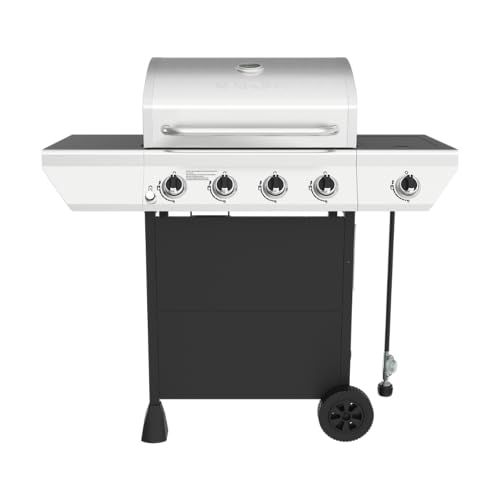
Nexgrill 4-Burner Propane Gas Grill with Side Burner and Stainless Steel Lid
Badge: Best Gas-Side Template
Strengths
- 526 sq. in. of cooking space with matte cast iron grates for real sear marks.
- Four burners plus a side burner give proper two-zone control.
- Built-in thermometer and electronic ignition reduce weeknight friction.
Trade-offs
- This verified model is propane; a natural gas purchase means shopping the equivalent NG format or a maker-approved kit.
- Cast iron grates need warm brushing and a light oil wipe.
- Stainless lid shows heat tint over seasons.
Mini spec box: Fuel: propane (verified model). Burners: 4 plus side burner. Output: 52,000 BTU. Cooking space: 526 sq. in. Grates: matte cast iron. Ignition: electronic. Extras: built-in thermometer.
Use this Nexgrill as the template for your gas side, whatever fuel feeds it. The format is the lesson: four burners for zones, cast iron for crust, a thermometer for honesty and electronic ignition for Tuesdays. In propane form it is a balanced family grill that roasts indirectly, sears respectably and hosts without strain. If your heart is set on a plumbed line, shop for this shape in a natural gas configuration — similar burner layout, similar grate material — and let this review stand as the checklist of what that grill should do.
Day to day, its virtues are calm ones. Preheat is brisk, the zones behave as the knobs suggest, and the side burner absorbs the sauce-and-sides work that otherwise crowds the grate on charcoal nights when the kettle is busy being the main event. Its limitation for this keyword is fuel identity, stated plainly in the spec box: the verified unit burns propane. Treat it as the pattern, verify the NG path for any specific model with its manufacturer, and the hybrid plan stays honest.
One more practical note for the two-fuel plan: a grill of this format is the one your household will light most often, so judge it by its Tuesday behaviour, not its Saturday résumé. Does it light first press? Does the lid thermometer agree roughly with a probe at the grate? Can you brush it clean in five minutes while the food rests? The Nexgrill’s package answers those small questions well, which is why it keeps appearing as the template even in a guide whose headline fuel it does not burn.
Best for: families wanting the reference format for a gas side / Not suited for: buyers who need a natural gas unit confirmed in this listing

Monument Grills Mesa II 4-Burner Propane Gas Grill
Badge: Best Fast Preheat
Strengths
- Advanced Broil Zone concentrates heat for fast, fierce browning.
- Stainless steel body with foldable side shelves suits smaller patios.
- Rapid preheat design suits the plumbed-gas lifestyle of cooking on impulse.
Trade-offs
- Verified model is propane, like the Nexgrill above.
- Concentrated heat scorches thin foods if you wander off.
- Younger brand ecosystem for accessories and spares.
Mini spec box: Fuel: propane (verified model). Burners: 4. Body: stainless steel. Model: Mesa II 410FBZ. Extras: Advanced Broil Zone, foldable side shelves.
The Mesa II understands the psychology of piped gas better than any pick here: when fuel is always on, the grill gets used on impulse, and impulse cooking lives or dies on preheat time. Its Advanced Broil Zone concentrates burner output so the surface reaches browning heat quickly — the maker rates it to hit high temperature within minutes — turning “should we grill?” into dinner without a planning meeting. The broil zone also finishes: glazes set there, cheese melts there, crusts happen there.
Four burners provide the zone control a hybrid household needs, and the folding shelves let a full-size grill live on a modest patio near the house wall — exactly where a natural gas stub-out usually lives. As with the Nexgrill, the verified unit is a propane model, so read it as a format recommendation and verify fuel configuration at purchase. Its temperament is the only caution: fierce, fast heat demands a timer for thin cuts. Attentive cooks will find it the most weeknight-friendly shape in this guide.
The folding shelves also matter more beside a house line than elsewhere: a plumbed grill lives semi-permanently in one spot, often a terrace strip, and a full-size four-burner that can slim itself against the wall between cooks fits that real estate honestly. Add a quick-connect hose if you do install a line, and the Mesa II pattern — fast heat, small stored footprint — becomes the most liveable version of the always-on gas idea for townhouses and modest patios.
Best for: impulse weeknight cooking near the house wall / Not suited for: distracted cooks or buyers needing NG confirmed in-listing

AMERLIFE 6-Burner Propane Gas Grill with Side Burner
Badge: Best for Big Gatherings
Strengths
- 650 sq. in. cooking area with a warming rack — the largest gas format here.
- Six burners allow three heat zones at once.
- 60,000 BTU with cast iron grates and a side burner.
Trade-offs
- Verified model is propane; large-format NG shoppers must verify configuration separately.
- Big footprint, longer preheat, higher fuel use for small meals.
- Six burners mean a deeper monthly clean.
Mini spec box: Fuel: propane (verified model). Burners: 6 plus side burner. Output: 60,000 BTU. Cooking area: 650 sq. in. Grates: cast iron. Extras: warming rack, built-in thermometer, regulating valve.
When a household installs a gas line, it is often dreaming of exactly this: a big, always-ready cooking station that never sends anyone to exchange a tank mid-party. The AMERLIFE is the format of that dream in this pool — six burners, three working zones, a warming rack for finished batches and cast iron grates to keep the sear honest across a very large surface. In propane form it already hosts impressively; as a shape, it is what large-format natural gas shoppers should picture.
The governing details matter at this size: the built-in thermometer and regulating valve help keep a big firebox honest, and zone discipline — not raw area — is what turns 650 square inches into a system rather than a parking lot. The costs are the familiar ones of scale, plus this keyword’s standing caveat: the verified model burns propane. If a plumbed version of this format is your goal, confirm the exact configuration with the manufacturer before any money moves, and have the line installed by a licensed professional.
Think of this format as outdoor-kitchen thinking on a grill budget. Six burners invite a routine: proteins on the hot third, vegetables in the middle, finished food holding on the cool third and the warming rack, with the side burner running a sauce — a line-cook layout that makes big family dinners feel produced rather than improvised. If a natural gas line joins that layout, the station becomes effectively permanent infrastructure, which is exactly why the format deserves a careful look even though the verified unit here burns from a tank.
Best for: hosts designing a permanent, always-ready gas station / Not suited for: small patios or small households

Charbroil Portable 1-Burner Propane Gas Grill
Badge: Best Portable Starter
Strengths
- Genuinely portable, cupboard-storable format.
- Simple single-burner operation; the lowest-cost design in this class.
- Ideal travel companion while the home patio runs the hybrid pair.
Trade-offs
- One burner: no zones, no indirect cooking.
- 11,000 BTU limits batch size and sear intensity.
- Aluminized steel needs dry, covered storage.
Mini spec box: Fuel: propane. Burners: 1. Output: 11,000 BTU. Body: aluminized steel, black. Model: 465133010.
Every lineup needs its honest footnote, and this Charbroil is ours. It has nothing to do with natural gas — it is a small propane portable — and nothing to do with charcoal. Its role in a hybrid household is the away game: camping, tailgates, balconies and rental properties, where the plumbed grill and the kettle cannot follow. Direct heat, small batches, zero ceremony.
Judged in that role it is exactly right: light, simple, inexpensive and easy to store, with enough heat for burgers, dogs and skewers for a few people. Judged as a main grill it is out of its depth, and this guide will not pretend otherwise. Buy it as the portable member of the family, keep it dry under a cover, and let the home station — gas for speed, charcoal for soul — handle the serious cooking.
There is one more household it quietly serves: the one still deciding. A season on an inexpensive portable teaches a family whether outdoor cooking fits their life before anyone prices a gas line or a kettle — the cheapest market research in this entire guide. And when the decision lands, the little Charbroil does not become waste; it becomes the travel grill, the balcony grill, the loaned-to-a-sibling grill. Appliances that can retire gracefully into a second role are worth their modest keep.
Best for: travel, balconies and starter households / Not suited for: indirect cooking or family-size batches

Royal Gourmet CC1830S Charcoal Grill and Offset Smoker
Badge: Best Charcoal Capacity
Strengths
- 783 sq. in. of charcoal cooking space, the largest grate in this guide.
- Offset smoker adds genuine low-and-slow capability to the hybrid patio.
- Adjustable charcoal pan and side door make fire management practical.
Trade-offs
- Barrel-and-offset format has a large footprint and a learning curve.
- Temperature control is manual — dampers and fuel, no knobs.
- Steel barrel needs ash discipline and dry storage to age well.
Mini spec box: Fuel: charcoal. Cooking area: 783 sq. in. Style: barrel grill with offset smoker. Extras: adjustable charcoal pan, side door, lid thermometer, front and side tables.
Here is the flavour half in full voice. The CC1830S is a barrel charcoal grill with an offset firebox, which means it does the two charcoal jobs a hybrid household actually wants: direct grilling over coals in the main chamber, and true offset smoking, where the fire sits beside the food and smoke does the cooking over hours. The adjustable charcoal pan raises and lowers the coal bed to fine-tune heat — a crude but effective throttle — and the side door lets you add fuel or shift coals without lifting the grate and dumping your temperature.
Capacity is the headline: 783 square inches swallows a party’s worth of chicken or a serious rib session, with front and side tables for the trays and tools that charcoal cooking generates. The honest costs are skill and space. Offset smoking is a craft of damper nudges and fuel timing, the barrel claims real patio, and ash must be emptied religiously once fully cold. Paired with a gas grill that handles Tuesdays, though, this is how a hybrid patio gets genuine smoke flavour without a dedicated smoker purchase — the charcoal half doing charcoal’s deepest work.
Fire management on the barrel rewards a simple discipline: small, hot fires beat big, smouldering ones. Keep the offset fire modest and fed, watch the lid thermometer as a trend rather than a truth, and let the adjustable pan in the main chamber do the fine work when you are grilling directly. Owners who learn that rhythm find the CC1830S generous and forgiving; owners who overload it with fuel fight it all afternoon. That learning curve is not a flaw — it is the charcoal craft itself, and the wider fuel comparison in Best Hydrid Fuel Grills explains why so many cooks find the effort worth it.
Best for: charcoal lovers who want grilling plus real offset smoking / Not suited for: beginners wanting push-button temperature control

Weber Original Kettle Premium Charcoal Grill, 22-Inch
Badge: Best Overall
Strengths
- Benchmark damper control for direct, indirect and low-and-slow charcoal cooking.
- Built-in lid thermometer and One-Touch cleaning simplify ownership.
- The deepest charcoal accessory and knowledge ecosystem in the category.
Trade-offs
- Charcoal time is real: lighting, stabilising and ash are part of every cook.
- Round 22-inch grate is smaller than the barrel’s for very large batches.
- No gas convenience — deliberately; that is the other half’s job.
Mini spec box: Fuel: charcoal. Size: 22-inch kettle. Extras: built-in thermometer, heat control dampers, One-Touch cleaning system.
If the hybrid patio gets one charcoal grill, the argument for the 22-inch Weber Kettle Premium is that it does every charcoal job well in the smallest footprint. Bank the coals to one side and it roasts indirectly; spread them and it sears; arrange a snake of briquettes and it holds a low, smoky temperature for hours. The Premium’s built-in thermometer and refined dampers make those techniques repeatable rather than lucky, and the One-Touch system sweeps ash into its catcher with a lever — the chore that decides whether a kettle gets used weekly or abandoned by August.
It is also the charcoal grill with the deepest support culture: hinged grates, charcoal rails, rotisseries, and a generation of accumulated technique written about this exact format. In hybrid terms, that depth matters, because the kettle is the half you will experiment on. Its limits are charcoal’s limits — time, ash, weather sensitivity — and its grate is round and modest beside the Royal Gourmet’s barrel. As the flavour anchor beside a plumbed or bottled gas grill, it remains the reference everything else is measured against.
A final kettle virtue for hybrid households: it sips patio space and budget compared with the barrel, leaving room — physical and financial — for the gas installation to be done properly. Many two-fuel patios start exactly here, kettle first, because charcoal teaches fire while the household saves and plans the line. When the gas side arrives, the kettle’s role narrows to what it does best and its owner’s skills transfer intact. That is not a compromise purchase; it is the classic sequence, and twenty-two inches of Weber is its classic first step.
Best for: the charcoal half of almost any hybrid patio / Not suited for: anyone who wants charcoal flavour without charcoal effort
Comparison Table
| Pick | Fuel (verified) | Burners / style | Cooking area | Role in hybrid setup | Link |
|---|---|---|---|---|---|
| Nexgrill 4-Burner (52,000 BTU) | Propane | 4 + side burner | 526 sq. in. | Gas-side template | Check on Amazon |
| Monument Mesa II | Propane | 4 | Not listed | Fast gas side | Check on Amazon |
| AMERLIFE 6-Burner | Propane | 6 + side burner | 650 sq. in. | Large gas station | Check on Amazon |
| Charbroil Portable | Propane | 1 | Not listed | Travel / starter | Check on Amazon |
| Royal Gourmet CC1830S | Charcoal | Barrel + offset smoker | 783 sq. in. | Charcoal capacity + smoking | Check on Amazon |
| Weber Kettle Premium 22″ | Charcoal | Kettle | Not listed | Charcoal all-rounder | Check on Amazon |
How to Choose the Best Hybrid Natural Gas Charcoal Grills
Decide the gas question first, because it is really a plumbing question. Natural gas makes sense if your home already has a line near the patio or you are renovating anyway, you grill several times a week, and you value never exchanging a tank over the ability to move the grill. Propane makes sense if the grill must move, the budget is staged, or the line installation quote arrives larger than the grill. Either way, the appliance must match the fuel: buy a grill built or factory-configured for natural gas, or one with a manufacturer conversion kit for that exact model — never a generic kit, never a drilled jet, never a hose swap and hope. Verify with the manufacturer, in writing where possible, before purchase.
Then choose the charcoal half by the flavour jobs you actually want. Kettle if you want one grill that grills, roasts and smokes competently in a small footprint — the Weber pattern. Barrel with offset if capacity and dedicated smoking matter and you accept the learning curve — the Royal Gourmet pattern. Size the pair together: the gas grill near the door and the gas stub, the charcoal grill where smoke drifts away from windows and seating. The technique overlap between the two halves is covered in Best Indirect Heat Grills, because indirect cooking is where gas and charcoal methods genuinely converge.
Natural Gas vs Propane: What Actually Differs
The two gases are cousins, not twins. Propane is stored as a liquid under pressure in your tank and carries more energy per cubic foot; natural gas arrives through a pipe at lower pressure and is metered by the utility. Because of the pressure and energy differences, a natural gas burner needs larger jet openings than a propane burner to deliver the same heat — which is why the fuels are not interchangeable in an unmodified appliance, and why a converted grill must have its jets, and sometimes its regulator setup, changed with the manufacturer’s kit. In use, natural gas feels identical at the grate — same flame, same heat — with three practical differences: it never runs out mid-cook, it costs a connection project up front, and it fixes the grill’s home to the length of its hose. Propane’s counter-virtues are portability and independence from the house. Neither fuel cooks better; they simply fit different houses.
Two smaller differences deserve mention because they surface after purchase. Natural gas appliances connect with a flexible hose to the house supply, so the grill’s position is fixed within that hose’s reach — plan the patio around it, and use a quick-connect fitting if you want the grill removable for service. Propane’s tank also gives you a visible, physical inventory: you can heft it, swap it and store a spare, which some households genuinely prefer to a metered utility they cannot see. And in an outage, the propane grill is wholly independent of the house, while the charcoal grill, of course, answers to no utility at all — one more quiet argument for keeping two fuels on the patio.
How to Run a Two-Fuel Station, Step by Step
Step one: place the gas grill within hose reach of the stub-out or in its propane spot by the door, level and clear of siding and overhangs. Step two: place the charcoal grill downwind of seating, on a non-combustible surface, with its ash can beside it. Step three: zone your tools — gas tools hang by the gas grill, charcoal tools and the chimney live with the kettle or barrel, and only the thermometer and brush caddy travel between them. Step four: build the weekly rhythm: gas for weeknight direct grilling and quick indirect roasts; charcoal for the weekend’s smoking and searing ceremonies. Step five: maintain each on its own calendar — gas gets a spring leak test and burner check; charcoal gets ash discipline after every cook and a deep clean each season. Step six: review the arrangement after the first month and move things without sentimentality. If the charcoal grill blocks the path to the gas grill, swap them; if the ash can lives downwind of the seating, move it; if the shared caddy keeps migrating indoors, duplicate the cheap items and let each station be complete. A two-fuel patio is a small system, and small systems reward exactly this kind of unglamorous tuning far more than they reward another accessory purchase.
Troubleshooting for two-fuel households:
- Problem: the gas grill’s flame is weak or yellow after a conversion → stop and call the installer or manufacturer; flame quality after a fuel change is a professional matter, not a DIY adjustment.
- Problem: charcoal cooks keep overshooting temperature → light fewer coals, close the intake damper earlier, and let the kettle stabilise for twenty minutes before food goes on.
- Problem: ash and charcoal dust keep migrating into the gas grill → store charcoal and ash tools on the opposite side of the patio and never empty the ash can on a windy day near the gas station.
Conversion Kits: the Safety Section
Because this keyword sends many shoppers toward conversions, the rules deserve plain statement. Convert only with the kit made by your grill’s manufacturer for your exact model. Follow its instructions completely, including jet changes and any regulator steps, and leak-test every connection with soapy water afterward. If a manufacturer offers no kit for a model, that model does not convert — buy the fuel configuration you need instead. Never enlarge jets with a drill, never run natural gas through propane jets (weak, sooty, wrong) or propane through natural gas jets (dangerously over-fired), and have a licensed professional handle anything touching the house line itself, including the shut-off valve and quick-connect fitting. Local codes govern this work in most places, and insurers care about it too. Done properly, a conversion is unremarkable; done casually, it is the one genuinely dangerous topic in this entire guide.
Planning the Gas Line Itself: Placement, Valves and Future You
If you do install natural gas, a few decisions made once will be lived with for years. Place the stub-out where the grill will actually stand in February, not where it looks good in a brochure — close to the kitchen door, sheltered enough that you will cook in ordinary rain, and far enough from siding, windows and the charcoal station that heat and smoke go where you intend. Specify a shut-off valve you can reach without moving the grill, and a quick-connect fitting so the grill can still roll out for cleaning and service. Ask the installer about capacity if an outdoor kitchen might grow later; a line sized only for today’s grill can become tomorrow’s constraint. Keep the paperwork — permits, installer details, the grill’s fuel configuration documents — with the house documents, because the next owner, insurer or service technician will ask exactly the questions this guide has taught you to ask.
And a safety boundary that belongs in every fuel conversation: plumbed gas, bottled gas and charcoal are all outdoor fuels. None of the appliances in this guide — not the smallest portable, not the kettle — may be used indoors, in a garage or under a sealed patio roof, because combustion gases, including carbon monoxide, have nowhere to go. Readers whose real question is cooking inside the home need electric appliances designed for that job; the separate topic of Best Indoor Barbecue Grills starts from equipment built for kitchens, not from outdoor gear carried through the door.
A Charcoal Primer for Gas Converts
Households arriving from gas usually need the same five charcoal lessons, and both charcoal picks here teach them well. First, light with a chimney starter and newspaper or a fire starter — never lighter fluid, whose taste survives into the food. Second, wait for the coals to ash over grey before cooking; black, smoking coals are still making the harsh flavours beginners blame on charcoal itself. Third, arrange the fire before the food: a two-zone bank for roasting, a full spread for searing, a snake for smoking. Fourth, control temperature with the intake damper at the bottom, not the lid vent alone, and change one thing at a time, then wait — charcoal answers in minutes, not seconds. Fifth, close all dampers when you finish; the coals smother, the ash cools safely in place, and unburned briquettes can often be reused next time.
Fuel choice inside charcoal matters too. Briquettes burn evenly and predictably, which suits kettles, snakes and learning; lump charcoal burns hotter and cleaner-tasting with more size variation, which suits direct searing and the barrel’s direct chamber. Neither is morally superior. The hybrid household typically keeps briquettes as the house standard and a bag of lump for steak nights — a small, inexpensive duality that mirrors the larger gas-and-charcoal duality of the whole patio.
How the Two Halves Share a Menu: a Worked Example
Concretely, here is a Saturday that shows why this pairing outperforms any single box. Mid-morning, the Royal Gourmet’s offset fire is lit for a pork shoulder, or the Weber kettle is set with a snake of briquettes for the same job; that cook will idle along for hours needing only occasional attention. Late afternoon, guests arrive and the gas grill takes the appetisers — sausages, vegetable skewers, flatbreads — at ten minutes’ notice, while the charcoal side minds the main event. When the shoulder rests, the kettle or barrel’s direct chamber, still holding a live fire, sears the finishing items with the flavour no burner fully imitates. Nothing waited on anything; each fuel did the shift it is best at, and the cook spent the day hosting instead of firefighting.
Scale that down to a Tuesday and the same logic holds in miniature: gas cooks dinner, the charcoal grill stays cold and clean, and nobody feels the hybrid patio is a burden. The setup earns its keep not on the days it performs heroics but on the ordinary days it simply fits around — which is the test every purchase in this guide was judged against.
Common Buying Mistakes
- Assuming propane and natural gas are interchangeable. They are not, at the jet, the regulator or the hose. Match the appliance to the fuel or use the maker’s exact kit.
- Buying the grill before pricing the gas line. The installation can rival the appliance. Get the plumbing quote first.
- Expecting a combo unit to do both jobs. The working hybrid is two appliances with a division of labour, as this guide’s picks demonstrate.
- Under-buying the charcoal half. A kettle with poor dampers teaches frustration, not technique. Fire control is the charcoal feature that matters.
- Forgetting smoke etiquette. Charcoal placement decides whether your smoke seasons the food or the neighbours’ laundry. Plan the downwind spot.
Final Recommendation
Anchor the charcoal half with the Weber Original Kettle Premium unless your parties demand the Royal Gourmet CC1830S and its offset smoker. On the gas side, use the Nexgrill 4-Burner as your format template — four burners, cast iron, thermometer, electronic ignition — and then make the fuel decision with your plumber’s quote in hand: propane as listed, or a verified natural gas configuration of the same shape. That sequence — charcoal chosen by flavour, gas chosen by format, fuel chosen by paperwork — is how the best hybrid natural gas charcoal grills actually come together in real backyards. Take the decisions in that order and each one stays simple: the kettle or barrel because of what it cooks, the gas format because of how your household cooks, and the fuel configuration because of what your house and your installer can properly support. Reverse the order, and shoppers end up with a plumbed line feeding a grill they do not enjoy, or a beautiful charcoal barrel with no weeknight partner — the two failure modes this guide was written to prevent.
Related guides
Frequently Asked Questions
Are any of these grills natural gas models?
No. The four gas picks are verified propane models and the two remaining picks burn charcoal. The guide reviews the gas picks as format templates and explains how to shop or convert safely, but it never claims a listed model runs on natural gas.
Can I convert a propane grill to natural gas?
Only with the manufacturer’s conversion kit for that exact model, installed exactly as instructed and leak-tested afterward. If no kit exists for the model, the answer is no — buy a grill configured for natural gas from the start.
Which charcoal pick is better: kettle or barrel with offset smoker?
The kettle is the better all-rounder and teacher: compact, precise and versatile. The barrel with offset smoker wins on capacity and on dedicated low-and-slow smoking. Choose by whether your charcoal life is varied weeknight-plus-weekend cooking (kettle) or big, smoky projects (barrel).
Does natural gas cook differently from propane?
At the grate, no — a properly configured burner produces the same cooking heat on either fuel. The differences are logistical: natural gas is always on and fixed in place; propane is portable and independent of the house. Owners switching fuels sometimes expect a flavour difference and report none, which makes sense: the flavour in gas grilling comes from the food, its marinades and vaporised drippings, not from the fuel gas itself. If flavour is the variable you care about, the charcoal half of your patio is where that decision lives.
What does a natural gas installation involve?
Typically a licensed plumber or gas fitter extends a line to the patio with a shut-off valve and often a quick-connect fitting for the grill’s hose. Costs and permits vary locally, which is why this guide insists on getting the quote before choosing the grill.
Should the gas grill or the charcoal grill come first?
Charcoal first, if flavour is your teacher: a season on a kettle builds fire skills that make you better on every appliance, and the purchase is small. Gas first, if the household’s problem is weeknight dinners: convenience creates the habit, and charcoal joins a going concern. Either order works in the staged hybrid plan; what fails is buying a compromised combo in a hurry and learning on equipment that fights you.
Can the charcoal picks handle low-and-slow smoking?
Yes. The Royal Gourmet is built for it with its offset firebox, and the Weber kettle manages it with a banked or snake arrangement of briquettes and patient damper work. The methods differ; both produce genuine smoked food, which no gas grill fully matches.


