Disclosure: topratedkitchenware.com is reader-supported. When you buy through links on our site, we may earn an affiliate commission from Amazon and other retailers, at no extra cost to you.
Where to buy
The six verified machines below are this guide’s shortlist of the best kick ass bread machines — ranked by what performance actually means in a bread machine: kneading power, baking evenness, control depth, capacity, and the hardware that keeps results consistent loaf after loaf. Every pick is linked, and every claim is tied to what its listing states.
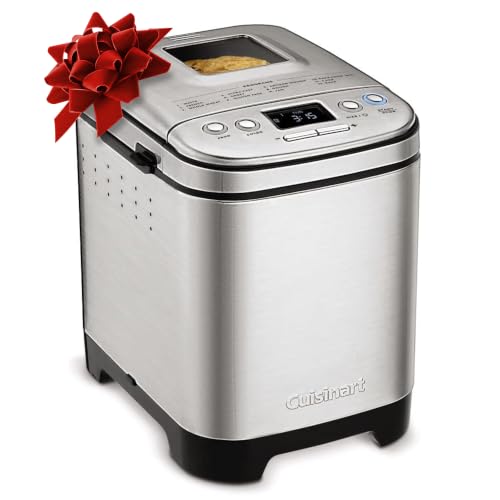
- Cuisinart Compact Automatic Bread Maker, CBK-110 — the all-round performer; check the latest price on Amazon
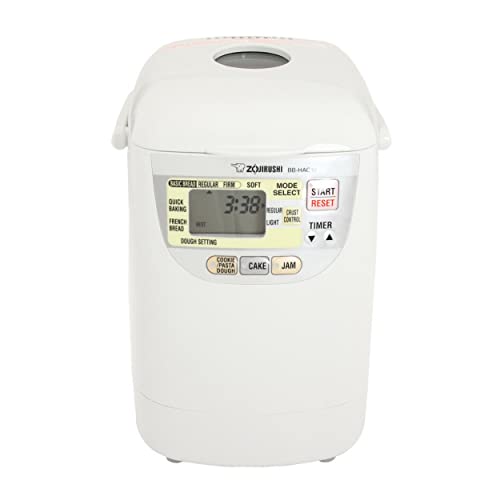
- Zojirushi Home Bakery Maestro, BB-SSC10WZ — the premium wildcard; check the latest price on Amazon
- Zojirushi Home Bakery Supreme Bundle, BB-CEC20 — the heavy-duty performer with dual kneading blades; check the latest price on Amazon
- Neretva 15-in-1 Bread Maker — the power-features pick with dual heaters; check the latest price on Amazon
- KITCHENARM 29-in-1 Smart Bread Machine — the program firepower pick; check the latest price on Amazon
- Breville Custom Loaf Bread Maker, BBM800XL — the flagship performer; check the latest price on Amazon
Read the full guide ↓
Let us translate the search honestly: the best kick ass bread machines are simply the best-performing ones — the machines that knead heavy dough without leaving dry corners, bake a tall loaf evenly from base to crown, hand the baker real control, and repeat the performance on the hundredth loaf as faithfully as on the first. Slang aside, that is a serious specification, and this guide treats it seriously. Performance in a bread machine is not one number; it is a chain — mixing, fermenting, baking, finishing — and a machine is only as strong as its weakest link. The six verified machines below are ranked by the strength of that whole chain, using only the evidence their listings state: dual kneading blades where they exist, dual heaters where they exist, dispensers, collapsible paddles, custom cycles, and the program depth to handle difficult doughs. Readers who train and eat with performance goals in mind will also find the athlete-focused angles in Best Kick Ass Bread Machines For Bodybuilders and Best Kick Ass Bread Machines For Weight Lifters.
A word on what does not count as performance here. A long program list with no kneading or heating hardware behind it is marketing, not muscle. A premium badge with no stated specification — and this pool contains one — is a promise, not a result. And raw capacity is not power: a big pan under a weak process makes big mediocre loaves. The reviews that follow grade each machine on the chain, link by link, and the comparison table lets you audit the grading at a glance.
Performance also has a time dimension that brochures never mention: the hundredth loaf. Bearings wear, coatings age, elements drift, and the machines that still bake evenly in year three are built differently from the ones that peak at the unboxing. A buyer cannot test longevity in a listing, but they can read its proxies — established makers with parts support, designs that have survived several seasons in the market, and hardware that is engineered rather than merely assembled. This guide weights those proxies quietly in its rankings, and mentions them here so the weighting is not a secret: the best-performing machine is the one still performing when the novelty is a memory.
Key Takeaways
- Performance is a chain — knead, ferment, bake, finish — and the strongest machines in this pool state hardware for every link.
- The Zojirushi BB-CEC20 is the heavy-duty pick: dual kneading blades for dense doughs, Home Made menus for control, and a sourdough menu stated.
- The Neretva brings the power features: dual heaters for an even bake, an automatic dispenser, and the largest stated capacity at 3.3 pounds.
- The Breville Custom Loaf is the flagship performer, built around a collapsible paddle, custom crust settings, and an automatic dispenser.
- The KITCHENARM fields the deepest arsenal: 29 programs, a homemade cycle, a gluten-free setting, and three loaf sizes.
- The Cuisinart CBK-110 is the all-round performer — the balanced chain with no weak link for everyday baking.
- The Maestro’s listing states no performance evidence at all; it is ranked last on evidence, whatever its badge promises.
- Consistency across twenty loaves is the true performance statistic; the best hardware is the hardware that retires lotteries — hot spots, unmixed corners, mistimed add-ins.
- Headroom matters: a machine whose comfortable centre matches your staple loaf outperforms a machine strained at its maximum every bake.
- The baker is the final link in the chain — weighed ingredients and the knead check lift any machine in this pool more than a tier jump would.
- Grade a machine’s centre before its extremes: your weekly loaf matters more than the spectacular bake you attempt twice a year.
- Longevity is a performance dimension — judge a machine by its hundredth loaf, and read build and maker support as its proxies.
- Diagnose before you buy: kneading failures want blades, pale crowns want top heat, shredded add-ins want a dispenser, torn bases want a paddle answer.
- Test any new machine with the same recipe three times; near-identical loaves prove the consistency everything else depends on.
- Timers are performance tools: they place fermentation where the kitchen’s temperature and your schedule can serve it.
In this guide
Quick Picks
| Pick | Badge | Performance headline | Best for |
|---|---|---|---|
| Cuisinart Compact CBK-110 | Best All-Round Performer | 12 programs, 3 sizes, 3 crust shades, paddle alert | Everyday excellence without a weak link |
| Zojirushi Maestro BB-SSC10WZ | Premium Wildcard | No performance specification stated in title | Brand loyalists who verify first |
| Zojirushi BB-CEC20 Bundle | Best Heavy-Duty Performer | Dual kneading blades, Home Made menus, sourdough | Dense doughs and custom cycles |
| Neretva 15-in-1 | Best Power Features | Dual heaters, auto dispenser, 3.3 Lb capacity | Big add-in loaves, evenly baked |
| KITCHENARM 29-in-1 Smart | Best Program Firepower | 29 programs, homemade cycle, gluten-free setting | Maximum repertoire in one machine |
| Breville Custom Loaf BBM800XL | Best Flagship Performer | Collapsible paddle, custom crust, dispenser | Control and finish at the top level |
How These Picks Were Chosen
All six machines come from a verified pool checked against Amazon listing data on 2026-11-20, and all six are linked, because each is a genuine bread machine whose performance evidence — or, in one case, whose lack of it — belongs in an honest ranking. Performance was scored only on stated evidence: kneading configuration, heating configuration, capacity, program and cycle depth for difficult doughs, dispenser and paddle engineering, and timer range for fermentation control. Nothing is inferred from brand reputation; where a listing is silent, the score suffers and the review says why. That discipline produces one deliberately uncomfortable result — a premium Zojirushi ranked on its evidence near the bottom — and the guide stands by it, because a performance ranking that grades badges instead of specifications is not a ranking at all.
This is research-led guidance, not a hands-on test report, and prices are never printed; each pick says check the latest price on Amazon. Within those rules, the ranking rewards the machines whose stated hardware attacks the real failure points of home baking: unmixed corners in heavy dough, pale crowns on tall loaves, shredded add-ins, torn loaf bases, and presets that cannot bend to a difficult flour. For the vocabulary behind those failure points, Best Features Of Bread Making Machines is the companion explainer.
The 6 Best Kick Ass Bread Machines, Ranked by Performance

Cuisinart Compact Automatic Bread Maker, CBK-110
Badge: Best All-Round Performer
Strengths
- No weak link: twelve programs, three loaf sizes, and three crust shades stated.
- A paddle-removal alert protects the finish of every loaf.
- A 13-hour delay start gives fermentation scheduling real range.
Trade-offs
- No dual blades, dual heaters, or dispenser are stated — its excellence is balance, not hardware extremes.
- No homemade cycle is stated for full custom control.
- A compact body caps its batch ambition.
Mini spec box: Model CBK-110NAS; 12 programs; loaf sizes 1, 1.5, and 2 Lb; 3 crust shades; 13-hour delay start; paddle-removal alert.
Performance rankings usually crown a specialist, but the all-rounder deserves its place at the head of this list’s logic: for the loaves most households bake most weeks, the Cuisinart’s chain has no weak link. Size control means the batch always matches the dough’s needs. Crust shades mean the finish is chosen, not accepted. The paddle alert means the loaf comes out whole. Twelve programs cover the standard repertoire without pretending to be a library. It will not out-knead the dual-blade machine on a brutal seeded dough or out-bake the dual-heater machine on a giant loaf — the specialists below exist for those fights — but across a season of ordinary excellent baking, balance is a performance statistic too, and this machine owns it. You can Check on Amazon for its current listing.
Best for: households wanting excellent everyday performance across the whole repertoire / Not suited for: specialists chasing one extreme capability

Zojirushi Home Bakery Maestro, BB-SSC10WZ
Badge: Premium Wildcard
Strengths
- A premium-tier machine from the category’s most respected performance lineage.
- A premium white finish for a counter-resident flagship lifestyle.
- The Home Bakery line’s even-baking heritage stands behind the model name.
Trade-offs
- Zero performance evidence in its title: no blades, heaters, programs, sizes, or timer stated.
- A performance ranking cannot credit what a listing does not claim.
- Its tier demands verification its title makes unavoidable.
Mini spec box: Model BB-SSC10WZ; line: Home Bakery Maestro; colour: premium white; performance specifications not stated in the verified title.
Every honest ranking needs its control case, and the Maestro is this one’s. Strip the badge away and read its verified title as a performance document: it contains a brand, a line, a model number, and a colour. No kneading claim, no heating claim, no program count, no capacity. It may conceal a superb performer — its lineage suggests real engineering — but performance, as this guide defines it, is stated and checkable, and on stated evidence the Maestro cannot be placed above machines that publish their hardware. It is ranked and reviewed here so the standard is visible: in this guide, specification beats reputation every time. If the full listing reveals a serious specification, re-rank it yourself with the table’s criteria; the framework is the point. You can Check on Amazon to read that specification.
Best for: brand loyalists willing to grade the full listing themselves / Not suited for: performance shoppers who buy on stated evidence

Zojirushi Home Bakery Supreme Bundle, BB-CEC20
Badge: Best Heavy-Duty Performer
Strengths
- Dual kneading blades are stated — the heavy-dough hardware that matters most.
- Home Made menus give the baker command of the cycle itself.
- A sourdough menu and a 13-hour delay cover fermentation’s long game.
Trade-offs
- Its power is aimed at serious doughs; light baking never wakes it fully.
- A 2-pound flagship format is a real counter commitment.
- No dispenser or dual-heater claim is stated.
Mini spec box: Model BB-CEC20; loaf size 2 Lb; dual kneading blades; 13-hour delay; menus stated: sourdough, jam, quick bake, Home Made; bundle format.
Heavy-duty performance in bread making is decided in the first ten minutes, in the knead. Dense whole-grain doughs, seeded doughs, enriched doughs heavy with butter — these punish a single small paddle, leaving dry pockets that become flaws no bake can hide. Dual kneading blades, stated plainly in this machine’s title, work the full pan and finish the mix completely; that is the single most consequential performance specification in this entire guide. Layer on Home Made menus — command of knead, rise, and bake timings — and the machine does not just execute difficult doughs, it lets the baker tune the execution. Add a stated sourdough menu for the longest fermentations in home baking, and the performance case is complete: this is the machine for the doughs that break lesser machines’ spirits. Its fuller control story is told in Best Custom Bread Machines. You can Check on Amazon for the bundle’s current contents.
Best for: bakers whose doughs are heavy, seeded, enriched, or fermented long / Not suited for: light, occasional baking
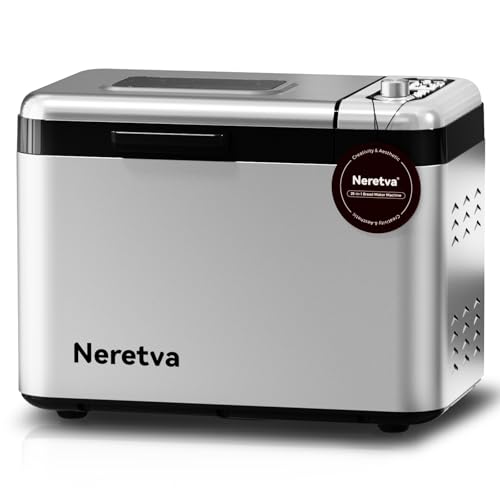
Neretva 15-in-1 Bread Maker with Auto Nut Dispenser
Badge: Best Power Features
Strengths
- Dual heaters are stated — top-and-bottom baking for an even, coloured crust.
- An automatic nut dispenser handles add-ins at the engineered moment.
- The largest stated capacity here, 3.3 pounds, with a 15-hour timer and keep warm.
Trade-offs
- No dual-blade or homemade-cycle claim is stated.
- Its scale is wasted on small households.
- Fifteen programs are presets, however well chosen.
Mini spec box: Capacity 3.3 Lb; 15-in-1 programs; dual heaters; automatic nut dispenser; stainless steel body, nonstick ceramic pan; full touch panel; 15-hour timer; 1-hour keep warm.
Where the Zojirushi bundle wins the knead, the Neretva wins the bake. Dual heaters attack the most visible performance failure in the category — the pale, under-coloured crown — by radiating heat onto the top of the loaf while the base element works below, and they do it at the largest scale in this pool, across a 3.3-pound loaf where evenness is hardest to achieve. The automatic dispenser is the second performance system: add-ins delivered mid-cycle, intact and distributed, instead of shredded by early kneading or stranded by late addition. Together with a 15-hour timer and an hour of keep warm, the stated specification describes a machine engineered around output quality at family scale.
Its honest gaps are at the chain’s other links: no dual-blade claim for the heaviest kneading, and no custom cycle for the baker who outgrows presets. Performance shoppers should weigh which link their baking stresses — if your failures are pale tops and ruined add-ins in big loaves, this is your machine; if they are unmixed corners in dense dough, the dual-blade pick above outranks it for you. You can Check on Amazon for its current listing.
Best for: families baking big, add-in loaves that must bake evenly / Not suited for: small households, or the heaviest dough specialists
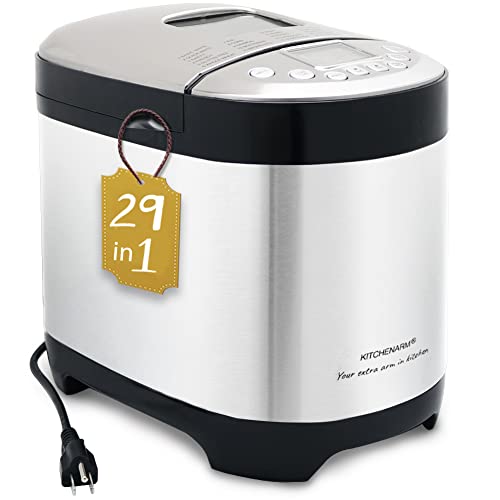
KITCHENARM 29-in-1 Smart Bread Machine
Badge: Best Program Firepower
Strengths
- Twenty-nine stated programs — a designed cycle for nearly every dough in home baking.
- A homemade cycle is stated, so the library has no ceiling.
- A gluten-free setting and three loaf sizes extend the firepower to diets and scales.
Trade-offs
- No dual-heater, dual-blade, or dispenser hardware is stated.
- Program depth cannot substitute for kneading and heating hardware at the extremes.
- The library’s breadth means a settling-in period before it feels simple.
Mini spec box: 29-in-1 programs; homemade cycle; gluten-free setting; loaf sizes 2 Lb, 1.5 Lb, 1 Lb; stainless steel body; recipes included; whole wheat capability stated.
The KITCHENARM’s performance claim is breadth with a back door. Twenty-nine programs mean the machine arrives with a tuned answer for doughs that other machines meet with a generic cycle — and dough-specific timing is a genuine performance variable, because the right rise for a lean white is wrong for a whole wheat and irrelevant to a gluten-free batter. The stated homemade cycle then removes the library’s limit: the dough that no program anticipated can still be built by hand. Add three loaf sizes and a gluten-free setting, and the machine’s arsenal covers more distinct baking situations than any rival here.
The discipline of this guide requires the counterweight in the same breath: programs are software, and the pool’s hardware champions — dual blades, dual heaters, dispensers — solve physical problems that timing alone cannot. The KITCHENARM is the pick when your performance failures are about fit between dough and cycle; it is not the pick when they are about mixing force or top heat. Know your failure, and its ranking resolves itself. You can Check on Amazon for the full program list.
Best for: repertoire bakers and mixed-diet households wanting a cycle for everything / Not suited for: bakers whose failures are hardware-shaped

Breville Custom Loaf Bread Maker, BBM800XL
Badge: Best Flagship Performer
Strengths
- A collapsible kneading paddle is stated — full kneading force, then a whole loaf with no hole.
- Custom crust settings put the finish under the baker’s command.
- An automatic fruit and nut dispenser completes the performance chain.
Trade-offs
- Flagship tier and footprint; performance this complete is not compact or entry-level.
- The folding paddle mechanism needs careful cleaning.
- No program count or loaf size is stated in the title — verify the details on the listing.
Mini spec box: Model BBM800XL; collapsible kneading paddle; custom crust settings; automatic fruit and nut dispenser; brushed stainless steel; control-every-detail design.
The Breville is what flagship performance looks like when it is engineered rather than enumerated. Its signature idea, the collapsible paddle, refuses the category’s oldest compromise: ordinary machines knead with a paddle that then bakes into the loaf and tears it on removal, trading the finish for the mix. Breville’s paddle kneads at full strength and folds flat before the bake, so the chain’s first link and last link are both strong — a whole loaf, end to end, with custom crust settings deciding its finish and a dispenser feeding add-ins at the right moment. That is the complete performance argument in one machine: nothing in the chain is an apology.
Its costs are the flagship’s costs — tier, size, and a mechanism that rewards careful cleaning — and its title leaves program counts and loaf sizes to the listing, which the performance shopper should read before committing. But as a statement of what the category can do when every link is engineered, it closes this ranking as the connoisseur’s pick: the machine for the baker who notices torn bases, pale finishes, and shredded fruit, and wants all three problems solved by design. You can Check on Amazon for its current listing.
Best for: detail-driven bakers who want the complete performance chain / Not suited for: entry-level budgets or small counters
Comparison Table
| Pick | Kneading evidence | Baking evidence | Control evidence | Capacity stated | Listing |
|---|---|---|---|---|---|
| Cuisinart CBK-110 | Standard, paddle alert stated | 3 crust shades | 12 programs, 3 sizes | 1, 1.5, 2 Lb | Check on Amazon |
| Zojirushi Maestro | Not stated | Not stated | Not stated | Not stated | Check on Amazon |
| Zojirushi BB-CEC20 | Dual kneading blades | Sourdough and quick bake menus | Home Made custom menus | 2 Lb | Check on Amazon |
| Neretva 15-in-1 | Standard | Dual heaters | 15 programs, auto dispenser | 3.3 Lb | Check on Amazon |
| KITCHENARM 29-in-1 | Standard | Whole wheat capability stated | 29 programs, homemade cycle | 1, 1.5, 2 Lb | Check on Amazon |
| Breville Custom Loaf | Collapsible paddle | Custom crust settings | Control-every-detail design, dispenser | Not stated | Check on Amazon |
How to Choose a High-Performance Bread Machine
Diagnose your failures first, because performance is personal. Unmixed corners and dense streaks in heavy loaves are a kneading failure — answer with dual blades. Pale crowns are a heating failure — answer with dual heaters or stronger crust control. Shredded fruit and stranded nuts are a dispenser failure. Torn bases are a paddle failure — answer with an alert, a removal habit, or a collapsible design. Doughs that no preset fits are a control failure — answer with a homemade cycle or a deeper, dough-specific library. Every machine in this guide is the strongest answer to some failure on that list, and none is the strongest answer to all of them; the ranking that matters is the one your last ten loaves dictate.
Then check the chain end to end. A performance machine should state something credible at every link: how it mixes, how it times fermentation, how it bakes, how it finishes. Silence at a link — and this pool contains a machine silent at all of them — is where your loaf will eventually fail. Finally, match the artillery to the war: a household baking a standard white twice a week does not need dual anything, and buying flagship hardware for it is not performance, it is decoration. The genuinely high-performing purchase is the one whose strengths land exactly on your doughs. Households balancing performance against cost will find the value arithmetic in Best Inexpensive Bread Machines.
Budget one more consideration that performance shoppers routinely skip: headroom. A machine operated forever at the edge of its capacity — the largest loaf, the heaviest dough, the longest cycle — lives a harder life and shows it sooner than a machine with margin. If your staple bake sits at a machine’s maximum on every axis, the next machine up is not indulgence; it is the performance choice, because headroom is what consistency is made of across years. The reverse holds too: a flagship loafing along on small, light bakes is headroom you paid for and never use. Match the machine’s comfortable centre to your staple, and let the extremes be occasional visitors rather than residents.
How to Use, Clean, and Troubleshoot a High-Performance Bread Machine
Performance machines reward performance habits. Weigh ingredients — at the level where hardware differences matter, measuring error is the largest remaining variable, and it is entirely yours. Perform the knead check without fail: five to ten minutes in, the dough should be a smooth, supple ball; correct it with a spoonful of flour or water and let the machine’s strength work on a properly hydrated dough. For heavy doughs, let the machine’s hardware do what it was bought for — do not lighten a seeded wholemeal out of sympathy for the motor; the dual blades and sturdy drives in this class exist for exactly that load.
Cleaning protects performance directly. A dispenser clogged with last week’s raisins misfires this week’s. A collapsible paddle gummed with baked-on dough folds late or not at all. A pan whose coating has been scoured into roughness sticks, tears loaves, and quietly cancels the engineering you paid for. Soak, soft cloth, patience — and brush crumbs from the chamber before they carbonise near the elements. Keep the vents clear; a machine that cannot breathe cannot bake evenly, whatever its heaters claim.
Troubleshooting, in the pattern that separates machine limits from baker errors. Problem: dense streaks in a heavy loaf → check hydration first and recipe balance second; only then blame the knead, and if the knead is truly the limit, your next machine needs the dual-blade answer. Problem: a great loaf, then an identical recipe fails → suspect yeast age and kitchen temperature before suspecting the machine; performance equipment is consistent, and inconsistency usually walks in with the ingredients. Problem: add-ins vanish into the crumb → they entered too early; use the dispenser where fitted, or add at the signal, and let the machine’s timing do the engineering.
The Performance Chain, Link by Link
Kneading is where structure is born. Gluten development decides whether a loaf can hold its rise, and heavy doughs — bran, seeds, butter, low hydration — resist development hardest. This is why kneading hardware headlines serious machines: dual blades for coverage, sturdy paddles for force, and cycles long enough to finish the job. Fermentation is where flavour is born, and its tools are timing and temperature steadiness: the right program for the dough, a delay timer to place the rise where the kitchen helps it, and custom cycles for doughs whose schedules are their own. Baking is where the loaf is set: heat from below for the base and crumb, heat from above where fitted for the crown, and enough power behind both that a full-size loaf bakes through before its crust overruns. Finishing is where quality becomes visible: crust shade under the baker’s control, add-ins intact, a base unmarked by the paddle that made it possible.
Read any performance claim against those four links and the marketing separates itself from the engineering in seconds. A machine strong at one link and silent at the others is a specialist — sometimes exactly what a baker needs. A machine credible at all four is an all-round performer. A machine silent everywhere is a badge in a box. This guide’s six picks include honest examples of each, which is what makes the ranking useful rather than ceremonial. For the home-routine view of the same hardware, see Best Oster Bread Machines comparisons and our other brand and use-case guides in this series.
Performance for Athletes and High-Protein Baking
A growing corner of home baking is driven by training diets: dense, seeded, high-protein loaves, whole-grain staples baked several times a week, and precise repeatability so that what is baked matches what the meal plan assumes. Performance machines serve that corner specifically well. Dual-blade kneading handles the heavy, seed-loaded doughs that protein-focused recipes favour; large capacities and long timers support batch rhythms around training schedules; homemade cycles let a baker lock in a personal staple loaf and reproduce it identically, week after week — and identical is the operative word when bread is part of a plan rather than an indulgence.
The honest cautions travel with the benefits. Seeded and enriched performance doughs are exactly the loads that punish sloppy measuring, so the scale-and-check habits in the how-to section matter doubly. And a machine is a tool, not a programme: it will bake the loaf you design, wisely or otherwise. Within those lines, the heavy-duty and firepower picks in this guide — the dual-blade Zojirushi bundle and the KITCHENARM’s library — are the natural shortlist for training households, with the Neretva’s capacity behind them for serious batch work.
Consistency: The Performance Statistic Nobody Advertises
Run a thought experiment across a season. Machine A produces one spectacular loaf in five and four good ones. Machine B produces five very good loaves, every week, with the same recipe, the same flour, and the same sleepy baker loading it at night. By June, Machine B’s household has eaten better bread, wasted less, and learned more — because consistency is what lets a baker iterate. When every loaf is the same, a single changed variable announces its effect clearly; when loaves vary randomly, the baker is reading noise and the notebook fills with superstition. This is why the flagship machines in this guide justify themselves less by their best loaf than by their distribution of loaves: tight, repeatable, boring in the best sense.
Consistency has hardware roots a shopper can actually inspect in a listing. Even heating removes the hot-spot lottery. Thorough kneading removes the unmixed-corner lottery. A timer with real range removes the fermentation lottery that kitchen weather otherwise runs nightly. And a pan and paddle system that releases and removes cleanly removes the finishing lottery. Stack those removals and what remains is the baker — which is the correct final variable, because the baker can improve and a lottery cannot. When you compare the six machines here, you are really comparing how many lotteries each one retires. That count, more than any single feature, is the performance ranking in disguise.
Matching Performance to Your Goals: A Short Field Guide
For the household whose goal is simply excellent daily bread with minimum fuss, the all-round chain wins: balanced programs, size and crust control, a paddle solution, and a timer — the Cuisinart’s stated profile — because daily performance is mostly the absence of failures. For the baker whose goal is mastery, the control machines win: Home Made menus and custom settings convert the appliance into an instrument, and performance becomes something you compose rather than something you select. For the family whose goal is volume with dignity — big loaves, add-ins intact, crusts coloured — the heating and dispenser hardware wins, because their failures were always about scale. And for the training household whose goal is a repeatable staple loaf with serious nutritional intent, the heavy-duty kneading and batch capacity win, because their doughs are the densest and their schedule the least forgiving.
Notice what this field guide does not do: it does not name one machine the winner for everyone. Performance is not a podium; it is a fit between a chain of hardware and a pattern of baking. The slang keyword that brought you here promises a single champion, and this guide has deliberately refused that promise in favour of a ranking you can re-sort by your own failures. That refusal is the most kick ass thing about it — the rest is just well-engineered bread.
Common Buying Mistakes
The first mistake is buying a program count and calling it performance. Timing software cannot knead, heat, or dispense; hardware does those jobs, and only stated hardware counts. The second is the badge error — assuming a premium name guarantees a performance specification, when this pool’s most famous name states nothing at all in its title. The third is overbuying artillery: dual everything for a twice-weekly white loaf is not performance, it is unused capacity with a cleaning burden. The fourth is underbuying for your dough: the baker of dense, seeded, enriched loaves who saves money on a light-duty machine pays for it in failed batches all year.
Fifth, neglecting the finish: loaves torn by paddles and paled by weak top heat are performance failures that happen after the hard work, and they are the ones your household actually sees. Sixth, judging performance by the first loaf instead of the twentieth — consistency across a season is the statistic that separates engineered machines from lucky ones. Seventh, forgetting that the baker is part of the chain: weighed ingredients and the knead check will lift a mid-tier machine’s results above a flagship fed on guesswork.
Eighth, chasing extremes you do not bake. The performance internet loves a superlative — the largest, the hottest, the most programs — but a machine’s extremes are the least-used part of its life, and paying for them while its everyday centre is wrong for your staple loaf is the classic performance-buying error. Grade the centre first: your weekly loaf, your weekly dough, your weekly schedule. The machine that is merely very good at your centre and adequate at the extremes will out-bake, across a year, the machine that is spectacular at extremes you visit twice.
Final Recommendation
Name your failure and the ranking resolves. Heavy, difficult doughs: the Zojirushi BB-CEC20, whose dual kneading blades and Home Made menus are the deepest performance specification stated here. Big loaves that must bake evenly with add-ins intact: the Neretva and its dual heaters and dispenser. The complete chain, engineered end to end: the Breville Custom Loaf. A cycle for every dough you own: the KITCHENARM. Everyday excellence with no weak link: the Cuisinart CBK-110. And the Maestro stands as the reminder to verify before you valorise — its full listing, not its badge, must make its case. Buy the machine whose stated strengths land on your doughs, and the slang in this keyword becomes a plain description of your mornings.
One last piece of performance honesty: the baker is the final link in every chain this guide has graded. The strongest machine in this pool, fed unweighed flour and tired yeast and never once checked at the knead, will lose to a mid-tier machine in disciplined hands — every week, on every loaf. Buy the hardware your doughs demand, then become the operator it deserves. That combination, and nothing short of it, is what the keyword was really asking for.
Frequently Asked Questions
What makes a bread machine high-performance?
Strength at every link of the chain: kneading hardware that finishes heavy doughs completely, programs and timers that time fermentation properly, heating that bakes a full loaf evenly including its crown, and finishing engineering — crust control, dispensers, paddle solutions — that delivers the loaf intact. Stated evidence at each link, as this guide’s table compares, is what separates performance from marketing.
Are dual kneading blades really better?
For wide pans and heavy doughs, yes: two blades work the whole pan, so dense, seeded, and enriched doughs mix completely without dry corners. For light standard loaves in smaller pans, a single paddle is entirely adequate. Judge the feature by your doughs, as with every performance claim in this guide.
Do dual heaters make a visible difference?
They address the most visible difference there is: the top crust. Machines baking only from below can leave tall loaves pale on top while their bases deepen; a second heater above colours the crown evenly. If your loaves have been coming out two-tone, dual heaters — stated on the Neretva here — are the direct answer.
Is a collapsible paddle worth it?
If you serve loaves whole and slice at the table, yes: the paddle kneads at full strength, folds away for the bake, and the loaf emerges without the hole and torn base that ordinary paddles leave. If you slice everything in the kitchen anyway, an alert-style solution or a careful removal habit achieves most of the same result.
Can a high-performance machine fix my dense loaves?
It can fix the machine-side causes: incomplete kneading, wrong cycle timing, weak baking. It cannot fix under-proofed dough from dead yeast, wrong hydration, or a recipe out of balance. Run the troubleshooting order in this guide — ingredients, hydration, then hardware — and upgrade only when the evidence points at the machine.
Which of these machines is best for heavy whole-grain and seeded bread?
On stated evidence, the Zojirushi BB-CEC20: dual kneading blades for the mix, a whole-grain-friendly custom system in its Home Made menus, and the control to tune rises for bran-heavy doughs. The KITCHENARM is the alternative when a dedicated program library matters more, and the Neretva when the loaves are large.
Why is a premium machine ranked low in a performance guide?
Because the ranking grades stated specification, and that machine’s listing title states none — no kneading, heating, program, or capacity evidence. It may perform superbly, but a performance guide that credited reputation over evidence would mislead exactly the readers it serves. Its full listing is linked in the review for anyone who wants to grade it themselves.
How important is the delay timer to performance?
More than it appears. Fermentation is a performance phase, and the timer is how a home baker controls when it happens — placing rises in the kitchen’s warm hours and bakes at the household’s convenience instead of letting both drift. Timers up to 13 and 15 hours are stated in this pool. A machine with strong hardware and no scheduling range performs brilliantly at inconvenient times; the timer is what makes performance arrive when it is wanted.
Does a bigger bread machine perform better?
Not inherently. Capacity is a dimension, not a virtue: a large machine performs better only when your loaves are large, because a full pan heats and kneads as designed, while the same machine half-filled with a small loaf can bake unevenly and waste energy and counter space. Performance lives in the match between the machine’s comfortable centre and your staple bake, which is why this guide keeps returning to fit even in a ranking about power.
What is the single best upgrade for better machine bread?
A kitchen scale and the knead check, before any machine change. Weighed ingredients remove the largest uncontrolled variable in home baking, and the thirty-second dough inspection in the first knead rescues more loaves than any feature on any listing. Once those habits are in place, hardware differences become visible — and only then does an upgrade decision rest on honest evidence.
How do I test a new machine’s performance in the first week?
Bake the same recipe three times without changing anything. If the three loaves are near-identical, the machine’s consistency — its core performance statistic — is proven, and you can start varying one thing at a time with confidence. If the loaves wander, work through the troubleshooting order: yeast freshness, measuring accuracy, kitchen temperature, and only then the machine itself. A week of disciplined sameness tells you more about performance than a month of adventurous variety.