Disclosure: topratedkitchenware.com is reader-supported. When you buy through links on our site, we may earn an affiliate commission from Amazon and other retailers, at no extra cost to you.
Where to buy
This guide to the best compact bread machines applies a strict rule: a machine only earns a link here if its verified listing states the compact evidence itself — a mini format, a compact name, or a small loaf size. Two machines pass that test and are linked below. The other four are excellent bread makers whose listings state full-size loaves or state no size at all, so they are reviewed in full as prose-only entries rather than being quietly relabelled as compact.
- Zojirushi Home Bakery Virtuoso Plus BB-PPC20BA — premium full-featured machine, covered prose-only below
- Zojirushi Virtuoso Plus BB-PDC20BA, 2 Lb — full-size loaf machine, covered prose-only below
- Zojirushi Home Bakery Supreme — classic all-rounder, covered prose-only below
- Zojirushi Home Bakery Mini Breadmaker, 1 Lb — the true compact pick; check the latest price on Amazon
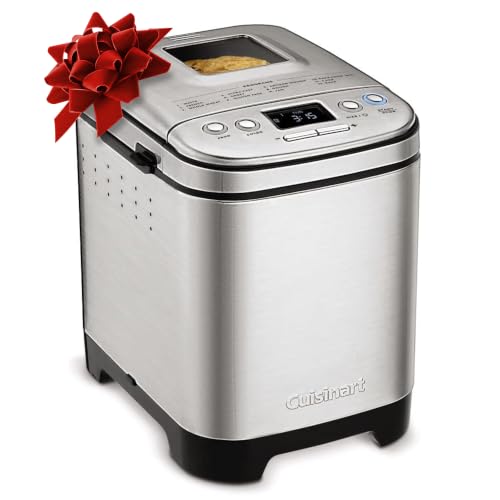
- Cuisinart Compact Automatic Bread Maker, CBK-110 — the compact machine that still bakes up to 2 Lb; check the latest price on Amazon
- Zojirushi Home Bakery Maestro BB-SSC10WZ — premium machine, size not stated in its listing, covered prose-only below
Read the full guide ↓
The search for the best compact bread machines starts with a frustration every apartment baker knows: most bread machines are built like small microwave ovens, and most kitchen counters are not. A standard machine that bakes a 2-pound loaf needs a deep footprint, clearance above for its lid, and storage space when it is not working — three things a small kitchen rarely has at once. Compact machines solve this by shrinking the loaf, shrinking the body, or both, and the best of them give up surprisingly little in bread quality. This guide sorts the verified pool by the evidence in the listings themselves: loaf sizes and format words that are actually stated, not assumed. If you are still deciding whether a machine belongs in your kitchen at all, our overview of Best Home Bread Machines covers the full-size landscape, while this page stays loyal to the small end of it.
Compact is not one thing, and the distinction matters before any model names. Some bakers want the smallest possible loaf — a 1-pound machine that turns out a fresh small loaf every couple of days for one or two people, with almost no stale bread waste. Others want a full-size loaf from a body that is merely less bulky, because their household eats sandwiches daily but their counter is shallow. The two linked picks in this guide answer those two different wishes, and the prose-only reviews explain what the larger machines offer if you decide counter space is worth spending after all.
Key Takeaways
- Only two verified listings state compact evidence in their titles: the Zojirushi Mini, a true 1-pound mini machine, and the Cuisinart Compact, which pairs a compact format with loaves up to 2 pounds.
- A 1-pound loaf suits one or two people who bake often and hate waste; a compact 2-pound machine suits families in small kitchens.
- Full-size machines in this pool — the two Virtuoso Plus models and the Home Bakery Supreme — are reviewed prose-only because their listings state 2-pound-class baking or no compact format.
- Delay timers matter more in small kitchens, not less: waking to a finished loaf means the machine can work overnight and be put away by breakfast.
- Measure your counter depth and the clearance under your cabinets before choosing; a compact footprint with a tall lid can still fail the fit test.
- Smaller loaves bake faster and fresher — the compact trade is capacity for freshness, and for many households that trade is a win.
In this guide
Quick Picks
| Pick | Badge | Size evidence in listing | Best for |
|---|---|---|---|
| Zojirushi Virtuoso Plus BB-PPC20BA | Best Premium Performer | No loaf size stated; full-featured flagship format | Bakers who decide space is worth it |
| Zojirushi Virtuoso Plus BB-PDC20BA | Best for Big Loaves | 2 Lb loaves stated | Families eating a full loaf at a time |
| Zojirushi Home Bakery Supreme | Best Classic All-Rounder | No size stated; cake, jam, dough settings | Varied baking beyond sandwich bread |
| Zojirushi Home Bakery Mini, 1 Lb | Best True Compact Pick | Mini format, 1 Lb loaves stated | Singles and couples, tiny counters |
| Cuisinart Compact CBK-110 | Best Compact Family Pick | Compact name; 1, 1.5 and 2 Lb sizes stated | Small kitchens feeding more people |
| Zojirushi Home Bakery Maestro BB-SSC10WZ | Best Premium Wildcard | No size stated in listing | Premium seekers who verify dimensions first |
How These Picks Were Chosen
Every machine here comes from a verified pool checked against Amazon listing data on 2026-11-20. For a compact keyword, the link test was evidence-based and deliberately narrow: the listing title had to state a mini or compact format, or a small loaf size. The Zojirushi Mini states both a mini format and 1-pound loaves. The Cuisinart states the word Compact in its name and lists three loaf sizes up to 2 pounds, which makes it the rare machine that is compact in body while remaining flexible in output. Those two are linked. The Virtuoso Plus BB-PDC20BA states 2-pound loaves with no compact claim, so it is prose-only despite its quality. The BB-PPC20BA, the Home Bakery Supreme, and the Maestro state no loaf size or format in their titles at all; we do not guess dimensions a listing does not give, so they are prose-only too, reviewed honestly on the features their listings do state.
Within that framework we compared stated programs, timers, loaf and crust options, and special modes such as gluten-free, whole-wheat, quick-bake, dough, jam, and cake settings. We invented nothing: if a specification is absent from the listing, it is absent from the review, and the mini spec boxes below contain only what the verified titles support. This is research-led guidance, not a hands-on test report, and prices are never printed — linked picks say check the latest price on Amazon, and prose-only picks are placed by tier in words. Readers weighing the wider category can compare this compact shortlist against Best Home Bread Making Machines for the general home-baking picture.
The 6 Best Compact Bread Machines and the Full-Size Alternatives
Read the heading carefully: two of these six are verified compact machines, and four are the full-size or unspecified alternatives that surround them in the market. Each review gives strengths, trade-offs, only the specifications its listing states, and a clear verdict.
Zojirushi Home Bakery Virtuoso Plus BB-PPC20BA
Badge: Best Premium Performer
Strengths
- The flagship Virtuoso Plus format carries the brand’s most complete program set.
- The listing states a PFAS-free positioning, which matters to coating-conscious buyers.
- Zojirushi’s dual-heater style baking is the benchmark for even crust colour in this class.
Trade-offs
- No compact format or small loaf size is stated, so it is prose-only in this guide.
- A flagship machine asks flagship counter space and a flagship budget tier.
- Its capability is more than a one-loaf-a-week baker will ever use.
Mini spec box: Model BB-PPC20BA; line: Home Bakery Virtuoso Plus; PFAS free (as stated); loaf size not stated in the verified title.
The Virtuoso Plus is the machine bread-machine forums measure everything else against, and it appears in this guide as the honest counterweight: this is what you give up compactness for. Even baking, a deep program library, and a build that feels like a small appliance built by people who also make commercial equipment. If your kitchen can house it and your household eats bread daily, the case writes itself.
Its limitation in a compact guide is definitional. Nothing in its verified listing claims a small footprint or a small loaf, and flagship machines in this line are substantial objects that live on the counter permanently. That permanence is fine in a big kitchen and impossible in a small one. It is reviewed here, fully and fairly, so that readers tempted by quality alone can see the trade clearly: premium results, premium space. Buyers who feel that pull but cannot spare the room should look at the Maestro entry below and at the two linked compacts, and should also read Best Features Of Bread Making Machines to see which flagship features actually matter day to day.
Best for: dedicated bakers with counter space who want the flagship experience / Not suited for: anyone whose primary constraint is space
Zojirushi Virtuoso Plus BB-PDC20BA, 2 Lb
Badge: Best for Big Loaves
Strengths
- Full 2-pound loaves stated in the listing — proper family sandwich capacity.
- Gluten-free and whole-wheat programs are stated, not implied.
- Dual heaters and a 13-hour timer are stated, supporting even bakes and overnight scheduling.
Trade-offs
- A stated 2-pound format is the opposite of the compact brief; prose-only here.
- Big loaves mean big leftovers for small households, and stale bread is wasted money.
- The machine’s footprint follows its loaf size.
Mini spec box: Model BB-PDC20BA; loaf size 2 Lb; dual heaters; gluten-free and whole-wheat programs; 13-hour timer; colour: black.
Everything the compact shopper is trying to avoid, this machine does proudly — and for the right household, proudly is correct. A 2-pound loaf feeds a family’s sandwiches for days, the stated gluten-free and whole-wheat programs handle the two hardest doughs in home baking, and dual heaters address the pale-top problem that plagues lesser machines. The 13-hour timer turns it into an overnight worker.
The limitation is simply fit. If your household is two people, a 2-pound loaf is a stale-bread generator, and if your counter is shallow, this machine will live in a cupboard it barely fits and be used less every month. Compactness is not a compromise for small households; it is the correct specification. This Virtuoso is the wrong specification for them, however excellent it is for someone else.
Best for: families who bake big loaves several times a week / Not suited for: singles, couples, and small kitchens
Zojirushi Home Bakery Supreme
Badge: Best Classic All-Rounder
Strengths
- Cake, jam, and dough settings stated — a genuinely wider repertoire than bread alone.
- A 13-hour timer and quick-bake mode are stated for scheduling flexibility.
- A long-established model line with a deep pool of community recipes behind it.
Trade-offs
- No loaf size or compact format is stated in the verified title; prose-only here.
- Its classic control style lacks some newer convenience touches.
- Versatility you never use is just footprint you always store.
Mini spec box: Line: Home Bakery Supreme; settings stated: cake, jam, dough; 13-hour timer; quick-bake mode; loaf size not stated in the verified title.
The Supreme is the machine for the baker who looks at a bread maker and sees a small bakery: bread today, pizza dough on Friday, a jar of jam when the fruit is cheap, a cake when the oven is busy. That breadth is real and stated in its listing, and for a varied cook it justifies a permanent counter position more easily than a bread-only machine does.
For the compact shopper, though, the Supreme asks the same question as the Virtuoso models, with less evidence to answer it. Its verified title does not state its loaf size or call itself compact, and this guide does not fill gaps with assumptions. If your heart is set on its repertoire, measure your space against the machine’s listed dimensions on its product page before deciding — and if the numbers fail, the linked Cuisinart below covers a surprising amount of the same ground in a compact body.
Best for: varied bakers who will use dough, jam, and cake modes weekly / Not suited for: space-first shoppers who need verified compact evidence

Zojirushi Home Bakery Mini Breadmaker, 1 Lb
Badge: Best True Compact Pick
Strengths
- A genuine mini format baking 1-pound loaves, both stated in the listing.
- Quick-bake under two hours is stated — fresh bread on a weeknight timescale.
- Dough, jam, and cake settings plus a 13-hour delay timer, in the smallest body here.
Trade-offs
- One-pound loaves are small; a family will bake constantly and still run out.
- Slices are smaller than bakery-standard, which sandwich traditionalists notice.
- You pay a premium tier price for miniaturisation rather than capacity.
Mini spec box: Model BB-HAC10; loaf size 1 Lb; 13-hour delay timer; quick-bake under 2 hours; settings stated: dough, jam, cake; nonstick pan and kneader; colour: white.
This is the machine the compact keyword was invented for. The Mini bakes a 1-pound loaf — enough for a single person or a couple to eat fresh over a day or two — and in exchange it asks for a fraction of the counter and cupboard space of everything else in this guide. That exchange unlocks the best habit in home baking: baking little and often. A small loaf baked twice a week is fresher than a big loaf baked once, and freshness, not size, is what makes machine bread taste like a bakery instead of a compromise.
The supporting cast is stronger than the mini format suggests. A quick-bake mode stated at under two hours means a loaf started at five can be sliced at seven. The delay timer means the machine can work while you sleep and be washed and shelved before breakfast, which is how a small kitchen survives owning any appliance at all. Dough mode turns it into a pizza and roll factory whose output goes to your oven, and jam and cake settings cover the weekend projects. Its honest limitation is absolute capacity: this machine will never feed a crowd, and its small slices will not satisfy someone whose benchmark is a doorstop sandwich. Within its brief — one or two people, minimal space, maximum freshness — it is the clearest recommendation in this guide, and you can Check on Amazon for its current listing.
Best for: singles and couples in small kitchens who bake little and often / Not suited for: families, batch bakers, or big-sandwich households

Cuisinart Compact Automatic Bread Maker, CBK-110
Badge: Best Compact Family Pick
Strengths
- The listing names it Compact while still offering 1, 1.5, and 2-pound loaf sizes.
- Twelve programs and three crust shades are stated — real flexibility in a small body.
- A paddle-removal alert is stated, solving the hole-in-the-loaf annoyance thoughtfully.
Trade-offs
- A compact body baking 2-pound loaves still needs lid clearance and counter depth.
- Vertical loaf shapes slice differently from horizontal bakery-style loaves.
- It is compact relative to full-size machines, not mini like the Zojirushi above.
Mini spec box: Model CBK-110NAS; 12 programs; loaf sizes 1, 1.5, and 2 Lb; 3 crust shades; 13-hour delay start; paddle-removal alert.
The Cuisinart answers the other compact question: not “how small can a bread machine be?” but “how much bread machine can fit in a small kitchen?” Its stated design keeps the body compact while the loaf options run from a small 1-pounder to a full 2-pound family loaf, with three crust shades and twelve programs in between. For a household whose numbers change — two people on weekdays, five at weekends — that range is the whole argument. One machine, three loaf sizes, no second appliance.
Details in the listing suggest the designers understood daily use. The paddle-removal alert tells you when to pull the kneading paddle before baking, so the finished loaf does not carry the classic paddle hole and torn base. The 13-hour delay start supports the overnight routine. Its honest limitation is relative: compact is not tiny, and a 2-pound loaf still rises in a body that needs honest measuring before purchase — check your counter depth and the space above it. But as the family-capable end of compact, it has no real rival in this pool, and you can Check on Amazon to confirm the current configuration.
Best for: small kitchens feeding three or more, and households with changing numbers / Not suited for: the very smallest counters, or one-person bakers better served by the Mini
Zojirushi Home Bakery Maestro BB-SSC10WZ
Badge: Best Premium Wildcard
Strengths
- A premium-tier Zojirushi in the Home Bakery line, finished in premium white.
- The Maestro name sits in the brand’s quality-focused tier.
- A calmer, simpler proposition than the flagship Virtuoso models.
Trade-offs
- Its verified title states no loaf size and no compact format; prose-only here.
- Premium tier positioning without stated compact evidence asks a leap of faith.
- Buyers must verify dimensions on the listing before treating it as a small machine.
Mini spec box: Model BB-SSC10WZ; line: Home Bakery Maestro; colour: premium white; loaf size and programs not stated in the verified title.
The Maestro is this guide’s lesson in buying discipline. It may well be a delightful machine — its brand and tier suggest so — but its verified listing title tells us almost nothing: no loaf size, no programs, no format claim. A compact guide that linked it on vibes would be guessing with your money. So it sits prose-only, presented honestly as a premium wildcard.
If it tempts you, do the work its listing title leaves undone: open the product page, find the stated loaf capacity and the machine’s dimensions, and measure both against your kitchen and your household’s appetite. If the numbers say small, it becomes a legitimate contender; if they say standard, it belongs in a general guide like Best Inexpensive Bread Machines comparisons of value rather than here. Either way, the two linked picks above need no such homework — their compact evidence is printed in their names and sizes.
Best for: premium-brand loyalists willing to verify dimensions before buying / Not suited for: anyone who wants compact evidence stated up front
Comparison Table
| Pick | Compact evidence | Loaf sizes stated | Timer stated | Standout trait | Listing |
|---|---|---|---|---|---|
| Zojirushi Virtuoso Plus BB-PPC20BA | None stated | Not stated | Not stated | Flagship program set, PFAS-free positioning | Prose-only in this guide |
| Zojirushi Virtuoso Plus BB-PDC20BA | None stated | 2 Lb | 13-hour | Dual heaters, gluten-free and whole-wheat programs | Prose-only in this guide |
| Zojirushi Home Bakery Supreme | None stated | Not stated | 13-hour | Cake, jam, and dough settings | Prose-only in this guide |
| Zojirushi Home Bakery Mini | Mini format stated | 1 Lb | 13-hour delay | Quick-bake under 2 hours | Check on Amazon |
| Cuisinart Compact CBK-110 | Compact in the model name | 1, 1.5, 2 Lb | 13-hour delay | 12 programs, paddle-removal alert | Check on Amazon |
| Zojirushi Home Bakery Maestro | None stated | Not stated | Not stated | Premium white finish | Prose-only in this guide |
How to Choose a Compact Bread Machine
Begin with the loaf, not the machine. Count the bread your household actually eats in two days. One or two people eating toast and a sandwich a day finish roughly a pound of bread in that window, which makes a 1-pound machine a freshness engine rather than a limitation. A family of four eats a 2-pound loaf in the same window, and for them a compact machine must mean a compact body around a full-size loaf — the Cuisinart’s brief. Choosing the loaf size first prevents the two classic errors: the mini bought by a family, which runs constantly and still disappoints, and the full-size machine bought by a couple, which produces a weekly monument to stale bread.
Measure second, and measure the right things. Counter depth decides whether the machine can sit out; the vertical clearance under wall cabinets decides whether its lid can open where it sits; cupboard dimensions decide whether it can be stored if it cannot sit out. A compact footprint with a tall lid still fails a low cabinet, and a machine that must be dragged from a cupboard twice a week will be used half as often as one that lives on the counter. Third, value the timer. In a small kitchen the delay timer is a space feature disguised as a convenience: load the machine at night, and by morning the loaf is done, the machine is washed, and the counter is clear for the day. Readers comparing the broader feature set should also see Best Custom Bread Machines, where scheduling and program control get a full treatment.
Finally, weigh programs against your real repertoire. Dough mode earns its place if you make pizza or rolls; gluten-free and whole-wheat programs matter if those are your weekly loaves; jam and cake are pleasures you should count honestly — delightful twice a year is still only twice a year. The right compact machine is the smallest one whose stated programs cover your actual week.
One more consideration separates satisfied compact owners from disappointed ones: be honest about whether you want a machine at all, or a loaf shape. Some shoppers say compact when they mean they dislike the tall, square loaves of vertical pans and want a horizontal, bakery-shaped loaf in a modest body. That is a shape preference, not a size preference, and it leads to a different shortlist. This guide serves the size preference — stated loaf sizes and formats — and if yours turns out to be about shape, read the detailed reviews with that lens and favour the machine whose pan proportions suit your sandwiches, even at the cost of a little counter depth.
How to Use, Clean, and Troubleshoot a Compact Bread Machine
Small machines reward precise habits. Add ingredients in the order your recipe and manual agree on — typically liquids first, then flour as a blanket, with yeast kept dry on top and away from salt until the cycle starts. In a 1-pound pan, accuracy matters more than in a big one: a small excess of flour is a larger percentage of the whole, so weigh flour if you can, or spoon and level it rather than scooping from the bag. Use the delay timer with confidence for plain loaves, but avoid delaying doughs rich in fresh milk or eggs for many hours at warm room temperatures.
During the first knead, peek once. The dough should form a smooth ball that cleans the pan walls; a shaggy, wet mass needs a spoonful of flour, and a dry, cracking ball needs a spoonful of water. That thirty-second check, five minutes in, rescues more small loaves than any other habit. When the loaf finishes, remove it promptly, shake it from the pan, and cool it on a rack before slicing — cutting a steaming loaf gums the crumb no matter how good the machine is. Cleaning is gentle work: the nonstick pan and kneader in these machines want a soak and a soft cloth, never a scouring pad, and the crumb tray area and lid vents want a brush-out so old crumbs do not bake on and smoke.
Troubleshooting, in the pattern that solves most small-machine problems. Problem: the loaf rises, then collapses → too much liquid or yeast for a small pan, or the lid was opened late in the cycle; reduce the liquid slightly and keep the lid shut after kneading. Problem: a dense, short loaf → old yeast, too little liquid, or the wrong program for a heavy whole-grain flour; check yeast freshness and use the stated whole-wheat style program where one exists. Problem: the paddle is baked into the loaf → use the paddle-removal alert where your machine offers one, or hook the paddle out with the tool provided before the loaf fully sets, and lightly oil the paddle shaft before loading.
Small Loaves, Fresher Bread: The Real Case for Compact
The deepest argument for a compact machine is not space at all; it is the arithmetic of freshness. Bread is at its best for about a day, good for two, and toast-only after that. A household that bakes a 2-pound loaf on Monday eats great bread on Monday, acceptable bread on Tuesday, and toast from Wednesday on — or throws the end away. The same household baking 1-pound loaves on Monday and Wednesday eats great bread twice as often and wastes almost nothing. Compact machines align the batch size with the freshness window, and that alignment, repeated weekly, is worth more than any single program on any machine in this guide.
There is a second, quieter benefit: experimentation becomes cheap. A failed 1-pound experiment — too much rosemary, a new flour blend, a questionable amount of cheese — costs a handful of ingredients and an hour, not a family-size loaf nobody wants to finish. Compact bakers iterate faster, learn their machine’s moods sooner, and end up better bakers than owners of big machines who cannot afford to play. If you are new to machine baking entirely, the compact route is not the beginner’s compromise; it is the beginner’s advantage. Our notes on Best Kick Ass Bread Machines cover the performance-first view for when the hobby takes hold.
A Week of Baking Small: What Compact Ownership Actually Looks Like
Specifications tell you what a machine can do; a week tells you what it will do. Picture the Mini on a narrow counter in a two-person flat. Monday evening, five minutes of loading — water, flour, salt, a little honey, yeast — and the delay timer is set. Tuesday begins with the smell of a finished loaf and a machine that gets a quick wipe and goes back to its corner while the counter hosts coffee and laptops. The loaf covers Tuesday’s toast and sandwiches and Wednesday’s breakfast, and by Wednesday evening it is gone, which is precisely the point: nothing went stale, nothing was thrown away.
Wednesday is dough night. The machine kneads and proofs a pizza dough while its owners do nothing more athletic than choose toppings; the oven, not the little pan, decides the pizza’s size, so a compact machine feeds guests without owning a compact appetite. Friday brings the quick-bake mode into play — a loaf started after work, sliced with dinner — and the weekend leaves room for a jam or cake experiment, the kind of small project that a big machine’s batch size would turn into a commitment. Across the week the machine has baked three times, washed up in minutes each time, and never once dominated the kitchen it lives in. That rhythm — frequent, small, unremarkable — is what compact ownership is for, and it is why owners of minis so often report baking more, not less, than they did with full-size machines.
The Cuisinart’s week looks different in one respect: scale swings. Its 1-pound setting handles the weekday rhythm exactly as above, but a weekend visit from family switches it to a full 2-pound loaf without a second appliance or a bakery run. If your household’s size is stable, that flexibility is a luxury; if your household’s size changes with the calendar — students home, parents visiting, a partner travelling for work — it is the feature that justifies the machine. Choose between the two linked picks by asking which week is yours: the steady small week, or the week that changes size.
Crust, Crumb, and the Small Pan: Getting Bakery Results
New compact owners sometimes worry that a small pan means a lesser loaf. The physics actually runs the other way. A small loaf has a higher crust-to-crumb ratio, which is why mini loaves taste so satisfyingly chewy at the edges, and its centre is never far from the pan’s heat, so underbaked, gummy middles — the classic big-machine failure — are rare. The main variables stay in your hands: crust shade settings where a machine states them, as the Cuisinart does with its three shades, and the flour itself, since strong bread flour gives a small loaf the structure to rise tall in a short pan.
Three habits lift a compact loaf from good to bakery-adjacent. First, weigh your ingredients; in a small batch, a casual extra handful of flour is a large percentage error, and consistency is what lets you improve a recipe loaf by loaf. Second, respect the first knead check described in the how-to section — a smooth, supple ball at minute five predicts the whole bake. Third, cool the loaf fully on a rack before slicing, and store what is left cut-side down on the board or in a cloth bag rather than sealed plastic, which softens the crust you worked for. None of this is compact-specific, but all of it pays off faster in small loaves, because you bake more often and each lesson costs less.
Loaf Shape, Slice Size, and Storage: The Practical Details
Compact machines bake in small pans, and pan geometry follows you to the table. A 1-pound loaf is shorter in every dimension: slices are smaller, which suits toast, small sandwiches, and children’s lunches, and tests the patience of anyone building a tall club sandwich. Think of it as portion honesty — most people eat the slice the loaf gives them — and many small households find the smaller slice quietly improves the week’s eating rather than diminishing it. If your household’s signature meal is a generously stacked sandwich, that is a genuine argument for the compact machine that still bakes a 2-pound loaf, where slices approach bakery dimensions while the body stays relatively trim.
Storage deserves the same clear-eyed treatment. A compact machine that lives on the counter needs a home position where its lid opens fully and its cord reaches an outlet without crossing the sink or the hob — heat and water are both unkind to appliances and to the people using them. If it lives in a cupboard, lift it in and out a few times before committing; a machine that is light enough to move without thought gets moved, and one that requires a grunt gets left behind on exactly the tired evenings when fresh bread would help most. Keep the pan, paddle, and measuring tools inside the machine or in the same cupboard, because a bread machine separated from its paddle is a sculpture.
Finally, think about noise and timing in a small home. Kneading is the loud phase — a rhythmic thumping that carries through thin walls — and in a studio or a small flat, the delay timer’s overnight run should be scheduled so the knead happens before sleep or after waking, not at the lightest hour of the night. Most owners solve this in a day by shifting the start time; it is a small thing, but small homes amplify small things, and a compact machine chosen and scheduled with its actual home in mind is the one still baking happily a year later.
Common Buying Mistakes
The first mistake is buying compact as a vague idea rather than a stated specification. If the listing does not state a loaf size or a compact format, you are guessing — as four of the six machines in this very guide demonstrate. The second is measuring only the footprint and forgetting the lid: bread machines open upward, and wall cabinets are unforgiving. The third is sizing for guests: the machine should fit your household’s ordinary week, and visitors can eat bakery bread twice a year. The fourth is ignoring the timer in a small kitchen, where overnight baking is what makes ownership practical at all.
Fifth, expecting a mini machine to slice like a bakery loaf. Small loaves make small slices; if your household’s sandwiches are architecture, choose the compact 2-pound route instead. Sixth, neglecting the paddle question — a machine with a removal alert or a collapsible paddle saves every loaf from the torn base that makes new owners think they did something wrong. Seventh, storing the machine somewhere so awkward that baking requires a furniture rearrangement. In a small kitchen, the best machine is the one that is easy to reach on a tired Tuesday.
Final Recommendation
For one or two people, the choice is the Zojirushi Home Bakery Mini: a true 1-pound mini machine with a quick-bake mode, a proper delay timer, and dough, jam, and cake settings in the smallest verified package here. It is the compact brief fulfilled. For a small kitchen feeding a family, choose the Cuisinart Compact, whose stated loaf range up to 2 pounds and twelve programs make it the flexible compact — one machine that scales from a small loaf to a full one. The four prose-only machines are not failures; the Virtuoso models and the Supreme are what you buy when space stops being the constraint, and the Maestro is a premium option to verify carefully. Match the machine to your counter and your appetite, in that order, and compact baking will feel like an upgrade rather than a compromise.
If you are torn between the two linked picks, decide with one question: does your household’s bread appetite ever double without warning? If it does not — if your table is a stable one or two — take the Mini and enjoy the freshest routine in home baking. If it does, take the Cuisinart and let its loaf sizes absorb the variation. Either way you are buying a stated specification rather than a hope, which is the entire discipline this guide has tried to model from its first paragraph to this one.
Frequently Asked Questions
What loaf size counts as compact in a bread machine?
A 1-pound loaf is the classic compact size, and machines that name themselves mini or compact in the listing give you evidence rather than a guess. A compact-bodied machine that also bakes larger loaves, like the Cuisinart here with sizes up to 2 pounds, serves households that need small-kitchen dimensions without small output.
Is a 1-pound loaf big enough?
For one or two people, yes — it covers a day or two of toast and sandwiches and gets eaten while it is still genuinely fresh. For a family, no: you would bake constantly and still run short. Match the loaf to the household, and remember that baking twice a week in a mini is easy precisely because the machine is small.
Do compact bread machines bake as well as full-size ones?
The best ones do, for their loaf size. Small pans heat evenly and small loaves bake through reliably. What you give up is not quality but capacity and, on some models, a few flagship programs. The reviews above note exactly which features each verified listing states, so you can see what a given compact keeps and what it skips.
Can a compact bread machine make dough for pizza and rolls?
Yes, where a dough setting is stated — the Zojirushi Mini lists dough among its settings. Dough mode is arguably the best use of any small machine: the machine kneads and proofs, your oven does the baking, and the output is not limited by the pan’s loaf shape at all.
Where should a compact bread machine live in a small kitchen?
On the counter if you bake weekly, because a machine that lives out gets used. Check the lid clearance under your cabinets before settling its spot. If it must be stored, choose a cupboard at waist height — a small machine dragged from a high shelf or a deep corner will quietly stop being used.
Why are some well-known machines in this guide not linked?
Because their verified listings do not state a compact format or a small loaf size, and this guide links only picks whose own listings support the keyword’s core attribute. They are reviewed in full as prose-only alternatives so the comparison stays honest and complete.
How long does a compact bread machine take to bake a loaf?
A standard cycle on most machines runs several hours including kneading, rising, and baking, and the listings here state the exceptions that matter: the Zojirushi Mini’s quick-bake finishes in under two hours, for days when several hours is too long. Delay timers of up to 13 hours are stated on both linked picks, which means the working time is rarely your time — load the machine, and let the schedule absorb the hours.
What should I measure before ordering?
Three numbers: your counter depth where the machine will sit, the vertical clearance from counter to the underside of your wall cabinets for the open lid, and the inside dimensions of the cupboard if you plan to store it. Compare all three with the machine’s stated dimensions on its listing, and leave a little room for the cord and for lifting the pan out.