Disclosure: topratedkitchenware.com is reader-supported. When you buy through links on our site, we may earn an affiliate commission from Amazon and other retailers, at no extra cost to you.
Where to buy
The six verified machines below are this guide’s shortlist of the best home bread machines — models whose listings suit real household baking, from a 1-pound mini for a couple to full 2-pound family machines with programs for everything from sourdough to jam. Each pick is linked, and each review judges the machine the way a home baker lives with it: on the counter, in the weekly routine, and at the table.
- KITCHENARM 29-in-1 Smart Bread Machine — the everything machine for home bakers; check the latest price on Amazon
- Breville Custom Loaf Bread Maker, BBM800XL — the premium home pick with a collapsible paddle; check the latest price on Amazon
- Zojirushi Home Bakery Virtuoso Plus, BB-PPC20BA — the flagship home bakery; check the latest price on Amazon
- Zojirushi Virtuoso Plus 2 Lb, BB-PDC20BA — family loaves with gluten-free and whole-wheat programs; check the latest price on Amazon
- Zojirushi Home Bakery Supreme — the classic all-rounder for bread, dough, jam, and cake; check the latest price on Amazon
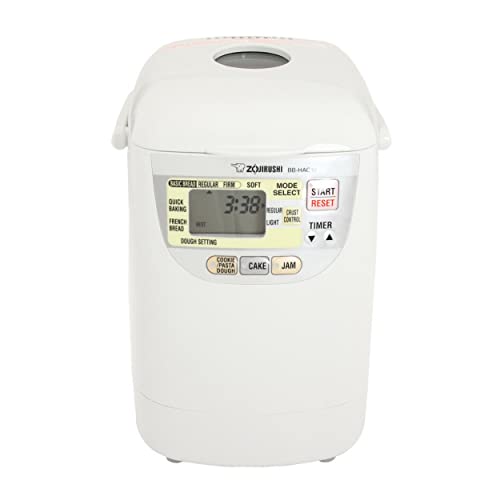
- Zojirushi Home Bakery Mini, 1 Lb — the small-home favourite; check the latest price on Amazon
Read the full guide ↓
Choosing among the best home bread machines is really choosing a new household routine. A bread machine is not a gadget you use twice and shelve; at its best it becomes part of how a home eats — the overnight loaf that makes weekday breakfasts feel cared for, the dough cycle that turns Friday into pizza night, the small fresh loaf that makes a simple soup supper feel complete. The six machines in this guide span the honest range of home baking: maximum-program all-rounders, premium flagships, the classic workhorse, and a mini that suits the smallest households. All are verified against their Amazon listings, and all are judged here on home criteria — how they fit a counter, a schedule, and an appetite — rather than on spec-sheet drama. If your home is short on space, our companion guide to Best Compact Bread Machines applies the same standards with a tape measure first.
What makes a bread machine a home machine, as opposed to a merely good one? Three things. It must be easy enough that the whole household can run it, because a machine only one person dares touch gets used half as much. It must fit the home’s rhythm, with a delay timer that turns night into baking time. And it must match the home’s appetite, loaf size for loaf size, so that bread is eaten fresh instead of aging into obligation. The reviews below weigh every pick against those three tests, plus the stated programs and hardware in each listing, so you can match a machine to the home you actually live in.
There is a fourth, quieter test: forgiveness. Home baking happens amid interruptions — a loaf loaded by a distracted parent, measured by a helpful child, started late, or sliced early. Machines differ in how gracefully they absorb ordinary human untidiness: a clear basic program that tolerates small measuring errors, a timer that forgives a late evening, a pan that releases a loaf even when it sat ten extra minutes. None of that appears in a specification list, yet it decides whether a household is still baking in month six. As you read the reviews, weigh the stated features against this forgiveness test too; the best home machine is the one that keeps producing good bread in a real, interruptible home.
Key Takeaways
- The KITCHENARM 29-in-1 is the widest-coverage home pick, with a homemade cycle, gluten-free setting, and three loaf sizes stated in its listing.
- The Breville Custom Loaf is the premium home choice, built around a collapsible paddle, custom crust settings, and an automatic dispenser.
- Zojirushi’s Virtuoso Plus models are the flagship home bakeries; the BB-PDC20BA states 2-pound loaves, dual heaters, and gluten-free and whole-wheat programs.
- The Home Bakery Supreme remains the classic household all-rounder, with bread, dough, jam, and cake settings and a 13-hour timer stated.
- The Home Bakery Mini proves home baking scales down gracefully: 1-pound loaves, quick-bake under two hours, and a full delay timer.
- For home use, the delay timer and loaf-size fit matter more than raw program count; buy for your household’s week, not its holidays.
- Every machine here is judged on stated listing evidence only — no invented specifications, no printed prices.
- A machine the whole household can operate bakes roughly twice as much as a machine only one enthusiast dares touch.
- Forgiveness is the unlisted home feature: clear basics, a tolerant basic program, and a timer that absorbs a busy family’s timing.
- Start with two house recipes and a weekly rhythm; repertoire grows on its own once the habit holds.
In this guide
Quick Picks
| Pick | Badge | Home profile | Best for |
|---|---|---|---|
| KITCHENARM 29-in-1 Smart | Best for Homes That Want Everything | 29 programs, homemade cycle, 3 loaf sizes | Varied family baking |
| Breville Custom Loaf | Best Premium Home Pick | Collapsible paddle, custom crust, dispenser | Quality-first home bakers |
| Zojirushi Virtuoso Plus BB-PPC20BA | Best Flagship Home Bakery | Flagship format, PFAS-free positioning | Dedicated daily bakers |
| Zojirushi Virtuoso Plus BB-PDC20BA | Best for Family Loaves | 2 Lb loaves, dual heaters, GF and whole-wheat programs | Families with mixed diets |
| Zojirushi Home Bakery Supreme | Best Classic All-Rounder | Bread, dough, jam, cake; 13-hour timer | Households that bake beyond bread |
| Zojirushi Home Bakery Mini | Best for Small Homes | 1 Lb loaves, quick-bake, full settings set | Singles and couples |
How These Picks Were Chosen
All six machines come from a verified pool checked against Amazon listing data on 2026-11-20. Because this keyword is the general home category, every pool machine is a genuine home bread maker and all six are linked; the ranking instead reflects home fit. We weighed the attributes each listing states — loaf sizes, programs for the flours homes actually bake, delay timers, special modes such as dough, jam, cake, sourdough, and quick-bake, and hardware such as dispensers and paddle designs — and then asked the home questions: How many people does this feed? How much counter does it claim? How forgiving is it in a busy week? Specifications not stated in a listing are not claimed in its review, and the one listing that states very little — none here is silent, though the Virtuoso Plus BB-PPC20BA states fewer details than its sibling — is reviewed on exactly what it gives.
This is research-led guidance, not a hands-on test report, and prices are never printed because they move; each pick says check the latest price on Amazon instead. The result is a shortlist that spans the category honestly — from a 29-program maximalist to a 1-pound minimalist — so that the right machine for your home is a matter of matching, not of ranking envy. Readers who want to understand the feature vocabulary behind these reviews will find it unpacked in Best Features Of Bread Making Machines.
The 6 Best Home Bread Machines
KITCHENARM 29-in-1 Smart Bread Machine
Badge: Best for Homes That Want Everything
Strengths
- Twenty-nine stated programs cover more home baking territory than any rival here.
- A homemade cycle and a gluten-free setting are stated — depth plus dietary range.
- Three loaf sizes, from 1 to 2 pounds, let one machine follow the household’s week.
Trade-offs
- Program abundance means a learning curve before the machine feels simple.
- No automatic dispenser is stated, so add-ins need your timing.
- A stainless, full-featured body is a permanent counter resident, not a cupboard guest.
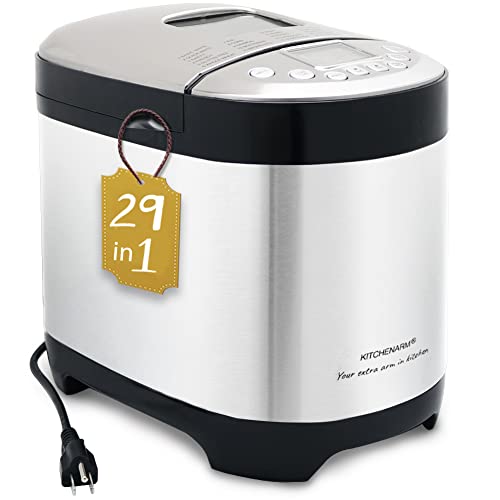
Mini spec box: 29-in-1 programs; homemade cycle; gluten-free setting; loaf sizes 2 Lb, 1.5 Lb, 1 Lb; stainless steel body; recipes included; whole wheat capability stated.
A home machine earns its counter by being reached for constantly, and the KITCHENARM’s stated design is a reach-for-it machine. The twenty-nine programs are best understood as a map of a family’s year: everyday whites and wholemeals, the gluten-free loaf for the relative who visits monthly and the household member who needs it weekly, sweet and enriched loaves for weekends, and the homemade cycle for the day the family’s favourite recipe outgrows every preset. Including recipes in the box is a small stated detail with outsized home value — the first month of baking runs on provided recipes while confidence builds.
The three loaf sizes are the feature that will matter most by month two. Homes do not eat at a constant rate: school weeks devour bread, holiday weeks nibble. A machine that scales its loaf to the week produces less stale bread and fewer emergency bakery runs than a fixed-size rival. Its honest limitation is the flip side of abundance — twenty-nine programs is a library most homes will only ever borrow five from, and the first weeks involve some menu wandering. Treat that as orientation rather than flaw, settle into your five, and the machine becomes simple by familiarity. You can Check on Amazon for the full program list and current listing.
Best for: families whose baking varies across loaves, diets, and seasons / Not suited for: minimalists who want one button and no library

Breville Custom Loaf Bread Maker, BBM800XL
Badge: Best Premium Home Pick
Strengths
- The collapsible paddle is stated — loaves emerge whole, without the torn base.
- Custom crust settings and an automatic fruit and nut dispenser are stated.
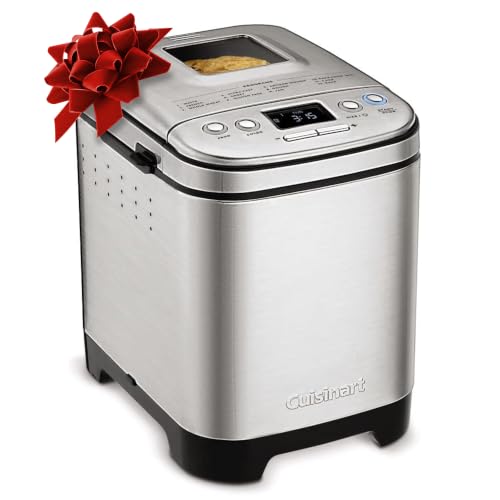
- Brushed stainless steel construction suits a machine that lives on display.
Trade-offs
- A premium-tier machine, in price positioning and in counter presence.
- The moving paddle mechanism asks careful cleaning around its fold.
- Its control depth exceeds a one-loaf household’s needs entirely.
Mini spec box: Model BBM800XL; collapsible kneading paddle; custom crust settings; automatic fruit and nut dispenser; brushed stainless steel.
The Breville is the home pick for the baker who notices details. The collapsible paddle sounds like a footnote until you have served a year of loaves with torn bases; then a loaf that comes out of the pan whole, sliceable from end to end, feels like the category growing up. The automatic dispenser performs the same quiet service for fruit and nut loaves, adding ingredients at the moment the dough can hold them, so the machine copes alone while the household gets on with its evening. Custom crust settings finish the thought: the finish of the loaf becomes a choice rather than an outcome.
At home, this machine’s real argument is permanence. A brushed stainless body is designed to sit out, and a machine that sits out gets used — for the weekday loaf, the weekend experiment, the dough for tonight’s pizzas. Its honest limitation is that everything about it is flagship: tier, size, and capability. A small household baking one standard loaf will use a fraction of it and store all of it. Buy it when your baking life is varied and frequent, and it will repay you in the currency home bakers actually spend: loaves that come out right, whole, and on time. You can Check on Amazon for its current listing.
Best for: quality-first home bakers who bake varied loaves every week / Not suited for: small households with a single standard loaf
Zojirushi Home Bakery Virtuoso Plus, BB-PPC20BA
Badge: Best Flagship Home Bakery
Strengths
- The Virtuoso Plus flagship format carries the maker’s most complete baking system.
- A PFAS-free positioning is stated, which coating-conscious homes will value.
- The Home Bakery line’s even-baking reputation is the category’s benchmark.
Trade-offs
- Its verified title states fewer specifics — no loaf size or program list — than its sibling model.
- Flagship tier and flagship footprint: this is a counter commitment.
- Capability this deep is wasted on occasional baking.
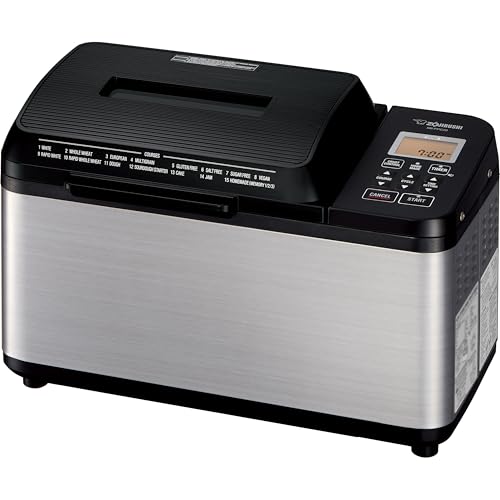
Mini spec box: Model BB-PPC20BA; line: Home Bakery Virtuoso Plus; PFAS free (as stated); loaf size and programs not enumerated in the verified title.
Some homes bake bread the way other homes make coffee: daily, ritually, and with strong opinions. The Virtuoso Plus is built for those homes. As the flagship of the Home Bakery line, it represents the maker’s most complete answer to the home baking problem — the machine you buy when bread is a staple your household produces rather than purchases, and when evenness of bake, loaf after loaf, is the quality you are actually shopping for.
Two honest notes frame it. First, its verified title is sparing with specifics, stating the model and its PFAS-free positioning without enumerating loaf size or programs; a careful buyer should read the full listing to confirm the configuration matches their household before committing, as with any flagship. Second, a flagship only pays in a home that bakes constantly — in a twice-a-month kitchen it is a magnificent underused appliance. In the right home, though, it is the anchor of this shortlist: the machine the other reviews are implicitly compared against. You can Check on Amazon to read its complete specification.
Best for: daily-baking homes that want the flagship standard / Not suited for: occasional bakers, or buyers who skip reading full listings

Zojirushi Virtuoso Plus 2 Lb, BB-PDC20BA
Badge: Best for Family Loaves
Strengths
- Full 2-pound loaves are stated — proper output for a family’s sandwiches and toast.
- Gluten-free and whole-wheat programs are stated, covering the two hardest home doughs.
- Dual heaters and a 13-hour timer are stated: even colour, overnight routine.
Trade-offs
- A 2-pound format overproduces for one or two people, and stale bread is waste.
- The machine’s footprint follows its loaf size; small counters should measure twice.
- Premium tier positioning, as expected of the Virtuoso line.
Mini spec box: Model BB-PDC20BA; loaf size 2 Lb; dual heaters; gluten-free and whole-wheat programs; 13-hour timer; colour: black.
If the BB-PPC20BA is the flagship as an idea, this sibling is the flagship with its homework shown: the listing states the 2-pound capacity, the dual heaters, the two hardest-working specialty programs, and the 13-hour timer. For a family home, that is nearly the whole shopping list in one title. Dual heaters answer the pale-top complaint that haunts big loaves. The gluten-free and whole-wheat programs answer the mixed-diet reality of modern households, where one loaf must be safe for one member and hearty for another. The timer turns the whole capability into breakfast.
Its limitation is arithmetic, not quality: two pounds of bread is a lot of bread. In a home of four or five, it vanishes in two days and the machine is a hero. In a home of two, it ages on the counter and the same machine becomes a waste generator with excellent crust. Home bakers should size the machine to the household’s honest appetite — the Mini at the end of this guide exists precisely for the smaller answer — and family homes can buy this Virtuoso knowing its stated specification matches their table. You can Check on Amazon for its current listing.
Best for: families of three or more, especially with gluten-free or whole-wheat needs / Not suited for: singles and couples
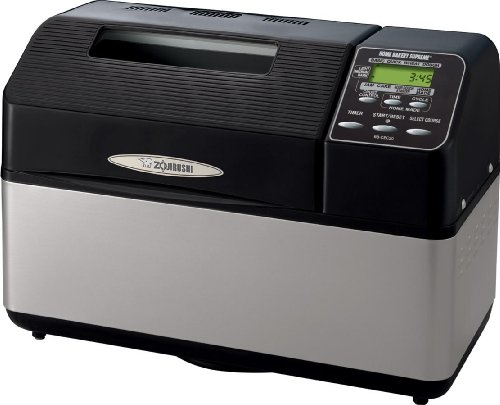
Zojirushi Home Bakery Supreme
Badge: Best Classic All-Rounder
Strengths
- Cake, jam, and dough settings are stated — a home repertoire beyond bread alone.
- A 13-hour timer and quick-bake mode are stated for real scheduling flexibility.
- A long-established model with a deep community recipe culture behind it.
Trade-offs
- Its verified title does not state a loaf size, so confirm capacity on the listing.
- Newer convenience ideas, like dispensers and paddle solutions, are not stated.
- Its classic control style is functional rather than flashy.
Mini spec box: Line: Home Bakery Supreme; settings stated: cake, jam, dough; 13-hour timer; quick-bake mode; loaf size not stated in the verified title.
The Supreme is the machine that taught a generation of homes what a bread maker could be, and its stated repertoire explains its staying power. Bread is the headline, but the dough setting is the weekly workhorse — pizza bases, rolls, and flatbreads that finish in your oven — and the jam and cake settings turn seasonal fruit and weekend baking into machine work. A home that bakes in this wider sense gets more value from the Supreme’s breadth than from a bread-only rival with a longer program count.
Its classic status cuts both ways, honestly. The control style belongs to an earlier generation, and the listing does not state the newer conveniences — no dispenser, no paddle remedy — that the Breville and others in this guide advertise. Its title also leaves loaf size unstated, so verify it against your household before buying. What it offers instead is maturity: proven cycles and a recipe culture deep enough that almost any loaf you dream up has a Supreme-tested version waiting. For many homes, that is the most practical form of excellence. You can Check on Amazon for its current listing and stated capacity.
Best for: households that bake bread, dough, jam, and cake across the week / Not suited for: buyers who want the newest convenience hardware

Zojirushi Home Bakery Mini, 1 Lb
Badge: Best for Small Homes
Strengths
- A true mini format baking 1-pound loaves, stated in the listing.
- Quick-bake under two hours and a 13-hour delay timer are stated.
- Dough, jam, and cake settings give the smallest machine here a full repertoire.
Trade-offs
- One-pound loaves cannot feed a family, however fresh and frequent.
- Small slices will not satisfy big-sandwich households.
- Premium tier positioning for a small machine is about quality, not capacity.
Mini spec box: Model BB-HAC10; loaf size 1 Lb; 13-hour delay timer; quick-bake under 2 hours; settings stated: dough, jam, cake; nonstick pan and kneader; colour: white.
Every category needs its proof that smaller can be complete, and in home bread machines the Mini is that proof. It keeps the features that define home baking — the delay timer for overnight loaves, the quick-bake for impatient evenings, the dough mode for pizza Fridays, even jam and cake for weekends — and scales only the loaf, down to the pound that one or two people eat at peak freshness. A small home with this machine does not have a lesser baking life; it has a correctly sized one.
The freshness arithmetic deserves repeating because it is the Mini’s whole case: a pound baked twice a week beats two pounds baked once, because bread’s best days are its first two. The Mini’s owner eats day-one bread twice as often as the big-loaf owner and throws away almost nothing. Its honest limitation is absolute — it will never cater a crowd, and growing households will outgrow it — but for the home it fits, it is not the compromise pick in this guide. It is the correct one, and its fuller portrait lives in our compact guide linked earlier. You can Check on Amazon for its current listing.
Best for: singles, couples, and small homes that bake little and often / Not suited for: families or batch bakers
Comparison Table
| Pick | Loaf sizes stated | Programs and modes stated | Timer stated | Home profile | Listing |
|---|---|---|---|---|---|
| KITCHENARM 29-in-1 | 1, 1.5, 2 Lb | 29 programs, homemade cycle, gluten-free | Not stated | Maximum variety for varied homes | Check on Amazon |
| Breville Custom Loaf | Not stated | Custom crust settings | Not stated | Premium detail: collapsible paddle, dispenser | Check on Amazon |
| Zojirushi Virtuoso Plus BB-PPC20BA | Not stated | Flagship line; PFAS free stated | Not stated | Daily-baking flagship | Check on Amazon |
| Zojirushi Virtuoso Plus BB-PDC20BA | 2 Lb | Gluten-free, whole-wheat; dual heaters | 13-hour | Family loaves, mixed diets | Check on Amazon |
| Zojirushi Home Bakery Supreme | Not stated | Cake, jam, dough; quick-bake | 13-hour | Classic all-rounder | Check on Amazon |
| Zojirushi Home Bakery Mini | 1 Lb | Dough, jam, cake; quick-bake | 13-hour delay | Small homes, fresh little loaves | Check on Amazon |
How to Choose a Bread Machine for Your Home
Start with the household, not the machine. Count the bread eaters, then count the bread: a home of two eating toast and sandwiches finishes about a pound in two days; a home of five finishes two pounds in the same window and asks for more on weekends. That arithmetic picks your loaf size, and loaf size is the decision you will live with at every single bake, long after program lists blur. Next, inventory your flours and diets. A home that bakes whole wheat weekly should insist on a stated whole-wheat program; a home with a gluten-free member should insist on a stated gluten-free program or setting, because adapted cycles disappoint exactly the person the loaf is for.
Then walk your week. When will the machine actually run? If mornings are chaos, the delay timer is your most important feature and its stated length matters. If evenings are your baking window, quick-bake modes and a dough setting for oven-finished breads matter more. If weekends are project time, jam, cake, sourdough, and homemade modes earn their place. Finally, place the machine in your mind’s kitchen: a resident of the counter, used constantly, or a cupboard appliance, used deliberately? Residents can be large and flagship; cupboard machines must be light enough to lift without resentment. The right home machine is the one that survives this walk-through with its stated specification intact. For the control-focused version of the same decision, see Best Custom Bread Machines.
How to Use, Clean, and Troubleshoot a Home Bread Machine
The home routine that works is boring in the best way. Keep the machine’s ingredients together — flour, yeast in the fridge, salt, and your two or three house recipes on a card inside the cupboard door — so that loading takes five unhurried minutes. Layer liquids first, flour as a blanket, yeast dry on top away from salt. Peek once during the first knead and correct the dough ball with a spoonful of water or flour; that single habit prevents most disappointing loaves. When the bake ends, remove the loaf promptly, cool it on a rack, and slice it only when it has cooled enough not to gum.
Cleaning is a rhythm, not an event. The pan and paddle soak while you eat; a soft cloth does the rest. Crumbs get brushed from the chamber weekly, before they bake into varnish, and the lid and vents get a wipe so steam escapes as designed. Store the paddle inside the pan and the pan inside the machine, and a home machine will never suffer the lost-part paralysis that idles so many appliances. If children bake — and they should, supervised — give them the measuring and the button-pressing; a machine the household shares is a machine the household maintains.
Troubleshooting, in the pattern that covers most home problems. Problem: loaves rise beautifully in summer and sulk in winter → your kitchen is an ingredient; use slightly warmer liquid in winter and let the delay timer finish the loaf as the morning kitchen warms. Problem: the loaf is perfect but the household is bored → the machine is fine and the repertoire is stale; rotate one new recipe a week from the machine’s stated modes, dough first, since pizza night cures most baking ruts. Problem: bread accumulates and goes stale → your loaf size has outgrown your household’s current appetite; drop a size where the machine allows it, slice and freeze surplus the day it is baked, and let the machine’s smaller settings carry quieter weeks.
The Home Baking Week: How a Machine Earns Its Counter
Picture the machine that justifies itself. Monday night it is loaded in five minutes and Tuesday starts with a finished loaf and a kitchen that smells like a bakery’s first hour. Wednesday the same loaf, still good, becomes toast and a bread-and-butter pudding’s base. Friday is dough night: the machine kneads and proofs while the family argues happily about toppings, and the oven does the theatre. Sunday is the experiment slot — a seeded loaf, a sweet loaf, jam from the fruit that needs using — because a machine that handles the staples earns the right to host the projects. Across that week the machine has touched breakfast, supper, a family ritual, and a small pleasure, and it has asked for perhaps twenty minutes of human attention in total.
That is the standard to buy against. A home bread machine is not competing with other bread machines; it is competing with the bakery run, the supermarket loaf, and the toaster’s boredom. The machines in this guide each propose a version of that week: the KITCHENARM with a program for every slot, the Breville with polish, the Zojirushi flagships with evenness, the Supreme with breadth, the Mini with freshness at small scale. Choose the version that resembles your household’s actual week, and the machine will stop being an appliance and become infrastructure — the quiet kind that a home runs on. Our making-focused companion, Best Home Bread Making Machines, looks at the same decision from the baker’s side of the counter.
Freshness, Waste, and the Quiet Economics of Home Loaves
Home baking’s deepest benefit is not romance; it is the alignment of production with appetite. A bakery loaf is baked for a stranger’s schedule and begins aging before you meet it. A home loaf is baked for your table, in your size, timed to your morning. The waste difference compounds quietly: the half-loaf that stales weekly in a big-loaf household is, across a year, a small mountain of bread that nobody enjoyed. Right-sized machines and right-sized settings — the multi-size flexibility stated on the KITCHENARM, the honest pound of the Mini — are waste-reduction features wearing ordinary clothes.
There is also the ingredient honesty that home bakers come to value: your loaf contains what you put in it, no more, and the recipe bends to the household — less salt for one member, seeds for another, the good flour for weekends. None of this requires the most expensive machine in the guide. It requires the machine whose size and stated programs match your table, used weekly. That is why this guide ranks fit above flagship status, and why its final recommendation is a matching exercise rather than a coronation.
From First Loaf to House Style: The Three-Month Arc
Month one is for the basics, and it should be unambitious on purpose. Bake the machine’s standard white and its wholemeal until both come out reliably, learning your kitchen’s water, your flour’s thirst, and the machine’s kneading sound when the dough is right. Most early disappointments live in this month and most are measurement, not machinery: flour scooped dense, yeast past its prime, a loaf sliced steaming and judged gummy before it had cooled. Keep notes on the recipe card itself. By the month’s end, a new home baker typically owns two dependable loaves, which is two more than they had.
Month two is for the features. The timer becomes the default for weekday loaves. Dough mode hosts its first pizza night. Crust shades get walked across identical recipes so the household can vote its preferences once, with evidence. This is also the month to test the machine against the household’s special cases — the gluten-free loaf for a visiting relative, the seeded loaf for the lunchbox — while the stakes are low and the bakery still exists as a fallback. Month three is for identity: the house loaf emerges, the recipe nobody bothers to look up anymore because everyone’s hands know it, and the machine settles from appliance into furniture of the family’s life. Guides can rank machines, but this arc is what ownership actually feels like, and every pick in this guide is capable of carrying a household through it — the differences are in emphasis, not in permission.
Sharing the Machine: Second Bakers, Children, and Guests
A home machine rarely has one user for long, and designing for the second baker is a mark of a good purchase. The partner who did not read the manual needs the basics to be findable: the everyday program, the size button, the start. Machines with legible surfaces and a small set of obvious controls get shared; machines whose basics hide behind the enthusiast’s custom menus get monopolised, and a monopolised machine bakes at half its household value. When you compare the picks here, imagine handing each to a tired family member at seven in the evening with the words “just make the usual” — the machines that survive that test are the home machines in the fullest sense.
Children deserve a deliberate word, because bread machines are among the safest ways to bring them into real cooking. The hot and sharp parts of baking are enclosed; the child’s parts — measuring, pouring, pressing the button, watching the dough through its stages, choosing tomorrow’s loaf — are genuine work with a genuine result. Households that give children the Friday dough ritual tend to keep it for years, and a machine bought partly as a teaching tool should be judged partly on that: clear controls, a forgiving basic program, and a size that lets small hands help carry the pan. Guests, finally, are the machine’s ambassadors: a loaf baked for visitors, timed to the meal, does more for a home’s reputation than any single dish, because fresh bread reads as care in every culture at the table.
Common Buying Mistakes
The first mistake is buying for the household you host twice a year instead of the one that eats breakfast daily; guests can eat bakery bread, but your Tuesdays cannot. The second is chasing program counts while ignoring loaf size, the one specification that touches every bake. The third is forgetting the timer: in a busy home, the delay timer is not a luxury feature but the mechanism that makes fresh bread compatible with sleep. The fourth is placing a flagship on a counter it overwhelms, or a heavy machine in a cupboard it makes miserable to reach — placement is a feature, and homes feel it daily.
Fifth, expecting the machine to rescue bad habits: unmeasured flour, ancient yeast, and a lid lifted six times per bake will defeat any model in this guide. Sixth, buying gluten-free hope instead of a stated gluten-free program when a household member actually needs it. Seventh, treating the first month as the verdict — every machine here has a learning curve of three or four loaves, and the homes that push through it are the ones still baking in year three.
Final Recommendation
For the widest range of homes, the first choice is the KITCHENARM 29-in-1: three loaf sizes, a homemade cycle, a gluten-free setting, and a library deep enough for a family’s whole year. Choose the Breville Custom Loaf if polish and whole loaves matter most, and the Zojirushi Virtuoso Plus line — the stated-specification BB-PDC20BA for families, the flagship BB-PPC20BA for daily bakers who will read its full listing — if even, benchmark baking is your priority. The Supreme remains the classic breadth pick, and the Mini is the right answer for small homes. Match size to appetite, programs to flours, and timer to mornings, and any of these six will earn its counter.
A final word on deciding between near-equals: if two machines both fit your home, choose the one whose everyday program you can imagine running half-asleep, because that is literally when you will run it. Home baking succeeds on rhythm, and rhythm favours the legible, the forgiving, and the correctly sized over the merely impressive. Buy the machine your household’s ordinary Tuesday would choose, and your Saturdays will take care of themselves.
Frequently Asked Questions
What size bread machine does a family need?
A household of three or more that eats bread daily should look at machines stating 2-pound loaves, or flexible machines stating several sizes up to 2 pounds. One or two people are better served by 1 to 1.5-pound baking, which keeps loaves fresh and waste near zero. When in doubt, choose the machine whose stated sizes bracket your appetite rather than exceed it.
Is a bread machine worth it for a home that buys good bakery bread?
It can be, for different reasons than savings: freshness timed to your morning, ingredient control, dough on demand for pizza and rolls, and loaves shaped to your household’s diets. If your bakery is excellent and your baking would be rare, the honest answer may be no — a home machine pays in use, and the guides here consistently favour the machine that will actually run weekly.
How long does a home bread machine take per loaf?
A standard cycle runs several hours, most of it unattended rising and baking. Quick-bake modes, stated on machines like the Mini and the Supreme here, finish in under two hours with a denser crumb. The delay timer changes the real answer: the hours happen overnight, and your active time per loaf is roughly the five minutes of loading.
Can one machine handle gluten-free and regular baking?
Yes, where a gluten-free program or setting is stated, as on the KITCHENARM and the Virtuoso Plus BB-PDC20BA in this guide. Clean the pan thoroughly between bakes if a household member’s need is medical rather than preferential, and consider dedicating a pan if cross-contact is a serious concern in your home.
What is dough mode, and why do home bakers love it?
Dough mode kneads and proofs without baking, so the dough finishes in your oven as pizza, rolls, focaccia, or shaped loaves a pan could never form. It is stated on machines like the Supreme and the Mini here, and for many homes it becomes the most-used setting of all, because it turns the machine into a tireless pair of hands.
Where should a bread machine live in the home?
On the counter if you bake weekly — a visible machine is a used machine. Check that the lid opens fully under your cabinets and that the cord reaches an outlet without crossing heat or water. If it must be stored, choose a waist-height cupboard; heavy flagships stored awkwardly are flagships retired early.
How do I keep home baking from becoming another chore?
Keep ingredients together, keep two house recipes you can load from memory, and let the timer do the scheduling. Bake the staples on rhythm — the same evenings each week — and reserve experiments for when you have appetite for them. The homes that keep baking are the ones that made it ordinary.
What flour should a new home baker start with?
Strong bread flour for wheat loaves, because its higher protein gives the machine’s kneading something to build structure with, and one reliable recipe matched to your machine’s basic program. Add whole wheat gradually — many home bakers blend it with bread flour at first — and move to specialty flours once the basics are boringly reliable. Fresh yeast or in-date instant yeast matters more than flour brand; check dates before blaming the machine.
How loud is a home bread machine, and when does it make noise?
Kneading is the audible phase — a rhythmic, workmanlike sound while the dough is being worked — while rising is silent and baking is nearly so. In a home with thin walls or a studio layout, schedule with the timer so kneading falls in waking hours rather than the lightest part of the night. Most households stop noticing within a week; the smell of the bake announces the machine far more than its sound ever does.
Can a bread machine replace my oven for baking?
For loaves, largely yes; for baking as a whole, no. The machine owns pan loaves and dough preparation, and its dough mode plus your oven covers shaped breads, pizzas, and rolls. Cakes, pastries, and anything wide, flat, or fiercely hot still belong to the oven. Think of the pair as a team: the machine provides tireless kneading, proofing, and everyday loaves, and the oven provides shape and theatre. Most homes find the machine increases oven baking rather than replacing it, because dough stops being the bottleneck.