Disclosure: topratedkitchenware.com is reader-supported. When you buy through links on our site, we may earn an affiliate commission from Amazon and other retailers, at no extra cost to you.
Where to buy
The six verified machines below are this guide’s shortlist of the best home bread making machines — judged not as appliances on a shelf but as partners in the actual making: the kneading, rising, timing, and learning that turn flour and water into your household’s bread. Each pick is linked, and each review focuses on what the machine contributes to the process in your kitchen.
- Zojirushi Home Bakery Virtuoso Plus, BB-PPC20BA — the flagship for serious home bread making; check the latest price on Amazon
- Zojirushi Virtuoso Plus 2 Lb, BB-PDC20BA — family-scale making with dual heaters; check the latest price on Amazon
- Zojirushi Home Bakery Supreme — the classic making all-rounder, dough to jam; check the latest price on Amazon
- Zojirushi Home Bakery Mini, 1 Lb — small-batch making for one or two; check the latest price on Amazon
- Cuisinart Compact Automatic Bread Maker, CBK-110 — flexible making across three loaf sizes; check the latest price on Amazon
- Zojirushi Home Bakery Maestro, BB-SSC10WZ — the premium finishing touch; check the latest price on Amazon
Read the full guide ↓
There is a subtle difference between shopping for the best home bread making machines and shopping for a bread machine, and it is the difference between an object and an activity. Home bread making is a practice: hands in flour on a Sunday, a starter sulking in a jar, a dough checked the way gardeners check soil. The machine’s role in that practice is specific and honourable — it takes the labour and the clock-watching out of the process so the baker can keep the judgment and the pleasure. The six machines in this guide are the verified pool for home bread making, and they are reviewed here as making tools: how each kneads, how each handles the doughs home bakers actually attempt, how each teaches or obstructs the learning curve. If your question is the household-appliance version of this decision, our companion guide to Best Home Bread Machines covers it; this page is for the makers.
Home bread making rewards a machine in three currencies. The first is dough quality: a thorough knead, honestly delivered, because no rise or bake can rescue an underworked dough. The second is process honesty: programs whose timings respect the flour in front of them, and modes — above all dough mode — that hand the work back to the baker at the right moment for shaping and the oven. The third is teachability: a machine whose results are consistent enough that you can learn from them, loaf by loaf, instead of guessing which variable betrayed you. Keep those currencies in mind through the reviews; they explain every ranking that follows.
Key Takeaways
- The Virtuoso Plus line anchors serious home bread making; the BB-PDC20BA states the maker’s full family specification — 2-pound loaves, dual heaters, gluten-free and whole-wheat programs, and a 13-hour timer.
- The Home Bakery Supreme is the making classic, with dough, jam, and cake settings that extend the practice well beyond pan loaves.
- The Mini proves small-batch making is real making: 1-pound loaves, quick-bake under two hours, and dough mode for oven-finished breads.
- The Cuisinart CBK-110 is the flexible maker’s pick, with 12 programs, three loaf sizes, three crust shades, and a paddle-removal alert stated.
- Dough mode is the home maker’s most valuable setting across the whole guide — it returns shaping and the oven to the baker.
- The Maestro’s listing states almost nothing, so makers who care about process should verify its full specification before choosing it.
- Consistency is the maker’s first requirement: a machine that repeats itself teaches you; a machine that varies randomly only confuses you.
- Dough mode plus a hot, steamy oven covers shaped and hearth-style breads; the machine’s job is the knead and the proof, the oven’s is the shape and the crust.
- Judge a new machine at loaf ten, not loaf three — the apprenticeship is part of the practice, and consistency is what shortens it.
- Weigh ingredients and keep a three-line notebook per loaf; those two habits improve home bread making faster than any upgrade.
- Place fermentation where the kitchen’s temperature helps it — the delay timer is a proofing tool, not just an alarm clock.
In this guide
Quick Picks
| Pick | Badge | Making profile | Best for |
|---|---|---|---|
| Zojirushi Virtuoso Plus BB-PPC20BA | Best Flagship for Home Bread Making | Flagship format, PFAS-free positioning | Serious daily makers |
| Zojirushi Virtuoso Plus BB-PDC20BA | Best for Family-Scale Making | 2 Lb, dual heaters, GF and whole-wheat programs | Families making their staple bread |
| Zojirushi Home Bakery Supreme | Best Classic Making All-Rounder | Dough, jam, cake settings; quick-bake | Makers who range beyond loaves |
| Zojirushi Home Bakery Mini | Best for Small-Batch Making | 1 Lb loaves, quick-bake, dough mode | Singles and couples who bake often |
| Cuisinart Compact CBK-110 | Best Flexible Making Pick | 12 programs, 3 sizes, 3 crust shades | Makers whose batches change size |
| Zojirushi Maestro BB-SSC10WZ | Best Premium Finishing Touch | Premium white; specification sparsely stated | Brand loyalists who verify first |
How These Picks Were Chosen
All six machines are drawn from a verified pool checked against Amazon listing data on 2026-11-20. This keyword names the home bread making class itself, so every pool machine — each a genuine home bread maker — is linked, and the reviews differentiate them by what their listings state about the making process: kneading hardware where stated, programs for the flours home bakers use, dough and other process modes, timers that govern fermentation schedules, and loaf sizes that set the scale of a batch. Where a listing states little — the Maestro states almost nothing, and the Virtuoso Plus BB-PPC20BA states less than its sibling — the review says so plainly and tells you what to verify, because a maker choosing a process tool deserves evidence, not aura.
This is research-led guidance, not a hands-on test report, and no prices are printed; each pick says check the latest price on Amazon. The emphasis throughout is the maker’s experience: what the dough feels like at the check, how the timings treat a slow whole-grain or a rich enriched dough, and how the machine behaves as a teacher across a season of loaves. For the feature-by-feature vocabulary behind these judgments, see Best Features Of Bread Making Machines.
The 6 Best Home Bread Making Machines
Zojirushi Home Bakery Virtuoso Plus, BB-PPC20BA
Badge: Best Flagship for Home Bread Making
Strengths
- The flagship Virtuoso Plus format is the maker’s most complete home baking system.
- A PFAS-free positioning is stated, relevant to makers who bake daily.
- The line’s reputation rests on even, repeatable bakes — the maker’s first currency.
Trade-offs
- Its verified title enumerates few specifics, so makers must confirm the configuration on the full listing.
- Flagship scale and tier suit committed makers, not dabblers.
- A machine this capable makes the baker, not the tool, the limiting factor — humbling at first.
Mini spec box: Model BB-PPC20BA; line: Home Bakery Virtuoso Plus; PFAS free (as stated); programs and loaf size not enumerated in the verified title.
For the home maker whose bread is a daily practice, the Virtuoso Plus is the flagship proposition: the most complete system in the maker’s line, built for repeatability. Repeatability is the quality makers should prize above novelty, because learning requires a stable instrument. When the same recipe gives the same loaf on Tuesday as on Sunday, every change you make — a new flour, a longer rise, a different crust — becomes readable information. That is how bakers improve, and it is the deep reason flagship machines earn their place in serious kitchens.
The honest cautions are two. The verified title is terse, stating the model and its PFAS-free positioning without a program list or loaf size, so the maker should read the full listing and confirm the specification against their doughs before buying — due diligence this guide recommends for any flagship. And a flagship’s capability only pays across frequent making; a household that bakes twice a month will never cash the cheque its precision writes. For the daily maker, though, this is the reference machine of the pool. You can Check on Amazon for its complete listing.
Best for: committed home makers baking most days / Not suited for: occasional bakers, or buyers unwilling to read a full specification

Zojirushi Virtuoso Plus 2 Lb, BB-PDC20BA
Badge: Best for Family-Scale Making
Strengths
- Dual heaters are stated — even colour across a full 2-pound loaf.
- Gluten-free and whole-wheat programs are stated for the two most demanding home doughs.
- A 13-hour timer governs overnight fermentation schedules for the morning loaf.
Trade-offs
- Family scale is wasted on one or two eaters; big loaves stale before they finish.
- The footprint follows the capacity.
- Premium tier positioning, in keeping with the Virtuoso name.
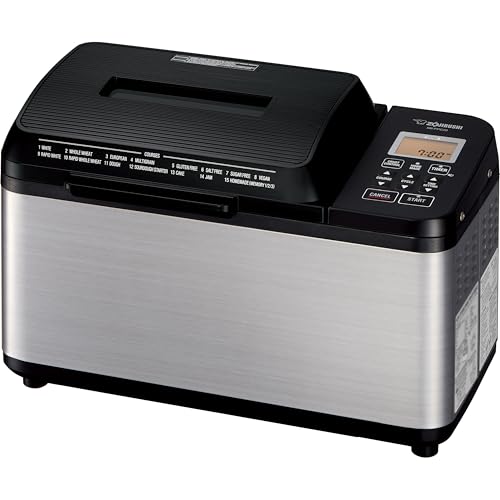
Mini spec box: Model BB-PDC20BA; loaf size 2 Lb; dual heaters; gluten-free and whole-wheat programs; 13-hour timer; colour: black.
Making bread at family scale changes the physics the machine must handle. A 2-pound dough is a serious mass to knead evenly and a serious loaf to bake through without a scorched base and a pale crown. The stated dual heaters answer the crown problem directly, radiating from above while the base element works below, and the stated programs answer the dough problems: whole-wheat timings for bran-heavy doughs that rise on their own schedule, and a gluten-free program for the batter-logic loaves that wheat cycles mishandle. This is the pool’s most completely stated family making specification.
For the making household, the 13-hour timer is the feature that turns capability into routine — the dough’s schedule bends around the family’s sleep rather than the reverse. Its honest limitation is simply scale: everything about this machine assumes a table of eaters, and in a small household its virtues curdle into waste. Makers feeding three or more, especially across mixed diets, will find this the most persuasive specification in the guide. You can Check on Amazon for its current listing.
Best for: families making their staple bread, including gluten-free and whole-wheat / Not suited for: small households
Zojirushi Home Bakery Supreme
Badge: Best Classic Making All-Rounder
Strengths
- Dough setting stated — the maker’s gateway to pizza, rolls, and shaped loaves.
- Jam and cake settings extend making into preserving and weekend baking.
- Quick-bake mode and a 13-hour timer cover both impatient and planned making.
Trade-offs
- Loaf size is not stated in the verified title; confirm it on the listing.
- No dispenser or paddle innovation is stated.
- Its classic controls assume a baker happy with proven presets.
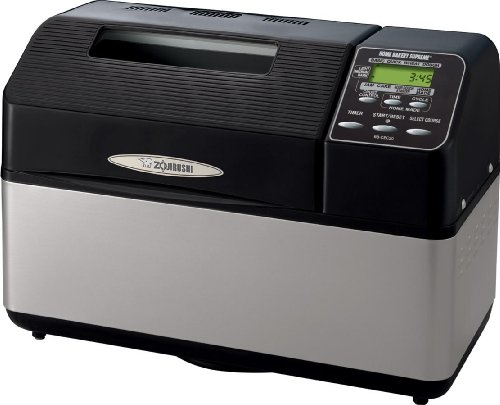
Mini spec box: Line: Home Bakery Supreme; settings stated: cake, jam, dough; 13-hour timer; quick-bake mode; loaf size not stated in the verified title.
If one machine in this guide understands that home bread making is bigger than loaves, it is the Supreme. The dough setting is the tell: it exists for makers, for people who want the machine’s tireless kneading and controlled proofing and then their own hands, their own shaping, their own oven. Pizza dough on Friday, rolls on Sunday, a focaccia when the rosemary bush needs pruning — dough mode is where a bread machine stops being a loaf appliance and becomes a bakery’s prep cook. The jam and cake settings widen the same philosophy into the preserving season and the tea table.
The quick-bake mode serves the maker’s impatient days honestly, trading some crumb openness for a loaf inside two hours, and the timer serves the planned ones. Its limitations are the classic’s limitations: an unstated loaf size to verify, and none of the newer hardware ideas — dispensers, collapsible paddles — that younger rivals advertise. What it offers instead is a repertoire shaped by decades of home makers, and a recipe culture deep enough to support almost any project you bring it. You can Check on Amazon for its current listing and capacity.
Best for: makers who shape, proof, and bake beyond the pan / Not suited for: buyers who want the newest automation hardware

Zojirushi Home Bakery Mini, 1 Lb
Badge: Best for Small-Batch Making
Strengths
- One-pound batches make experimentation cheap and waste nearly zero.
- Dough, jam, and cake settings are stated — a full making repertoire at small scale.
- Quick-bake under two hours suits spontaneous making sessions.
Trade-offs
- Small batches cannot serve a family’s staple loaf.
- Small pans punish measuring errors proportionally more.
- Its slices are small, whatever your sandwich ambitions.
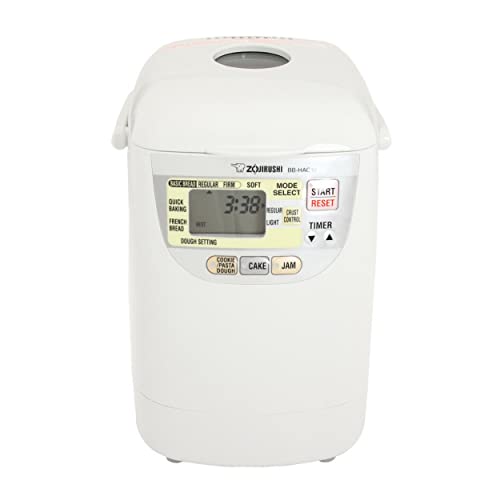
Mini spec box: Model BB-HAC10; loaf size 1 Lb; 13-hour delay timer; quick-bake under 2 hours; settings stated: dough, jam, cake; nonstick pan and kneader; colour: white.
Small-batch making is a discipline of its own, and the Mini is its instrument. A 1-pound batch costs a handful of flour, so the maker can afford curiosity: a new blend this week, a questionable amount of cheese the next, a spice experiment that would be a family-size mistake in a big pan. Iteration is how makers learn, and the Mini iterates faster than any other machine in this guide. Its stated dough mode matters here too — small batches of dough for two pizzas or a half-dozen rolls are exactly what small households actually make, and most big machines force them to scale recipes awkwardly.
The timer and quick-bake give the small maker both tempos: the planned overnight loaf and the spontaneous afternoon one. The honest limitations are capacity and precision — this machine will never be a family’s staple engine, and its small batches amplify sloppy measuring, so a scale is the Mini owner’s best companion. For one or two makers who bake often and learn fast, it is the most enabling machine in the pool. You can Check on Amazon for its current listing.
Best for: singles and couples who bake often and experiment freely / Not suited for: family staple production

Cuisinart Compact Automatic Bread Maker, CBK-110
Badge: Best Flexible Making Pick
Strengths
- Three loaf sizes let the batch match the making session, from 1 to 2 pounds.
- Twelve programs and three crust shades give the maker real finishing control.
- A paddle-removal alert is stated, protecting shaped results at the pan stage.
Trade-offs
- No homemade cycle is stated; process control is settings-level.
- No dispenser is stated for add-in doughs.
- Compact body, full-size ambitions — measure the counter honestly.
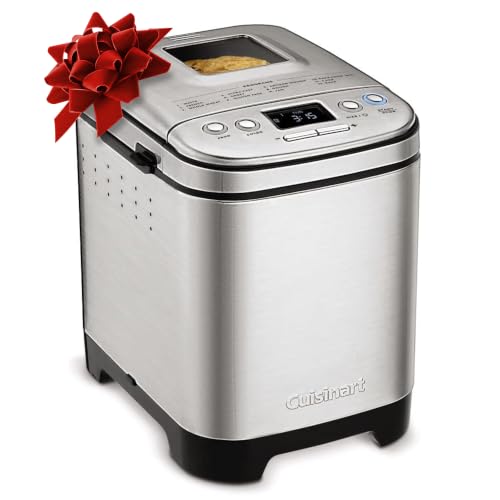
Mini spec box: Model CBK-110NAS; 12 programs; loaf sizes 1, 1.5, and 2 Lb; 3 crust shades; 13-hour delay start; paddle-removal alert.
Making is full of variable batch sizes, and the Cuisinart is built for that variability. The same maker who bakes a small loaf for two on Wednesday needs a full loaf for Sunday’s table, and a machine with stated 1, 1.5, and 2-pound sizes follows without a second appliance. The crust shades give the maker the finishing lever that pan baking otherwise removes — the difference between a soft sandwich loaf and a toast loaf with backbone is one shade setting — and the paddle-removal alert protects the result at the moment of maximum vulnerability, when the paddle would otherwise tear the base.
Its process ceiling is settings-level control: twelve programs to choose among, sizes and shades to tune, but no stated cycle to build from raw timings. For most home makers that ceiling is above their heads anyway; the ones it will genuinely limit are the cycle-builders, who should look at the custom-focused machines in Best Custom Bread Machines. For the flexible household maker, this is the pool’s most adaptable tool. You can Check on Amazon for its current listing.
Best for: makers whose batch sizes and finishes change week to week / Not suited for: cycle-builders wanting full phase control

Zojirushi Home Bakery Maestro, BB-SSC10WZ
Badge: Best Premium Finishing Touch
Strengths
- A premium-tier Zojirushi, from the line makers measure the category against.
- A premium white finish suited to a machine that lives on a maker’s counter.
- The Maestro name carries the brand’s quality-focused positioning.
Trade-offs
- Its verified title states no programs, loaf size, or timer — the pool’s sparsest evidence.
- A process-focused maker cannot judge its making tools from the title at all.
- Premium tier demands the verification its title makes necessary.
Mini spec box: Model BB-SSC10WZ; line: Home Bakery Maestro; colour: premium white; making specifications not stated in the verified title.
The Maestro closes the reviews as the guide’s standing reminder that making is a specification game. A maker choosing a process tool needs to know the kneading arrangement, the programs, the sizes, the timer — and this listing’s title offers none of them, only brand, line, model, and colour. It may be a lovely machine to make with; the evidence in front of us does not say, and this guide does not invent evidence for premium badges.
The practical path is the same as elsewhere in this series: open the full listing, extract its stated making specification, and compare it line by line with the five machines above, whose titles do their talking up front. If its specification proves strong, its brand and finish make it a legitimate premium contender; if it proves ordinary, the pool offers stated alternatives at every scale. Either way, let the specification decide — that is the maker’s habit, applied to buying. You can Check on Amazon to read that full specification.
Best for: brand loyalists who verify specifications before buying / Not suited for: makers who want process evidence stated up front
Comparison Table
| Pick | Loaf sizes stated | Making strengths stated | Timer stated | Making style | Listing |
|---|---|---|---|---|---|
| Zojirushi Virtuoso Plus BB-PPC20BA | Not stated | Flagship system; PFAS free stated | Not stated | Daily flagship making | Check on Amazon |
| Zojirushi Virtuoso Plus BB-PDC20BA | 2 Lb | Dual heaters; gluten-free and whole-wheat programs | 13-hour | Family-scale staple making | Check on Amazon |
| Zojirushi Home Bakery Supreme | Not stated | Dough, jam, cake settings; quick-bake | 13-hour | Beyond-the-loaf making | Check on Amazon |
| Zojirushi Home Bakery Mini | 1 Lb | Dough, jam, cake settings; quick-bake | 13-hour delay | Small-batch, high-frequency making | Check on Amazon |
| Cuisinart Compact CBK-110 | 1, 1.5, 2 Lb | 12 programs; 3 crust shades; paddle alert | 13-hour delay | Flexible-size making | Check on Amazon |
| Zojirushi Maestro BB-SSC10WZ | Not stated | Not stated | Not stated | Premium, verify first | Check on Amazon |
How to Choose a Machine for Home Bread Making
Choose for the doughs you will actually make. List your next ten bakes honestly — not the aspirational ten, the probable ten — and let that list interrogate every specification. Mostly white and wholemeal pan loaves? Any machine here serves you, and consistency should decide. Pizza and rolls every week? Dough mode becomes non-negotiable, and the Supreme and Mini state it outright. A gluten-free household member? A stated gluten-free program, as on the Virtuoso Plus BB-PDC20BA, moves from feature to requirement. Enriched and festive loaves? Crust control and gentle programs rise in value. The list is the brief; the machine is the answer.
Give some thought, too, to where your making will happen and who will witness it. Home bread making is unusually social for a kitchen practice: dough rising on the counter invites questions, children gravitate to the kneading sounds, and a finished loaf has a way of reorganising a meal around itself. A machine that lives visibly, in a finish that suits the kitchen — the premium white of the Maestro, the black of the family Virtuoso — participates in that social life rather than hiding from it. This is not a frivolous consideration. Tools that please the eye get kept in reach, and tools kept in reach get used, and use is the whole game. Weigh it last, after doughs and scale, but do weigh it.
Scale comes second. Batch size is a making decision before it is an eating one: big batches forgive measuring slips and demand eaters; small batches punish slips and reward frequency. Match the machine’s stated sizes to your making rhythm — the frequent small maker and the twice-weekly family maker are different people and should not buy the same machine. Third, judge the teacher: you want timings you can trust and results you can read, because your first season with any machine is an apprenticeship whether you planned it or not. A machine with legible programs and consistent outcomes shortens that apprenticeship by months. Shoppers whose making centres on control will also want Best Kick Ass Bread Machines, where the performance ceiling of the category is the theme.
Fourth, be honest about the counter. Making is a practice, and practices live where their tools live. A machine exiled to a high cupboard will be used for special occasions; a machine resident on the counter will be used on ordinary Tuesdays, and ordinary Tuesdays are where a making practice is actually built. Measure the space, including the open lid’s clearance, before the machine arrives, and let a too-small kitchen argue for the compact and mini formats in this guide rather than against making itself. The smallest machine used weekly teaches more, and feeds better, than the flagship used monthly.
How to Make Bread at Home With a Machine: Process, Care, and Troubleshooting
The maker’s process begins before the machine does. Weigh your ingredients if you can; home bread making improves faster under measurement than under any other single change, because weighed recipes repeat and repeated recipes teach. Add liquids first, then flour as a blanket over them, salt in one corner, yeast dry on top in another. During the first knead — five to ten minutes in — open the lid once and read the dough: it should gather into a smooth, supple ball that cleans the pan. A shaggy, sticky mass wants a spoonful of flour; a dry, tearing ball wants a spoonful of water. That single check, performed religiously, is worth more than any program on any machine in this guide.
Respect the phases you cannot see. The rise is fermentation, and fermentation answers to temperature: a cold kitchen slows it, a warm one hurries it, and the same recipe is legitimately a different recipe in January and July. Use the timer to place the bake in the kitchen’s warm morning rather than its cold night when you can. When the loaf finishes, free it promptly, cool it fully on a rack, and only then slice — a loaf cut steaming will gum no matter who made it. Care for the tools as a maker does: pan and paddle soaked and soft-clothed, never scoured; crumbs brushed from the chamber; the paddle stored with the pan so the next session starts whole.
Troubleshooting, in the pattern that solves most making problems. Problem: a loaf that rises then falls → too much yeast or liquid for the flour, or a rise that ran long in a warm kitchen; trim the liquid slightly and shorten the schedule’s exposure to warmth. Problem: a tight, dense crumb in whole-grain loaves → bran is cutting the gluten and the dough is likely under-kneaded or under-risen; choose the stated whole-wheat program where one exists, blend in some strong white flour, and check the dough ball’s smoothness at the knead. Problem: dough mode pizza bases that spring back when rolled → the dough is telling you it needs rest, not force; cover it, wait ten minutes, and roll again, and the gluten will have relaxed into obedience.
Dough Mode: Where Home Bread Making Really Lives
Ask experienced home makers which setting changed their baking and most will not name a loaf program. They will name dough mode. A machine loaf is a fine thing, but it is one shape, baked one way. Dough mode breaks the mould — literally. The machine performs the two jobs human hands tire of, kneading to a proper windowpane and proofing at a steady warmth, and then returns a living dough to a baker who can shape it into anything: a blistered pizza base, a tray of rolls glossed with milk, a focaccia dimpled and oiled, a braided loaf for a celebration. The oven, which was always better at shapes than the pan, finishes the work.
This is why the stated dough settings on the Supreme and the Mini matter out of proportion to their line in a specification list, and why makers should ask after dough mode in any listing — including the ones here whose titles do not mention it — before deciding. A machine with dough mode is two appliances: a loaf baker for the weekdays and a prep baker for the weekends, and the second appliance is the one that turns a household’s baking from a routine into a repertoire. If your making ambitions include anything shaped by hand, weight dough mode accordingly, and let the Best Inexpensive Bread Machines guide argue the value side of the same purchase afterwards.
The Maker’s Pantry: Flours, Yeast, and the Habits That Compound
Machines get the attention, but pantries make the bread. Keep a strong bread flour as your default — its protein gives machine kneading the material to build structure — and add wholemeal, rye, and specialty flours as variations on that theme rather than replacements for it. Treat yeast as a living ingredient with a lifespan: store it cool and sealed, respect its dates, and proof a doubtful spoonful in warm water before entrusting it with a full batch. Salt is structure and flavour, not an afterthought, and it should never sit in direct contact with yeast during a delayed start. Water is the variable nobody lists: the same flour drinks differently across seasons and brands, which is why the knead-time check in the process section exists.
The habits compound quietly. A notebook — even three lines per loaf: flour, tweak, verdict — turns a season of baking into an education. A scale turns recipes into repeatable events. A regular baking slot turns intention into bread. None of this is purchasable, and all of it multiplies whatever machine you choose from this guide, which is why the guide ranks consistency and process fit above spectacle: the machine is the junior partner in home bread making, and the maker — stocked, noted, and practised — is the senior one.
Fermentation at Home: Time, Temperature, and the Timer’s Real Job
Every home maker eventually learns that bread is mostly waiting, and that the waiting is where flavour is made. Fermentation develops the acids and aromas that separate a living loaf from a merely risen one, and the home kitchen — unlike a bakery — swings through temperatures that speed and slow it without asking permission. This is why the delay timers stated across this guide, up to 13 hours on several machines, are fermentation tools and not just conveniences. A timer lets you place the active phases of a loaf where the kitchen’s temperature and your attention can serve them: kneaded in the cool of the evening, risen through a steady night, baked into the warm morning. Used that way, the timer is the home maker’s answer to the bakery’s proofing room.
Learn to read the dough rather than the clock and the timer becomes even more powerful. A dough that has doubled with a domed, springy surface is ready, whether the schedule agrees or not; a dough that sighs when poked has gone too far, and its loaf will tell the story. Machines cannot make that judgment for you — yet. What they can do is hold every other variable steady so your judgment has clean evidence to work with. That partnership, machine steadiness plus human reading, is the mature form of home bread making, and every pick in this guide can support it. The maker who understands this stops asking which machine bakes best and starts asking which machine teaches fastest, which is the question this whole guide has been quietly answering.
Shaped Breads and the Oven Partnership
A word for the makers whose ambitions point past the pan. Boules, batards, braided loaves, and hearth breads with crackling crusts are oven work, and no honest guide should pretend a pan machine replaces them. What the machine changes is the labour economics of getting there. Hand-kneading a stiff whole-grain dough to windowpane is twenty minutes of real work; proofing it evenly in a draughty kitchen is an exercise in improvisation. Dough mode removes both obstacles, which means the home maker attempts shaped breads on ordinary weekends instead of saving them for holidays. The machine’s contribution to your finest loaves may never appear in the loaf itself — it appears in how often you dare to make them.
Steam is the oven partner’s one trick worth learning early: a covered heavy pot or a tray of boiling water in the first minutes of the bake keeps the crust supple while the loaf expands, then releases it to crisp. Pair that with machine-proofed dough and a home kitchen produces hearth-style bread that surprises everyone who assumed a bread machine meant square loaves forever. The Supreme and Mini state dough settings outright; for the machines whose titles are silent on the point, the listing check this guide keeps recommending will tell you whether dough mode is present before you build plans on it.
Common Buying Mistakes
The first mistake is buying a loaf appliance when you wanted a making tool — if your joy is in shaping and dough, a machine without a stated dough mode will quietly disappoint you every weekend. The second is the reverse: buying process depth for a household that wants breakfast bread without a hobby attached. The third is ignoring batch scale as a making variable, then fighting a family machine’s leftovers or a mini’s limits for years. The fourth is trusting a premium badge over a stated specification — the Maestro’s silent title is in this guide precisely to teach that lesson kindly.
Fifth, neglecting the pantry while upgrading the machine: fresh yeast and a scale will improve your loaves more this month than any model change. Sixth, judging a machine by its third loaf — every maker-machine pairing has an apprenticeship of several bakes, and the verdict belongs at loaf ten. Seventh, lifting the lid through the rises to admire the dough; each peek dumps the warmth and moisture the rise was counting on. Watch through the knead, then trust the process you bought.
Final Recommendation
For family-scale making with the most completely stated specification, choose the Zojirushi Virtuoso Plus BB-PDC20BA — dual heaters, the hard doughs’ programs, and a proper timer. For the flagship as a daily practice, the Virtuoso Plus BB-PPC20BA awaits the maker who reads its full listing and bakes constantly. Makers who live for dough should take the Zojirushi Home Bakery Supreme for its breadth or the Mini for small-batch freedom; flexible households should take the Cuisinart CBK-110 and its three sizes; and the Maestro belongs on the shortlist of brand loyalists who verify first. Buy for your doughs, your scale, and your learning curve — the making will follow.
Whichever machine you choose, give it the maker’s welcome: the same recipe three times before you judge it, a notebook open beside it, and the knead check performed like a ritual. Home bread making is one of the few kitchen practices that reliably returns more than it takes — skill, rhythm, and bread that tastes like your house. The machines in this guide are the junior partners in that enterprise. Choose the partner whose stated strengths match your doughs, and get your hands floury.
Frequently Asked Questions
What is the difference between a bread machine and home bread making?
The machine is the tool; home bread making is the practice around it — choosing flours, timing fermentation, shaping doughs, and learning loaf by loaf. The best machines serve the practice: they knead thoroughly, time honestly, and hand the work back through dough mode when the baker wants hands on. This guide reviews machines by that service, not by shelf appeal.
Can a machine knead as well as hands?
For everyday doughs, a good machine kneads as thoroughly as most home hands and far more patiently, which is why dough mode is so valued. What hands add is feel — the ability to sense a dough’s mood mid-knead. The knead-time check described in this guide, adjusting with a spoonful of flour or water, is how machine bakers recover most of that feel.
Why do my machine loaves keep collapsing?
Usually the dough rose too far or too fast: too much yeast or liquid, or a warm kitchen stretching the rise. Reduce the liquid slightly, check yeast amounts against the recipe, and in summer consider cooler liquid. If it persists on one program, try the flour-matched program for your dough — whole-grain doughs in particular punish wheat-cycle timing.
Is dough mode worth prioritising?
If you ever want pizza, rolls, focaccia, or shaped loaves, yes — it is the setting that converts a loaf appliance into a making tool, and it is stated on several machines in this guide. If your making is strictly pan loaves for the week’s sandwiches and toast, it is a pleasure rather than a necessity.
How do I get a better crust from a machine loaf?
Use the darkest crust setting your loaf can take without bitterness — the Cuisinart states three shades — and value top heat where it is stated, as in the dual-heater Virtuoso. Cool the loaf on a rack so steam escapes instead of softening the crust, and store it cut-side down or in cloth rather than sealed plastic.
What flour should a beginning home maker buy first?
One strong bread flour and one recipe that suits your machine, repeated until it is reliable. Add wholemeal as a blend partner next, then specialty flours one at a time so each change teaches something. Fresh, in-date yeast will do more for your first ten loaves than any flour upgrade.
How long before home bread making starts feeling easy?
Most makers turn the corner around the eighth to tenth loaf: measuring becomes habit, the knead check becomes instinct, and the machine’s sounds start meaning things. Machines with consistent results shorten that apprenticeship, which is why this guide prizes repeatability so highly in its flagship picks.
How do I store a finished loaf so it stays at its best?
Cool it completely first — trapping steam is the fastest way to ruin a crust you made well. Then keep it cut-side down on a board for the first day, or in a cloth bag or bread box that breathes a little. Refrigeration stales bread faster than the counter does; for keeping beyond two days, slice and freeze, and revive slices in the toaster or a warm oven. Small, frequent loaves — the pattern several machines in this guide encourage — mostly make the storage question disappear.
What is the best first project for a new home bread maker?
The machine’s basic white loaf, made three times in the first week with nothing changed but your attention. Repetition teaches the sounds, the dough check, and the cooling discipline, and gives you a control loaf to judge every later experiment against. Move to wholemeal as a blend next, then to dough mode for pizza — the project with the highest applause-to-effort ratio in home baking.
Do I need a starter to make sourdough-style bread at home?
A true sourdough needs a living starter, and keeping one is a small, pleasant commitment — flour, water, and a feeding rhythm. Machines support the baking side with long, gentle schedules; a stated sourdough menu, like the one on the Zojirushi bundle in our custom guide, gives the dough a designed cycle. If a starter is more commitment than you want, yeasted loaves with a long, cool rise borrow some of the same flavour honestly, and a machine’s timer makes that schedule easy to run overnight.