Disclosure: topratedkitchenware.com is reader-supported. When you buy through links on our site, we may earn an affiliate commission from Amazon and other retailers, at no extra cost to you.
Where to buy
If you have ever stood in a shop wondering what the best kind of chopsticks actually is — bamboo or wood, steel or fiberglass, Japanese or Korean or Chinese — this guide answers the classification question first and then shows you the six sets we recommend within the kind that suits most households best. All six sets below are reusable stainless steel chopsticks, the kind we judge best for everyday Western kitchens, and all six carry purchase links because every one of them is a genuine, verified example of that kind.
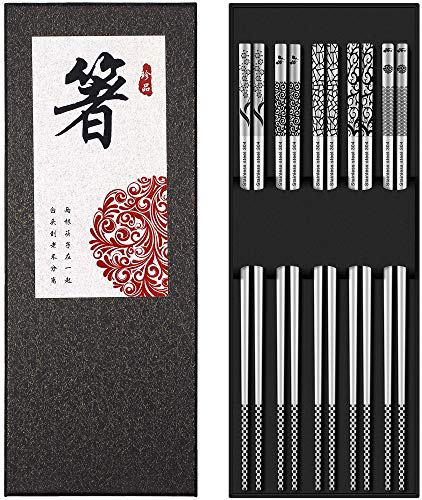
- Greatamzor 18/8 Stainless Steel Chopsticks, 5 Pairs — Best Overall of the Steel Kind
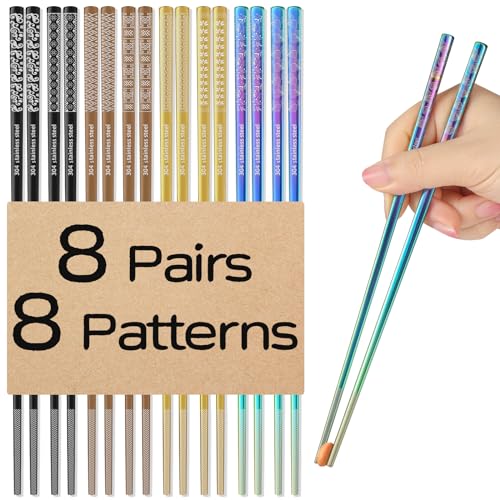
- NEWDRIP 18/8 Stainless Steel Chopsticks, 8 Pairs — Best for Families
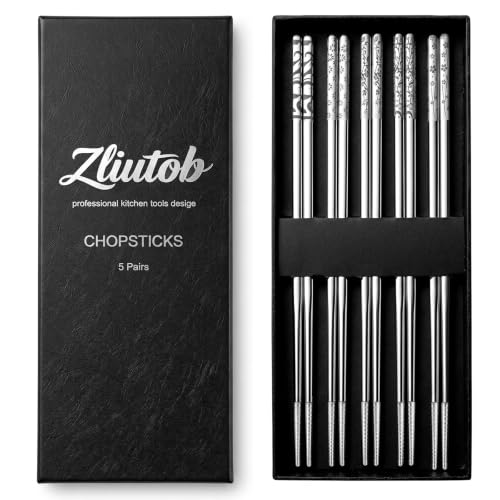
- Zliutob Stainless Steel Chopsticks, 5 Pairs — Best Grip Design
- LIXTONGR Dragon & Phoenix Black Stainless Steel Chopsticks, 2 Pairs — Best Gift-Grade Pair
- MUYOS Stainless Steel Chopsticks, 5 Pairs, Silver — Best Lightweight Design
- Greatamzor Multicolor Stainless Steel Chopsticks, 5 Pairs — Best Color-Coded Set
Read the full guide ↓ for the complete map of chopstick kinds — by material, by regional style and by purpose — and for the reasoning that puts reusable steel at the top for most homes, with honest accounts of where each other kind wins instead.
Ask “what is the best kind of chopsticks?” in a room of experienced cooks and you will start an argument, because the honest answer is that “kind” cuts three different ways at once. Chopsticks vary by material — bamboo, wood, stainless steel, fiberglass, plastic, even titanium and silver. They vary by regional style — short pointed Japanese hashi, flat mid-length Korean pairs, long Chinese pairs built for shared dishes and hot pots. And they vary by purpose — eating pairs, long cooking pairs, training pairs for children and beginners, disposable pairs for takeout, and novelty pairs that light up. Every combination of those three axes exists, and the best kind of chopsticks for a sushi purist, a Korean barbecue household and a parent packing school lunches are three genuinely different answers. This guide untangles the three axes one by one, gives each major kind its fair hearing, and then makes the case — with its limits stated — for the kind our six picks represent.
That kind is reusable stainless steel in the mid-length eating format, and the case is practical rather than romantic. Steel is the only common material that is simultaneously dishwasher safe, odor-proof, warp-proof, splinter-proof and effectively immortal in normal use, and the mid-length format around 9 to 9.25 inches — where all six sets here live — is the one that serves Japanese, Korean and Chinese home cooking without specializing in any of them. The sections below review the six sets in detail, then lay out the full taxonomy so you can check our conclusion against your own table. If, at the end, your honest answer is bamboo for ceremony or a flat Korean profile for barbecue nights, the guide will have done its job too — it points to the specialist guides where those kinds get their own rankings.
Key Takeaways
- “Kind” means three things at once: material, regional style and purpose. Decide each axis separately and the right purchase becomes obvious.
- For most households, reusable stainless steel is the best default kind: dishwasher safe, odor-proof, warp-proof and long-lived, with grip supplied by engraving or texture.
- Bamboo and wood remain the best kinds for traditional feel and natural grip; fiberglass is the heat-tolerant middle ground; plastic belongs to training and travel niches.
- Regional styles are geometry, not branding: Japanese pairs are short and pointed, Korean pairs mid-length and often flat, Chinese pairs long for shared dishes and cooking.
- All six picks here are the steel kind at 9 to 9.25 inches where lengths are stated, spanning 18/8 and 18/10 alloys, hollow-core and textured designs, and counts from two pairs to eight.
- Buy a second kind only for a job the first cannot do — a long cooking pair for the stove, a training pair for a child — rather than duplicating the same kind in new colors.
In this guide
Quick Picks
| Pick | Badge | Pairs | Length | Distinguishing design | Link |
|---|---|---|---|---|---|
| Greatamzor 18/8 Stainless Steel Chopsticks | Best Overall of the Steel Kind | 5 pairs | 9 1/4 inches | Laser engraved, 18/8 steel | Check on Amazon |
| NEWDRIP 18/8 Stainless Steel Chopsticks | Best for Families | 8 pairs | 9.25 inches | Laser engraved, 18/8 steel | Check on Amazon |
| Zliutob Stainless Steel Chopsticks | Best Grip Design | 5 pairs | Not stated in listing | Textured tips, square grip | Check on Amazon |
| LIXTONGR Dragon & Phoenix Black Stainless Steel Chopsticks | Best Gift-Grade Pair | 2 pairs | 9 inches | 18/10 steel, black finish, gift box | Check on Amazon |
| MUYOS Stainless Steel Chopsticks | Best Lightweight Design | 5 pairs | Not stated in listing | Hollow-core construction | Check on Amazon |
| Greatamzor Multicolor Stainless Steel Chopsticks | Best Color-Coded Set | 5 pairs | 9 1/4 inches | Multicolor, engraved coin pattern | Check on Amazon |
The six picks are one kind explored six ways — which is exactly how a kind should be judged. Same material family, same eating format, and then meaningful variation in alloy, grip engineering, weight, finish and count. If steel is not your kind, the taxonomy sections below argue the alternatives fairly; if steel is your kind, this table plus the detailed reviews are the whole decision. Readers who already know they want the steel kind optimized for one cuisine can jump to the specialist ranking for Best Korean Chopsticks, where the flatter Korean profile gets its own field.
How These Picks Were Chosen
This is a classification guide, so the method had two stages. First, we mapped the kinds: the materials in common use, the three regional geometries and the purpose-built variants, using the standard, well-documented characteristics of each — how bamboo behaves in a dishwasher, why Korean pairs are flat, what a cooking pair’s extra length is for. That taxonomy is general knowledge about the category, and we present it as such. Second, within the kind we recommend as the default — reusable stainless steel eating pairs — we selected six sets from verified listing data, cross-checking every title for its alloy, count, stated length and stated features, and we print only those verified facts in the spec boxes. Because this keyword’s lens is the general classification rather than a single attribute, every pick qualifies for a link: each is a genuine reusable chopstick set of the recommended kind, and none is being stretched to fit a narrower promise.
The six were chosen to span the kind’s real decision space rather than to repeat one design six times. Two alloys anchor the range — 18/8 in the Greatamzor and NEWDRIP multipacks, 18/10 in the LIXTONGR gift set — alongside the grades the other listings describe in general stainless terms. Three grip philosophies compete: laser engraving, the Zliutob’s textured tips with a square grip, and the MUYOS answer of hollowing the shaft to change the pair’s whole feel. Counts run from a two-pair personal set to an eight-pair household system, and finishes from plain silver through black to a five-color family system. Whatever your household looks like, one of the six is shaped like it.
As always on this site, the work is research-led: verified specifications compared, owner-feedback themes weighed qualitatively, and no hands-on claims we cannot support. We print no prices and no fixed ratings or review counts — both drift too fast to be honest in print — and the Check on Amazon links carry the live numbers. One honesty note about scope: a guide that recommends a default kind is making a judgment, and judgments deserve their counterarguments. The taxonomy sections below give bamboo, wood and fiberglass their strongest cases, and the final recommendation names the households for whom our default is the wrong answer.
The 6 Best Chopsticks of the Steel Kind, Reviewed in Detail
Greatamzor 18/8 Stainless Steel Chopsticks, 5 Pairs
Badge: Best Overall of the Steel Kind
Strengths
- 18/8 stainless steel — the flatware-grade alloy — with laser-engraved non-slip grip.
- Stated 9 1/4 inch length in the versatile mid-length band that serves most cuisines.
- Five pairs, dishwasher safe, in a gift-ready set: the complete default specification.
Trade-offs
- Steel’s cool, smooth hand-feel is a genuine change for diners raised on bamboo.
- The engraved pattern is visible decoration as well as grip, which minimalists may not want.
- Five pairs will not cover a large family’s whole week without regular washing.
Spec box: Material: 18/8 stainless steel · Pairs: 5 · Length: 9 1/4 inches · Finish detail: laser engraved, non-slip · Care: dishwasher safe · Style as listed: Japanese Korean
Every kind needs a reference example, and for reusable steel this Greatamzor set is ours. It demonstrates what the material does when a maker takes it seriously: a named food-grade alloy instead of anonymous metal, engraving cut into the surface so the grip can never peel or wear away, a length in the versatile middle band, and a count that suits the couple or small family who will actually use it daily. Eat a week of mixed meals with it — ramen on Monday, dumplings on Wednesday, a grain bowl on Friday — and the steel kind’s argument makes itself: nothing stains, nothing warps, nothing smells of the last meal, and the dishwasher does the work every single night.
The counterargument is feel, and it deserves its sentence. Bamboo is warmer, lighter and naturally grippy in a way no engraved steel fully reproduces; diners who eat slowly and ceremonially may simply enjoy it more, and this guide’s taxonomy section says so without hedging. The Greatamzor’s honest limitation is that it is a superb tool of its kind rather than a simulation of another kind. Buy it as what it is — the default steel set against which the other five are variations — and it will not disappoint. Households that find five pairs tight should read the next review before deciding, since the same specification exists at eight pairs.
Best for: anyone buying a first serious reusable set and wanting the steel kind’s reference specification / Not suited for: traditionalists who know they prefer the warm feel of bamboo or wood

NEWDRIP 18/8 Stainless Steel Chopsticks, 8 Pairs
Badge: Best for Families
Strengths
- Eight pairs in the same 18/8 alloy and engraved-grip specification as the top pick.
- Stated 9.25 inch length, listed across Japanese, Korean and Chinese eating styles.
- Uniform design keeps family tables consistent and the dishwasher rotation deep.
Trade-offs
- Identical pairs mean no built-in way to tell one diner’s pair from another’s.
- Eight pairs demand drawer organization to stay a system rather than a jumble.
- The utilitarian presentation is a household tool, not a gift.
Spec box: Material: 18/8 stainless steel · Pairs: 8 · Length: 9.25 inches · Finish detail: laser engraved, non-slip · Care: dishwasher safe · Style as listed: Japanese Korean Chinese
The NEWDRIP set answers the question the top pick leaves open: what does the steel kind look like at family scale? Eight identical pairs of named-alloy, engraved, dishwasher-safe steel turn chopsticks from a purchase into a utility — always available, always matched, always cleanable. Families discover quickly that chopstick ownership is a logistics problem disguised as a shopping problem: pairs migrate to lunch bags, school kits and partners’ kitchens, and a five-pair household feels every loss. Eight pairs absorb those losses and still seat six for dinner.
The trade-off is identity. Japanese households traditionally give each person a recognizable pair; a uniform eight-pack deliberately gives that up in exchange for interchangeability, and families who value the personal-pair custom should look at the color-coded set that closes this guide instead. The honest limitation is storage discipline: eight loose pairs in a cutlery drawer become a rattle of steel, and this set earns its keep only with a simple organizer or a jar to stand in. As the steel kind’s family expression, though, nothing else here competes — and for the longevity-focused buyer, its alloy is the same one discussed in our companion piece on the Best Long Lasting Chopsticks, where service life is the whole subject.
Best for: families, hosts and anyone who wants the steel kind as household infrastructure / Not suited for: households built around personal, distinguishable pairs

Zliutob Stainless Steel Chopsticks, 5 Pairs
Badge: Best Grip Design
Strengths
- Textured tips plus a square grip section — the most deliberate grip engineering in the steel kind here.
- Square profile cannot roll off tables, bowl rims or desk edges.
- Positioned for sushi, ramen and daily meals, the core of home chopstick use.
Trade-offs
- The listing does not state a length, an unusual omission in a category where length defines use.
- The assertive texture can feel coarse to diners used to lacquered wood’s smoothness.
- Five pairs in one texture only — no variety for households with mixed preferences.
Spec box: Material: stainless steel · Pairs: 5 · Length: not stated in listing · Finish detail: textured tips, square grip · Care: dishwasher safe · Suggested use as listed: sushi, ramen and daily meals
If the steel kind has a native weakness, it is smoothness — and the Zliutob set is what happens when a maker treats that weakness as the design brief. Textured tips attack the problem where food is held; the square grip attacks it where fingers hold, giving the hand flat faces instead of a rotating cylinder; and the square profile quietly solves rolling, the small daily indignity of round steel on hard tables. For noodle dishes, the steel kind’s hardest test, this is the most confident tool in the guide, and it demonstrates that “steel is slippery” is a property of lazy steel design rather than of the material itself.
The honest limitations are documentation and taste. The listing omits the length — the one fact this guide most wants for any set — so a buyer must verify dimensions independently before counting on bento or table fit. And texture is a preference: the same bite that reassures a ramen lover can feel busy to a diner performing delicate work on a piece of steamed fish. Neither flaw dents the set’s real achievement, which is to show the steel kind solving its own problem with geometry instead of apologies. Beginners, in particular, often learn faster on a grippy square pair like this than on any other kind, because the tool forgives the loose grip they have not yet trained.
Best for: noodle lovers, beginners and anyone whose verdict on steel was decided by a slippery pair / Not suited for: buyers who need the length stated in the listing or who prefer a smooth traditional feel

LIXTONGR Dragon & Phoenix Black Stainless Steel Chopsticks, 2 Pairs
Badge: Best Gift-Grade Pair
Strengths
- 18/10 stainless steel — the premium alloy in this guide — in a black, motif-led finish.
- Shortest set here at 9 inches, closest to classic Japanese proportions.
- Gift box presentation listed for weddings, housewarmings and travel.
Trade-offs
- Two pairs is a personal or couple’s set, never a household solution.
- The bold dragon and phoenix design commits the table to a look.
- Decorative finishes deserve gentler handling than plain working steel.
Spec box: Material: 18/10 stainless steel, black finish · Pairs: 2 · Length: 9 inches · Finish detail: non-slip grip, dragon and phoenix design · Care: dishwasher safe · Presentation: gift box
The LIXTONGR set represents the steel kind’s ceremonial wing. Its alloy is the richest in the guide, its length the most traditional, its presentation the only one designed to be given rather than merely bought — a boxed pair with a motif that carries meaning, offered for weddings and housewarmings in its own listing. It exists to prove that the practical kind can also be the beautiful kind: nothing about dishwasher-safe, decades-durable steel prevents a pair from being an occasion object, and a household that owns working sets for the week may still want this pair for the dinners that matter.
Its limitations are the mirror of its virtues. Two pairs serve two people; the motif that makes it giftable makes it unusable as anonymous household stock; and a finish chosen for looks should be washed like it was chosen for looks, however durable the listing says it is. Judge it as the steel kind’s ambassador rather than its workforce — the pair you give, the pair you keep for guests of honor, the pair that demonstrates to a bamboo loyalist that steel can have a soul. The working pairs elsewhere in this guide will handle Tuesday.
Best for: gifts, couples and ceremonial dinners where the pair is part of the occasion / Not suited for: stocking a family drawer or anyone who dislikes decorative tableware
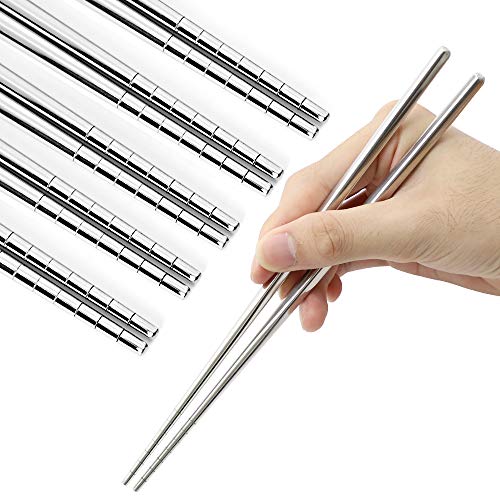
MUYOS Stainless Steel Chopsticks, 5 Pairs, Silver
Badge: Best Lightweight Design
Strengths
- Hollow-core construction — the steel kind with the material’s main drawback engineered out.
- Non-slip tips keep the light pair capable on noodles and smooth foods.
- Plain silver finish integrates with any flatware collection.
Trade-offs
- Length is not stated in the listing.
- Some diners read very light steel as insubstantial, whatever its strength.
- No distinctive finish or system — its virtue is the absence of weight, not a look.
Spec box: Material: stainless steel, hollow-core design · Pairs: 5 · Length: not stated in listing · Finish detail: non-slip tips · Care: dishwasher safe · Finish color: silver
The MUYOS set is the steel kind’s answer to its own second weakness. If smoothness is steel’s first problem, weight is its second — a solid steel pair is noticeably heavier than bamboo, and across a long meal that weight lives in the fingers. Hollowing the core removes most of it while keeping steel’s hygiene and dishwasher virtues intact, producing the pair that older diners, smaller hands and long slow dinners appreciate most. It is a genuinely different design philosophy from the engraved sets: instead of adding grip to a standard pair, it subtracts mass from the pair itself.
The honest limitation is that lightness is polarizing. Diners who like a planted, deliberate feel — and there are many, especially among experienced users — may find a hollow pair vague on heavy items like a dense gyoza, where a little heft steadies the lift. The unstated length is the recurring documentation gap, and the plain finish offers no help telling pairs apart. None of that changes its place in the taxonomy of the kind: within steel, this is the featherweight branch, and for the hands it suits, no solid set at any alloy will feel as kind. It is also the set most often chosen as a travel pair by readers building the lunch kits discussed in the Best Long Chopsticks For Cooking guide’s companion advice on keeping a separate pair for the stove — different jobs, different tools, one drawer.
Best for: smaller hands, older diners and anyone who found solid steel tiring / Not suited for: diners who equate heft with quality or who need the length in writing

Greatamzor Multicolor Stainless Steel Chopsticks, 5 Pairs
Badge: Best Color-Coded Set
Strengths
- Five colors across five pairs — the personal-pair system, built into the steel kind.
- Laser-engraved copper coin pattern on a square non-slip shaft at 9 1/4 inches.
- Same maker and dishwasher-safe construction as the guide’s top pick.
Trade-offs
- Bright colors suit family tables, not formal settings.
- The coin motif belongs to Chinese tradition, a mixed signal on a Japanese-set table.
- Color finishes, like all decorative surfaces, prefer non-abrasive washing.
Spec box: Material: stainless steel, multicolor finish · Pairs: 5 · Length: 9 1/4 inches · Finish detail: laser-engraved copper coin pattern, square non-slip shaft · Care: dishwasher safe
The multicolor Greatamzor set closes the guide by importing a social system into the steel kind. Traditional chopstick households run on personal pairs — yours is yours, recognized instantly, washed and returned to your place. Uniform steel sets break that system; this set restores it with color, while keeping everything else the kind promises: engraved grip, a square no-roll shaft, a stated mid-band length and dishwasher-safe construction. For families with children old enough for real pairs, it is the set that ends the nightly negotiation over whose pair is whose, and for shared houses it is basic hygiene made cheerful.
The honest limitations are aesthetic range and motif. Rainbow steel under lacquered bowls at a formal dinner looks like a category error, and the copper coin pattern — a Chinese emblem of prosperity — will read as mixed messaging to a table set with strict cultural intent. Most family tables are neither formal nor strict, and for them this is the most livable set in the guide: the steel kind with its one social flaw designed out. Buy it for the system, and let the ceremonial LIXTONGR handle the evenings when the system takes the night off.
Best for: families and shared households that run on personal pairs / Not suited for: formal or single-tradition table settings
Comparison Table
| Pick | Pairs | Length | Steel | Grip approach | Link |
|---|---|---|---|---|---|
| Greatamzor 18/8 | 5 | 9 1/4 in | 18/8 | Laser engraved | Check on Amazon |
| NEWDRIP 18/8 | 8 | 9.25 in | 18/8 | Laser engraved | Check on Amazon |
| Zliutob | 5 | Not stated | Stainless | Textured tips, square grip | Check on Amazon |
| LIXTONGR Dragon & Phoenix | 2 | 9 in | 18/10 | Non-slip grip | Check on Amazon |
| MUYOS | 5 | Not stated | Stainless, hollow-core | Non-slip tips | Check on Amazon |
| Greatamzor Multicolor | 5 | 9 1/4 in | Stainless | Engraved coin pattern, square | Check on Amazon |
Within one kind, the comparison is about design philosophy: engrave it, texture it, hollow it, color it, or present it beautifully. Across kinds, the comparison is about values — convenience against tradition, permanence against warmth — and the taxonomy below is where that larger comparison happens.
The Kinds by Material: A Fair Hearing for Each
Bamboo is the traditional default across much of Asia, and its case is strong: feather-light, naturally grippy, warm in the hand, gentle on cookware and inexpensive enough to replace without grief. Its costs are care and lifespan — bamboo absorbs water, can warp or crack, dislikes dishwashers and long soaks, and eventually splinters. As a kind, it rewards households willing to hand-wash and replace periodically, and it remains the connoisseur’s choice for sushi. Wood, including lacquered wood, trades a little of bamboo’s lightness for beauty and variety; lacquered pairs are the formal wear of the chopstick world, and they demand the most care of any common kind — no dishwasher, no soaking, no abrasives — in exchange for the most beautiful table.
Stainless steel, this guide’s default, inverts the bargain: maximum durability and minimum care, at the price of weight, coolness and engineered rather than natural grip. Fiberglass sits between wood and steel in most respects — light, strong, tolerant of high heat and dishwashers, with a feel many diners find more neutral than steel — and it is a genuinely good kind for households that cook and eat with the same pair near heat. Plastic and melamine are the utility kinds: light, cheap and dishwasher tolerant, but prone to warping near heat and to a slippery surface, best kept to training, travel spares and children’s practice rather than a main set. Titanium and precious-metal pairs exist as the luxury fringe — titanium is light and inert, silver is traditional in Korea for ceremonial use — and they are bought as objects as much as tools. The purchase companion to this guide, Best Kind Of Chopsticks To Buy, turns this taxonomy into a buying sequence for readers who want the decision made step by step.
The Kinds by Style and Purpose
Material is only one axis. By regional style, Japanese pairs are short and pointed for individual servings and fish; Korean pairs are mid-length, commonly metal and often flat-sided for slippery pickled foods and hot stews; Chinese pairs are the longest, built to reach shared platters and hot pot broth. A household’s dominant cuisine should usually pick its style axis before its material axis — a steel pair in the wrong geometry serves no one well — and hybrid listings that claim Japanese Korean proportions are honestly describing the overlap between the two shorter styles. The steel mirror of that idea, for Korean-leaning tables, is ranked separately in the Best Korean Stainless Stell Chopsticks guide.
By purpose, four sub-kinds matter. Eating pairs are the subject of this guide. Cooking pairs run far longer, keeping hands away from oil and steam, and should be a separate purchase in a heat-tolerant material — never your eating pair borrowed at the stove. Training pairs for children and beginners add helpers, hinges or textured grips and come in shorter lengths; they are a kind of their own, not a small size of the adult kind. And novelty pairs — the light-up end of the market — are gifts and party pieces whose value is delight rather than decades of service. A complete drawer is usually three purchases deep: an eating set, one cooking pair, and training pairs if small hands are learning. Everything beyond that is pleasure, which is a fine reason, as long as it is recognized as the reason.
How to Choose Your Kind
Work the three axes in order. Purpose first: if the pair must cook as well as eat, you need length and heat tolerance, and the answer is a dedicated cooking pair plus an eating set, not a compromise. Style second: name the cuisine your table serves most and take its geometry — short and pointed, flat and mid-length, or long. Material third: be honest about your washing habits. A household that dishwashes everything should not buy lacquered wood and hope; a household that hand-washes happily can choose on feel alone. Within the material, judge the grip mechanism before the finish, the stated length before the photography, and the count against your household’s real size and loss rate. That sequence — purpose, style, material, mechanism, count — resolves nearly every chopstick purchase, and it is the same sequence the six reviews above were organized to serve.
How to Use and Care for Chopsticks of Any Kind
- Hold the lower stick still in the web of the thumb, resting on the ring finger; move only the upper stick, held like a pencil.
- Grip in the upper third of the pair, whatever the material — leverage and control live there.
- Align the tips before eating and keep them together when resting the pair on a rest or bowl rim.
- Wash steel and fiberglass in the dishwasher; hand-wash bamboo, wood and lacquer promptly and dry them standing so water leaves the tips.
- Never soak wooden kinds, never cook with eating pairs, and never store any kind wet and sealed.
- Retire a pair when it warps, splinters, cracks or loses its finish — a damaged pair is unhygienic in any material, and steel’s advantage is simply that this day may never come.
Troubleshooting. Problem: food slips from every pair you own → what to do: it is usually technique before tools — slow down, grip higher, and take smaller bites; if the problem survives a week of practice, move to a textured or square-profile pair like the Zliutob. Problem: wooden pairs keep warping → what to do: they are being soaked or dishwashed; switch the washing habit or switch the kind to steel and end the argument permanently. Problem: the drawer is full and nothing matches → what to do: consolidate to one eating kind with a system — uniform or color-coded — and keep only the cooking pair and any training pairs as deliberate exceptions.
Matching the Kind to the Meal, Dish by Dish
Abstract taxonomies become useful when they meet a week of actual dinners, so here is the classification at work. Sushi and sashimi nights reward the finest point and the lightest touch — Japanese geometry, in bamboo for purists or in textured steel for households that will not hand-wash; the LIXTONGR set’s 9 inch length is the steel representative of that geometry in this guide. Ramen and noodle soups are a grip examination: wet noodles, hot broth, long strands. Texture wins here — the Zliutob’s treated tips or an engraved pair — and the pair must tolerate being rested across a steaming bowl, which steel does without complaint and lacquered wood does not. Korean barbecue and stew nights ask for the flat metal profile and heat tolerance; the hybrid sets in this guide serve respectably, and the specialist Korean ranking serves better. Hot pot is the one common meal where no eating pair in this guide is the right tool: the broth demands length, and a dedicated long cooking pair should do the dipping while eating pairs stay at the plate — using a 9.25 inch eating pair in a bubbling pot is how fingers learn about conduction.
Weeknight takeout and grain bowls are the steel kind’s home turf — forgiving food, fast washing, no ceremony — and they are the meals that quietly decide which set a household actually loves, because they outnumber the occasions ten to one. Children’s dinners belong to the training kind until small hands graduate, and forcing an adult pair into that role teaches only frustration. Packed lunches reward lightness and a personal, identifiable pair — the MUYOS hollow-core design and the color-coded Greatamzor exist in this guide largely because that meal exists. Read your own week honestly across those seven meals and the taxonomy stops being theory: most households find four or five of the seven point at the same mid-length steel set, one points at a cooking pair, and one points at whatever kind their most ceremonial meal demands. That distribution is the real answer to the question this guide’s title asks — the best kind is the kind your week keeps reaching for, and for most weeks, in most kitchens we hear from, that is the kind ranked above.
Two kinds deserve a final word because readers ask about them constantly and neither appears among the picks. Disposable chopsticks are a kind with a real, narrow virtue — zero washing, anywhere — purchased at a real cost: they are the weakest grippers in the category, they splinter, and a household that eats with chopsticks daily discards them by the hundreds each year, which is why the personal reusable pair became a movement in Japan in the first place. Keep a small reserve for picnics and lunch guests if you like; do not let them be your kind by default. Fiberglass, the other absentee, is the kind we would rank second overall for most households: light, heat-tolerant, dishwasher safe and neutral in the hand. It loses the top spot to steel on longevity and on the precision of the finishes steel makes possible, but a reader who finds steel cold and bamboo fragile will be well served by it, and the buying sequence in the companion guide shows exactly where it slots in. Naming the runner-up matters in a classification guide — a taxonomy that cannot say what almost won is hiding its reasoning, and this one would rather show it.
Common Buying Mistakes
- Choosing a kind by photograph. A bamboo look printed on plastic, a sushi board behind generic steel — the material and style are in the listing text, not the image.
- Buying one pair to do every job. Eating, cooking and training are different kinds. The compromise pair does all three badly.
- Matching the kind to the cuisine you admire instead of the one you cook. Buy for your actual table, three nights a week, not for the dinner party in your imagination.
- Ignoring the washing reality. The best kind is the one your household will actually clean properly. Dishwasher households should start with steel.
- Duplicating instead of complementing. A second set in the same kind and format adds little; a cooking pair or a gift-grade pair adds a capability.
- Skipping the stated length. In every material and style, length is the dimension that decides fit — for hands, for boxes, for the pot. Buy from listings that state it.
Final Recommendation
For the majority of households, the best kind of chopsticks is the one all six picks represent — reusable stainless steel eating pairs — and within the kind, the Greatamzor 18/8 five-pair set is the reference purchase, the NEWDRIP eight-pair set its family-scale form, and the Zliutob textured set the answer for anyone steel has ever frustrated with slipperiness. Choose bamboo instead if your table is ceremonial and your washing is by hand; choose a flat Korean profile if barbecue and stews dominate; add a long cooking pair whatever else you do. Kinds are not rivals — they are tools shaped by different kitchens — and the best kind is the one shaped like yours.
Frequently Asked Questions
What is the best kind of chopsticks for beginners?
For adult beginners, a mid-length pair with engineered grip — textured tips or a square profile, like the Zliutob set here — shortens the learning curve more than any material choice. For children, choose a dedicated training kind with helpers and a shorter length rather than a small adult pair. In both cases, avoid polished, round, slippery pairs until the grip is trained.
Bamboo or stainless steel — which kind is better?
Each wins its own category. Bamboo is lighter, warmer and naturally grippy, and it is the traditional choice for delicate food. Steel is dishwasher safe, odor-proof, warp-proof and far longer-lived. Households that hand-wash and eat ceremonially lean bamboo; households that machine-wash and eat daily lean steel. Many own both, using steel as the workforce and bamboo as the occasion pair.
What kind of chopsticks do Korean households use?
Most characteristically, metal — stainless steel — in a mid-length, often flat-sided profile. The flat shape grips slippery fermented and pickled foods, and the metal tolerates the heat of stews and tabletop grills. The hybrid Japanese Korean sets in this guide sit close to that tradition, and the dedicated Korean guides rank the flattest, most steel-forward options separately.
Are expensive kinds like titanium worth it?
As tools, rarely — a well-made steel pair performs the same at the table. As objects, sometimes: titanium is exceptionally light and inert, and precious-metal pairs carry ceremonial meaning in some traditions. Buy them the way you buy the LIXTONGR gift set here, for the occasion and the keeping, not because dinner will taste different.
How many kinds should one household own?
Three cover nearly every real need: an everyday eating set in your main kind, one long cooking pair in a heat-tolerant material, and training pairs if children are learning. A gift-grade or ceremonial pair is a pleasure, not a need. Beyond that, additional sets should replace a capability — color-coding for a family system, a lightweight pair for travel — rather than repeat one.
Is there a kind I should avoid altogether?
Only in context. Very cheap plastic pairs warp near heat and grip badly, unlacquered softwood pairs splinter quickly, and any pair — in any material — that arrives rough, asymmetric or unfinished at the tips is a bad example of its kind rather than a bad kind. Judge examples by finish and listings by stated facts, and no mainstream kind needs avoiding outright; each has a table where it is the right answer.
What kind lasts the longest?
Stainless steel, by a wide margin. It cannot warp, splinter, crack or absorb odors, and its realistic failure modes are loss and cosmetic dulling rather than damage. Bamboo and wood are consumables by comparison — good ones last years with care, but they are on a replacement cycle that steel simply is not. That longevity gap is the core of the steel kind’s case as the default.