Disclosure: topratedkitchenware.com is reader-supported. When you buy through links on our site, we may earn an affiliate commission from Amazon and other retailers, at no extra cost to you.
Where to buy
The six faucets below are the verified picks for this guide to best made inexpensive kitchen faucets. Each name links to its Amazon listing, where you can check the latest price on Amazon, confirm the current deck configuration, and read the newest owner feedback before you decide. Inexpensive here is a positioning, not a printed figure: every pick sits in the value tier of its class, and the guide judges what that tier buys you in materials and engineering rather than quoting numbers that change.
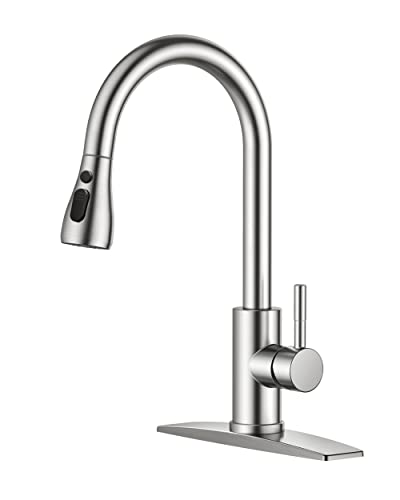
- FORIOUS Kitchen Faucet with Pull Down Sprayer
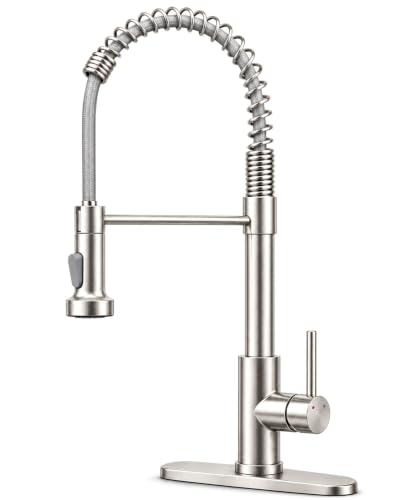
- OWOFAN Kitchen Faucet with Pull Down Sprayer
- WEWE Pull-Down Kitchen Faucet, 3-Mode Sprayer
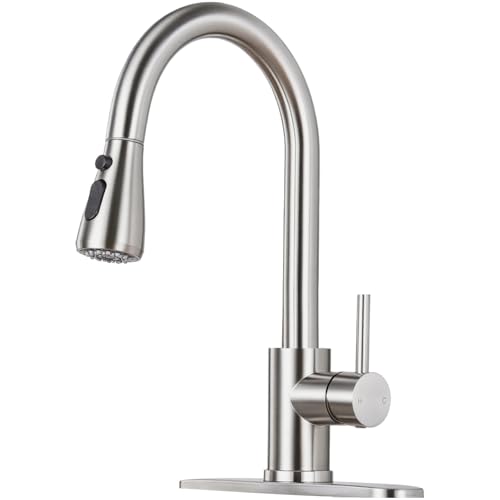
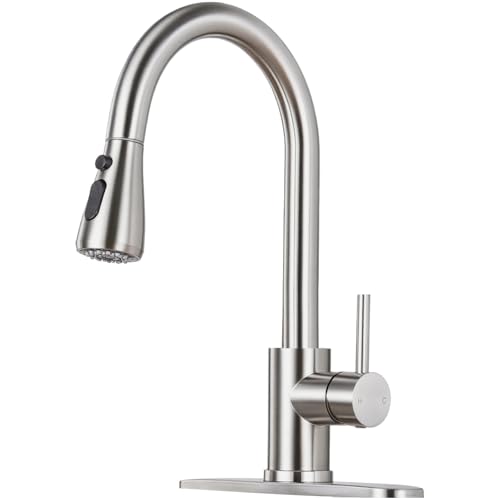
- LUFG Brushed Nickel Kitchen Faucet with Pull Down Sprayer
- Moen Essie Pulldown Kitchen Faucet 87014SRS
- Moen Adler Pulldown Kitchen Faucet 87233SRS
Read the full guide ↓ for the ranking logic, the honest limitations of every pick, and the checks that matter more than any headline claim.
Finding the best made inexpensive kitchen faucets is really a question about where the money went. A value-tier faucet can be genuinely well made — solid stainless construction, a ceramic cartridge, honest certifications — or it can be a thin shell over weak internals that looks identical in a product photo. The listings themselves tell you which is which, if you read them for evidence instead of adjectives: materials named by grade, certifications named by standard, and installation hardware described instead of hidden.
This guide ranks six value-positioned pull-down faucets by build evidence per tier. Two carry the Moen name and long-running model numbers, which brings a parts-and-support advantage that has nothing to do with the faucet body itself. The other four compete on stated construction: SUS 304 stainless steel, lead-free certification, braided supply hoses and tool-free installation claims. None of that guarantees a decade of service, but it separates engineered value from decorative value. Readers comparing the broader build-quality picture should also see the companion guide to Best Made Kitchen Faucets, which ranks construction without the value lens.
One honesty note before the rankings. Inexpensive is a relative tier, judged here from each model line’s positioning — value lines versus flagship lines — and never from a printed figure, because figures move. What does not move is the engineering: a ceramic cartridge, a stainless body and a certified lead-free waterway cost what they cost to make, and a listing that states them has made a verifiable claim you can hold the maker to.
Key Takeaways
- Well-made and inexpensive meet at three stated features: a stainless or otherwise named body material, a ceramic cartridge, and a drinking-water certification named by standard.
- Installation is part of the price you actually pay: tool-free or deck-plate-included designs remove the plumber call and the extra parts run from the real cost of ownership.
- A famous brand’s value line (Moen Essie, Moen Adler) buys you model-number stability and parts availability, which is a form of build quality that shows up years later.
- Pull-down sprayers dominate this tier for a reason: one mechanism covers rinsing, filling and cleaning, so value engineering concentrates on making that one mechanism well.
- Judge the hose and the cartridge, not the silhouette: every faucet in this tier photographs beautifully, but only some listings state what the working parts are made of.
In this guide
Quick Picks
Six faucets made the final cut for best made inexpensive kitchen faucets. All six are linked, because all six state enough construction evidence to stand behind. The table gives the short version; the detailed reviews give the full reasoning.
| Pick | Badge | Why it stands out | Listing |
|---|---|---|---|
| FORIOUS Kitchen Faucet with Pull Down Sprayer | Best Overall Value Build | Stainless steel body and a deck plate for 1 or 3 hole sinks are both stated, so the value covers fit as well as construction. | Check on Amazon |
| OWOFAN Kitchen Faucet with Pull Down Sprayer | Best Spring-Design Value | Lead-free NSF certified stainless steel is stated in the title itself, and the spring silhouette adds commercial-style reach. | Check on Amazon |
| WEWE Pull-Down Kitchen Faucet, 3-Mode Sprayer | Best Tool-Free Install Value | The fullest budget spec sheet in the group: SUS 304, ceramic cartridge, braided hoses and tool-free install are all stated. | Check on Amazon |
| LUFG Brushed Nickel Kitchen Faucet with Pull Down Sprayer | Best Certified Value | Three certifications are named by standard — NSF372, NSF61 and cUPC — alongside SUS 304 construction. | Check on Amazon |
| Moen Essie Pulldown Kitchen Faucet 87014SRS | Best Brand-Name Value | A numbered Moen model (87014SRS) with a Spot Resist finish: the value is in support, parts and finish upkeep. | Check on Amazon |
| Moen Adler Pulldown Kitchen Faucet 87233SRS | Best Easy-Replacement Value | The Adler line is one of the most widely stocked value pulldowns in US retail, which makes future replacement simple. | Check on Amazon |
How These Picks Were Chosen
Shortlisting started with a value-tier filter and an evidence filter applied together. The value filter kept model lines positioned as accessible rather than flagship. The evidence filter then removed any listing that would not state its body material, its cartridge type or its certification status in plain language. What survived is a shortlist where every pick can point to at least two concrete construction claims in its own listing.
Badges were assigned after ranking. Best Overall went to the faucet with the strongest spread of stated construction for its tier. Other badges mark where a pick’s value concentrates: the easiest installation, the fullest certification set, the brand-support advantage. Where two picks are close, the reviews say so and name the deciding factor, because at this tier the deciding factor is usually one stated feature.
This is research-led guidance, not a laboratory programme. We did not cut faucets open or run cycle tests; we compared verified listing data, certification language and model-line positioning, and we flag every place where a listing is silent and a buyer should verify on the listing page itself. That discipline matters more at the value tier than anywhere else, because silence is where cheap construction hides.
The 6 Best Picks for Best Made Inexpensive Kitchen Faucets, Reviewed in Detail

FORIOUS Kitchen Faucet with Pull Down Sprayer
Badge: Best Overall Value Build
Strengths
- Stainless steel construction is stated outright, not implied by the finish name
- Deck plate included in the concept: one purchase covers 1-hole and 3-hole decks
- Classic high arc gives tall-pot clearance that value faucets often sacrifice
Trade-offs
- The listing leans on versatility claims (farmhouse, camper, RV, bar) rather than cartridge detail
- No spray-mode count is stated, so sprayer versatility must be verified on the listing
- Brushed nickel is the stated finish; buyers wanting a polished look should look elsewhere
Key specifications from the listing
- Body: Stainless steel, as stated in the listing
- Finish: Brushed nickel
- Handle: Single handle
- Mounting: Deck plate for 1 or 3 hole
- Spout: Classic high arc, pull-down sprayer
The FORIOUS earns the top badge because its value is stated in the right order: material first, fit second, styling last. Stainless steel is named as the construction, the single-handle layout keeps the moving-parts count low, and the included deck-plate concept means a 3-hole sink does not trigger a second purchase. In a tier where many listings lead with lifestyle settings, a listing that leads with what the faucet is made of is already ahead.
In daily use the high arc is the feature you will feel. Tall stockpots and watering cans pass underneath without the tilt-and-wedge routine, and the pull-down sprayer covers rinsing at the basin corners. The honest limitation is documentation depth: the listing does not state a spray-mode count or a cartridge type, so a buyer who cares about either should confirm both on the listing page before ordering. That gap is the only thing keeping this from being an unqualified recommendation, and it is a gap about paperwork, not about the metal.
Best for: value buyers who want stated stainless construction and one-box fit for either deck layout / Not suited for: buyers who need a stated multi-mode sprayer or a documented cartridge specification before they commit

OWOFAN Kitchen Faucet with Pull Down Sprayer
Badge: Best Spring-Design Value
Strengths
- Lead-free, NSF certified stainless steel is claimed in the title, where it can be checked
- Spring spout design gives flexible, directed rinsing around big pans
- 1 or 3-hole deck plate flexibility matches the FORIOUS on fit
Trade-offs
- The exposed spring style divides opinion and shows water spots more readily
- A spring faucet’s taller profile needs cabinet clearance above the sink
- Certification scope (which NSF standard) is not spelled out in the title
Key specifications from the listing
- Body: Lead-free NSF certified stainless steel, as stated
- Finish: Brushed nickel
- Handle: 1 handle
- Mounting: 1 or 3-hole deck plate
- Spout: Spring design with pull-down sprayer
OWOFAN’s value argument is the spring. Commercial-style spring faucets usually live in a higher tier; here the spring silhouette arrives with a lead-free, NSF certified stainless claim stated in the title itself. The spring does real work: it holds the sprayer at varied heights and angles, so rinsing a sheet pan propped in the sink stops being a two-handed negotiation.
The trade-offs are aesthetic and practical at once. An exposed spring is a strong visual statement that suits industrial and farmhouse kitchens better than formal ones, and its coils ask for an occasional wipe that a smooth spout does not. Height matters too: measure the space between your sink deck and any cabinet or shelf above before choosing a spring design. Judged purely as engineering per tier, though, this is one of the strongest value statements in the group.
Best for: cooks who want commercial-style spring reach and a stated lead-free stainless build at a value position / Not suited for: low-clearance sinks under cabinets, or buyers who prefer a smooth, minimal spout silhouette

WEWE Pull-Down Kitchen Faucet, 3-Mode Sprayer
Badge: Best Tool-Free Install Value
Strengths
- SUS 304 stainless and a ceramic cartridge are both named — the two specs that decide longevity
- 304 braided supply hoses are stated, removing a common hidden extra purchase
- Tool-free installation claim directly cuts the real cost of ownership
Trade-offs
- Stated fit is 1-hole, so 3-hole decks need the deck question resolved before ordering
- Easy-clean nozzles help with scale, but hard-water homes still need routine descaling
- Three spray modes are stated without naming each mode’s pattern in the title
Key specifications from the listing
- Body: SUS 304 stainless steel
- Cartridge: Ceramic cartridge
- Sprayer: 3-mode sprayer, easy-clean nozzles
- Swivel: 360-degree swivel, high arc
- Install: Tool-free install stated; 304 braided supply hoses; 1-hole fit
On paper this is the best-specified value faucet in the guide, and the paper matters. SUS 304 names the stainless grade. Ceramic names the cartridge technology. Braided 304 hoses name the supply lines. Each of those is a place where a cheaper faucet quietly saves money at your expense, and this listing declines to save it in all three places at once. Add a tool-free installation claim and the total cost of ownership story gets stronger still: no plumber, no separate hose purchase, no basin-wrench wrestling.
The one fit caution is real: the title states a 1-hole fit. Owners of 3-hole sinks should confirm the deck-plate situation on the listing before ordering rather than assuming. In use, the 360-degree swivel and high arc make this a basin-coverage specialist, and the easy-clean nozzle design acknowledges the most common value-faucet failure — scale-clogged spray holes — with the right engineering answer, soft nozzles you can clear by hand.
Best for: 1-hole sink owners who want the most completely specified value build in the group / Not suited for: 3-hole deck owners who cannot confirm a deck-plate option, or buyers who dislike high-arc profiles
LUFG Brushed Nickel Kitchen Faucet with Pull Down Sprayer
Badge: Best Certified Value
Strengths
- Certifications are named precisely (NSF372, NSF61, cUPC), the strongest paperwork in this tier
- SUS 304 stainless with a 360-degree swivel spout covers material and movement
- Deck plate included in the listing concept for flexible mounting
Trade-offs
- No cartridge type is stated in the title, a notable silence next to its certification strength
- Positioned for kitchen, RV, laundry and bar use, so it is a generalist rather than a kitchen specialist
- Three spray modes are counted but not individually described in the title
Key specifications from the listing
- Body: SUS 304 stainless steel
- Certifications: NSF372, NSF61, cUPC, as stated
- Handle: Single handle
- Sprayer: 3 spray modes, pull-down
- Swivel: 360-degree swivel spout; deck plate included
LUFG’s value case rests on paperwork, and at this tier paperwork is precious. NSF61 addresses drinking-water system components, NSF372 addresses lead content, and cUPC listing speaks to code compliance in the US and Canada. A value faucet that names all three in its title is making checkable claims, and checkable claims are the closest thing a listing can offer to a warranty on its waterway. Buyers who prioritise certified water contact over every other dimension — a reasonable priority for a family kitchen — will find this the most reassuring pick in the group, a point the guide to Best Material For Kitchen Faucets develops in depth.
Construction keeps pace: SUS 304 stainless, a full-swivel spout and three spray modes cover the daily-work checklist. The silence is the cartridge, which the title does not name. That does not make the cartridge poor; it makes it unverified from the title alone, and the listing page is the place to confirm it. As a generalist sold for kitchen, RV, laundry and bar sinks, it also trades a little kitchen-specific refinement for breadth — a fair trade at this position.
Best for: buyers who rank named drinking-water certifications first and want stainless construction behind them / Not suited for: buyers who need the cartridge type stated up front, or who want a kitchen-only specialist design
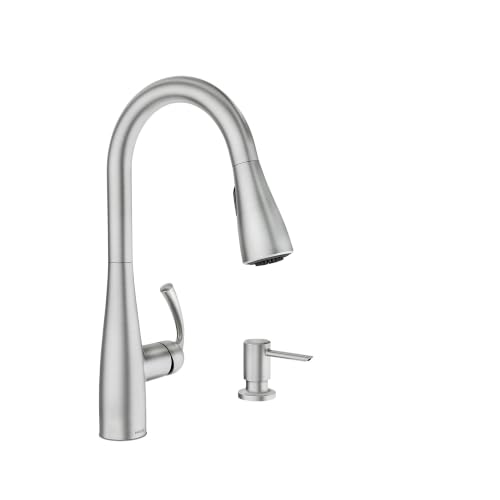
Moen Essie Pulldown Kitchen Faucet 87014SRS
Badge: Best Brand-Name Value
Strengths
- A real model number means cartridges and parts can be ordered by number years later
- Spot Resist finish is engineered to show fewer fingerprints and water spots
- Moen’s retail footprint makes in-person parts and help unusually accessible
Trade-offs
- The title is terse: body material and cartridge type are not stated there and need listing-page confirmation
- No deck configuration is stated in the title, so fit must be verified before ordering
- You pay something for the badge; on stated specs alone, rivals in this guide say more
Key specifications from the listing
- Model: 87014SRS, as stated
- Finish: Spot Resist Stainless
- Sprayer: Pulldown sprayer
- Brand: Moen Essie line
The Essie makes a different kind of value argument: not the longest spec sheet, but the longest support tail. A faucet is a ten-year appliance wearing a two-year purchase decision, and the thing that fails in year six is a cartridge or a hose — parts that are trivially orderable when the faucet carries a stable model number from a maker with deep retail distribution, and a research project when it does not. The guide to Best Manufacturers Of Kitchen Faucets explains why that support question deserves its own ranking; the Essie is where it lands in this tier.
The Spot Resist finish is the second half of the case. Stainless-look faucets in busy kitchens live under a film of fingerprints and dried droplets, and a finish engineered to resist both is a daily-quality-of-life feature, not a cosmetic extra. The honest limitation is the title’s brevity: it does not state body material, cartridge type or deck fit, so this pick asks you to verify more on the listing page than its rivals do. What it states — brand, line, model, finish technology — it states precisely.
Best for: buyers who value parts availability and a spot-resistant finish over a long stated spec sheet / Not suited for: spec-first buyers who want material and cartridge claims confirmed in the title itself

Moen Adler Pulldown Kitchen Faucet 87233SRS
Badge: Best Easy-Replacement Value
Strengths
- Adler is a long-running, widely stocked line — the safest future-parts bet in this guide
- Spot Resist Stainless finish keeps a busy sink looking cleaner between wipes
- Pulldown format matches how most households actually rinse and fill
Trade-offs
- Like the Essie, the title states no body material or cartridge type
- A ubiquitous line means a common look; design-led kitchens may find it plain
- Deck fit is not stated in the title and must be confirmed on the listing
Key specifications from the listing
- Model: 87233SRS, as stated
- Finish: Spot Resist Stainless
- Sprayer: Pulldown sprayer
- Brand: Moen Adler line
If the Essie is the brand-value pick, the Adler is the ubiquity pick. Adler faucets sit on the shelves of big-box stores across the country, which changes the ownership maths in two ways: a replacement cartridge is a short drive rather than a shipping wait, and any plumber you call has almost certainly serviced this exact line before. For a rental property, a first home, or a kitchen that simply cannot be out of service while a part ships, that ubiquity is a genuine engineering-adjacent virtue.
Against the Essie, the choice is mostly about which Moen value line’s shape and handle feel you prefer, since both carry the Spot Resist finish and the same support logic. The same documentation caveat applies: the title states brand, line, model and finish, and leaves material and cartridge to the listing page. Buyers weighing the two Moens against the fully-specified WEWE and LUFG above are really choosing between two kinds of assurance — stated construction today, or supported ownership tomorrow. Both are defensible; this guide ranks stated construction first, which is why the Adler closes the list rather than leading it.
Best for: owners who want the easiest future servicing and parts sourcing in the value tier / Not suited for: buyers who want a distinctive design, or full material and cartridge disclosure in the title

Comparison Table
Read the table by evidence type. The WEWE and LUFG state construction and certification in engineering language; the FORIOUS and OWOFAN state material and fit; the two Moens state identity — brand, line, model, finish technology — and ask you to verify internals on the listing page. All three evidence styles can describe a well-made faucet, but they ask different amounts of trust.
| Pick | Badge | Defining traits from the listing | Listing |
|---|---|---|---|
| FORIOUS Kitchen Faucet with Pull Down Sprayer | Best Overall Value Build | Stainless steel body, brushed nickel, single handle, high arc, deck plate for 1 or 3 hole | Check on Amazon |
| OWOFAN Kitchen Faucet with Pull Down Sprayer | Best Spring-Design Value | Lead-free NSF certified stainless steel, spring spout, 1 handle, 1 or 3-hole deck plate | Check on Amazon |
| WEWE Pull-Down Kitchen Faucet, 3-Mode Sprayer | Best Tool-Free Install Value | SUS 304, ceramic cartridge, 3-mode sprayer, 360-degree swivel, braided hoses, tool-free install | Check on Amazon |
| LUFG Brushed Nickel Kitchen Faucet with Pull Down Sprayer | Best Certified Value | SUS 304, NSF372 / NSF61 / cUPC stated, 3 spray modes, 360-degree swivel, deck plate | Check on Amazon |
| Moen Essie Pulldown Kitchen Faucet 87014SRS | Best Brand-Name Value | Moen Essie 87014SRS, Spot Resist Stainless finish, pulldown sprayer, numbered model | Check on Amazon |
| Moen Adler Pulldown Kitchen Faucet 87233SRS | Best Easy-Replacement Value | Moen Adler 87233SRS, Spot Resist Stainless finish, pulldown sprayer, widely stocked line | Check on Amazon |
How to Choose Best Made Inexpensive Kitchen Faucets
Start with the waterway, because that is what your family drinks from. A lead-free claim tied to a named standard (NSF61 for water-contact components, NSF372 for lead content) is verifiable in a way that a bare “safe materials” slogan is not. In this tier, treat named certifications as the first filter and everything else as tiebreakers. If a listing will not name its standard, assume the claim is marketing until the listing page proves otherwise.
Next, the cartridge — the valve that decides whether the faucet drips in year three. Ceramic cartridges are the longevity benchmark in this class, and a listing that names one (as the WEWE does) is telling you where its money went. Where the cartridge is not stated, do not assume the worst; do assume the unknown, and price that uncertainty into your choice between a fully specified rival and a brand-support pick.
Then count the true cost of installation. A faucet that needs a deck plate you do not own, supply hoses in a different length, or a plumber’s minimum call-out is not the faucet its tier suggests. Tool-free installation claims, included deck plates and stated braided hoses all subtract real money and a full weekend afternoon from ownership. The companion guide to Best Manual Kitchen Faucets covers the no-electronics ownership path that most of this tier follows, and it is worth reading before you pay extra for features with batteries.
Finally, fit the faucet to the sink you have, not the sink in the photograph. Count your deck holes, measure the clearance above the deck for high-arc and spring profiles, and check that a pull-down hose has room to move under your sink without snagging on shut-off valves or a disposal. Ten minutes with a tape measure prevents the most common value-tier disappointment, which is a good faucet in the wrong kitchen.
How to Install a Value Pull-Down Faucet Without Paying a Plumber
Most faucets in this guide are designed for owner installation, and the tool-free and deck-plate designs make that realistic for a first-timer. Work in daylight if you can, photograph every connection under the sink before you touch it, and keep a shallow tray and an old towel in the cabinet — the water trapped in supply lines always goes somewhere, and it should go where you planned.
- Shut off the hot and cold valves under the sink and open the old faucet to drain pressure. If a valve will not fully close, shut the house supply instead and note the valve for replacement.
- Disconnect the supply lines and the old mounting hardware. On older sinks the mounting nuts are the whole job; penetrating oil and patience beat force.
- Clean the deck thoroughly. Old putty and scale under the new base are the leading cause of a faucet that rocks and then leaks.
- Set the deck plate first if your sink has three holes, then mount the faucet body following the maker’s sequence. Hand-tighten, check alignment from the front of the sink, then finish tightening.
- Connect the supply lines — braided hoses where stated — hand-tight plus a modest wrench turn. Over-tightening cracks fittings and causes the leaks people blame on the faucet.
- Attach the pull-down hose and its weight, leaving a clear loop with nothing stored against it. The weight’s position sets how firmly the sprayer docks.
- Restore water slowly, then check every joint with a dry paper towel, run each spray mode, and swing the spout through its full arc while watching underneath.
For the first week, leave the under-sink cabinet partly empty and glance at the connections when you take out the trash. Most installation leaks announce themselves as a damp fitting in the first days, when they are a quarter-turn problem rather than a cabinet-repair problem.
Troubleshooting: three problems owners actually meet
Problem: the sprayer will not stay docked and droops overnight → the hose weight has slid or is catching on stored items. Clear the hose’s path, reposition the weight on the loop, and confirm the sprayer seats with a click or a firm magnetic-style pull, depending on the design.
Problem: spray pattern splutters or one mode is weak → scale or debris is in the nozzle face. Use the easy-clean method where fitted (rub the soft nozzles), soak the spray face in vinegar solution if your maker allows it, and flush the line with the sprayer removed if debris is suspected.
Problem: a slow drip from the spout after shut-off → the cartridge is passing water. On a new faucet this is usually debris from installation; flush per the maker’s instructions before concluding the cartridge itself is faulty, and record the model number before ordering any part.
Where Value Engineering Shows: Hoses, Weights and the Parts Nobody Photographs
The difference between a well-made inexpensive faucet and a merely inexpensive one lives under the sink. Braided supply hoses resist the slow abrasion that plain lines suffer against cabinet edges. A properly placed hose weight decides whether the sprayer docks firmly for a decade or droops in a year. Mounting hardware that can be tightened by hand, in the cramped space behind a basin, is a design decision that respects the installer. None of these photograph well, which is exactly why listings that bother to state them deserve attention.
This is also why the two Moens remain competitive despite terse titles. A model number is an under-sink feature: it is printed on the documentation that lets a future owner order the exact cartridge in minutes. When you compare a fully specified challenger against a numbered incumbent, you are comparing stated hardware against stated support. The guide to Best Made Kitchen Faucets Ada takes the same evidence-first approach into accessible design, where handle effort matters as much as hardware.
Rentals, First Homes and Flips: Matching the Tier to the Job
Value faucets do three different jobs in American housing, and the right pick differs by job. In a rental, the Adler’s ubiquity wins: a tenant-reported drip becomes a same-day cartridge swap from local stock. In a first home you plan to keep, the WEWE’s stated cartridge and hoses or the LUFG’s certifications buy the longest quiet ownership. In a flip or a pre-sale refresh, the FORIOUS and OWOFAN deliver the visual upgrade — high arc, spring profile — with stated stainless construction behind the looks, so the improvement survives a buyer’s home inspection questions.
In all three jobs, avoid the one false economy this tier tempts: choosing by silhouette alone. A dramatic profile on an unstated body is how a kitchen ends up with a second faucet purchase inside two years, which is the most expensive outcome the value tier can produce.
A Week of Real Cooking on a Value Faucet: Where the Tier Shows
Rankings are abstract; a week of cooking is not. Imagine the FORIOUS or the WEWE installed in a family kitchen and walk the days. Monday is pasta night: the high arc earns its keep when the stockpot slides under the spout instead of being filled in two saucepan relays, and the pull-down sprayer rinses the colander without redecorating the backsplash. Tuesday is sheet-pan vegetables, and the sprayer’s rinse strength matters more than its mode count. Wednesday the sink fills with the week’s lunch containers, and the swivel — full-circle on the WEWE and LUFG — decides whether the faucet patrols the whole basin or argues with its corners.
Thursday is where value engineering quietly shows its ledger. A braided hose does not announce itself; it simply never becomes the damp cabinet smell that sends an owner shopping for a second faucet in year two. A ceramic cartridge does not announce itself either; the lever just keeps landing at the same temperature with the same effort. The features that do announce themselves are the absences: no deck plate bought separately because the FORIOUS and LUFG accounted for the deck, no plumber’s invoice because the WEWE’s installation was designed for hands and patience rather than for a basin wrench and a call-out fee.
By the weekend the honest limitations have also had their say. The spring profile of the OWOFAN has needed a wipe that a smooth spout would not. The Moen models have asked their owner to verify on a listing page what their rivals stated in a title. And the whole set has done the thing the tier promises when it is engineered rather than decorated: it has disappeared into the work. A value faucet should be boring in the best sense — present for every task, absent from every worry — and the picks in this guide were chosen because their stated construction predicts exactly that boring, dependable week.
The Second Year Test: What to Check Before the First Year Ends
Value purchases deserve a scheduled moment of scepticism, and the right moment is a few months before the first year closes. Run this short audit on whichever pick you installed. Check every under-sink joint with a dry paper towel, slowly, joint by joint. Work the lever through its full travel and notice whether the effort is the same in both directions and whether shut-off is still immediate and complete. Pull the sprayer to its full extension ten times and watch the hose’s path and the dock’s confidence. Rub the nozzle face clean and judge the pattern against your memory of its first week.
Then check the paperwork position while it is still cheap to fix. Do you know the model or the full listing identity of your faucet? Do you know which cartridge it takes, or where that answer lives? Is the maker’s documentation findable from what you saved? The two Moen models in this guide make that audit almost unfairly easy, which is their argument in miniature. The challengers make it easy in a different way: their titles stated the cartridge, the grade and the certifications up front, so the audit is a comparison against promises already in writing.
Nothing in this audit is maintenance theatre. Each check maps to a failure that is inexpensive inside the first year — a fitting’s quarter-turn, a hose weight’s repositioning, a cartridge question asked while documentation is current — and expensive after it. The inexpensive faucet’s real price is set by whether its owner ever has to buy the category twice. This guide’s picks, and this audit, exist to make sure the answer is once.
Gift, Rental and First-Home Scenarios: Quick Answers
Three recurring scenarios deserve direct answers. Buying for a rental you manage: choose the Moen Adler, because the first tenant-reported drip will be fixed from local stock on the same day, and time-to-repair is the only faucet metric a tenant ever scores you on. Buying a first home you will keep: choose the WEWE or the LUFG, because their stated cartridges, grades and certifications are the longest quiet you can buy at this tier. Buying a pre-sale refresh: choose the FORIOUS for stated stainless with a classic profile, or the OWOFAN if the kitchen’s style can carry the spring — both photograph as upgrades and document as substance, which is exactly the combination a buyer’s inspection rewards.
Notice what none of those answers required: a price. Tier positioning, support geography and stated construction decided all three. That is the habit this guide hopes outlives the page — when the next inexpensive appliance presents itself, ask where its money went, in its own listing’s words, before asking what it costs this week.
One last scenario ties the tier together: the house you are preparing for someone you love — a parent’s kitchen refresh, an adult child’s first apartment. There, the inexpensive faucet is not a compromise to apologise for but a judgement to be proud of, provided it is the engineered kind this guide ranks: stated stainless or certified waterway, a cartridge you can name, a fit you verified against their actual sink. Send the WEWE for a modern 1-hole deck, the LUFG where certification reassures, the Adler where local servicing matters most — and include, with the gift, the one thing money tiers cannot buy afterwards: a note of the model, the cartridge and the date it went in. That note is the difference between a faucet and an inheritance of small, solvable problems.
Common Buying Mistakes
Mistake one: treating “inexpensive” as a synonym for “disposable” and skipping the evidence check entirely. The whole point of this guide is that the tier contains both engineered value and decorated junk, separable in five minutes of listing reading.
Mistake two: ignoring deck configuration until the box is open. A 1-hole faucet and a 3-hole sink can usually be reconciled with a deck plate, but only if the plate exists for that model. Confirm before ordering, not during installation with the water off.
Mistake three: over-tightening supply connections. More installation leaks in this tier come from cracked, over-torqued fittings than from defective faucets. Hand-tight plus a modest turn is the specification, not a suggestion.
Mistake four: storing cleaning bottles against the pull-down hose loop. The hose needs a clear swing path and its weight needs a clear drop; a crowded cabinet is the leading cause of docking problems that get blamed on the faucet.
Final Recommendation
Start with the WEWE Pull-Down if your sink is a 1-hole deck: it states the most complete construction story in the tier — SUS 304, ceramic cartridge, braided hoses, tool-free installation — and asks the least trust. Choose the LUFG instead if named drinking-water certifications are your first priority, and the FORIOUS if you need one-box coverage of either deck layout with stated stainless construction.
Check on Amazon · Check on Amazon · Check on Amazon
Pick the Moen Essie or Adler when the support tail matters more than the spec sheet — a home you will keep, service locally, and expect to find parts for without a search project. Pick the OWOFAN when the spring profile is the look your kitchen wants and you have the clearance above the sink to house it. Every pick here is defensible; the ranking simply puts stated construction first, because at this tier, what a listing is willing to state is the best predictor of what the faucet will do.
Frequently Asked Questions
Can an inexpensive kitchen faucet really last?
Yes, when the savings come from distribution and styling rather than from the waterway and the valve. A value faucet with a stainless body, a ceramic cartridge and a certified lead-free waterway has the same longevity ingredients as a flagship; what it usually gives up is finish variety, exotic spray patterns and brand theatre. The picks in this guide were filtered for exactly those ingredients.
What does NSF certification actually tell me about a faucet?
NSF61 concerns the safety of materials in contact with drinking water, and NSF372 concerns lead content. A listing that names the standard is making a checkable claim about its waterway. A listing that says only “safe” or “healthy” without a standard is making an uncheckable one, and this guide weights the two very differently.
Is a ceramic cartridge worth prioritising at this tier?
It is the single most predictive stated feature for drip-free service, because the cartridge is the moving seal the whole faucet depends on. Where a listing names a ceramic cartridge, that is meaningful evidence. Where it does not, the cartridge may still be fine — but you are being asked to trust rather than verify.
Should I choose the Moen models or the fully specified challengers?
Choose the Moens for ownership support: stable model numbers, wide parts availability and a spot-resistant finish. Choose the WEWE or LUFG for stated construction and certification today. Neither answer is wrong; they insure against different futures — a part you will need later versus a specification you want confirmed now.
Do I need a plumber to install these faucets?
Most owners install this class of faucet themselves, and the tool-free and deck-plate designs in this guide are built for that. Budget an unhurried afternoon, photograph the old connections before removal, and shut the water off properly. Call a plumber instead if your shut-off valves are seized, corroded or absent — that is a plumbing problem, not a faucet problem.
Why does this guide print no prices for an “inexpensive” ranking?
Because a printed figure would be wrong within weeks and would mislead the comparison. Inexpensive here describes each model line’s tier positioning — value line versus flagship line — which is stable. Check the current figure on the listing, where it is accurate, and judge it against the construction evidence in these reviews.