Disclosure: topratedkitchenware.com is reader-supported. When you buy through links on our site, we may earn an affiliate commission from Amazon and other retailers, at no extra cost to you.
Where to buy
The six bottles below are the verified picks for this guide to best malibu rum mango mixers. One honest fact shapes the whole list: this site’s verified pool contains no mango juice or mango puree mixer, so no pick below pretends to be one. What the pool offers instead is a complete family of Fever-Tree tonics, and tonic turns out to be the mixer style that flatters mango rum most in a long drink, because bitterness, bubbles, and citrus or floral top notes frame the mango instead of burying it under more fruit sweetness. Each bottle is a different tonic register, and each review names the drinker it suits. Each name links to its Amazon listing, where you can check the latest price on Amazon and confirm the current pack before ordering.
- Fever-Tree Light Tonic Water Mixer Cans
- Fever-Tree Tonic Water Mixer Bottles
- Fever-Tree Premium Indian Tonic Water
- Fever-Tree Mediterranean Tonic Mixer
- Fever-Tree Light Tonic Water 8 Pack
- Fever-Tree Elderflower Tonic Mixer
Read the full guide ↓ for the full breakdown of how each mixer behaves with this spirit, the honest limits of every pick, and the mixing checks that matter more than the label.
Finding the best malibu rum mango mixers requires one honest reset at the start. Malibu’s mango expression already delivers the mango, loudly and sweetly, in the spirit itself. A mixer for it therefore does not need to bring more mango, and the thick, sweet mango juices many buyers go hunting for usually make the finished drink heavier, not better: fruit on fruit, sugar on sugar, with the mango flavour paradoxically less distinct because nothing contrasts with it. What makes mango taste more like mango in a glass is contrast, a bitter edge, a citrus lift, cold, and carbonation. That is precisely what tonic water supplies, which is why this verified pool of tonics is a better answer to the search than it first appears.
So this guide is a tonic guide with a mango rum mission. The six Fever-Tree picks below span the useful range: light tonics that keep the drink dry and let the mango lead, the classic tonic in cans and in bottles, the full-bodied premium Indian style for bitterness devotees, a Mediterranean style whose rosemary and herbaceous notes pull the drink toward a savoury, aperitif register, and an elderflower style whose soft floral sweetness rounds the mango into something that tastes like a considered cocktail rather than a flavoured rum with bubbles. Each one makes a genuinely different drink from the same bottle of rum, and the reviews are explicit about those differences.
You will also find the working layer that decides whether any of them succeed: the ratio that keeps mango in charge, the ice and temperature discipline a highball demands, garnish choices that amplify mango rather than masking it, storage habits for cans and bottles, and fixes for the flat or cloying glass. Households whose Malibu shelf covers the original coconut rum as well will find the wider picture in Best Malibu Mixers, and the sugar-conscious version of this same thinking in Best Low Sugar Mixers.
Key Takeaways
- The mango is already in the rum; the mixer’s job is contrast, not more mango. Bitterness, citrus, and bubbles make mango taste brighter.
- All six picks are Fever-Tree tonics in different registers: light, classic, premium, Mediterranean, and elderflower. They make genuinely different drinks.
- Light tonics suit drinkers who want the driest glass; elderflower suits drinkers who want the roundest, most cocktail-like one.
- Ratio discipline decides everything: one part mango rum to three parts cold tonic over a full glass of ice.
- Cans guarantee fizz for solo drinkers; larger bottles suit shared evenings and must be finished promptly once opened.
- Check the latest price on Amazon per pick, because pack counts and bottle sizes differ across the tonic family.
In this guide
Quick Picks
| Pick | Badge | Why it earns its place | Listing |
|---|---|---|---|
| Fever-Tree Light Tonic Water Mixer Cans | Best Overall | Lightest sweetness, real quinine, and a bitter orange hint that frames mango perfectly. | Check on Amazon |
| Fever-Tree Tonic Water Mixer Bottles | Best for Entertaining | Classic tonic in 6.8 fl oz glass bottles, the presentable serve for guests. | Check on Amazon |
| Fever-Tree Premium Indian Tonic Water | Best Premium | Fullest quinine character, with no artificial sweeteners, flavourings, or preservatives per the listing. | Check on Amazon |
| Fever-Tree Mediterranean Tonic Mixer | Best Herbal Twist | Rosemary essential oils and African quinine pull mango rum toward a savoury aperitif. | Check on Amazon |
| Fever-Tree Light Tonic Water 8 Pack | Best Small Pack | The same light tonic in a small 8 can pack for trialling the highball habit. | Check on Amazon |
| Fever-Tree Elderflower Tonic Mixer | Best Floral Twist | Soft elderflower sweetness over African quinine for the roundest, most cocktail-like serve. | Check on Amazon |
How These Picks Were Chosen
This guide is research-led, not panel-tasted, and it is transparent about that. Every pick comes from the site’s verified beverage pool, with product identity, format, and listing claims confirmed against current listing data. Because the pool for this keyword is a single brand’s tonic range, the selection work was different from a typical roundup: instead of comparing brands, the picks were compared as registers of one well-understood mixer, judged on the three variables that change a mango rum highball, namely the tonic’s sweetness level, its bitterness weight, and its aromatic top note.
Those three variables were assessed directly from each product’s verified listing description, which for this range is unusually informative: the light styles declare their lighter positioning and bitter orange note, the Mediterranean declares rosemary and herbaceous character, the elderflower declares its soft floral sweetness, and the premium Indian declares the absence of artificial sweeteners, flavourings, and preservatives. Matched against how mango rum behaves, sweet, soft, and fruit-forward, those declarations predict the glass with reasonable confidence: lighter and more bitter tonics dry the drink out, aromatic tonics redirect it, and the elderflower rounds it.
What research cannot predict is where your household sits on the bitterness spectrum, and with tonic that preference is close to binary: people tend to know whether they are tonic people. The reviews therefore avoid declaring one register objectively superior. Best Overall goes to the light cans, because mango rum’s sweetness makes the lighter tonic the most broadly correct starting point, but the guide is written so that a bitterness devotee or a floral cocktail drinker can identify their bottle in one reading and skip the rest with confidence.
The 6 Best Options for Best Malibu Rum Mango Mixers

Fever-Tree Light Tonic Water Mixer Cans
Badge: Best Overall
Strengths
- Light style adds the least sweetness to the sweetest rum in this coverage
- Hint of Mexican bitter orange per the listing sharpens the mango top note
- Single-serve cans keep every highball at full carbonation
Trade-offs
- Gentler bitterness corrects less forcefully than the premium style
- A 24 can pack assumes the highball becomes a household habit
- Drinkers who find light products thin may prefer the classic cans
| Detail | From the product listing |
|---|---|
| Format | 5.1 fl oz cans, pack of 24 |
| Key ingredient named | Real quinine |
| Flavour notes | Hint of Mexican bitter orange; balanced botanicals; smooth, crisp taste |
The lead pick earns its place on a simple piece of arithmetic: mango rum brings the most sweetness of any spirit in this programme, so the winning mixer is the one that adds the least while contributing the most structure. Fever-Tree’s light tonic does exactly that, with real quinine for the bitter frame, balanced botanicals for a smooth, crisp body, and a hint of Mexican bitter orange that does for mango what a twist of peel does for a cocktail, lifting the fruit’s aroma into the first sip. In the standard one-to-three build over a full glass of ice, the mango tastes brighter than it does neat, which is the whole promise of this guide delivered in one glass.
The can format completes the case. At 5.1 ounces a can is one highball’s tonic, opened fresh every time, so the household’s fiftieth serve fizzes like its first and no large bottle ever dies flat in the fridge door. Choose the classic cans instead only if your household reliably finds light mixers thin; choose the premium bottle only if bitterness is your hobby. For everyone else, and particularly for drinkers who have previously found mango rum too sweet to finish, this is the bottle, or rather the can, that changes the verdict. The same pick anchors the lighter end of Best Malibu Mixers for the coconut original.
Best for: most mango rum drinkers, especially sweetness sceptics / Not suited for: drinkers who want a rich, full-bodied tonic

Fever-Tree Tonic Water Mixer Bottles
Badge: Best for Entertaining
Strengths
- Glass bottle presentation makes the highball feel like a considered serve
- 6.8 oz measure suits a tall, generously iced glass in one pour
- Classic quinine and citrus profile is the family’s reference flavour
Trade-offs
- Glass is heavy to stock and breakable outdoors
- A bottle should be served whole; recapped leftovers pour softer
- Hosting presentation is wasted on a purely solo drinking household
| Detail | From the product listing |
|---|---|
| Format | 6.8 fl oz bottles, pack of 24 |
| Key ingredient named | Real quinine |
| Flavour notes | Subtle citrus and fruit notes balanced by quinine bitterness |
Hosting changes what a mixer is for, and this format is the hosting answer. The classic Fever-Tree tonic, real quinine balanced by subtle citrus and fruit notes, arrives in 6.8 ounce glass bottles that let you build a guest’s drink at the table with a little ceremony: tall glass, ice to the top, rum measured, tonic poured from a cold bottle. The measure suits a generously iced tall glass without leaving the drink short, and the classic profile is the register least likely to divide a group, bitter enough to frame the mango, gentle enough not to challenge anyone.
The format’s costs are physical rather than flavourful. Glass is heavy in quantity and unforgiving on stone patios, so outdoor hosts may rationally choose cans and lose nothing in the glass. Each bottle should be poured whole and fresh; a recapped half bottle the next day pours noticeably softer, and in a drink whose purpose is liveliness that softness is the whole ballgame. For a dinner party where mango rum is the aperitif experiment, though, this is the pick that makes the experiment look deliberate, and guests drink with their eyes first more often than hosts like to admit.
Best for: hosts serving mango highballs to guests / Not suited for: solo drinkers who value zero waste above presentation

Fever-Tree Premium Indian Tonic Water
Badge: Best Premium
Strengths
- Fullest bitterness in the family gives mango rum its firmest frame
- No artificial sweeteners, flavourings, or preservatives per the listing
- Larger bottles suit a shared evening of unhurried top-ups
Trade-offs
- Large bottle loses fizz across days; it is an evening’s bottle, not a week’s
- Maximum bitterness will overwhelm drinkers new to tonic
- Premium positioning is wasted on guests who do not notice tonic quality
| Detail | From the product listing |
|---|---|
| Format | 16.9 fl oz (pack of 8) |
| Named attributes | No artificial sweeteners, flavourings or preservatives |
| Style | Premium Indian tonic water |
This is the tonic drinker’s tonic, and mango rum turns out to be an excellent reason to own it. The premium Indian style brings the fullest quinine character in the family, with a listing that specifies no artificial sweeteners, flavourings, or preservatives, and against mango rum’s soft sweetness that firmness produces the most grown-up glass in the guide: bitter first, mango blooming in the middle, finish dry and clean. At one part rum to two and a half parts tonic over large, cold ice, it is a slow drink, the kind that holds its character across a long conversation.
The condition is format discipline, and it is absolute. A 16.9 ounce bottle is one shared evening’s tonic; opened for a single glass and returned to all week, it pours progressively flatter, and flat premium tonic is a worse waste than flat standard tonic because you paid for character that carbonation was carrying. Buy it when highballs are a two-person ritual, recap and refrigerate between rounds the same evening, and let the cans handle your solo nights. Drinkers unsure whether they are bitterness devotees should audition with the classic style first; this bottle rewards a palate that already knows it wants more.
Best for: bitterness devotees sharing highballs across an evening / Not suited for: solo drinkers or tonic newcomers
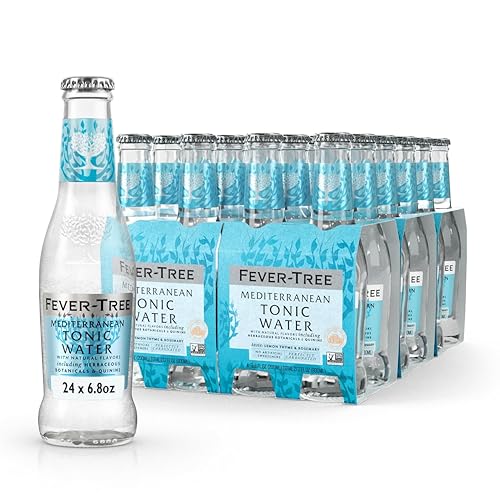
Fever-Tree Mediterranean Tonic Mixer
Badge: Best Herbal Twist
Strengths
- Rosemary and herbaceous notes create a genuinely different, food-friendly drink
- Aperitif register surprises guests who think they know flavoured rum
- Bottle format matches the entertaining rhythm of the classic pick
Trade-offs
- Herbal direction divides drinkers; it is a taste to audition, not assume
- Less purely refreshing than the light and classic styles on a hot afternoon
- Rosemary character can crowd delicate garnishes, so garnish simply
| Detail | From the product listing |
|---|---|
| Format | 6.8 fl oz bottles, pack of 24 |
| Key ingredients named | Essential oils of rosemary, African quinine |
| Flavour notes | Subtly herbaceous, refreshing flavour |
The Mediterranean tonic is the pick that changes the subject. Its listing describes essential oils of rosemary combined with African quinine for a subtly herbaceous flavour, and with mango rum that herbal note performs a small transformation: the drink stops reading as a flavoured rum serve and starts reading as an aperitif, fruit kept in check by a green, savoury edge. Served before food, or alongside grilled vegetables, salads, and seafood, it is the most sophisticated glass in this guide and the one most likely to make a guest ask what they are drinking.
Sophistication is a direction, not a universal upgrade, and this review will not pretend otherwise. On a hot afternoon when the household wants simple refreshment, the light cans do the job with less to think about, and drinkers who dislike herbal flavours in any context should skip this bottle entirely rather than hoping the mango will hide the rosemary; it will not, and it should not. Garnish with restraint, a single rosemary sprig if you have one, a plain lime wedge if you do not, and let the tonic’s own aromatics lead. Audition one pack for a dinner party before committing the shelf to it.
Best for: aperitif drinkers and hosts pairing drinks with food / Not suited for: drinkers who want a purely fruity, sweet serve

Fever-Tree Light Tonic Water 8 Pack
Badge: Best Small Pack
Strengths
- Small pack lets a household audition the light highball before committing to a case
- Same lighter profile and bitter orange touch as the lead pick
- Cans keep every trial serve at full carbonation for a fair test
Trade-offs
- Per-can economy of a small pack is worse once the habit is established
- Eight cans disappear quickly if the trial succeeds with guests present
- Duplicates the lead pick’s flavour, so owning both is redundant
| Detail | From the product listing |
|---|---|
| Format | 5.07 fl oz cans, pack of 8 |
| Key ingredient named | Real quinine |
| Flavour notes | Touch of Mexican bitter orange; balanced botanicals; smooth, crisp taste |
Not every correct purchase is a case. This eight can pack of the same light tonic style, real quinine with a touch of Mexican bitter orange and balanced botanicals, exists for the household that has not yet decided whether mango rum highballs are its drink, and it deserves a badge for that honesty. Eight cans is four evenings of two drinks, enough to learn the ratio, test the garnish question, and discover whether the household asks for the serve again, which is the only trial result that matters.
The economics invert once the verdict is in. A household that loves the serve should graduate to the 24 can pack of the lead pick and stop paying the small pack premium, and this guide says so in the pick’s own review because the trial pack’s job is to be outgrown. What it should never be is skipped in favour of guessing with a case: the commonest waste in this category is not flat tonic but full cases of a register the household turns out not to enjoy. Trial small, commit large, and let the second purchase be the confident one. The bourbon shelf runs the same trial logic with its own bottles in Best Makers Mark Mixers.
Best for: households trialling mango highballs for the first time / Not suited for: established highball households, who should buy the larger pack

Fever-Tree Elderflower Tonic Mixer
Badge: Best Floral Twist
Strengths
- Elderflower rounds the mango into a composed, cocktail-like glass
- African quinine base still supplies the bitter frame underneath the florals
- Can format keeps the serve fresh for occasional, deliberate making
Trade-offs
- Softest and sweetest register here, so dry drinkers should choose the light picks
- Floral notes divide drinkers as firmly as herbal ones do
- Elderflower can mask the mango if the ratio drifts toward tonic
| Detail | From the product listing |
|---|---|
| Format | 5.1 fl oz cans, pack of 24 |
| Key ingredient named | Finest African quinine |
| Flavour notes | Soft, sweet elderflower notes; delicate, balanced flavour |
The elderflower tonic is where this guide’s drink stops being a spirit and mixer and starts being a cocktail. Blended, per its listing, with African quinine for a delicate base and carrying soft, sweet elderflower notes, it wraps mango rum in a floral roundness that tastes designed: mango and elderflower share a perfumed fruit register, and together over ice they produce the glass in this line-up most likely to be described as lovely by someone who does not usually praise drinks. Serve it at one to three, skip the lime wedge on the first glass so the florals can speak, and let it be the after-dinner serve of the family.
Its position at the sweet, soft end of the range is a genuine trade, not a flaw to apologise for, but it must be chosen knowingly. Drinkers whose whole project with mango rum is drying it out should take the light picks and leave this bottle to the cocktail romantics. Ratio discipline matters doubly here, because elderflower plus an over-generous tonic pour can perfume the mango into the background entirely; measure, taste, and only then adjust. In a household that entertains dessert-course drinks, this is the pick that earns compliments, and compliments, for a host, are a legitimate specification.
Best for: cocktail drinkers who want the roundest mango serve / Not suited for: dry highball purists or floral sceptics
Comparison Table
| Pick | Badge | Format | Best serve in this guide | Listing |
|---|---|---|---|---|
| Fever-Tree Light Tonic Water Mixer Cans | Best Overall | 5.1 fl oz cans, pack of 24 | Light mango tonic highball | Check on Amazon |
| Fever-Tree Tonic Water Mixer Bottles | Best for Entertaining | 6.8 fl oz bottles, pack of 24 | Mango tonic highball for guests | Check on Amazon |
| Fever-Tree Premium Indian Tonic Water | Best Premium | 16.9 fl oz bottles, pack of 8 | Bitter-led mango highball for slow evenings | Check on Amazon |
| Fever-Tree Mediterranean Tonic Mixer | Best Herbal Twist | 6.8 fl oz bottles, pack of 24 | Herbaceous mango aperitif serve | Check on Amazon |
| Fever-Tree Light Tonic Water 8 Pack | Best Small Pack | 5.07 fl oz cans, pack of 8 | Trial-size light mango highball | Check on Amazon |
| Fever-Tree Elderflower Tonic Mixer | Best Floral Twist | 5.1 fl oz cans, pack of 24 | Floral mango cocktail style serve | Check on Amazon |
How to Choose a Tonic for Mango Rum
Start from the sweetness problem, because mango rum has the sweetest profile in the Malibu family this programme covers. Every choice that adds sweetness must justify itself, and most cannot. That is why the light tonics lead this guide: they contribute quinine structure and carbonation while adding the least sugar of the family, so the mango stays bright rather than syrupy. If your household’s standing complaint about flavoured rum is that it coats the palate, begin with a light pick and do not look back. If your household finds light products thin generally, begin with the classic tonic and accept a slightly richer glass in exchange for more body.
Next, choose your aromatic direction, because this is where the six picks genuinely diverge. Bitter orange, declared in the light styles, is the classic citrus frame and the safest partner for mango; it sharpens without redirecting. Rosemary and the Mediterranean style’s herbaceous oils pull the drink toward a savoury aperitif register that pairs with food and surprises guests pleasantly. Elderflower pulls the other way, toward a soft, floral, rounded glass that tastes the most like a designed cocktail and the least like a spirit and mixer. None of these is a garnish-level difference; each changes what the drink is. Pick the direction that matches the occasion you serve most often.
Then match format to drinking rhythm with unusual honesty, because tonic punishes optimism. Carbonation is a perishable ingredient. Solo drinkers and occasional hosts should buy cans, full stop: every glass gets a fresh, fully carbonated measure and nothing is wasted. Couples who share a highball ritual most evenings can justify the larger premium bottles, provided the bottle is finished across one or two evenings and refrigerated, recapped, between pours. Hosts serving a group should calculate in whole single-serve units, cans or the 6.8 ounce bottles, so the last guest’s drink fizzes like the first.
Finally, budget a garnish. Mango rum highballs are transformed by a lime wedge squeezed and dropped in, or by a strip of orange peel, either of which supplies fresh citrus aroma that no tonic fully provides. A small stock of fresh citrus in the fridge is the cheapest upgrade available to every pick in this guide, and the household that keeps it will get better drinks from the mid-priced picks than a garnish-less household gets from the premium one. Readers calibrating sweetness across a whole home bar, not just this shelf, will find the category-wide view in Best Low Calorie Mixers a useful companion.
How to Mix, Serve, and Store Mango Rum Highballs
The core build. Chill everything first: the tonic, and ideally the glass. Fill a tall glass completely with ice, cubes rather than crushed, because cubes melt slower and protect the drink’s balance to the end. Pour one part Malibu mango rum, then three parts tonic, adding the tonic slowly down the inside of the glass to keep the carbonation in the drink rather than in the air. Stir once, gently, with a long spoon. Squeeze a lime wedge over the surface and drop it in, or express a strip of orange peel. Taste the first sip critically: the mango should arrive bright and first, the bitterness should clean the finish, and the whole glass should taste cold. If mango is muted, your tonic ratio crept up; if the finish is sweet and lingering, it crept down.
Varying the build by pick. With the elderflower tonic, hold the ratio at one to three and skip the lime wedge the first time, because the floral note is the point and citrus can crowd it; add the wedge on the second glass only if the drink reads too soft. With the Mediterranean tonic, a sprig of rosemary or a green olive on a pick turns the aperitif register up and makes the serve feel designed for a food table. With the premium Indian, consider one to two and a half for bitterness devotees, poured over the largest, coldest ice you have, since that register rewards a slower, colder drink.
Storing the components. Unopened cans and bottles keep in a cool, dark cupboard; refrigerate the ones you plan to serve, because tonic should always be poured cold. Never freeze tonic containers, which risk bursting and always pour flat afterwards. Opened large bottles go back in the fridge immediately, tightly recapped, and are finished within a day or two at most; treat their remaining fizz as a perishable. Mango rum itself stores upright in a cool, dark place with no special handling. Date nothing here except your own expectations: buy tonic in the quantity your next month of drinking will actually use.
Troubleshooting. Problem: the drink tastes like flat mango soda and the rum has vanished → the tonic was warm, the glass under-iced, or the pour was stirred hard; chill the cans, fill the glass with ice, pour gently, and stir once. Problem: the mango tastes dull despite a correct build → the drink lacks fresh citrus aroma; add the lime wedge or orange peel, which restores the top note instantly. Problem: the glass is harshly bitter and the fruit is gone → the ratio drifted toward tonic or the premium style is too much for your palate; rebuild at one to three and step down to the classic or light style. Problem: the second round from a large bottle pours soft → carbonation loss after opening; switch the household to cans or small bottles, where every serve is a fresh container.
Why Contrast Makes Mango Taste More Like Mango
There is a small paradox at the centre of this guide, and understanding it will improve every flavoured-rum drink you make. Flavour perception is comparative: a sweet fruit note registers most vividly against something that is not sweet. This is why mango sorbet is served with a squeeze of lime, why mango salads carry chilli and herbs, and why a mango rum drowned in mango juice tastes, counterintuitively, of less mango than the same rum lengthened with a bitter, citrus-noted tonic. The tonic does not add mango; it adds the frame that lets your palate see the mango that is already there. Bitterness resets the palate between sips, carbonation lifts aroma into the nose, and cold suppresses the syrupy impression that makes flavoured spirits taste simple. Every pick in this guide is, in that sense, a mango amplifier, and the differences between them are differences in how the amplification is tuned.
The practical consequence is a buying order. Drinkers new to mango rum highballs should not start with the sweetest, roundest register and conclude tonic does not work; they should start with the light or classic style, where the contrast effect is strongest, and only explore the floral and herbal registers once the core serve is familiar. Contrast first, character second, is the sequence that makes this whole category click.
Serving Mango Rum Highballs With Food
The highball format gives mango rum a second life at the table, where the bottled fruit serves of the coconut rum world rarely succeed. A light or classic tonic build, dry and cold, sits comfortably beside grilled seafood, spiced chicken, and the chilli-and-herb register of Southeast Asian cooking, where the mango echoes the food’s fruit notes while the bitterness and bubbles cut richness. The Mediterranean build is the food pick of the six, its rosemary and herbaceous character bridging toward salads, grilled vegetables, and Mediterranean plates in a way a purely fruity drink cannot. The elderflower build belongs after the meal rather than with it, a softer, rounder glass that functions as a light dessert serve. Matching the register to the course is a small host’s skill that costs nothing and makes the same bottle of rum look like three different drinks across one evening.
From One Bottle to a Small Mango Rum Ritual
Flavoured spirits often disappoint households not because the bottle is poor but because it is only ever served one way, and repetition makes even a good flavour feel like a novelty that has worn off. The tonic family in this guide is the antidote, because it turns a single bottle of mango rum into a small rotation of genuinely different drinks. A household that works through the registers across a month, light tonic on weeknights, classic bottles when guests come, Mediterranean beside a grilled dinner, elderflower as the after-dinner glass, and the premium Indian on the slow evening reserved for it, will find the rum bottle emptying steadily and enjoyably instead of lingering half full into a second season.
The ritual framing also disciplines buying. Each register has a format that suits it, and buying against the ritual rather than against a promotion keeps the shelf honest: cans for the weeknight habit, bottles for the hosting occasions, one premium pack for the shared evenings. Households that buy this way rarely waste tonic, because every container was purchased for a named occasion in the rotation. When a register fails to please, and one usually does, it is simply not repurchased, and the rotation tightens around the two or three serves the household actually loves. That is the mature end state of any mixer shelf, a small set of known drinks made well, and mango rum, precisely because its flavour is decided for you by the bottle, reaches that end state faster than almost any other spirit.
Reading a Tonic Label Like a Buyer, Not a Fan
Because this guide’s picks share one brand, it is worth teaching the label reading that separates them, since the same skill transfers to any tonic shelf you meet later. Read for three things. First, the quinine declaration: a tonic that names real quinine is telling you its bitterness comes from the traditional source rather than from generic bittering, and that correlates with the clean, lingering bitter finish this guide’s serves depend on. Second, the sweetening and additives declarations: a listing that specifies the absence of artificial sweeteners, flavourings, or preservatives is making a checkable claim about what the drink will taste like, namely cleaner and less lingering-sweet. Third, the aromatic declaration: bitter orange, rosemary, elderflower. These are not adjectives; they are the drink’s top note, and they should be chosen the way you would choose a garnish, deliberately and by occasion.
Ignore, by contrast, the purely atmospheric language every drinks label carries, and be sceptical of any tonic whose listing cannot tell you its format size and pack count plainly, because those are the facts your storage and waste calculations run on. The household that reads labels this way will notice that this guide’s six picks, similar as they look in a product grid, are six different decisions wearing one brand’s livery, and will choose among them the way the guide intends: by register, by format, and by the evenings the bottle is actually for.
When Mango Rum Meets the Rest of the Shelf
A flavoured rum earns its permanent place when it starts cooperating with the bottles around it, and mango rum cooperates better than its novelty reputation suggests. A small measure floated over the coconut rum serves elsewhere in this programme adds a mango top note without a new mixer being opened. A measure in the classic tonic build, split with the original coconut rum, produces a tropical highball that neither bottle makes alone. Even the bourbon shelf benefits at the margins: a teaspoon of mango rum in a bourbon tonic adds a fruit echo that some households will love, though purists should consider themselves warned in advance and are under no obligation to try it twice.
These cross-uses matter for a practical reason beyond novelty. They consume the bottle steadily across different evenings, which keeps the rum fresh in the household’s imagination and prevents the familiar flavoured-spirit fate of a bottle opened with enthusiasm, shelved with guilt, and rediscovered a year later as a curiosity. A spirit that appears in three different drinks is a working ingredient; a spirit that appears in one is a souvenir. The tonic rotation in this guide already gives mango rum its core repertoire, and the cross-uses above are the optional extension for households that enjoy it enough to experiment. Buy the next bottle when the current one is genuinely low, and let the shelf stay a working shelf rather than a museum of flavours tried once.
Common Buying Mistakes
The defining mistake for this keyword is hunting for the sweetest mango companion and building a drink with no contrast in it. If your first mango rum serves tasted heavy and dull, the fix is almost never a different fruit mixer; it is bitterness, bubbles, cold, and citrus, which is the entire logic of this guide.
The second mistake is serving highballs warm or under-iced, then blaming the tonic. Temperature is an ingredient here: a warm tonic over three ice cubes produces the flat, sweet glass that gives the category a bad name. The third mistake is ratio drift through free-pouring, usually toward too much rum, which reads as more sweetness rather than more strength. Measure the spirit. The fourth is opening the large premium bottles for a single nightly glass and drinking flat tonic all week; formats exist to prevent exactly that. The fifth is skipping the fresh citrus garnish on the theory that the tonic already contains citrus notes. Bottled notes and fresh aroma are different things, and the wedge or peel is doing perceptible work in every glass.
Final Recommendation
If you buy one pick from this guide, buy the Fever-Tree Light Tonic Water cans. Mango rum is the sweetest spirit in this programme’s Malibu coverage, and the light tonic’s restraint, real quinine structure, and bitter orange hint make it the most broadly correct partner, in the format that never wastes fizz.
Start with the Fever-Tree Light Tonic Water Mixer Cans if you want the safest first bottle. Choose the Fever-Tree Tonic Water Mixer Bottles when its particular strength matches how you actually drink. Keep the Fever-Tree Premium Indian Tonic Water in mind as the change-of-pace option once you know your preferred ratio.
From that base, explore by register: elderflower for the cocktail drinkers, Mediterranean for the food table, premium Indian for the bitterness devotees. Keep everything cold, the glass full of ice, the ratio measured, and a lime in the fridge, and mango rum becomes a genuinely versatile bottle rather than a one-note novelty. The coconut original’s wider mixer shelf, fruit serves included, is covered in Best Malibu Mixers.
Related guides
Frequently Asked Questions
What is the best mixer for Malibu mango rum?
For most drinkers, a light tonic water. The rum already supplies abundant mango and sweetness, so the mixer that improves it supplies contrast: quinine bitterness, carbonation, and a citrus note. The light cans lead this guide because they add the least sweetness in the most waste-free format.
Why is there no mango juice mixer in this guide?
No mango juice or puree mixer appears in this site’s verified beverage pool for this assignment, and the guide recommends only verified products. It is also the honest culinary answer: more mango and more sugar usually make the drink heavier and the mango less distinct, while tonic contrast makes the mango brighter.
What ratio of rum to tonic should I use?
Start at one part mango rum to three parts well-chilled tonic over a full glass of ice, with a lime wedge. Bitterness devotees using the premium Indian style can try one to two and a half. Adjust in small steps and measure the rum, since free-pouring drifts sweet.
Which tonic is best if I find tonic too bitter?
The elderflower style is the gentlest register here, its soft floral sweetness rounding the quinine edge into the most cocktail-like glass. The light cans are the other good starting point, with a smoother, crisper profile per the listing. Avoid the premium Indian style until your palate asks for more bitterness.
Can I use these tonics with original coconut Malibu too?
Yes, every pick here works with the original coconut rum in the same highball build, and the broader coconut rum guide in this programme uses several of the same bottles alongside fruit mixes. The light styles are again the safest start, since coconut Malibu is also a sweet spirit.
How should tonic be stored once opened?
Small cans and bottles should be served whole and fresh. Larger bottles must be recapped tightly, refrigerated immediately, and finished within a day or two, because carbonation is perishable and a flat tonic cannot do the job this guide asks of it. Unopened stock keeps in a cool, dark cupboard.


