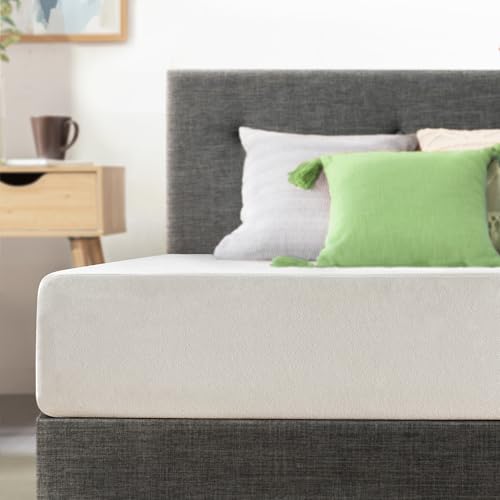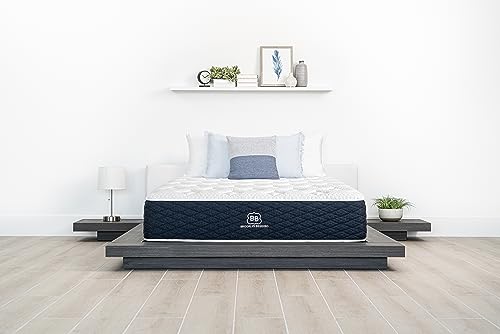
Disclosure: As an Amazon Associate, topratedkitchenware.com earns from qualifying purchases. Prices and availability change; check Amazon for the latest.
Where to buy
Check the latest price and availability on Amazon. Orders are placed on Amazon. We may earn a commission from qualifying purchases. Two warnings before the list: every pick below is the queen size — check the current price on Amazon for the size you need — and this is the side-sleeper edition of the under-$1,000 shelf, ranked by shoulder and hip sink rather than by the brands’ own ladder. One pick here is a genuinely soft build you choose on purpose; one is brand-rated extra firm and is included mainly so side sleepers can recognise it and walk past it.
- Best overall for side sleepers: Brooklyn Bedding Signature Hybrid 11 Inch Mattress, Queen (Soft) — Check on Amazon
- Nectar Premier 13 Inch Memory Foam Mattress, Queen — Check on Amazon
- Nectar Classic 12 Inch Memory Foam Mattress, Queen — Check on Amazon
- Nectar Classic Hybrid 12 Inch Mattress, Queen — Check on Amazon
See 2 more options
- DreamCloud Classic 12 Inch Hybrid Mattress, Queen — Check on Amazon
- DreamCloud Classic 12 Inch Memory Foam Mattress, Queen — Check on Amazon
Read the full guide ↓
Disclosure: As an Amazon Associate, topratedkitchenware.com earns from qualifying purchases. Links to Amazon on this page are affiliate links; they cost you nothing extra. Price and availability change often, so check the current Amazon listing before you buy.
The best mattresses for side sleepers under $1,000 start with a finding that has nothing to do with softness: on Amazon, this budget does not buy the premium direct-to-consumer class at all — it buys the second rung of the ladders that list there. The two models most heavily marketed at side sleepers — the Helix Midnight, a bed designed and advertised for side sleeping, and the Purple Mattress, sold on pressure relief — sit above this guide’s line on Amazon itself. The Saatva Classic is sold direct only, Casper’s current entry model The One is not sold on Amazon at all, and the Premier Hybrids sit a step above this budget. What a queen-size $1,000 budget genuinely buys a side sleeper on Amazon is narrower and, judged by the right measure, still good: one hybrid you can order in a deliberately soft build, one 13-inch foam bed with an extra inch of memory foam to sink into, and the Classic models of the two sister brands that dominate this shelf — five of the six picks share one parent company, and we say so openly. For current pricing on any pick, check price on Amazon.
The right measure is sink. A side sleeper’s shoulder is a narrow, heavy point: it has to drop into the mattress far enough that the spine runs level and the hip can follow, and a surface that merely feels soft to a palm — a quilted top, a puffy pillow-top — can still hold that shoulder up all night. So this guide ranks by contouring depth and chosen firmness, not by labels. For most side sleepers we would start with the Brooklyn Bedding Signature Hybrid in its Soft build: the only pick whose softness is a decision you make rather than a hope you have, with coils giving the sink a support floor so the waist does not sag while the shoulder drops. If you want the deepest foam cradle and a year-long trial printed in the listing, the Nectar Premier is the step up. And one pick below — the DreamCloud Classic foam, brand-rated extra firm — is here as a warning signpost: it shares a name with a hybrid that suits some side sleepers, and it is the purchase strict side sleepers most need to avoid by accident. Below you will find a quick picks table, detailed notes on each mattress, a comparison table, a buying checklist, sections on sink and on pillows, an account of where the premium class actually sells, common mistakes, and FAQs. One boundary before the list: these are comfort products. Nothing here treats shoulder or hip pain, and pain that persists, radiates, or comes with numbness or tingling is a reason to see a clinician, not to keep upgrading mattresses.
In this guide
Quick Picks
Short on time? Each row below names a side-sleeper type and its mattress. Every pick is the queen size — check the current price on Amazon.
| Buyer type | Pick | Why it stands out | Link |
|---|---|---|---|
| Best overall for side sleepers | Brooklyn Bedding Signature Hybrid 11 Inch Mattress, Queen (Soft) | The only pick sold in a chosen firmness — the linked listing is the Soft build | Check on Amazon |
| Best deep-sink foam | Nectar Premier 13 Inch Memory Foam Mattress, Queen | An extra inch of memory foam over the Classic — the deepest famous-name cradle under the line | Check on Amazon |
| Best for combination sleepers | Nectar Classic 12 Inch Memory Foam Mattress, Queen | A moderate, balanced hug — enough sink for part-time side sleeping, support for the back hours | Check on Amazon |
| Best hybrid for side sleepers | Nectar Classic Hybrid 12 Inch Mattress, Queen | Coils with the Classic’s contouring foam stack — for heavier and hot side sleepers | Check on Amazon |
| Best for heavier side sleepers | DreamCloud Classic 12 Inch Hybrid Mattress, Queen | 792 coils and a firm-leaning feel — support first, sink second; fiberglass-free in the title | Check on Amazon |
| The firm outlier — side sleepers skip | DreamCloud Classic 12 Inch Memory Foam Mattress, Queen | Brand-rated extra firm — a stomach sleeper’s bed, listed here so you do not buy it by accident | Check on Amazon |
How These Picks Were Chosen
The first filter was the budget, applied to the queen size and to Amazon itself — not to a brand’s own store. Every mattress below is a real Amazon listing in the queen size that belongs in this guide’s under-$1,000 tier; check the current price on Amazon on the day you order, because this guide does not print a fixed figure for any pick. That Amazon-specific filter shapes this guide. Several famous mattresses belong to a higher tier on Amazon — the Helix Midnight, the model most aggressively marketed to side sleepers, sits above this guide’s line there — and several more are not on Amazon in any buyable form. Those mattresses are named below, positioned by tier, with the reason they are not linked.
The second filter was the featured-offer rule this site applies at every tier: a pick needs a live Amazon listing for the queen size of a specific model that a reader can actually buy. A listing with no buyable offer does not get a link, however famous the brand. That is why the Leesa Original — which has a real Amazon queen listing — is named as a swap-in rather than linked: we could not verify a buyable in-budget offer on it.
The third filter is this edition’s own: side-sleeper physics. We read the maker listings and specification pages, compared construction, thickness, coil counts, foam certifications and stated firmness, and re-judged every pick by one question — what happens at the shoulder? A pick earns its place by letting a shoulder and hip sink far enough to level the spine (chosen softness, deep foam), by supporting a heavier body that would bottom out a softer bed, or — in one case — by being the firm outlier side sleepers need to be warned away from. Surface softness alone earned nothing: a quilted layer can feel plush to a hand while the support beneath holds a shoulder up all night. A mattress also had to be CertiPUR-US certified (or carry an equivalent certification we could verify) to be linked. Firmness words are the makers’ own descriptions, with tester disagreements flagged. One disclosure belongs here rather than in a footnote: Nectar and DreamCloud are sister brands under one parent company, so five of these six picks share a corporate owner. That is not a preference — it is a measurement of how narrow Amazon’s famous-name shelf is at this level, and the Brooklyn Bedding pick leads partly because it is the exception.
Two checks matter more at this level than at any other. The first is the trial, because this is the tier where the famous brands’ headline terms genuinely appear inside Amazon listings — the Nectar and DreamCloud listings print their 365-night trial in their titles — but a printed trial is still a claim to verify on the live listing before you order, and an Amazon purchase is not identical to a brand-store purchase. For a side sleeper the trial is not a courtesy, it is the test equipment: firmness labels are not calibrated across brands, and the only honest way to learn whether a shoulder sinks is to sleep on the bed for a few weeks. The second check is the fire barrier. Some mattresses use a fiberglass sock under the cover, and fiberglass that escapes a damaged or unzipped cover is a genuine household contamination problem; we report each pick’s fiberglass position exactly as its listing states it — DreamCloud’s titles state fiberglass free outright, the Nectar and Brooklyn Bedding listings we checked did not. Silence is not evidence of fiberglass; it is a prompt to confirm the current build with the brand, and whatever you buy, never unzip or cut the inner cover.
The 6 Best Mattresses for Side Sleepers Under $1,000
Brooklyn Bedding Signature Hybrid 11 Inch Mattress, Queen (Soft)
Who it suits: Side sleepers who want to choose their softness instead of hoping a “medium” label lands soft — the linked listing is the Soft build a strict side sleeper should be buying.
Every other pick here asks a side sleeper to accept the one firmness the brand decided to sell. The Signature Hybrid is built the other way: an 11-inch hybrid from Brooklyn Bedding, a brand that manufactures in its own Arizona factory, with pressure-relieving foam over individually encased coils and a choice of three firmnesses — soft, medium or firm. The listing linked throughout this guide is the queen Soft variant (model BBS50S), and for a side sleeper that is the whole story. A soft build lets the shoulder drop in until the spine levels, while the encased coils underneath keep the waist and hips from sagging — sink with a floor under it, the exact combination side sleeping needs. Review labs have recommended some version of the Signature for a decade. Check the current price on Amazon before ordering.
Now the warning, at full strength. Brooklyn Bedding’s Signature sells on Amazon through a thicket of near-identical listings — same model name, same model number, different listing codes for firmness and seller variants. The Amazon shelf for it is a hall of mirrors, so the buying protocol is part of the review: use the link in this guide to land on the verified listing, confirm the size selector says queen, confirm the firmness selector says Soft — a side sleeper who lands on the Firm sibling has bought the opposite of this recommendation — and check price on Amazon on that exact listing. If the page you land on does not match the linked listing, back out and come in through this guide’s link again. Terms need the same care: Brooklyn Bedding’s own store sells this mattress with a 120-night trial, but we could not verify that trial printed on the Amazon listing. Buy this one on the strength of Amazon’s return window and judge the softness inside that window.
- Three firmness options from a factory-owning brand — and the linked listing is the Soft build a strict side sleeper needs.
- Foam over encased coils: the shoulder sinks into the comfort layers while the coils hold the waist up.
- Check price on Amazon on the linked listing — sibling listings are easy to land on by mistake.
Honest limitation: Listings for this model are fragmented across near-identical codes — size, firmness and the live listing must all be re-confirmed before ordering, and no Amazon-listing trial could be verified, so the softness verdict has to happen inside Amazon’s return window.
Choose it if you sleep mostly on your side and want softness you select, with support underneath. Skip it if you want a printed year-long trial in the listing — that is the Nectar Premier below — or you will not do the listing checks before checkout.
Nectar Premier 13 Inch Memory Foam Mattress, Queen
Who it suits: Strict side sleepers who want the deepest foam cradle the famous-name shelf on Amazon can sell them under $1,000 — and a year-long trial printed in the listing.
If the Signature above is softness by selection, the Premier is softness by depth. It is a 13-inch, five-layer all-foam mattress — one inch taller than the Classic, with an extra inch of memory foam in the comfort stack, a phase-change cooling cover and CertiPUR-US certified foams — and Nectar rates it 6.5 out of 10 for firmness, the same medium-firm address as the Classic with more material above the support core. That extra inch serves side sleepers and lighter bodies most — the sleepers a 12-inch foam bed can leave perched on top — giving the shoulder further to sink before the firmer support layers push back: the deepest contour available from a famous name on Amazon under this budget. The queen is sold and shipped by Amazon.com, with the 365-night trial and the Forever Warranty carried in the listing itself. Check the current price on Amazon before ordering.
For a side sleeper, the trial deserves as much weight as the foam: firmness is the one specification no listing can honestly calibrate for you, and the Premier is the pick where the exit window — a full year — is printed on the page you buy from. Two honest qualifications. First, the step up from the Classic is depth, not a new class: the trial, warranty, brand and medium-firm balance are the Classic’s, and the hybrid version of this Premier step sits in a higher tier. Second, the cooling cover is a phase-change first-contact effect, not active cooling; it reaches body temperature and stays there, so expect warm-neutral, not cool. Judge it as what it is — the deepest famous-name foam bed Amazon sells under $1,000, with the longest trial in the class printed on the listing — and it is the natural second pick, and the first pick for anyone who distrusts a firmness menu.
- Sold and shipped by Amazon.com, with the 365-night trial and Forever Warranty in the listing.
- 13 inches, five layers: an extra inch of memory foam over the Classic — the depth a shoulder feels.
- Nectar’s upper foam step inside this budget — check price on Amazon.
Honest limitation: The step up is depth, not a new class — the Premier Hybrid sits in a higher tier — and a medium-firm balance with more sink is still a medium-firm balance: very light side sleepers who need a genuinely soft surface may do better with the Soft build above.
Choose it if you want maximum foam sink from a famous name and a year to change your mind. Skip it if you want coils — that is the Classic Hybrid below — or you are a combination sleeper who will not feel the extra inch.
Nectar Classic 12 Inch Memory Foam Mattress, Queen
Who it suits: Combination sleepers — who split the night between side and back — and anyone who wants the benchmark mattress in this guide, against which every step up has to justify itself.
The Nectar Classic is a 12-inch all-foam bed — cooling-fiber cover, gel memory foam, a transition layer and a dense support core, CertiPUR-US certified, about 74 pounds in a queen — from the brand that defined the modern bed-in-a-box. Its Amazon listing is unusually clean: the mattress is sold and shipped by Amazon.com, and the listing title itself carries the 365-night trial and the Forever Warranty. It is Nectar’s entry model in this guide’s tier — check the current price on Amazon.
Its side-sleeper verdict turns on one honest word: moderate. Nectar calls the Classic medium firm, testers generally land near 6.5 out of 10, and its contour is a balanced hug rather than a deep cradle. For a combination sleeper that balance is the point — enough give at the shoulder for the side hours, enough support under the hips for the back hours, and motion isolation for a partner’s turning. For a strict side sleeper, the same moderation is the limitation: the hug may run out before the spine levels, and that is what the Premier’s extra inch, or the Signature’s Soft build, exists to answer. Hot sleepers should treat “cooling cover” and “gel” as a cooler first contact, not an actively cooled bed. Expect the class benchmark, tuned to the middle of the road, with a year to change your mind.
- Sold and shipped by Amazon.com, with the 365-night trial and Forever Warranty in the listing title.
- Nectar’s entry model in this tier — the benchmark for the step-up picks; check price on Amazon.
- 12 inches of CertiPUR-US foam with a cooling-fiber cover; a deep independent test record.
Honest limitation: The hug is moderate rather than deep — strict side sleepers with pronounced shoulder pressure are exactly the buyers the two picks above exist for — and this is Nectar’s entry model only.
Choose it if you split the night between side and back and want the lowest-risk famous-name purchase here. Skip it if you sleep almost entirely on one side and need deep pressure relief at the shoulder, or you specifically want coils.
Nectar Classic Hybrid 12 Inch Mattress, Queen
Who it suits: Heavier side sleepers, hot sleepers, and side sleepers who hate the stuck feeling of deep foam — bodies that need a support floor under the sink.
The Classic Hybrid takes the Classic’s formula — cooling cover, gel memory foam comfort layers, CertiPUR-US foams, the 365-night trial and Forever Warranty printed in the Amazon listing title — and swaps the foam support core for individually wrapped coils. For a side sleeper, that swap changes the physics. The shoulder still sinks into the same foam stack, but against a spring unit that pushes back progressively: the sink is shallower and more lifted than the all-foam picks, the edges hold, air moves through the coil unit so the bed sleeps less warm, and a partner’s movement travels slightly more. That profile is wrong for a light, strict side sleeper chasing maximum cradle — the Premier above cradles deeper — and right for the side sleeper whose real failure mode is bottoming out: a heavier body can compress a foam comfort layer completely and end up resting on the support core. Coils carry that body at a shallower, more supported depth. It sits above the Classic in Nectar’s ladder inside this budget — check the current price on Amazon.
Against its sibling above, the choice is coils versus depth: the Premier foam gives you 13 inches and more memory foam; this gives you 12 inches and a spring unit. Against the DreamCloud hybrid below, the difference is feel: testers generally find the Nectar the more contouring of the two — for a shoulder, contouring is what matters, which is why this pick ranks above it here. It is not a step into the premium hybrid class. Bought as the supported sink — a famous-name hybrid with a year-long trial for the side sleeper who bottoms out foam — it is exactly that.
- Pocketed coils under the Classic’s foam stack: a lifted sink heavier side sleepers do not bottom out.
- The 365-night trial and Forever Warranty are printed in the Amazon listing title.
- Nectar’s hybrid step inside this budget — check price on Amazon.
Honest limitation: The sink is the shallowest of the four picks above it — a light, strict side sleeper will feel held up rather than cradled.
Choose it if you sleep on your side but are heavier, hotter, or prefer a lifted feel with a year-long trial. Skip it if you are a light side sleeper who needs maximum sink — the Premier foam or the Signature Soft will serve you better.
DreamCloud Classic 12 Inch Hybrid Mattress, Queen
Who it suits: Heavier and combination sleepers who want a famous name with real coils and the cleanest fiberglass paperwork here — and who know they prefer a firmer bed.
DreamCloud is Nectar’s sister brand under the same parent company, aimed at shoppers who find all-foam beds too still and too warm. The Classic Hybrid is a 12-inch, six-layer build: a CloudQuilt top with a cashmere-blend cover, memory foam and adaptive foam over 792 individually wrapped coils in a queen, with thicker perimeter coils, at about 79 pounds. Its Amazon listing carries the full checklist in its title — fiberglass free, CertiPUR-US certified, 365-night trial, Forever Warranty — and like the Nectars it is sold by Amazon.com. Check the current price on Amazon before ordering.
The side-sleeper charge has to be stated at full strength, because it decides who should buy this bed: the feel runs to the firmer side of its medium-firm label — coils push back more than foam — and at the shoulder that pushback is the whole experience. Heavier and combination sleepers often prefer exactly this: the shoulder is supported rather than swallowed, the hips cannot sag, and turning over takes no effort. Light and strict side sleepers tend to bounce off it — the shoulder stays near the surface, pressure stays on the point, and no quilted top changes that arithmetic; a soft surface over a firm core is surface softness, not sink. One difference deserves printing here: the brand store has included a free bedding bundle with this mattress in recent promotions, and the Amazon purchase does not include it. If the bundle matters to you, compare the two routes before ordering. This pick headlined our under-$700 guide for general sleepers, and it is here because an under-$1,000 side-sleeper guide that skipped it would hide the support-first option — but in this edition it ranks fifth, behind every pick that lets a shoulder sink further.
- 792 individually wrapped coils with reinforced perimeter edges — the strongest support core here.
- Fiberglass-free and CertiPUR-US statements, plus trial and warranty, all in the listing title.
- DreamCloud’s hybrid entry in this tier — check price on Amazon.
Honest limitation: For a strict or light side sleeper this is close to the wrong bed: the feel runs firmer than “medium firm” suggests and the shoulder gets support where it asked for sink. The Amazon purchase also omits the brand store’s free bedding bundle.
Choose it if you are a heavier or combination side sleeper who prefers a firmer, cooler surface with a year-long trial. Skip it if you are a light side sleeper who needs a soft shoulder cradle, or the brand-store bundle matters more to you than Amazon’s checkout.
DreamCloud Classic 12 Inch Memory Foam Mattress, Queen
Who it suits: Stomach sleepers and firm-bed loyalists — it is in this guide so side sleepers can recognise it, because it is the purchase they are most likely to make by accident.
DreamCloud sells the Classic in two builds, and this all-foam version is the one shoppers most often buy by mistake. It is a 12-inch, five-layer foam mattress with an inch of pressure-relieving memory foam at the surface under the same CloudQuilt cooling-fiber top as its hybrid sibling, and the brand rates it extra firm — a clear step firmer than the hybrid, not a foam twin of it. At roughly 69 pounds in a queen it is also the lightest of the entry-tier picks. The brand’s 365-night trial and Forever Warranty are the stated terms for the model; because firmness is the whole point here, confirm the trial wording on the live listing before you rely on it. Check the current price on Amazon before ordering.
Now the charge, at full strength, because a side-sleeper guide that softened it would fail its readers. Extra firm is close to a disqualification for strict side sleeping. A side sleeper’s shoulder and hip carry the body’s weight on two narrow points that need a surface that yields; on an extra-firm bed the comfort layer barely compresses, the shoulder stays up, the spine bends instead of levelling, and pressure stays concentrated exactly where it hurts comfort most. Lighter bodies get the worst of it — many will not compress the surface enough to feel any contour at all. Who is extra firm actually for? Stomach sleepers, whose hips must not dip below their shoulders; back sleepers who dislike any sense of being held; and heavier sleepers, for whom softer foams bottom out. Motion isolation is the foam consolation, and the all-foam build sleeps warmer than the hybrid. Its role here is the specialist slot and the signpost: nothing else on Amazon’s famous-name shelf at or under this budget is honestly this firm, and everyone shopping for their shoulder should treat its name — identical to the hybrid’s — as the trap it is.
- Brand-rated extra firm — the firmest feel in this guide.
- All-foam motion isolation with the same CloudQuilt top as the hybrid.
- DreamCloud’s foam entry in this tier — check price on Amazon.
Honest limitation: For side sleepers this is the wrong specification, full stop: most will find shoulder and hip pressure unrelenting, and lighter bodies may feel no contour at all. Confirm the trial wording on the live listing before purchase.
Choose it if you sleep on your stomach or know from experience that you like a genuinely firm bed. Skip it if you sleep on your side — every other pick here serves your shoulder better, starting with the Signature Soft.
Comparison Table
| Product | Type | Price | Side-sleeper read | Link |
|---|---|---|---|---|
| Brooklyn Bedding Signature Hybrid 11 Inch (Soft) | Hybrid, 11 in | Check price on Amazon | Softness you choose — the shoulder sink with a coil floor under it | Check on Amazon |
| Nectar Premier 13 Inch Memory Foam | All-foam, 13 in | Check price on Amazon | The deepest foam cradle here, with a year-long in-listing trial | Check on Amazon |
| Nectar Classic 12 Inch Memory Foam | All-foam, 12 in | Check price on Amazon | A moderate hug — the combination sleeper’s balance point | Check on Amazon |
| Nectar Classic Hybrid 12 Inch | Hybrid, 12 in | Check price on Amazon | A lifted, supported sink for heavier or hotter side sleepers | Check on Amazon |
| DreamCloud Classic 12 Inch Hybrid | Hybrid, 12 in | Check price on Amazon | Firm-leaning support first, sink second — heavier bodies only | Check on Amazon |
| DreamCloud Classic 12 Inch Memory Foam | All-foam, 12 in | Check price on Amazon | Extra firm — a stomach sleeper’s bed; strict side sleepers skip | Check on Amazon |
How to Choose a Mattress for Side Sleepers Under $1,000
- Judge sink, not softness words. Your shoulder has to drop far enough for your spine to run level. “Plush,” “pillow-top” and “cloud” describe how a surface feels to a hand; sink is what it does under a shoulder at 3 a.m. The section below explains the difference.
- Decide whether you are a strict or a combination side sleeper. Strict side sleepers route to the Signature Soft or the Premier’s depth. Combination sleepers are served by the Classic’s balance or the hybrids’ support — and should not chase depth they only use half the night.
- Match the sink to your weight. Bottoming out is weight-dependent: a lighter body needs a genuinely soft build to sink at all, while a heavier body can compress a soft foam layer completely and land on the support core. Light sleepers, choose chosen softness or deep foam; heavier sleepers, choose a hybrid.
- Budget for the pillow change. A deeper-sinking mattress changes the gap between the surface and your head, and the pillow that suited your old bed will likely be wrong — usually too thin. Treat a new pillow as part of this purchase; the pillow section below explains why.
- Shop the Amazon shelf, not the brand’s ladder. The models marketed hardest at side sleepers — Helix Midnight, Purple — sit above this guide’s budget on Amazon itself, as do the Premier Hybrids. Before falling for a step-up model, check whether it is actually sold on Amazon, in a queen, at or under $1,000 — and check the current price on Amazon.
- Ask what the step up buys, in inches and coils. Above the entry-tier Classics, the verifiable upgrades here are a chosen firmness (Signature Soft), an inch of profile and memory foam (Premier) or a coil unit (Classic Hybrid). If a listing cannot name its upgrade concretely, it is selling a label.
- Check the live price, not a remembered one. These brands run permanent promotions and listing prices move, so no figure quoted anywhere should be trusted at checkout. The only price that matters is the current price on Amazon.
- Verify the trial on the listing, not the brand’s homepage. The Nectar and DreamCloud listings print their 365-night trial in their titles; the Brooklyn Bedding listing printed no trial we could verify, so its verdict must happen inside Amazon’s return window. A brand-store trial does not automatically follow a mattress to Amazon.
- On the Brooklyn Bedding listings, verify three things. Size selector on queen, the firmness you actually want (the linked listing is Soft — the Firm sibling is the opposite of this advice), and that you are on the linked listing itself when you check price on Amazon.
- Check the fiberglass position before you need it. DreamCloud’s titles state fiberglass free outright; the Nectar and Brooklyn Bedding listings we checked did not. If a fiberglass-free barrier is a hard requirement, confirm it with the brand for the exact listing — and never unzip or cut the inner cover.
- Count what the brand store adds. DreamCloud’s store has bundled free bedding the Amazon purchase omits. Compare the whole offer, not just the headline.
- Give the verdict weeks, not nights. Foams take days to fully expand and bodies take weeks to adjust; the year-long trials exist precisely so a shoulder can deliver its verdict slowly. Judge inside the trial or return window — and use it if the pressure does not ease.
Sink Is Not Softness: What a Shoulder Actually Needs
Lie on your side and the geometry is unforgiving. Your shoulder is narrow — a few inches of contact carrying a large share of your upper body’s weight — and it sticks out sideways from a ribcage that is narrower still. For your spine to run level, that shoulder has to descend into the mattress until the wider hip can share the load and the waist is supported rather than sagging or jackknifed. The descent is the product. A mattress can interrupt it in two ways: by being too firm, so the shoulder stays near the surface and pressure concentrates on its point all night; or by being soft without support, so the waist and hips descend further than the shoulder. Side sleepers need the narrow path between those failures — a comfort layer deep and yielding enough to take the shoulder, over a support core firm enough to stop the hips. That is why this guide’s top pick is a soft build over coils, and its second is a foam bed whose step-up is one more inch of yielding depth.
Softness, as listings use the word, is a different and much lesser thing. A quilted cover, a pillow-top, a layer of fluffy fiber — these change the first second of contact. They compress to nothing under a sleeping shoulder within minutes, after which the shoulder meets whatever is underneath; if that is a firm core, the night is spent on a firm bed wearing a soft hat. This is the distinction the DreamCloud Hybrid’s review charges it with: its quilted top is genuinely pleasant, its support is genuinely firm, and a light side sleeper experiences the second fact for eight hours. Translate any listing’s softness vocabulary into the only question that matters — how far will my shoulder travel, and what stops it? — and notice the honest answers come from construction, not adjectives.
Two corollaries follow. Bottoming out is not a softness failure but a weight event: a comfort layer has finite depth, a heavier body compresses all of it, and the sleeper ends the descent on the support core regardless of how plush the surface felt. Heavier side sleepers therefore shop for support under the sink — the hybrids here — while lighter side sleepers shop for a surface that yields immediately. Temperature claims work the same way: gel and phase-change layers change first contact, then reach body temperature and stay there, so no passive layer here will actively cool you. And the governing boundary: sink is a comfort specification, not a treatment. It does not treat shoulder or hip pain, and pain that persists, radiates, or arrives with numbness, tingling or weakness belongs in a clinician’s office, not in a shopping cart.
Your Pillow Is Half the Equation: Loft, Sink and the Gap
Change how far your shoulder sinks and you have quietly changed your pillow — many side sleepers who “hate the new mattress” are actually sleeping on the right mattress with the wrong pillow. On your side, your head rests on a pillow that rests on the mattress surface, while your shoulder sinks below that surface. The pillow’s job is to fill the gap between the surface and your head so your neck continues the spine’s level line. The deeper the shoulder sinks, the larger that gap grows: a shoulder descending deep into a Premier or a Signature Soft needs noticeably more loft than the same sleeper on a firm bed. Keep the old thin pillow on a deep-sink new bed and the head drops toward the bed all night — a neck problem manufactured by geometry, routinely misdiagnosed as the mattress being “too soft.”
The working rules are these. On the deep-sink picks — the Signature Soft, the Premier, the Classic — most side sleepers need a pillow with real, held loft: a gusseted or shaped pillow whose height survives under a head’s weight. On the firm picks — the DreamCloud foam above all — the same lofty pillow cranes the neck upward, because the shoulder never left the surface; firm-bed side sleepers need the thinner end of the range. Combination sleepers should bias toward the middle: a medium, compressible loft is the usual truce. Whatever you buy, re-judge the pillow after the mattress’s first week, when the sink has settled to its real depth. Treat the pillow as the second half of this purchase, and a surprising share of “wrong mattress” verdicts resolve themselves by changing the pillow.
Where the Rest of the Premium Class Actually Sells
A side sleeper who sets a $1,000 budget deserves a map of where the beds marketed to them actually are, because the two most famous names in side-sleeper advertising are both in this guide’s story and neither is in its picks. Helix built its brand on sleep-position matching, and its Midnight is the model its quiz routes side sleepers to; Helix does sell on Amazon — but the Midnight queen sits above this guide’s budget there, and the Midnight Luxe sits higher still. Purple’s grid is marketed on exactly the pressure-relief language side sleepers search for, and its queen range likewise sits above this guide’s line. Neither fact makes those beds bad. It makes them a different budget.
The rest of the map matches our general guide’s. Saatva sells direct only, and its Classic queen sits in a premium tier well above this guide, so Saatva falls outside twice, on channel and on tier. Casper is the subtlest case: the current entry model, The One, is sold from Casper’s own store but we found no Amazon listing for it; Amazon’s Casper shelf is the older Original line and the Amazon-specific Element, and a stable, verified, in-budget offer for the Original foam could not be established — so Casper is named here rather than linked. The same discipline covers the step-ups inside the linked brands’ own ladders: the DreamCloud Premier Hybrid, the Nectar Premier Hybrid and the Tuft & Needle Original Hybrid all sit in the tier above this budget on Amazon, and the Leesa Original’s Amazon queen listing exists but showed no buyable offer we could verify. If the Leesa’s offer verifies in budget, it is this guide’s first swap-in.
The conclusion is not that Amazon has nothing for side sleepers — it is that at this budget the choice is among second-rung beds, chosen by the physics above: chosen softness, foam depth, supported sink. The beds whose advertising promises an engineered answer are real, and they belong to a higher tier on this platform.
Common Buying Mistakes
- Buying the DreamCloud Classic foam instead of the hybrid — or the reverse. The two share a name and a cover in photos; the all-foam is brand-rated extra firm, which for a side sleeper is a different bed entirely.
- Trusting “medium firm” as if it were calibrated. Labels are marketing addresses, and the trial is the only calibration you can trust.
- Shopping for softness instead of sink. A pillow-top feels plush to a palm and compresses to nothing under a shoulder; what a side sleeper needs is comfort-layer depth over support — a construction fact, not an adjective.
- Keeping the old pillow on a deeper mattress. More sink means a bigger gap to fill; a thin old pillow on a deep new bed bends the neck all night and gets the mattress blamed.
- A light side sleeper buying a firm hybrid for its support story. Support is for bodies that bottom out soft beds; a light body on a firm hybrid never sinks at all.
- A heavier side sleeper buying the softest foam for its cradle story. Bottoming out is weight-dependent: compress the whole comfort layer and the shoulder lands on the support core.
- Assuming a brand-store trial or bundle follows the mattress to Amazon. Brooklyn Bedding’s 120-night store trial could not be verified on its Amazon listing, and DreamCloud’s bedding bundle does not transfer; the trial you own is the one printed where you buy.
- Ordering a Brooklyn Bedding Signature from the wrong listing — or in the wrong firmness. Lookalike listings crowd Amazon, and the Firm sibling of the linked Soft listing is the opposite of this guide’s recommendation.
- Expecting any mattress here to treat shoulder or hip pain. These are comfort products: none treats pain or any condition, and pain that persists, radiates or comes with numbness is a reason to see a clinician.
- Unzipping the mattress cover to “check” the fire barrier. The barrier only becomes a problem when the cover is opened or torn — use a washable protector and leave the cover shut.
- Judging the sink in the first week. Foams take days to fully expand and bodies take weeks to adjust; the year-long trials exist precisely so the verdict can wait — and so can the pillow verdict, which depends on the settled sink.
Final Recommendation
- Most side sleepers: Brooklyn Bedding Signature Hybrid 11 Inch Mattress (Soft) — with the listing checks in its review.
- Deepest foam sink, longest printed trial: Nectar Premier 13 Inch Memory Foam Mattress.
- Combination sleepers: Nectar Classic 12 Inch Memory Foam Mattress.
- Heavier or hotter side sleepers: Nectar Classic Hybrid 12 Inch Mattress.
- Firmest support in this tier: DreamCloud Classic 12 Inch Hybrid Mattress.
- Stomach sleepers only: DreamCloud Classic 12 Inch Memory Foam Mattress.
Our top two are the Brooklyn Bedding Signature in its Soft build for anyone who sleeps mostly on their side — the only pick whose softness is a choice, paired with a coil floor — and the Nectar Premier for anyone who wants the deepest foam cradle and a year-long trial in the listing. Between them they cover the two honest routes to sink at this budget: select it, or sink into depth. If you split the night between side and back, the Classic is the balanced answer, and heavier side sleepers should look at the hybrids first. If the mattress you actually want is a Helix Midnight or a Purple, do not expect it here: those beds belong to a higher-budget decision. Check the current price on Amazon and the trial wording, confirm the size selector says queen — and on the Signature, that the firmness selector says Soft — and order the bed that matches your shoulder.
Frequently Asked Questions
What does $1,000 actually buy a side sleeper in a queen mattress on Amazon?
The second rung of the famous-name ladders that list there, re-judged by sink: Brooklyn Bedding’s Signature Hybrid in a chosen Soft build, Nectar’s Premier foam mattress for the deepest foam cradle, its Classic Hybrid for a supported sink, and the entry-tier Classic models of Nectar and DreamCloud. Check price on Amazon for the current figure on any of them. It does not buy the models marketed hardest at side sleepers — the Helix Midnight and the Purple, both above this budget on Amazon — or the Premier Hybrids, or anything from Saatva, which sells direct only.
Which pick is best for a strict side sleeper?
The Brooklyn Bedding Signature in its Soft build, because its softness is selected rather than hoped for and its coils stop the waist sagging while the shoulder sinks — with the Nectar Premier as the answer if you want an all-foam cradle and a year-long trial in the listing. Strict side sleepers should read the DreamCloud foam’s review as a warning: brand-rated extra firm is close to a disqualification for side sleeping.
Why are the Helix Midnight and Purple not picks? They are the side-sleeper brands.
They are — and on Amazon they sit above this guide’s budget, which is why both are named here with their tier position rather than linked. If either is the bed you want, it is a higher-budget decision on this platform; no entry-tier pick secretly contains the same engineering.
Is a hybrid or an all-foam mattress better for side sleepers?
It depends on the body, not on prestige. All-foam beds (Premier, Classic) sink deeper and isolate motion better, suiting lighter and strict side sleepers. Hybrids (Signature, Classic Hybrid, DreamCloud Hybrid) sink less but hold a support floor under the sink, sleep cooler and suit heavier side sleepers who bottom out foam. The failure mode decides: not sinking enough points to foam depth or a soft build; sinking through points to coils.
Do I need a new pillow with a deeper mattress?
Probably, for the reason the section above works through: the deeper your shoulder sinks, the bigger the gap between the surface and your head, and the more loft the pillow must hold to keep your neck level. Judge the pillow after the mattress’s first week, when the sink has settled — a gusseted pillow that holds its height under load suits the deep picks, a thinner one the firm picks.
Is the 365-night trial the same on Amazon as on the brand’s site?
The headline matches for the Nectar and DreamCloud listings — the trial is printed in the Amazon listings themselves — but the mechanics can differ: return collection, any minimum-nights rule, and extras like DreamCloud’s brand-store bedding bundle do not automatically transfer. Brooklyn Bedding’s 120-night trial is a brand-store term we could not verify on its Amazon listing. Read the return terms on the exact listing before ordering; the trial you own is the one printed where you buy.
Will one of these mattresses fix my shoulder or hip pain?
No mattress in this guide treats shoulder pain, hip pain or any other condition, and you should be skeptical of any listing that promises otherwise. A mattress can be a comfort decision — deep enough not to hold a shoulder up, supportive enough not to bottom out — and that is the basis on which these picks are made. Pain that persists, radiates, or comes with numbness, tingling or weakness belongs in a clinician’s office, not in a shopping cart.
What if the price has moved above $1,000 when I check?
Then that mattress has left this guide’s budget until it returns, and the right move is patience or another pick inside the tier, not a stretched budget: check the current price on Amazon across the shortlist before deciding. On the Brooklyn Bedding listings, an unexpected page usually means you have landed on a sibling listing — come back in through this guide’s link and re-check size, firmness and the listing itself.