Disclosure: As an Amazon Associate, topratedkitchenware.com earns from qualifying purchases. Prices and availability change; check Amazon for the latest.
Where to buy
Check the latest price, availability and delivery on Amazon. Orders are placed on Amazon. We may earn a commission from qualifying purchases. Prices change often, so check the current price on Amazon for each pick before you buy.
- Best overall for side sleepers: Nectar Premier Hybrid 13 Inch Mattress, Queen — Check on Amazon
- DreamCloud Premier Hybrid 13 Inch Mattress, Queen — Check on Amazon
- Purple Mattress, Queen — Check on Amazon
- Nectar Premier 13 Inch Memory Foam Mattress, Queen — Check on Amazon
See 2 more Amazon options
- Casper Original Hybrid Mattress, Queen — Check on Amazon
- Tuft & Needle Original Hybrid Mattress, Queen — Check on Amazon
Read the full guide ↓
Disclosure: As an Amazon Associate, topratedkitchenware.com earns from qualifying purchases. Links to Amazon on this page are affiliate links; they cost you nothing extra. Listing details such as price and availability change often, so check the current Amazon listing before you buy.
The best mattresses for side sleepers under $1,500 are the Premier rung of the famous-name ladder, judged by the only three tests that matter on your side: is there enough depth for a shoulder to sink without hitting the support core, is the surface soft enough at first contact to cradle rather than perch, and does the support underneath give locally — point by point under the shoulder and hip — instead of bridging across them. At this budget the Nectar Premier Hybrid and DreamCloud Premier Hybrid, which sat above the line in the under-$1,000 guide, verify cleanly as picks, and the Purple Mattress verifies in this tier as well — check price on Amazon for each. But two honest charges run through this whole guide. It is named throughout this guide as the first swap-in, and its absence is stated plainly rather than smoothed over.
Three of the six picks share one parent company, Resident, and we say so openly. For most side sleepers we would start with the Nectar Premier Hybrid: the deepest memory foam stack over coils in this list, with a year-long trial printed in its listing — check the current price on Amazon. Below you will find a quick picks table, detailed notes on each mattress re-judged for side sleeping, a comparison table, a buying checklist, the three side-sleeper tests explained, an honest account of the missing Helix and the Luxe rung above this budget, the fiberglass section, the mistakes side sleepers make most at this level, and answers to the questions that come up again and again.
In this guide
Quick Picks
Short on time, or comparing several options at once? Each row below names a side-sleeper situation and the mattress that suits it, with a link to the listing. Check the current price on Amazon for each pick — every pick is judged in its queen size.
| Side-sleeper situation | Pick | Why it stands out | Link |
|---|---|---|---|
| Best overall for side sleepers | Nectar Premier Hybrid 13 Inch Mattress, Queen | The deepest memory foam stack over coils here, with the 365-night trial in the listing — check price on Amazon | Check on Amazon |
| Best for heavier side sleepers | DreamCloud Premier Hybrid 13 Inch Mattress, Queen | Testers measure 7.5–8/10 against a 6.5 label — firm support under the hip; its title states fiberglass free — check price on Amazon | Check on Amazon |
| Best non-foam surface | Purple Mattress, Queen | The GelFlex Grid buckles under a shoulder’s point pressure and holds elsewhere — check price on Amazon | Check on Amazon |
| Best value / deepest sink | Nectar Premier 13 Inch Memory Foam Mattress, Queen | 13 inches of foam with no coil pushback, sold by Amazon.com — the softest landing in this guide; check price on Amazon | Check on Amazon |
| Best zoned design | Casper Original Hybrid Mattress, Queen | Zoned coils — softer at the shoulders, firmer under the hips by design — check price on Amazon | Check on Amazon |
| Best for side sleepers who hate sink | Tuft & Needle Original Hybrid Mattress, Queen | A responsive, shallow-hug surface over coils — check the current price on Amazon and buy only when the listing sits within this budget | Check on Amazon |
How These Picks Were Chosen
The first filter was the budget, applied to the queen size and applied to Amazon itself — not to a brand’s own store. Every mattress below is a real Amazon listing whose queen we verified for this tier, and we direct you to check the current price on Amazon in each review instead of treating any earlier figure as permanent. That Amazon-specific filter is what shapes this guide, and for a side sleeper it bites in a particular place. That is a real loss for this reader and we do not dress it up as anything else.
The second filter was the three tests a side sleeper’s body actually applies, in the order it applies them. Depth first: a shoulder and a hip are the two heaviest point loads a mattress takes, and they need vertical room — comfort material to sink into before the support core pushes back. Five of these six picks are 11 to 13 inches; the sixth, the Purple, is 9.25 inches and is charged for it in its review. A pick did not need to win all three tests, but every review states how it does on each.
Two picks sit close to the budget line, so confirm their position on the live listing before you order. The Casper Original Hybrid sits near the top of this tier — check the current price on Amazon and treat it as in budget only on days its queen listing sits within the cap. If either framing bothers you, the first four picks are the conservative list.
We did not sleep on these mattresses ourselves. We read the maker listings and specification pages, compared construction, thickness and stated firmness, and cross-checked listings against independent trackers and published test results. A mattress had to be CertiPUR-US certified (or carry an equivalent certification we could verify) to be linked. One disclosure belongs here rather than in a footnote: Nectar and DreamCloud are sister brands under one parent company, Resident, so three of these six picks — both Premier Hybrids and the foam Premier — share a corporate owner. The second check is the fire barrier, reported exactly as each listing states it in a full section below.
The 6 Best Mattresses for Side Sleepers Under $1,500
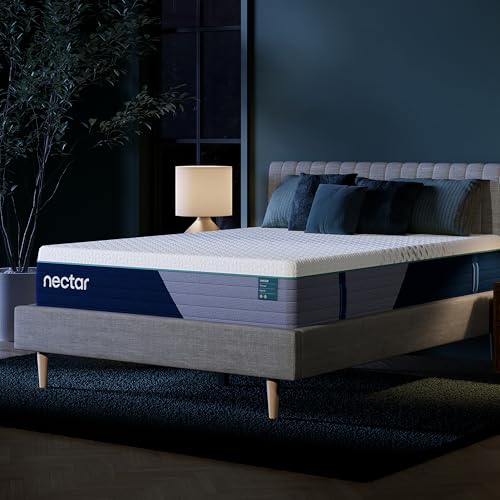
Nectar Premier Hybrid 13 Inch Mattress, Queen
Who it suits: The committed side sleeper this guide is written for — someone who needs a shoulder to sink and a hip to be held, in the same mattress, at the same time.
Run the three tests. Depth: this is a 13-inch hybrid, and the Premier stack puts a thicker memory foam comfort layer than the Classic carries between the sleeper and the coils — the most sink room of any hybrid in this guide. When the under-$1,000 guide was researched, this mattress sat above its line; here it sits comfortably inside this budget, with the 365-night trial and Forever Warranty printed in the listing — check price on Amazon.
The charges are the ones this lens always brings. The cooling-touch cover is a first-contact effect, not active cooling, and for a side sleeper it fades fastest exactly where it is marketed hardest: a shoulder buried in foam for eight hours holds one patch of cover at body temperature all night, and the gel and phase-change materials in that patch saturate — reach body temperature and stay there — while the rest of the bed still feels cool to a hand. Judge this bed as a neutral-temperature foam hybrid, not a cold one. That is why it leads.
- Sits comfortably inside this budget tier in its queen size — check the current price on Amazon.
- 13 inches: the thickest memory foam comfort stack over individually wrapped coils in this guide — sink for the shoulder, point-by-point give underneath.
- The 365-night trial and Forever Warranty are printed in the Amazon listing, as they are on the Classic models.
Honest limitation: The cooling cover is a first-contact effect that saturates at body temperature under a stationary shoulder, and the fiberglass position is not stated in the listing records we checked — silence to verify with the brand, not a claim either way.
Choose it if you are a committed side sleeper of light-to-average build who wants the full foam cradle with coil support underneath. Skip it if you run heavy and sleep hot — the firmer, quilted DreamCloud below holds a heavier hip higher — or you do not need coils, in which case its own foam sibling sinks deeper while sitting lower in this budget tier.
DreamCloud Premier Hybrid 13 Inch Mattress, Queen
Who it suits: Heavier side sleepers and side-to-back combination sleepers who need the hip held up more than the shoulder hugged — and who have read the firmness charge below and still want it.
The charge first, at full strength, because for this reader it is the review. DreamCloud labels the Premier Hybrid medium-firm, around 6.5 out of 10. Independent testers who have measured it land at 7.5 to 8 — a genuinely firm-leaning bed wearing a medium-firm label. For a back sleeper that gap is trivia. The local give is there; it is the surface that argues.
What this pick offers that no other does is certainty on two fronts. It sits squarely inside this budget tier — check price on Amazon — with no straddle and no dependence on a sale event. And alone among the six picks, its Amazon listing title states “fiberglass free” in so many words, alongside the brand’s 365-night trial and Forever Warranty — the only fiberglass answer in this guide that is printed where you buy. For the light, committed side sleeper, the label is the most misleading sentence in this guide, and the tester numbers are the review.
- Sits squarely inside this budget tier in its queen size — check the current price on Amazon.
- The only pick whose Amazon listing title states fiberglass free outright, with the 365-night trial and Forever Warranty.
- Testers measure 7.5–8/10 firmness against the brand’s 6.5 label — printed here at full strength because a side sleeper’s shoulder will find the difference.
Honest limitation: The label understates the firmness by a full point or more on tester instruments, so the sleepers this bed suits least — light, strict side sleepers — are exactly the ones its medium-firm marketing courts.
Choose it if you are a heavier side sleeper, or a side-and-back combination sleeper, who wants the Premier rung firm, quilted and fiberglass-free on the record. Skip it if you are a light, committed side sleeper — take the Nectar above — or you want to leave the Resident family entirely, in which case the next pick is the exit.
Purple Mattress, Queen
Who it suits: Side sleepers who find foam’s sink and warmth are the problem itself — and who want the one surface in this guide that answers a shoulder by buckling under it.
Judge the Purple on its verified construction, because the construction is the entire argument. Its comfort layer is not foam but the GelFlex Grid — a hyper-elastic polymer lattice over foam support layers — and a lattice behaves under a side sleeper differently from anything else here: it buckles under concentrated pressure and stays supportive where pressure is spread out. A shoulder is the most concentrated load a sleeper presents, and a hip is the second; the grid’s design answer is to collapse locally under exactly those two points while holding the ribs, waist and legs on an unbuckled surface. The grid’s open lattice also moves air passively, which warm sleepers consistently rate as the coolest passive design here — passive being the load-bearing word: air moves through it, nothing refrigerates, and no polymer changes that.
The charges are two, and the first is this lens’s first test. At 9.25 inches this is the thinnest pick in the guide by nearly four inches: the grid buckles, but the total vertical room for a shoulder and hip to sink into is the smallest here, and a heavier side sleeper who bottoms out thinner beds should weigh that against the buckling argument — depth is the test this pick passes least well, and no lattice geometry prints extra inches. The second charge is acclimation and evidence. What the Purple unambiguously buys a side sleeper is a different mechanism: point-pressure buckling, passive airflow, and a non-Resident brand, sitting inside this budget tier.
- Sits inside this budget tier in its queen size, sold by Purple Innovation — check the current price on Amazon.
- GelFlex Grid comfort layer: buckles under a shoulder’s and hip’s point pressure, holds elsewhere — local give by geometry, with open airflow through the lattice.
- A non-Resident brand — the clearest break from this list’s parent-company concentration.
Honest limitation: The thinnest pick here at 9.25 inches — the least sink depth in the guide — with a love-it-or-return-it surface feel, and an Amazon listing that has gone unbuyable before; if it shows no featured offer when you check, it is a named mattress, not a pick, until it returns.
Choose it if foam’s sink and warmth are what you are trying to escape and you want pressure-point give from geometry rather than softness. Skip it if you are a heavier side sleeper who needs profile depth — the 13-inch hybrids above give a shoulder more room to travel.
Nectar Premier 13 Inch Memory Foam Mattress, Queen
Who it suits: Side sleepers who want the deepest sink in this guide and no coil pushback at all — the under-$1,000 guide’s hero, carried up deliberately.
Everything the under-$1,000 guide said about this mattress remains true, and its presence here is a position, not filler: a guide to spending up to $1,500 that omits a strong lower-tier mattress in the class would be a sales document, not a guide. For this reader it has a specific claim: run the three tests and it posts the guide’s most extreme surface result. Depth: 13 inches, five layers, an extra inch of memory foam in the comfort stack over the Classic. It sits in the lower part of this budget tier, below the brand’s own higher list positioning — check price on Amazon.
The charges are the foam charges, sharpened by this lens. The phase-change cooling cover is a first-contact effect, and a side sleeper is its hardest case: the shoulder and hip stay planted on one patch of cover for hours, that patch saturates at body temperature, and the all-foam core beneath it is the warmest and least responsive support in this guide — no airflow through coils, no lattice, just foam holding heat where the body presses deepest. Bought with open eyes, this remains the value anchor of the entire famous-name shelf: the deepest foam cradle Amazon sells from its own stock, sitting low in this budget tier, in a guide whose headline number is $1,500.
- Sold and shipped by Amazon.com, with the 365-night trial and Forever Warranty in the listing.
- Sits in the lower part of this budget tier in its queen size — check the current price on Amazon.
- 13 inches and five layers of foam: the deepest continuous sink in this guide, with no coil pushback under the shoulder.
Honest limitation: Its local give is foam’s broad approximation rather than a coil unit’s point-by-point yield, and its all-foam build sleeps the warmest here — the cooling cover saturates fastest exactly where a side sleeper presses deepest.
Choose it if you want maximum cradle and the year-long trial and would rather stay lower in this budget tier than spend up toward the cap on coils. Skip it if you sleep hot, are a heavier side sleeper who needs a support core that pushes back, or share the bed with a restless partner — the hybrids above answer all three.
Casper Original Hybrid Mattress, Queen
Who it suits: Side sleepers who like the sound of a mattress engineered around their exact problem — softer where the shoulder lands, firmer where the hip lands — and who will confirm its position in this tier on the live listing before buying.
Start with the disclosure this pick is obliged to lead with: the Casper Original Hybrid sits near the top of this budget tier — check the current price on Amazon — and it belongs here only on days its queen listing sits within the cap. Treat it as a patience pick: its position in the tier moves, and the only honest way to buy it is when the live listing confirms it sits within this budget. On the three tests: depth is adequate at 11 inches, the surface is foam over the zones, and the local give is not merely local but intentionally unequal — the shoulder zone is built to yield more than the hip zone.
Two silences are printed rather than filled: the listing publishes no coil count and no firmness number, so anyone quoting you either figure for this bed is quoting a review, not the maker — for a side sleeper comparing surfaces, that means the zoned design is verified as a design while its degree of softness at the shoulder is not a number this guide will invent. The generation point matters as much as the tier position. Its fiberglass position is not stated in the listing records we checked — the same silence as most of this list, handled the same way.
- Sits near the top of this budget tier in its queen size — check the current price on Amazon and buy only when the listing sits within the cap.
- 11-inch zoned hybrid: softer at the shoulders, firmer under the hips by design — the only support map in this guide drawn for this reader.
- Sold and shipped by Amazon.com, with the 100-night trial and CertiPUR-US printed in the title; the listing publishes no coil count and no firmness number, and we print neither.
Honest limitation: A previous-generation model that sits near the top of this tier — the pick depends on confirming its live position within the budget — and its 100-night in-listing trial is the shortest printed term in this guide.
Choose it if the zoned design is the one you want and the live listing sits within this budget. Skip it if you need a mattress this week without checking its tier position — the Premier Hybrids above give you more depth and a longer trial while sitting more comfortably inside the tier.
Tuft & Needle Original Hybrid Mattress, Queen
Who it suits: Side sleepers who curl loosely rather than plant a shoulder — combination sleepers who pass through the side position — and who will obey the rule printed in this review, because this pick is only a pick under it.
The rule first, at full strength: this mattress straddles this guide’s budget line. It belongs to this tier but has also sat above it, so it is included as a disclosed straddler: buy it only when the live listing shows it within this budget; on any day it shows above the cap, it is not a pick in this guide, whatever this page’s headline says — check the current price on Amazon. The mattress under the argument is Tuft & Needle’s hybrid — the only Tuft & Needle left on Amazon, its all-foam sibling having left the platform entirely during 2026 — pairing the brand’s Adaptive Foam comfort layer, a responsive, medium-feel foam with less sink and less heat retention than memory foam, over pocketed coils.
For this reader, that surface is the charge as much as the feature. Run the three tests: the pocketed coils give genuine local give, point by point — that test it passes. But the surface test it passes least well of any hybrid here: Adaptive Foam’s shallow hug means a committed side sleeper’s shoulder sits higher and less cradled than on either Premier Hybrid or the foam Premier, and the depth of sink is the smallest the hybrid class offers in this guide. Sleepers who rotate — side to back to side — often prefer exactly that: nothing to climb out of, a surface that answers quickly. Neither gap crosses the mattress off; both are reasons it sits sixth rather than higher.
- Straddles this budget tier — check the current price on Amazon and buy only when the listing sits within the cap.
- Adaptive Foam over pocketed coils: real point-by-point give underneath, the shallowest hug on top — best suited to combination sleepers.
- The only Tuft & Needle still sold on Amazon — the all-foam Original left the platform in 2026.
Honest limitation: It does not always sit within this budget at all, its surface gives a committed side sleeper the least shoulder cradle of any hybrid here, no trial could be verified on its Amazon listing, and its no-fiberglass position is a brand statement the listing itself does not repeat.
Choose it if you rotate positions through the night, dislike memory foam’s sink, are buying on a day the listing sits within this budget, and are comfortable resting the return decision on Amazon’s window. Skip it if you are a strict side sleeper who needs deep shoulder sink — the hero above is built for you — or the listing sits above the cap when you check.
Comparison Table
| Product | Type | Side-sleeper read | Link |
|---|---|---|---|
| Nectar Premier Hybrid, Queen | Memory foam hybrid, 13 in | Passes all three tests — deepest foam stack over point-by-point coils; check price on Amazon | Check on Amazon |
| DreamCloud Premier Hybrid, Queen | Quilted hybrid, 13 in | Depth and give, firmest measured surface — testers 7.5–8/10 vs 6.5 label; check price on Amazon | Check on Amazon |
| Purple Mattress, Queen | GelFlex Grid over foam, 9.25 in | Grid buckles at shoulder and hip; least depth here; check price on Amazon | Check on Amazon |
| Nectar Premier, Queen | Memory foam, 13 in | Deepest sink, broad rather than local give; sold by Amazon.com; check price on Amazon | Check on Amazon |
| Casper Original Hybrid, Queen | Zoned hybrid, 11 in | Zones drawn for this reader — softer shoulders, firmer hips; check price on Amazon | Check on Amazon |
| Tuft & Needle Original Hybrid, Queen | Adaptive foam hybrid | Local give, shallowest hug — for rotators; buy only when the listing sits within this budget | Check on Amazon |
How to Choose a Mattress for Side Sleepers Under $1,500
Apply the three tests in order: depth, surface, local give. Depth is the gate — a shoulder needs vertical room to sink before any surface quality matters, which is why five of these six picks are 11 to 13 inches and the 9.25-inch Purple carries its thinness as a charge. Surface decides whether the shoulder is cradled or perched in the first inch. Local give decides whether the support underneath yields at the shoulder and hip while holding the waist — pocketed coils do it point by point, zoned coils do it by design, foam approximates it by softness, and a grid does it by buckling.
Believe tester measurements over firmness labels. Labels at this tier are marketing addresses, not measurements — this guide contains a bed labeled 6.5 that testers measure at 7.5 to 8, and for a side sleeper that gap is the whole purchase. Where a label and a measurement disagree, plan around the measurement, and keep the trial as your exit if the bed disagrees with both.
Match the surface to your build, not your preference alone. Lighter side sleepers (under roughly 130 pounds) do not load a firm surface enough to sink into it — they perch, and should shop the soft end of this list. Heavier side sleepers sink medium surfaces to the support core and should shop measured firmness and depth together. Combination sleepers who rotate need response more than cradle — a surface they can roll across without climbing out of a foam trench.
Fix the size before the brand. Judge every pick in its queen size, 60 by 80 inches, because mattress pricing is quoted per size and the headline figure in an advertisement is routinely the twin. A low headline figure that turns out to be a twin is not a deal; it is a different product. Confirm the queen of the exact model named is selected before comparing any two listings — here or anywhere.
Check the live price, not a remembered figure. At this tier prices move, and a crossed-out “list price” is a costume these brands wear permanently. Check the current price on Amazon for any pick you are serious about, and if a pick’s live listing sits at the very top of this tier, waiting is a strategy, not a delay — every brand here promotes on a cycle measured in weeks.
Treat the cap as a trigger, not a description. Two of this guide’s six picks live close to the line. The working rule: a mattress earns a place in an “under $1,500” decision only on days its queen listing actually sits within the cap. The moment it sits above the cap, it has moved to the under-$2,000 guide’s territory, and your shortlist is the other five.
Read the trial where you will use it — all of it. The trial that governs an Amazon order is the one printed on the Amazon listing, not the one on the brand’s website. Three picks here print theirs in the listing (365 nights for the Resident hybrids and the foam Premier; 100 nights for the Casper). Screenshot the listing’s terms on the day you order.
Discount every cooling claim to first contact. Gel infusions, phase-change covers and cooling-touch fabrics absorb heat until they reach body temperature — and a side sleeper holds one patch of mattress at body temperature, under a buried shoulder, for hours at a stretch. That patch saturates first and stays saturated. Judge cooling claims as a cooler first hour, never a cooler night; the only designs here that keep moving air all night are the coil cores and the Purple’s open lattice, and both are passive.
Never unzip the cover. Some mattresses use a fiberglass sock as their flame barrier; if that material escapes through an opened or damaged cover it is a serious household contamination problem. Whatever barrier any mattress uses, the safe rule is identical: never remove or unzip a mattress cover that is not explicitly sold as removable and washable, and treat a torn cover as a warranty call, not a repair project.
Budget the base honestly. A 13-inch hybrid on a weak or widely spaced slat frame will feel worse than a thinner mattress on a sound one, and several makers condition their warranties on adequate support. If your frame is old, part of this budget belongs under the mattress — a sound platform costs less than the return shipping argument you will have without one.
Depth, Surface and Local Give: The Side Sleeper’s Three Tests
Every mattress in this guide was re-judged on the same three tests, and the order is not arbitrary — it is the order in which a body on its side meets a bed. Depth is met first and matters most. A side sleeper’s weight arrives at the mattress through two narrow points, the shoulder and the hip, and those points must travel downward — through the comfort layers, toward the support core — far enough that the spine between them stays level rather than jackknifed. Depth is the gate; a mattress that fails it cannot be rescued by the other two tests.
Surface is met second, in the first inch, and it is where firmness labels do their damage. The surface decides the terms of contact: whether the shoulder is received by material that molds around it, spreading its load across a cradle, or by material that resists, leaving the point perched on a small, highly loaded patch. Makers describe this quality with numbers — 6.5 out of 10, medium-firm — that are addresses in their own marketing, not measurements. Believe measurements; treat labels as the maker’s hope.
Local give is met third, underneath, and it is the quietest of the three. Once the shoulder has sunk, what should the support core do at the waist, two feet away? Ideally, nothing — hold. A support that yields uniformly sags the whole side of the body; a support that yields locally lets the shoulder and hip sit deep while the waist and ribs stay lifted, which is the geometry of a level spine. But a side sleeper who understands these three tests — depth as the gate, surface as the terms of contact, local give as the geometry underneath — can read any listing in this category and know which questions it has not answered.
The Mattress Built for Side Sleepers That This Guide Cannot Link
Every guide in this series has an absence, but this one’s absence has a name this reader will search for: the Helix Midnight. The standard Midnight — not the Luxe — is an 11.5-inch, medium-feel hybrid that Helix builds and markets specifically for side sleepers; it is, by design brief, the most side-sleeper-specific famous mattress sold on Amazon, and it belongs to this budget tier. Until that day, the honest sentence is the uncomfortable one: the mattress designed for exactly you is the one this guide cannot send you to.
The rung above it explains the rest of the shelf’s shape. The Helix Midnight Luxe sits in the Luxe rung above this budget — even at its most accessible it remains above this tier, and its cooling-cover variant sits higher still in that upper rung. That Luxe listing also supplies this guide’s trial warning at full strength: its bullet points promise a 365-night trial while its own specification table says 120 nights — a listing contradicting itself about the term a buyer would rely on, with the brand’s direct store advertising the longer figure, which may explain the bullets but does not bind an Amazon order. The summary for this reader is precise: $1,500 buys the complete Premier rung, verified — and the two mattresses marketed hardest at side sleepers, the Midnight and its Luxe sibling, sit one on each side of the verification line, one unlinkable and one in the rung above, neither of them linkable here.
Fiberglass at $1,500: One Title States It, Five Do Not
The fiberglass position of this guide can be stated in one sentence and then explained: of the six picks, exactly one listing — the DreamCloud Premier Hybrid’s — states “fiberglass free” in its title; the other five listings, in the records we checked, carry no fiberglass-free statement, and that silence is reported here as silence, never as an assertion that any of them contains fiberglass. A flame barrier can be made from several materials, listings change their wording without notice, and the absence of a claim is evidence about the listing’s copy, not about the mattress’s contents. One pick needs a finer distinction: Tuft & Needle states at brand level that it uses no fiberglass in any component, but that statement does not appear on the Amazon listing records we checked, so in this guide it is a brand claim, attributed to the brand — a different grade of evidence from a statement printed on the page where you buy.
What you should do with this is procedural, not anxious. If a fiberglass-free barrier is a hard requirement for your household, the DreamCloud Premier Hybrid is the pick whose listing makes the claim in writing — though this reader should weigh that certainty against its measured firmness, charged in its review — and for any other pick the correct move is to ask the brand directly and keep the answer with your order records. And treat any guide, at any price, that asserts a mattress “contains fiberglass” or “is fiberglass-free” without pointing at the listing’s own words as a guide that is guessing with your house.
Common Buying Mistakes
Trusting the firmness label. The most expensive mistake in this guide is printed on a title: a bed labeled 6.5 that testers measure at 7.5 to 8. A side sleeper who buys the label and perches on the bed for a month has not bought the wrong mattress so much as the wrong description. Read measurements, and where none exist, say so — as this guide does for the Casper, whose listing publishes no firmness number at all.
Assuming $1,500 buys the Luxe rung — or the Midnight. It buys the Premier rung, verified and complete. The Luxe models sit in the rung above this budget, and the standard Helix Midnight — the side-sleeper model itself — cannot be linked because its queen ASIN could not be verified. A shopper who stretches for either headline at this budget usually ends up with a mislabeled size, a third-party listing, or a different model than the one reviewed.
Buying at the top of a moving tier position without checking. Picks in this guide move within and around this tier. Buying without checking the live listing because a guide listed it “under $1,500” converts a good mattress into a bad purchase; check the current price on Amazon precisely so you can decide with the live figure in front of you.
Reading a twin price as a queen price. The oldest trap in this category and still the most common: headline figures attach to the smallest size. Confirm 60 by 80 inches and the queen variant selected before any figure in an advertisement means anything.
Confusing the two Premiers. Nectar sells a Premier foam mattress and a Premier Hybrid that differ by tier positioning, one letter’s worth of title, and an entire support system — and for a side sleeper the difference is real: the hybrid’s coils give point by point, the foam’s sink is deeper and broader. Check that the listing you order is the construction you chose.
Importing the brand store’s trial into an Amazon order. The 365 nights on a brand’s homepage, the free bedding bundle, the white-glove return — those are direct-channel terms. Your contract is the listing’s text and Amazon’s window, and where the listing’s own bullets and specification table disagree — 365 against 120, in the case documented above — the disagreement, not the bigger number, is your starting assumption. Screenshot the terms at purchase.
Counting brands instead of owners. Three of these six picks share one parent company. That is not a scandal and the mattresses genuinely differ — but a shopper who believes they have comparison-shopped six independent makers has shopped three, and should weigh the Purple, Casper and Tuft & Needle accordingly.
Believing a cooling cover cools all night. Gel and phase-change layers saturate at body temperature, and a side sleeper saturates them fastest — one patch, under a shoulder, held for hours. A cooler first contact is a real but small thing; it is not a cool night, and no passive cover at any price delivers one.
Unzipping the cover to check. Curiosity about the flame barrier is how the flame barrier becomes a problem. If you need to know what is inside, ask the brand; if the cover tears, call the warranty line. Do not open it.
Expecting a mattress to treat pain. No mattress in this guide treats shoulder pain, back pain or any other condition, whatever a listing’s marketing implies. These are comfort purchases, judged on support and feel. Pain that persists, wakes you regularly, radiates into an arm, or arrives with numbness, tingling or weakness is a clinician’s question, not a shopping criterion — and no upgrade within this budget changes that.
Final Recommendation
For most side sleepers, buy the Nectar Premier Hybrid: it is the only pick that passes all three of this reader’s tests at once — 13 inches of depth, the deepest foam cradle over coils that give point by point, sitting comfortably inside this budget with a year-long trial printed in its listing — check price on Amazon. If you are a heavier side sleeper, or split the night between your side and your back, buy its sibling, the DreamCloud Premier Hybrid — with the tester-measured 7.5 to 8 firmness, not the 6.5 label, as the reason — and accept that you have shopped within one family either way. If leaving that family matters, the Purple is the genuine alternative: a different mechanism, buckling where a shoulder presses, sitting inside this tier, for sleepers who can spare the depth — check price on Amazon. The Casper is the zoned design this reader would draw on paper, and it is a buy for the patient who confirms its live listing sits within this budget, while the Tuft & Needle suits the rotating sleeper who hates sink, and is a pick only on days its listing sits within this budget. And if none of the step-up arguments moved you, the foam Nectar Premier remains what it was in the guide below this one: the deepest sink in this guide, sitting low in this tier, and the benchmark every mattress here had to beat. What this budget cannot do, stated one last time, is link you the Helix Midnight — the side-sleeper mattress itself, sitting in this tier, waiting on an ASIN. When it verifies, it will be named here as what it already is: the first swap-in.
Frequently Asked Questions
What does $1,500 actually buy a side sleeper on Amazon?
The Premier rung, complete, judged by the side sleeper’s three tests: both Premier Hybrids sit inside this tier — one with the deepest foam-over-coil cradle, one measurably firmer than its label — the Purple Mattress sits inside this tier with a grid that buckles at the shoulder and hip, and the under-$1,000 tier’s best foam mattress sits in the lower part of this tier with the deepest sink of all — check price on Amazon for each. What it does not buy is the Luxe rung — Helix’s Luxe, Nectar’s Luxe Hybrid and the DreamCloud Luxe Hybrid all sit in or toward that upper rung, with the DreamCloud Luxe Hybrid’s Amazon tier position unpinned — nor the traditional luxury channel, which remains direct-only or in the luxury tier above.
Why is the Helix Midnight named but not linked?
Because its two verifications point in opposite directions. It belongs to this budget tier on Amazon and it is the famous model built specifically for side sleepers, an 11.5-inch medium hybrid. But its queen listing’s ASIN could not be verified from any dated source, and this guide does not print links it cannot verify. It is the documented first swap-in: the day its ASIN verifies with a live in-budget offer, it belongs in this list — and for this reader, that day matters more than for any other.
Is the DreamCloud Premier Hybrid too firm for a side sleeper?
For a light, strict side sleeper, on the evidence, yes — and this guide says so rather than repeating the label. DreamCloud calls it medium-firm, about 6.5 out of 10; independent testers measure 7.5 to 8. A lighter shoulder may not load that surface enough to sink, and will perch instead. Heavier side sleepers and side-to-back combination sleepers are the counter-case: the same measured firmness keeps a heavier hip from bottoming out through the 13-inch stack. The 365-night trial printed in its listing is the exit if the measurement argument loses to your body.
Hybrid or all-foam for a side sleeper at this price?
It depends which test you fail on your current bed. Hybrids win on local give and airflow: pocketed coils yield point by point under the shoulder while holding the waist, and both Premier Hybrids are the step this budget exists to reach. Choose by what wakes you up at night, not by which construction sounds more premium.
Does a cooling cover keep a side sleeper cool all night?
No — and side sleepers are the hardest case for the claim. Gel infusions and phase-change covers absorb heat only until they reach body temperature; a shoulder buried in one patch of cover for hours brings that patch to body temperature and holds it there, so the cooling is a first-contact effect, strongest in the first part of the night and gone where you press deepest. The designs that keep helping all night do it passively — air moving through a coil core or through the Purple’s open lattice — and even those move air rather than refrigerate. No mattress in this guide actively cools.
Is the Casper Original Hybrid worth buying near the top of this tier?
Right at the cap, the value case is weakest: the Premier Hybrids give you more depth and a longer printed trial while sitting more comfortably inside this tier. When its live listing sits comfortably within this budget, it is competitive, and its zoned design — softer at the shoulders, firmer under the hips — is arguably this guide’s best-matched design for a side sleeper. The pick is its live tier position, so check the current price on Amazon before deciding. Note that its listing publishes no firmness number, so the zoning is a verified design, not a measured softness.
Is the Tuft & Needle over budget?
It straddles the line: it belongs to this tier but has also sat above it, which is why it is included as a disclosed straddler under a printed rule — buy it only when the listing shows it within this budget, and check the current price on Amazon. On any day it sits above the cap, it is not a pick in this guide. Side sleepers should also weigh its surface: its Adaptive Foam hug is the shallowest here, which suits rotating sleepers better than committed ones.
Is the 365-night trial the same on Amazon as on the brand’s site?
The number is the same where the listing prints it — the Nectar and DreamCloud listings carry the 365-night trial in their titles — but the purchase is not identical: brand stores add free bedding bundles and run their own return logistics, and an Amazon order is governed by the listing’s text and Amazon’s processes. Read the terms on the listing itself, in the specification table as well as the bullets — the Helix Midnight Luxe’s listing promises 365 nights in one and 120 in the other — screenshot them at purchase, and where the two disagree, ask the seller which governs before you order.
Do these mattresses contain fiberglass?
One pick’s listing answers in writing: the DreamCloud Premier Hybrid’s title states fiberglass free. The other five listings, in the records we checked, make no fiberglass-free statement — which is silence about the listing’s copy, not proof of any mattress’s contents; Tuft & Needle’s no-fiberglass position is a brand-level statement its Amazon listing does not repeat. Whatever you buy, never unzip a cover that is not sold as removable: a fiberglass barrier, where used, does its harm when it escapes.
Will a $1,500 mattress fix my shoulder pain?
No mattress in this guide treats shoulder pain, back pain or any other condition, and you should be skeptical of any listing at any price that promises otherwise — including titles that use relief language as marketing, which this guide names as marketing wherever it appears. A mattress can be a comfort decision: deep enough not to bottom out, soft enough at the surface to cradle a shoulder, supportive enough to keep the spine level. Pain that persists, wakes you regularly, radiates into an arm, or comes with numbness, tingling or weakness belongs in a clinician’s office, not in a shopping cart.
What if the price has moved above $1,500 when I check?
Then that mattress has left this guide’s budget until it returns, and the right move is patience or the benchmark, not a stretched budget: these brands promote permanently, picks in this tier move within it over time, and the foam Premier sitting low in this tier is the standing answer while you wait — check price on Amazon. Never let a crossed-out “list price” convince you a mattress is about to become expensive — in this category, it almost never does.
Still deciding? Compare this tier with the neighbouring budgets and constructions: