Disclosure: topratedkitchenware.com is reader-supported. When you buy through links on our site, we may earn an affiliate commission from Amazon and other retailers, at no extra cost to you.
Where to buy
Every model below is a current countertop microwave matched to best microwaves for college students, with the key facts checked against the manufacturer listings. Prices move constantly, so each pick links to its live listing rather than a figure printed here. Start with the shortlist, then read the full guide for the reasoning behind each badge.
- BLACK+DECKER 0.9 Cu. Ft. Microwave — Check on Amazon — 0.9 cu. ft., 900W, 10 power levels
- Toshiba 0.9 Cu. Ft. Microwave with LED Lighting — 0.9 cu. ft., 900W, 6 auto menus
- Toshiba 1.2 Cu. Ft. Microwave in Black — 1.2 cu. ft., 1000W, 12.4-inch removable turntable
- COMFEE’ 0.7 Cu. Ft. Compact Microwave — 0.7 cu. ft., 700W, eco mode
- Farberware 1.1 Cu. Ft. Microwave with Multi-Stage Cooking — 1.1 cu. ft., 1000W, 10 power levels
- Chefman 0.9 Cu. Ft. Microwave with Eco Mode — 0.9 cu. ft., 900W, 10 power levels
Read the full guide ↓
Finding the best microwaves for college students is mostly a matter of matching the oven to the life it will actually live. Students buy appliances differently from settled households. The budget is real, the living situation changes every year, and the oven will probably be carried up and down stairs at least twice before graduation. The best microwaves for college students balance four things: a sensible position in the price tiers without chasing the cheapest possible box, controls a tired brain can operate during exam week, enough capacity for real meals rather than just snacks, and a size that survives the annual move between dorm, apartment and storage. Every pick below earns its place against at least three of those four tests.
This guide compares six countertop models across the full range of sizes and technologies, from 700W compacts to 1250W inverter ovens. If you are comparing neighbouring use cases, our notes on Best Microwaves For Cooking Lover cover the closest alternative brief. Each pick below was chosen for a distinct job, given a badge that reflects that job, and reviewed with its strengths and its honest trade-offs side by side.
Key Takeaways
- Match the cavity to your largest regular dish first; features come second.
- Inverter models cook and defrost most evenly; sensor models automate reheating best.
- For this brief, BLACK+DECKER 0.9 Cu. Ft. Microwave is the safest first choice, with Toshiba 0.9 Cu. Ft. Microwave with LED Lighting the strongest alternative.
- Mute functions, eco modes and easy-clean interiors matter more in shared spaces than headline wattage.
- Moderate power, a halfway stir and a standing minute improve results in every oven listed.
In this guide
Quick Picks
Six picks, six different briefs. The badge on each model here is the same badge it carries in its detailed review, so you can jump straight to the section that matches your needs.
| Badge | Model | Capacity | Power | Headline feature |
|---|---|---|---|---|
| Best for Quiet Spaces | BLACK+DECKER 0.9 Cu. Ft. Microwave | 0.9 cu. ft. | 900W | 10 power levels |
| Best Family-Size Option | Toshiba 0.9 Cu. Ft. Microwave with LED Lighting | 0.9 cu. ft. | 900W | 6 auto menus |
| Best Budget-Friendly Pick | Toshiba 1.2 Cu. Ft. Microwave in Black | 1.2 cu. ft. | 1000W | 12.4-inch removable turntable |
| Best Overall | COMFEE’ 0.7 Cu. Ft. Compact Microwave | 0.7 cu. ft. | 700W | ECO mode |
| Best for Even Results | Farberware 1.1 Cu. Ft. Microwave with Multi-Stage Cooking | 1.1 cu. ft. | 1000W | 10 power levels |
| Best Compact Pick | Chefman 0.9 Cu. Ft. Microwave with Eco Mode | 0.9 cu. ft. | 900W | 10 power levels |
How These Picks Were Chosen
This is a research-led guide, not a laboratory test, and it does not pretend otherwise. The shortlist was built by comparing manufacturer specifications, verified listing data and the feature sets that matter for this brief, then checking each candidate against the jobs described in the introduction. Models were excluded when their specification duplicated a stronger pick, when their size class was wrong for the brief, or when a headline feature turned out to be a preset by another name. Readers weighing a slightly different brief may also find Best Microwaves For Counter useful as a comparison point.
Within the shortlist, ranking follows a consistent order of questions. Does the oven fit the space and the dishes? Does its power system suit the cooking it will actually do? Do its controls and conveniences match the household — quiet operation for shared spaces, automation for busy ones, simplicity for occasional users? Only after those questions does finish or styling enter the decision. Star ratings and review counts were deliberately not used as ranking inputs: they shift constantly and say little about whether a specific oven suits a specific kitchen, so this guide argues from specifications and cooking logic instead, and leaves the live verdicts of other buyers on the listings themselves, where they belong.
Every product named here is a real, current model, and every specification quoted comes from its verified listing data. Where a feature could not be confirmed, it is simply not claimed.
The 6 Best Microwaves For College Students
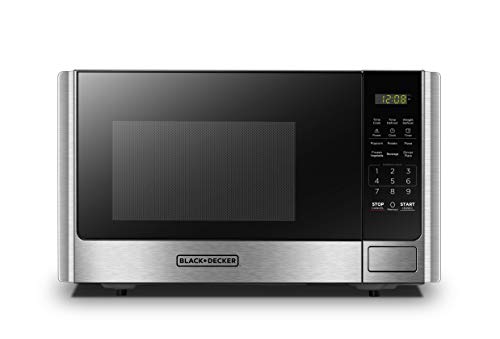
BLACK+DECKER 0.9 Cu. Ft. Microwave
Badge: Best for Quiet Spaces
Strengths
- 0.9 cu. ft. is the classic compact sweet spot: a full plate fits, yet the footprint stays modest
- 900W splits the difference between slow compacts and full-power family ovens
- Push-button door and simple presets make it nearly instruction-free for guests and roommates
Trade-offs
- No sensor or inverter technology, so evenness relies on the turntable and sensible power levels
- No mute option for the completion beeps
- Mid-size cavity still excludes the largest casserole dishes
| Specification | Detail |
|---|---|
| Capacity | 0.9 cu. ft. |
| Power | 900W |
| Finish | Stainless steel |
| Key features | 10 power levels, Push-button door, Child safety lock, 6 auto cook presets |
For the student budget and lifestyle — value, simplicity and food that fits around study, the BLACK+DECKER 0.9 Cu. Ft. Microwave makes its case through a specification that reads like a checklist for the job: 10 power levels, push-button door, child safety lock, 6 auto cook presets. None of those features is decorative. Each one answers a situation that comes up weekly in a real kitchen, and together they explain why this model earned its badge in a field where several rivals look similar at a glance.
Its conventional power delivery cycles on and off at lower settings, which is entirely serviceable for reheating and preset cooking, provided you use the sensible techniques this guide returns to often: moderate power for dense food, a stir or turn halfway, and a standing minute before you judge the result. The turntable rotates food through the energy field to average out hot and cold spots, and at this cavity size it accepts the plates and bowls that make up most of a household’s real cooking.
At 0.9 cu. ft. and 900W, it is sized for singles, couples and small households, covering plates, bowls and medium dishes without claiming family-feast territory. In daily use the controls follow the pattern most households prefer: presets for the routine jobs, a full ladder of power levels for the deliberate ones, and express options for the moments when dinner is already late. The stainless steel finish suits most kitchens and wipes down easily, which matters more over two years of ownership than it does in the showroom.
The honest limitation is the one listed in its trade-offs, and it is worth weighing rather than glossing: no sensor or inverter technology, so evenness relies on the turntable and sensible power levels It does not disqualify the model — every oven in this guide carries a compromise of the same order — but if that specific weakness collides with your most common cooking job, choose one of the neighbouring picks instead and you will be happier for it.
Best for: Small households, first apartments and dorm-style cooking for one or two / Not suited for: Large families or cooks who want sensor-guided automatic cooking

Toshiba 0.9 Cu. Ft. Microwave with LED Lighting
Badge: Best Family-Size Option
Strengths
- Mute function in a compact oven is a standout for shared and quiet spaces
- LED interior lighting makes it easy to watch food without opening the door
- Removable 10.6-inch turntable lifts out for proper washing
Trade-offs
- 900W is mid-pack, so the largest frozen meals take a little longer than in 1200W-plus models
- No sensor cooking to automate reheating decisions
- Black stainless finish rewards regular wiping
| Specification | Detail |
|---|---|
| Capacity | 0.9 cu. ft. |
| Power | 900W |
| Finish | Black stainless steel |
| Key features | 6 auto menus, Mute function, Child lock, LED lighting, 10.6-inch removable turntable |
For the student budget and lifestyle — value, simplicity and food that fits around study, the Toshiba 0.9 Cu. Ft. Microwave with LED Lighting makes its case through a specification that reads like a checklist for the job: 6 auto menus, mute function, child lock, led lighting, 10.6-inch removable turntable. None of those features is decorative. Each one answers a situation that comes up weekly in a real kitchen, and together they explain why this model earned its badge in a field where several rivals look similar at a glance.
Its conventional power delivery cycles on and off at lower settings, which is entirely serviceable for reheating and preset cooking, provided you use the sensible techniques this guide returns to often: moderate power for dense food, a stir or turn halfway, and a standing minute before you judge the result. The turntable rotates food through the energy field to average out hot and cold spots, and at this cavity size it accepts the plates and bowls that make up most of a household’s real cooking.
At 0.9 cu. ft. and 900W, it is sized for singles, couples and small households, covering plates, bowls and medium dishes without claiming family-feast territory. In daily use the controls follow the pattern most households prefer: presets for the routine jobs, a full ladder of power levels for the deliberate ones, and express options for the moments when dinner is already late. The black stainless steel finish suits most kitchens and wipes down easily, which matters more over two years of ownership than it does in the showroom.
The honest limitation is the one listed in its trade-offs, and it is worth weighing rather than glossing: 900W is mid-pack, so the largest frozen meals take a little longer than in 1200W-plus models It does not disqualify the model — every oven in this guide carries a compromise of the same order — but if that specific weakness collides with your most common cooking job, choose one of the neighbouring picks instead and you will be happier for it.
Best for: Compact kitchens, apartments and quiet households that reheat more than they cook / Not suited for: Anyone who needs a family-size cavity or inverter defrosting

Toshiba 1.2 Cu. Ft. Microwave in Black
Badge: Best Budget-Friendly Pick
Strengths
- Humidity sensor plus 12 auto menus is the strongest automation package at this size
- 12.4-inch turntable handles large plates and medium casseroles comfortably
- Mute and ECO modes suit shared homes and energy-conscious households
Trade-offs
- No inverter, so gentle power is delivered in pulses
- Black finish shows dust and light splatter more than stainless
- Full 1.2 cu. ft. footprint needs a proper counter run, not a corner niche
| Specification | Detail |
|---|---|
| Capacity | 1.2 cu. ft. |
| Power | 1000W |
| Finish | Black |
| Key features | 12.4-inch removable turntable, Smart humidity sensor, 12 auto menus, Mute function, ECO mode, Easy-clean interior |
For the student budget and lifestyle — value, simplicity and food that fits around study, the Toshiba 1.2 Cu. Ft. Microwave in Black makes its case through a specification that reads like a checklist for the job: 12.4-inch removable turntable, smart humidity sensor, 12 auto menus, mute function, eco mode, easy-clean interior. None of those features is decorative. Each one answers a situation that comes up weekly in a real kitchen, and together they explain why this model earned its badge in a field where several rivals look similar at a glance.
Its conventional power delivery cycles on and off at lower settings, which is entirely serviceable for reheating and preset cooking, provided you use the sensible techniques this guide returns to often: moderate power for dense food, a stir or turn halfway, and a standing minute before you judge the result. The turntable rotates food through the energy field to average out hot and cold spots, and at this cavity size it accepts the plates and bowls that make up most of a household’s real cooking.
At 1.2 cu. ft. and 1000W, it occupies the versatile middle of the market: a full dinner plate fits with room to spare, and the power is enough for confident everyday cooking. In daily use the controls follow the pattern most households prefer: presets for the routine jobs, a full ladder of power levels for the deliberate ones, and express options for the moments when dinner is already late. The black finish suits most kitchens and wipes down easily, which matters more over two years of ownership than it does in the showroom.
The honest limitation is the one listed in its trade-offs, and it is worth weighing rather than glossing: no inverter, so gentle power is delivered in pulses It does not disqualify the model — every oven in this guide carries a compromise of the same order — but if that specific weakness collides with your most common cooking job, choose one of the neighbouring picks instead and you will be happier for it.
Best for: Everyday family reheating, preset cooking and sensor-guided results / Not suited for: The smallest counters or anyone set on inverter technology


COMFEE’ 0.7 Cu. Ft. Compact Microwave
Badge: Best Overall
Strengths
- Purpose-built compact for dorms, apartments and offices, with a footprint to match
- Sound on/off control lets you silence beeps completely in quiet buildings
- ECO mode trims standby draw, which matters for an appliance that sits plugged in all day
Trade-offs
- 700W output means longer cook times on anything dense or frozen
- Small cavity limits you to bowls, mugs and modest plates
- Basic control set with no sensor cooking
| Specification | Detail |
|---|---|
| Capacity | 0.7 cu. ft. |
| Power | 700W |
| Finish | Black |
| Key features | ECO mode, Sound on/off, One-touch buttons, Child safety lock |
For the student budget and lifestyle — value, simplicity and food that fits around study, the COMFEE’ 0.7 Cu. Ft. Compact Microwave makes its case through a specification that reads like a checklist for the job: eco mode, sound on/off, one-touch buttons, child safety lock. None of those features is decorative. Each one answers a situation that comes up weekly in a real kitchen, and together they explain why this model earned its badge in a field where several rivals look similar at a glance.
Its conventional power delivery cycles on and off at lower settings, which is entirely serviceable for reheating and preset cooking, provided you use the sensible techniques this guide returns to often: moderate power for dense food, a stir or turn halfway, and a standing minute before you judge the result. The turntable rotates food through the energy field to average out hot and cold spots, and at this cavity size it accepts the plates and bowls that make up most of a household’s real cooking.
At 0.7 cu. ft. and 700W, it is sized for singles, couples and small households, covering plates, bowls and medium dishes without claiming family-feast territory. In daily use the controls follow the pattern most households prefer: presets for the routine jobs, a full ladder of power levels for the deliberate ones, and express options for the moments when dinner is already late. The black finish suits most kitchens and wipes down easily, which matters more over two years of ownership than it does in the showroom.
The honest limitation is the one listed in its trade-offs, and it is worth weighing rather than glossing: 700W output means longer cook times on anything dense or frozen It does not disqualify the model — every oven in this guide carries a compromise of the same order — but if that specific weakness collides with your most common cooking job, choose one of the neighbouring picks instead and you will be happier for it.
Best for: Dorm rooms, offices and single-person reheating on a tight footprint / Not suited for: Cooking for groups or fitting large serving dishes


Farberware 1.1 Cu. Ft. Microwave with Multi-Stage Cooking
Badge: Best for Even Results
Strengths
- Multi-stage cooking lets you program defrost-then-cook in one sequence, a real cook’s feature
- Defrost by weight or by time covers both careful and quick thawing styles
- 1.1 cu. ft. at 1000W is a proven, balanced everyday specification
Trade-offs
- No sensor, so reheating still relies on your chosen times
- No mute function for end-of-cycle sounds
- Stainless front needs wiping to stay presentable
| Specification | Detail |
|---|---|
| Capacity | 1.1 cu. ft. |
| Power | 1000W |
| Finish | Stainless steel |
| Key features | 10 power levels, Multi-stage cooking, 6 preset options, Defrost by weight or time, LED display, Express cooking |
For the student budget and lifestyle — value, simplicity and food that fits around study, the Farberware 1.1 Cu. Ft. Microwave with Multi-Stage Cooking makes its case through a specification that reads like a checklist for the job: 10 power levels, multi-stage cooking, 6 preset options, defrost by weight or time, led display, express cooking. None of those features is decorative. Each one answers a situation that comes up weekly in a real kitchen, and together they explain why this model earned its badge in a field where several rivals look similar at a glance.
Its conventional power delivery cycles on and off at lower settings, which is entirely serviceable for reheating and preset cooking, provided you use the sensible techniques this guide returns to often: moderate power for dense food, a stir or turn halfway, and a standing minute before you judge the result. The turntable rotates food through the energy field to average out hot and cold spots, and at this cavity size it accepts the plates and bowls that make up most of a household’s real cooking.
At 1.1 cu. ft. and 1000W, it occupies the versatile middle of the market: a full dinner plate fits with room to spare, and the power is enough for confident everyday cooking. In daily use the controls follow the pattern most households prefer: presets for the routine jobs, a full ladder of power levels for the deliberate ones, and express options for the moments when dinner is already late. The stainless steel finish suits most kitchens and wipes down easily, which matters more over two years of ownership than it does in the showroom.
The honest limitation is the one listed in its trade-offs, and it is worth weighing rather than glossing: no sensor, so reheating still relies on your chosen times It does not disqualify the model — every oven in this guide carries a compromise of the same order — but if that specific weakness collides with your most common cooking job, choose one of the neighbouring picks instead and you will be happier for it.
Best for: Cooks who use a microwave as a real cooking tool, not just a reheater / Not suited for: Anyone who wants fully automatic sensor cooking or silent operation

Chefman 0.9 Cu. Ft. Microwave with Eco Mode
Badge: Best Compact Pick
Strengths
- Combines a mute button and Eco mode, two features compact ovens often skip
- 0.9 cu. ft. cavity fits a standard dinner plate while staying counter-friendly
- Express cook keeps the daily routine to a couple of button presses
Trade-offs
- 900W is adequate rather than fast for large frozen portions
- No sensor or inverter technology at this level
- Black finish shows dust between cleans
| Specification | Detail |
|---|---|
| Capacity | 0.9 cu. ft. |
| Power | 900W |
| Finish | Black |
| Key features | 10 power levels, 6 cooking presets, One-touch express cook, Eco mode, Child safety lock, Mute button |
For the student budget and lifestyle — value, simplicity and food that fits around study, the Chefman 0.9 Cu. Ft. Microwave with Eco Mode makes its case through a specification that reads like a checklist for the job: 10 power levels, 6 cooking presets, one-touch express cook, eco mode, child safety lock, mute button. None of those features is decorative. Each one answers a situation that comes up weekly in a real kitchen, and together they explain why this model earned its badge in a field where several rivals look similar at a glance.
Its conventional power delivery cycles on and off at lower settings, which is entirely serviceable for reheating and preset cooking, provided you use the sensible techniques this guide returns to often: moderate power for dense food, a stir or turn halfway, and a standing minute before you judge the result. The turntable rotates food through the energy field to average out hot and cold spots, and at this cavity size it accepts the plates and bowls that make up most of a household’s real cooking.
At 0.9 cu. ft. and 900W, it is sized for singles, couples and small households, covering plates, bowls and medium dishes without claiming family-feast territory. In daily use the controls follow the pattern most households prefer: presets for the routine jobs, a full ladder of power levels for the deliberate ones, and express options for the moments when dinner is already late. The black finish suits most kitchens and wipes down easily, which matters more over two years of ownership than it does in the showroom.
The honest limitation is the one listed in its trade-offs, and it is worth weighing rather than glossing: 900W is adequate rather than fast for large frozen portions It does not disqualify the model — every oven in this guide carries a compromise of the same order — but if that specific weakness collides with your most common cooking job, choose one of the neighbouring picks instead and you will be happier for it.
Best for: Small households that want quiet, simple, plate-size cooking / Not suited for: Large dishes or cooks who rely on sensor automation
Comparison Table
The six picks side by side on the attributes that decide daily satisfaction. Live pricing sits on the listings, since it changes too often to print honestly.
| Model | Capacity | Power | Inverter | Headline feature | Listing |
|---|---|---|---|---|---|
| BLACK+DECKER 0.9 Cu. Ft. Microwave | 0.9 cu. ft. | 900W | No | 10 power levels | Check on Amazon |
| Toshiba 0.9 Cu. Ft. Microwave with LED Lighting | 0.9 cu. ft. | 900W | No | 6 auto menus | Check on Amazon |
| Toshiba 1.2 Cu. Ft. Microwave in Black | 1.2 cu. ft. | 1000W | No | 12.4-inch removable turntable | Check on Amazon |
| COMFEE’ 0.7 Cu. Ft. Compact Microwave | 0.7 cu. ft. | 700W | No | ECO mode | Check on Amazon |
| Farberware 1.1 Cu. Ft. Microwave with Multi-Stage Cooking | 1.1 cu. ft. | 1000W | No | 10 power levels | Check on Amazon |
| Chefman 0.9 Cu. Ft. Microwave with Eco Mode | 0.9 cu. ft. | 900W | No | 10 power levels | Check on Amazon |
How to Choose the Right Microwave for This Job
Start with the dish, not the brochure. The largest plate, bowl or baker you use weekly sets the minimum cavity, and the counter or shelf it must live on sets the maximum exterior. Between those two limits, the decision becomes a technology choice. Inverter power is the upgrade that changes cooking quality most visibly, especially for defrosting and delicate work. Sensor cooking is the upgrade that changes convenience most, because it replaces guessed times with the food’s own signals. If your household mainly reheats, a sensor model is the smarter spend; if it defrosts and cooks from raw, inverter power earns priority; households that do both heavily should shortlist the models that combine strong versions of each. Shoppers comparing adjacent briefs will find Best Microwaves For Countertops covers the neighbouring case in the same spirit.
Next, be honest about portions. Wattage buys speed on large and dense food; it buys almost nothing on a mug of soup. A 700W compact reheats a single bowl perfectly well and asks little of the circuit and the counter. A 1200W-plus oven earns its draw when frozen family meals and big casseroles are routine. Capacity follows the same logic: one size up from your biggest regular dish is the reliable rule, because every extra litre is counter space you pay for daily and use rarely.
On a student budget, choose by jobs-per-week, not by headline wattage. Compacts for snack-and-reheat lives, mid-size sensor models for daily real cooking, and inverter models only when defrosting is a weekly habit.
Finally, weigh the citizenship features. Mute and sound-off controls, eco standby modes, child locks and interiors that genuinely wipe clean are unglamorous, and they decide whether an oven is pleasant to live with in month twelve. Read the trade-offs in each review above with your own household in mind; the right pick is the one whose compromises fall on the jobs you do least.
How to Use, Set Up and Look After Your Microwave
Setting up. Unpack the oven onto its final surface, remove every piece of transit packaging from inside the cavity, and confirm the vents have the clearance the manual specifies on every side that has them. Wash the turntable and ring, seat them properly, plug the oven directly into a wall outlet rather than a light-duty extension lead, and set the clock so timed cooking behaves as expected. Run a mug of water for a minute as a first cycle: it confirms everything works and clears new-appliance smells before food is involved.
Everyday technique. Use microwave-safe containers — glass and ceramic are the reliable defaults — and cover food with a vented lid to even the heat and keep the cavity clean. Arrange food in an even layer or a ring, stir or turn it halfway through longer cycles, choose a power level that matches the food rather than defaulting to full, and always allow standing time before serving. Students should learn one skill early: adjusting package times to their oven’s wattage. Most frozen meals are written for ovens around 1100W; in a 700W compact, add roughly a third more time in short bursts, and in a 1250W model, start checking early. That single habit fixes most complaints about microwave food.
Cleaning and care. Wipe splatters while they are fresh whenever you can. Once a week, steam-clean: heat a bowl of water with lemon until the window fogs, leave the door closed for a few minutes, then wipe the softened residue away. Wash the turntable like a plate, keep the door seal area free of trapped food, and never run the oven empty. Readers setting up for a related brief may also want Best Microwaves For Defrosting And Warming Up Food for the matching guidance.
Troubleshooting.
Problem: food is hot at the edges and cold in the middle → what to do: reduce the power level, add time in shorter bursts, stir or rearrange halfway, and let the dish stand before serving; arrange food in a ring rather than a mound.
Problem: defrosted meat has cooked edges and a frozen centre → what to do: use the defrost program with the true weight, separate and turn pieces at each pause, remove portions as they thaw, and finish the last stage with standing time instead of more power.
Problem: the oven runs but the turntable does not turn → what to do: check the plate is seated on its ring and the ring is clean and correctly positioned; debris under the ring is the usual cause, and a wash normally cures it.
Getting the Most From a Student Budget
Microwave pricing follows features more than brand. The honest way to shop on a student budget is to list the jobs you actually do weekly, then pay only for the technology those jobs need. Reheating, noodles, popcorn and frozen meals need none of the advanced systems — a straightforward compact does them all. Sensor cooking earns its keep if you reheat varied leftovers daily and hate guesswork. Inverter power earns its keep if you defrost meat and fish often, because that is where cheaper ovens most visibly fail. Spending on a feature you use twice a year is the real waste, whichever direction it goes.
Also factor in longevity across moves. A mid-size oven that serves a dorm year, then an apartment, then a first job is better value than a rock-bottom compact replaced twice.
Study-Friendly Cooking: Fast, Quiet, Forgiving
Student cooking happens in the gaps of a study schedule, so the most-used features are express cook, presets that need one press, and a keep-warm tolerance for food forgotten while finishing an essay. Mute functions matter during late revision sessions in shared rooms. Interiors that clean in one wipe matter because cleaning time competes with deadline time. The picks in this guide were weighted toward exactly those lived realities rather than specification-sheet bragging rights.
One underrated student feature is a clear, bright interior light: it lets you check whether soup is about to boil over without opening the door and losing heat — a small thing that prevents most microwave messes.
Cleaning little and often beats the occasional deep rescue. A weekly steam clean — a bowl of water with a slice of lemon, heated until the window fogs, left standing with the door closed, then wiped — loosens almost everything a week of cooking deposits. The turntable and its ring wash like ordinary dishes. Door seals deserve a wipe too, because trapped food in the seal area is the commonest reason a door stops closing cleanly, and a door that does not close properly is a door the oven will not run with.
Wattage literacy prevents most disappointment. Recipes and package directions are usually written for ovens in the middle of the power range. In a stronger oven, check early and shorten times; in a weaker compact, add time in short bursts and expect dense food to need a stir and a rest. None of this is a flaw in the oven — it is the same adjustment cooks make between a fierce and a gentle hob — but shoppers who understand it stop blaming the machine for physics.
Placement affects performance more than brochures admit. The vents on the sides, top or back need their specified clearance, because a microwave that cannot shed heat will cook less consistently and age faster. The surface should be level and stable so the turntable runs true and the door seals evenly. Keep the oven away from the sink’s splash zone and from the hob’s steam, and never use the top of the unit as a shelf for cookbooks or storage boxes, however tempting the flat surface looks.
Child safety locks, fitted to most models in this guide, are worth using in any household with small children or in shared spaces where an oven might be started empty by accident. Running a microwave empty is genuinely bad for it, and a lock prevents both that and curious small hands opening a door onto steaming food. If your household does not need the lock, it costs nothing to leave it off — but knowing it exists is part of choosing the right model for a family kitchen.
Eco and standby modes answer a fair criticism of modern appliances: a microwave spends most of its life doing nothing while its clock draws power. Models here with ECO mode cut that standby draw, and sound-off controls end the tyranny of the completion beep in open-plan homes. Neither feature cooks anything better, but both make the oven a better citizen in the house, and in shared or quiet spaces that citizenship is a legitimate part of the buying decision.
Power levels deserve more respect than they get. Full power is right for boiling water, steaming vegetables and reheating soups, but it is the wrong setting for most other food. Medium power reheats a plated dinner without toughening meat, low power softens butter and cream cheese without melting them into oil, and the lowest settings keep a dish warm or thaw bread without drying it. Treat the power ladder the way a hob cook treats burner sizes and your results improve in every oven in this guide, regardless of its technology.
Covers are the cheapest upgrade in microwave cooking. A vented cover or an upturned microwave-safe plate traps steam around the food, which evens the temperature, shortens the time and keeps the cavity clean. Paper towels suit fatty foods that splatter; a damp paper towel over rice or pasta restores moisture as it reheats. What never belongs over food is ordinary plastic wrap pressed directly onto the surface or, worse, foil — metal in a microwave is a hard rule with no exceptions, whatever a confident housemate tells you.
Standing time is part of the cooking, not an optional pause. Microwave energy heats unevenly by nature, and the minutes after the timer ends are when conduction evens the temperature through the dish. A casserole that stands for two minutes serves at one consistent temperature; the same casserole served instantly has a scalding rim and a cool centre. Build the standing minute into your timing the way you would rest a roast, and judge doneness after the stand, not before it.
Common Buying Mistakes
Buying by wattage alone. Power is one variable in a system; a well-designed sensor or inverter oven at moderate wattage routinely out-cooks a crude high-wattage box on real food.
Ignoring the door swing and the landing zone. An oven that fits its rectangle but leaves nowhere to set a hot dish will annoy you daily. Measure the space around the oven, not just under it — a point that also runs through Best Microwaves For Defrozing And Warming Up Food.
Paying for capacity you never use. Every litre beyond your biggest dish is counter surrendered for nothing. Buy one size up from your real life, not from your imagination.
Skipping the household rules check. Shared housing, dorm contracts and older circuits all impose limits. Confirm them before ordering, not after delivery.
Treating presets as cooking. Presets are starting points. The cooks who get the best from any microwave adjust power, stir halfway and respect standing time.
Final Recommendation
For most readers of this guide, the first choice is the BLACK+DECKER 0.9 Cu. Ft. Microwave Check on Amazon: it matches the brief’s central jobs with the fewest compromises. If your priorities lean the way the second badge suggests, the Toshiba 0.9 Cu. Ft. Microwave with LED Lighting Check on Amazon is the alternative to beat. Compact-space shoppers should start from the smallest pick that fits their largest dish, and heavy defrosters or deliberate cooks from the inverter end of the list. Whichever you choose, the techniques in the how-to section will raise its results from the first week — and Best Microwaves For Even Cooking rounds out the picture for the closest related brief.
Frequently Asked Questions
What size microwave do I actually need?
Work from your largest regular dish. Mugs, bowls and small plates are happy in 0.7 cu. ft.; full dinner plates and medium casseroles want 0.9 to 1.2 cu. ft.; large serving dishes and rectangular bakers need the 1.3 flatbed or 1.6 cu. ft. class. One size up from your biggest dish is the reliable rule.
Is inverter technology worth it?
If you defrost often or cook delicate food — sauces, custards, fish, melting and softening — yes: continuous low power is visibly gentler and more even. If you almost exclusively reheat drinks and leftovers, a good sensor model is the better-value upgrade.
How do I stop reheated food drying out?
Add a spoonful of water or a damp cover, use a moderate power level instead of full, stir or rearrange halfway, and let the dish stand for a minute before serving. Sensor reheating automates most of this.
Can I put metal in a microwave if it is small?
No. Foil, cutlery, metallic-rimmed dishes and twist ties can all spark and damage the oven. Keep metal out entirely and use glass, ceramic or clearly microwave-safe containers instead.
Why does my microwave cook unevenly?
Microwave energy is naturally uneven and penetrates only a short distance. Even layers, a halfway stir or turn, moderate power for dense food and standing time are the cures; inverter delivery and sensor supervision reduce the problem at the hardware level.
How often should I clean the interior?
Wipe fresh splatters as they happen and steam-clean weekly with a bowl of water and lemon. A clean cavity smells neutral, heats predictably and keeps the door seal seating properly.


