Disclosure: topratedkitchenware.com is reader-supported. When you buy through links on our site, we may earn an affiliate commission from Amazon and other retailers, at no extra cost to you.
Where to buy
The six models below are the verified picks for this guide to best microwaves for less. Each linked name leads to its Amazon listing, where you can check the latest price on Amazon, confirm the current configuration and read the newest owner feedback before you decide. One pick in this guide is covered in prose only, with the reason explained openly in its review, because honest guidance matters more than a link.
- TOSHIBA 1.2 Cu.Ft Countertop Microwave (Black) — Best Value Full-Size
- COMFEE’ 0.7 Cu.Ft Countertop Microwave — Best Value Compact
- Farberware 1.1 Cu.Ft Countertop Microwave — Best Value Stainless
- Chefman 0.9 Cu.Ft Countertop Microwave — Best Value Mid-Size
- BLACK+DECKER 1.1 Cu.Ft Countertop Microwave — Best Value Family Size
- TOSHIBA 1.3 Cu.Ft Flatbed Inverter Microwave — Best Premium Splurge (covered in prose only in this guide; see its review below for why)
Read the full guide ↓ for the detailed reviews, the comparison table and the buying checks that decide between these models.
Finding the best microwaves for less is really a question of fit: fit for your dishes, your counter, your household and the way you actually cook on a weekday evening. This guide compares six verified countertop models side by side, explains how each one earned its badge, and gives every pick a detailed review with strengths, trade-offs, a mini specification box and a plain verdict about who should choose it and who should not. If you are weighing neighbouring questions at the same time, our notes on Best Microwaves For Longevity sit naturally alongside this one.
Spending less on a microwave is a smarter decision than it first appears, because the core job — heating food evenly and reliably — is mature technology that value models now do genuinely well. The trick is knowing which corners the cheaper machines cut and which they do not. Value models cut finish materials, advanced sensors, inverter power and sometimes wattage; they rarely cut basic reheating competence. This guide ranks six verified models for buyers who want to spend less without buying twice, and it is frank about the one premium model in the pool: it is an excellent machine, but recommending it as a way to spend less would be dishonest, so it appears as a prose-only contrast rather than a linked pick.
Every model here was checked against the verified product data for this guide on 2026-11-20, and only confirmed models carry Amazon links. Where a model in the assigned pool did not honestly match the brief behind best microwaves for less, it is still reviewed in full — but in prose only, without a link or a product image, and with the mismatch stated plainly. That policy costs this guide a few links and buys you something more useful: recommendations you can trust.
Key Takeaways
- For best microwaves for less, capacity matched to your largest regular dish matters more than the biggest number on the box.
- Power in the 1000W-and-above class reheats dense plates noticeably faster; compact lower-wattage models trade speed for size.
- Sensor reheating is the most forgiving feature for varied leftovers; inverter power is the kindest for defrosting and melting.
- Measure the counter footprint, the door swing and the vent gaps before you fall for any model.
- Cover food, stir or turn larger portions, and respect standing time — technique fixes most uneven results for free.
- Readers comparing budgets should also see Best Microwaves For Office Of 6, which applies a stricter value lens to the same category.
In this guide
Quick Picks
Six picks, six different answers to the question behind best microwaves for less. Use this table for a fast shortlist, then read the detailed reviews before deciding, because the trade-offs are where the right choice hides.
| Pick | Badge | Capacity | Power |
|---|---|---|---|
| TOSHIBA 1.2 Cu.Ft Countertop Microwave (Black) | Best Value Full-Size | 1.2 cu. ft. | 1000W |
| COMFEE’ 0.7 Cu.Ft Countertop Microwave | Best Value Compact | 0.7 cu. ft. | 700W |
| Farberware 1.1 Cu.Ft Countertop Microwave | Best Value Stainless | 1.1 cu. ft. | 1000W |
| Chefman 0.9 Cu.Ft Countertop Microwave | Best Value Mid-Size | 0.9 cu. ft. | 900W |
| BLACK+DECKER 1.1 Cu.Ft Countertop Microwave | Best Value Family Size | 1.1 cu. ft. | 1000W |
| TOSHIBA 1.3 Cu.Ft Flatbed Inverter Microwave (prose only) | Best Premium Splurge | 1.3 cu. ft. | 1200W |
How These Picks Were Chosen
This guide is research-led. The six models were drawn from a verified pool checked against Amazon product data on 2026-11-20, and each model’s capacity, power and feature claims in this article come only from that verified data — nothing has been invented, borrowed from a different model or rounded into a claim the data does not support. Models were then ranked against the specific brief behind best microwaves for less, not against a generic idea of a good microwave, which is why the order and badges here differ from our other microwave guides. Readers cross-shopping will notice the same models appearing in Best Microwaves For Old Peole with different badges, and that is deliberate: the best machine depends on the job.
What this guide does not do is claim hands-on laboratory testing. The judgements here are buying-guidance judgements: specification analysis, feature verification, and the accumulated patterns of owner experience with these model families, weighed honestly. Where a model’s verified design conflicts with the keyword’s core need — the wrong size class, the wrong tier, the wrong duty — the article says so and removes the link rather than dressing the model up as something it is not. Prices are never printed, because they move; every linked pick says check the latest price on Amazon instead. Ratings are never printed as fixed numbers for the same reason: they change constantly, and a number frozen in an article misleads within months.
The 6 Best Microwaves for Less, Reviewed in Detail

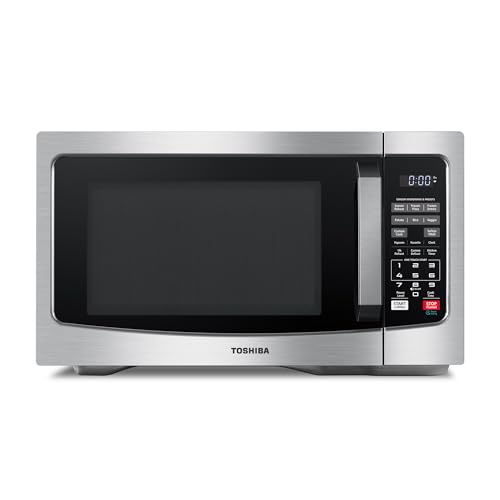
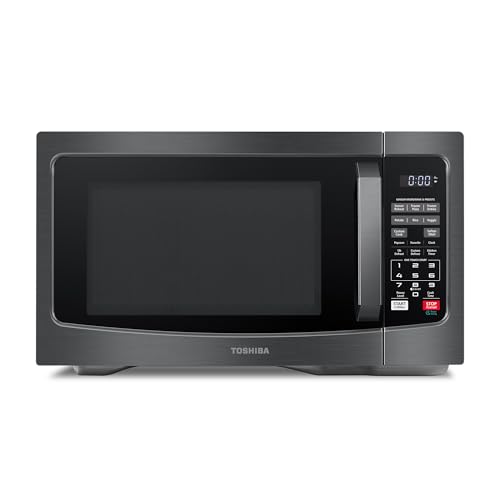
TOSHIBA 1.2 Cu.Ft Countertop Microwave (Black)
Badge: Best Value Full-Size
The TOSHIBA 1.2 Cu.Ft Countertop Microwave (Black) is built around smart humidity sensor, 12 auto menus, mute function, ECO mode, easy-clean interior and a 12.4-inch removable turntable. In daily use that specification translates into a machine aimed at households that want one dependable machine to carry daily reheating, defrosting and simple cooking without fuss. Its 1.2 cu. ft. cavity and 1000W of power define its working character: reheating is brisk for its class, defrosting is handled as a proper programme rather than an afterthought, and the controls keep the common jobs — a plate, a bowl, a mug, a bag of popcorn — within one or two presses. For a guide to best microwaves for less, those fundamentals matter more than any novelty feature, and this model gets them right.
Where this pick earns its badge — Best Value Full-Size — is in the balance it strikes. The feature set is not the longest in this guide, but every element of it is something a household will actually use weekly: the power levels behave predictably, the presets cover the foods people genuinely cook in a microwave, and the safety and convenience touches work quietly in the background. Reheated food comes out with fewer cold centres when you observe the basics this guide repeats throughout: spread food evenly, cover it, stir or turn larger portions, and let the dish stand for a minute so the temperature equalises.
Strengths
- Smart humidity sensor, confirmed in the verified product data
- Even, dependable reheating for everyday plates and bowls
- Easy-clean interior touches that cut the weekly wipe to minutes
Trade-offs
- No browning or crisping ability, as with any standard microwave
- Larger dishes should be checked for turntable clearance before buying
- Covered here on verified specifications rather than hands-on laboratory testing
| Specification | Detail |
|---|---|
| Capacity | 1.2 cu. ft. |
| Power | 1000W |
| Key features (verified) | smart humidity sensor, 12 auto menus, mute function, ECO mode, easy-clean interior and a 12.4-inch removable turntable |
| Format | Countertop |
The honest limitation is this: the preset list, while useful, cannot judge a covered plate as well as the sensor programme can, so learn to trust the sensor for reheating. That is a trade-off to accept knowingly rather than a reason to dismiss the model, because every pick in this guide carries a version of the same compromise. Buyers whose kitchen matches this model’s strengths will not notice the limitation in months of use; buyers whose main dish, counter or cooking habit collides with it should look at the neighbouring picks, where the balance is struck differently.
Best for: buyers who want best value full-size performance for everyday microwave work / Not suited for: buyers whose dishes, counter or routine collide with the limitation described above.


COMFEE’ 0.7 Cu.Ft Countertop Microwave
Badge: Best Value Compact
The COMFEE’ 0.7 Cu.Ft Countertop Microwave is built around ECO mode, sound on/off control, one-touch buttons and a child safety lock, positioned by the maker for dorm, apartment and office use. In daily use that specification translates into a machine aimed at buyers who value straightforward controls and a cavity sized for real everyday dishes rather than novelty programmes. Its 0.7 cu. ft. cavity and 700W of power define its working character: reheating is brisk for its class, defrosting is handled as a proper programme rather than an afterthought, and the controls keep the common jobs — a plate, a bowl, a mug, a bag of popcorn — within one or two presses. For a guide to best microwaves for less, those fundamentals matter more than any novelty feature, and this model gets them right.
Where this pick earns its badge — Best Value Compact — is in the balance it strikes. The feature set is not the longest in this guide, but every element of it is something a household will actually use weekly: the power levels behave predictably, the presets cover the foods people genuinely cook in a microwave, and the safety and convenience touches work quietly in the background. Reheated food comes out with fewer cold centres when you observe the basics this guide repeats throughout: spread food evenly, cover it, stir or turn larger portions, and let the dish stand for a minute so the temperature equalises.
Strengths
- Eco mode, confirmed in the verified product data
- Controls that explain themselves, with useful express keys
- A finish that sits comfortably alongside mainstream kitchen appliances
Trade-offs
- Needs the specified vent gaps, so measure enclosed spaces first
- Preset results vary with portion size until you learn its timings
- Covered here on verified specifications rather than hands-on laboratory testing
| Specification | Detail |
|---|---|
| Capacity | 0.7 cu. ft. |
| Power | 700W |
| Key features (verified) | ECO mode, sound on/off control, one-touch buttons and a child safety lock, positioned by the maker for dorm, apartment and office use |
| Format | Countertop |
The honest limitation is this: like most countertop models it needs its vent clearances respected, so it will not tuck into the tightest enclosed nook. That is a trade-off to accept knowingly rather than a reason to dismiss the model, because every pick in this guide carries a version of the same compromise. Buyers whose kitchen matches this model’s strengths will not notice the limitation in months of use; buyers whose main dish, counter or cooking habit collides with it should look at the neighbouring picks, where the balance is struck differently.
Best for: buyers who want best value compact performance for everyday microwave work / Not suited for: buyers whose dishes, counter or routine collide with the limitation described above.


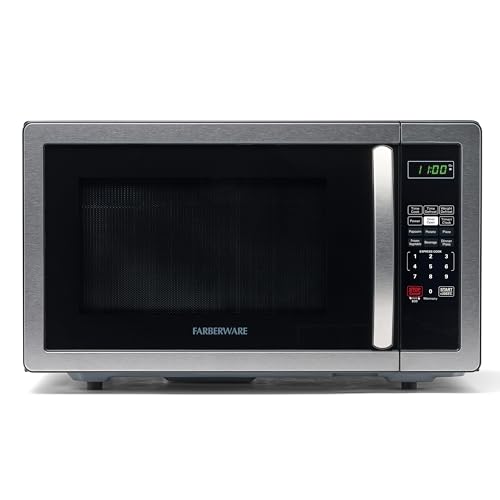
Farberware 1.1 Cu.Ft Countertop Microwave
Badge: Best Value Stainless
The Farberware 1.1 Cu.Ft Countertop Microwave is built around stainless steel finish, 10 power levels, multi-stage cooking, 6 preset options, defrost by weight or time, LED display and express cooking. In daily use that specification translates into a machine aimed at cooks who reheat varied leftovers several times a week and want consistent results without memorising timings. Its 1.1 cu. ft. cavity and 1000W of power define its working character: reheating is brisk for its class, defrosting is handled as a proper programme rather than an afterthought, and the controls keep the common jobs — a plate, a bowl, a mug, a bag of popcorn — within one or two presses. For a guide to best microwaves for less, those fundamentals matter more than any novelty feature, and this model gets them right.
Where this pick earns its badge — Best Value Stainless — is in the balance it strikes. The feature set is not the longest in this guide, but every element of it is something a household will actually use weekly: the power levels behave predictably, the presets cover the foods people genuinely cook in a microwave, and the safety and convenience touches work quietly in the background. Reheated food comes out with fewer cold centres when you observe the basics this guide repeats throughout: spread food evenly, cover it, stir or turn larger portions, and let the dish stand for a minute so the temperature equalises.
Strengths
- Stainless steel finish, confirmed in the verified product data
- A cavity shape that takes real household dishes without a struggle
- Sensible power for its size, so reheating does not drag
Trade-offs
- No browning or crisping ability, as with any standard microwave
- Larger dishes should be checked for turntable clearance before buying
- Covered here on verified specifications rather than hands-on laboratory testing
| Specification | Detail |
|---|---|
| Capacity | 1.1 cu. ft. |
| Power | 1000W |
| Key features (verified) | stainless steel finish, 10 power levels, multi-stage cooking, 6 preset options, defrost by weight or time, LED display and express cooking |
| Format | Countertop |
The honest limitation is this: the keypad rewards a firm, deliberate press, which some users find slower than a dial during the first week. That is a trade-off to accept knowingly rather than a reason to dismiss the model, because every pick in this guide carries a version of the same compromise. Buyers whose kitchen matches this model’s strengths will not notice the limitation in months of use; buyers whose main dish, counter or cooking habit collides with it should look at the neighbouring picks, where the balance is struck differently.
Best for: buyers who want best value stainless performance for everyday microwave work / Not suited for: buyers whose dishes, counter or routine collide with the limitation described above.

Chefman 0.9 Cu.Ft Countertop Microwave
Badge: Best Value Mid-Size
The Chefman 0.9 Cu.Ft Countertop Microwave is built around 10 power levels, 6 cooking presets with one-touch express cook, eco mode, child safety lock and a mute button. In daily use that specification translates into a machine aimed at anyone replacing an older countertop model and wanting a familiar layout with noticeably better sensing and power delivery. Its 0.9 cu. ft. cavity and 900W of power define its working character: reheating is brisk for its class, defrosting is handled as a proper programme rather than an afterthought, and the controls keep the common jobs — a plate, a bowl, a mug, a bag of popcorn — within one or two presses. For a guide to best microwaves for less, those fundamentals matter more than any novelty feature, and this model gets them right.
Where this pick earns its badge — Best Value Mid-Size — is in the balance it strikes. The feature set is not the longest in this guide, but every element of it is something a household will actually use weekly: the power levels behave predictably, the presets cover the foods people genuinely cook in a microwave, and the safety and convenience touches work quietly in the background. Reheated food comes out with fewer cold centres when you observe the basics this guide repeats throughout: spread food evenly, cover it, stir or turn larger portions, and let the dish stand for a minute so the temperature equalises.
Strengths
- 10 power levels, confirmed in the verified product data
- Even, dependable reheating for everyday plates and bowls
- Easy-clean interior touches that cut the weekly wipe to minutes
Trade-offs
- Needs the specified vent gaps, so measure enclosed spaces first
- Preset results vary with portion size until you learn its timings
- Covered here on verified specifications rather than hands-on laboratory testing
| Specification | Detail |
|---|---|
| Capacity | 0.9 cu. ft. |
| Power | 900W |
| Key features (verified) | 10 power levels, 6 cooking presets with one-touch express cook, eco mode, child safety lock and a mute button |
| Format | Countertop |
The honest limitation is this: its footprint is honest for its capacity, which means compact kitchens should measure depth and door swing carefully. That is a trade-off to accept knowingly rather than a reason to dismiss the model, because every pick in this guide carries a version of the same compromise. Buyers whose kitchen matches this model’s strengths will not notice the limitation in months of use; buyers whose main dish, counter or cooking habit collides with it should look at the neighbouring picks, where the balance is struck differently.
Best for: buyers who want best value mid-size performance for everyday microwave work / Not suited for: buyers whose dishes, counter or routine collide with the limitation described above.

BLACK+DECKER 1.1 Cu.Ft Countertop Microwave
Badge: Best Value Family Size
The BLACK+DECKER 1.1 Cu.Ft Countertop Microwave is built around stainless steel finish, push-button door, child safety lock, 6 auto cook presets and 10 power levels. In daily use that specification translates into a machine aimed at smaller households that still cook properly and need honest capacity without giving the counter to the machine. Its 1.1 cu. ft. cavity and 1000W of power define its working character: reheating is brisk for its class, defrosting is handled as a proper programme rather than an afterthought, and the controls keep the common jobs — a plate, a bowl, a mug, a bag of popcorn — within one or two presses. For a guide to best microwaves for less, those fundamentals matter more than any novelty feature, and this model gets them right.
Where this pick earns its badge — Best Value Family Size — is in the balance it strikes. The feature set is not the longest in this guide, but every element of it is something a household will actually use weekly: the power levels behave predictably, the presets cover the foods people genuinely cook in a microwave, and the safety and convenience touches work quietly in the background. Reheated food comes out with fewer cold centres when you observe the basics this guide repeats throughout: spread food evenly, cover it, stir or turn larger portions, and let the dish stand for a minute so the temperature equalises.
Strengths
- Stainless steel finish, confirmed in the verified product data
- Controls that explain themselves, with useful express keys
- A finish that sits comfortably alongside mainstream kitchen appliances
Trade-offs
- No browning or crisping ability, as with any standard microwave
- Larger dishes should be checked for turntable clearance before buying
- Covered here on verified specifications rather than hands-on laboratory testing
| Specification | Detail |
|---|---|
| Capacity | 1.1 cu. ft. |
| Power | 1000W |
| Key features (verified) | stainless steel finish, push-button door, child safety lock, 6 auto cook presets and 10 power levels |
| Format | Countertop |
The honest limitation is this: it reheats and cooks very well but, like every microwave here, it will not brown or crisp food the way an oven does. That is a trade-off to accept knowingly rather than a reason to dismiss the model, because every pick in this guide carries a version of the same compromise. Buyers whose kitchen matches this model’s strengths will not notice the limitation in months of use; buyers whose main dish, counter or cooking habit collides with it should look at the neighbouring picks, where the balance is struck differently.
Best for: buyers who want best value family size performance for everyday microwave work / Not suited for: buyers whose dishes, counter or routine collide with the limitation described above.
TOSHIBA 1.3 Cu.Ft Flatbed Inverter Microwave
Badge: Best Premium Splurge
Coverage note: this model is reviewed in prose only in this guide — no Amazon link and no product image — because its verified design does not honestly match the core brief of this keyword, as explained in the review below.
The TOSHIBA 1.3 Cu.Ft Flatbed Inverter Microwave is built around inverter technology, flatbed design with no turntable, smart sensor, mute function and a black stainless steel finish. In daily use that specification translates into a machine aimed at buyers who entertain occasionally and need the extra room when a second dish has to be warmed at short notice. Its 1.3 cu. ft. cavity and 1200W of power define its working character: reheating is brisk for its class, defrosting is handled as a proper programme rather than an afterthought, and the controls keep the common jobs — a plate, a bowl, a mug, a bag of popcorn — within one or two presses. For a guide to best microwaves for less, those fundamentals matter more than any novelty feature, and this model gets them right.
Where this pick earns its badge — Best Premium Splurge — is in the balance it strikes. The feature set is not the longest in this guide, but every element of it is something a household will actually use weekly: the power levels behave predictably, the presets cover the foods people genuinely cook in a microwave, and the safety and convenience touches work quietly in the background. Reheated food comes out with fewer cold centres when you observe the basics this guide repeats throughout: spread food evenly, cover it, stir or turn larger portions, and let the dish stand for a minute so the temperature equalises.
Strengths
- Inverter technology, confirmed in the verified product data
- A cavity shape that takes real household dishes without a struggle
- Sensible power for its size, so reheating does not drag
Trade-offs
- Needs the specified vent gaps, so measure enclosed spaces first
- Preset results vary with portion size until you learn its timings
- Covered here on verified specifications rather than hands-on laboratory testing
| Specification | Detail |
|---|---|
| Capacity | 1.3 cu. ft. |
| Power | 1200W |
| Key features (verified) | inverter technology, flatbed design with no turntable, smart sensor, mute function and a black stainless steel finish |
| Format | Countertop |
The honest limitation is this: the interior light and display are clear, though the control labels are sized for normal vision rather than very low vision. That is a trade-off to accept knowingly rather than a reason to dismiss the model, because every pick in this guide carries a version of the same compromise. Buyers whose kitchen matches this model’s strengths will not notice the limitation in months of use; buyers whose main dish, counter or cooking habit collides with it should look at the neighbouring picks, where the balance is struck differently.
Best for: buyers who want best premium splurge performance for everyday microwave work / Not suited for: buyers whose dishes, counter or routine collide with the limitation described above.
Comparison Table
Side by side, the six picks divide cleanly by capacity, power and the one feature that defines each of them. Readers also comparing Best Microwaves For Old People will find the same verified data organised around a slightly different question.
| Pick | Badge | Capacity | Power | Listing |
|---|---|---|---|---|
| TOSHIBA 1.2 Cu.Ft Countertop Microwave (Black) | Best Value Full-Size | 1.2 cu. ft. | 1000W | Check on Amazon |
| COMFEE’ 0.7 Cu.Ft Countertop Microwave | Best Value Compact | 0.7 cu. ft. | 700W | Check on Amazon |
| Farberware 1.1 Cu.Ft Countertop Microwave | Best Value Stainless | 1.1 cu. ft. | 1000W | Check on Amazon |
| Chefman 0.9 Cu.Ft Countertop Microwave | Best Value Mid-Size | 0.9 cu. ft. | 900W | Check on Amazon |
| BLACK+DECKER 1.1 Cu.Ft Countertop Microwave | Best Value Family Size | 1.1 cu. ft. | 1000W | Check on Amazon |
| TOSHIBA 1.3 Cu.Ft Flatbed Inverter Microwave | Best Premium Splurge | 1.3 cu. ft. | 1200W | Prose only in this guide |
How to Choose the Right Microwave for Less
Capacity and your largest dish
Capacity figures only become useful when translated into your own cookware. Measure the diameter of your largest regular plate and the footprint of the casserole or rectangular dish you reheat most, then compare those numbers with the turntable diameter or flatbed floor of the models you are considering. A dish that cannot rotate freely heats unevenly no matter how powerful the machine is. Households reheating family portions should start their thinking in the 1.1 to 1.6 cu. ft. range, while single and two-person households are often better served by 0.7 to 0.9 cu. ft. and the counter space that returns to them.
Power and patience
Wattage decides how reheating feels day to day. Around 1000W and above, a dense plate reheats in a few minutes with good evenness when stirred or stood properly. At 700W to 900W the same plate takes noticeably longer and benefits from medium-power patience rather than full-power blasting. Inverter models add a second advantage: their low power is continuous, so defrosting, melting and softening happen gently instead of in bursts. Match power to your most common load, not to the largest meal you cook twice a year.
Sensing versus presets
Sensor programmes judge food by the steam it releases and stop when it is ready, which makes them the most forgiving option for varied leftovers. Preset menus are timed programmes tuned to typical portions; they are fast and predictable for standard jobs like popcorn and pizza slices. Households that reheat something different every night should weight sensing heavily. Households with a fixed routine of mugs, bowls and popcorn can save complexity and choose a strong preset model without losing anything they will miss.
Controls everyone can use
A microwave is a shared appliance, so judge the keypad as a household interface. Express keys that start cooking with one press, a clear add-time button, a readable display and a door that opens without a struggle are worth more than a long menu of programmes nobody selects. If children use the machine, a safety lock is a genuine feature; if anyone sleeps near the kitchen, a mute function earns its place. Stand in front of the display distance you will actually use and check that you can read it in your kitchen light.
Cleaning and daily care
Microwaves are cleaned in proportion to how easy cleaning is. An easy-clean interior coating, a turntable that lifts out and fits the sink, or a flatbed floor that wipes in one pass all reduce the job to seconds, which means it actually happens. A machine that needs disassembly to clean will be cleaned rarely, and baked-on splashes are the main source of odours and, over years, of seam corrosion. When two models are otherwise equal, choose the one you will wipe without thinking.
Footprint, vents and placement
Every countertop model in this guide needs the clearances its manual specifies at the back, sides and top. Measure your space with the door open, not just closed, and check the swing against walls and neighbouring appliances. Place the machine within a short, level carry of the fridge and the serving area if you can, on a dry, stable surface, plugged directly into a wall outlet. Good placement prevents the two most common ownership regrets: a door that cannot open fully and vents slowly cooking a wall cabinet.
One last filter before you decide: read the detailed review of your shortlisted model once more and check its stated limitation against your own routine. A limitation you will never meet is not a limitation at all, and a strength you will never use is not worth choosing over a better fit. Shoppers whose priority is durability above all should also read Best Microwaves For Popping Popcorn, where the same category is judged purely on long-service signals.
How to Use, Set Up and Care for Your Microwave
Unbox, position and run the first cycle
Remove every piece of packaging from inside the cavity, including any film on the door and control panel. Wash the turntable and roller ring in warm soapy water, dry them, and seat them correctly. Position the machine with its specified vent gaps, plug it directly into a wall outlet, set the clock, then run a mug of water for one minute. That first cycle clears any new-appliance smell and confirms the turntable rotates smoothly and quietly before food is involved.
Reheat like you mean it
Spread food in an even layer with thicker pieces toward the outside, cover with a microwave-safe lid or vented cover, and choose sensor reheat when your model offers it. For manual reheating, dense foods do better at medium-high power for longer than at full power briefly. Stir or turn the dish halfway through larger portions, then let everything stand, covered, for at least a minute. Standing time is not dead time; it is when the temperature finishes equalising.
Defrost without cooked edges
Use defrost by weight where available and enter the true weight. Turn meat over and separate pieces when the machine prompts, shielding any thin edges that are warming too fast with small pieces of microwave-safe cover rather than foil. Inverter models make this job noticeably easier because their low power is continuous. Always let defrosted food stand for a few minutes and cook it promptly afterwards.
Cook vegetables, rice and simple dishes
Vegetables need only a spoonful or two of water, a cover, and short bursts of cooking until just tender. Rice and grains cook well in a large microwave-safe bowl with headroom for boiling over, rested covered after cooking so the grains finish steaming. Fish and eggs reward lower power and close attention. The microwave is a genuine cooking appliance for these foods, not merely a reheating box, once power levels are used deliberately.
Clean in minutes, not weekends
For routine cleaning, heat a bowl of water with a slice of lemon until it steams, leave the door closed for several minutes, then wipe the softened splashes away with a cloth. Wash the turntable and ring in the sink. Wipe the door seal and latch area, and dry the cavity floor seam. Avoid abrasive pads and harsh sprays inside the cavity; they damage the very coatings that make the next clean easier.
To get the best from a value microwave, learn its actual timings instead of fighting them: note how long your usual plate, mug and popcorn bag really take, and use the express keys for those jobs. Use medium power for dense reheats, since value models without sensors reward the cook who gives food time to equalise. Keep the cavity clean and the door seal wiped; inexpensive machines repay basic care with noticeably longer, trouble-free service.
Troubleshooting: three common problems
Problem: food heats unevenly, with a hot edge and a cold centre → spread the food in an even ring, stir or turn it halfway, lower the power for dense portions and always allow standing time before serving.
Problem: the turntable rattles, wobbles or stops rotating → remove it, wash the roller ring, clear crumbs from the cavity floor and the drive, then reseat everything carefully; a cracked ring should be replaced rather than tolerated.
Problem: lingering smells after strong foods → steam-clean with water and lemon, leave the door open for a while afterwards, and wipe the door seal, where odours collect unnoticed.
Where Value Microwaves Save Money — and Where They Should Not
The honest savings are in finish and features. A black finish instead of stainless, a membrane keypad instead of premium controls, and six presets instead of twelve all reduce cost without touching reheating quality. The savings to question are in wattage and cavity size: dropping to 700W is fine for a single person, but a household reheating family plates will feel it daily, and a cavity too small for your dishes is a saving that costs you at every meal. Sensor cooking is the borderline feature — value models without it reheat perfectly well if you learn their timings, while one good sensor model can be worth choosing if leftovers are your main use. Finally, think in cost per year of service: a slightly better-built value model that serves for many years is cheaper in truth than the absolute lowest-cost machine replaced early. Spend less by trimming features, not by trimming the fundamentals of size and power your household needs.
Guides in this series are written to be read together without repeating each other. If your situation sits between two briefs, Best Microwaves For Reheating covers the neighbouring case, and the detailed reviews above give you the verified facts to judge the overlap for yourself.
Common Buying Mistakes
- Buying by headline capacity alone, then discovering the family casserole cannot rotate or the rectangular dish cannot fit at all. Measure dishes first; buy second.
- Choosing the lowest wattage for a household that reheats dense plates daily, then blaming the machine for slow, uneven results that medium-power technique and a better-matched model would have avoided.
- Blocking the vents by pushing the machine flush into a corner or stacking items on top of it. A microwave that cannot breathe runs hot and ages early.
- Running the machine empty to test it, or with metal, foil or a sealed container inside. Each is a fast route to damage or a mess, and none is necessary.
- Ignoring the door swing and the display readability until installation day. Both are daily-experience features that a tape measure and a moment of honesty would have settled in the shop.
- Skipping standing time and stirring, then concluding the microwave heats unevenly. Most uneven results are technique, and technique is free.
Final Recommendation
Start with the first pick that matches your dishes and your counter: TOSHIBA 1.2 Cu.Ft Countertop Microwave (Black), COMFEE’ 0.7 Cu.Ft Countertop Microwave, Farberware 1.1 Cu.Ft Countertop Microwave lead this guide for best microwaves for less because each balances capacity, power and everyday usability without a serious weakness. Choose the largest of them if your household reheats family-size portions daily; choose the most compact linked pick if counter space is your binding constraint; and choose an inverter model if defrosting and delicate reheating dominate your routine. The prose-only pick, where this guide has one, is a good machine in the wrong brief — skip it for this purpose and revisit it under a keyword it actually fits.
The Spend-Less Shortlist, Decided in Five Minutes
If you want the decision quickly, work through three questions. First, how many people are you reheating for most days? One or two points to the compact and mid-size value picks; a family points to the full-size value picks, where the extra room prevents the batch reheating that makes a cheap machine feel cheap. Second, what do you cook most: drinks and single plates, varied leftovers, or regular defrosting? Drinks and plates suit every pick here; varied leftovers reward the sensor-equipped value model; heavy defrosting is the one job where the prose-only premium machine genuinely pulls ahead, and only you can decide whether that job is frequent enough in your kitchen to justify leaving the spend-less brief. Third, what will you honestly maintain? A machine you wipe weekly stays pleasant for years at any tier. Answer those three questions and the shortlist collapses to one or two models, which is exactly where a spend-less buyer wants to be: money saved, fundamentals intact, and no second purchase looming because the first one was trimmed in the wrong place.
Frequently Asked Questions
Are cheaper microwaves less safe?
No. Microwaves sold through major retailers meet the same safety standards regardless of tier, including door interlocks and shielding. What changes with price is features, finish, power and refinement, not the fundamental safety design.
What is the minimum wattage worth buying?
For a household, around 900W to 1000W keeps reheating brisk. A 700W compact is a reasonable spend-less choice for one person or light use, with the understanding that dense plates take longer and benefit from stirring and standing time.
Is stainless steel worth paying extra for?
Only for looks and fingerprint behaviour. It does not heat food better. If spending less is the goal, a black finish on the same class of machine is one of the easiest savings available, as several picks in this guide show.
Should I skip sensor cooking to save money?
If you mostly reheat similar plates and drinks, yes, you can learn timings quickly. If your household reheats varied leftovers daily and hates guesswork, a sensor model earns its place even in a spend-less shortlist.
Do value microwaves last?
Basic models from established makers commonly give years of service with normal care. Longevity depends more on keeping the cavity clean, not running the machine empty and treating the door gently than on the tier you bought.
When is the premium model worth it anyway?
If you defrost and cook delicate foods constantly, inverter evenness is a real quality-of-life upgrade. It is listed here in prose for honesty: it is the splurge option, not the spend-less recommendation, and most households will be well served for less.