Disclosure: topratedkitchenware.com is reader-supported. When you buy through links on our site, we may earn an affiliate commission from Amazon and other retailers, at no extra cost to you.
Where to buy
Finding the best microwaves to survive Arizona heat is not about finding a special desert model — no such thing exists. It is about choosing a well-built mainstream microwave and then placing, ventilating and using it so that a Phoenix summer, a Tucson monsoon season or a garage-adjacent kitchen in Yuma never gets the chance to shorten its life. This guide shortlists six verified countertop models suited to hot-climate homes and pairs them with the heat-specific guidance that actually decides survival. Each name links to its Amazon listing so you can check the latest price on Amazon for the exact model.
- TOSHIBA Countertop Microwave Oven 1.2 Cu.Ft (Stainless Steel) — Best Overall for Hot-Climate Kitchens. The mainstream pick with sensor help, an easy-clean interior and an ECO mode for long hot seasons.
- Chefman Countertop Microwave Oven 0.7 Cu.Ft — Best for Small Hot Apartments. The compact for small, warm apartments and single-person households.
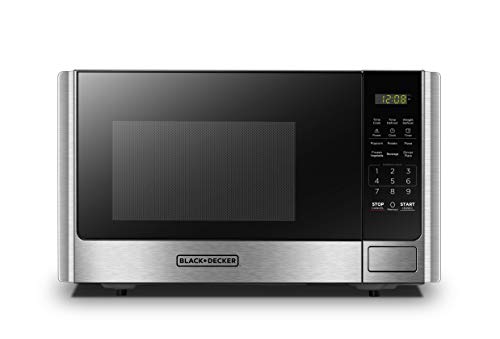
- BLACK+DECKER Countertop Microwave Oven 0.9 Cu.Ft — Best Mid-Compact for Family Kitchens. The mid-compact family pick in stainless with a push-button door.
- TOSHIBA Microwave Oven 0.9 Cu.Ft (Black Stainless Steel) — Best for Apartments and Condos. The apartment pick whose mute function and LED light suit close desert living.
- TOSHIBA Countertop Microwave Oven 1.2 Cu.Ft (Black) — Best in Black for Daily Cooking. The black-finish sensor model for kitchens that run warm and cook daily.
- COMFEE’ Countertop Microwave Oven 0.7 Cu.Ft (Black) — Best for Casitas, Offices and Guest Spaces. The small-footprint pick for offices, casitas and guest spaces.
Read the full guide ↓ for badges, honest trade-offs, a comparison table and the buying advice that helps you choose between them.
Arizona asks more of a kitchen appliance than most states. Summer ambient temperatures push unconditioned spaces — garages, casitas, RV kitchens, sun-struck apartment kitchens — into ranges where electronics age faster, and even in air-conditioned homes the microwave often sits near the two hottest objects in the room: the oven and the sunlit window. Shoppers searching for the best microwaves to survive Arizona heat are usually asking a practical question: which machine, placed how, will still be working after five summers of this?
The honest answer has two halves. The machine half favours boring virtues: established brands with mature designs, straightforward ventilation, finishes that tolerate heat and dust, and features — ECO modes, mute functions, easy-clean interiors — that suit a household cooking quickly to keep the kitchen cool. The placement half matters just as much: clearance for vents, distance from the range, shade from direct sun, and a firm rule against running any countertop microwave in an unconditioned space hotter than its manual allows. This guide covers both halves, because in Arizona either one can kill the appliance.
There is also a cooking argument for the microwave in a hot climate that residents already understand: every meal the microwave handles is a meal the oven does not, and an oven heats a kitchen for an hour while a microwave heats the food for minutes. Summer cooking in Arizona is a heat-management exercise, and the microwave is its best tool. If your purchase is budget-led rather than climate-led, our guide to Best Microwaves Under $100 applies a firm ceiling to a similar shortlist, and readers comparing small-space options should see Best Microwaves Under $14 Inches Wide for the measurement-led view.
The six picks below are all mainstream countertop models — deliberately. Exotic or unbranded machines are a poor bet where heat, dust and distance from service networks punish fragility. Every pick is a current model from an established brand with specifications verified against Amazon’s catalogue data, and the reviews judge each one through the Arizona lens: how it vents, how it cleans, how it behaves in a small hot kitchen, and how much oven work it can take off your summer.
Key Takeaways
- No microwave is desert-rated; survival comes from a well-built mainstream model plus correct placement, clearance and shade.
- Keep vents unobstructed and the machine out of direct sun and away from the range — heat and blocked airflow are the real killers.
- Never run a countertop microwave in an unconditioned garage or casita beyond the operating range in its manual; bring it into conditioned space for summer.
- ECO modes, easy-clean interiors and quick cooking cycles all suit hot-climate life more than novelty features do.
- In summer the microwave is also a cooling strategy: every meal it cooks is oven heat your air conditioner never has to remove.
In this guide
Quick Picks
Badges below are assigned through the Arizona lens — the household and space each model suits in a hot-climate home. The detailed reviews explain the placement and care each one needs to earn a long life.
| Pick | Badge | Capacity | Power | Listing |
|---|---|---|---|---|
| TOSHIBA 1.2 Cu.Ft Countertop Microwave, Stainless | Best Overall for Hot-Climate Kitchens | 1.2 cu ft | 1000W | Check on Amazon |
| Chefman 0.7 Cu.Ft Countertop Microwave | Best for Small Hot Apartments | 0.7 cu ft | 700W | Check on Amazon |
| BLACK+DECKER 0.9 Cu.Ft Countertop Microwave | Best Mid-Compact for Family Kitchens | 0.9 cu ft | 900W | Check on Amazon |
| TOSHIBA 0.9 Cu.Ft Countertop Microwave | Best for Apartments and Condos | 0.9 cu ft | 900W | Check on Amazon |
| TOSHIBA 1.2 Cu.Ft Countertop Microwave | Best in Black for Daily Cooking | 1.2 cu ft | 1000W | Check on Amazon |
| COMFEE’ 0.7 Cu.Ft Countertop Microwave | Best for Casitas, Offices and Guest Spaces | 0.7 cu ft | 700W | Check on Amazon |
How These Picks Were Chosen
We selected these six from current countertop ranges of established brands, with every specification verified against Amazon’s catalogue data for the exact model. For this guide the selection criteria were climate-weighted: mainstream, mature model families rather than first-generation experiments; ventilation through conventional side and rear vents that are easy to keep clear; interiors that clean quickly, because summer cooking is fast cooking and splatter bakes on in a warm kitchen; and feature sets — ECO modes, mute functions, sensor help — that match how hot-climate households actually cook from May to October.
We deliberately excluded nothing on wattage grounds: in a hot kitchen, a more powerful microwave that finishes in three minutes can be kinder to the room (and to itself) than a weak one running for eight, provided its vents are clear. Size coverage runs from the two 0.7 cu ft compacts for casitas and offices to the 1.2 cu ft sensor models for family kitchens, so the placement advice in this guide has a machine to attach to at every scale of Arizona home.
A note on evidence: this is a research-led guide, not a torture test. We have not baked these six machines in a Phoenix garage to rank their survival, and any guide claiming that should be read sceptically. What we can do is apply the known enemies — ambient heat, blocked ventilation, dust, direct sun, voltage-stressing brownout conditions — to real, verifiable model characteristics, and give placement and care advice that follows manufacturer guidance. Survival in Arizona is mostly a behaviour, and behaviours can be taught.
The 6 Best Microwaves to Survive Arizona Heat

TOSHIBA Countertop Microwave Oven 1.2 Cu.Ft (Stainless Steel)
Badge: Best Overall for Hot-Climate Kitchens
Strengths
- Humidity sensor automates reheating better than timed guessing
- Stainless front matches mainstream kitchen appliance suites
- Mute and ECO mode cover noise and standby-draw complaints
Trade-offs
- Conventional power cycling at low settings rather than inverter delivery
- Stainless shows smudges and needs a soft cloth routine
- Menu-heavy panel has a short learning curve
| Capacity | 1.2 cu ft |
| Power | 1000W |
| Sensor | smart humidity sensor |
| Programs | 12 auto menus |
| Extras | mute function, ECO mode, easy-clean interior |
| Finish | stainless steel |
The flagship pick for a conditioned Arizona kitchen, the TOSHIBA 1.2 Cu.Ft Countertop Microwave, Stainless is built around a smart humidity sensor, twelve auto menus, a mute function, ECO mode and an easy-clean interior, here in the stainless steel finish. Capacity is 1.2 cu ft with 1000W of cooking power, and the interior uses a removable turntable, which together set the baseline for how it handles everyday reheating, defrosting and simple cooking.
The stainless Toshiba suits hot-climate life in ways its listing does not advertise. The humidity sensor shortens cooking: sensor-supervised reheating ends when the food is hot rather than after a padded timer guess, which means less run time, less steam vented into an already warm kitchen, and less heat soak into the machine’s own electronics. ECO mode matters across a six-month cooling season, trimming the standby draw of an appliance that sits plugged in through the hottest months of the year. And the easy-clean interior earns its keep weekly, because summer cooking — quick, saucy, splattery — punishes neglected cavities.
Placement notes for this model are the standard ones, applied seriously: clear of the range’s rising heat, vents unobstructed by the storage that accumulates on Arizona counters, and out of the blade of afternoon sun that comes through west-facing kitchen windows. Given those, its mainstream engineering and established brand support make it the safest long-life bet in this guide — the machine most likely to still be reheating tamales five summers from now.
Best for: conditioned family kitchens that cook daily through the summer / Not suited for: unconditioned garages or sheds, where no countertop model belongs in July
Check on Amazon to check the latest price on Amazon for this model.

Chefman Countertop Microwave Oven 0.7 Cu.Ft
Badge: Best for Small Hot Apartments
Strengths
- Compact footprint suits dorms, offices and single-person kitchens
- Mute button is rare and welcome at this size
- Ten power levels give more control than most 700W compacts
Trade-offs
- 700W output means packaged meals take longer than their box suggests
- 0.7 cu ft cavity limits plate and dish size
- No sensor programs; timing is manual
| Capacity | 0.7 cu ft |
| Power | 700W |
| Power levels | 10 |
| Programs | 6 cooking presets with one-touch express cook |
| Extras | child safety lock, mute button |
| Finish | black |
For the studio and one-bedroom end of Arizona housing, the Chefman 0.7 Cu.Ft Countertop Microwave is built around ten power levels, six cooking presets with one-touch express cook, a child safety lock and a mute button in a compact black cabinet. Capacity is 0.7 cu ft with 700W of cooking power, and the interior uses a compact turntable cavity, which together set the baseline for how it handles everyday reheating, defrosting and simple cooking.
Small apartments in Phoenix and Tucson share a thermal problem: one air conditioner, one small kitchen, and cooking heat that has nowhere to go. A compact microwave is the right weapon — it heats food, not rooms — and the Chefman is the compact we would station there. Its small footprint leaves room for the ventilation clearance that matters, its ten power levels give it more control than most 700W machines, and the mute button respects thin walls and sleeping roommates after late shifts.
Its heat-survival profile is simple: a small machine with modest output generates modest self-heat, and its jobs are short. The cautions are equally simple — do not wedge it into a closed cabinet to save space, do not let it bake on a sunlit counter, and remember that 700W pacing means packaged meals run longer, generating their own small heat load in the room. Used as intended, in conditioned space with clear vents, it will outlast the lease and several after.
Best for: studio and one-bedroom apartments, dorms and single-person households / Not suited for: family cooking, or any unconditioned space in summer
Check on Amazon to check the latest price on Amazon for this model.
BLACK+DECKER Countertop Microwave Oven 0.9 Cu.Ft
Badge: Best Mid-Compact for Family Kitchens
Strengths
- 900W output is a real step up from 700W compacts
- Push-button door is easy for kids and for full hands
- Stainless finish in a footprint that still suits smaller kitchens
Trade-offs
- 0.9 cu ft is snug for large dinner plates and wide dishes
- No sensor or inverter technology at this tier
- Preset count is modest
| Capacity | 0.9 cu ft |
| Power | 900W |
| Power levels | 10 |
| Programs | 6 auto cook presets |
| Door | push-button release |
| Extras | child safety lock |
| Finish | stainless steel |
The family-duty pick in the smaller half of the guide, the BLACK+DECKER 0.9 Cu.Ft Countertop Microwave is built around ten power levels, a push-button door, a child safety lock and six auto cook presets in a stainless steel finish, sized between the compacts and the family models. Capacity is 0.9 cu ft with 900W of cooking power, and the interior uses a glass turntable cavity, which together set the baseline for how it handles everyday reheating, defrosting and simple cooking.
Arizona family kitchens run their microwaves like infrastructure — breakfast burritos before school, reheated leftovers at staggered hours, popcorn through monsoon evenings when the dust storm keeps everyone inside. The BLACK+DECKER’s virtues for that life are durability of format and ease of use: a push-button door that survives years of hurried openings, straightforward presets everyone in the house can run, and a stainless front that wipes down fast when the kitchen is already warm and nobody wants a cleaning project.
For heat survival, its mainstream design is the point: conventional ventilation, no exotic electronics, a brand with support everywhere in the state. Give it the clearances its manual specifies, keep it off the counter section directly beside the range burners, and dust its vents when you dust the ceiling fan — Arizona dust is fine, constant and insulating, and vent hygiene is a genuine survival factor in desert homes. It is the workhorse pick for a busy, warm, ordinary kitchen.
Best for: busy family kitchens wanting a simple, durable mid-size machine / Not suited for: buyers wanting sensor automation for reheating
Check on Amazon to check the latest price on Amazon for this model.

TOSHIBA Microwave Oven 0.9 Cu.Ft (Black Stainless Steel)
Badge: Best for Apartments and Condos
Strengths
- LED interior lighting makes it easy to watch food without opening the door
- Mute function and child lock cover the classic shared-household complaints
- 900W in an apartment-size body is a balanced everyday combination
Trade-offs
- 10.6-inch turntable caps the size of plates you can spin
- No humidity sensor at this size in the range
- Black stainless shows dust between cleans
| Capacity | 0.9 cu ft |
| Power | 900W |
| Turntable | 10.6-inch removable |
| Programs | 6 auto menus |
| Extras | mute function, child lock, LED interior lighting |
| Finish | black stainless steel |
| Positioning | apartment use |
The close-quarters pick, the TOSHIBA 0.9 Cu.Ft Countertop Microwave is built around six auto menus, a mute function, a child lock, LED interior lighting and a 10.6-inch removable turntable, in black stainless steel and positioned for apartment kitchens. Capacity is 0.9 cu ft with 900W of cooking power, and the interior uses a 10.6-inch removable turntable, which together set the baseline for how it handles everyday reheating, defrosting and simple cooking.
Condo and apartment living in the Valley comes with acoustic realities: neighbours through the wall, a partner asleep one room away, a baby finally down. The apartment Toshiba’s mute function is therefore not a gimmick but the feature its owners will bless weekly, and its LED interior lighting lets you watch a sauce at midnight without opening the door and dumping heat and light into the room. Its 900W output keeps cooking sessions short — less time heating the kitchen, less time heating itself.
Black stainless looks sharp in a modern condo kitchen and shows desert dust between cleans, so budget it a weekly wipe — a small tax. As with every pick here, its survival depends on conditioned space and clear vents; its size helps, because a 0.9 cu ft machine fits the spots with genuine clearance rather than the cramped nook where a bigger machine would suffocate. For apartment households, it is the most considerate machine in the guide — to neighbours, to sleepers and to itself.
Best for: apartments, condos and couples in conditioned spaces / Not suited for: large families, or counters without room for ventilation clearance
Check on Amazon to check the latest price on Amazon for this model.

TOSHIBA Countertop Microwave Oven 1.2 Cu.Ft (Black)
Badge: Best in Black for Daily Cooking
Strengths
- Humidity sensor takes the guesswork out of reheating and sensor-cook programs
- Full 1000W output in a mid-size 1.2 cu ft cavity that still fits a dinner plate easily
- Mute function and ECO mode are small features you end up using every day
Trade-offs
- Conventional on/off power cycling rather than true inverter delivery at low settings
- Black finish shows fingerprints and kitchen dust more than stainless
- Twelve menus are useful, but the panel takes a week to learn by touch
| Capacity | 1.2 cu ft |
| Power | 1000W |
| Turntable | 12.4-inch removable glass turntable |
| Sensor | smart humidity sensor |
| Programs | 12 auto menus |
| Extras | mute function, ECO mode, easy-clean interior |
| Finish | black |
The black-finish twin of our top pick, the TOSHIBA 1.2 Cu.Ft Countertop Microwave is built around a smart humidity sensor that watches steam coming off the food and adjusts the run instead of blindly counting down a timer, twelve auto menus, a mute function for the beeps, an ECO mode that trims standby draw, and an easy-clean interior coating. Capacity is 1.2 cu ft with 1000W of cooking power, and the interior uses a 12.4-inch removable turntable, which together set the baseline for how it handles everyday reheating, defrosting and simple cooking.
Mechanically this is the same sensor-equipped, twelve-menu machine as the stainless model at the head of the guide, and everything said there about short, sensor-supervised cooking cycles applies: less run time, less vented steam, less heat soak. The differences are finish and feel. Black shows Arizona’s pale dust more honestly than stainless does — you will see the weekly wipe coming due — and it disappears visually into darker kitchens and against black appliance suites, which many newer Arizona builds have.
Choose between the twins on kitchen reality, not sentiment: if your kitchen takes direct sun and dust through open doors all spring, stainless hides the evidence slightly better between cleans; if your kitchen is shaded and modern, black is the sharper look for identical cooking. Either way, the survival recipe is unchanged — conditioned space, clear vents, shade from the west window, and a wipe-down rhythm that keeps the cavity from baking its splatter into insulation. A well-kept example of this model is a five-summer machine.
Best for: daily-cooking households with darker kitchens wanting sensor help / Not suited for: anyone who hates seeing dust on appliances between cleans
Check on Amazon to check the latest price on Amazon for this model.

COMFEE’ Countertop Microwave Oven 0.7 Cu.Ft (Black)
Badge: Best for Casitas, Offices and Guest Spaces
Strengths
- Smallest footprint in this guide, so it fits counters the others cannot
- Sound on/off and child lock are features bigger models often skip
- Simple one-touch controls that nobody needs a manual to operate
Trade-offs
- 700W is the slowest output here; packaged meals need noticeably longer
- 0.7 cu ft cavity struggles with wide plates and tall mugs
- No sensor cooking, so timing is entirely manual
| Capacity | 0.7 cu ft |
| Power | 700W |
| Controls | one-touch buttons |
| Extras | ECO mode, sound on/off, child safety lock |
| Finish | black |
| Positioning | dorm, apartment and office use |
The small-space specialist in this guide, the COMFEE’ 0.7 Cu.Ft Countertop Microwave is built around one-touch buttons for the everyday jobs, an ECO mode, a sound on/off switch so the beeps can be silenced, and a child safety lock, all in a footprint made for dorm rooms, small apartments and office kitchenettes. Capacity is 0.7 cu ft with 700W of cooking power, and the interior uses a compact turntable cavity, which together set the baseline for how it handles everyday reheating, defrosting and simple cooking.
Arizona homes sprout secondary spaces — the casita for guests and in-laws, the home office that needs a lunch station, the laundry-adjacent kitchenette. The COMFEE’ is built for exactly those postings: a small footprint, one-touch simplicity for guests who will never read a manual, a child lock for visiting grandchildren, and a sound on/off switch for the guest room’s sake. In a conditioned casita it is a perfect citizen.
The warning label on this pick is the most important sentence in the guide: a casita that is only cooled when guests arrive is not conditioned space in July, and no countertop microwave — this one included — should live through a summer of unconditioned 110-degree storage and be expected to thrive. If the space bakes when empty, store the machine in the main house for the summer or keep the space minimally cooled. Respected that way, this little machine will serve guests for years; ignored, the desert will collect its toll from the smallest electronics first.
Best for: conditioned casitas, offices, guest rooms and dorm postings / Not suited for: unconditioned spaces in summer, or main-family-kitchen duty
Check on Amazon to check the latest price on Amazon for this model.
Comparison Table
In this guide the comparison table’s most important column is the one you cannot see: where each machine will sit. Match the size class to a spot with genuine ventilation clearance and shade, and every row becomes a survivor.
| Pick | Badge | Capacity | Power | Interior | Listing |
|---|---|---|---|---|---|
| TOSHIBA 1.2 Cu.Ft Countertop Microwave, Stainless | Best Overall for Hot-Climate Kitchens | 1.2 cu ft | 1000W | removable turntable | Check on Amazon |
| Chefman 0.7 Cu.Ft Countertop Microwave | Best for Small Hot Apartments | 0.7 cu ft | 700W | compact turntable cavity | Check on Amazon |
| BLACK+DECKER 0.9 Cu.Ft Countertop Microwave | Best Mid-Compact for Family Kitchens | 0.9 cu ft | 900W | glass turntable cavity | Check on Amazon |
| TOSHIBA 0.9 Cu.Ft Countertop Microwave | Best for Apartments and Condos | 0.9 cu ft | 900W | 10.6-inch removable turntable | Check on Amazon |
| TOSHIBA 1.2 Cu.Ft Countertop Microwave | Best in Black for Daily Cooking | 1.2 cu ft | 1000W | 12.4-inch removable turntable | Check on Amazon |
| COMFEE’ 0.7 Cu.Ft Countertop Microwave | Best for Casitas, Offices and Guest Spaces | 0.7 cu ft | 700W | compact turntable cavity | Check on Amazon |
How to Choose a Microwave for a Hot-Climate Kitchen
Heat and electronics: what actually wears out
Microwaves are not fragile, but heat accelerates the ageing of everything electronic inside them — power supplies, control boards, the capacitors that smooth their current — and it dries lubricants, embrittles plastics and stresses the magnetron that generates the cooking energy. A machine cooking in a 95-degree garage starts every cycle already heat-soaked, runs hotter throughout, and cools more slowly afterwards. None of that kills it in a week; all of it compounds across summers. The goal of hot-climate buying is not a mythical heat-proof model but a well-built mainstream machine whose life is not shortened by its environment.
That is why this shortlist favours mature model families from established brands. Their ventilation designs are proven, their parts and service networks exist in-state, and their manuals state clearances and operating conditions plainly. When a summer brownout or a monsoon surge does damage a board, a mainstream brand is the difference between a repair and a replacement.
Placement is a buying decision
Decide where the microwave will live before you decide which one to buy, because placement constrains size and the best spot in an Arizona kitchen is specific: away from the range, whose burners and oven vent heat upward exactly where a thoughtless installer puts the microwave shelf; out of direct sun, especially the west-facing afternoon blade that can heat a black cabinet like a parked car; and with the manufacturer’s stated clearance on the vented sides — vents blocked by a bread bin or a wall turn every cycle into a hotter one.
Measure that spot, then buy the largest pick that fits it with clearance to spare. In conditioned kitchens, any of the six will thrive in such a spot. In marginal spaces — the sunlit nook, the tight cabinet — choose the smaller machines in this guide, whose modest heat output and short cycles forgive more, and never solve a fit problem by removing clearance.
The unconditioned-space rule
Garages, sheds, uninsulated casitas and RVs parked in the sun can exceed any countertop microwave’s intended operating environment in an Arizona summer. Appliance manuals state an ambient range for good reason: beyond it, electronics age rapidly and plastics and seals suffer. The rule for this guide is absolute — if the space is not cooled, the microwave does not live there in summer. Move it into the house in May, or choose a space that stays conditioned. No pick in this guide, and no honest guide anywhere, can repeal that.
The same logic applies to storage: a microwave stored through summer in a hot garage ages while it sits. If a machine must be stored, the coolest, driest indoor spot you have — a closet inside the conditioned envelope — is worth the shelf space it takes.
Features that suit the climate
Short, supervised cooking is heat-friendly cooking, which is why the sensor models lead this guide: they end cycles when food is done instead of after padded guesses, cutting run time, vented steam and self-heating together. ECO modes trim the standby draw of a machine that stays plugged in through a six-month cooling season — a small number that runs twenty-four hours a day, all summer, on every appliance you own. Easy-clean interiors matter because a warm kitchen bakes splatter on faster, and a clean cavity cooks more efficiently than a coated one.
Mute functions and one-touch simplicity suit households whose schedules bend around the heat — early shifts, siesta-quiet afternoons, guests in the casita. And across all features, prefer the mainstream: in a state where a failed appliance in August is a genuine emergency, the best feature is a brand whose replacement or repair is a day away, not a shipment away.
How to Place and Care for a Microwave in Extreme Heat
Placement and habits decide survival more than model choice does. This is the hot-climate routine, in the order to apply it.
Site it like you mean it
Put the microwave on its permanent counter with the manual’s clearances measured, not eyeballed — typically a few inches at the vented sides and more above. Keep it out of the column of heat above and beside the range. If the only available spot catches direct sun, move the spot up the priority list: a shade, a relocated small appliance, or the smaller pick that fits the shaded counter across the room. Check that the door opens fully and that steam from the door, when you open it mid-cook, is not venting straight into a cabinet face.
Vent and dust discipline
Every month in dust season — which in much of Arizona is most of the year, and always after a haboob or monsoon dust event — wipe or vacuum the vent grilles and the area behind the machine. Fine desert dust insulates electronics and chokes airflow exactly like a blocked vent, just more politely. Keep the counter around the machine clear of the paper, bags and storage that migrate toward warmth, and never drape anything over the top vents, even briefly, even ‘just while it runs’.
Cook to keep the kitchen cool
Use the microwave as your summer strategy, not just your convenience: vegetables, rice, reheating and defrosting all move from the oven and hob to the microwave from May onward, cutting the heat your air conditioner must remove. Batch the microwave’s work — several short cycles in one session beat spreading them across the afternoon — and let frozen food thaw in the fridge overnight when you can, reserving microwave defrosting for genuine emergencies. Cover food to keep steam in the dish rather than the room.
One more summer habit protects both the machine and the meal: in the hottest weeks, run long or heavy cycles — the big defrost, the batch of baked potatoes — in the cooler parts of the day when you can. The appliance starts those cycles from a lower baseline, the kitchen gains less heat at the hour the air conditioner is already fighting hardest, and food spends less time in the temperature zone where a hot kitchen spoils it fastest. It costs nothing but a little planning, which in an Arizona summer is the currency everything is priced in.
Troubleshooting in the heat
Problem: the machine shuts down mid-cycle on a hot day → it is likely thermal protection doing its job; let it cool fully, check the vents for blockage and dust, and confirm the ambient temperature is within the manual’s range before running it again.
Problem: cooking seems uneven or slow in summer → check that vents are clear and the cavity is clean; a dust-choked, splatter-coated machine in a hot room loses performance before it loses function.
Problem: the display flickers during afternoon storms or peak-load hours → monsoon surges and brownouts stress control boards; a quality surge protector is cheap insurance in Arizona, and persistent flicker means unplug during storms.
Problem: condensation and smells linger → warm, humid monsoon air plus a closed cavity breeds odours; leave the door ajar after cooking on humid days and run the lemon-water clean described in our general care advice.
Monsoon Season, Dust and Power: The Arizona-Specific Risks
Summer in Arizona is not one hazard but three. The heat itself we have covered. The dust is its own slow mechanism: haboobs and everyday desert dust infiltrate kitchens, settle on vents and boards, and insulate the electronics that most need to shed heat. The monsoon adds the third — humidity spikes and electrical violence. Lightning-driven surges and the brownouts of peak-demand afternoons are hard on control boards, and a microwave’s board is awake twenty-four hours a day, running its clock, waiting for instructions. A surge protector rated for appliances, and the habit of unplugging during serious lightning, are the cheapest longevity measures in this entire guide.
Humidity deserves one more sentence: monsoon weeks turn a closed, splattered microwave cavity into a smell incubator. The defences are boring and complete — wipe the cavity, leave the door ajar after use on humid days, and run a bowl of lemon water weekly. Readers setting up in the desert for the first time may also want the budget framing in Best Microwaves Under $100 Dollars, and those equipping a small casita kitchen should compare the compact end of this guide with Best Microwaves Under $200 for the neighbouring tier’s other candidates.
RV, Casita and Second-Home Kitchens in the Desert
Arizona’s housing stock includes a lot of part-time kitchens: the casita occupied in winter, the RV that winters in Quartzsite and summers in storage, the second home visited monthly. Microwaves in these spaces face the storage problem in its purest form — months of heat with nobody home. The rules are simple. If the space is stored hot, the microwave should be stored cool: bring it into the conditioned main house, or accept a shortened life as the price of the arrangement. If the space is kept minimally cooled, a compact pick like the COMFEE’ or the Chefman is the right scale of machine to keep there.
For RVs in use, the countertop compacts suit the power and space realities, and their modest draw is kinder to RV electrical systems than a full-size model — but the same sun rule applies with interest, because a parked RV is a solar oven. Shade the vehicle, ventilate the interior, and never leave any appliance baking in a closed RV through a desert afternoon expecting it to be fine. The desert is patient; plan for its patience.
Common Buying Mistakes
Installing it in the garage for summer
The single most destructive decision in this category. A garage in Phoenix in July exceeds the operating environment of every countertop microwave made, and ‘it still works’ in August ignores the years quietly subtracted from its life. Conditioned space is not a preference; it is the requirement.
Blocking the vents to save space
Wedging the machine flush into a nook, stacking storage on top, or pushing it against the wall feels tidy and cooks the electronics. Clearance is part of the appliance. Measure it, keep it, and dust it — especially after dust storms.
Leaving it in direct sun
A black microwave on a west-facing counter in June is being slow-roasted daily before it cooks anything. Sun heats the cabinet, ages the plastics and door seal, and starts every cycle heat-soaked. Shade is a feature you provide, not one you buy.
Ignoring surge protection
Arizona’s monsoon lightning and peak-load brownouts attack the control board that never sleeps. Owners protect televisions and computers and leave the microwave — an always-on electronic appliance — plugged straight into the wall. A suitable surge protector costs little and guards the board all summer.
Final Recommendation
For most Arizona households, the purchase is the TOSHIBA 1.2 Cu.Ft Countertop Microwave, Stainless: sensor-shortened cooking, an easy-clean cavity and ECO standby, in a mainstream machine with support everywhere in the state. Site it with clearance and shade, and it will shrug off summers.
Smaller households should take the Chefman 0.7 Cu.Ft Countertop Microwave for apartments or the COMFEE’ 0.7 Cu.Ft Countertop Microwave for conditioned casitas and offices, and family kitchens that run all day will be happy with the BLACK+DECKER’s simple durability. The black Toshiba twin suits darker kitchens; the apartment Toshiba suits close living.
But the model is only half the answer this keyword asks for. The other half is yours: conditioned space, clear and dusted vents, shade from the west sun, surge protection before monsoon season. Do those four things and almost any well-built microwave survives Arizona. Skip them, and the desert will eventually collect from the best machine in this guide.
Frequently Asked Questions
Can a microwave really be damaged by Arizona heat?
Yes, over time. Sustained high ambient temperatures accelerate the ageing of electronic components, dry out plastics and seals, and make every cooking cycle start from a hotter baseline, so the machine runs hotter and cools slower. A single hot day will not kill a healthy microwave; summers of storage or operation in unconditioned spaces will measurably shorten its life. Placement in conditioned space with clear ventilation is the entire remedy.
Is it safe to keep a microwave in the garage in Arizona?
In a conditioned garage kept within the appliance’s stated operating range, it can be acceptable. In a typical unconditioned Arizona garage in summer — which can exceed the range in any countertop microwave’s manual — it is not a good idea for storage or for use. Move the machine into the house for the summer months, or accept that its lifespan will be shortened by heat ageing even while it sits unused.
Does a more powerful microwave survive heat better?
Power itself is not protection, but it has a side benefit: a higher-wattage machine finishes jobs faster, so it runs for less time and vents less heat into the room per meal. What protects a microwave is build quality, clear ventilation, shade and sensible ambient temperatures. A mainstream 1000W model in a good spot will outlast a premium model baking in a garage every time.
How do I protect my microwave during monsoon season?
Three habits cover it. Keep the vents and the area behind the machine dust-free, especially after dust storms. Use a surge protector suitable for appliances, and unplug during severe lightning if you are home to do it. And manage humidity: wipe the cavity dry after steamy cooking and leave the door ajar for a while on humid days so the interior does not stay damp and develop odours.
Why does my microwave shut off on very hot days?
Most microwaves have thermal protection that shuts the machine down when internal temperatures exceed safe limits — the appliance is defending itself. If it happens, let it cool completely, check for blocked or dust-choked vents, and consider whether its spot is too close to the range or in direct sun. Repeated thermal shutdowns in a properly sited, clean machine deserve a service call rather than persistence.
How often should I clean the vents in a dusty desert home?
Monthly as a baseline, and always after a major dust event such as a haboob or a monsoon dust storm. Fine desert dust settles on vent grilles and the surfaces behind the machine, where it insulates the electronics and restricts the airflow the cooling system depends on. A soft brush or a vacuum with a brush attachment clears the grilles in a minute; while you are there, pull the machine forward once a season and clear the dust from behind it, where it accumulates unseen. In a conditioned, well-sealed home the interval can stretch; in a house that opens its doors all spring, shorten it. Vent hygiene is the cheapest longevity habit in this entire guide.
Should I choose a white or light-coloured microwave for a hot kitchen?
Finish colour matters far less than placement, but it is not nothing: a dark cabinet in direct sun absorbs more heat than a light one. If your only good spot catches sun you cannot shade, a lighter or stainless finish is the marginally better choice. In a shaded, conditioned kitchen, choose the finish you like looking at — the black and stainless twins in this guide cook identically.


