Disclosure: topratedkitchenware.com is reader-supported. When you buy through links on our site, we may earn an affiliate commission from Amazon and other retailers, at no extra cost to you.
Where to buy
This guide to the best microwaves under 75 is deliberately honest about a tight band: of the six verified models assigned to it, only one — a compact 0.7 cubic foot oven — genuinely belongs to this price class. That pick is linked below so you can check the latest price on Amazon. The other five are reviewed in full as reference points, clearly labelled, with no links and no images, so you can see exactly what stepping above the band would buy and decide whether the step is worth it.
- Chefman Countertop Microwave Oven 0.7 Cu. Ft., 700 Watts, Black
- BLACK+DECKER Microwave Oven Countertop, 1.1 Cu.Ft, 1000W, Stainless Steel — reference model, above this band (no link)
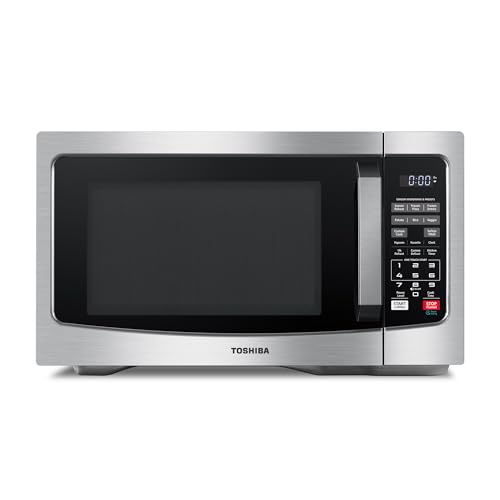
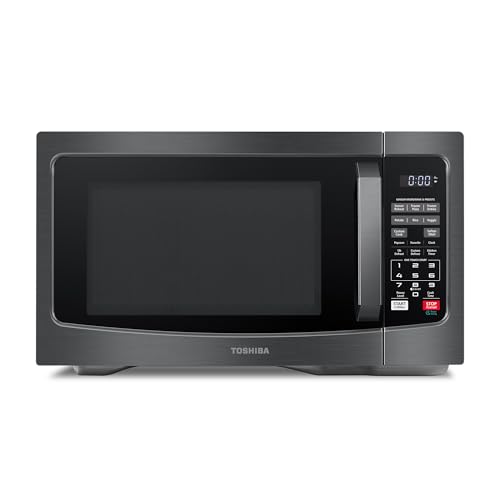
- TOSHIBA Flatbed Microwave Oven with Inverter Technology, 1.3 Cu.Ft, 1200W — reference model, above this band (no link)
- TOSHIBA Countertop Microwave Oven with Inverter Technology, 1.6 Cu.Ft, 1250W — reference model, above this band (no link)
- Panasonic Countertop Microwave Oven, 1.2 Cu. Ft., 1250W, Inverter Technology with Genius Sensor — reference model, above this band (no link)
- TOSHIBA Countertop Microwave Oven, 1.2 Cu.Ft, 1000W, Stainless Steel — reference model, above this band (no link)
Read the full guide ↓ for what this band really buys, why the compact class owns it, and the point at which stretching the budget starts to make sense.
Let us start with the truth about the best microwaves under 75: this band buys the compact class, and it buys it well. A new countertop microwave at this level is a 0.7 cubic foot, roughly 700-watt oven designed for single portions — the mug, the bowl, the single-serve meal, the bag of popcorn. That is not a failure of the band; it is the band’s honest shape, and for dorm rooms, offices, studios, caravans, and second-oven duty it is exactly the right shape. What this band does not buy new is family capacity, sensor automation, or inverter technology, and any guide that pretends otherwise is selling you a listing rather than advising you. This guide instead does two jobs: it reviews the one verified pick that truly lives in the band, and it reviews five verified models above the band as labelled reference points, so the trade between staying and stretching is visible in full before you spend anything.
The structure below reflects that honesty. The Chefman compact receives a full linked review with its image, as the band’s real recommendation. The five reference models receive full prose reviews — strengths, trade-offs, verified specifications — without links or images, because they do not meet the keyword’s core condition and this guide will not pretend they do. Around those reviews you will find a buying guide explaining what this band buys and what it cannot, a how-to section tuned to compact-oven cooking, and answers to the questions tight-budget buyers ask most. Readers who can stretch a little should compare the next tier in Best Microwaves Under $800 Watts discussions of low-power cooking, and those whose real constraint is a small counter rather than a small budget may find Best Microwaves With Big Button designs worth a look for their simpler controls.
Key Takeaways
- This band buys the compact class: around 0.7 cubic feet and 700 watts, sized for mugs, bowls, and single portions.
- Only one of the six verified models assigned here — the Chefman 0.7 — genuinely belongs to the band, and it is this guide’s linked recommendation.
- The five reference models show what stretching buys: family capacity, sensor cooking, and inverter technology, in that order of everyday value.
- Compact cooking is a skill, not a compromise: add time, stir halfway, rest the food, and a 700-watt oven reheats single portions beautifully.
- If your household reheats family plates nightly, no compact will satisfy you — the honest advice is to stretch to the sensor class or save longer.
- Check the latest price on Amazon for the linked pick when you decide, because compact-class pricing is promotion-driven and moves often.
- Judge the band by your week of cooking, not by your most ambitious meal: if family dishes are rare guests rather than nightly residents, the compact serves the week and the rare guest can be handled in portions.
In this guide
Quick Picks
| Pick | Badge | Capacity | Power | Status in this band |
|---|---|---|---|---|
| Chefman 0.7 Cu. Ft. | Best in Band | 0.7 cu ft | 700W | In band — linked pick |
| BLACK+DECKER 1.1 Cu.Ft | Reference: Family Staple | 1.1 cu ft | 1000W | Above band — prose only |
| TOSHIBA Flatbed Inverter 1.3 | Reference: Cavity Design | 1.3 cu ft | 1200W | Above band — prose only |
| TOSHIBA Inverter 1.6 | Reference: Largest Capacity | 1.6 cu ft | 1250W | Above band — prose only |
| Panasonic Inverter 1.2 NN-SN67QS | Reference: Finest Control | 1.2 cu ft | 1250W | Above band — prose only |
| TOSHIBA 1.2 Stainless Steel | Reference: Sensor Value | 1.2 cu ft | 1000W | Above band — prose only |
The table is the guide in miniature. One row is a purchase inside the band; five rows are a map of where the money goes when a buyer decides the band cannot serve their kitchen. Both kinds of information are useful, and confusing them would help no one, least of all the buyer whose budget was the entire point of the search that brought them here in the first place.
How These Picks Were Chosen
Every model here comes from a verified pool confirmed through the Creators API, so capacities, wattages, and features are live listing facts. The selection question for this keyword was different from most: not which six ovens are best, but which ovens honestly belong to the band and which serve as truthful reference points above it. Applying the band strictly, exactly one assigned model — the Chefman compact — sits in the compact budget class this price level buys new. The other five assigned models are mid-range and flagship designs whose classes sit well above the band, so they are presented prose-only, without links or images, and labelled as references wherever they appear.
This is a research-led guide, not a hands-on test, and it prints no prices for any model: the band is the keyword’s frame, individual listings move with promotions, and the only figure we will send you to is the current one on the linked pick’s listing, where you can check the latest price on Amazon. Buyers weighing the stretch decision will find the ownership perspective in Best Microwaves Warranty useful, since a larger purchase deserves more paperwork diligence, and the lab-testing perspective in Best Microwaves W Carousel According To Consumer Reports explains how evenness and speed are judged when models are compared formally.
The Best Microwaves Under 75 in Detail
The linked band pick is reviewed first in spirit — it is the recommendation — followed by the five reference models in assignment order. Each review follows the same pattern of badge, strengths, trade-offs, verified spec box, and verdict, so the comparison stays fair even though only one pick carries a link.

Chefman Countertop Microwave Oven 0.7 Cu. Ft., 700 Watts, Black
Badge: Best in Band
Strengths
- A complete control set for the compact class: ten power levels and six cooking presets with one-touch express cook.
- A mute button and child safety lock make it considerate in dorms, offices, and family corners.
- The 0.7 cubic foot cabinet fits the shelves and counters this band’s buyers actually have.
Trade-offs
- At 700 watts it cooks more slowly than packaged directions assume; the how-to section gives the adjustment routine.
- The cavity serves mugs, bowls, and small plates, not full dinner plates or family dishes.
- No sensor or inverter technology — this band does not buy them, and the reviews below show their price of admission.
Mini spec box: Capacity 0.7 cu ft · Power 700W · Finish: black · 10 power levels · 6 cooking presets · One-touch express cook · Child safety lock · Mute button.
This is the microwave this band actually buys, and judged as what it is — a compact reheating specialist — it is a good one. The control set is the surprise: many compacts strip the panel to a dial and a prayer, but the Chefman keeps ten power levels, six presets, and express cook, which means the owner can melt at low power, defrost in stages, and reheat a bowl at full pace from the same small panel. In a dorm room it warms the midnight noodles silently thanks to the mute button. In an office it reheats lunches without a queue of frustrated colleagues learning a strange interface. In a studio flat it is the whole microwave, and for single portions it is genuinely sufficient.
The discipline it asks is the compact discipline: respect the cavity size, add the time a 700-watt oven needs, stir halfway, and let food stand. Owners who adopt that rhythm report the universal compact experience — the oven disappears into the routine. Owners who bought it hoping to reheat family plates discover the limit on the first Sunday. Read the verdict plainly: this is the best purchase inside the band for the kitchens the band serves, and the wrong purchase for kitchens it does not.
Two details of daily use deserve emphasis because they separate satisfied compact owners from frustrated ones. The first is container choice: a wide, shallow bowl reheats dramatically more evenly than a deep mug-shaped container at this wattage, because the food layer stays thin enough for the energy to reach its centre within the cycle. The second is the pause. Compact owners who open the door the second the beep sounds meet the coldest version of their food; the same food, rested under its cover for a minute, arrives at the table evenly hot. Neither habit costs money, both are learnable in a day, and together they are worth more than any specification difference between the compacts in this class.
Best for: dorms, offices, studios, caravans, and single-portion households / Not suited for: family plates or batch cooking
BLACK+DECKER Microwave Oven Countertop, 1.1 Cu.Ft, 1000W, Stainless Steel
Badge: Reference — Family Staple (Above Band, Prose Only)
Strengths
- Family capacity at 1000 watts: the classic formula for plates, bowls, and weeknight reheating.
- Push-button door and a standard preset layout that any guest can operate.
- Ten power levels give the timed-cooking control this class is built around.
Trade-offs
- It sits above this band’s class, which is why it appears here without a link or image.
- No sensor automation and no mute function in its verified feature set.
- Its footprint is a family footprint; small counters should measure first.
Mini spec box: Capacity 1.1 cu ft · Power 1000W · Finish: stainless steel · Push-button door · Child safety lock · 6 auto cook presets · 10 power levels.
This is the first reference point, and it marks the most common stretch: from compact to family staple. The jump buys the two things compact owners miss most — a cavity that takes the dinner plate and a wattage that matches packaged timings — in the category’s most familiar design. For a household that has outgrown a compact, or a family replacing a dead oven, this class is where the stretching usually stops, because it answers the capacity and pace complaints completely without paying for sensor or inverter refinement.
As a reference it also clarifies the band’s boundary. Nothing about this oven is exotic; it is simply a bigger, stronger class of machine, and classes are what prices buy. If your kitchen needs this class, the honest paths are to stretch deliberately or to wait and save — not to ask a compact to impersonate it.
Best for: families who decide to stretch one tier / Not suited for: buyers holding this band strictly
TOSHIBA Flatbed Microwave Oven with Inverter Technology, 1.3 Cu.Ft, 1200W, Black Stainless Steel
Badge: Reference — Cavity Design (Above Band, Prose Only)
Strengths
- Flatbed cavity with no turntable accepts rectangular and oversized dishes freely.
- Inverter technology delivers continuous low power for defrosting and delicate work.
- Smart sensor and mute function complete the flagship behavioural set.
Trade-offs
- A flagship class far above this band, presented here for reference only, without a link or image.
- Large loads need a manual halfway turn, since nothing rotates them.
- A large black stainless cabinet that small kitchens cannot house.
Mini spec box: Capacity 1.3 cu ft · Power 1200W · Technology: inverter · Flatbed, no turntable · Smart sensor · Mute function · Finish: black stainless steel.
The flatbed Toshiba is the design reference: it shows what the top of the category does with the cavity itself. By removing the turntable it removes the shape tax every rotating oven charges — rectangles fit, pairs of containers fit, cleaning becomes a flat wipe — and it pairs that freedom with inverter power and sensor judgement. As a stretch target it suits one specific frustration: the meal-prep household whose containers quarrel with turntables daily.
For most tight-budget buyers it is best read as education rather than temptation. It demonstrates that the category’s ceiling is about design and power delivery, not about reheating soup better — the Chefman reheats soup perfectly well. File it under future knowledge, and let the band do its job.
Best for: readers mapping the category’s top for a future purchase / Not suited for: any purchase inside this band
TOSHIBA Countertop Microwave Oven with Inverter Technology, 1.6 Cu.Ft, 1250W, Black Stainless Steel
Badge: Reference — Largest Capacity (Above Band, Prose Only)
Strengths
- The largest cavity in this guide at 1.6 cubic feet, with a 13.6-inch turntable.
- Inverter technology and a smart sensor pair that capacity with gentle, judged power.
- Auto defrost and 1250 watts handle big frozen loads at flagship pace.
Trade-offs
- The flagship capacity class sits far above this band; reference only, no link or image.
- The largest counter footprint here, beyond most small kitchens entirely.
- Capacity on this scale is wasted on the single portions this band serves.
Mini spec box: Capacity 1.6 cu ft · Power 1250W · Technology: inverter · Smart sensor · Auto defrost · 13.6-inch turntable · Finish: black stainless steel.
If the flatbed is the design reference, this Toshiba is the scale reference: the biggest countertop cavity in the programme, built for households that cook family volumes from the freezer. Its inverter and sensor set means the scale does not cost finesse, which is precisely what flagship money is for. As a data point for the tight-budget reader, it proves the guide’s recurring lesson from the opposite direction — capacity is a class, classes are priced, and no amount of clever shopping turns one class into another.
Most readers of this guide should simply note it and move on. The household that genuinely needs it already knows, because its casserole dishes have been refusing smaller ovens for years.
Best for: future-planning large households / Not suited for: this band or small kitchens
Panasonic Countertop Microwave Oven, 1.2 Cu. Ft., 1250W, Inverter Technology with Genius Sensor, Stainless Steel — NN-SN67QS
Badge: Reference — Finest Control (Above Band, Prose Only)
Strengths
- Inverter delivery judged by the Genius Sensor: the most complete control pairing in the category.
- Top-tier pace at 1250 watts with genuinely gentle low power.
- A liveable 1.2 cubic foot stainless cabinet for family counters.
Trade-offs
- A flagship class far above this band; reference only, no link or image.
- Its talents address delicate cooking that compact-band buyers rarely do.
- Turntable design keeps the usual dish-shape limits.
Mini spec box: Capacity 1.2 cu ft · Power 1250W · Technology: inverter · Genius Sensor · Model NN-SN67QS · Finish: stainless steel.
The Panasonic is the control reference — the oven testers reach for when they describe what the technology can do. Inverter power answers the how of delivery; the Genius Sensor answers the when of stopping; together they produce the calmest reheating and defrosting behaviour in the category. For the reader of a budget guide, its role is to define the far end of the stretch honestly: this is what complete control looks like, and it is priced like it.
It also quietly validates the compact pick. Notice that even this flagship’s genius is aimed at judgement and gentleness — qualities that matter in proportion to how varied and delicate your cooking is. For the mug, the bowl, and the popcorn that dominate compact duty, the distance between this oven and the Chefman is mostly invisible, which is the most comforting sentence in this guide.
Best for: readers who want to know what the best control looks like / Not suited for: purchases inside this band
TOSHIBA Countertop Microwave Oven, 1.2 Cu.Ft, 1000W, Stainless Steel
Badge: Reference — Sensor Value (Above Band, Prose Only)
Strengths
- Smart humidity sensor with twelve auto menus removes reheating guesswork.
- Family capacity at 1000 watts with an easy-clean interior.
- Mute function and ECO mode bring flagship manners to the sensor class.
Trade-offs
- The sensor class sits above this band; reference only, no link or image.
- Conventional pulsing power rather than inverter delivery.
- A large cabinet that compact kitchens cannot absorb.
Mini spec box: Capacity 1.2 cu ft · Power 1000W · Finish: stainless steel · Smart humidity sensor · 12 auto menus · Mute function · ECO mode · Easy-clean interior.
This Toshiba is the most instructive reference of the five, because it is the closest meaningful stretch for the largest number of readers. Its humidity sensor fixes the single most common microwave complaint — the mixed plate reheated wrong — and its capacity fixes the second, the plate that does not fit. If a household reading this guide concludes that the band cannot serve it, this sensor class is where the stretch usually lands, and for reheating-led families it lands well.
Hold it to the same honesty standard as the rest: it is not in the band, it is not linked, and no promotion should be assumed to drag a sensor family oven into compact money. It is here so the decision to stretch — or to stay, contentedly, with the compact — is made with the destination in view.
Best for: families weighing the nearest worthwhile stretch / Not suited for: strict band purchases
Comparison Table
| Model | Capacity | Power | Technology | Status | Link |
|---|---|---|---|---|---|
| Chefman 0.7 | 0.7 cu ft | 700W | Timed, mute | In band | Check on Amazon |
| BLACK+DECKER 1.1 | 1.1 cu ft | 1000W | Timed presets | Above band — reference | See review |
| TOSHIBA Flatbed Inverter 1.3 | 1.3 cu ft | 1200W | Inverter, sensor | Above band — reference | See review |
| TOSHIBA Inverter 1.6 | 1.6 cu ft | 1250W | Inverter, sensor | Above band — reference | See review |
| Panasonic Inverter 1.2 | 1.2 cu ft | 1250W | Inverter, Genius Sensor | Above band — reference | See review |
| TOSHIBA 1.2 Stainless | 1.2 cu ft | 1000W | Humidity sensor | Above band — reference | See review |
One linked row and five reference rows is the honest shape of this band, and this guide would rather show you that shape than disguise it. The carousel question — how rotating models even out heating — is covered for the turntable models here in Best Microwaves W Carousel, which pairs naturally with the flatbed reference above.
How to Choose on a Tight Band
Confirm the band serves your portions. The decision is portion-shaped. If your microwave life is mugs, bowls, single-serve meals, and popcorn, the compact class is not a compromise at all — it is the correct tool, and the Chefman is its complete current expression in this guide. If your life includes family plates, serving bowls, or batch reheating, the band cannot serve you new, and the choice is between stretching to a reference class and reorganising how you reheat — smaller containers, sequential portions — with open eyes.
Learn the 700-watt arithmetic before you judge it. Packaged timings assume a stronger oven. At 700 watts, add roughly a third more time, stir or turn halfway, and always use standing time. Owners who internalise those three habits stop noticing the wattage within a week. Owners who expect packaged timings to work verbatim blame the oven for arithmetic, nightly.
Spend the band on manners, not menus. Within the compact class, the features that matter are a mute option for shared walls, a child lock where small hands explore, enough power levels to melt and defrost gently, and a panel you can read in the dark. A long preset list matters least, because compact cooking is a short repertoire performed often.
Measure the shelf, not just the counter. Compacts live on shelves, in cupboards converted to appliance bays, and on caravan counters. Measure height as carefully as width, leave the vent clearance the manual specifies, and never run a microwave inside a closed cupboard — heat and steam need somewhere to go.
Think about the second year, not just the first week. A compact in a dorm or office accumulates cycles faster than a family oven in a quiet house, because its users are many and its portions are constant. That argues for the boring virtues: a door that feels solid, a latch that engages positively, a tray and ring that can be replaced or at least removed and washed without a struggle, and a brand whose support route you can find in one search. None of that appears in a headline specification, and all of it decides whether the band’s bargain is still a bargain in its second year of shared service. The Chefman’s inclusion of a child safety lock and a conventional, complete panel is reassuring on exactly this axis: it is built like an appliance meant to be used by everyone, which in its intended rooms it will be.
How to Set Up, Use, and Care for a Compact Microwave
Setup. Unpack fully, seat the turntable ring and glass tray level, and place the oven on a stable surface with its specified clearance. Plug directly into a wall outlet — dorm and office power strips are a common hidden cause of poor performance — set the clock, and test with a cup of water, which should steam in a couple of minutes with the tray turning smoothly. Keep the manual: at 700 watts you will consult its timing guidance more than flagship owners ever do.
Daily compact technique. Use containers sized to the cavity so food spreads in a shallow layer; deep mounds insulate their centres. Cover with a vented lid to hold steam and protect the walls. For packaged meals, take the printed time, add a third, stop halfway to stir, and let the meal stand covered for a full minute before judging it — standing time is part of the cooking at this wattage, not a delay. Defrost in short bursts with rests, separating pieces as they loosen, and melt butter or chocolate at low power in brief checks.
Cleaning and care. Small cavities splatter proportionally more, so the steam-clean routine matters: heat a bowl of water with lemon until the walls steam, wait, wipe. Wash the tray and ring in warm soapy water, dry fully, reseat carefully. Wipe the door seal and latch area weekly in shared kitchens, where crumbs accumulate fastest, and keep the vents dust-free — a compact working in a dusty dorm corner overheats sooner than its size suggests.
Troubleshooting mini-guide.
- Problem: packaged meals finish with cold centres → what to do: apply the full routine — add a third to the time, stir halfway, cover, and stand for a minute; if centres persist, reduce portion depth by splitting the meal across two shallower containers cooked in sequence.
- Problem: the oven trips the room’s power or dims the lights → what to do: move it to a direct wall outlet on its own circuit where possible, avoid running it simultaneously with a kettle or heater on the same circuit, and in dormitories check the building’s appliance rules before assuming the oven is faulty.
- Problem: popcorn burns or under-pops → what to do: ignore the bag’s flagship-oven timing, use the listen method — stop when pops slow to a couple of seconds apart — and place the bag centred on the tray; compact cavities concentrate energy, so the margin between perfect and scorched is genuinely shorter.
The Compact Kitchen Playbook: A Week of Single Portions
Abstract wattage arguments settle nothing, so here is the band’s real test: a week of the cooking its buyers actually do. Monday is a bowl of soup reheated at full power with a stir in the middle — indistinguishable from any oven in this guide. Tuesday is porridge, made in a deep bowl with headroom for the rise, where the compact’s ten power levels earn their keep at a medium setting that prevents the boil-over stronger ovens cause. Wednesday is a packaged ready meal, cooked with the add-a-third routine and a standing minute, emerging properly hot. Thursday is defrosting a single chicken portion in rested bursts for a stir-fry — slower than an inverter’s glide, entirely successful with patience. Friday is popcorn by the listen method. The weekend adds reheated pizza slices, a mug of hot chocolate, and melted butter for baking at low power in short checks.
Notice what the week never required: a family plate, a casserole, a second portion cooked simultaneously. That absence is the band’s whole thesis. Kitchens whose weeks look like this one are not enduring a compromise; they are using the correctly sized tool, and the money the band saves them is real money available for the rest of a small kitchen. Kitchens whose weeks include Sunday’s family reheats should stop reading playbooks and start reading the stretch map above — the mismatch is in the week, not in the oven.
Reading This Band’s Market Without Illusions
Three honest observations help tight-budget buyers shop this band well. First, the compact class is a mature, competitive class: several reputable brands build 0.7 cubic foot ovens to a similar recipe, which is why the differences that matter are behavioural — mute functions, power-level counts, panel clarity — rather than headline specifications that all read alike. Judge compacts against each other on those behaviours, as this guide judges the Chefman, and ignore any suggestion that one compact’s basic reheating is magically stronger than another’s at the same wattage.
Second, promotion cycles rule this class. Compact microwaves are staple promotional items, and the same model can occupy noticeably different positions across a season. That is another reason this guide prints no figure for its linked pick and sends you to check the latest price on Amazon at the moment of decision: in this class, timing your purchase within a promotion is worth more than any negotiation between near-identical models.
Third, be wary of the too-good listing. An unknown badge offering family capacity at compact money is describing either a refurbished unit, a mini oven of a different and weaker kind, or a specification written generously. Refurbished appliances from reputable channels can be sensible purchases, but they are a different decision — with different paperwork and return considerations — from buying the new compact class this guide reviews. Keep the categories separate in your mind and the band stops being confusing: new family capacity costs family money, new compact capacity costs compact money, and the Chefman is what the second sentence buys at its best.
When Stretching Is the Honest Advice
A budget guide earns its keep by saying when not to buy in its own band. Stretch when three signals align: your portions are family-size at least several times a week, your counter can house a 1.1 or 1.2 cubic foot cabinet, and the frustration you feel is about capacity or reheating judgement rather than about speed alone. In that situation the sensor Toshiba reference is the destination most families choose, because it fixes both complaints at the category’s value tier. Do not stretch for wattage alone — pace differences are tens of seconds — and do not stretch for a preset list. Stretch for space and for judgement, the two things no technique can lend a compact.
Conversely, stay in the band without a flicker of doubt when the oven’s home is a dorm, an office, a caravan, a studio, or a utility corner, and its menu is single portions. In those rooms the flagship references in this guide would be worse purchases than the Chefman — larger, louder in standby, and permanently in the way — at several times the commitment. Fit is a feature. This band has it.
Controls, Noise, and Shared Walls: Living With a Compact
The compact class lives closer to its owners than any other. It sits in bedrooms’ kitchenettes, on office counters within earshot of desks, and in studios where the kitchen is also the living room and the bedroom. That proximity makes three behavioural qualities worth more than any preset list. The first is sound discipline: the Chefman’s mute button exists because beeps in a shared room are a social act, and an oven that can be silenced will be forgiven almost everything else. The second is standby behaviour: a dorm or office oven waits through nights and weekends, so a class that sips standby power — and an owner who unplugs sensibly during long holidays — keeps the band’s running cost as modest as its purchase class.
The third quality is panel honesty. Compact panels compress controls into small spaces, and the difference between a readable layout and a cramped one is the difference between a roommate using the oven correctly at midnight and a roommate waking you to ask. Ten power levels only help if they can be set without a manual; express cook only helps if it is the obvious button. When you compare compacts in person or in listing photographs, read the panel as a stranger would. The oven you can operate half-asleep is the oven your household will still like in month six, and at this band that lived experience — not a specification — is the entire product.
One more proximity note deserves space: heat and steam. A compact venting beside a bed, a desk, or stored paperwork will season its surroundings with every use. Give the oven its clearance, aim its vents at open room rather than at a wall of books, and wipe the door seal area in shared installations, where many hands and many lunches conspire to grime the surfaces that keep the door sealing properly. Small ovens ask small disciplines, and they repay them completely.
Common Buying Mistakes
- Expecting family capacity at compact money. Classes are priced; a compact asked to do family work disappoints nightly and unfairly.
- Using packaged timings verbatim at 700 watts. Add time, stir, and stand — the arithmetic is the appliance’s operating manual.
- Running a compact on a crowded power strip. Voltage sag makes a small oven slower and stranger; use a direct wall outlet.
- Buying by preset count. Compact cooking is a short repertoire; power levels, mute, and a readable panel matter more.
- Sealing the oven in a cupboard. Heat and steam need clearance; a closed bay is a slow fault.
- Stretching for speed alone. Tens of seconds per meal is the worst reason to leave a band that fits your life.
Final Recommendation
Inside this band, the recommendation is singular and confident: the Chefman 0.7 Cu. Ft. is the compact to buy — complete controls, a mute button for shared walls, and honest single-portion performance — and you can check the latest price on Amazon on its listing before you decide. Buy it for the rooms and routines it was designed for, run it on a direct wall outlet, learn the add-a-third timing habit in the first week, and it will repay the band’s modest commitment with years of uncomplaining service. If your portions are family-size and your counter allows it, treat the reference reviews above as your stretch map, with the sensor Toshiba as the most common destination and the family BLACK+DECKER class as the simplest. What this guide asks you not to do is blur the two decisions: buy the compact for compact work, or stretch deliberately for family work, and either way buy with your eyes open.
Frequently Asked Questions
Can a 700-watt microwave cook a frozen ready meal properly?
Yes, with the compact routine: add roughly a third to the printed time, stir halfway, keep the meal covered, and let it stand for a minute before eating. The result is properly hot throughout. What 700 watts cannot do is make that process as fast as a stronger oven, or fit a family-size tray in the first place.
What fits inside a 0.7 cubic foot microwave?
Mugs, cereal and soup bowls, single-serve meal trays, small plates, and popcorn bags — the single-portion repertoire. Standard dinner plates are at or beyond its comfortable limit depending on their rim, and family dishes do not fit. Measure your most-used bowl before ordering if your kitchen lives on one favourite vessel.
Is it worth stretching above this band for a sensor model?
Only if reheating varied family plates is your microwave’s main job. The sensor’s gift is judgement on mixed plates, which single-portion compact cooking barely needs. Dorm, office, and studio buyers gain almost nothing from the stretch; reheating-led families gain the feature they will use most.
Why does this guide show models it does not link?
Because the assigned pool for this keyword contained one model that honestly belongs to the band and five that sit above it. Rather than disguise that, the guide links the one, reviews the five in full as labelled reference points with no links or images, and explains the stretch decision openly. You deserve the map as well as the destination.
How long will a compact microwave last?
With a clean cavity, clear vents, and a direct wall outlet, a compact should serve for years of daily single-portion work. Shared kitchens shorten any appliance’s life through sheer cycle count and latch wear, so office and dorm buyers should treat the door gently and keep the seal area clean — the two habits that most extend a hard-working compact’s service.
Can a compact microwave serve two people?
Yes, if the household reheats in sequence rather than simultaneously and its portions are bowl-sized. Couples in studios do this routinely: one portion cooks while the other is plated, and the first portion’s standing time overlaps the second’s cooking, so both eat hot food within minutes of each other. The arrangement fails when both people expect family plates at the same moment — that is a capacity problem no routine can solve, and it is the clearest signal that a household should stretch to the 0.9 or 1.1 cubic foot class instead. Many couples also split the difference with a hybrid routine: the compact handles drinks, vegetables, and individual portions all week, while the conventional oven — which most kitchens have anyway — takes the occasional shared dish, leaving the microwave to do the work it is sized for.
What is the first thing to check when a compact seems underpowered?
The outlet, not the oven. Compacts in dorms and offices are often plugged into crowded power strips or long extension arrangements that sag under load and make any microwave run below its specification. Plug the oven directly into a wall socket, run the water test again, and only then judge its pace. A surprising share of weak-compact complaints end at that socket, with the oven entirely innocent.
Can I put a compact microwave in a cupboard or on a shelf?
On an open shelf with the manufacturer’s clearance, yes — that is a normal compact home. Inside a closed cupboard, no: heat and steam must escape, and running any microwave in a sealed space stresses the oven and the furniture. If the shelf is enclosed, leave the door open during and after use, or choose a different home for the oven.