Disclosure: topratedkitchenware.com is reader-supported. When you buy through links on our site, we may earn an affiliate commission from Amazon and other retailers, at no extra cost to you.
Where to buy
The best mixers for each application start from a simple refusal: no single bottle is best at everything, so this guide assigns each of its six verified picks to the job it actually wins. A classic tonic in cans owns the gin and tonic and the vodka tonic. The same recipe in glass bottles owns the dinner party. The light tonic owns the aperitif and the second glass. The premium Indian tonic in larger bottles owns the connoisseur’s shelf and the batched serve. And on the built-mix side, a classic margarita mix owns the tequila round while a strawberry margarita-daiquiri mix owns the frozen, flavored, crowd-pleasing application. Buy by application and every bottle in the fridge has a job description.
- Zing Zang Strawberry Margarita-Daiquiri Mix, 32 Fl Oz — the frozen and flavored application. Check on Amazon
- Master of Mixes Margarita Mix, 1 Liter Bottle — the classic margarita application.
- Fever-Tree Tonic Water, 24 Pack of 5.1 Fl Oz Cans — the everyday gin and vodka tonic application.
- Fever-Tree Light Tonic Water, 24 Pack of 5.1 Fl Oz Cans — the light and aperitif application.
- Fever-Tree Tonic Water, 24 Pack of 6.8 Fl Oz Bottles — the serving and party application.
- Fever-Tree Premium Indian Tonic Water, 16.9 Fl Oz (Pack of 8) — the premium and batching application.
Read the full guide ↓ for the application map in full, the two house builds (a tonic serve and a margarita), and the stocking system that keeps every application covered without overlap.
Best Mixers for Each Application: Match the Bottle to the Job
Most mixer buying goes wrong in a predictable way: a drinker falls for one bottle, buys it in bulk, and then asks it to do every job — the weeknight gin and tonic, the dinner-party serve, the frozen round, the light aperitif — until each drink is a small compromise. The best mixers for each application invert that logic. Start from the applications a real household actually repeats — the classic tonic serve, the lighter tonic serve, the presented tonic serve, the premium serve, the margarita, the frozen flavored drink — and assign the best tool to each. The six verified picks in this guide map onto those six applications almost one-to-one, which is what makes the list useful rather than merely long: four expressions of one great tonic family, each in the format its application demands, and two built mixes covering the tequila applications that tonic cannot.
The tonic side deserves a word of orientation, because three of the four tonic picks share a recipe family. Fever-Tree’s classic tonic appears here in small cans and in glass bottles — one liquid, two applications (everyday versus presented) — alongside its light recipe for the trimmed serve and its Premium Indian expression in larger bottles for the connoisseur and batching applications. This guide states those identities openly rather than manufacturing differences, and the reviews treat format as the real decision it is. The built-mix side is simpler: a classic margarita mix for the classic application, and a strawberry margarita-daiquiri mix for the flavored and frozen one. Readers who want the spirit-first view of the same shelf — which mixer for which bottle, rather than which mixer for which occasion — will find it in the guide to the Best Mixers For Gin Cocktails and its companion roundups.
There is a cost argument hiding inside the application philosophy, and it is worth surfacing before the reviews. A household that buys by application buys less in total: fewer half-finished bottles expiring at the back of the fridge, fewer duplicate liquids competing for one job, fewer emergency purchases of the wrong format at the wrong moment. The six products here, bought in the sequence the Final Recommendation lays out and in step with the applications actually arriving in your life, will out-serve a fridge of fifteen miscellaneous mixers bought on enthusiasm. Restraint, organized by a map, is not the enemy of a good home bar — it is the mechanism by which a home bar stays good across years instead of across one enthusiastic month.
Key Takeaways
- Buy by application, not by brand loyalty: the right question is which job the bottle wins, not which label you prefer.
- The classic tonic in 5.1 fl oz cans is the everyday application — gin and tonic, vodka and tonic, one can per drink at full fizz.
- The light tonic owns the lighter applications: aperitifs, long afternoons, and second glasses, at 30 calories per can per its listing.
- Glass bottles and the larger Premium Indian format own presentation and batching — the applications where a can’s convenience stops mattering.
- Built mixes cover what tonic cannot: Master of Mixes for the classic margarita, Zing Zang Strawberry for frozen and flavored serves.
- Three of the tonic picks are one recipe family in different formats; the guide names the identities so your money buys coverage, not duplication.
- The alcohol-free applications are part of the map, not an afterthought: the light tonic and the non-alcoholic strawberry mix cover them with the same glassware and garnish discipline as every spirited serve.
In this guide
Quick Picks
| Pick | Badge (Application) | Format (from listing) | Owns this application | Link |
|---|---|---|---|---|
| Zing Zang Strawberry Margarita-Daiquiri Mix | Best for Frozen & Flavored | 32 fl oz | Strawberry margaritas and daiquiris, frozen or rocks | Check on Amazon |
| Master of Mixes Margarita Mix | Best for Classic Margaritas | 1 liter bottle | The standard tequila round | Check on Amazon |
| Fever-Tree Tonic Water, Cans | Best for Everyday Tonics | 24 pack, 5.1 fl oz cans | Gin and tonic, vodka and tonic | Check on Amazon |
| Fever-Tree Light Tonic Water, Cans | Best for Light Serves | 24 pack, 5.1 fl oz cans | Aperitifs and lighter drinking | Check on Amazon |
| Fever-Tree Tonic Water, Bottles | Best for Serving | 24 pack, 6.8 fl oz bottles | Dinners, guests, presented serves | Check on Amazon |
| Fever-Tree Premium Indian Tonic | Best for Premium & Batching | 16.9 fl oz, pack of 8 | Connoisseur serves and pitchers | Check on Amazon |
How These Picks Were Chosen
Each pick was verified against its manufacturer’s Amazon listing data — identity, format, and flavor description — and specifications are quoted only from those listings: the tonic’s real quinine and citrus-fruit balance, the light tonic’s stated 30 calories per can and Mexican bitter orange, the Premium Indian tonic’s no-artificial-sweeteners positioning, the strawberry mix’s real fruit juices, the margarita mix’s liter format. No prices, no ratings.
The organizing filter is the keyword itself: application coverage. Picks were mapped to the distinct jobs a home bar repeats — everyday tonic serve, light serve, presented serve, premium/batched serve, classic margarita, flavored frozen serve — and kept only where each owned its job against the others in the pool. That discipline produces some honest redundancies, which the guide names rather than hides: the canned and bottled classic tonics are the same recipe serving two applications, and if your household never presents drinks at a table, one of them is genuinely optional for you. A guide organized by application should be willing to tell you which application you can skip; this one does, in the relevant reviews.
Method note: research-led guidance from verified product data and established serving practice, not laboratory testing. The application map reflects how these products are conventionally and successfully used; your household’s actual repertoire — the drinks you poured last month — is the final authority on which applications you need to cover.
One more choice deserves explanation: the badges in this guide are applications, not superlatives. “Best Overall” appears nowhere on the tonic side, deliberately, because the keyword’s premise is that overall is the wrong unit of judgment — a bottle that is best for the dinner table is merely adequate for the Tuesday, and vice versa. Where a reader insists on a single first purchase anyway, the Final Recommendation names the two anchors that cover the most households’ most frequent applications. Everything after those anchors should be bought the way the map prescribes: when the application it serves becomes real in your house, and not before.
The 6 Best Mixers for Each Application

Zing Zang Strawberry Margarita-Daiquiri Mix, 32 Fl Oz
Badge: Best for Frozen & Flavored
Strengths
- Made with real fruit juices per its listing — the flavored mix with an ingredient story.
- Dual-purpose by design: margaritas and daiquiris, frozen or on the rocks, spirited or not.
- Non-alcoholic as sold, so the same bottle serves the whole table’s flavored drinks.
Trade-offs
- Strawberry is a commitment: this bottle does one flavor, exuberantly, and no other.
- Flavored mixes run sweet and festive — correct for their application, wrong for a purist’s classic serve.
- A single 32 fl oz bottle is one party, not a season.
Mini spec box
- Format: 32 fl oz, pack of 1
- From listing: strawberry margarita-daiquiri mixer, made with real fruit juices, made in USA, non-alcoholic cocktail mixer
The frozen, flavored application is the one most home bars improvise worst — fresh fruit, guessed sweetness, a blender of pink uncertainty — and this bottle exists to make it a solved problem. Strawberry margaritas and daiquiris are party drinks whose entire purpose is generosity and color, and a mix built for them, with real fruit juices in its description, delivers the consistency the blender cannot. Pour it over ice for the rocks version, blend it for the frozen one, and keep a lime wedge on every glass to remind the drink of its citrus backbone. Within this guide’s map, it is the specialist at the festive edge — the application you buy for when the occasion is announced, not the one you stock for Tuesdays.
Best for: frozen and flavored party serves / Not suited for: classic, purist margaritas or everyday drinking
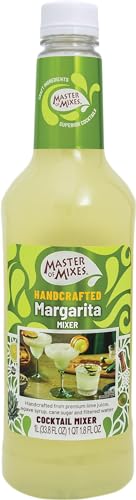
Master of Mixes Margarita Mix, 1 Liter Bottle
Badge: Best for Classic Margaritas
Strengths
- A single-purpose classic: one liter of margarita mix from a specialist mixer house.
- The liter format pours a full round without opening a second bottle.
- Unadorned and dependable — the application is the classic drink, done the standard way.
Trade-offs
- One flavor, one drink: it will not stretch to daiquiris or variations the way a variety case does.
- As with every built mix, fresh lime at its best beats it; this wins on consistency and speed.
- An opened liter is a use-soon commitment for small households.
Mini spec box
- Format: 1 liter bottle
- Style: margarita mix
If the strawberry pick is the festive edge, this is the dependable center of the built-mix applications: the classic margarita, at home, without a juicing session. Tequila, this mix, ice, a salt rim when wanted, a lime wedge always — the drink is four decisions deep and every one of them is already made well. It is the bottle for the household whose margarita is a standing order rather than an event, and its liter format is sized exactly to that habit: a round for friends, or a week of single serves, finished while the mix is still itself. In the application map it also plays a second role as the reference point — the standard against which flavored and lighter margarita products define themselves.
Best for: households with a standing margarita order / Not suited for: flavor variety or one-drink-a-month drinkers

Fever-Tree Tonic Water, 24 Pack of 5.1 Fl Oz Cans
Badge: Best for Everyday Tonics
Strengths
- Real quinine with subtle citrus and fruit notes per the listing — the balanced, bitter-led profile the classic serves are built on.
- The maker’s own positioning names the applications: gin and tonic, vodka and tonic.
- Single-serve cans mean every everyday drink gets full carbonation and a known measure.
Trade-offs
- A full, regular recipe — the sweetness is part of the classic profile.
- Cans are the working format, not the presenting one; the bottles below exist for the table.
- A 24 pack assumes the everyday application is genuinely everyday in your house.
Mini spec box
- Format: 24 pack, 5.1 fl oz cans
- From listing: real quinine; subtle citrus and fruit notes balanced by quinine bitterness
This is the highest-frequency application in most drinking households — the weeknight gin and tonic, the vodka tonic after work — and the can is its perfect instrument. Open, pour over ice and spirit, done: no flat half-bottles, no measuring, no waste, and a quinine structure that makes the simplest drink in the repertoire taste composed. The recipe’s balance is the point — citrus and fruit softness in front, bitterness carrying the finish — and it flatters juniper-led gins and clean vodkas equally, which is why the maker names both on the listing and why this guide names this can the everyday champion. If you buy one tonic from this page, the application logic says buy this one: it covers the most drinks you will actually pour. Its daily-driver role is the same one explored across the shelf in the guide to the Best Mixers For Every Day Use.
Best for: the standing weeknight tonic serve / Not suited for: presented occasions or sugar-trimming drinkers

Fever-Tree Light Tonic Water, 24 Pack of 5.1 Fl Oz Cans
Badge: Best for Light Serves
Strengths
- 30 calories per can per the listing, with real quinine — the light application without losing the tonic structure.
- A hint of Mexican bitter orange adds a citrus bitterness that suits aperitif serves especially.
- Balanced botanicals and a smooth, crisp taste per the listing: it reads as a style, not a compromise.
Trade-offs
- Leaner body than the classic recipe; at short ratios it can taste spare.
- Light is reduced, not zero — the can still belongs in any honest count.
- Same case-size commitment as the classic cans.
Mini spec box
- Format: 24 pack, 5.1 fl oz cans
- From listing: real quinine, 30 calories per can, hint of Mexican bitter orange, balanced botanicals
Every repertoire has a lighter register — the aperitif before dinner, the long afternoon serve, the second glass that should be gentler than the first — and this can is that register, bottled. The recipe keeps what the application cannot lose (quinine, carbonation, a citrus-bitter edge) and trims what it can (the sugar load), so the drink stays recognizably a tonic serve while sitting more lightly in the evening. It is also the natural tonic for food-led occasions, where a full-sugar mixer can crowd the first course — a theme the guide to the Best Mixers For Food develops across the whole mixer shelf. Households that entertain health-conscious guests will find this the most diplomatically useful case in the fridge: nobody has to announce anything; the lighter drink is simply what is poured.
Best for: aperitifs, long serves, and lighter drinking generally / Not suited for: drinkers who want the fullest classic body

Fever-Tree Tonic Water, 24 Pack of 6.8 Fl Oz Bottles
Badge: Best for Serving
Strengths
- The classic recipe in glass: the listing’s own framing is the gin and tonic and vodka tonic, presented properly.
- At 6.8 fl oz, the bottle is a generous single serve for a long, presented drink.
- Bottles reseal briefly between courses and look right on a table or a bar cart.
Trade-offs
- Same recipe as the cans — you are buying the application (presentation), not a different liquid.
- Glass is heavy and breakable in a 24 pack, and fridge-hungry.
- For pure weeknight function, the cans do the same job with less ceremony.
Mini spec box
- Format: 24 pack, 6.8 fl oz bottles
- From listing: real quinine; subtle citrus and fruit notes balanced by quinine bitterness; for gin and tonic or vodka and tonic
Presentation is an application, not a vanity. A tonic serve brought to a dinner table in a cold glass bottle, poured in view over good ice, signals that the drink was considered — and guests taste consideration. This format owns that moment, plus the bar-cart aesthetic and the slightly longer serve the bigger bottle allows. The guide is explicit about the identity underneath: the liquid is the classic recipe of the canned pick, so the rational household buys one format or the other by how it actually drinks — cans for the kitchen routine, bottles for the dining room — and only enthusiastic hosts need both. Seasonal hosts should note that this is also the format that carries the winter table, where tonic serves sit beside richer food and the holiday shelf described in the guide to the Best Mixers For Eggnog.
Best for: dinners, guests, and bar-cart households / Not suited for: purely functional weeknight stocking

Fever-Tree Premium Indian Tonic Water, 16.9 Fl Oz (Pack of 8)
Badge: Best for Premium & Batching
Strengths
- The Premium Indian expression: no artificial sweeteners, flavourings, or preservatives per the listing — the ingredient-purist’s tonic.
- The 16.9 fl oz bottle is the batching format: pitchers and rounds poured from one cold bottle.
- A pack of 8 large bottles suits a household that hosts in rounds rather than singles.
Trade-offs
- Large bottles lose carbonation after opening — this format is for occasions, not for one drink tonight.
- The premium register is wasted on drinkers who take their tonic casually; the cans serve them better.
- Eight large bottles are a real storage footprint.
Mini spec box
- Format: 16.9 fl oz bottles, pack of 8
- From listing: Premium Indian Tonic Water; no artificial sweeteners, flavourings, or preservatives
The final application is scale with standards: the pitcher of gin and tonic for a garden table, the round of vodka tonics poured in one motion, the connoisseur’s serve where the tonic’s own pedigree — the Indian tonic tradition, the clean ingredient list — is part of the pleasure. A large bottle is the only format that pours a round gracefully, and this one brings the family’s premium expression to the job. The discipline is the familiar one: chill it hard, open it when the round is actually happening, and finish it that day. Used so, it completes the map — the application the small cans, for all their virtues, genuinely cannot cover.
Best for: pitchers, rounds, and ingredient-purist tonic drinkers / Not suited for: solo single serves or next-day leftovers
Comparison Table
| Pick | Application it owns | Format | Recipe register | Link |
|---|---|---|---|---|
| Zing Zang Strawberry Mix | Frozen & flavored serves | 32 fl oz | Flavored, festive | Check on Amazon |
| Master of Mixes Margarita Mix | Classic margaritas | 1 liter bottle | Classic built mix | Check on Amazon |
| Fever-Tree Tonic Cans | Everyday tonic serves | 24 × 5.1 fl oz cans | Classic tonic | Check on Amazon |
| Fever-Tree Light Tonic Cans | Light & aperitif serves | 24 × 5.1 fl oz cans | Light tonic, 30 cal/can per listing | Check on Amazon |
| Fever-Tree Tonic Bottles | Presented serves | 24 × 6.8 fl oz bottles | Classic tonic | Check on Amazon |
| Fever-Tree Premium Indian Tonic | Premium & batched serves | 16.9 fl oz × 8 | Premium tonic | Check on Amazon |
How to Choose: Build Your Own Application Map
List your real applications first. Write down the drinks your household actually poured in the last month — not the drinks you admire. Most lists come back with four to six entries, and they will look much like this guide’s map: a default serve, a lighter serve, a guest serve, a celebration serve, and one or two specialties. Any application not on your list does not need a bottle, however good the bottle is.
Assign one owner per application. Overlap is where shelves go to die: two bottles competing for the same job means both go flat. Where this guide’s map overlaps by design — the classic tonic in two formats — the applications are genuinely different (routine versus presentation), and your map should demand the same justification before allowing a duplicate.
Match format to the application’s rhythm. Daily applications want single-serve formats (cans). Occasion applications want presentation or volume (bottles, liters). Seasonal applications — the frozen strawberry serve is this map’s example — want the smallest purchase that covers the season, because their bottles must not be asked to survive until next year once opened.
Re-map twice a year. Applications drift with seasons, households, and tastes. The five-minute audit — what did we actually pour, what is still unopened, what ran out and was missed — keeps the map honest and the fridge a working bar rather than a museum of intentions. Treat the audit as a standing appointment with your own habits; it is the cheapest bar consultancy available.
How to Run the Two Anchor Builds, Step by Step
The everyday tonic serve (cans’ application).
- Fill a highball glass completely with ice.
- Pour one measure of gin or vodka over the ice.
- Top with one cold can of tonic, poured gently down the side of the glass — roughly one part spirit to three parts tonic.
- Stir once, garnish with the spirit’s citrus — lemon or lime for gin, lemon for vodka — and serve at once.
The classic margarita (the mix’s application).
- Salt the rim of a rocks glass if wanted: lime wedge around the rim, dip in a saucer of salt.
- Shake tequila and the margarita mix with hard ice in the proportion the bottle directs, until the shaker frosts.
- Strain over fresh ice in the prepared glass — never the shaker’s spent ice.
- Garnish with a lime wheel and serve. For the frozen application, the strawberry mix and the same tequila go to the blender with ice instead.
Troubleshooting.
- Problem: a batched pitcher of tonic serve tastes flat by the second round → the large bottle was opened early. Fix: chill unopened, open at pouring time, and top each glass with a splash from a fresh can.
- Problem: the light serve tastes thin next to the classic → ratio and temperature, as always. Fix: full ice, a slightly shorter pour, and the bitter-orange garnish of lemon peel expressed over the top.
- Problem: two tonic formats keep expiring half-used → the map has a duplicate. Fix: demote one format to occasion-only buying and let the other own the everyday application outright.
The Applications This Map Does Not Cover — and What to Do About Them
Honesty about a map includes its edges. This pool contains no cola (the rum-and-cola application), no ginger ale (the highball application that a sister guide covers in depth), no sour mix, and no syrups. A household whose real application list includes those jobs should cover them with the same method — one owner per job, format matched to rhythm, listing read before purchase — rather than forcing a tonic or a margarita mix to impersonate them. The method travels even where the products do not; that is the difference between a shopping list and a system. And when a new application genuinely enters your life — a partner’s favorite drink, a seasonal ritual — buy its smallest format first, let it earn its shelf space across a month of real pours, and only then promote it to a case.
The edges also protect you in the other direction. A map with named limits is a map you can trust inside its borders: when this guide says the light tonic owns the aperitif application, that verdict was reached against a pool that was actually compared, for a job that was actually defined. Guides that claim to cover everything usually cover nothing carefully; this one’s narrower, owned applications are the substance behind its recommendations.
The Format Ladder: Why One Recipe Needs Three Packages
New readers of this guide sometimes balk at the tonic side: why should one recipe occupy three slots? The answer is that carbonation, the soul of every tonic application, behaves differently in every package. A small can is a sealed unit of fizz — perfect, portioned, and finished in one drink, which is why cans own the everyday and light applications where drinks are poured one at a time across a week. A small glass bottle holds the same perfection with presentation added, and its slightly larger measure suits the long serve; glass also chills beautifully and pours with a small ceremony that cans cannot imitate. A large bottle inverts the economics: it is the only format that pours a round or a pitcher in one motion, and it pays for that power with a wasting asset — every hour after opening, its fizz declines. None of these is the “real” product and the others packaging; each is a different tool whose edge is a different application. The drinker who understands the ladder buys the recipe once per application they actually run, and the drinker who does not buys the same liquid three times for one job — or, just as often, buys the large bottle for a solo habit and spends a season drinking flat tonic in the name of economy.
The Alcohol-Free Applications
Every map needs its alcohol-free layer, and this pool covers it better than its alcoholic framing suggests. The light tonic over ice with citrus and herbs is a complete aperitif application — bitter, cold, adult — that happens to contain no spirit. The classic tonic cans do the same job at full register. The strawberry mix, non-alcoholic as sold per its listing, builds the flavored frozen serve for the whole table when it is blended with ice and citrus alone, and the margarita mix makes a credible alcohol-free margarita-style drink with a salt rim and a full lime wedge to replace the structure tequila would have supplied. The hosting consequence matters: a household whose map includes these layers never has to improvise a sad substitute for the guest who is not drinking, because the alcohol-free serves were applications in the plan from the start, poured in the same glassware with the same garnish discipline. That is not a concession layered onto the map; for many households it is the layer that gets used most often of all.
A Worked Example: One Household’s Map
Consider a household of two adults who drink moderately and host monthly. Their last month of pours: gin and tonic twice a week, a lighter spritz-style serve on Fridays, margaritas when friends came (twice), one dinner with drinks served at the table, and a standing wish for an alcohol-free option that does not feel like one. Mapped against this guide, the shopping writes itself: the classic tonic cans own the twice-weekly serve; the light cans own Friday and quietly cover the alcohol-free aperitif as well; the margarita mix owns the friends’ nights; the glass tonic bottles own the monthly dinner. The Premium Indian and the strawberry mix stay unpurchased — batching and frozen serves are not in this household’s real repertoire — and that restraint is the map working, not failing. Six months later the audit may promote one of them (a summer of garden parties will argue for the Premium Indian; a blender enthusiast’s birthday for the strawberry), and the map absorbs the change by promotion, not by clutter. Every household’s version of this paragraph differs in detail and is identical in method, which is why the guide teaches the method at this length: the products will rotate across your life, but the discipline of one owner per application, in the format its rhythm demands, will serve every shelf you ever stock.
Seasonal Rotation: The Map Across a Year
Applications have seasons, and a good map breathes with them. Summer promotes the frozen and light applications — the strawberry mix and the light tonic cans do their year’s best work — and pushes batching up the agenda for garden drinking, which is the Premium Indian’s moment. Autumn returns the everyday serve to the center and starts the presented applications’ long season: bottles on tables, drinks with dinners. Winter is the presented and classic applications’ peak, with the margarita mix resting unless the household’s calendar says otherwise. Spring is audit season in both senses — the repertoire lightens, the light tonic takes the lead, and the fridge is cleared of winter’s half-finished intentions before summer’s cases arrive. None of this requires buying more across the year; it requires buying the same shelf in the season each format was designed for, and letting no bottle be asked to survive, opened, into a season that does not want it.
Inside the Tonic Family: What Actually Differs
Because four of the six picks share a brand and a category, it is worth stating precisely what varies among them, so no reader pays for an imagined difference. Recipe: there are three — the classic (in cans and in bottles, identical), the light (its own recipe, with the bitter-orange note and the stated calorie count), and the Premium Indian (the family’s flagship expression, with the cleanest ingredient positioning in its listing). Sweetness: classic and Premium Indian sit at the traditional register; the light sits deliberately below it. Format: 5.1 fl oz cans for single serves, 6.8 fl oz bottles for presented single serves, 16.9 fl oz bottles for rounds. Carbonation behavior: identical at the moment of opening, divergent thereafter, with the large bottle on a clock the small formats never hear. Price positioning is deliberately not discussed in this guide, but the application logic implies its own economy: the most expensive format per ounce should be the one whose application you run least casually, and the workhorse formats should be the ones you never have to think about. Read the four tonic reviews again with those five variables in mind and the family’s structure becomes a small, legible machine: three recipes, three formats, four applications, no wasted motion.
The Garnish and Glassware Layer of the Map
An application is not only a liquid; it is a serve, and serves are completed by glassware and garnish that this guide assigns as deliberately as the bottles. The everyday tonic application lives in a highball glass with a citrus wedge — fast, cold, unceremonious. The presented application moves to better glassware, a twist instead of a wedge, and ice chosen for looks as well as cold. The light application borrows the wine glass from the spritz tradition, because its drinkers are often eating. The batched application needs a pitcher that pours cleanly and glasses small enough that the pitcher stays the coldest thing on the table. The margarita applications divide by temperature: rocks glasses and salt for the classic, blender-proof vessels and a lime wheel for the frozen strawberry. None of this requires buying a glassware collection; it requires noticing that the same tonic in two glasses is, experientially, two applications — which is the entire thesis of this guide, expressed in crockery. Stock the map’s bottles first, then let one or two glasses per application follow as the occasions prove themselves.
Common Buying Mistakes
- Buying a favorite instead of a map. One beloved bottle asked to do six jobs does most of them badly; assign owners per application.
- Duplicating without an application reason. Same recipe, same job, two formats is storage waste; same recipe, different job is a system.
- Letting the festive application set the stock level. The frozen strawberry serve is glorious twice a summer; buy it like that.
- Ignoring the opened-bottle clock per format. Cans forgive; large bottles do not. Match the opening to the occasion.
- Never re-mapping. Last year’s applications fossilize into this year’s clutter unless the audit happens.
- Promoting a seasonal guest to a standing case. One great frozen-drink party does not make frozen drinks a weekly application; let a specialty prove itself across a season before it earns bulk format in your fridge.
Final Recommendation
Cover the two anchor applications first: the Fever-Tree Tonic cans for the everyday serve and the Master of Mixes Margarita Mix for the classic tequila round — between them, most households are honestly equipped. Add the Light cans when the lighter register becomes a habit, the glass bottles when you start serving at a table, the Premium Indian when you batch or when the tonic itself becomes the point, and the strawberry mix when a frozen-drink occasion is actually on the calendar. Bought in that order, every bottle arrives to a job already waiting for it — which is the whole philosophy of this guide in one sentence.
And when the map is built, use it the way it was designed to be used: without thinking. The point of assigning owners to applications is that the evening’s question shrinks from “what do we have?” to “which serve do we want?” — a smaller, happier question, asked with a cold drink already halfway made. That ease, compounded across a year of evenings, is what the six bottles in this guide are really selling, and it is available at every level of the map, from the two-anchor starter shelf to the full six-application bar.
Frequently Asked Questions
What does “a mixer for each application” actually mean?
It means assigning each recurring job in your home bar — the everyday serve, the light serve, the guest serve, the batched serve, the specialty serve — its own best-suited product and format, instead of asking one bottle to cover everything. This guide’s six picks map to six such applications.
Are the canned and bottled Fever-Tree tonics the same?
Yes — one classic recipe in two formats. The cans own the everyday application (single serves, full fizz, no waste); the bottles own presentation (table service, bar carts, longer pours). Buy the format your drinking matches, or both if you genuinely run both applications.
Which single pick covers the most applications?
The classic tonic cans. The everyday gin and tonic and vodka and tonic are the highest-frequency applications in most homes, and the same can stretches to spritzes and alcohol-free serves. It is the correct first purchase; the other picks specialize from there. Judge any “one bottle for everything” claim by this standard: the can wins not by being best at every job but by being best at the most frequent one, with no job it does embarrassingly — a definition of versatility that survives contact with a real fridge.
When is the Premium Indian tonic worth it over the regular cans?
When the application is premium or batched: pitchers and rounds poured from one large bottle, and serves where the tonic’s own clean ingredient profile — no artificial sweeteners, flavourings, or preservatives per its listing — is part of the point. For a solo weeknight drink, the cans are the better tool. The dividing question is simply whether more than two drinks will be poured in the same hour: below that line the large bottle’s clock beats you, and above it the cans’ one-at-a-time rhythm starts to feel like work.
Light tonic or classic tonic for guests?
Read the occasion. A dinner where the drink accompanies food often suits the light recipe’s cleaner register; a classic gin and tonic occasion suits the classic. Keeping both cases is the diplomatic solution, and this guide’s map is built to make that a system rather than an indulgence.
Can the strawberry mix make a classic margarita?
No — it makes a strawberry margarita, which is its application and a good one. The classic application belongs to the Master of Mixes bottle. Asking the flavored mix to do the classic job produces a drink that satisfies neither purpose. This is the application philosophy in miniature: the failure is never the product’s, it is the assignment’s, and it is always avoidable by buying for the job in the first place.
How do I know which applications my household needs?
Audit the last month of actual pours. The drinks that recur are your applications; the drinks you admire but never make are not. Buy owners for the recurring list, in formats matched to how often each recurs, and re-audit twice a year. If the audit surprises you — most households discover their repertoire is narrower and more habitual than they believed — treat the surprise as the map’s first gift: the shelf you build next will be the first one sized to the drinkers you actually are.


