Disclosure: topratedkitchenware.com is reader-supported. When you buy through links on our site, we may earn an affiliate commission from Amazon and other retailers, at no extra cost to you.
Where to buy
All six picks in this guide to the best mixers for icing are sold on Amazon, and the quickest way to compare them is to open the listings below side by side and look at the attachment sets, speed ranges and bowl sizes rather than any headline number. Stock and colours move around, so check the latest price on Amazon for the exact model you want instead of trusting a figure printed in any guide, including this one. Each name and button below goes straight to that product’s own listing.
- Best Overall: KitchenAid 5 Ultra Power Speed Hand Mixer, KHM512, Black Matte — Check on Amazon
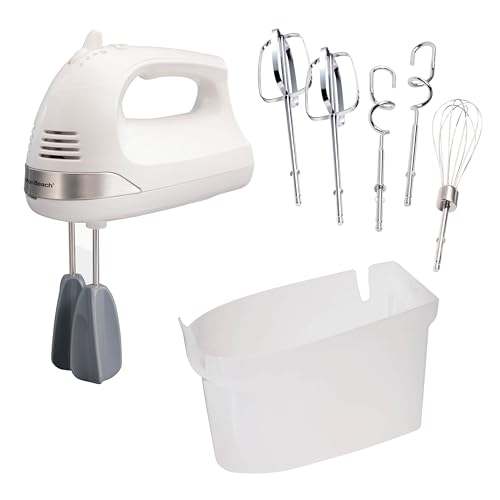
- Most Versatile: Hamilton Beach 6-Speed Electric Hand Mixer with Snap-On Storage Case, White — Check on Amazon
- Best for Stiff Buttercream: Cuisinart 9-Speed Hand Mixer with Storage Case, HM-90BCS — Check on Amazon
- Best Budget Pick: Proctor Silex Easy Mix 5-Speed Hand Mixer, Black — Check on Amazon
- Best Hands-Free Stand Mixer: Cuisinart SM-50 Stand Mixer, White Linen — Check on Amazon
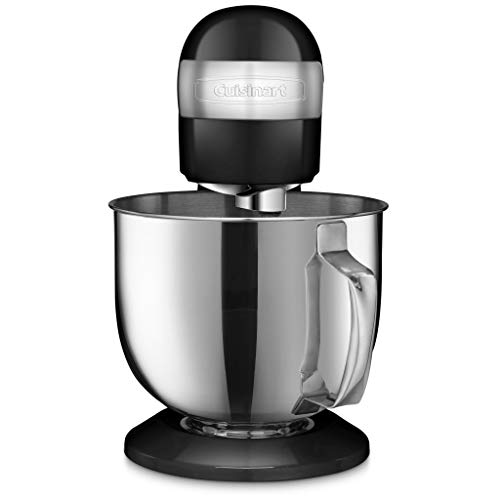
- Best Stand Mixer in a Dark Finish: Cuisinart SM-50 Stand Mixer, Onyx — Check on Amazon
Read the full guide ↓
Finding the best mixers for icing is a narrower problem than finding a good all-round mixer, because icing punishes weaknesses that cake batter never reveals. Buttercream starts as cold, dense butter that fights the beaters, then turns into a stiff, sticky mass that climbs the shafts and tries to crawl out of the bowl. Royal icing goes the other way: it needs sustained whipping to build volume, then holds its peaks only if the mixer can keep a steady, splatter-free pace without overheating. A mixer that is perfectly happy folding cake batter can bog down, surge, or spray powdered sugar across the kitchen the moment a double batch of American buttercream hits the bowl. That is why this guide judges every pick against icing first and everything else second: low-speed control for adding sugar without a dust cloud, enough torque to cream cold butter, beaters that scrape the bowl sides cleanly, and a motor that does not fade halfway through a long royal icing whip.
The six picks split into two honest camps. Four are hand mixers, which suit most home decorators because you can tilt the bowl, chase the last streak of unmixed butter around the edge, and store the whole kit in a drawer. Two are finishes of one Cuisinart stand mixer platform, included because serious decorators eventually want hands-free power for big batches — one in White Linen and one in Onyx, mechanically the same machine, so the choice between them is purely about your kitchen. If you decorate a birthday cake twice a year, a hand mixer from the top of this list is the sensible spend. If you pipe borders for a side business or turn out layered cakes most weekends, the stand mixer sections explain what the step up actually buys you in icing work specifically. Either way, nothing here was chosen for its colour range or its marketing wattage; each pick earned its place on speed control, attachment design and how it behaves in a bowl of frosting.
Key Takeaways
- For most home decorators, the KitchenAid KHM512 hand mixer is the best mixers for icing pick overall: five speeds, gentle low-end control and beaters that eject cleanly.
- Low-speed control matters more than top speed for icing — a slow, surge-free first speed is what keeps powdered sugar in the bowl.
- Stiff buttercream is a torque test, not a speed test; the Cuisinart HM-90BCS and its SmoothStart anti-splatter start handle dense batches best among the hand mixers here.
- A stand mixer earns its counter space when you make double batches or meringue-based icings regularly; the Cuisinart SM-50’s 5.5 quart bowl and 12 speeds cover that work hands-free.
- Whisk attachments matter for royal icing and Swiss meringue buttercream — the Hamilton Beach pick includes a whisk alongside beaters and dough hooks, which most rivals in this group do not.
- Whatever you buy, add powdered sugar in stages and keep the beaters submerged; technique prevents more mess than any feature.
In this guide
Quick Picks
| Pick | Badge | Type | Why it suits icing | Link |
|---|---|---|---|---|
| KitchenAid 5 Ultra Power Speed Hand Mixer, KHM512, Black Matte | Best Overall | Hand mixer, 5 speeds | Controlled low speeds, easy-release beaters, lockable swivel cord keeps the cord out of the frosting | Check on Amazon |
| Hamilton Beach 6-Speed Electric Hand Mixer, 62636J, White | Most Versatile | Hand mixer, 6 speeds, 275 watt motor | Ships with beaters, dough hooks and a whisk plus a snap-on storage case — the only pick here that whisks royal icing without a separate purchase | Check on Amazon |
| Cuisinart 9-Speed Hand Mixer, HM-90BCS, Brushed Chrome | Best for Stiff Buttercream | Hand mixer, 9 speeds, 220 W motor | SmoothStart anti-splatter technology and nine speeds give the finest low-end control for dense buttercream | Check on Amazon |
| Proctor Silex Easy Mix 5-Speed Hand Mixer, 62511, Black | Best Budget Pick | Hand mixer, 5 speeds, 215 watts peak power | Compact, lightweight, with a bowl rest — enough for occasional frosting at the lowest commitment in the group | Check on Amazon |
| Cuisinart SM-50 Stand Mixer, White Linen | Best Hands-Free Stand Mixer | Stand mixer, 12 speeds, 5.5 quart bowl | Chef’s whisk, mixing paddle and splash guard with pour spout for big, tidy batches | Check on Amazon |
| Cuisinart SM-50 Stand Mixer, Onyx | Best Stand Mixer, Dark Finish | Stand mixer, 12 speeds, 5.5 quart bowl | The same SM-50 platform in a dark finish that hides cocoa and gel-colour splashes better between cleans | Check on Amazon |
How These Picks Were Chosen
This is a research-led guide, not a lab report, and it is worth saying plainly what that means. We compared the verified product data for each model — speed counts, motor figures as the manufacturers state them, attachment sets, bowl sizes and included accessories — against the specific demands of icing work, and we weighed the patterns that show up again and again in owner feedback: whether the lowest speed genuinely starts slowly, whether beaters release without a fight, whether the machine walks across the counter under load, and whether it survives repeated stiff batches. We did not invent test results, and where a judgement is an inference from specifications rather than a measured fact, the wording says so.
Three filters did most of the work. First, low-speed behaviour: a mixer whose first speed is already fast will throw powdered sugar no matter how careful you are, so models known for gentle starts ranked higher. Second, attachment coverage: icing is not one job but three — creaming, whipping and folding — so a whisk in the box counted for a lot, and a splash guard counted for the stand mixer. Third, honest capacity: a hand mixer that strains audibly on a single batch of buttercream will not last, so we favoured motors and gearing with a track record in dense mixtures. Price was deliberately not a filter beyond keeping one genuinely low-cost option, because the right question for a decorator is not “which is cheapest” but “which will still be creaming butter smoothly in three years”. Readers comparing machines for high-volume bakery work should also read our notes alongside guides like Best Mixers For Industrial Pastry, keeping in mind that everything here is home-scale equipment.
The 6 Best Mixers for Icing

KitchenAid 5 Ultra Power Speed Hand Mixer, KHM512, Black Matte
Badge: Best Overall
Strengths
- Five speeds with a low end gentle enough to start powdered sugar without a dust cloud.
- Lockable swivel cord moves the cord to the side, so it stays out of the bowl and off the frosting.
- Easy release button ejects the Turbo Beaters without touching them — a real help when they are coated in buttercream.
Trade-offs
- Beaters only in the box; there is no whisk attachment for royal icing volume work.
- Five speeds is a narrower range than the nine-speed Cuisinart if you like fine gradations.
- As a hand mixer it still asks your arm to do the steering on very stiff double batches.
Mini spec box
- Type: electric hand mixer
- Speeds: 5
- Attachments: Turbo Beaters (dishwasher-safe)
- Features: lockable swivel cord, easy release button
- Finish: Black Matte
KitchenAid’s KHM512 takes the top spot because icing rewards control more than raw power, and control is what this machine is built around. The lowest of its five speeds starts softly enough that you can begin incorporating powdered sugar into butter without the familiar white explosion, and each step up adds pace without a sudden surge. The Turbo Beaters have no centre post, which matters more for frosting than for batter: there is less surface for buttercream to pack onto, the beaters shed mixture back into the bowl as you lift and tilt, and they rinse clean quickly. The dishwasher-safe rating is not a small thing after a decorating session, when everything you own seems to be coated in a thin film of grease.
In use, the detail that keeps earning praise is the lockable swivel cord. Anyone who has dragged a power cord through a bowl of finished buttercream — and then had to re-whip the batch to fix the streak — understands why moving the cord to a locked side position is a genuine feature rather than a bullet point. The easy release button is the second half of that hygiene story: press it and the beaters drop into the sink, so you never grip a greasy shaft with clean hands. For royal icing, the honest limitation is the missing whisk; the beaters will whip egg white icing to soft peaks, but a whisk builds volume faster and finer, so dedicated royal icing decorators should look at the Hamilton Beach pick below or the stand mixers. For buttercream, cream cheese frosting, ganache and glazes, though, this is the most balanced tool in the group.
Best for: home bakers who mostly make buttercream and cream cheese frosting in standard batches / Not suited for: decorators who whip large volumes of royal icing daily and need a whisk in the box
Hamilton Beach 6-Speed Electric Hand Mixer with Snap-On Storage Case, White
Badge: Most Versatile
Strengths
- Full attachment set in the box: traditional beaters, dough hooks and a whisk — the whisk makes royal icing and meringue frostings realistic with a hand mixer.
- 275 watt motor is the strongest figure stated among the hand mixers in this guide.
- Snap-on storage case keeps every attachment in one place instead of loose in a drawer.
Trade-offs
- Easy Clean beaters are convenient, but the first speed is less delicate than the KitchenAid’s for sugar work.
- The storage case makes the stored footprint bigger than a bare hand mixer.
- Six speeds still leaves bigger jumps between settings than the nine-speed Cuisinart.
Mini spec box
- Type: electric hand mixer
- Speeds: 6
- Motor: 275 watts
- Attachments: traditional beaters, dough hooks, whisk
- Storage: snap-on storage case
- Finish: White (model 62636J)
If your icing work changes from week to week — buttercream on Saturday, royal icing for cookies on Sunday, a whipped Swiss meringue when you are feeling ambitious — this Hamilton Beach is the hand mixer that covers all of it without extra purchases. The whisk is the headline. Royal icing needs air beaten into it steadily, and a whisk’s wires cut and fold far more efficiently than flat beaters; with the whisk fitted, this machine handles cookie icing and meringue toppings in a way the beater-only picks simply cannot match. Swap back to the traditional beaters for creaming butter and sugar, and you have a complete icing station in one case.
The 275 watt motor figure is the highest stated among the hand mixers here, and while wattage numbers are not directly comparable across brands, the practical upshot owners report is a machine that does not feel strained pushing through the stiff middle stage of American buttercream, when the sugar is in but the liquid is not yet fully incorporated. The snap-on case deserves its own mention: hand mixer attachments are exactly the kind of thing that migrates to the back of a drawer and vanishes, and having beaters, hooks and whisk clipped under the unit means the whisk you bought this machine for is actually there when cookie season arrives. The trade-off is finesse at the very bottom of the speed range — sugar still needs adding in stages with this one — but as an all-rounder for varied icing work, nothing else in the group is as complete.
Best for: decorators who switch between buttercream, royal icing and meringue frostings / Not suited for: minimalists who only ever make one frosting type and want the smallest, simplest tool

Cuisinart 9-Speed Hand Mixer with Storage Case, HM-90BCS, Brushed Chrome
Badge: Best for Stiff Buttercream
Strengths
- SmoothStart anti-splatter technology brings the beaters up to speed gradually — the single most useful icing feature in this guide.
- Nine speeds give fine control from folding in sifted sugar to whipping finished frosting fluffy.
- Six-piece set with snap-on storage case keeps the kit together.
Trade-offs
- The 220 W motor figure is lower on paper than the Hamilton Beach, even though gearing matters more than the number.
- Brushed chrome shows frosting fingerprints and needs a wipe to stay smart.
- It is the most feature-rich hand mixer here, and the price tier reflects that — check the listing rather than assuming.
Mini spec box
- Type: electric hand mixer
- Speeds: 9
- Motor: 220 W with SmoothStart anti-splatter technology
- Set: 6-piece, snap-on storage case
- Finish: Brushed chrome (model HM-90BCS)
Stiff buttercream — the kind that holds a piped rosette without slumping — is the hardest job in home icing, because the mixture passes through a stage where it is nearly solid and a lesser mixer either stalls or flings dry sugar everywhere when it catches. The HM-90BCS is built for exactly that passage. SmoothStart means the beaters ease into motion instead of jolting, so the first contact with butter and sugar is a fold rather than an explosion, and the nine-speed range lets you creep up through the stiff stage one notch at a time, listening to the motor instead of fighting it. Decorators who make crusting buttercream for stacked cakes will feel the difference in the first batch.
Beyond the stiff stage, the wide speed range pays off at the other end of the process: once your buttercream is combined, a minute or two at a higher speed whips in air and turns a dense frosting silky, and having several speeds between “combine” and “whip” means you can find the pace that aerates without overshooting into a bubbly, over-beaten texture. The six-piece set and snap-on case keep the kit complete between projects. The honest limitation is that it remains a hand mixer — your wrist is still the bowl-scraping mechanism, and a double batch of stiff buttercream will give your forearm a workout. If that is your weekly routine, the stand mixers below exist for you. But as a hand mixer for serious frosting, this is the one we would hand to someone whose cakes cannot fail.
Best for: bakers who make stiff, pipeable buttercream and stacked celebration cakes / Not suited for: anyone who wants a stand mixer’s hands-free operation for double batches

Proctor Silex Easy Mix 5-Speed Hand Mixer, 62511, Black
Badge: Best Budget Pick
Strengths
- Compact and lightweight — easy to steer around a bowl and kind to smaller hands and wrists.
- Bowl rest lets you set the mixer down on the bowl edge mid-job without dripping frosting on the counter.
- Five speeds cover the core icing tasks without menu-diving.
Trade-offs
- 215 watts of peak power is the modest end of this group; very stiff or double batches are beyond its comfort zone.
- No whisk and no storage case in the specification.
- Peak power figures describe a momentary maximum, not sustained strength — manage batch sizes accordingly.
Mini spec box
- Type: electric hand mixer
- Speeds: 5
- Power: 215 watts peak power
- Features: bowl rest, compact lightweight body
- Finish: Black (model 62511)
Not every icing job needs a flagship machine. If you frost a tray of cupcakes for a school event a few times a year, make a simple glaze for cinnamon rolls, or beat a single batch of buttercream for a family birthday cake, the Proctor Silex Easy Mix covers the work honestly at the lowest commitment in this guide. It is compact and lightweight, which sounds like a minor virtue until you have held a heavier mixer at an angle for six minutes of creaming; for smaller batches, lightness is a genuine ergonomic advantage, and the bowl rest — a small ledge that lets the mixer sit on the rim of the bowl, beaters dripping inward — saves the counter from the usual ring of frosting drips when you pause to add vanilla.
The limits are equally clear, and we would rather state them than oversell. The 215 watts is quoted as peak power, which describes the motor’s momentary maximum rather than its sustained working strength, so this is a single-batch machine: standard buttercream, whipped cream, glazes and light frostings are its territory, while a double batch of stiff buttercream will slow it and heat it. There is no whisk, so royal icing is possible but slow going with beaters. Within those boundaries it is a perfectly sensible purchase — the kind of inexpensive tool that earns its drawer space for a decade of occasional use. Decorators who find themselves frosting every weekend will outgrow it, and the picks above are the upgrade path.
Best for: occasional bakers making single batches of buttercream, glaze or whipped frosting / Not suited for: frequent decorators, stiff double batches, or royal icing specialists

Cuisinart SM-50 Stand Mixer, White Linen
Badge: Best Hands-Free Stand Mixer
Strengths
- 5.5 quart stainless steel bowl swallows double batches of buttercream without climbing out.
- Chef’s whisk, mixing paddle and dough hook included — the whisk and paddle are the two tools icing actually uses.
- Splash guard with pour spout lets you add powdered sugar gradually with the machine running and the mess contained.
Trade-offs
- Takes permanent counter space and is a lift in and out of a cupboard if you store it away.
- Planetary mixing still leaves a small unmixed pocket at the bowl’s bottom dimple — scrape once mid-batch.
- More machine than a twice-a-year froster needs.
Mini spec box
- Type: stand mixer
- Speeds: 12
- Bowl: 5.5 quart stainless steel
- Attachments: chef’s whisk, mixing paddle, dough hook
- Extras: splash guard with pour spout
- Finish: White Linen (model SM-50NAS)
The case for a stand mixer in icing work is not power — the hand mixers above have enough — it is freedom. With the SM-50 running, both of your hands are free: one to add powdered sugar in a slow stream through the pour spout, the other to scrape the bowl, adjust the speed, or start piping the previous batch. The splash guard is the accessory that makes this real. Powdered sugar added to a running open bowl becomes airborne no matter whose name is on the machine; a guard with a pour spout turns that step into a controlled, contained process, and for decorators who make frosting weekly it justifies the machine almost on its own. Twelve speeds span from a gentle fold to a vigorous whip, and the 5.5 quart bowl means a double batch of buttercream — the amount a three-layer cake actually eats — mixes in one go instead of two.
The paddle and whisk divide icing labour exactly as they should. The paddle creams butter and works sugar in without incorporating excess air, which is what you want for a smooth, dense buttercream that spreads without bubbles; the chef’s whisk then handles royal icing, meringue frostings and whipped ganache, building the volume those icings live on. The White Linen finish is the classic kitchen look and shows coloured icing splashes plainly, which some decorators count as a virtue — you can see what needs wiping. The standing caveat for every stand mixer applies: planetary action leaves a small dead spot at the very bottom of the bowl, so stop once, scrape the dimple, and finish. Do that, and this is the pick for anyone whose decorating has outgrown a hand mixer’s batch size.
Best for: frequent decorators, double batches, meringue and royal icing with the whisk / Not suited for: tiny kitchens with no spare counter space or very occasional bakers
Cuisinart SM-50 Stand Mixer, Onyx
Badge: Best Stand Mixer, Dark Finish
Strengths
- Identical SM-50 platform to the White Linen pick: 12 speeds, 5.5 quart bowl, whisk, paddle, dough hook and splash guard.
- Dark Onyx finish hides cocoa, charcoal and deep gel-colour splashes between cleans — practical for chocolate-heavy decorating.
- Same hands-free batch capacity for decorators whose kitchen scheme is dark.
Trade-offs
- Mechanically identical to the White Linen model — there is no performance reason to own both.
- White powdered sugar dust shows more visibly on a dark body, so it needs a quick wipe after sugar work.
- Same counter-space commitment as any stand mixer.
Mini spec box
- Type: stand mixer
- Speeds: 12
- Bowl: 5.5 quart stainless steel
- Attachments: chef’s whisk, mixing paddle, dough hook
- Extras: splash guard with pour spout
- Finish: Onyx (model SM-50BK)
We list the Onyx SM-50 separately for one honest reason: it is a different listing and a different finish, and pretending otherwise would confuse anyone comparing the two on Amazon. Under the paint it is the same machine as the White Linen pick — the same 12 speeds, the same 5.5 quart stainless bowl, the same chef’s whisk, mixing paddle and dough hook, and the same splash guard with pour spout. Everything said above about hands-free batch icing, paddle-creamed buttercream and whisk-built meringue applies here word for word. If you are choosing between the two stand mixer picks in this guide, you are choosing a colour, not a capability.
Colour, though, is not nothing in a working kitchen. Decorators who lean into chocolate buttercream, black cocoa frosting and deep gel colours will find the Onyx finish forgiving: dark splashes that would shout on a white machine read as shadows on this one, and the mixer looks presentable on the counter between sessions with less fussing. The counter-consideration is powdered sugar itself, which shows as a pale dust on a dark body — a ten-second wipe after sugar work solves it, but it is the one cleaning trade the dark finish makes. Choose Onyx if your kitchen runs dark or your decorating runs chocolate-heavy; choose White Linen if you prefer to see every splash you need to clean. Either way the icing performance is identical, and both listings are worth a look before you decide — start with the Check on Amazon listing for current availability of this finish.
Best for: decorators who want SM-50 performance in a dark, splash-forgiving finish / Not suited for: anyone expecting a different machine from the White Linen version — it is the same platform
Comparison Table
| Pick | Type | Speeds | Key icing asset | Link |
|---|---|---|---|---|
| KitchenAid KHM512, Black Matte | Hand mixer | 5 | Gentle low speed, cord locks out of the bowl | Check on Amazon |
| Hamilton Beach 62636J, White | Hand mixer | 6 | Whisk included for royal icing; 275 watt motor | Check on Amazon |
| Cuisinart HM-90BCS, Brushed Chrome | Hand mixer | 9 | SmoothStart anti-splatter; finest speed gradations | Check on Amazon |
| Proctor Silex 62511, Black | Hand mixer | 5 | Lightweight with bowl rest; simplest operation | Check on Amazon |
| Cuisinart SM-50, White Linen | Stand mixer | 12 | 5.5 quart bowl, splash guard, whisk and paddle | Check on Amazon |
| Cuisinart SM-50, Onyx | Stand mixer | 12 | Same platform, dark splash-forgiving finish | Check on Amazon |
How to Choose the Right Mixer for Icing
Start with the icing you actually make, because the three main families ask for different things. American buttercream — butter, powdered sugar, a splash of milk — is a torque and dust-control problem: it needs a slow start, steady creaming power and beaters or a paddle that work a dense mass without stalling. Royal icing is an aeration problem: egg white or meringue powder and sugar whipped to precise peaks, which rewards a whisk and a motor that can run steadily for several minutes without fading. Meringue-based buttercreams split the difference: the meringue wants a whisk and sustained speed, then the butter wants gentle, thorough incorporation. Match the machine to your dominant icing and most of the decision makes itself — whisk included for royal icing devotees, SmoothStart and speed gradations for buttercream specialists, a stand mixer’s bowl and guard for anyone doubling batches.
Next, think about batch size honestly. A single batch of buttercream for a two-layer cake is roughly a hand mixer’s home turf; a double batch for a three-layer or sheet cake pushes most hand mixers into strain, and it is the point where a 5.5 quart stand bowl stops being a luxury. Consider your hands, too: hand mixing means holding the machine at an angle, steering it around the bowl and scraping with the other hand for the full creaming time. If your wrists complain, or if you decorate while doing three other things, hands-free operation is an ergonomic feature, not a convenience. Storage cuts the other way — a hand mixer with a snap-on case lives in a drawer, while a stand mixer needs a permanent home on the counter or a strong shelf and a willingness to lift it.
Finally, read specification numbers the way manufacturers hope you won’t. Wattage is measured differently across brands — some quote peak power, the momentary maximum a motor can draw, others quote a working figure — so a higher number does not guarantee a stronger mixer, and a lower one does not condemn it. Speed counts are similarly slippery: nine speeds are useful only if the bottom speed is genuinely slow, which is why anti-splatter start technology matters more than the count. The reliable signals are the attachment set, the bowl or case design, and the pattern of owner experience with dense mixtures. Buy on those, and use price only to choose between machines that already fit your icing.
How to Make Smooth Buttercream Without the Sugar Cloud
Technique decides whether icing is a pleasure or a cleanup operation, and the same steps work with every pick in this guide. First, start with butter at cool room temperature — soft enough to dent with a finger, not greasy or melting. Cream it alone for a minute before any sugar goes in; this builds the smooth base that determines the finished texture. Second, sift the powdered sugar if it is lumpy, and add it in three or four stages rather than all at once, starting the mixer on its lowest speed each time and keeping the beaters or paddle submerged in the mixture until the new addition disappears. Third, add liquid a teaspoon at a time near the end — buttercream goes from stiff to soupy in a single careless splash. Fourth, once combined, whip briefly at a higher speed for a silky finish, then stir by hand for thirty seconds to knock out the largest air bubbles if you need a flawless spreading surface. Fifth, scrape the bowl properly at least twice: down the sides and across the bottom, where unmixed butter likes to hide.
Cleaning and care follow the same pattern of small habits. Eject beaters straight into warm soapy water before the icing dries — dried buttercream sets like cement, while fresh residue rinses in seconds. Wipe the mixer body with a damp cloth rather than rinsing it, and never let liquid reach the vents. On the stand mixer, wash the bowl, paddle and whisk promptly and dry the whisk wires fully so nothing corrodes in the joints. Store hand mixer attachments in their case or clipped together so the set stays complete. Three problems come up again and again. Problem: frosting climbs the beaters and reaches the mixer body → the bowl is too small or the beaters are lifted too high; work deeper in the bowl and tilt it instead of raising the mixer. Problem: buttercream is grainy → the sugar went in too fast or the butter was too cold; keep mixing at low speed and let friction warm the batch gently. Problem: royal icing will not hold peaks → grease is the usual culprit; wash the bowl and whisk with hot soapy water, dry thoroughly, and start again with clean tools, because a trace of butter fat collapses meringue structure.
Hand Mixer or Stand Mixer for Decorating?
This is the decision most buyers actually face, so it deserves a direct answer. A hand mixer gives you control: you feel the mixture’s resistance through the handle, you tilt the bowl to bring the edges into the beaters, and you can chase the last unmixed streak in seconds. For single batches, small kitchens and bakers who frost occasionally, that control plus drawer storage wins. A stand mixer gives you capacity and freedom: double batches, long meringue whips that would tire an arm, and the ability to add ingredients with both hands while the machine runs. Its weakness is the fixed geometry — the beater’s path is set, so the bowl’s bottom centre needs one manual scrape — and its footprint. Neither is “better” in the abstract; the right answer is the one matched to your batch size and frequency. Many serious home decorators end up owning both, using the hand mixer for glazes, small batches and quick whipped cream, and the stand mixer for the weekend’s main production. If budget forces one purchase, buy for the job you do most, not the job you imagine doing someday.
Reading Icing Recipes Against Your Mixer’s Speeds
Recipes say “beat on medium” as if speeds were universal, and they are not — one machine’s medium is another’s high. Translate by behaviour instead of numbers. “Cream until pale and fluffy” means a steady middle pace where the mixture visibly lightens without splashing. “Whip to stiff peaks” means the fastest pace your whisk can sustain while the icing stays in the bowl. “Fold in on low” means the slowest speed that still moves the beaters. When a recipe gives a time — “beat for five minutes” — treat it as a description of a result, not a stopwatch instruction: a powerful stand whisk may reach glossy peaks sooner than a hand mixer’s beaters, and an underpowered machine may need longer. Judge by what the icing looks like: buttercream should hold a spatula trail briefly before relaxing, royal icing at flooding consistency should settle flat in about fifteen seconds when drizzled, and stiff-peak icing should stand up when the whisk lifts. Your eyes are the calibration tool every recipe quietly assumes you will use.
Matching Mixer Settings to Icing Textures
Different icings live at different points on your mixer’s dial, and learning the map makes every recipe easier. Glazes and drizzles — powdered sugar and liquid, nothing more — want the lowest speed you have and only a few seconds of it, just until the streaks disappear; overbeating a glaze adds bubbles that show on the finished surface. Cream cheese frosting wants restraint of a different kind: the cheese softens fast, so cream the butter and sugar first, then add cold cream cheese at low speed and stop the moment the mixture is uniform, or it will slump. Whipped cream frosting is a whisk’s job at a confident middle-high pace, watched closely, because the distance between soft peaks and butter is about thirty seconds. Ganache sits at the gentle end: pour warm cream over chocolate, let it stand, then stir or beat briefly at the lowest speed for a glossy finish — speed here is the enemy of shine. Keep this map in mind and the speed numbers on any machine become a language you can read, whichever of the six picks ends up in your kitchen.
Common Buying Mistakes
- Buying on wattage alone. Peak-power numbers are not comparable across brands; attachment design and low-speed behaviour decide icing results.
- Ignoring the whisk. Royal icing and meringue frostings need aeration. If that is your work, a beater-only mixer is the wrong purchase no matter how strong it is.
- Choosing a stand mixer for status. If you frost twice a year, a stand mixer is expensive counter decoration; a good hand mixer serves you better.
- Skipping the storage question. Attachments without a case get lost. Two picks here include snap-on cases for a reason.
- Assuming finishes differ mechanically. The two SM-50 picks are one platform in two colours — buy the finish once, on looks and kitchen fit, not imagined performance.
- Forgetting bowl size at home. A mixer is only half the system; stiff buttercream in a shallow, wide bowl will climb out of any machine. Use a deep bowl for hand mixing.
Final Recommendation
For most readers, the answer is the KitchenAid KHM512: it starts gently, steers easily, ejects its beaters cleanly and handles the full range of everyday icing with the least fuss. If your decorating spans royal icing and meringue work, step sideways to the Hamilton Beach 6-Speed for its included whisk and stronger stated motor. If stiff, pipeable buttercream is your signature and cakes must not fail, the Cuisinart HM-90BCS and its SmoothStart earn their place. And if your batches have outgrown hand mixing altogether, the Cuisinart SM-50 — in White Linen or Onyx, whichever suits your kitchen — is the hands-free upgrade, with the Proctor Silex standing by as the honest low-cost option for occasional work. Readers whose mixing questions run beyond the kitchen entirely may also find our companion guides useful, from Best Mixers For Infused Vodkas and Best Mixers For Irish Whiskey to Best Mixers For Jack Daniels, Best Mixers For Jack Daniels Fire and Best Mixers For Jack Daniels Honey — different machines, same principle of matching the tool to the mixture.
Frequently Asked Questions
Can a hand mixer really handle stiff buttercream?
Yes, in single batches, provided the low speeds are genuinely slow and you add sugar in stages. The Cuisinart HM-90BCS is the most comfortable here thanks to SmoothStart and its nine-speed range; the KitchenAid and Hamilton Beach handle standard batches well. Double batches of stiff buttercream are stand mixer territory.
Do I need a whisk attachment for royal icing?
It helps a great deal. Beaters will whip royal icing, but a whisk builds volume faster and gives a finer, more stable peak structure. The Hamilton Beach pick includes a whisk, and both stand mixer picks include a chef’s whisk; the KitchenAid and Proctor Silex are beater-only.
Why does my powdered sugar explode everywhere?
Because the beaters start too fast or sit too shallow in the bowl. Start on the lowest speed with the beaters submerged, add sugar in stages, and consider a machine with anti-splatter start technology — or a stand mixer’s splash guard — if the problem persists.
Is a stand mixer worth it just for icing?
If you decorate weekly or make double batches, yes: hands-free operation, a 5.5 quart bowl and a splash guard change the experience completely. If you frost a few cakes a year, a quality hand mixer does the same job for far less money and storage.
What is the difference between the two Cuisinart SM-50 picks?
Only the finish. White Linen and Onyx are the same 12-speed, 5.5 quart machine with the same whisk, paddle, dough hook and splash guard. Choose on kitchen scheme and on which finish you would rather wipe down.
How do I stop buttercream tasting gritty?
Sift lumpy sugar, cream the butter thoroughly first, add sugar gradually at low speed, and give the finished frosting a brief whip followed by a hand stir. Grittiness usually means undissolved sugar crystals from rushed combining rather than a mixer fault.
Can these mixers handle cookie dough and bread dough too?
The hand mixers manage cake batters and soft cookie doughs; the Hamilton Beach also includes dough hooks for light dough work. The stand mixers, with their dough hooks and larger bowls, are the right tools for regular bread and pizza dough.


