Disclosure: topratedkitchenware.com is reader-supported. When you buy through links on our site, we may earn an affiliate commission from Amazon and other retailers, at no extra cost to you.
Where to buy
Every pick in this guide to the best mixers for scotch whisky is a bottled sour mix — lime, sweetener and salt in one pour — because the sour is the one mixed format that respects what Scotch whisky actually is. All six are available online at the listings below. The Master of Mixes variety pack is the flexible starting point, the Agalima is the clean-label bottle for malt drinkers who read ingredient lists, and the Zing Zang Strawberry is the wildcard for drinkers who like a fruit-led serve.
- Master of Mixes Margarita/Daiquiri Variety, 1 Liter, 6 Pack & Salt — six flavors; blood orange and passion fruit are the Scotch-friendly standouts.
- Agalima Organic Authentic Margarita Drink Mix, 1 Liter Glass Bottle — organic, all-natural, and the tidiest sour profile in the guide.
- Daily’s Margarita Mix, 64 oz Bottle — the large-format bottle for gatherings and batched sours.
- Zing Zang Original Margarita Cocktail Mix, 32 Fl Oz — real fruit juice, no high fructose corn syrup.
- Zing Zang Strawberry Margarita-Daiquiri Mix, 32 Fl Oz — the fruity twist, made with real fruit juices.
- Master of Mixes Margarita Mix, 1 Liter Bottle — the single-flavor classic sour base.
Read the full guide ↓ for which whisky styles survive a sour mix and which should never meet one, the dilution maths behind the ratio, and a tasting protocol for finding your own house pour.
The search for the best mixers for scotch whisky begins with a spelling lesson that turns out to matter. “Whisky” without the “e” is the Scotch spelling, and the drinkers who type it that way tend to be the ones who care most about what is in the bottle — single malts, cask characters, regional styles from Speyside to Islay. That audience does not want its whisky hidden. So this guide applies a stricter test than a generic mixing roundup: a mix earns its place only if the whisky still tastes like whisky on the other side of it. Bottled margarita mixes pass that test for a specific reason. Strip away the name and the tequila association, and a margarita mix is a sour mix — citrus acid, a measured sweetener, and salt — and the sour is the oldest respectable frame for whisky there is, older than the cocktail shaker itself in its punch-house ancestry.
Used with a blended Scotch or a gentle unpeated malt, at a ratio that keeps the spirit in charge, these bottles produce a whisky sour variant with the whisky’s grain, fruit and oak still legible in the glass. Used with a heavily peated malt or a fragile old single cask, they produce regret — and this guide will be specific about that boundary, because respecting it is the whole difference between a Scotch drinker who mixes and a person who wastes Scotch. Readers who found us through the American spelling will find the same bottles assessed for everyday blends in our companion piece, while this guide keeps the malt-first lens throughout.
Key Takeaways
- A margarita mix is a sour mix under another name — lime, sweetener, salt — and the sour is whisky’s most historic mixed format.
- The test applied here is stricter than usual: the whisky must still taste like itself after mixing. Blends and unpeated malts pass; peat and cask strength do not.
- Master of Mixes’ variety pack leads on flexibility — its blood orange bottle is a genuinely fine partner for Speyside fruit.
- Agalima’s organic glass bottle is the purist’s pick: the cleanest label and the tidiest sour in the guide.
- Pour two parts whisky to one part mix as a starting ratio, then walk the mix down — malt drinkers usually settle whisky-heavier than the label suggests.
- Dilution is a dial, not an accident: ice quantity, shake length and serving temperature decide how much of the malt survives.
In this guide
Quick Picks
| Pick | Badge | Format from listing | Why it suits Scotch whisky | Link |
|---|---|---|---|---|
| Master of Mixes Margarita/Daiquiri Variety | Most Versatile | 1 liter bottles, 6 pack with salt | Blood orange and passion fruit echo malt fruit; classic bottle covers the plain sour | Check on Amazon |
| Agalima Organic Authentic Margarita Drink Mix | Best for Malt Drinkers | 1 liter (18 fl oz) glass bottle, individually boxed | Organic, all-natural recipe; clean profile that stays out of the whisky’s way | Check on Amazon |
| Daily’s Margarita Mix | Best for Batches | 64 oz bottle | One bottle batches a whole evening of consistent sours | Check on Amazon |
| Zing Zang Original Margarita Cocktail Mix | Best Real-Juice Flavor | 32 fl oz plastic bottle | Real fruit juice and no HFCS give the sour body | Check on Amazon |
| Zing Zang Strawberry Margarita-Daiquiri Mix | Best Fruity Twist | 32 fl oz bottle | Strawberry softens lime’s edge for fruit-led serves | Check on Amazon |
| Master of Mixes Margarita Mix | Best Classic Sour Base | 1 liter bottle | The single-flavor staple for a repeatable house sour | Check on Amazon |
Badges here were assigned through a malt-first lens. Versatility wins the headline slot because a whisky drinker’s needs change by the bottle they open, but if you only ever mix one style of Scotch, the badge column tells you which single bottle matches that habit.
How These Picks Were Chosen
This guide is research-led. We compared bottled sour mixes by their published listings and ingredient positioning — citrus source, sweetener style, salt, format — and judged each against how Scotch whisky behaves under dilution and acidity, drawing on established sour-making practice rather than invented tasting panels. Facts stated in a listing are reported as stated: the Zing Zang bottles’ real fruit juice and no-high-fructose-corn-syrup positioning, the Agalima’s organic and all-natural recipe, the pack contents of the Master of Mixes variety set. Where a listing does not state something, this guide does not claim it.
The selection filter had three gates. Gate one: genuine sour architecture — acid plus sweetener plus salt — because a sweetened flavoring without acid makes malt taste flabby and dull. Gate two: a flavor profile that can sit beside malt without shouting over it, which favored clean lime, blood orange and real-juice builds and ranked candy-leaning profiles down. Gate three: formats that suit how whisky drinkers actually buy — a single considered bottle, a variety pack for exploration, a large format for the nights a crowd descends. One scope note, stated plainly: the long highball serves Scotch is famous for — whisky and soda, whisky and ginger — belong to a different product category than bottled sour mixes. This guide covers the sour route completely rather than pretending a sour bottle is also a highball mixer.
The 6 Best Mixers for Scotch Whisky
Each review below is written for the whisky drinker, not the margarita drinker: the question is never “is this a good mix?” but “what does this mix do to Scotch, which Scotch, and at what cost to the whisky’s character?” Where a bottle’s best whisky partner is a humble blend, we say so. Where a bottle can hold a single malt’s hand without crushing it, that earns real praise.

Master of Mixes Margarita/Daiquiri Variety Pack
Badge: Most Versatile
Strengths
- Six 1 liter flavors — blood orange, mango, margarita, passion fruit, watermelon, white peach — plus included salt.
- Blood orange is a standout with Scotch: bittersweet citrus that rhymes with Speyside marmalade notes.
- Pour-ready bottles make side-by-side tasting with one whisky genuinely easy.
Trade-offs
- Watermelon and white peach are honest misses with whisky — keep them for rum and vodka guests.
- Six liters demands storage and a household that will work through it.
- Flavored sours, however good, are a step away from the plain lime sour a purist defaults to.
Mini spec box
- Format: 1 liter bottles, 6 pack, with salt included
- Flavors: blood orange, mango, margarita, passion fruit, watermelon, white peach
- Use: cocktails and mocktails, pour ready (per listing)
For a whisky drinker, this pack is best understood as a tasting kit. Open one blend or one unpeated malt and pour it four ways — classic lime, blood orange, passion fruit, mango — and you learn more about both the whisky and your own palate in one evening than a month of random mixing teaches. The blood orange serve is the revelation: Scotch, particularly fruit-led Speyside whisky, carries natural orange and marmalade notes from its cask life, and blood orange mix amplifies exactly that register instead of importing a foreign flavor. Passion fruit works differently, adding a tart tropical top note that makes a simple blend taste deliberately composed.
The pack’s honesty requirement runs the other way for two bottles. Watermelon with whisky tastes like a compromise nobody asked for, and white peach mostly buries malt under orchard softness. Neither flaw sinks the pack — both bottles will find happy work with white rum, vodka or soda as mocktails — but a whisky-only household should price the pack mentally as four useful bottles plus two for guests. On that accounting it still leads this guide, because no other pick lets you map one whisky’s range so completely.
Best for: curious drinkers running their own whisky-and-sour tastings / Not suited for: single-flavor loyalists with limited storage

Agalima Organic Authentic Margarita Drink Mix
Badge: Best for Malt Drinkers
Strengths
- Organic and all-natural recipe — the cleanest ingredient story available in this category.
- Glass bottle, individually boxed: stores well and presents well beside a good malt.
- Authentic sour balance — tidy and restrained rather than sweet and loud.
Trade-offs
- A considered purchase, not a bulk one; there is no multi-pack economy here.
- Natural recipes vary slightly in tartness, so your perfect ratio may drift a little between bottles.
- One classic flavor only.
Mini spec box
- Format: 1 liter (18 fl oz) glass bottle, individually boxed
- Recipe positioning: organic, all natural, authentic
- Flavor direction: classic lime sour
If the variety pack is the experimenter’s pick, Agalima is the minimalist’s. Its whole proposition is that a sour mix should contain nothing the drink does not need, and for malt drinkers that restraint is the point. In the glass with an unpeated single malt, the Agalima sour tastes assembled rather than applied: lime brightness up front, a clean sweet middle that does not linger into stickiness, and a finish short enough that the whisky’s own oak and fruit close the sip. Of the six bottles here, it is the one we would reach for when the whisky is good enough that the mix’s job is to frame, not feature.
The practicalities support the positioning. Glass is the better storage material for an opened citrus mix, and the individual box makes this the only pick that works as a gift next to a bottle of whisky without apology. The one adjustment to expect: natural products are alive in a way industrial ones are not, and tartness can shift slightly from bottle to bottle. Treat the first serve from each new bottle as a calibration pour — taste, nudge the ratio, then settle. Malt drinkers, who calibrate everything else in their drinking life, tend to enjoy rather than resent that ritual.
Best for: single-malt drinkers who mix occasionally and carefully / Not suited for: bulk buyers and variety seekers

Daily’s Margarita Mix, 64 oz
Badge: Best for Batches
Strengths
- 64 oz format — the largest here — batches a full party of sours from one bottle.
- Familiar, crowd-pleasing sour profile that needs no explaining to guests.
- Consistency across a batch beats squeezing citrus to order for a crowd.
Trade-offs
- The least subtle profile in the guide; it supports whisky rather than revealing it.
- Opened, it claims real fridge space and wants a plan for use.
- Crowd-pleasing sweetness means whisky-forward drinkers should strengthen the ratio.
Mini spec box
- Format: 64 oz bottle
- Flavor direction: classic margarita sour
- Best use case: batching, punch-style serves, parties
There is a moment in every whisky drinker’s hosting life when the good bottles go back on the shelf and the question becomes logistical: twelve people, one kitchen, drinks needed for three hours. The Daily’s 64 oz bottle is the answer this guide gives. Batched in a jug with a solid blended Scotch at a steady ratio, chilled hard and poured over fresh ice with a salt station beside it, it produces a sour that tastes the same in the twelfth glass as the first — and consistency, at a party, is quality. Guests are not benchmarking your sour against a single malt; they are having a cold, balanced drink that happens to be whisky-based, possibly their first evidence that Scotch mixes at all.
Judge it by that job and it excels; judge it by the malt-revealing job and it is the wrong tool, which is why its review sits third rather than first. The profile is deliberately broad — sweet enough to please, lime enough to read as a sour — and broad profiles sand down exactly the edges a malt drinker values. Keep a bottle for the crowd, keep your Agalima or your classic Master of Mixes for yourself, and the Daily’s will never disappoint you, because you will never ask it to do the wrong work.
Best for: hosts batching sours for a group / Not suited for: quiet two-glass evenings with a special malt

Zing Zang Original Margarita Cocktail Mix
Badge: Best Real-Juice Flavor
Strengths
- Made with real fruit juice per the listing — citrus with genuine fruit body behind it.
- No high fructose corn syrup, which keeps the finish from turning sticky.
- 32 fl oz format splits the difference between trial bottle and party jug; made in USA.
Trade-offs
- Fruit weight can round off a delicate malt’s finer edges.
- Single bottle per purchase — steady drinkers reorder often.
- Fuller profile will not suit drinkers chasing a bone-dry sour.
Mini spec box
- Format: 32 fl oz plastic bottle
- Per listing: made with real fruit juice; no high fructose corn syrup; made in USA
- Flavor direction: lime margarita, fruit-forward
Zing Zang’s margarita mix carries the house style of a brand known for an assertive Bloody Mary mix: real juice, real presence. With Scotch whisky that presence is mostly an asset. Blends in particular can taste thin in a sour once dilution sets in — the middle of the drink goes hollow — and the Zing Zang’s fruit body fills precisely that gap, giving the sour a middle that holds from first sip to last. The absence of high fructose corn syrup matters on the finish, where cheaper sweetness turns cloying and this stays comparatively clean.
Its boundary is delicacy. A light Lowland malt or a subtle, floral Highland style will find this mix a loud companion; the fruit weight that rescues a blend will politely trample a whisper. Match it to whiskies with malt body of their own — weightier blends, richer Highland styles — and pour the whisky a fraction strong. Drinkers whose sours have always felt a little empty will find this bottle fixes the exact thing they could not name.
Best for: drinkers who find sours thin; weightier blends and malts / Not suited for: delicate, floral single malts

Zing Zang Strawberry Margarita-Daiquiri Mix
Badge: Best Fruity Twist
Strengths
- Strawberry softens lime’s bite — the friendliest entry point for Scotch-sour skeptics.
- Made with real fruit juices per the listing; non-alcoholic and mocktail-capable.
- Same 32 fl oz practicality as the original Zing Zang.
Trade-offs
- Fruit-led and sweeter in direction — the furthest pick here from a classic sour.
- Strawberry can steer the drink toward dessert if the ratio drifts mix-heavy.
- Not the bottle for peat, sherry bombs, or any whisky you want to taste unadorned.
Mini spec box
- Format: 32 fl oz bottle, pack of 1
- Per listing: made with real fruit juices; non-alcoholic cocktail mix; made in USA
- Flavor direction: strawberry margarita-daiquiri
Every category needs its gateway bottle, and this is the sour shelf’s. Strawberry changes the psychology of a Scotch sour: lime alone announces “cocktail, tart, grown-up,” while strawberry rounds the first impression into something generous and summery that drinkers who claim not to like whisky will happily finish. Underneath the fruit, the sour architecture still works — the acidity keeps the drink structured, the whisky still brings grain and oak to the middle — but the serve reads as a pleasure rather than a position statement. For converting the Scotch-curious at a summer gathering, no other bottle in this guide does the job as easily.
Discipline is the price. Strawberry mixes invite heavy pouring, and a mix-heavy glass tips from “fruity whisky sour” into “whisky-flavored fruit drink” quickly. Hold the two-to-one ratio, serve it very cold over plenty of ice, and choose a straightforward blend whose job is backbone rather than nuance. Kept in that lane, it is a legitimate and enjoyable serve; asked to carry a fine malt, it will spend the malt’s character on sweetness. Know which evening you are having, and pick accordingly.
Best for: summer serves and converting whisky skeptics / Not suited for: classic-sour purists or fine malts
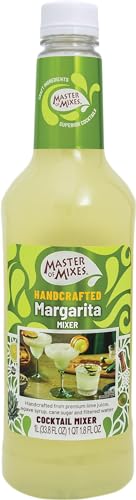
Master of Mixes Margarita Mix, 1 Liter
Badge: Best Classic Sour Base
Strengths
- The single-flavor classic from the same range as the variety pack — a dependable house sour.
- Full 1 liter format suits a regular mixing habit without a six-flavor commitment.
- Consistent profile makes it easy to dial in and remember your ratio.
Trade-offs
- No variety — if you want blood orange too, the pack above is the smarter buy.
- Classic profile is middle-of-the-road by design; it will not thrill flavor chasers.
- Like all bottled sours, it cannot rescue a peated malt pairing.
Mini spec box
- Format: 1 liter bottle
- Flavor direction: classic margarita lime sour
- Range: Master of Mixes (same family as the variety pack)
Some drinkers do not want a tasting kit or a fruit twist; they want one bottle that makes the same good sour every Friday. This is that bottle. The single-flavor Master of Mixes margarita is the classic sour base in its most straightforward form — lime-led, balanced, repeatable — and repeatability is an underrated virtue in home mixing, because it turns ratio-finding into a one-time job. Once you know your pour with this bottle and your house blend, you can make the drink in the dark, and it will taste like your drink.
Its middle-of-the-road character is both the strength and the ceiling. It will not give a Speyside malt the blood-orange resonance the variety pack can, nor match the Agalima’s clean-label tidiness, and a drinker who loves either of those experiences will eventually wander. But as a foundation — the bottle that teaches you the sour format and anchors a home bar’s whisky corner — it is exactly right, and its 1 liter size is the sweet spot between the trial bottle you outgrow and the party jug you cannot finish.
Best for: creatures of habit who want one reliable house sour / Not suited for: variety seekers (take the six-pack instead)
Comparison Table
| Pick | Badge | Format | Profile | Best whisky partner | Link |
|---|---|---|---|---|---|
| Master of Mixes Variety Pack | Most Versatile | 1 liter × 6, with salt | Six flavors; blood orange leads for whisky | Speyside malts and blends, in tastings | Check on Amazon |
| Agalima Organic Margarita Mix | Best for Malt Drinkers | 1 liter glass bottle | Organic, all-natural, restrained | Unpeated single malts | Check on Amazon |
| Daily’s Margarita Mix | Best for Batches | 64 oz bottle | Classic crowd-pleaser | Blends, batched | Check on Amazon |
| Zing Zang Original Margarita Mix | Best Real-Juice Flavor | 32 fl oz bottle | Real fruit juice; no HFCS | Weightier blends and Highland styles | Check on Amazon |
| Zing Zang Strawberry Mix | Best Fruity Twist | 32 fl oz bottle | Strawberry-lime, real fruit juices | Straightforward blends, summer serves | Check on Amazon |
| Master of Mixes Margarita Mix | Best Classic Sour Base | 1 liter bottle | Classic lime sour, repeatable | Your house blend, every week | Check on Amazon |
How to Choose a Sour Mix That Respects the Whisky
Start from the whisky, not the mix. The single most useful habit in this category is choosing the bottle after naming the whisky it will meet. Mixing a blend three nights a week? Format and consistency dominate — the 1 liter classic or the variety pack. Mixing a good unpeated malt once a month? The mix’s restraint dominates — Agalima. Hosting? The Daily’s, and no further thought required. Most disappointed purchases in this category come from buying a bottle for a whisky you do not actually drink, then blaming the pairing.
Understand what dilution does to malt. Whisky at bottle strength holds its aromatic compounds in a tight, alcohol-rich environment. Add water — from ice melt, from the mix itself — and those compounds loosen and bloom, which is why a splash of water opens up a neat pour. Add too much, and the same compounds thin past the point of perception: the whisky goes quiet. A sour mix dilutes twice, once with its own water content and once through the ice it demands. This is the mechanical reason behind every rule in this guide: whisky-forward ratios, hard cold ice, short shakes. You are managing a dilution budget, and the malt’s character is what you are spending it on.
Weigh acid style against cask style. Lime is a bright, high, green acid; it flatters whiskies whose casks gave them citrus and orchard fruit — bourbon-cask Speysides, ex-bourbon Highlanders. It argues with whiskies whose casks gave them darkness: heavy sherry, port finishes, and of course peat. Blood orange, with its bittersweet depth, bridges further toward those darker styles than lime can, which is why the variety pack punches above its weight for malt drinkers. Real-juice body, as in the Zing Zang bottles, adds a third option: not brighter or darker, but fuller — the right answer when a blend tastes hollow in a lean sour.
Keep one unopened spare, never three. A single sealed backup bottle in the cupboard means a faded fridge bottle never forces a disappointing drink or an emergency shop. More than one spare, though, usually means you bought a format your household does not actually use — the multi-pack discount that quietly expires is the most expensive bottle of all. Let your finishing speed, not the pack size, set the order.
Buy size honestly. Citrus mixes are perishables wearing a shelf-stable costume. The right size is the one your household finishes while the lime still tastes alive: a 32 fl oz or 1 liter bottle for most couples, multi-packs for steady habits with sealed spares in the cupboard, the 64 oz only when a date with a crowd is actually set. An unfinished giant bottle that sours in the fridge door has cost you more — in disappointing drinks — than any smaller bottle ever will.
How to Build a Whisky Sour With a Bottled Mix
- Choose the whisky by the rules above. Blend by default; unpeated malt when the mix is clean and the evening is quiet; never peat, never cask strength.
- Pour whisky-forward. Two parts whisky to one part mix is the floor, not the target — malt drinkers often land nearer five-to-two. Measure the first time; free-pour only after your ratio is memorized.
- Shake short and hard over fresh ice. Eight to ten seconds chills and integrates without flooding the dilution budget. Strain over fresh ice in the glass — never serve on the shaken ice, which is already half spent.
- Taste, then season. A tiny pinch of salt lifts malt fruit; a twist of citrus peel expressed over the surface returns the aromatics dilution borrowed. Adjust once, deliberately, rather than repeatedly.
- Serve colder than you think. A sour that starts merely cool ends warm and sweet. Pre-chilled mix, cold glass, full ice — temperature is the cheapest quality control in the drink.
Troubleshooting. Problem: the malt has vanished from the drink → what to do: you have overspent the dilution budget; rebuild with a stronger ratio, fresher ice and a shorter shake, or step down to a cleaner mix that needs less volume. Problem: the drink tastes like two separate drinks — fruit, then whisky → what to do: the serve is under-integrated; shake longer, or let the built drink rest two minutes on its ice so the components marry before the first sip. Problem: a sherried whisky turns bitter against the lime → what to do: that cask style wants blood orange, not lime; switch to the variety pack’s blood orange bottle, or serve the sherried whisky neat and mix a blend instead.
The Dilution Budget: A Tasting Protocol for Your House Ratio
Ratios in books are other people’s palates. This short protocol finds yours, using one whisky and one mix, in about fifteen minutes. Pour three small serves of the same whisky and mix at three ratios — two-to-one, five-to-two, and three-to-one — over identical fresh ice, in identical glasses, tasted in order from whisky-heaviest to mix-heaviest and back again. Note three things for each: where the malt’s fruit sits (front, middle, gone), how long the finish lasts, and whether the sweetness outstays the whisky. Most malt drinkers discover their ratio is one step whisky-heavier than their guess, and that the middle serve — the one where fruit and finish both survive — is the one they would order in a bar.
Run the protocol again whenever you change either variable: a new house blend resets it, and so does a new mix, because bottled sours differ in both tartness and sweetness density. It sounds like homework; in practice it is three small drinks and the end of ever making a sour you do not like. Households that entertain can run it as a group tasting with the variety pack — same whisky, four flavors, one ratio — and let guests find their own serves, which is the most reliable party trick in this entire guide. Readers cross-shopping the DJ meaning of “mixer” while they plan the party should note the two purchases never overlap: the crew comparing the Best Mixers For Serato Dj are buying crossfaders and channel strips for the music, turntablists debating the Best Mixers For Scratching care about fader cut-in above everything, and anyone speccing a full Best Mixers For Serato Dvs Setup is solving a timecode problem — while everything in this guide is for the glasses. And if a microphone is involved in your event, the Best Mixers For Shure Sm7b question is about preamp gain, not drinks. Sort the music with those guides; sort the whisky here.
A Short Lineage: Whisky Has Always Been Mixed
There is a persistent myth that Scotch was drunk neat and untouched until modern marketing invented mixing. The historical record says the opposite. Whisky punch — spirit, citrus, sugar, water, spice — was a centerpiece of Scottish and Irish convivial drinking centuries before the single malt became a connoisseur’s category, and the sour family descends directly from that punch tradition, simply shrunk from the bowl to the glass. Sailors’ rations paired spirits with citrus for brutally practical reasons; nineteenth-century bartenders codified the whisky sour into the canon; and the twentieth century’s blended Scotch industry — the whiskies most people actually drank — was built explicitly for a world of mixed serves, soda highballs included.
The modern chapter of the story is the Penicillin, created in New York in the 2000s: blended Scotch, lemon, honey and ginger, crowned with a float of peated Islay malt. It matters here for two reasons. First, it proved to a skeptical generation of malt drinkers that a sour-format Scotch cocktail could be a serious drink — balanced, structured, and unmistakably whisky. Second, it codified the float technique this guide recommends: peat as perfume, applied in a teaspoon over the surface, rather than peat as foundation, where its smoke would collide with the acid. Every bottled sour in this guide can be served Penicillin-style — build the sour on a blend, float the peat — and the technique converts drinkers who believed the two worlds could never meet.
None of this history argues that your oldest malt belongs in a shaker. It argues something narrower and more useful: mixing Scotch is not a fall from grace, it is one of the whisky’s native formats, and the drinker’s job is matching the right whisky to the format — which is precisely the discipline the reviews above are organized around.
Glassware, Ice and the Serving Ritual
A whisky sour is a short drink with a short life, and its serving details decide whether it tastes composed or tired. Glassware first: a rocks glass is the honest default — heavy-based, wide enough for a large cube, honest about the drink’s pub ancestry. A coupe makes the same drink feel dressed up and keeps dilution slower once served, since the ice stays in the shaker rather than the glass; choose it when the malt is good and the evening is seated. What matters more than the silhouette is temperature: a warm glass steals five degrees from a short drink in minutes, so chill the glass while you shake, even if that only means filling it with ice water and emptying it at the last second.
Ice is the ingredient drinkers most underestimate. For serving, one large, hard, fresh cube beats a scoop of small freezer cubes on every axis: it melts slower, so the dilution budget stretches across the whole drink instead of being spent in the first three sips; it looks better; and it carries no freezer odors. For shaking, the calculus flips — smaller, plentiful ice chills faster — which is why the method in this guide shakes on one ice and serves on another. It reads as fussiness until you taste the two versions side by side, after which it reads as obvious.
Finally, the garnish is a functional ingredient, not decoration. A strip of citrus peel, pinched over the surface to express its oils, returns the bright aromatics that dilution and cold suppress — with lemon for classic sours, orange for blood-orange and sherried-leaning serves. A cocktail cherry belongs to the sweeter American sour tradition and sits happily in the strawberry serve. Skip the garnish entirely and the drink still works; add the peel and it tastes finished. Small rituals, honestly applied, are what separate a mixed drink from a mixture.
Common Buying Mistakes
- Treating all Scotch as one ingredient. Region, cask and peat level decide mixing success more than brand or age. Choose the mix for the style you actually pour.
- Mixing the special bottle. Age and rarity are not mixing credentials. The whiskies that mix best are usually the honest blends you already own.
- Copying margarita ratios. Tequila serves often run near equal parts; Scotch wants the spirit clearly in charge. Start two-to-one and walk the mix down.
- Serving on spent ice. The ice you shook with is half melted and flavor-diluting. Fresh ice in the glass is non-negotiable for a malt drinker.
- Buying variety before knowing your baseline. Learn the classic lime sour first; flavored bottles make sense only once you know what they are varying from.
- Letting an opened bottle fade in the fridge. Dull citrus makes dull sours. Buy the size you will finish while it is bright.
Final Recommendation
Start with the Master of Mixes Margarita/Daiquiri Variety Pack: for a whisky drinker it is less a six-pack than a map, and its blood orange bottle alone justifies the purchase beside a fruity Speyside. If you already know your taste runs clean and classic, skip the map and buy the Agalima Organic — the bottle that treats a single malt with the most respect — or the Master of Mixes Margarita Mix in its single-flavor 1 liter form as your repeatable house base. Whatever you choose, run the ratio protocol once, write your number on the bottle in marker, and keep the peat neat. That small discipline is the difference between mixing Scotch and merely diluting it — and it costs nothing but a little attention and honesty.
Frequently Asked Questions
Is it a waste to mix single malt Scotch?
It depends entirely on the malt. A heavily peated, cask-strength or very old single malt gives up exactly what you paid for when it is diluted and acidified — keep those neat. A young, unpeated, fruit-led single malt, mixed whisky-forward with a clean sour like the Agalima, makes a genuinely excellent drink in which the malt remains the main event. The rule is not “never mix malt”; it is “never mix a malt whose character cannot survive the format.”
Why do these whisky mixers have “margarita” on the label?
Because margarita mix is the retail name for the most common bottled sour mix: lime, sweetener and salt. Bartenders have always treated that formula as a general sour base, not a tequila-only product. The label describes the drink that made the formula famous, not the only drink it can make — and with Scotch, the same formula produces the whisky sour family.
What ratio of mix to whisky should a malt drinker use?
Begin at two parts whisky to one part mix, then adjust downward on the mix. Malt drinkers typically settle between five-to-two and three-to-one, because bottled mixes are sweeter than a scratch sour and dilution costs malt character. The tasting protocol in this guide — three ratios, one whisky, one mix — finds your number in a single session.
Which Scotch style should never go in a sour mix?
Heavily peated whisky. Smoke and lime acidity clash in a way most drinkers experience as medicinal or ashtray-like, and no ratio fixes it. The honorable exception is a teaspoon of peated whisky floated on top of a finished sour built on a blend, where the smoke perfumes the drink without entering the acid fight — the trick the Penicillin cocktail made famous.
How long does an opened bottled mix stay good?
Treat it as a perishable. Refrigerated after opening, a bottled citrus mix keeps its bright character for a limited window — judge by the senses rather than a calendar: it should smell vividly of citrus and taste bright and tart. Once it reads dull or flat, every sour made from it will read the same, and replacing the bottle is cheaper than the whiskies it would waste.
Can I use these mixes for a whisky highball?
Not really — a highball is whisky lengthened with a carbonated mixer such as soda or ginger ale, and a bottled sour mix is neither carbonated nor a lengthener; it is a concentrate. Adding it to a highball makes a different, sweeter drink. If highballs are your format, shop the soda and ginger ale category; if sours are your format, everything in this guide applies.
Does the spelling — whiskey or whisky — change which mixer to buy?
Not the bottle, but often the drinker. “Whisky” is the spelling used in Scotland (and Canada and Japan), “whiskey” the spelling used in Ireland and the United States — and for a bottle of Scotch, the label will always read “whisky.” Shoppers who search with the “e” are frequently thinking of bourbon or Irish whiskey, which mix more forgivingly thanks to corn sweetness or a triple-distilled lightness. Every bottle in this guide works across all three styles, but the ratios in this guide are calibrated for Scotch’s drier, malt-led profile; pour a bourbon sour a touch closer to two-to-one, since the whiskey brings more of its own sweetness to the glass.
Do these mixes work in mocktails?
Yes. All six picks are non-alcoholic mixes. Over ice with soda water, the classic and blood orange bottles make structured, adult-tasting zero-proof sours, and the strawberry Zing Zang is the crowd-pleaser of the group. The salt in the sour formula is what keeps these mocktails tasting like drinks rather than juice — a small thing that makes a large difference.


