Disclosure: topratedkitchenware.com is reader-supported. When you buy through links on our site, we may earn an affiliate commission from Amazon and other retailers, at no extra cost to you.
Where to buy
Here are the verified picks for best natural gas grills under 2000, listed up front before the full guide.
One honesty note before the list, because it shapes everything in this guide: the verified pool for this keyword contains no factory-built natural gas model. Five picks are propane cart grills — the same burner, grate and cabinet formats you should shop for in a natural gas version, reviewed here with their listed fuel stated plainly — and one pick is a charcoal smoker included prose-only as a contrast. A budget framed as under 2000 is a serious tier, and at that tier the correct move is to buy the natural gas variant of a format you like, or a manufacturer-approved conversion, never to assume a propane box connects to a house line. The guide explains exactly how to handle that, pick by pick.
- Nexgrill 4-Burner Propane Gas Grill, Stainless Steel Body with Side Burner — Badge: Best for Big Family Cookouts. Check on Amazon for the current listing details.
- IdeaMaxx 3-Burner Propane Gas Grill with Cast Iron Grates — Badge: Best for Small Patios. Check on Amazon for the current listing details.
- Weber Spirit E-425 Gas Grill — Badge: Best Overall. Check on Amazon for the current listing details.
- Nexgrill Propane 4-Burner Gas Grill, Side Burner and Stainless Steel Lid — Badge: Best Balanced Four-Burner. Check on Amazon for the current listing details.
- AMERLIFE 60,000 BTU 6-Burner Propane Gas Grill with Side Burner — Badge: Best for Parties. Check on Amazon for the current listing details.
- Realcook Charcoal Grill with Offset Smoker — Badge: Best Charcoal Alternative (Prose-Only). Prose-only in this guide (see its review for why).
Read the full guide ↓ before deciding — the fuel and size sections below change how several of these picks should be judged.
Finding the best natural gas grills under 2000 starts with a reality check about how gas grills are actually sold. Most mainstream cart grills are built and boxed as propane models, with natural gas offered as a separate factory variant or as a manufacturer conversion kit for specific models only. So a guide at this budget has two jobs: first, identify the grill formats — burner counts, grate materials, sear zones, cabinets — that are genuinely worth a premium-tier budget, and second, be completely straight about fuel, so nobody orders a propane grill expecting to plug it into a house gas line.
That is how the six picks below were chosen. Five are propane gas grills from the verified pool, spanning a Weber Spirit with a dedicated sear zone, two Nexgrill four-burners at different sizes, a three-burner with folding shelves for smaller patios, and a six-burner party format. Each is reviewed as a format: what its layout cooks well, what its grates and burners mean in daily use, and what to verify about a natural gas version before spending at this level. The sixth pick, a charcoal offset smoker, is prose-only — no link, no image — because it cannot run on gas at all; it is here so readers tempted by smoke flavour can see the trade clearly. If your house already has a gas stub-out on the patio, this budget buys a lot of grill. Spend it on format and build, and handle the fuel question with the checklist in this guide.
If your shortlist started with a neighbouring search, our companion coverage of Best Natural Gas Barbecue Grills and Best Natural Gas Bbq Grills applies the same fuel and format checks to those angles.
Key Takeaways
- At the under-2000 tier, buy format and build quality — sear zones, cast iron grates, enclosed cabinets — not headline BTU alone.
- No pick in the verified pool is a factory natural gas model; the five linked picks are propane grills reviewed as formats, with fuel stated in every spec box.
- For a house gas line, buy the natural gas variant of the model or a manufacturer-approved conversion kit for that exact model — never improvise orifices or hoses.
- The Weber Spirit E-425 leads on searing and finish; the six-burner AMERLIFE leads on party capacity and zone control.
- The charcoal offset smoker is prose-only: it is a legitimate smoker, but it cannot answer a gas brief in any way.
- Budget for the unglamorous extras at this tier: a licensed gas-line installation, a fitted cover and a proper leak test after any connection.
In this guide
Quick Picks
All six pool picks for best natural gas grills under 2000 at a glance. Linked picks carry a purchase link; prose-only picks are included for honest comparison and carry none.
| Pick | Badge | Format | Headline spec (as listed) |
|---|---|---|---|
| Nexgrill 4-Burner Propane Gas Grill with Side Burner (60,000 BTU) | Best for Big Family Cookouts | Propane cart grill | 626 sq. in., 60,000 BTU as listed |
| IdeaMaxx 3-Burner Propane Gas Grill with Cast Iron Grates | Best for Small Patios | Propane cart grill, folding shelves | 38,200 BTU as listed, cast iron grates |
| Weber Spirit E-425 Gas Grill | Best Overall | Propane cart grill | Porcelain-enameled cast iron grates, Weber Works rails |
| Nexgrill 4-Burner Propane Gas Grill with Side Burner (52,000 BTU) | Best Balanced Four-Burner | Propane cart grill | 526 sq. in., 52,000 BTU as listed |
| AMERLIFE 6-Burner Propane Gas Grill with Side Burner | Best for Parties | Propane cart grill | 650 sq. in., 60,000 BTU as listed, warming rack |
| Realcook Charcoal Grill with Offset Smoker (800 sq. in.) (prose-only) | Best Charcoal Alternative (Prose-Only) | Charcoal barrel grill + offset smoker | 800 sq. in. as listed |
How These Picks Were Chosen
This guide was built by comparing the verified pick pool on the things that decide daily cooking: burner count and layout, listed heat output, cooking area, grate material, side burners, storage format and portability. Every specification quoted comes from the verified listing data for that model; where a listing does not state a figure — one pick has no headline BTU in its verified data — this guide says so instead of estimating one. Prices and star ratings are deliberately excluded: prices move, ratings drift, and neither tells you whether a grill’s zones match the way you cook.
The fuel question was handled as a hard filter for honesty rather than for inclusion. Rather than pretending the pool’s propane models are natural gas grills, each review states the listed fuel, explains what the format would offer in a natural gas version, and flags the conversion rule that applies to every model in this guide: only a manufacturer-approved kit or factory variant, fitted and leak-tested properly. The charcoal pick failed the fuel test entirely and was demoted to prose-only, which is the same treatment any off-fuel pick receives in this series. This is a research-led guide, not a hands-on lab test, and it does not claim otherwise; the judgements here come from specifications, format analysis and the accumulated patterns of what owners praise and regret in each grill class.
The same method runs through the neighbouring guides in this cluster, including Best Natural Gas Cast Iron Grills and Best Natural Gas Gas Grills, so comparisons across them stay consistent.
The 6 Best Natural Gas Grills Under 2000: Gas Formats Worth Your Budget

Nexgrill 4-Burner Propane Gas Grill with Side Burner (60,000 BTU)
Badge: Best for Big Family Cookouts
Strengths
- The largest listed cooking area among the four-burner picks here, so sheet-pan-sized batches of vegetables or two dozen burgers fit without a second round
- A side burner adds a true second cooking zone for beans, corn or a pan sauce while the main grates stay free
- The double-door cabinet hides the tank and gives weather-sheltered storage for tools and a spare grate brush
Trade-offs
- It is a full-size cart grill, so it needs a proper patio footprint and is not a balcony or tailgate answer
- Stainless panels show fingerprints and pollen and need regular wiping to keep the finish even
- As a propane model it does not connect to a house gas line out of the box; any conversion must be a manufacturer-approved kit fitted exactly to the maker instructions
Key specs (from the verified listing)
- Fuel as listed: propane (gas format — see the natural gas conversion discussion in this guide)
- 4 main burners, 60,000 BTU total output as listed
- 626 sq. in. total cooking space as listed
- Side burner for sauces and side dishes
- Stainless steel body with built-in thermometer
- Electronic ignition and a double-door storage cabinet
This Nexgrill is the big stainless cart grill in the pool: four main burners, a side burner, a built-in lid thermometer and a double-door cabinet under the firebox. On paper the headline numbers are heat and space — 60,000 BTU across the main burners and 626 square inches of cooking area as listed — and in everyday terms that combination is about flexibility. You can run two burners low under chicken thighs on one side while the other two sit ready for a fast sear, and the side burner means a skillet of peppers or a pot of barbecue beans is not competing for grate space. The cabinet matters more than people expect: a covered, enclosed base keeps the tank out of sight, keeps a drip pan and tools dry between cooks, and makes the whole unit look finished on a patio rather than like equipment. Electronic ignition removes the lighter-and-lid routine, and the thermometer gives a rough lid-temperature reference for planning, though an instant-read thermometer should still make the final call on doneness.
In an under-2000 plan this Nexgrill is the space play: the budget stretches to a big cabinet format with a side burner, leaving room in the same budget for professional gas-line work on the natural gas version of a comparable format.
Best for: households that cook for six or more and want cabinet storage with a side burner / Not suited for: small patios, balconies and anyone who needs a grill that stores compactly
Check on Amazon — see the current listing for this model, and check the latest price on Amazon before ordering.

IdeaMaxx 3-Burner Propane Gas Grill with Cast Iron Grates
Badge: Best for Small Patios
Strengths
- Foldable side shelves shrink the storage footprint, which is rare in this pool and valuable on narrow patios
- Cast iron grates hold heat well and leave deep, well-defined sear marks on steaks and chops
- Three burners still allow a genuine two-zone setup — one side hot, one side as a holding zone
Trade-offs
- Cast iron grates need seasoning and prompt drying after cleaning or they will rust
- Three burners and a smaller grate area cap how much you can cook for a crowd at once
- As a propane model it does not connect to a house gas line out of the box; any conversion must be a manufacturer-approved kit fitted exactly to the maker instructions
Key specs (from the verified listing)
- Fuel as listed: propane (gas format — see the natural gas conversion discussion in this guide)
- 3 burners, 38,200 BTU output as listed
- Cast iron cooking grates
- Foldable side shelves for a smaller storage footprint
- Listed for patio and camping use
The IdeaMaxx is the pragmatist in this pool: three burners, cast iron grates and side shelves that fold down when the cook is over. The 38,200 BTU output as listed is well matched to a three-burner firebox, and cast iron is the grate material most cooks in this guide will appreciate day to day, because it stores heat and releases food with strong sear marks once it is seasoned and preheated properly. The folding shelves are the detail that decides where this grill can live. With the shelves down it tucks against a wall or into a garage corner far more easily than a fixed-shelf cart, and with them up you still get landing space for a tray on one side and utensils on the other. It is listed for patio and camping use, and while it is not a tabletop portable, the smaller format is noticeably easier to move, cover and store than the six-burner and full four-burner carts in this guide.
Not every premium-budget patio is large. The IdeaMaxx is the reminder that spending well sometimes means spending on the right size: folding shelves and cast iron grates in a three-burner footprint that a small terrace can actually hold, with budget left over for the gas-line installation.
Best for: small patios and small households that still want cast iron searing and two-zone cooking / Not suited for: crowd cooking, or buyers who dislike cast iron’s seasoning routine
Check on Amazon — see the current listing for this model, and check the latest price on Amazon before ordering.

Weber Spirit E-425 Gas Grill
Badge: Best Overall
Strengths
- The Sear Zone with Boost burners gives a genuinely hotter patch of grate for steaks and smash burgers
- Porcelain-enameled cast iron combines cast iron heat retention with an easier-cleaning surface
- Weber Works rails accept snap-on accessories, so prep space can grow with the system rather than being fixed at purchase
Trade-offs
- It is a four-burner cart, so it takes a full patio footprint despite the tidy styling
- The accessory-rail ecosystem rewards staying inside one brand, which not every buyer wants
- As a propane model it does not connect to a house gas line out of the box; Weber sells separate natural gas versions of its grills, so check the exact model variant before buying for a gas line
Key specs (from the verified listing)
- Fuel as listed: propane (gas format — see the natural gas conversion discussion in this guide)
- 4 burners with a Sear Zone and Boost burners as listed
- Porcelain-enameled cast-iron cooking grates
- Weber Works accessory rails as listed
- Black finish, cart format
The Weber Spirit E-425 is the brand-name anchor of this pool. The Spirit line is Weber’s mainstream cart-grill family, and this E-425 version runs four burners with a dedicated Sear Zone whose Boost burners push one section of grate noticeably hotter than the rest — exactly what you want for a hard crust on a ribeye or colour on skin-on chicken before moving it to a gentler zone. The grates are porcelain-enameled cast iron, which is the low-drama version of cast iron: most of the heat retention, less of the seasoning burden, and a surface that scrubs clean more forgivingly. Weber Works rails along the front and side accept snap-on trays and holders, a small thing that becomes a big thing on the third cook when your tongs, thermometer and tray all have a home. Fit and finish are the quiet reasons Spirits stay popular: lids close with a solid feel, knobs turn smoothly, and parts support for Weber models tends to be easy to find years later.
At this budget the E-425 earns its lead role because the sear zone is the feature premium money should buy: it changes what a Tuesday steak tastes like, which no cabinet door ever will. If you are shopping its natural gas counterpart, confirm the exact variant name with the maker before ordering, because Spirit models are sold in both fuels and the boxes look alike.
Best for: sear-focused cooks who want the strongest finish and feature set in this pool / Not suited for: shoppers who need the smallest possible footprint or the lowest possible upkeep
Check on Amazon — see the current listing for this model, and check the latest price on Amazon before ordering.
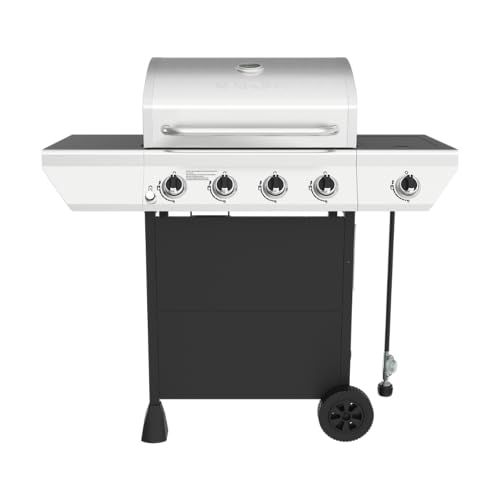
Nexgrill 4-Burner Propane Gas Grill with Side Burner (52,000 BTU)
Badge: Best Balanced Four-Burner
Strengths
- A balanced size: 526 sq. in. cooks for a family plus guests without the footprint of the biggest carts here
- Matte cast iron grates sear well and hide early seasoning marks better than glossy finishes
- Side burner, thermometer and electronic ignition cover the everyday convenience checklist in one unit
Trade-offs
- A stainless lid over a non-stainless body means two finishes to maintain, not one
- Cast iron grates still need basic seasoning care and drying after washes
- As a propane model it does not connect to a house gas line out of the box; any conversion must be a manufacturer-approved kit fitted exactly to the maker instructions
Key specs (from the verified listing)
- Fuel as listed: propane (gas format — see the natural gas conversion discussion in this guide)
- 4 burners, 52,000 BTU total output as listed
- 526 sq. in. cooking space as listed
- Side burner and stainless steel lid
- Matte finish cast iron cooking grate
- Built-in thermometer and electronic ignition
This second Nexgrill is the slightly smaller sibling of the 60,000 BTU model: four burners at 52,000 BTU as listed, 526 square inches of cooking space, a side burner and a stainless steel lid over matte cast iron grates. That size is a sweet spot for a lot of households. It is big enough for a whole spatchcocked chicken next to a tray of vegetables, or burgers for a youth-sports team dinner, but it does not dominate a modest patio the way the six-burner options can. The matte cast iron grate is a thoughtful touch — cast iron performance without the mirror finish that shows every early mistake — and the built-in thermometer plus electronic ignition keep the daily routine simple: open the lid, push, turn, preheat, cook. The side burner handles the usual supporting roles, from warming sauce to boiling corn, and frees the main grates for the food that actually needs smoke and sear.
This is the balanced spend in the guide — four burners, a side burner and cast iron at a mid-format size — and for many households it is the wisest use of a generous budget: the format is complete, and the money saved versus the largest carts funds the licensed plumber a natural gas hookup deserves.
Best for: most family households — the balanced four-burner package / Not suited for: hosts who regularly cook for eight or more at once
Check on Amazon — see the current listing for this model, and check the latest price on Amazon before ordering.

AMERLIFE 6-Burner Propane Gas Grill with Side Burner
Badge: Best for Parties
Strengths
- Six burners give the finest zone control in this pool — run one, three or all six to match the menu
- 650 sq. in. plus a warming rack is genuine party capacity: mains below, buns and finished food above
- Cast iron grates across a wide firebox keep searing consistent even during big batches
Trade-offs
- This is the largest footprint in the guide; measure your patio and gate width before ordering
- More burners mean more parts to clean, inspect and eventually service
- As a propane model it does not connect to a house gas line out of the box; any conversion must be a manufacturer-approved kit fitted exactly to the maker instructions
Key specs (from the verified listing)
- Fuel as listed: propane (gas format — see the natural gas conversion discussion in this guide)
- 6 main burners, 60,000 BTU total output as listed
- 650 sq. in. cooking area as listed
- Side burner, cast iron grates and a warming rack
- Built-in thermometer and regulating valve as listed
The AMERLIFE is the capacity pick: six burners, 60,000 BTU as listed, 650 square inches of cooking area, cast iron grates, a warming rack and a side burner. Six burners are not about raw power — the total output matches the four-burner Nexgrill — they are about zoning. With six independent controls you can hold a true gradient across the grate: searing heat at one end, a medium middle for chicken, and a single low burner at the far end keeping finished ribs warm without drying them out. The warming rack adds a second storey for buns, corn and anything waiting its turn, which is how one grill feeds a long guest list in waves without the first wave going cold. The trade is size and upkeep. This is a wide, heavy cart that wants a permanent patio spot, a cover that actually fits, and an owner who will keep six burners’ worth of drip management and grate care on schedule.
Six burners at this tier are about hosting, not heat. If your under-2000 plan is really a plan to feed twenty people on the Fourth of July without a second grill, this format is the one that does it — and a plumbed gas line suits it especially well, because big multi-burner cooks are exactly when a propane tank runs dry mid-party.
Best for: hosts and party cooks who will use six zones and a warming rack / Not suited for: small spaces, small households and minimalist patio layouts
Check on Amazon — see the current listing for this model, and check the latest price on Amazon before ordering.
Realcook Charcoal Grill with Offset Smoker (800 sq. in.)
Badge: Best Charcoal Alternative (Prose-Only)
Strengths
- The offset firebox allows true indirect smoking — brisket, ribs and pork shoulder cooked away from direct coals
- 800 sq. in. is the largest listed cooking space in this pool
- Charcoal delivers a smoke flavour profile that gas burners cannot reproduce
Trade-offs
- It cannot connect to a natural gas line or run on gas in any form — it is a charcoal appliance, full stop
- Charcoal means lighting time, ash management and closer fire tending than push-button gas
- The barrel-plus-offset shape is long, so it needs a wide storage spot
Key specs (from the verified listing)
- Fuel: charcoal — not a gas grill (prose-only in gas guides; see the fit note)
- 800 sq. in. cooking space as listed
- Barrel main chamber with an offset smoker firebox
- Listed for backyard parties and gatherings
The Realcook is a barrel charcoal grill with an offset smoker box, and it is in this guide for completeness and honesty rather than as a gas recommendation. Its 800 square inches as listed make it the capacity leader of the pool, and the offset layout is the classic low-and-slow arrangement: fire in the small side box, heat and smoke drawn across the main chamber, food cooked indirectly for hours. For ribs, pork shoulder and brisket, that is a legitimate and enjoyable way to cook, and charcoal smoke flavour is the one thing no gas burner in this guide can honestly claim to match. Everything else about it runs opposite to the gas brief: there is no ignition button, no instant off, no fuel line, and ash and fire management are part of every session. Treat it as the traditional alternative for readers who decide, after reading the gas guidance, that they would rather tend a fire than turn a knob.
It sits in this guide prose-only for one reason: readers cross-shopping smoke flavour deserve to see the traditional alternative priced into their thinking. It cannot use your gas line, it cannot start instantly, and at this budget it competes with the gas picks on flavour alone.
Best for: charcoal smokers who want offset low-and-slow cooking and maximum smoke flavour / Not suited for: anyone who needs gas, a gas line, instant start or a small footprint
Prose-only pick: no purchase link and no image, by the rule this series applies to picks that miss the keyword’s core fuel or size attribute. It is reviewed in full so the comparison stays honest.
Comparison Table
The six picks side by side on the attributes that decide daily use. No prices and no ratings — check the current listing for either. Fuel is stated exactly as listed, because in this cluster fuel is the attribute buyers most often get wrong.
| Pick | Format / fuel as listed | Burners | Badge | Listing |
|---|---|---|---|---|
| Nexgrill 4-Burner Propane Gas Grill with Side Burner (60,000 BTU) | Propane cart grill | 4 + side burner | Best for Big Family Cookouts | Check on Amazon |
| IdeaMaxx 3-Burner Propane Gas Grill with Cast Iron Grates | Propane cart grill, folding shelves | 3 | Best for Small Patios | Check on Amazon |
| Weber Spirit E-425 Gas Grill | Propane cart grill | 4 with Sear Zone | Best Overall | Check on Amazon |
| Nexgrill 4-Burner Propane Gas Grill with Side Burner (52,000 BTU) | Propane cart grill | 4 + side burner | Best Balanced Four-Burner | Check on Amazon |
| AMERLIFE 6-Burner Propane Gas Grill with Side Burner | Propane cart grill | 6 + side burner | Best for Parties | Check on Amazon |
| Realcook Charcoal Grill with Offset Smoker (800 sq. in.) | Charcoal barrel grill + offset smoker | — (charcoal) | Best Charcoal Alternative (Prose-Only) | Prose-only |
How to Choose: Applying the Lessons of best natural gas grills under 2000
Choosing at this tier is mostly about refusing to pay for the wrong things. Total BTU is the most marketed and least useful number on the box: what matters is BTU relative to cooking area, how many independently controlled burners shape your zones, and whether the grates are cast iron or porcelain-enameled cast iron, which hold and release heat the way searing requires. A dedicated sear zone or broil zone is worth real money. A thermometer in the lid is worth a little. Lighted knobs and cosmetic trim are worth almost nothing.
The second decision is fuel logistics, and at this budget it deserves a line item of its own. A natural gas grill needs a properly sized gas line and shutoff at the patio, installed or verified by a licensed professional, plus a hose of the correct length for where the grill will actually stand. If your chosen format exists as a factory natural gas model, that is the cleanest path. If it is offered with a manufacturer conversion kit, the kit must be listed for that exact model, and the conversion includes changing orifices — it is never just a hose swap. Propane versions of these formats remain fine grills; they simply answer a different fuel question, and this guide keeps that distinction visible in every spec box.
- Burner count first: 3 burners for couples and small families, 4 for most households, 6 only if you regularly cook for crowds.
- Grate material second: cast iron or porcelain-enameled cast iron for searing; budget for seasoning care on bare cast iron.
- A sear or broil zone is the premium feature most worth paying for at this tier.
- Match cooking area to your real menu: roughly 100 sq. in. per person you cook for in a single round.
- Decide the fuel path before ordering: factory natural gas variant, approved conversion kit, or propane as listed.
- Keep part of the budget for installation, a fitted cover and a leak test — the grill is not the whole purchase.
Readers who arrived via a wider search may also want the cluster’s coverage of Best Natural Gas Grills 42 Inch, which works through the same decision in a neighbouring format.
How to Set Up, Cook On and Care for a Gas Grill
A plumbed gas grill rewards a calm, correct first week. The routine below applies to any natural gas installation and to the propane formats in this guide with the fuel steps adapted.
- Have the gas line and shutoff installed or inspected by a licensed professional, and confirm the grill’s fuel type matches the line before anything is connected.
- Position the grill on a level, non-combustible surface with the clearances the manual specifies from walls, railings and overhangs.
- Connect the hose hand-tight plus a quarter turn as directed, open the shutoff, and leak-test every joint with soapy water — bubbles mean stop, close the valve and refit.
- Season cast iron grates: heat the grill, apply a thin coat of high-smoke-point oil to the warm grates, and repeat twice before the first cook.
- Preheat with the lid down for ten to fifteen minutes, then map your zones by holding a hand above the grate or laying out slices of white bread to toast and reveal hot spots.
- Cook with the lid down for thick cuts, rest meat off the heat, and brush grates while warm after every session.
- Shut down in order: burners off, then the supply shutoff for a plumbed line, and cover the grill only once it is fully cool.
Troubleshooting
- Problem: one burner lights weakly or not at all → check for a blocked burner port or a spider nest in the venturi tube; clean with a soft brush and a straightened paper clip, never a drill bit.
- Problem: uneven heat across the grate → confirm the grill is level, preheat longer, and rotate food between zones instead of fighting the hot map.
- Problem: a gas smell at any point → stop immediately, close the supply shutoff, do not light anything, and have the connection inspected before the next cook.
Natural Gas vs Propane: What Changes and What Does Not
Natural gas and propane cook identically once the grill is built or converted correctly — same burners, same grates, same food. The differences are logistical. Natural gas arrives through a pipe at lower pressure, uses larger burner orifices, never runs out mid-cook, and ties the grill to within a hose-length of the stub-out. Propane arrives from a tank at higher pressure, uses smaller orifices, makes the grill fully mobile, and can empty at the worst possible moment unless you keep a spare tank. That orifice difference is why fuel is not a casual swap: a propane grill connected to natural gas without the correct orifices and regulator changes will burn weakly and wrongly, and a natural gas grill on propane can burn dangerously hot. Manufacturers who support conversion sell a kit with the exact orifices and instructions for the model; manufacturers who do not support it leave you one safe option, which is buying the factory version in your fuel. At the under-2000 tier, treat that rule as absolute — the budget is large enough that there is never a reason to improvise.
Running costs differ in structure rather than in drama: piped gas is billed with the house utilities and is effectively pay-as-you-go with no refills to fetch, while propane is bought in tank exchanges or refills and rewards households that keep a spare. Neither fuel changes flavour. If a salesperson tells you one fuel ‘tastes better’, what they are really describing is a grill that was preheated properly and grates that were clean — both available on either fuel.
Planning the Gas Line: the Half of This Purchase Nobody Photographs
The grill gets the attention, but the gas line decides whether a natural gas setup is a pleasure or a regret. Start with placement: choose the grill’s permanent home first — near the kitchen door, out of the main footpath, with working room behind it — because the stub-out goes where the grill lives, not the other way round. A licensed installer will size the line for the grill’s total demand, fit an accessible shutoff valve, and pressure-test the work; in many areas a permit and inspection are part of doing this properly, and at this budget there is no excuse for skipping them. Think about the hose run as well: the quick-disconnect hose should reach with a gentle curve, never stretched tight and never crossing a walkway where it becomes a trip hazard. If your long-term plan includes an outdoor kitchen — a side burner today, perhaps a second appliance later — say so at installation time, because teeing capacity in now is far cheaper than reopening the line later. Finally, photograph the finished installation and keep the paperwork with the grill manual; future you, selling the house or servicing the grill, will be grateful.
Living With Your Grill Across the Year
The first month with any grill from this best natural gas grills under 2000 guide is calibration, and it should be treated that way. Learn where the Weber Spirit E-425 Gas Grill runs hot and where it rests cool, note how long a true sear preheat takes on a still day versus a windy one, and write nothing down except the habits: which zone you trust for chicken, which corner holds finished food, how the lid thermometer’s reading compares with your instant-read. By the second month those notes are reflexes, and reflexes are what good grilling actually is.
The middle of the year tests systems rather than skills. Volume cooking exposes grease management first — trays and cups that were monthly chores become weekly ones — and exposes fuel planning second. A plumbed line passes this test invisibly, which is its whole point. A propane setup passes it with a gauge and a spare tank, which is its honest equivalent. What fails the test is hope: hope that the tray is not full, hope that the tank has one more cook in it. Replace hope with the two-minute checks in this guide and the season runs itself.
The end of the year is where ownership quality compounds. A grill cleaned, oiled and covered in autumn lights cleanly in spring and needs nothing; a grill abandoned in October needs a restoration project. The work is identical in total minutes — it is simply paid either in pleasant autumn instalments or in one resentful spring lump, plus parts. Choose the instalments. Your future self, standing beside a grill that lights first time on the first warm evening, will consider it the best bargain in this entire guide.
Cooking a Full Dinner on One Grill: a Walkthrough
New owners often ask whether a single grill can really produce a whole dinner, and the answer is a demonstration rather than an argument. Start with the longest item — bone-in chicken or thick pork chops — over the medium zone of a format like the Weber Spirit E-425 Gas Grill, lid down. Add the sturdy vegetables next: halved peppers, thick zucchini planks, corn in husks, arranged in the medium-low areas where they can soften without scorching. While those cook, the side burner or a free corner handles the skillet work — onions, mushrooms, a pan sauce — and the quick items wait their turn in the raw, because burgers, steaks and skewers need minutes, not the half hour the chicken wants. Finish in reverse order of cooking time: quick items sear last over the hottest zone, everything else holds warm in the gentle corner, and the table receives a dinner that tastes coordinated because it was. The lesson generalises to every pick in this guide: sequence by cooking time, hold in the low zone, sear at the end.
Common Buying Mistakes
- Buying the propane box for a natural gas line. The single most expensive mistake with this keyword. Check the exact model variant and fuel on the order confirmation, not just the product family name.
- Spending the whole budget on the grill. Installation, a cover, a hose of the right length and a leak test are part of the purchase. A premium grill with a corner-cut gas line is a bad buy at any price.
- Judging by total BTU alone. 60,000 BTU across six burners is gentler per burner than 52,000 across four. Heat per square inch and zone control are what you actually cook with.
- Skipping the leak test. Every new connection and every reconnection gets a soapy-water test. It takes two minutes and it is the difference between a routine and a risk.
- Letting cast iron grates rust in year one. Season them, dry them after washing, and oil lightly while warm. Cast iron rewards a small routine and punishes neglect.
Final Recommendation
For most households shopping this keyword, the first choice is the Weber Spirit E-425 format: the sear zone, porcelain-enameled cast iron grates and accessory rails make it the most complete cooker in the guide, and the format to look for in a natural gas variant. Choose the 60,000 BTU Nexgrill if your priority is maximum cooking area with a cabinet and side burner, and the AMERLIFE if your real priority is feeding a crowd with fine-grained zone control.
Pick the smaller Nexgrill four-burner for the balanced middle path, and the IdeaMaxx when the patio, not the menu, sets the size limit. Keep the charcoal smoker in perspective: it is a fine way to cook and a poor answer to a gas-line brief. Whichever format you choose, settle the fuel variant before you order, have the line work done properly, and the grill you buy at this tier should serve for many seasons.
Revisit the shortlist here: Weber Spirit E-425 Gas Grill, Nexgrill 4-Burner Propane Gas Grill with Side Burner (60,000 BTU), Nexgrill 4-Burner Propane Gas Grill with Side Burner (52,000 BTU). One more neighbouring angle is covered in Best Natural Gas Grills At Lowes for readers still comparing formats.
Frequently Asked Questions
Can I connect a propane grill directly to my home natural gas line?
No. The fuels run at different pressures and need different burner orifices. Use the factory natural gas variant of the model, or a manufacturer-approved conversion kit listed for that exact model, fitted carefully and leak-tested. Never improvise a connection.
Is natural gas or propane better for grilling?
Neither cooks better; the food cannot tell them apart when the grill is set up correctly. Natural gas wins on convenience and never running out. Propane wins on mobility. Choose by your patio and your habits, not by flavour claims.
What does a budget under 2000 actually buy in a gas grill?
At this tier it buys format and materials: four to six burners, cast iron or porcelain-enameled cast iron grates, sear zones, enclosed cabinets, side burners and better fit and finish — plus, importantly, it should also cover proper gas-line installation if you are going the plumbed route.
How much cooking area do I need?
A useful rule is about 100 square inches per person cooked for in one round. The picks here range from a compact three-burner footprint up to 650 square inches plus a warming rack, so match the grill to your largest regular cook, not your largest imaginable one.
Do I need a professional to install a natural gas grill?
For the line itself, yes — gas line work should be done or verified by a licensed professional, with a shutoff valve and a pressure or leak test. Connecting the grill’s hose to a finished, tested stub-out is the owner’s part; everything upstream of that is professional work.
How do I keep cast iron grates from rusting?
Season them before the first cook, brush them while warm after each session, dry them fully after any washing, and wipe on a thin film of cooking oil while they are still warm. A fitted cover keeps patio moisture from undoing the routine.
How do I stop stainless steel from looking tired?
Wipe it with the grain using a soft cloth, clean spills before they bake on, avoid abrasive pads, and keep the fitted cover on between cooks. Heat tint near the firebox is normal and largely cosmetic; neglect, not heat, is what makes stainless look old.


