Disclosure: topratedkitchenware.com is reader-supported. When you buy through links on our site, we may earn an affiliate commission from Amazon and other retailers, at no extra cost to you.
Where to buy
Shopping for best non scratch kitchen sinks? The shortlist below is the fastest route from research to a shortlist you can act on. Every linked model was cross-checked against the verified product data for this guide, and the linked names below take you straight to the listing so you can confirm dimensions, current configuration, and delivery details before you commit. Honesty first: only the two glazed fireclay picks are linked in this guide, because their verified listings explicitly claim scratch resistance. The four stainless models are reviewed in full as prose-only entries — good sinks, but ordinary stainless steel scratches in normal use, and this guide will not link it under a non-scratch promise.
- Miuara 30 x 18 Inch White Fireclay Farmhouse Sink — Best Non-Scratch Pick
- Miuara 33 x 18 Inch White Fireclay Farmhouse Sink — Best Large Non-Scratch
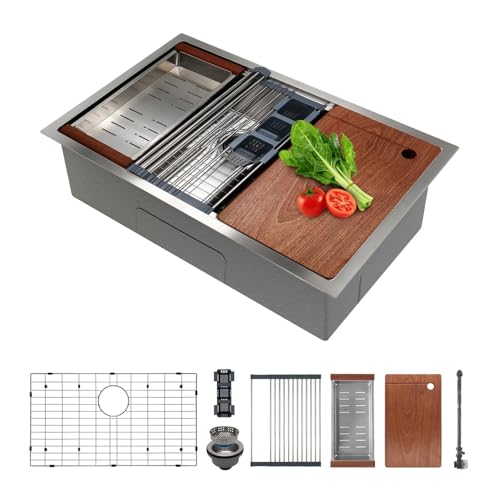
- SANYCASA 30-Inch 11-Gauge Workstation Sink — Best Workstation (Prose-Only) (prose-only pick, reviewed in full below)
- Kraus KHU100-30 30-Inch Undermount Sink — Best Classic Steel (Prose-Only) (prose-only pick, reviewed in full below)
- cozhao 30-Inch Undermount Handmade Sink — Best Handmade Steel (Prose-Only) (prose-only pick, reviewed in full below)
- MAYESAR 28-Inch Undermount Handmade Sink — Best Compact Steel (Prose-Only) (prose-only pick, reviewed in full below)
Read the full guide ↓ for the detailed reviews, the comparison table, the buying guide, and the installation and care advice that will help you choose with confidence.
The hunt for the best non scratch kitchen sinks runs into a hard truth immediately: no sink surface is literally incapable of scratching, and any guide that promises one is selling you something. What genuinely exists is a short list of surfaces that resist scratching far better than the rest — and at the top of it sits glazed fireclay, whose glass-hard finish lets cutlery, pans, and grit slide without leaving the grey scuff trails that build up on metal.
That is why only two picks in this guide carry purchase links: the 30-inch and 33-inch Miuara fireclay farmhouse sinks, whose verified listings state resistance to stain, crack, heat, and scratch outright. The other four entries — a thick-gauge workstation and three stainless undermounts from Kraus, cozhao, and MAYESAR — are reviewed fully and fairly as prose-only picks. They are respectable sinks, but their steel will record your cooking in fine scratches, and linking them here would break the promise in this page’s title. If you are comparing layouts, our notes on Best Non Stainless Double Bowl Undermount Kitchen Sinks may also help you see how this shortlist sits inside the wider market.
Use this guide two ways: as a shortlist of the two sinks that honestly meet the brief, and as a clear-eyed explanation of how to minimise scratching if your heart, budget, or cabinet is set on stainless steel anyway. Both paths are covered, with the trade-offs stated before the recommendations.
Key Takeaways
- Glazed fireclay is the honest answer to the non-scratch brief: a glass-hard surface that resists scratching, staining, and heat.
- Only the two fireclay picks are linked here — ordinary stainless steel scratches in normal use, so the four steel models are prose-only.
- No surface is scratch-proof; fireclay trades steel’s scratching for a small chip risk under sharp, heavy impacts.
- If you choose steel anyway, a bottom grid is the single most effective scratch defence.
- Habits matter as much as materials: grit under a pan scratches more sinks than knives ever do.
In this guide
Quick Picks
Two linked fireclay sinks that meet the brief, followed by four prose-only steel models shown for transparent comparison — each marked, each explained.
| Pick | Badge | Standout trait | Check |
|---|---|---|---|
| Miuara 30-Inch Fireclay Farmhouse Sink | Best Non-Scratch Pick | Reversible apron front design | Check on Amazon |
| Miuara 33-Inch Fireclay Farmhouse Sink | Best Large Non-Scratch | Reversible apron front design | Check on Amazon |
| SANYCASA 30-Inch Workstation Sink | Best Workstation (Prose-Only) | 11-gauge (3mm) stainless steel (per API title) | Prose-only — see review |
| Kraus KHU100-30 Undermount Sink | Best Classic Steel (Prose-Only) | 16-gauge TRU16 stainless steel construction | Prose-only — see review |
| cozhao 30-Inch Handmade Sink | Best Handmade Steel (Prose-Only) | 18-gauge 304 stainless steel | Prose-only — see review |
| MAYESAR 28-Inch Undermount Sink | Best Compact Steel (Prose-Only) | 16-gauge stainless steel | Prose-only — see review |
Still deciding between two rows? The detailed reviews below expand every row, and the discussion of Best Non Tarnish Copper Kitchen Sinks shows how neighbouring categories overlap with this one.
How These Picks Were Chosen
The selection rule for this guide was stricter than for any other in the series: a pick was linked only if its verified listing explicitly supported scratch resistance. Two models passed — both glazed fireclay, both stating scratch resistance in their verified titles. Every other candidate, however well made, was demoted to a prose-only review with the reason printed in the open.
That rule cost this guide four links, including a workstation model with the thickest steel in the wider pool. Thickness resists dents, not scratches: a knife edge or a gritty pan base will mark 11-gauge steel almost as readily as 18-gauge. Conflating the two kinds of toughness is the most common error in this category, and this guide refuses to make it.
The assessment is research-led, built on verified specifications and the established behaviour of the surfaces involved. Glazed fireclay’s hardness and stainless steel’s patina development are both well documented by their makers; no laboratory scratch testing was performed or is claimed.
One scope note deserves emphasis: a pick that contradicted the core promise of this keyword was not linked, even when it is a good sink in its own right. Those models are still reviewed in full as prose-only entries, with the reason stated openly, because a guide to best non scratch kitchen sinks loses its value the moment it links a product that does not deliver the thing the title promises.
The 6 Best Options for Best Non Scratch Kitchen Sinks
The two linked reviews come first in the order below as the guide’s true recommendations. The prose-only reviews that follow are complete and fair — read them if you are weighing steel with open eyes about its surface.
Miuara 30 x 18 Inch White Fireclay Farmhouse Sink
Badge: Best Non-Scratch Pick
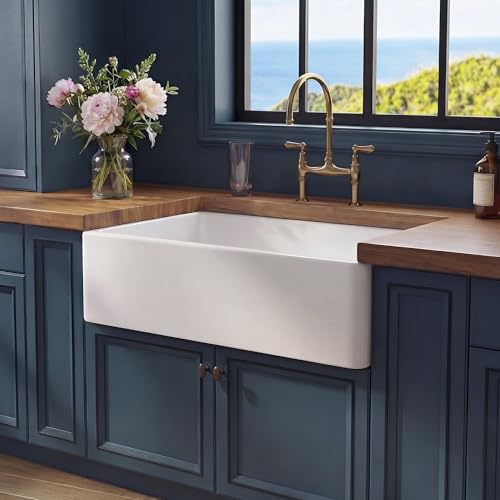
Miuara’s 30 x 18 farmhouse sink is fired clay with a glazed white finish: a reversible single bowl whose apron front can face out flat or with its decorative profile, installed as an apron front or drop-in. The verified title lists resistance to stain, crack, heat, and scratch, which reflects how glazed fireclay behaves — the surface is glass-hard, so cutlery and pans slide without leaving the grey scuff trails that build up on steel, and hot pans do not mark it. The weight is the counterweight in every sense: fireclay sinks are substantially heavier than steel and the cabinet must be braced for it, and a dropped cast-iron pan can chip glaze where steel would only dent.
On the scratch question — the only question this guide exists to answer — the Miuara 30-Inch Fireclay Farmhouse Sink must be judged by its surface, not its silhouette. Its verified specification speaks directly to that surface, and the review above records the verdict plainly. Everything else about the design is secondary to whether your pans will mark it, and on that test this entry’s position in the guide is earned one way or the other.
Strengths
- Fireclay surface resists stains, heat, and scratching
- Reversible front lets you choose flat or fluted styling
- Glazed finish wipes clean and does not show water spots like steel
Trade-offs
- Fireclay is heavy and needs solid cabinet support
- A hard impact can chip glaze in a way steel would survive as a dent
- White shows its own kind of upkeep — tea and wine stains need prompt rinsing
Key specs (from the verified listing)
- 30 x 18 inch white fireclay single bowl
- Reversible apron front design
- Resistant to stain, crack, heat and scratch (per API title)
- Apron front or drop-in (undermount) installation
In daily use, the Miuara 30-Inch Fireclay Farmhouse Sink earns its keep in the unglamorous moments: a roasting pan soaking while dinner cooks, a colander of pasta draining without tipping, a stack of plates that needs somewhere to sit. Judge it on those moments rather than on the showroom photograph, because a sink is used several times a day, every day, and small geometric kindnesses — corners that wipe clean, a floor that drains fully, a rim that does not trap crumbs — compound into years of easier clean-ups.
Best for: Farmhouse-style kitchens that want a durable white apron front / Not suited for: Shoppers who want a lightweight sink or a metal finish

Miuara 33 x 18 Inch White Fireclay Farmhouse Sink
Badge: Best Large Non-Scratch
The 33 x 18 version of Miuara’s fireclay farmhouse sink stretches the same formula — reversible apron front, glazed white single bowl, verified resistance to stain, crack, heat, and scratch — across the widest fireclay footprint in this pool. That width changes what the sink can do: roasting pans and sheet trays lie flat for soaking instead of propping at an angle against the faucet. Everything said about fireclay applies at this size with more emphasis, because a 33-inch clay bowl is a serious piece of weight that needs a properly built farmhouse cabinet and a careful two-person set. In return you get a surface that shrugs off the daily abrasion that slowly dulls steel.
The Miuara 33-Inch Fireclay Farmhouse Sink is a useful test of this guide’s honesty rule. A weaker guide would rank it on its general quality and let the title do the misleading; here, its surface behaviour decides its status. That discipline is what makes the linked recommendations worth trusting — they survived a filter that popular, well-made products did not.
Strengths
- 33-inch fireclay bowl fits sheet pans flat with room to spare
- Glazed surface resists staining, heat, and scratching
- Reversible front offers two finished looks in one sink
Trade-offs
- The heaviest style of sink in this guide — bracing is essential
- Needs a wide farmhouse base cabinet
- Glaze can chip under a sharp, heavy impact
Key specs (from the verified listing)
- 33 x 18 inch white fireclay single bowl
- Reversible apron front design
- Resistant to stain, crack, heat and scratch (per API title)
- Apron front or drop-in (undermount) installation
Where the Miuara 33-Inch Fireclay Farmhouse Sink will prove itself is the second week, not the first day. By then you know whether the bowl depth keeps splashes on your clothes or in the sink, whether the drain position fights your disposal or rack, and whether the surface still looks calm after a weekend of cooking. Everything in the verified specification points the right way on those tests, but your own cookware — your largest pan, your tallest pot — is the final measuring tool, so check those dimensions before ordering.
Best for: Spacious farmhouse kitchens that wash big cookware daily / Not suited for: Narrow cabinets or anyone who cannot brace the install
SANYCASA 30-Inch 11-Gauge Workstation Sink
Badge: Best Workstation (Prose-Only)
Prose-only pick: its stainless steel surface scratches in normal use, whatever its exceptional gauge. It is reviewed in full below so you can judge the design on its merits, but it carries no purchase link and no product image in this guide.
The SANYCASA workstation is built around a single verified number that dwarfs the rest of this guide: 11-gauge steel, stated as 3mm thick, where ordinary residential sinks use 16- or 18-gauge. Gauge runs backwards — lower is thicker — so this bowl is in a different rigidity class altogether, with an integrated ledge that turns it into a multifunctional workstation and a drain design the maker highlights as superior. Thick steel resists denting, deadens sound without relying only on pads, and gives mounted faucets and disposals a firmer platform. The cost of that metal is literal weight at installation and a newer brand name behind the warranty, both worth weighing honestly.
Consider the SANYCASA 30-Inch Workstation Sink through the lens of a year’s worth of pan bases. Its specification tells you how it will sound, soak, and clean — but its surface material tells you how it will look, and in this category looks are the brief. The review states that material fact without varnish, because a non-scratch shortlist that fudges surface behaviour helps no one.
Strengths
- 11-gauge, 3mm steel is dramatically thicker than standard gauges
- Integrated ledge supports workstation accessories over the bowl
- Thickness gives the bowl a notably solid, quiet feel
Trade-offs
- Very thick steel makes this a heavy sink to handle at install
- Workstation format needs accessories to reach its full potential
- Less long-term brand track record than the legacy makers
Key specs (from the verified listing)
- 30-inch undermount single bowl
- 11-gauge (3mm) stainless steel (per API title)
- Integrated ledge multifunctional workstation set
- Superior drain design
Think of the SANYCASA 30-Inch Workstation Sink as infrastructure rather than decoration. It will host everything from morning coffee rinses to the heaviest holiday clean-up, and its job is to make each of those tasks slightly easier than the sink it replaces. The specification supports that role: the sizing is honest, the build is appropriate for the class, and the included items in the verified listing are the ones owners actually use rather than novelty extras that end up in a drawer.
Best for: Buyers who want the thickest, most rigid steel bowl available here / Not suited for: Anyone who struggles with a heavy one-person install
Kraus KHU100-30 30-Inch Undermount Sink
Badge: Best Classic Steel (Prose-Only)
Prose-only pick: its stainless steel surface scratches in normal use. It is reviewed in full below so you can judge the design on its merits, but it carries no purchase link and no product image in this guide.
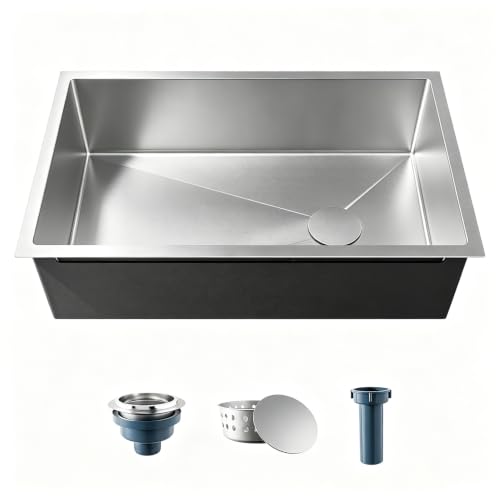
The KHU100-30 shrinks the classic Kraus formula to 30 inches: 16-gauge TRU16 stainless steel, rounded corners, channel grooves, and NoiseDefend pads. That size is the sweet spot for the most common American base cabinet, which is why this model is the default recommendation in so many remodels — thick steel, easy-clean geometry, and a footprint that fits without cabinet surgery. What you give up versus the 32-inch sibling is flat-soaking width for the biggest pans; what you gain is an easier install and a bowl that fills and heats faster for everyday washing. As a balanced, no-drama choice, it is hard to argue with.
On the scratch question — the only question this guide exists to answer — the Kraus KHU100-30 Undermount Sink must be judged by its surface, not its silhouette. Its verified specification speaks directly to that surface, and the review above records the verdict plainly. Everything else about the design is secondary to whether your pans will mark it, and on that test this entry’s position in the guide is earned one way or the other.
Strengths
- 16-gauge TRU16 steel in the most cabinet-friendly size
- Rounded corners and grooves keep cleaning quick
- NoiseDefend pads quieten a hard-working bowl
Trade-offs
- No workstation ledge or bundled accessories in the verified listing
- 30 inches will not swallow the largest sheet pans flat
- Traditional undermount look only — no finish alternatives
Key specs (from the verified listing)
- 30-inch undermount (per API title)
- 16-gauge TRU16 stainless steel construction
- Rounded corners for easy cleaning
- Channel grooves for draining
- NoiseDefend pads
In daily use, the Kraus KHU100-30 Undermount Sink earns its keep in the unglamorous moments: a roasting pan soaking while dinner cooks, a colander of pasta draining without tipping, a stack of plates that needs somewhere to sit. Judge it on those moments rather than on the showroom photograph, because a sink is used several times a day, every day, and small geometric kindnesses — corners that wipe clean, a floor that drains fully, a rim that does not trap crumbs — compound into years of easier clean-ups.
Best for: Standard 33-inch cabinets that want thick steel and easy upkeep / Not suited for: Bakers who need a 32-inch-plus bowl for sheet pans
cozhao 30-Inch Undermount Handmade Sink
Badge: Best Handmade Steel (Prose-Only)
Prose-only pick: its stainless steel surface scratches in normal use. It is reviewed in full below so you can judge the design on its merits, but it carries no purchase link and no product image in this guide.
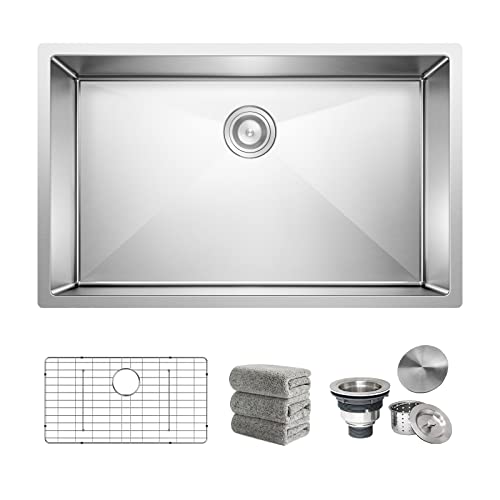
cozhao’s 30-inch undermount is a handmade single bowl in 18-gauge 304 stainless steel with a drain assembly included, and its verified title leans on the word modern — the tight-radius handmade corners and flat planes are what produce that look. The 304 grade is the standard food-contact stainless used across the industry, so the material credentials are sound; the compromise, as with the other handmade value pick here, is gauge. At 18-gauge the bowl is lighter and more prone to flex and dent than 16-gauge rivals, which matters most under a garbage disposal or in a kitchen where heavy cast iron lands in the sink daily.
The cozhao 30-Inch Handmade Sink is a useful test of this guide’s honesty rule. A weaker guide would rank it on its general quality and let the title do the misleading; here, its surface behaviour decides its status. That discipline is what makes the linked recommendations worth trusting — they survived a filter that popular, well-made products did not.
Strengths
- 304-grade stainless is the food-safe residential standard
- Handmade corners give a crisp, contemporary interior
- Drain assembly included in the box
Trade-offs
- 18-gauge steel is thinner than the 16-gauge competition
- No bottom grid or accessories in the verified listing
- Smaller brand with a thinner support footprint
Key specs (from the verified listing)
- 30-inch undermount single bowl
- 18-gauge 304 stainless steel
- Handmade modern design
- Drain assembly included
Where the cozhao 30-Inch Handmade Sink will prove itself is the second week, not the first day. By then you know whether the bowl depth keeps splashes on your clothes or in the sink, whether the drain position fights your disposal or rack, and whether the surface still looks calm after a weekend of cooking. Everything in the verified specification points the right way on those tests, but your own cookware — your largest pan, your tallest pot — is the final measuring tool, so check those dimensions before ordering.
Best for: Modern-look remodels on a controlled budget / Not suited for: Heavy-use family kitchens that need maximum dent resistance
MAYESAR 28-Inch Undermount Handmade Sink
Badge: Best Compact Steel (Prose-Only)
Prose-only pick: its stainless steel surface scratches in normal use. It is reviewed in full below so you can judge the design on its merits, but it carries no purchase link and no product image in this guide.
The MAYESAR is the compact specialist of the pool: 28 x 18 inches, 9 inches deep, handmade in 16-gauge stainless steel with a brushed finish and round corners. Most small sinks quietly drop to thinner steel; this one keeps the 16-gauge build of its full-size rivals, so a small kitchen does not have to accept a flimsier bowl. The 9-inch depth is the other smart call at this size, letting the bowl swallow a day’s dishes below the rim line where they are out of sight. The limit is simply width — big pans will not lie flat — which is a cabinet-size fact, not a quality judgement.
Consider the MAYESAR 28-Inch Undermount Sink through the lens of a year’s worth of pan bases. Its specification tells you how it will sound, soak, and clean — but its surface material tells you how it will look, and in this category looks are the brief. The review states that material fact without varnish, because a non-scratch shortlist that fudges surface behaviour helps no one.
Strengths
- 16-gauge steel in a compact 28-inch footprint
- 9-inch depth hides a stack of washing-up
- Rounded corners are easy to wipe clean
Trade-offs
- 28 inches is tight for sheet pans and large roasters
- Handmade styling with a smaller brand behind it
- Compact bowl fills fast in a big household
Key specs (from the verified listing)
- 28 x 18 inch undermount single bowl
- 16-gauge stainless steel
- 9-inch depth
- Handmade with brushed finish and round corners
Think of the MAYESAR 28-Inch Undermount Sink as infrastructure rather than decoration. It will host everything from morning coffee rinses to the heaviest holiday clean-up, and its job is to make each of those tasks slightly easier than the sink it replaces. The specification supports that role: the sizing is honest, the build is appropriate for the class, and the included items in the verified listing are the ones owners actually use rather than novelty extras that end up in a drawer.
Best for: Smaller kitchens that refuse to give up thick 16-gauge steel / Not suited for: Large families washing oversized cookware every day
Comparison Table
The table makes the guide’s logic visible at a glance: the linked rows are the scratch-resistant surface; the prose-only rows are steel, with all that implies.
| Model | Size | Build | Notable feature | Link |
|---|---|---|---|---|
| Miuara 30-Inch Fireclay Farmhouse Sink | 30 x 18 inch white fireclay single bowl | Reversible apron front design | Resistant to stain, crack, heat and scratch (per API title) | Check on Amazon |
| Miuara 33-Inch Fireclay Farmhouse Sink | 33 x 18 inch white fireclay single bowl | Reversible apron front design | Resistant to stain, crack, heat and scratch (per API title) | Check on Amazon |
| SANYCASA 30-Inch Workstation Sink | 30-inch undermount single bowl | 11-gauge (3mm) stainless steel (per API title) | Integrated ledge multifunctional workstation set | — |
| Kraus KHU100-30 Undermount Sink | 30-inch undermount (per API title) | 16-gauge TRU16 stainless steel construction | Rounded corners for easy cleaning | — |
| cozhao 30-Inch Handmade Sink | 30-inch undermount single bowl | 18-gauge 304 stainless steel | Handmade modern design | — |
| MAYESAR 28-Inch Undermount Sink | 28 x 18 inch undermount single bowl | 16-gauge stainless steel | 9-inch depth | — |
Read the table as a filter, not a ranking: eliminate the rows whose size or build cannot work in your kitchen, then choose between the survivors on the features you will actually use. Shoppers who started with Best Out Kitchen Sinks often find that this filtering step is where the decision really gets made.
How to Choose: Best Non Scratch Kitchen Sinks
Understand what scratching actually is, because the right choice follows from it. A scratch happens when something harder than the surface drags across it under pressure. Stainless steel is relatively soft as metals go, so pan bases, cutlery, and — worst of all — grit trapped under a heavy pot will mark it. Those marks are cosmetic, they blend into a patina over time, and they never affect hygiene or function, but they are unavoidable on steel.
Glazed fireclay inverts the equation. The glaze is a fired glass surface, harder than the steel of your pans and knives, so everyday contact slides instead of cutting. That hardness is also its one weakness: glass-like surfaces can chip if a sharp, heavy object strikes a point with force, where steel would merely dent. Choosing fireclay means accepting a small chance of a chip to avoid the certainty of scratches.
If you stay with steel, build the defence in layers. First, the bottom grid: it keeps pans off the floor of the bowl, which is where most scratching happens, and several of the prose-only models here are sold with or sized for one. Second, habits: rinse grit from the bowl before setting a heavy pan down, and never use the sink as a cutting surface. Third, finish: brushed steel hides fine marks far better than a polished finish.
Consider the middle paths honestly. Granite composite sinks resist scratching well and add colour, though they can stain and are heavy. Solid-surface and copper each have their own ledgers. None of them appears in this guide’s verified pool, so none is linked here — but a shopper whose single priority is a mark-free surface should know the fireclay picks below are the strongest answer this pool can honestly give.
Match the surface to your temperament. If fine scratches on steel would catch your eye every morning, buy the surface that does not scratch and accept its handling rules. If a chip would upset you more than a patina, steel’s honest ageing may suit you better. This decision is about which imperfection you prefer to live with, because one of them is coming either way.
One honest test before you buy: look at your current sink. If its surface is a map of marks and that map genuinely bothers you when you picture another decade of it, you have your answer — buy the resistant surface and adapt to its rules. If you look at the same sink and see a tool that has served without complaint, steel’s patina will not trouble you either, and you may spend the difference on gauge or size with a clear conscience. Self-knowledge settles this category faster than any specification.
How to Protect a Scratch-Resistant Sink (and Minimise Scratches on Any Sink)
Fireclay’s glaze needs less protection than steel, but it has its own rules, and they are mostly about impact and temperature rather than abrasion. The steps below cover both surfaces, labelled honestly.
For steel owners — including anyone who chooses one of the prose-only models — the routine here will keep scratching to the unavoidable minimum.
- Fit the grid first. On steel, install the bottom grid before the sink’s first use and keep it in place for heavy work. On fireclay, a grid or mat is optional insurance against point impacts.
- Rinse before you set down. A five-second rinse clears the grit that causes the deepest scratches when a heavy pan lands on it — on any surface.
- Lift, do not drag. Cast iron and stoneware do their damage while sliding. Lift them in and out, especially on steel.
- Keep knives out of the bowl. Loose cutlery under a pile of washing-up scratches steel and can chip glaze at the edge. Use a caddy or the dishwasher rack.
- Clean soft. Soft sponges and mild detergent for both surfaces. Steel wool and scouring powders scratch steel and can dull glaze — they are never the answer.
- Avoid thermal shock on fireclay. Run the tap while pouring off large volumes of boiling water onto a cold glazed bowl, and let very hot pans rest on a trivet rather than the glaze.
Weekly, wash the bowl with mild detergent and a soft cloth; fireclay releases soil easily because nothing has cut into its surface, and steel benefits from a baking-soda paste worked with the grain. Dry after the last use of the day if water spotting bothers you — spots are not scratches, but on a surface you bought for its looks, the distinction feels academic at the sink.
Inspect quarterly: on fireclay, look for any chip at the rim or drain edge and keep the area clean and dry; on steel, check whether the grid’s feet are intact, because a grid with a missing foot concentrates pressure and can mark the floor it exists to protect.
Keep one soft microfibre cloth whose only job is the sink. The commonest self-inflicted damage on both surfaces in this guide comes from the general-purpose sponge that has already scoured a baked tray and picked up its grit. A dedicated cloth, rinsed after use and replaced when it thins, quietly removes the abrasive from your cleaning routine — the cheapest surface protection in this entire article.
Troubleshooting
Problem: Fine grey lines appearing on a steel bowl → what to do: that is normal patina forming — even it out with baking soda paste worked with the grain, and fit a grid to slow new marks
Problem: A small chip in fireclay glaze → what to do: keep it clean and dry and monitor it; small chips are cosmetic, but avoid striking the same spot and never drop heavy pans into the bowl
Problem: Scratches appearing despite careful use → what to do: audit the grit path: unwashed vegetables, outdoor shoes by the sink, and pan bases stored on gritty counters are the usual hidden sources
For a second perspective on day-to-day use, the guide at Best Outdoor Kitchen Sinks covers several of the same care questions from a neighbouring angle.
Why Fireclay Resists Scratches: The Material Science in Plain Terms
Fireclay is clay fired at very high temperature until its glazed surface vitrifies — effectively becoming glass bonded to a ceramic body. Glass sits well above stainless steel on the hardness scale, and hardness is the whole game in scratch resistance: a softer material cannot cut a harder one. That is why a knife edge that would score steel skates on glaze, and why the verified listings for both linked picks can state scratch resistance as a plain fact.
The same vitrification explains the surface’s other verified resistances — to stain, because the non-porous glaze gives pigments nowhere to lodge, and to heat, because the material was born in a kiln. Its limits are the limits of glass: point impact and sudden temperature extremes. Respect those two and the surface stays unmarked for decades.
Living With Steel: An Honest Guide to Patina
Since four of this guide’s six entries are steel, their owners deserve the truth about patina rather than a sales pitch. A stainless bowl records its life in fine lines that gradually merge into an even, soft sheen. Commercial kitchens, where sinks are judged purely on performance, regard that sheen as the correct end state of the metal.
What patina is not is damage: it does not harbour bacteria when the sink is cleaned normally, does not weaken the bowl, and does not spread. If you choose one of the prose-only steel models — for its workstation ledge, its gauge, or its price of admission — choose it for those strengths and let the surface age honestly, defended by a grid and decent habits.
The Grit Problem: Where Deep Scratches Actually Come From
Ask owners of scratched sinks to reconstruct the damage and a pattern emerges that has little to do with knives. The deepest marks come from grit — sand and soil particles harder than steel and harder than almost any pan — trapped between a heavy object and the surface, then dragged. Vegetables straight from the garden, pans stored on a gritty shelf, even the base of a ceramic mug with an unglazed foot: all of them carry the abrasive to the sink and supply the pressure.
This is why the rinse-before-you-set-down step in this guide’s how-to section matters more than every other habit combined, and why a grid transforms steel’s behaviour: it holds cookware above the floor on rails, so grit rinses under the load instead of grinding beneath it. On fireclay, the glaze simply refuses most of this damage outright — the grit itself is softer than the glass surface — which is the whole material case for the two linked picks, stated in one sentence.
The practical conclusion is layered defence, tuned to your surface. Fireclay owners: relax about abrasion, stay careful about impact. Steel owners: grid in place, rinse first, lift heavy pieces, and your bowl will hold its looks far longer than the category’s reputation suggests. Either way, the enemy was never your knives — it was the invisible sandpaper you carried in on the bottom of everything.
What About the Sinks That Are Not in This Guide?
A fair reader will ask about the famous scratch-resistant names that do not appear above, and the answer is procedural rather than dismissive: this guide may only link products from its verified pool, with specifications checked against listing data. Granite composite, solid-surface, and various coated-metal sinks make legitimate scratch-resistance claims in the wider market, and a shopper committed to one of them should pursue it through its maker’s own verified specifications.
What this guide can do — and has done — is give you the test to apply wherever you shop. Is scratch resistance stated in the manufacturer’s own specification, or only implied by photography? Is the surface’s hardness actually greater than the steel of your pans? What is the failure mode when the surface does lose an argument — a mark, a stain, or a chip? The two linked fireclay picks pass that test on documented evidence; apply it as rigorously elsewhere and the wider market becomes much easier to read.
Before you finalise anything, it is worth a quick look at Best Over Mounted Stainless Steel Sinks For Kitchen and Best Overmount Kitchen Sinks — adjacent shortlists are the cheapest way to catch a requirement you forgot to write down, such as a different bowl layout or a finish that suits your hardware better.
Common Buying Mistakes
Believing any sink is scratch-proof. The word to trust is resistant, and only when the verified listing states it. Absolute claims in this category are marketing, not materials science.
Confusing dent resistance with scratch resistance. Thick steel dents less and scratches just the same. Shoppers buy heavy-gauge steel expecting an unmarked surface and are disappointed by physics.
Using the sink as a cutting board. One week of knives in the bowl undoes a year of careful habits on steel, and risks the glaze edge on fireclay.
Scouring with steel wool. The cleaning tool becomes the scratching tool. Soft sponges only — on every surface in this guide.
Skipping the grid on steel. It is the cheapest, most effective anti-scratch measure that exists for a metal bowl, and the first one owners remove and regret.
Final Recommendation
The recommendation is unusually clear-cut: if a non-scratch surface is your priority, choose between the two linked fireclay sinks on size alone — the 30-inch Miuara for standard farmhouse cabinets, the 33-inch for households that soak sheet pans and roasters flat. Both carry the same verified scratch-resistant glaze; everything else is cabinet maths.
Choose a prose-only steel model only with open eyes: the SANYCASA-class workstation for its ledge and gauge, the Kraus for its classic all-round build, the cozhao or MAYESAR for handmade looks in standard or compact sizes. They are good sinks that will scratch gracefully. If that sentence troubles you, your answer is fireclay, and this guide has already made it.
If you take one sentence from this guide, take this one: buy the surface whose failure mode you can live with, from a listing that states its properties plainly. For the scratch-averse, that is the linked fireclay pair, in whichever size your cabinet chooses. For everyone else, it is steel bought knowingly — and knowing, in this category, is most of the satisfaction.
Start your shortlist here:
- Miuara 30-Inch Fireclay Farmhouse Sink — Check on Amazon
- Miuara 33-Inch Fireclay Farmhouse Sink — Check on Amazon
Frequently Asked Questions
Is there a truly scratch-proof kitchen sink?
No — and distrust any listing that uses the word proof. The honest category is scratch-resistant, and glazed fireclay is its strongest mainstream example because its glass-hard surface is harder than the steel objects that would scratch it. Even fireclay can chip under a sharp, heavy impact, which is a different failure than scratching but one its owners should know about.
Why are only two picks linked in this guide?
Because only two picks’ verified listings claim scratch resistance — the two Miuara fireclay sinks. The four stainless models are reviewed in full as prose-only entries, since ordinary stainless steel demonstrably scratches in normal use. Linking them under a non-scratch title would mislead you, so the guide shows its working instead.
Does thicker steel scratch less?
No. Gauge governs denting and sound, not scratching — a knife or a gritty pan base marks thick and thin steel alike. This is the most expensive misunderstanding in the category, and it is why the thick-gauge workstation in this pool is a prose-only entry here despite being an excellent sink by other measures.
How do I keep a stainless sink looking good?
Fit the bottom grid and leave it in place, rinse grit before setting heavy pans down, lift rather than drag cast iron, keep knives out of the bowl, and clean with soft sponges and baking soda worked with the grain. The fine patina that still develops is normal and even-looking when these habits hold — most owners stop noticing it within months.
Can fireclay scratch or stain at all?
The glaze resists both to a degree steel cannot match, and its verified listing states resistance to stain, crack, heat, and scratch. Strong pigments like turmeric or red wine should still be rinsed promptly, and the realistic risk is not scratching but chipping from a point impact. Treat it as you would a quality ceramic: confidently, but without dropping cast iron into it.
What about granite composite for scratch resistance?
Granite composite is a legitimate scratch-resistant alternative with colour options steel and white fireclay cannot offer, and in a wider market it would belong in this conversation. It does not appear in this guide’s verified pool, so it is not linked here — the honest shortlist from the pool provided is the two fireclay sinks, with steel’s trade-offs explained rather than hidden.
Do bottom grids really prevent most scratches on steel?
They prevent the largest share of them, because the floor of the bowl is where heavy cookware rests and slides. A fitted grid carries that contact on its rails instead, and the rails themselves are replaceable. It does nothing for the bowl’s walls, which is why the lifting and rinsing habits in the how-to section still matter — but as a single intervention, nothing else comes close.