PFOA is a chemical once used in making some nonstick coatings, and today most major brands say their pans are made without it. If you want that peace of mind, the practical step is to read each set’s description and look for a clear PFOA-free statement from the maker.
The six sets below mix ceramic-style and traditional nonstick coatings, with a range of body materials and handle styles. We compare them on construction, lids and everyday use. We have not used these products ourselves, so please confirm the details, including the PFOA-free claim, on the current listing before you buy.
As an Amazon Associate we earn from qualifying purchases. Links below are affiliate links, and they do not change the product information we give.
What to Look For
| Feature | Why it matters |
|---|---|
| PFOA-free claim | Look for the maker’s own statement in the listing text |
| Coating type | Ceramic-style and PTFE-based coatings behave differently over time |
| Body | Aluminum bodies heat fast; thicker bases resist warping |
| Handles | Riveted or stay-cool handles are more secure |
| Piece count | Pick a set that matches the pans you actually use |
In this guide
Specs at a Glance
| Set | Material | Size | Notes |
|---|---|---|---|
| GreenPan Rio | Aluminum, ceramic nonstick | Multi-piece; check count | Ceramic-style coating |
| Carote granite | Aluminum, granite-style nonstick | Multi-piece; check count | Stone-look finish |
| Rachael Ray Create Delicious | Hard-anodized aluminum | Multi-piece; check count | Rubberized handles |
| Ninja NeverStick Premium | Hard-anodized aluminum | Multi-piece; check count | Oven-safe per the maker |
| Tramontina PrimaWare | Aluminum | Multi-piece; check count | Soft-grip handles |
| Gotham Steel Hammered | Aluminum, ceramic-style coating | Multi-piece; check count | Hammered texture |
The 6 Best Nonstick Cookware Sets (PFOA Free)
Top pickBest for ceramic fans
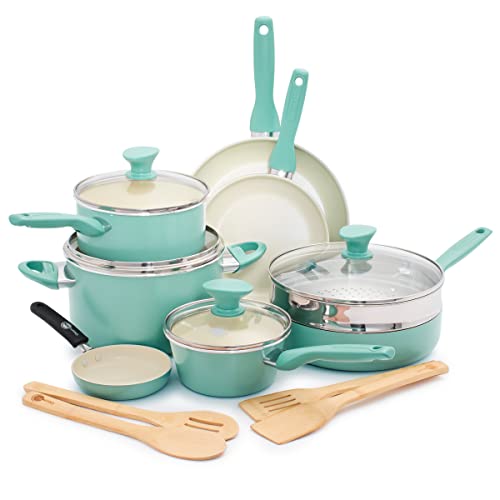
1. GreenPan Rio Ceramic Nonstick Cookware Set
A ceramic nonstick set from a brand that built its name on coatings free of PFAS and PFOA, according to its own descriptions. The bright finish and light pans suit cooks who prefer a ceramic surface for everyday sauteing.
Suits: ceramic fans. Strengths: a coating the maker markets as free of PFOA. Weaknesses: ceramic surfaces can lose their slickness faster. Skip it if you want a traditional coating.

Best for full-kitchen starter sets
2. Carote Nonstick Granite Cookware Set
A stone-look nonstick set with a speckled finish and a range of pot and pan sizes. The listing describes the coating as free of PFOA, and the set is aimed at households that want a full kitchen in one box.
Suits: full-kitchen starter sets. Strengths: a wide mix of pieces. Weaknesses: lighter feel than heavy cookware. Skip it if you want a premium brand name.
View Carote granite set on Amazon

Best for casual family cooking
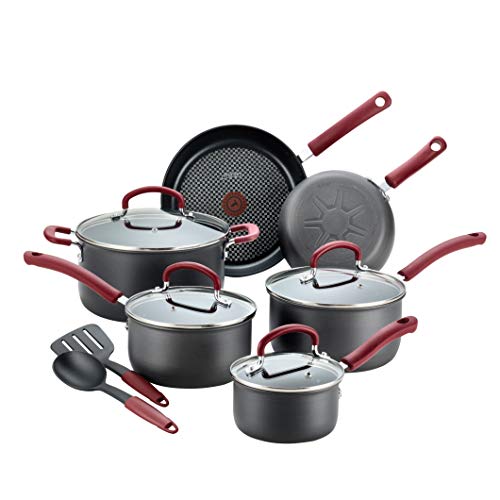
3. Rachael Ray Create Delicious Hard-Anodized Nonstick Set
A hard-anodized set with rubberized handles in bold colors, from a celebrity-chef line. The pans are built for everyday family cooking, and the handles are shaped for a comfortable hold.
Suits: casual family cooking. Strengths: a comfortable grip. Weaknesses: bright colors may not fit every kitchen. Skip it if you prefer a plain steel look.

Best for cooks who move pans to the oven
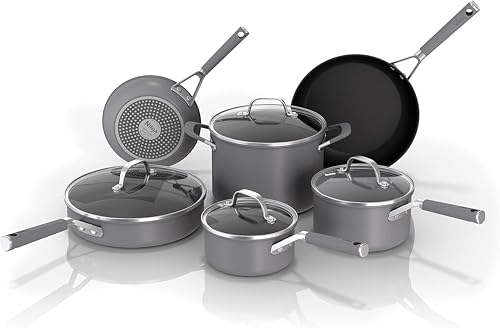
4. Ninja Foodi NeverStick Premium Hard-Anodized Set
A hard-anodized set from a brand better known for appliances, with a coating the maker describes as built to last and stay-cool handles. It is designed for oven use up to the limit stated in the listing.
Suits: cooks who move pans to the oven. Strengths: sturdy build. Weaknesses: a newer line without a long track record. Skip it if you prefer a long-established pan brand.
View Ninja NeverStick Premium set on Amazon

Best for first kitchens
5. Tramontina PrimaWare Nonstick Cookware Set
A straightforward aluminum set with soft-grip handles and tempered glass lids, from a brand known for restaurant-style pans. It is a practical option for anyone building a first kitchen.
Suits: first kitchens. Strengths: simple, practical pieces. Weaknesses: the finish is plain. Skip it if you want a heavy, premium feel.


Best for a good-looking set for light use
6. Gotham Steel Hammered Collection Cookware Set
A set with a hammered texture and a ceramic-style nonstick finish, sold with a range of lids and a few extras. The listing positions the coating as free of PFOA.
Suits: a good-looking set for light use. Strengths: an attractive finish. Weaknesses: lighter build. Skip it if you cook on high heat often.

Care and Setup
- Wash by hand with a soft sponge unless the listing confirms dishwasher use.
- Use low to medium heat for ceramic-style coatings.
- Cook with silicone, wood or nylon tools.
- Let pans cool before washing to avoid warping.
- Wipe a thin film of oil on the surface before first use if the maker suggests it.
Mistakes to Avoid
- Assuming every set is PFOA-free without reading the description.
- Heating an empty pan on high.
- Using metal tools on the coating.
- Stacking pans without a protective layer.
- Ignoring the maker’s oven limit.
Understanding PFOA, PTFE and PFAS Labels
Several similar-sounding terms appear on nonstick listings, and they do not mean the same thing. PFOA is a specific processing chemical that was once used in making some coatings. PTFE is the name of a common nonstick coating material itself. PFAS is a broad family of chemicals that includes many substances, and some nonstick coatings are made from compounds in that family. A pan can be described as PFOA-free and still use a PTFE-based coating.
Because these terms are easy to confuse, read the listing carefully. Look for the exact wording the maker uses. A statement that the coating is made without PFOA is different from a statement that it is free of PTFE or PFAS. If a specific term matters to you, check the maker’s website or product documentation, and contact the seller if the information is unclear.
Ceramic-style coatings are often marketed as an alternative that does not use PTFE. They are generally made from silicon-based materials and applied as a thin layer. They have their own care requirements and typically wear differently. This guide does not make health claims, so treat labels as the maker’s statements and verify them on the listing before buying. If you have questions about materials and personal health, ask a qualified professional.
Traditional and Ceramic-Style Coatings Compared
Traditional nonstick coatings are slick and release food with little fat, which makes them easy for eggs, pancakes and fish. They tend to hold their performance well when treated gently, but they can be damaged by high heat, metal tools and abrasive cleaning. Many makers suggest low to medium heat as the usual working range.
Ceramic-style coatings have a smooth, glassy feel and can release food well when new. They are often light in color and appeal to people who prefer a different type of surface. Over time, their release can fade faster, particularly if used at high heat or cleaned with harsh detergents. Some cooks keep a ceramic pan for occasional use or specific tasks.
Reinforced coatings, sometimes marketed with extra layers or textured surfaces, aim to improve durability. The claims come from the maker, and you can compare them across listings, but be cautious about extreme promises. Consider what you cook most: if you want a pan for daily eggs, a gentle, well-cared-for surface is key. If you cook at higher heat, look at cookware designed for it, or use a different material for searing.
Whatever coating you choose, the way you use it determines its lifespan more than the label does.
Body Materials, Thickness and Weight
The metal under the coating shapes the cooking experience. Aluminum bodies are light and heat quickly, which makes them easy to handle but sometimes prone to hot spots if thin. Hard-anodized aluminum is denser and more resistant to scratching on the outside. Stainless steel exteriors with aluminum cores can add durability and induction compatibility. Cast aluminum is thicker and holds heat better.
Thickness influences warping and heat distribution. A thin pan may warp when heated or cooled quickly, which causes it to rock on the burner and cook unevenly. A thicker base resists warping and spreads heat more evenly, though the pan is heavier. Pick a weight you can comfortably lift with food inside, especially for large skillets and stockpots.
Check the handles and lids too. Handles should be firmly attached, comfortable and stay cool enough to hold. Check the listing for oven limits, which are often lower for pans with plastic or silicone parts. Glass lids let you watch food but may have temperature limits.
Compare set contents with your habits. A set with a large skillet, a small skillet, saucepans and a stockpot covers many needs. Extra utensils are useful only if they are suitable for your pans. Count the actual vessels rather than the headline piece count.
Daily Habits That Make a Coating Last
Most nonstick problems come from a few habits, so small changes help. Preheat on low to medium heat and avoid heating an empty pan. Add a small amount of oil or butter if you like, and avoid aerosol sprays that can build up a sticky residue. Choose a burner that matches the pan size and avoid flames that lick up the sides.
Use utensils that will not scratch: silicone, nylon or wood are common recommendations. Do not cut food in the pan with a knife. Avoid stacking pans directly on each other. Place a paper towel, felt pad or cloth liner between them, or hang them if possible.
When cleaning, let the pan cool, then wash with warm soapy water and a soft sponge. Skip steel wool and abrasive powders. Even if the listing says dishwasher safe, hand washing is usually gentler on coatings. For stubborn residue, soak the pan instead of scraping.
- Do not move a hot pan directly to cold water.
- Store pans dry, with lids ajar to prevent trapped moisture.
- Avoid using damaged pans, especially those with flaking surfaces.
Following the maker’s guidelines is the best way to protect your investment.
When a Nonstick Pan Should Retire
Every nonstick pan has a limited working life, and recognizing the signs helps you replace it at the right time. Food that begins to stick even with oil and moderate heat suggests the coating is wearing. A surface that looks scratched through to bare metal, shows flaking or peeling, or feels rough and sticky after cleaning should be retired.
A warped base is another reason to replace a pan. If it spins or rocks on the burner, it will heat unevenly and may be unstable. Loose handles are a safety issue, too, since a handle that gives way when the pan is full could cause burns.
Some discoloration is cosmetic, particularly on the exterior. It does not necessarily mean the pan is unsafe, but a damaged cooking surface is a different matter. When in doubt, check the maker’s guidance and the warranty terms on the listing.
To get more life out of your next pan, note what damaged the last one. Was it high heat, metal tools or dishwasher cleaning? Adjust your habits accordingly. Consider keeping one nonstick pan for eggs and delicate foods and using stainless steel or cast iron for searing. Dispose of old pans according to local waste guidance, and check whether recycling programs accept cookware in your area.
A Quick Checklist Before You Buy a Set
A cookware set is a bigger commitment than a single pan, so a few minutes of planning pays off. Work through this list with your own kitchen in mind.
- Count how many people you cook for on a normal weeknight.
- List the pans you reach for most, such as a skillet, a saucepan and a stockpot.
- Check your stovetop type, and look for clear compatibility notes in the listing.
- Measure your cabinet or rack space, because sets with many lids can take more room than expected.
- Look at the maker’s stated oven limit for the pans and the lids.
- Read the care instructions so you know whether you will be hand washing.
- Decide whether you want glass lids for watching food or solid lids for a tighter fit.
If a set includes pieces you will never use, it may be better to pick a smaller set and add a single pan later.
Choosing a Set Size by Household
Bigger is not always better. A large set looks like a bargain on the page but can leave you with pans that never leave the cabinet. This guide matches household size to a sensible mix of pieces.
| Household | Pieces that tend to be useful |
|---|---|
| One person or a couple | One skillet, one small saucepan, one medium pot |
| Small family | Two skillets, two saucepans, a stockpot |
| Large family or frequent guests | Multiple skillets, a deep saute pan, a large pot |
| Occasional cook | A compact set of the basics |
Treat the table as a rough idea, not a rule. Your own cooking habits matter more than the number printed on the box.
Reading a Cookware Listing Carefully
Cookware listings often use similar words to describe very different products. Slow down and look for specifics. The coating type should be named, and the body material, such as aluminum or hard-anodized aluminum, should be described. Look at the oven and stovetop notes, and for any mention of induction compatibility. If a claim is important to you, such as a PFOA-free statement, look for it in the maker’s own words on the product page or packaging.
Next, count the pieces carefully. Some listings count each lid as a separate piece, which makes the total look larger. Read the item list so you know how many pans you are actually getting. Finally, check what the maker says about utensils and cleaning. A set that recommends wood or silicone tools and hand washing asks for a certain routine, so be honest about whether that suits you.
A Short Glossary of Cookware Terms
- Hard-anodized: an aluminum body treated to form a harder outer surface.
- Induction compatible: a base that works with induction cooktops, as described by the maker.
- Ceramic-style coating: a nonstick finish marketed as an alternative to traditional coatings.
- Disc base: a metal plate added to the base to help spread heat.
- Riveted handle: a handle fastened with metal pins.
- Flared rim: a lip that helps pour without drips.
- Oven safe: a temperature limit stated by the maker for pans and lids.
When to Follow the Maker’s Manual or Contact the Maker
The care sheet that comes with your set is the final authority on heat levels, utensils, cleaning and oven use. Read it before the first meal, and keep it somewhere you can find it. If the sheet contradicts a tip from a video or a forum, follow the sheet.
Contact the maker if a coating peels, a handle loosens or a lid does not fit. Warranty terms vary, and the maker can explain what is covered. For questions about the chemistry of coatings, rely on the maker’s statements and official guidance from regulators, not on guesswork. When a pan is worn out, check local waste and recycling rules before you discard it.
Matching Pans to Your Cooktop
Not every set works on every stove. Gas burners are flexible, since flames heat the base and sides, but a handle that sits over the flame can get uncomfortable. Electric coil and smooth-top surfaces like a flat base that sits fully on the heat, because a warped pan rocks and heats unevenly. Induction cooktops need a base that responds to magnetic fields, and the listing should say so plainly.
Match the pan diameter to the burner size as well. A small pan on a large element wastes energy and may scorch the handle, while a pan much larger than the burner can leave cool spots at the edges. Place a ruler across the base if you are unsure, and compare it with the burner marking.
Storing a Set Without Scratching It
Coatings last longer when they are protected between uses. Stacking pans directly on one another can scuff the cooking surface, so place a soft pan protector, a paper towel or a thin cloth between layers. If you have a rack, hang the pans or stand them on edge with space between them.
Keep lids in a separate spot where their knobs will not press into a coating. Dry every piece fully before putting it away, because trapped moisture can leave marks on some bodies. A tidy cabinet also makes it easier to see what you own, which keeps you from buying duplicates and helps you notice when something has worn out.
Nonstick Cookware FAQ
Does PFOA free mean PFAS free?
Not necessarily. They are different terms, so read what each maker actually states about its coating.
Is ceramic nonstick better?
It suits people who prefer a different type of coating, though it may lose its slickness sooner than traditional ones.
Can I use these on induction?
Only if the listing says so. Many aluminum sets need a magnetic base.
How do I make a coating last?
Use moderate heat, soft tools and hand washing, and replace pans that show flaking.
Does PFOA-free mean the pan is safe at any temperature?
No. Every nonstick pan has recommended temperature limits. Follow the maker's guidance and avoid overheating empty pans.
Can I use cooking spray on nonstick pans?
Many makers advise against aerosol sprays because residue can build up. Use a little oil or butter instead.
Are ceramic nonstick pans oven safe?
Some are, up to a limit set by the maker. Check the listing for the pan, lid and handle limits.
How do I clean a nonstick pan with stuck-on food?
Soak it in warm soapy water and use a soft sponge. Avoid steel wool and harsh abrasives.
Is hand washing really necessary?
Many makers recommend it even when the listing says dishwasher safe, because detergents and heat can wear coatings.
What size skillet should I choose?
Think about how many people you cook for. A larger skillet suits families, while a small one is handy for eggs and single servings.
How should I dispose of a worn-out pan?
Check local waste and recycling guidelines. Some areas accept metal cookware at recycling centers.
The Short Version
For ceramic, the GreenPan Rio. For a full box of pieces, the Carote. For a comfortable grip, the Rachael Ray Create Delicious. For oven use, the Ninja NeverStick Premium. For a plain starter set, the Tramontina PrimaWare. For a textured look, the Gotham Steel Hammered.
What PFOA-Free Means and What It Does Not
The phrase PFOA-free appears on every set in this guide, and it is worth understanding precisely, because the term answers one specific question and is often stretched to imply answers to others. PFOA is a processing chemical that was historically used in making certain nonstick coatings. It has been phased out of production for cookware coatings sold in the United States for years, and a PFOA-free label confirms the coating on that set was not made with it. That is a genuine and worthwhile assurance, and it is the reason shoppers who care about the topic can choose among these sets with confidence on that point.
What the label does not describe is everything else about a pan: the coating family itself, the base metal, the handle materials, or how the set behaves at high heat. Two PFOA-free sets can be built quite differently, one using a traditional fluoropolymer coating made without PFOA, another using a ceramic-style sol-gel surface. Both can fairly carry the label while cooking and aging differently. This is why the reviews above discuss construction and behavior alongside the label, and why your decision should weigh the whole pan rather than a single reassuring phrase.
It also helps to keep the safety conversation practical. Any nonstick surface, whatever its family, performs best and lasts longest at low to moderate heat, with ventilation as a normal part of cooking. Overheating an empty coated pan is poor practice for the coating, the food, and the kitchen air alike. The habits that extend a set’s life, gentle preheating, soft utensils, and hand washing, are the same habits that keep cooking comfortable and unremarkable, which is exactly what you want from everyday cookware.
Fluoropolymer and Ceramic-Style Surfaces Compared
Because PFOA-free sets split mainly into these two surface families, comparing them honestly helps more than comparing brands. Traditional fluoropolymer coatings, made without PFOA, are the release benchmark: eggs, fish, and sticky glazes slide with minimal fat, and the release stays strong for years under kind use. They dislike high heat and metal utensils, and their weakness is gradual wear at the spots that see the most spatula traffic.
Ceramic-style surfaces start out very slick as well and appeal to shoppers who prefer to avoid fluoropolymers altogether. Their release tends to fade sooner in heavy daily use, sometimes within a couple of years of hard service, though careful owners who reserve them for gentle jobs report longer satisfaction. They often tolerate somewhat higher heat on paper, but that is not an invitation to sear aggressively; their release layer still ages with thermal stress. Neither family is the morally or practically correct choice for everyone. The fluoropolymer sets suit cooks who want maximum release longevity for eggs and fish, while ceramic-style sets suit cooks whose priority is the material itself and whose cooking leans gentle.
Whichever family you choose from the picks above, judge it by the same daily tests after a month of use: Does an egg still release with a nudge? Does the surface wash clean without scrubbing? Are there dull patches where a utensil habit needs changing? Those answers, tracked early, let you correct habits while the set is young rather than mourning it later.
Heat, Ventilation and Sensible Daily Practice
Everyday practice with coated cookware is simple and bears repeating because it decides outcomes. Preheat on low to medium with the food’s fat or a little oil in the pan rather than blasting a dry pan. Cook at the lowest heat that does the job; nonstick’s even aluminum cores mean medium on the dial delivers more cooking power than many expect. Run the vent hood or crack a window as you would for any cooking, since sizzling food itself fills kitchen air regardless of the pan beneath it.
Keep birds and other sensitive pets out of the kitchen during any high-heat cooking, a standard precaution for their delicate respiratory systems around cooking fumes generally. In practice, the sets in this guide are bought for eggs, pancakes, fish, vegetables, and reheating, none of which require the extreme temperatures that cause concern. If a recipe truly needs a ripping-hot surface, that is a job for uncoated metal, and owning one inexpensive cast iron or steel pan for those moments protects your nonstick set and your peace of mind at once.
Oven and broiler limits are set by the maker for each set, driven by handles, lids, and coating together. Respect the stated ceiling for the piece in your hand, remember glass lids rate lower than metal ones, and treat the broiler as out of bounds for coated pieces unless the maker explicitly allows it. None of this is restrictive in real cooking; it simply routes each task to the vessel built for it.
Care Routines That Protect the Surface
Rinse and wash coated pans once they have cooled enough to handle comfortably, using warm soapy water and the soft side of a sponge. The release surface should surrender residue with almost no effort; if you are scrubbing, something earlier in the process needs adjusting, usually heat that was too high or a spray-oil buildup that a soak and a gentle paste of baking soda can lift. Avoid abrasive pads and powders, which dull the surface microscopically and shorten its best years.
Utensil discipline is the other half of care. Keep silicone, wood, and nylon at the stove and store metal spatulas and tongs with the grill or the uncoated pans. In shared kitchens, this is a conversation worth having once, kindly and clearly, because most coating damage comes from a helper who did not know rather than from carelessness. A small utensil crock by the stove holding only coating-safe tools makes the right choice the easy choice.
Storage protects what washing preserves. Nest pans with a soft barrier between them, hang them if you have the rail space, and never use a coated pan as a storage container for other heavy cookware. In the refrigerator, transfer leftovers to a container rather than parking the pan; acidic foods sitting for days are unkind to any surface, and the pan is needed for tomorrow’s eggs anyway.
Choosing Among These Sets by Household
A single cook or a couple cooking simple dinners needs release and easy cleanup more than capacity, so a set weighted toward skillets and a medium saucepan serves best, and the premium for extra vessels is wasted. A family kitchen should weight capacity and lids: a larger covered saute pan or Dutch-oven-style piece earns its place for one-pan dinners, and skillets in two sizes prevent the nightly standoff over the one good pan.
Cooks avoiding fluoropolymers on principle should choose the ceramic-style picks with eyes open about lifespan and plan to reserve them for gentle work, perhaps keeping an uncoated pan for searing. Cooks whose priority is release performance per year should choose the fluoropolymer picks and invest their effort in heat discipline. Both are coherent strategies; the incoherent one is buying either family and then cooking as though it were bare cast iron.
More Questions Readers Ask
Is PFOA-free the same as PFAS-free?
No, and the distinction matters for shoppers who care. PFOA is one specific chemical, while PFAS names a broad family that includes the materials used in traditional nonstick coatings. A PFOA-free label addresses the single chemical. If avoiding the broader family is your goal, the ceramic-style sets in this guide are the relevant picks, and their product information states their construction plainly.
What should I do with a worn-out coated pan?
Retire it from cooking when release is gone and the surface is damaged, since recoating at home is not a real option. Check local guidance for cookware recycling, as some programs accept metal pans; otherwise the pan goes out with household waste. Do not pass a failing pan to a thrift store as a donation if its surface is flaking.
Can these sets go on induction?
Only the sets whose bases include a magnetic layer, which the reviews above flag where it applies. Aluminum alone will not heat on induction. A magnet test on the base settles it for any specific piece: a firm grip means compatibility, a weak slide means look at a different pick.
Do I still need oil on a PFOA-free nonstick surface?
A little fat improves flavor, browning, and release insurance on any coated pan, and it protects the surface during preheating. You need far less than on uncoated metal, often just a wiped film, but cooking completely dry as a habit shortens the surface’s best-performing period.
Daily Cooking Patterns That Suit These Sets
PFOA-free sets, in either surface family, reward a particular daily pattern: moderate heat, a little fat, soft utensils, and prompt, gentle washing. That pattern happens to describe most weeknight cooking anyway, which is why these sets integrate so easily into real households. Breakfasts of eggs and pancakes, lunches of reheated grains and grilled sandwiches, dinners of fish, vegetables, and pan sauces all sit comfortably inside the envelope. The cooking that falls outside it, aggressive searing and broiler finishing, is a small share of most weeks and is easily routed to a single uncoated pan kept for the purpose.
Batch cooking deserves a mention because it is where coated sets quietly excel. A big batch of soup, a double recipe of sauce, or a tray’s worth of roasted vegetables reheated in portions through the week all pass through the largest lidded piece without scorching or sticking, and cleanup after each reheat takes seconds. Cooks who meal-prep on Sundays often report that the set’s value concentrates there: five days of lunches made pleasant by a pan that never fights back at the sink.
Households with children find another pattern: the set becomes the teaching cookware. Its forgiving release lets a young cook flip a pancake successfully, its moderate-heat habits are safe ones to learn, and its easy cleanup removes the penalty that discourages practice. A generation of cooks has learned heat management on exactly this kind of cookware, and the lessons transfer intact when they graduate to steel and iron later.
Reading Labels and Product Pages With a Clear Eye
Because this category’s vocabulary is crowded, a few reading habits help. Treat the PFOA-free claim as a settled baseline rather than a differentiator, and spend your attention on the construction details that actually separate the picks: surface family, base build, handle and lid materials, oven limits, and induction suitability. Those five facts predict your experience far better than any banner phrase.
Be similarly precise about ceramic language. A ceramic-style coated pan and a solid ceramic vessel are different objects with different care and lifespans, and product pages do not always make the distinction loudly. The reviews in this guide keep the categories straight; when you compare elsewhere, look for whether the cooking surface is the material itself or a coating over metal, because your expectations for lifespan should be set by that answer.
Finally, read care instructions before the first use rather than after the first problem. A short read tells you the maker’s own heat and washing guidance for the specific surface you bought, and following the maker’s version of the rules, rather than a generic memory of them, is what keeps warranties meaningful and surfaces performing. Keep the instructions with the set’s lids or in the kitchen drawer; future questions tend to arise months later, when the box is long gone.
End of Life and Responsible Replacement
Every coated set eventually reaches the end of its release, and handling that moment well is part of owning this category responsibly. The signs are functional rather than cosmetic: food sticking despite correct technique, a surface worn or damaged in the main cooking area, or a base warped enough to rock. At that point the piece should leave food service. Check whether your area accepts cookware in metal recycling, since the aluminum or steel body under a coating is often recoverable through local programs even when the piece as a whole is not.
Replace by the piece when the set allows it. In most households the skillets finish first while saucepans and stockpots have years left, and replacing only what has worn keeps good cookware in service and reduces waste. Choose the replacement using the same five construction facts you used originally, informed by what the old set taught you about your heat habits and your menu.
Resist the temptation to demote a worn coated pan to camping, pet food, or a relative’s first kitchen if its surface is damaged; a pan that should not cook your food should not cook anyone’s. Retiring it cleanly and completely is the respectful end to a tool that made hundreds of dinners easier, and it keeps the category’s promise intact for the next set you bring home.
Questions This Category Raises at the Store, Answered Plainly
Shoppers comparing these sets in a store or on a product page tend to circle the same handful of worries, and plain answers help more than reassurance. The first worry is whether a coating made without PFOA behaves as well as the coatings people remember. In daily cooking it does: the release, the cleanup, and the gentle-heat rules are the same experience, because the change was in a processing aid, not in the finished surface’s character. The second worry is whether ceramic-style surfaces are simply better. They are different, with a shorter expected release life in hard service, and choosing them is a values-and-habits decision rather than an upgrade. The third worry is whether any of these pans can be used hard. They can be used daily and confidently within their heat envelope, and they should not be asked to live outside it.
A fourth worry deserves its own paragraph because it causes real returns: induction. A shopper who assumes all modern pans work on induction discovers otherwise at the first meal. Check the base, do the magnet test in the store if you can, and let that result, not the shelf talker, decide. The picks in this guide flag compatibility so that particular disappointment never has to happen.
The last worry is longevity honesty. Sellers speak in years; cooks experience pans in meals. Judge a set by whether its construction and your habits are compatible, because that compatibility, more than any number printed anywhere, determines whether the set is still making breakfast easy several years from now. The guides above return to habits so often because habits are the variable you control, and in this category they are worth more than the difference between any two good sets.
Setting Up a New Set for Its Best Life
The first day with a set is a small ceremony worth doing properly. Wash every piece in warm soapy water to remove manufacturing and packing residues, dry everything completely, and season nothing, because these surfaces need no seasoning ritual. Read the maker’s heat and oven guidance once, with the pans in front of you, and note the limits where you will see them again, perhaps on a card inside the cupboard door. Assign the storage: protectors between the skillets, lids where they belong, and the soft utensils moved to the stove-side crock before the first egg is cracked.
Then cook something forgiving and enjoyable, not a test designed to break the set in. Pancakes, a grilled cheese, a simple sauce: foods that let you learn the pans’ heat response on your burners while succeeding. That first success sets the relationship. Cookware that begins as a pleasure tends to be treated as one, and treatment, as this entire guide has argued, is what a coated set’s lifespan is made of.
Bringing It Together: A Calm Way to Decide
Decisions in this category go wrong when they are made from anxiety, either anxiety about materials, which inflates a single label into the whole choice, or anxiety about performance, which imagines restaurant searing as a nightly need. The calmer method this guide has used throughout is to start from your actual cooking: the meals you make weekly, the heat they need, the pans they already love, and the care you will genuinely give. From that starting point, the PFOA-free question settles itself as a baseline, the surface-family question becomes a preference you can state in one sentence, and the remaining choice among the picks above is about construction and fit, which are knowable things.
State your preference plainly before you shop. If avoiding fluoropolymer materials matters to you, the ceramic-style picks are your shortlist and their care rules are your homework. If maximum release over the longest span matters most, the fluoropolymer picks are your shortlist and heat discipline is yours. Either sentence leads to a set that will serve you well, because both were written by the same honest process: knowing what you cook and choosing the tool that matches it.
Then give the chosen set its fair trial: a month of ordinary dinners, cared for by the rules in this guide, before any verdict. Surfaces reveal themselves across dozens of meals, not one. Most owners who run that trial find the worry that brought them to this category quietly replaced by something better, which is a kitchen that simply works, morning after morning, on cookware they understand and trust.
A Last Practical Tip Before You Choose
Decide your surface family first, in writing if it helps, and let that single decision shrink the shelf to a manageable few sets. Shoppers who skip that step end up comparing every pan against every other pan on every axis at once, which produces either paralysis or a purchase made on the loudest banner rather than the soundest reasoning. With the family settled, the remaining comparison, base, handles, lids, oven limits, and induction fit, takes minutes and ends in a choice you can explain to yourself, which is the kind of choice people stay satisfied with.
And keep the receipt and the maker’s care guidance together until the set has cooked its first month of meals. If anything about the surface behaves unexpectedly in that window, you will want both documents at hand, and if everything behaves as it should, you will have the quieter satisfaction of a decision that needed no revisiting.
One More Habit: Heat First, Food Second, Worry Never
If this guide leaves you with a single working rule, let it be the order of operations at the stove: warm the pan gently, add a little fat, add the food, and cook at the lowest heat that does the job well. That sequence, repeated without exception, protects every surface family in this category, produces better food than the blast-first alternative, and removes nearly all the anxiety that surrounds coated cookware. Cooks who adopt it stop monitoring their pans for danger and start simply cooking, which is the entire point of owning tools like these. The rest of the guide, the comparisons, the care routines, the buying logic, exists to support that one calm sequence, morning after morning, year after year.
That calm sequence is also the easiest standard to teach anyone who shares your kitchen, which makes it the rule most likely to survive contact with real household life. One sentence at the stove, repeated kindly until it sticks, protects the set better than any amount of solitary care.