Disclosure: topratedkitchenware.com is reader-supported. When you buy through links on our site, we may earn an affiliate commission from Amazon and other retailers, at no extra cost to you.
Where to buy
Shape is a promise, so this guide to the best oval dutch ovens keeps its evidence visible: two pots in the verified pool are confirmed round in their own listings, and they are reviewed here as prose-only comparison points with no purchase links, because a round pot is not an oval one. The four remaining pots do not state a shape in their titles; they are the linked shortlist for oval shoppers, reviewed with their capacities and features verified — and with an explicit instruction, repeated in each review, to confirm the elongated shape and dimensions on the listing itself before you buy. Each linked name below goes to its Amazon listing, and each linked review carries its own link so you can check the latest price on Amazon and the listing’s shape details together.
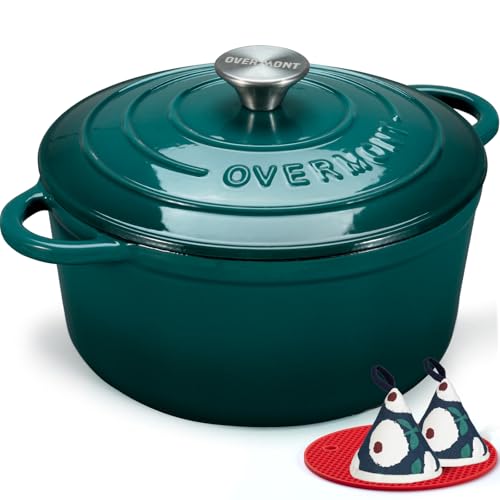
- Overmont Enameled Cast Iron Dutch Oven, 7QT — Best for Whole Birds and Big Roasts. Best for cooks whose oval need is really a length need at gathering scale.
- Amazon Basics Enameled Cast Iron Dutch Oven, 6-Quart, Blue — prose-only comparison point: confirmed round in its listing, so not an oval pick.
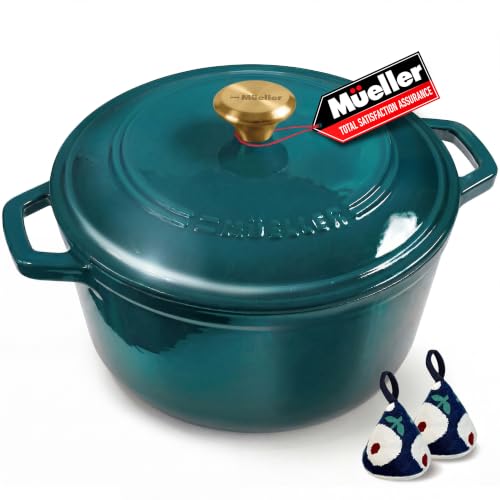
- Mueller DuraCast 6 Quart Enameled Cast Iron Dutch Oven, Emerald — Best Documented Specifications. Best for buyers who want stated oven and cooktop confirmations alongside the shape check.
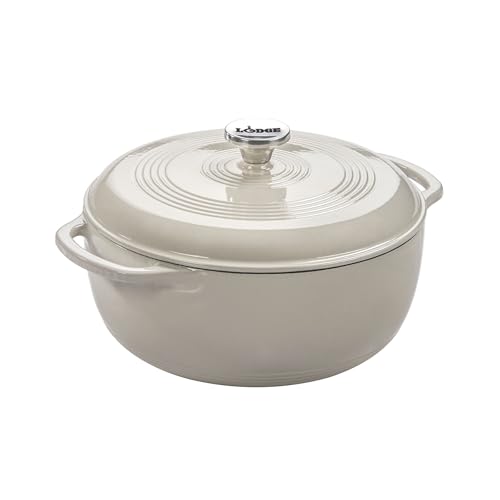
- Lodge Essential Enamel Cast Iron Dutch Oven, 6 Quart, Island Spice Red — Best for Braising. Best for cooks who value the moisture-sealing lid while shopping the shape.
- Le Creuset Enameled Cast Iron Round Dutch Oven, 5.5 qt., Cerise — prose-only comparison point: a premium pot whose listing states Round in its very name.
- Umite Chef 7QT Enameled Cast Iron Dutch Oven, Emerald — Best Capacity with Potholders. Best for batch cooks who want the big format and the included hand protection.
Read the full guide ↓ for why cooks choose oval, how this pool’s evidence actually reads, and the measurements to take before any shape-led purchase.
The case for the best oval dutch ovens is a case about geometry. A round pot is a circle: even on a round burner, perfect for round loaves, and quietly awkward for the elongated things people roast — a whole chicken that wants to lie flat, a pork loin, a rack, a fish, a baguette-shaped loaf. An oval pot stretches the circle into a length, and that length changes the cooking: birds sit flatter and brown more evenly, long joints fit without curling, and the pot can straddle two burners on many hobs, turning one vessel into a small roasting station. Shoppers who type this keyword usually have one of those meals in mind, and they deserve a guide that treats shape as the headline specification it is.
So this guide applies its shape rule in the open. Where a listing states its shape, the statement rules: the Amazon Basics and Le Creuset titles both say Round, and both pots are therefore reviewed fully but linked nowhere — they are the comparison that proves the rule. Where a listing is silent on shape, as four titles here are, the pot stays on the shortlist for its verified capacity and features, its spec box records the silence honestly, and its review sends you to the listing’s dimensions and photographs to confirm the elongated form before money moves. That is less tidy than pretending certainty, and more useful. Readers who decide round is actually right for their cooking will find the round shelf ranked at Best Oven Proof Dutch Ovens and in the general shortlists throughout this series.
Key Takeaways
- Oval pots earn their place with elongated food: whole birds lying flat, long joints, racks and loaves that a round pot crowds or curls.
- Two pool pots are confirmed round in their titles — the Amazon Basics 6-Quart and the Le Creuset 5.5 qt. — and are prose-only here for exactly that reason.
- Four linked picks state no shape in their titles; verify the oval form and the length on each listing before buying, because shape is this keyword’s whole point.
- Capacity still matters inside the shape: the two 7QT picks give length and volume together, the six-quart picks suit family roasting.
- An oval pot’s length can straddle two burners on many hobs — check your hob’s layout and the pot’s base length against it.
- Oven fit is the hidden constraint: measure your oven’s width and shelf spacing for an elongated pot with its lid on.
In this guide
Quick Picks
Four linked picks whose listings do not contradict the oval brief, and two prose-only round comparison points, badges repeated in the reviews.
| Pick | Badge | Who it suits |
|---|---|---|
| Overmont Enameled Cast Iron Dutch Oven, 7QT | Best for Whole Birds and Big Roasts | Length and volume at gathering scale; verify shape on listing |
| Amazon Basics Enameled Cast Iron Dutch Oven, 6-Quart, Blue | Round Comparison (Prose-Only) | Confirmed round — the honest alternative if round suits you |
| Mueller DuraCast 6 Quart Enameled Cast Iron Dutch Oven, Emerald | Best Documented Specifications | Stated oven figure and induction confirmation; verify shape |
| Lodge Essential Enamel Cast Iron Dutch Oven, 6 Quart, Island Spice Red | Best for Braising | Moisture-sealing lid for long roasts; verify shape |
| Le Creuset Enameled Cast Iron Round Dutch Oven, 5.5 qt., Cerise | Premium Round (Prose-Only) | Confirmed round — the benchmark, in the other shape |
| Umite Chef 7QT Enameled Cast Iron Dutch Oven, Emerald | Best Capacity with Potholders | Batch scale with included hand protection; verify shape |
How These Picks Were Chosen
The method was shape-first and evidence-bound. Every pool title was read for a shape statement. Two titles state Round; those pots were moved to prose-only comparison reviews, because linking a self-described round pot under an oval headline would break the keyword’s promise. Four titles state no shape; those pots form the linked shortlist, ranked by their verified capacities, named features and bundles, with shape verification assigned to the listing — where dimensions and photographs, not titles, carry that information — in every review. No pot in this guide is described as oval in its spec box, because no title in the pool says so; the guide’s claim is narrower and true: these are the pots an oval shopper should examine, in this order, with the round alternatives honestly labelled beside them.
Within the shortlist, the ranking weighs what elongated cooking needs: capacity for birds and joints, lids that manage long braises, handles and potholders for a pot whose weight distribution differs from a round one’s, and stated specifications where they exist. All details come from the verified titles; confirm shape, dimensions and current bundle on the listing before buying. The capacity-first ranking of the big pots here appears at Best Porcilan Cast Iron Dutch Ovens for readers cross-shopping the wider enameled shelf.
The Best Oval Dutch Ovens and the Round Alternatives in Detail

Overmont Enameled Cast Iron Dutch Oven, 7QT
Badge: Best for Whole Birds and Big Roasts
Strengths
- Seven quarts gives elongated roasts the length and the volume together — the combination oval shoppers actually need.
- The listing names an enclosed lid-knob design and oven-safe positioning, and includes a cookbook and cotton potholders.
- Heavy-duty construction for the biggest workload in this guide.
Trade-offs
- Its title does not state a shape — confirm the oval form and length on the listing before buying.
- The heaviest pot here, with an elongated carry that needs both hands and a planned route.
- Check oven width carefully; big pots test shelf space in every direction.
Mini spec box
- Material: enameled cast iron
- Capacity: 7QT
- Shape: not stated in listing title — verify on listing
- Includes: lid, cookbook and cotton potholders (per listing title)
- Features named in listing: enclosed lid-knob design, oven safe positioning
- Listed uses: sourdough baking, braising, stews, roasting
The big Overmont leads the oval shortlist because elongated cooking is usually also large cooking: the whole chicken, the pork loin, the tray-worth of vegetables under a joint. Seven quarts provides the volume those meals need, and the pot’s stated repertoire — sourdough baking, braising, stews and roasting, with oven-safe positioning — covers the roast-led cooking that brings shoppers to this keyword. Its enclosed lid-knob design is named in the listing, its bundle includes the potholders that an elongated, full pot makes essential, and its cookbook suits the cook stepping up to a new shape. What its title does not do is state that shape, so this review’s instruction is explicit: open the listing, read the dimensions, look at the photographs, and confirm the length your cooking needs before you buy.
It suits hosts and roasters whose signature dishes are long. Its limitations are the verification step and the physical scale — weight, footprint, oven fit. Buyers who confirm the shape will find the most complete big-pot package in the guide; buyers who discover a different shape on the listing should walk away with the lesson this guide teaches, that dimensions are a specification, not a detail.
Best for: whole birds and big roasts at gathering scale / Not suited for: buyers unwilling to verify shape on the listing, or small ovens
Check on Amazon to see the current listing — and its shape and dimensions — for the Overmont 7QT.
Amazon Basics Enameled Cast Iron Dutch Oven, 6-Quart, Blue
Badge: Round Comparison (Prose-Only)
Strengths
- A plain, honest six-quart pot with dual handles and oven-safe positioning stated in its listing.
- Its title states its shape — Round — with a clarity this guide wishes every listing shared.
- Saturated blue finish hides cooking marks well.
Trade-offs
- It is round, by its own listing’s word, and therefore not an oval pick — prose-only here, with no link.
- No potholders or named lid feature in the bundle.
- Round format crowds the elongated roasts this keyword is about.
Mini spec box
- Material: enameled cast iron
- Capacity: 6-Quart
- Shape: round (stated in listing title)
- Features named in listing: dual handles, heavy-duty, oven safe positioning
- Colour: Blue
- Status in this guide: prose-only — confirmed round, not oval
This review exists to prove the guide’s rule by applying it to a likeable pot. The Amazon Basics six-quart is a good, plain Dutch oven — dual handles, heavy-duty positioning, oven-safe for stews, roasting and baking — and its title does something admirably unambiguous: it says Round. Under an oval headline, that single word is decisive. We review the pot fully so that readers whose cooking is actually round-shaped — soups, stews, round loaves, standard braises — can see the honest alternative and choose it knowingly through the general shortlists, where it is linked. But in this guide it carries no link and no image, because the keyword promised a shape this pot declares it is not.
If your elongated ambitions turn out to be occasional — a chicken now and then, manageable in a round pot with a little tucking — this comparison point is your permission to save the difference and buy the simpler shape. If length is your weekly reality, continue down the shortlist.
Best for: readers who realise round actually fits their cooking / Not suited for: anyone who needs a genuinely elongated pot

Mueller DuraCast 6 Quart Enameled Cast Iron Dutch Oven, Emerald
Badge: Best Documented Specifications
Strengths
- The listing states its oven-safe figure and confirms all cooktops including induction — paperwork that matters when an elongated pot may straddle burners.
- Six quarts suits family roasting and braising in Emerald, a forgiving finish.
- PFOA-free positioning is also stated in the title.
Trade-offs
- Shape is not stated in the title — the listing’s dimensions are your evidence.
- No potholders included and no named lid feature.
- Confirm current specifications on the listing before buying.
Mini spec box
- Material: enameled cast iron
- Capacity: 6 Quart
- Shape: not stated in listing title — verify on listing
- Stated in listing: 500°F oven safe; PFOA-free; all cooktops incl. induction
- Colour: Emerald
- Listed uses: sourdough bread baking, braising, slow cooking
The Mueller is the specification-first shopper’s entry on the oval shortlist. Its title states a 500°F oven-safe figure and confirms all cooktops including induction — the latter doubly relevant for an elongated pot, whose two-burner and induction-zone behaviour depends on the base the maker built. At six quarts it covers the family end of elongated cooking: a chicken with room, a loin with its vegetables, braises and slow cooking per its stated uses, in an Emerald finish that forgives the record. As with every linked pick here, the title’s silence on shape is recorded rather than papered over: the listing’s dimensions and images are where the oval question gets its answer, and this review instructs you to ask it there.
It suits induction owners, specification-driven buyers and family roasters. Its limitations are the missing bundle and the same verification step as the Overmont. A buyer who confirms the shape gains the best-documented pot in the guide; the documentation habit itself is transferable to every listing in this category, as the neighbouring value ranking at Best Dutch Ovens More Affordable Than Le Creuset also assumes.
Best for: documented specs alongside the shape check / Not suited for: buyers who want shape confirmed in the title itself
Check on Amazon to see the current listing — and its shape and dimensions — for the Mueller DuraCast 6 Quart.

Lodge Essential Enamel Cast Iron Dutch Oven, 6 Quart, Island Spice Red
Badge: Best for Braising
Strengths
- A moisture-sealing lid and dual handles named in the listing — the features long braises and long pots both need.
- Six quarts in Island Spice Red, a finish that presents elongated roasts beautifully at the table.
- An established cast iron name at a value tier.
Trade-offs
- Shape is not stated in the title — verify the form and length on the listing.
- No potholders listed as included.
- The title states no heat figure; confirm details on the listing if they matter to you.
Mini spec box
- Material: enamel cast iron (per listing title)
- Capacity: 6 Quart
- Shape: not stated in listing title — verify on listing
- Features named in listing: moisture-sealing lid, dual handles
- Colour: Island Spice Red
- Listed uses: bread baking, braising, marinating, slow cooking
Elongated cooking is braising with geometry: a joint or bird lying flat in a shallow pool of liquid, basted by its own steam across hours. The Lodge brings the lid that style of cooking rewards — moisture-sealing, by its listing’s own description — plus dual handles for a pot whose load is distributed along a length, and six quarts of family capacity in the finish that makes a roast look like an occasion. Its stated repertoire of bread baking, braising, marinating and slow cooking matches the oval shopper’s menu closely. The shape silence is handled as it is throughout this guide: recorded in the spec box, with the listing’s dimensions as the required confirmation before purchase.
It suits braise-led roasters and value-conscious households. If the listing’s shape confirms your need, this is the hardest combination of lid, capacity and tier on the shortlist to argue with; if it does not, the guide’s honesty has saved you a return. Either way, the Lodge’s named features make it the braising benchmark of the four linked picks.
Best for: long braises of elongated joints and birds / Not suited for: buyers who need shape stated in the title
Check on Amazon to see the current listing — and its shape and dimensions — for the Lodge Essential 6 Quart in Island Spice Red.
Le Creuset Enameled Cast Iron Round Dutch Oven, 5.5 qt., Cerise
Badge: Premium Round (Prose-Only)
Strengths
- The benchmark premium name in enameled cast iron, in its signature Cerise finish.
- At 5.5 quarts, a versatile family pot for the round repertoire — stews, braises and round loaves.
- Its title states its shape in its name: Round. No ambiguity is possible.
Trade-offs
- Round is the opposite of this keyword’s shape — prose-only here, with no link, however fine the pot.
- Premium tier commitment for a shape the oval shopper did not ask for.
- Not sized or shaped for the elongated roasts that define this guide.
Mini spec box
- Material: enameled cast iron
- Capacity: 5.5 qt.
- Shape: round (stated in listing title)
- Colour: Cerise
- Status in this guide: prose-only — confirmed round, not oval
The Le Creuset is the comparison that disciplines the whole page. It is the most prestigious pot in the pool, and its title contains the word that excludes it from this keyword: Round, printed in the product’s own name. A lazier guide would have linked it anyway and let the brand carry the headline; this one reviews it fully — the benchmark name, the versatile 5.5-quart format, the Cerise presentation — and links it nowhere, because an oval guide that sells a round pot on prestige has failed at its only job. Readers who conclude that round is right for them will find this pot recommended and linked where it belongs, in the brand guide at Best Dutch Ovens Not Le Crueset and the Le Creuset coverage elsewhere in this series.
For the true oval shopper, the Le Creuset’s role here is a reminder that shape outranks badge. Buy the geometry your cooking needs; let prestige follow if it can.
Best for: readers who decide round and premium are actually their brief / Not suited for: any genuinely oval requirement

Umite Chef 7QT Enameled Cast Iron Dutch Oven, Emerald
Badge: Best Capacity with Potholders
Strengths
- Seven quarts of batch capacity with cotton potholders included — the handling kit an elongated heavy pot demands.
- Heavy-duty positioning for bread baking, braising, stews and marinating, per its listing.
- Emerald finish conceals the marks of big, saucy roasts.
Trade-offs
- Shape is not stated in the title — verify form and length on the listing.
- The heaviest full carry in the guide, along a length.
- No named lid or knob feature in the title.
Mini spec box
- Material: enameled cast iron
- Capacity: 7QT
- Shape: not stated in listing title — verify on listing
- Includes: lid and cotton potholders (per listing title)
- Colour: Emerald
- Listed uses: bread baking, braising, stews, marinating
The Umite Chef 7QT closes the shortlist with the batch cook’s version of the shape question: when the meal is a whole bird plus its vegetables, or a double quantity of stew for a table that keeps extending, capacity and length must arrive together, and seven quarts is the pool’s largest answer. Its listing describes heavy-duty enameled cast iron for bread baking, braising, stews and marinating, and includes the cotton potholders that a pot of this scale — especially a long one, whose weight sits between two hands at a distance — makes non-negotiable. Against the Overmont at the same capacity, it trades the named knob design and cookbook for a plainer, potholder-focused bundle.
It suits batch cooks and hosts who have measured their oven and their storage. The shape instruction stands as it does for every linked pick: the title is silent, so the listing’s dimensions decide. Confirm them, and this is the capacity pick of the oval shelf.
Best for: batch-scale elongated cooking with included hand protection / Not suited for: small ovens or buyers who skip the shape check
Check on Amazon to see the current listing — and its shape and dimensions — for the Umite Chef 7QT in Emerald.
Comparison Table
| Pick | Capacity | Shape evidence | Named feature or extras | Link |
|---|---|---|---|---|
| Overmont Dutch Oven | 7QT | Not stated in title — verify | Enclosed lid-knob design, cookbook, potholders | Check on Amazon |
| Amazon Basics Dutch Oven | 6-Quart | Round — stated in title | Dual handles | Prose-only in this guide |
| Mueller DuraCast Dutch Oven | 6 Quart | Not stated in title — verify | Oven figure and induction stated in listing | Check on Amazon |
| Lodge Essential Dutch Oven | 6 Quart | Not stated in title — verify | Moisture-sealing lid, dual handles | Check on Amazon |
| Le Creuset Round Dutch Oven | 5.5 qt. | Round — stated in title | Premium benchmark name | Prose-only in this guide |
| Umite Chef Dutch Oven | 7QT | Not stated in title — verify | Cotton potholders included | Check on Amazon |
How to Choose an Oval Dutch Oven: Measure the Meal, Then the Pot
Shape shopping starts with the food, not the catalogue. Name the elongated dishes you actually cook — whole chickens, pork loins, racks, long fish, baguette-style loaves — and estimate the length they need to lie flat with a little room around them. That length is your minimum internal dimension, and it, not the quart figure, is the first number to verify on any listing. Capacity comes second: six quarts for family roasting, seven for birds plus vegetables and batch work, always remembering that a braise fills to about two-thirds. Hob fit comes third, and it is where oval pots diverge most from round ones: an elongated base may straddle two burners, which can be a feature for gentle, even braising heat, but only if your hob’s layout and the pot’s base length agree — measure both. Oven fit is fourth and unforgiving: width, shelf spacing and door clearance for a long pot with its lid on, checked with a tape before the purchase, not with a hot pot after it.
Then apply this guide’s evidence discipline to your final candidate. If its listing states a shape, believe the statement. If it does not, let the published dimensions and photographs answer, and walk away if they do not answer clearly — an oval purchase made on hope is a round purchase made by accident. Features break the remaining ties: a sealing lid for braise-led cooks, stated specifications for the documentation-minded, potholders for anyone moving a long, full pot. The two prose-only pots in this guide stand as the permanent reminder that a famous name or a low tier in the wrong shape is the wrong pot.
How to Cook in an Oval Pot: Roasts, Braises and Long Loaves
Technique follows geometry. For whole birds and joints, pat the surface dry, sear where the base allows — an elongated base over two burners may need the pot rotated once for even browning — then add liquid to a shallow depth, cover, and let the oven’s surrounding heat do the long work. The flat lie of the meat is the method: more surface in contact with the braising liquid’s flavour, more skin exposed to brown, no curled ends drying above the line. For long loaves, preheat the pot with the oven, lower the dough on parchment, and bake covered for steam before uncovering; confirm your loaf’s length against the pot’s before the dough is shaped, not after. For stews and soups, an oval pot behaves exactly like a round one of the same capacity, which is why shape buyers lose nothing on the days the menu is round.
Care is the category standard: cool before washing, soak rather than scour, use a baking-soda simmer for residue, keep metal tools off the enamel, and dry fully before storage. An elongated pot stores on its long side in many cupboards; measure the shelf as you measured the oven.
Troubleshooting, in brief. Problem: a chicken browns unevenly → the base heated unevenly across two burners; rotate the pot once during searing and let the oven finish the equalising. Problem: a long loaf presses the lid → the pot’s length was marginal for the dough; shape the next loaf shorter or step up a capacity. Problem: braising liquid reduces too fast → the wide surface evaporates generously; top up with hot stock and keep the lid seated, especially with a sealing design.
Round vs Oval: The Honest Ledger
Close the shape question with the full ledger, because many readers arrive oval-curious rather than oval-committed. Round pots sit perfectly on round burners, bake round loaves — the majority of home bread — without compromise, store in squarer spaces, and dominate the category’s listings, which is why two excellent round pots appear in this very pool. Oval pots fit elongated food without tucking, can straddle burners, present roasts dramatically, and ask more of ovens, shelves and verification in return. Neither shape cooks better in the abstract; each cooks its own menu better. The buyer’s task is to know which menu is theirs — and to insist, as this guide has, that the pot they buy states or shows the shape that menu requires. Readers whose menus run to both shapes often end with a round everyday pot and one elongated roaster, a pairing the prose-only reviews above make easy to plan.
The Two-Burner Advantage, Explained Carefully
The oval pot’s party trick deserves a precise explanation, because it is often oversold. On a hob with two burners arranged front-to-back or side-by-side at the right spacing, an elongated pot can sit across both, receiving gentle heat along its whole length instead of only at its centre. For the long, slow phase of a braise — after the searing, before the oven or instead of it — that even, distributed heat is genuinely useful, and it is a trick no round pot can perform. The conditions matter, though: the burner spacing must match the pot’s base, both burners must be set low and alike, and the arrangement suits simmering far better than searing, where concentrated heat does the work. Treat two-burner straddling as a bonus the right kitchen unlocks, not as the reason to buy the shape; the reason remains the food’s geometry. Buyers whose hobs cannot straddle lose nothing essential, because the oven — where heat surrounds any shape impartially — does most of an oval pot’s long cooking anyway.
Serving Elongated Food From an Elongated Pot
One more virtue of the shape is presentational, and presentation is part of cooking’s pleasure rather than a vanity. A whole roasted chicken carried to the table in the long pot it roasted in, a loin sliced in the vessel with its vegetables around it, a fish presented at length — these are the images that make a meal feel composed, and they are only possible when the pot’s geometry matches the food’s. The finishes on the linked shortlist serve that moment: Island Spice Red and Emerald present as centrepieces, and the iron holds the food hot through a long table conversation in a way a transferred serving dish cannot. If your cooking regularly ends with an elongated centrepiece, the oval pot is not merely a cooking tool but the serving plan — and that dual role is worth weighing alongside capacities and lids when the final choice is close. The companion discussion of value within this same shelf, at Best Dutch Ovens On Sale, is worth a look before the final decision, since shape-led purchases benefit from the same listing discipline at every tier.
Common Buying Mistakes
- Buying a round pot under an oval headline. Two famous pots in this pool declare themselves round. Read titles literally; shape is a specification.
- Assuming silence means oval. Four titles here state no shape. Silence means verify — dimensions and photographs on the listing decide.
- Shopping by quarts alone. A seven-quart round pot still curls a long joint. Length is the first measurement for this keyword.
- Forgetting the oven’s width. Elongated pots fail at the oven door and the shelf, not at the recipe. Measure with the lid on.
- Ignoring the two-burner question. An oval base over mismatched burners heats unevenly. Check your hob’s layout against the pot’s base length.
- Letting a premium name override geometry. The most prestigious pot in this guide is prose-only because it is round. Shape outranks badge.
Who Should Skip Oval Entirely
Honesty about a shape includes naming the cooks it does not serve. If your repertoire is soups, stews, beans, curries and round loaves — the great round canon of pot cooking — an oval pot buys you length you will never use and asks oven and storage space for the privilege. If your hob is a single small ring and your oven is compact, the elongated form fights your kitchen daily. And if your roasting is mostly joints that a round pot already fits, the shape solves a problem you do not have. Those cooks are well served by the round shelf — including the two prose-only pots in this guide, whose exclusion here is a matter of headline, not of merit. The oval purchase is for the cook whose signature food is long. Everyone else is shopping for capacity, lids and tiers, and the rest of this series ranks exactly those qualities without the geometry tax.
A Note on Lids for Long Pots
The lid of an elongated pot works harder than a round pot’s, in one specific way: it spans a longer opening, and its seal along that length is what keeps a shallow braise’s moisture circulating rather than escaping at the ends. That is why the Lodge’s moisture-sealing description earns emphasis in a shape guide as much as in a braising one, and why any oval candidate’s lid deserves a look in the listing’s photographs — seated, even, and with a knob positioned for a two-handed or central grip. When the pot arrives, the arrival test is simple: set the lid on, look for rocking, and check the seat all the way around the long rim. A lid that sits true on day one is the lid that will baste your roasts for years; a lid that rocks is a listing conversation to have immediately, while the purchase is fresh.
Final Recommendation
For oval-led cooking at scale, verify the shape on the Overmont 7QT’s listing first: it pairs the largest capacity here with a named lid-knob design, stated oven-safe positioning and the full bundle. Family roasters should choose between the Lodge — for its moisture-sealing lid over long braises — and the Mueller — for its stated oven figure and induction confirmation — each after the same shape check, while batch cooks should weigh the Umite Chef 7QT’s potholder bundle at the same capacity as the Overmont. And if the comparison reviews have persuaded you that round is your true shape, buy the round pot proudly through the general shortlists — the only failure this guide guards against is buying one shape while believing it is the other.
If you want a fast answer, start with one of these three linked picks and read its detailed review above: Overmont Enameled Cast Iron Dutch Oven, 7QT, Lodge Essential Enamel Cast Iron Dutch Oven, 6 Quart, Island Spice Red, Mueller DuraCast 6 Quart Enameled Cast Iron Dutch Oven, Emerald. Each review repeats the shape check that this keyword makes essential.
One final word for the shape shopper: bring the same measurement discipline to the listing that you would bring to the oven itself. The cooks who love their elongated pots are the ones who measured twice — the food, the hob, the oven, the shelf — and bought once.
Buy the shape once, buy it verified, and the pot will repay the care every time a long roast lies down flat in it — which is the small, specific pleasure this entire keyword exists to deliver.
Frequently Asked Questions
Why are two pots in an oval guide not linked?
Because their own listings state they are round — the Amazon Basics title says Round, and the Le Creuset’s name contains the word. A guide that linked them under an oval headline would be selling the wrong shape. They are reviewed in full, without links or images, so round-shape shoppers can choose them knowingly elsewhere.
How do I verify a pot is really oval before buying?
Use the listing’s stated dimensions and photographs, not the title alone — several titles in this category state no shape at all. Look for a length clearly greater than the width, compare that length with the food you cook, and confirm oven fit with the same numbers. If the listing does not make the shape clear, treat that as your answer and move on.
What foods genuinely need an oval Dutch oven?
Whole chickens and ducks that should lie flat, pork loins and other long joints, racks, whole fish, and elongated loaves. Stews, soups, beans and round loaves do not need the shape at all — which is why honest round pots remain excellent purchases for most kitchens, as this guide’s comparison reviews acknowledge.
Can an oval pot sit on one burner?
It can, but the ends will heat less than the centre on a small burner, which matters for searing and matters less once the pot is in the oven. Many oval owners sear in stages or rotate the pot, and braise in the oven where heat surrounds the vessel. Check your hob against the pot’s base length before relying on two-burner straddling.
Is oval or round better for bread?
It depends on the loaf. Round boules belong in round pots; batards and elongated loaves belong in oval ones. Match the pot to the loaf shape your baking actually produces, and preheat pot and lid fully either way — the enclosed steam, not the outline, is what builds the crust.
Why do so few listings state the shape in the title?
Because titles are written to carry the words shoppers search most — capacity, material, brand — and shape often lives in the dimensions and photographs instead. That is precisely why this guide treats title silence as a verification task rather than an assumption, and why the two titles that do state a shape, both round, were taken at their word.
Can an oval pot replace my roasting tray?
For braised and covered roasting, largely yes — and with better moisture control, since the lid keeps the roast basted in a way an open tray cannot. For dry, open roasting where maximum surface evaporation and crisping is the goal, a shallow tray still has its place. Many kitchens run the oval pot for covered work and keep one tray for the open jobs.
Are oval Dutch ovens harder to clean and store?
Cleaning is identical to any enameled pot — soak, soft sponge, no scouring — with one practical note: the long interior is easier to reach end-to-end than a deep round pot’s, which many owners count as a quiet advantage. Storage asks for length, as the guide’s shape sections describe, so measure the shelf as you measured the oven.
How do I measure my oven for an oval pot?
Measure the usable width between the oven walls, the depth from door to back, and the vertical space between shelves with the shelf in the position you will use. Compare all three with the listing’s full external dimensions, lid and handles included, and leave a margin for gloved hands. A pot that fits on paper with no margin fits badly in practice at temperature.
What size oval Dutch oven suits a whole chicken?
Plan by length first and capacity second: the bird should lie flat with a little room around it, which for most chickens means the six-to-seven-quart class represented on this shortlist, verified against the listing’s internal length. A smaller pot can hold a chicken by volume while still crowding it into a curl — the exact failure the oval shape exists to prevent.
Can I bake round loaves in an oval pot?
Yes — a round boule bakes happily in an elongated pot, since the enclosed steam and stored heat do the work and the dough keeps its own shape. The oval pot’s bread advantage is additive: it also fits the batards and long loaves a round pot cannot. Shape flexibility runs in oval’s favour for bakers who vary their loaves.
Does an oval pot store differently from a round one?
It asks for length rather than width: a longer shelf, a deeper drawer, or storage on the hob for daily cooks. Measure the space as carefully as the oven. A pot that stores awkwardly gets used reluctantly, whatever its shape virtues at the stove.