Nespresso machines use sealed aluminum capsules, often called pods, and the type you need depends on your machine. The Original line makes small, strong espresso shots, while the Vertuo line makes larger cups of coffee. Pods from one line will not fit the other, so check your machine first.
The six options below include official Nespresso variety packs and capsules from other roasters. We have not used these products ourselves, and we avoid roast levels and counts we cannot verify. Please confirm machine compatibility, capsule count and flavors on the current listing before you buy.
A variety pack is a good place to start, since it lets you sample roasts before you commit to a favorite. Once you know what you like, you can buy larger quantities of your preferred flavor or try compatible capsules from other brands.
Taste is personal, so use the strength and flavor notes on each listing as a guide rather than a promise. If you mostly make lattes, look for bolder blends. If you drink black coffee, a lighter or more balanced pod may suit you better.
As an Amazon Associate we earn from qualifying purchases. Links below are affiliate links, and they do not change the product information we give.
What to Look For
| Feature | Why it matters |
|---|---|
| Machine line | Original and Vertuo capsules are not interchangeable |
| Roast and intensity | Pick a strength that suits your taste and milk habits |
| Variety | Mixed packs let you sample several flavors |
| Compatibility | Third-party capsules should state which line they fit |
| Recycling | Aluminum capsules can often be recycled through programs |
In this guide
Specs at a Glance
| Pods | Line | Maker | Notes |
|---|---|---|---|
| Nespresso Original Variety Pack | Original | Nespresso | Mixed roasts for sampling |
| Nespresso Vertuo Variety Pack | Vertuo | Nespresso | Mixed coffee and espresso styles |
| Starbucks by Nespresso Original | Original | Starbucks | Familiar roasts in capsules |
| Starbucks by Nespresso Vertuo | Vertuo | Starbucks | Larger cup capsules |
| L’OR Barista Original-compatible | Original | L’OR | Aluminum capsules; third-party |
| Peet’s Original-compatible | Original | Peet’s | Dark roast style; third-party |
The 6 Best Pods for Nespresso Machines
Top pickBest for new Original owners
1. Nespresso Original Line Variety Pack
A mixed pack of capsules for Original machines, covering a range of roasts and intensities. It is a good way to find the style you prefer.
Suits: new Original owners. Strengths: variety from the machine’s maker. Weaknesses: not every flavor is to everyone’s taste. Skip it if you already know your favorite.
View Nespresso Original Variety Pack on Amazon
Best for new Vertuo owners
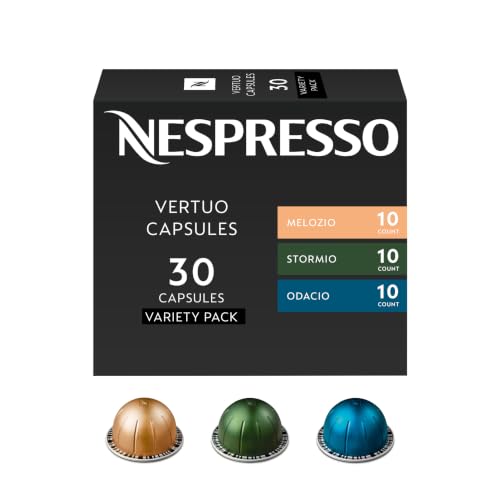
2. Nespresso Vertuo Line Variety Pack
A mixed pack of capsules for Vertuo machines, covering several cup sizes and roasts. Use it to learn which styles suit your mornings.
Suits: new Vertuo owners. Strengths: variety from the maker. Weaknesses: only for Vertuo machines. Skip it if you own an Original machine.
View Nespresso Vertuo Variety Pack on Amazon
Best for fans of the Starbucks style
3. Starbucks by Nespresso Original Line Capsules
Capsules from a familiar coffee chain, made for Original machines. They bring well-known roasts to a quick, home-friendly format.
Suits: fans of the Starbucks style. Strengths: familiar flavors. Weaknesses: a narrower range than the maker’s own. Skip it if you like lighter roasts.
View Starbucks Original Capsules on Amazon
Best for vertuo owners who want familiar roasts
4. Starbucks by Nespresso Vertuo Line Capsules
Capsules from the same chain, made for Vertuo machines. They suit larger cups of brewed coffee.
Suits: Vertuo owners who want familiar roasts. Strengths: recognizable flavors. Weaknesses: check that the flavor suits your taste. Skip it if you own an Original machine.
View Starbucks Vertuo Capsules on Amazon
Best for people who like to explore other brands
5. L’OR Barista Espresso Capsules for Original Machines
Aluminum capsules from a French coffee brand, made to fit Original-line machines. They offer a different set of flavors from the maker’s own range.
Suits: people who like to explore other brands. Strengths: varied roasts. Weaknesses: check compatibility on the listing. Skip it if you only want official capsules.
View L’OR Barista Capsules on Amazon
Best for dark roast fans
6. Peet’s Coffee Capsules for Nespresso Original
Capsules from a California roaster known for darker roasts, made for Original-line machines. They suit people who like a bold cup.
Suits: dark roast fans. Strengths: a bold flavor style. Weaknesses: not suited to every palate. Skip it if you prefer mild roasts.
View Peet’s Capsules on Amazon
Care and Setup
- Store capsules in a cool, dry place away from sunlight.
- Use fresh water in the tank for each session.
- Descale the machine on the maker’s schedule.
- Recycle used capsules where a program is available.
- Keep a note of the flavors you like so reordering is easy.
Mistakes to Avoid
- Buying Vertuo capsules for an Original machine, or the reverse.
- Stocking up before you know the flavor.
- Ignoring the intensity for milk drinks.
- Skipping the listing check for compatibility.
- Keeping opened sleeves of capsules in a humid spot.
Original Versus Vertuo Capsule Formats
Nespresso machines come in two families that use different capsules, and the first task is to know which one you own. Original machines use small, tapered capsules and brew espresso-style shots and small cups under pressure. Vertuo machines use dome-shaped capsules and brew in a different way, spinning the capsule to mix the water with the coffee and producing larger cups with a foam layer on top.
The two formats are not interchangeable. A capsule made for one family will not work properly in the other, and forcing it can damage the machine or the capsule. Check your machine’s model name, look at the capsule shape and read the compatibility notes on any listing before buying. If you are unsure, look at the underside of the machine or its manual.
The format affects the style of drink. Original capsules suit small, concentrated shots and milk drinks. Vertuo capsules suit mug-sized coffee and a range of cup sizes. Some Vertuo machines read a code on the capsule to adjust the brew. If you drink both black coffee and milk drinks, think about which you make most. The two families also differ in capsule variety, with each offering its own range of flavors and sizes. Knowing the difference saves you from ordering the wrong type and helps you choose a flavor range that suits how you drink coffee.
Reading Intensity, Roast and Flavor Notes
Capsule packaging usually lists intensity, roast level or flavor notes. These are the maker’s descriptions, and intensity scales are not standardized across brands, so compare within a brand rather than between them. A higher intensity number generally suggests a bolder, more bitter cup, while a lower number suggests a softer, more balanced one.
Roast level shapes flavor. Lighter roasts tend to show more acidity and fruit or floral notes, medium roasts are balanced and darker roasts bring bitterness, chocolate and smoky notes. Dark roasts often stand up to milk, which makes them popular for lattes. Lighter roasts may taste thin when milk is added, although preferences vary.
Flavor notes such as nutty, cocoa, caramel or fruity help you pick. If you are new, try a variety pack with different notes, and keep track of what you like. Remember that the size of the cup changes flavor. The same capsule brewed as a small shot tastes stronger than when brewed as a longer cup. Use the listing’s guidance about recommended cup sizes. Do not rely on a single description. If a pod tastes too bitter, try a lighter one or reduce the cup size. If it tastes weak, try a darker pod or a smaller volume. Taste is personal, so use the notes as a starting point only.
Third-Party Capsules and Compatibility Checks
Besides the official range, other roasters sell capsules designed to fit Nespresso machines. These can offer different flavors, roast styles and pack sizes. Many work well, but quality and fit vary, so read the listing carefully. Look for the line they are made for, either Original or Vertuo, and confirm it matches your machine.
Check the material. Some third-party capsules are aluminum and some are plastic, and these differ in recyclability and how they handle pressure. Also check whether the capsule is sealed properly. A badly fitted capsule can leak, jam or give a weak brew. If a pod does not seat easily, do not force it. Try another pod from the same pack, and contact the seller if problems continue.
There is a point on warranty and support. Makers may state that using non-approved capsules is not covered, so read your machine’s warranty terms. For most people, using a mix of official and third-party capsules works well, but if you are unsure, start with a small pack to test fit and flavor before buying in bulk. Keep an eye on cleanliness too, since some capsules may leave more residue than others. Regular cleaning and descaling help keep any capsule working well.
Storing Capsules and Keeping a Reorder Routine
Capsules are sealed, which keeps coffee fresh for a long time, but they still benefit from good storage. Keep them in a cool, dry place away from sunlight, heat and strong smells. A drawer or a capsule holder near the machine is convenient, though avoid placing them right above the machine where heat and steam rise.
Check the best-before date on the packaging and use older capsules first. If you buy in bulk, rotate the stock. Do not store capsules in a damp spot, since moisture can affect the outer shell and the label. If a capsule is dented, bulging or leaking, do not use it.
A reorder routine saves effort. Keep a list of the flavors you like, how many you use per week and what you plan to try next. Subscriptions can be convenient, but only if you will use the amounts delivered, so review them from time to time. Buying variety packs is a sensible way to explore. When you find favorites, buying larger quantities may reduce the per-cup cost, but do not stock up before you know you will enjoy the flavor. Set aside a place for used capsules and learn about recycling options in your area, which differ by location.
Matching Pods to How You Drink Coffee
Start with your daily drinks. If you mainly make milk drinks, choose bolder pods that cut through the milk, and remember that using a smaller cup size increases strength. If you drink black coffee, a balanced or lighter pod may be more pleasant. For iced drinks, a strong pod brewed over ice holds up well against dilution.
Consider the time of day. Many people keep a bolder pod for the morning and a milder or decaf pod for later. If you share the machine with others, a variety pack or a mix of capsules makes everyone happy. If guests are common, keep a few mild options on hand.
Budget tiers show up in pod choices as well. Variety packs help you explore without committing, while larger boxes suit regular favorites. Third-party options may offer different price points, but compare per-capsule cost only after checking the count and compatibility. Ask yourself a few questions before buying. Is this the right capsule line? Do I like the roast and flavor? How many will I use before the date? Can I recycle the capsules? If a pod disappoints, try a different one rather than abandoning the machine, because flavor differences between pods can be large. And if you notice weak flow or off tastes across many pods, descale the machine before blaming the coffee.
Pods for Nespresso Machines FAQ
How do I know which line I have?
Check the model name and look at your capsules. Original capsules are small and tapered, while Vertuo capsules are domed.
Are third-party capsules safe to use?
Many work well, but check each listing for compatibility with your machine.
Which roast is best for milk drinks?
Stronger, darker roasts hold up better against milk than lighter ones.
Can I use Original capsules in a Vertuo machine?
No. The two lines use different capsule shapes and brewing methods, so they are not interchangeable. Check your machine's line before buying.
What does the intensity number mean?
It is the maker's rating of how bold a coffee is. Scales differ between brands, so compare within the same brand and treat the number as a rough guide.
How long do capsules last?
Sealed capsules keep for a long time, and the packaging shows a best-before date. Store them in a cool, dry place and use them before that date.
Why does my coffee taste weak?
The cup size may be too large, the pod may be a mild roast or the machine may need descaling. Try a smaller size, a bolder pod or a cleaning cycle.
Are variety packs a good way to start?
Yes, they let you try several roasts and flavors before committing to larger quantities. Note the ones you like and reorder those.
Can I recycle used capsules?
It depends on your area and the capsule material. Check the maker's recycling program or local guidance, and empty and separate the coffee grounds if instructed.
Do decaf capsules exist for both lines?
Both lines typically offer decaf options, but availability changes. Check the listing for your line before ordering.
Will third-party capsules void my warranty?
Warranty terms vary by maker and region, so read your machine's documentation. If unsure, ask the maker's support before relying on non-official capsules.
Cup Sizes and How Each Line Brews Them
The two Nespresso lines treat cup size very differently, and it affects which capsules make sense for you. Original machines brew a small set of drinks, commonly ristretto, espresso and lungo, which differ mainly in how much water passes through the capsule. A ristretto is the shortest and most concentrated, while a lungo is longer and lighter. The machine’s buttons or settings control the volume, and you can often adjust it to taste.
Vertuo machines work through a barcode on the capsule rim. The machine reads it and spins the capsule while adjusting water volume, temperature and brewing time. Capsules are sold in distinct sizes, from a small espresso to a large mug-sized pour, and the capsule shape signals the size. Because the machine decides the recipe, the same coffee cannot be freely brewed at different strengths in the way an Original machine can. If you like to adjust cup volume yourself, that is a point in favor of the Original line, while the Vertuo line suits those who prefer pressing one button.
Matching the capsule to the cup you drink matters. A big mug pour from a small espresso capsule tastes thin, and a tiny cup from a large-format capsule is not possible on a Vertuo machine in the first place. The Starbucks and Peet’s capsules in this guide are listed for a specific line, so confirm that before ordering.
Decaf, Flavored and Limited-Edition Capsules
Variety packs are a convenient way to find a favorite, but the range extends beyond the standard roasts. Decaf capsules exist for both lines and are useful for evenings or for households where not everyone drinks caffeine. Flavored capsules, which add notes such as vanilla or caramel, are usually offered in smaller runs and may suit those who drink their coffee black or with milk.
Limited editions and seasonal releases appear periodically and may be sold in smaller sleeves. They are a pleasant way to vary your routine, but because availability changes, do not build your daily habit around one you cannot restock. If you find a seasonal capsule you love, buy a few extra sleeves while it is available, and check the expiry on the packaging before stocking up.
When trying decaf, remember that the process removes caffeine but also changes flavor slightly, and roast style makes a bigger difference than the label. A darker decaf often hides the difference better than a light one. Sample with milk and without to see what you prefer.
How Water Quality Affects Capsule Coffee
A capsule delivers a measured dose of coffee, but a cup is mostly water, so the water you use has a large influence on taste. Very hard water leaves limescale inside the machine, which restricts flow and can make coffee taste dull or flat over time. Heavily chlorinated or very soft water can also change flavor. Many people notice that switching to filtered water makes a clearer cup.
Use fresh water in the tank rather than topping up old water, and rinse the tank regularly. If your tap water is hard, the descaling routine matters even more, so follow the maker’s descaling interval and use the recommended descaling product. If your coffee has started to taste weak or sour with no change in capsules, scale buildup is a likely suspect. Replace water filters if the machine uses one, and consider a filter jug if your tap water is unusually hard.
Cost Per Cup and Smart Buying
Capsule coffee costs more per cup than ground beans, so it helps to think in terms of cost per drink. Packs vary in capsule count, and larger sleeves or multi-pack boxes usually lower the per-cup price. Compare the price per capsule rather than per box, and note whether the count is stated clearly in the listing. Third-party capsules, where compatible, often cost less than the maker’s own, though the quality and compatibility vary.
A sensible approach is to begin with a variety pack to find two or three favorites, then buy those in larger quantities. Keep a small note of what you liked, along with the intensity and roast, so you do not repeat a disappointing purchase. If you drink milk-based drinks, compare capsules by how they perform with milk, since a capsule that tastes balanced black may seem thin in a latte. Sharing a sleeve with a friend is another low-cost way to sample before committing.
One last habit pays off: keep your capsules visible and sorted. A drawer or holder that separates Original from Vertuo, and regular from decaf, prevents the wrong capsule from going into the machine at six in the morning. Check each sleeve date when you restock, use the oldest first, and discard any capsule with a dent or a bulge, since damage to the sealed aluminum can let air in and dull the coffee inside.
Building a Capsule Collection That Does Not Gather Dust
Every Nespresso owner develops a pattern within the first few months: a small rotation of capsules that get reordered, and a tail of experiments that sit in the drawer. The trick to buying well is to stock for the pattern, not the fantasy. Keep your everyday drinking covered by two or three capsules you know you love — one for straight espresso, one for longer drinks, one for milk — and let everything else be bought in the smallest quantity available until it earns a place. A drawer organized this way never holds a fortune in capsules nobody wants, and every morning starts with a drink you actually look forward to.
Variety packs, two of which appear in this guide, are the right tool for the exploring phase and the wrong tool as a permanent strategy. They teach you a system’s range quickly, but they also guarantee that some capsules in every box are not to your taste. Use them when you get a new machine, when a guest with different tastes is staying, or when your palate feels stuck. Once you know your preferences, buying single varieties in sensible quantities gives you better coffee for the same spend, because every capsule in the box is one you chose.
Decaf and half-caffeine options deserve a deliberate place in the drawer rather than an afterthought. Many households discover that a good decaf capsule extends the machine’s usefulness into the evening, when the ritual is wanted but the caffeine is not. The same goes for a capsule you keep for guests whose tastes differ from yours — a milder option for the visitor who finds your favorite too intense. A collection that covers the household’s real range of moments gets used more, and a machine that gets used more justifies its counter space every day.
Rotation is the final discipline. Capsules do not spoil quickly, but they do slowly lose their liveliness, and a huge stock bought in a sale can outlast its best months. Buy for the next month or two, store the boxes somewhere cool and dry away from the machine’s heat, and put new stock behind old so the older capsules are used first. It is the same first-in, first-out logic a café uses, scaled to a kitchen drawer, and it keeps every cup tasting like the capsule was meant to taste.
Reading the Six Capsule Picks as a Tasting Plan
The two variety packs in this guide are your orientation tools. The Original Line pack suits a new Original owner who wants to learn the range from gentle to intense before committing, while the Vertuo Line pack does the same job across Vertuo’s wider size range, from espresso to full mugs. If you have just bought a machine, start here and keep notes — even a few words per capsule on your phone — because memory flatters variety and forgets which one you actually reached for twice.
The Starbucks by Nespresso capsules, in both Original and Vertuo forms, serve the drinker who already knows the Starbucks profile and wants it at home without the trip. They are also the easiest capsules to hand to guests, because the names and expectations are familiar. If your household’s taste runs to that style, these may become your default reorder; if you are exploring what Nespresso’s own roasters do differently, treat them as a known reference point to compare against.
L’OR Barista capsules represent the compatible-capsule world for Original machines: a major roaster’s take on the format, often chosen by drinkers who want to explore beyond the house range or who find a particular L’OR blend suits them. Peet’s Coffee capsules do the same from an American craft-coffee tradition, with a darker, bolder inclination that many milk-drink drinkers prefer. The lesson of both picks is that Original-line ownership is partly ownership of an open shelf — your machine is a platform, and these capsules are evidence of how wide that platform runs.
Plan a simple tasting order if you try several of these in a week: mild before intense, straight espresso before milk drinks, and the same capsule at its intended size before you experiment with longer pours. Taste with a clean palate, ideally at your normal coffee time, and write down one line per capsule. Within a fortnight you will have something no review can give you — your own ranked list, which is the only capsule guide that never goes out of date.
Brewing Each Capsule at Its Best
A capsule’s intended size is printed on the box for a reason, and respecting it is the single biggest improvement most owners can make. An espresso capsule run as a long drink does not become a mild coffee; it becomes an over-extracted one, because the water pulls bitterness from grounds that have already given their best. If you want a longer drink, choose a capsule made for it — Vertuo’s range makes this easy with its mug sizes, and Original owners can brew two capsules into a larger cup. The rule is simple: length comes from the capsule, not from stretching it.
Water and temperature habits from the machine side matter just as much. Run a short blank cycle before the first drink of the day to warm the system and rinse the path, fill the tank with fresh water rather than yesterday’s remainder, and warm the cup for short drinks. These steps are not ceremony; a capsule brewed through a cold machine into a cold cup loses the aromatic top that distinguishes a good capsule from a mediocre one, and the loss is entirely preventable in under a minute.
Milk changes the ranking of capsules, so judge candidates in the form you will drink them. A capsule that tastes almost too assertive straight often becomes perfectly balanced under milk, while a delicate capsule that shines as espresso can vanish in a latte. If your default drink is milky, do your tasting with milk from the start, and keep a bolder capsule in the drawer specifically for those drinks. Households that drink both ways usually settle on two defaults — one for straight, one for milk — and that small specialization improves every cup.
Iced drinks have their own logic. Brew the capsule at its normal strength over a full glass of ice rather than brewing long and letting it melt its way down, and choose capsules with enough presence to survive dilution. Vertuo owners have capsules designed for pouring over ice; Original owners can achieve the same with a double espresso of a robust blend. Add milk or sweetness after the coffee meets the ice, taste, and adjust the glass — not the brew — until it suits you.
Storage, Freshness and Honest Running Costs
Capsules are a preserved food, but preservation is not permanence. Heat, light and air slowly flatten them, so store boxes in a cool cupboard rather than in a decorative rack above the warm machine, and keep opened sleeves sealed or decanted into a closed container. If you buy a flavor in quantity because it was on offer, check that your household’s real pace will finish it while it still tastes lively. A capsule used within its best months, bought at full price, is better value than a stale bargain, because the entire point of the system is a reliably good cup.
Cost honesty helps a capsule habit stay enjoyable. Count your household’s capsules in a normal week, multiply by your capsule’s real cost, and look at the number without flinching: for most owners it sits comfortably below the café habit it replaced and above the cost of brewing from beans, which is exactly the trade the system advertises — convenience and consistency in exchange for a higher cost per cup. Where money leaks is waste: capsules bought and disliked, variety packs finished by nobody, a second machine bought because the first system’s menu was never explored. The fixes in this section cost nothing and save more than any bulk discount.
Recycling is part of running costs in the broader sense. Each system in the Nespresso world has its return and collection routes, and compatible capsules vary — some are collected, some are designed for home composting where facilities exist, some are refillable. Set up the route that fits your household when you choose your main capsule, keep the collection where the used capsules land, and fold returns into trips you already make. A system you actually complete beats a perfect system you abandon by March.
Finally, revisit your defaults twice a year. Palates drift with the seasons — many drinkers prefer brighter capsules in summer and darker ones in winter — and roasters revise ranges. A short, deliberate retasting, using the method in this guide, keeps your drawer matched to your current taste instead of last year’s. The capsule drawer is a small thing, but it is opened every morning, and keeping it honest is one of the cheapest pleasures in the kitchen.
Learning Your Own Palate: A Taster’s Method for Capsules
Capsule coffee is often dismissed as a fixed experience — the capsule decides, you drink — but anyone who has tasted methodically knows the drinker decides a great deal. Palates differ in what they notice first: some drinkers taste roast before origin, some notice bitterness before sweetness, and everyone has a strength at which a coffee stops tasting generous and starts tasting like an argument. Learning your own responses is the skill that turns capsule buying from gambling into shopping, and it requires nothing but a notebook, a few capsules bought deliberately, and the willingness to taste the same coffee twice with your full attention — a small price for never buying a box you dislike again.
Begin with a reference capsule: one you know well, brewed at its intended size, tasted at your normal hour. Describe it in plain words — not the vocabulary of tasting notes, but your own: what arrives first, what lingers, what you would change. That description is your palate’s home address. Every new capsule is then tasted against it, and the comparison, not an absolute judgment, is what you record. ‘Darker than my reference, less sweet, better with milk’ is a note you can shop from; a number out of ten is a note you cannot, because it forgets everything that made the coffee itself.
Taste in the form you drink. If your life is lattes, a capsule judged as a straight espresso may be rejected for exactly the intensity that would have made it perfect under milk, and the reverse error wastes just as many good capsules. Keep two short lists if you drink both ways — most capsule households do — and let each candidate audition for the list it would actually join. The same discipline applies to iced drinks in summer, which forgive softness and punish bitterness, and to the long morning mug, which exposes thinness that a short drink conceals. A capsule is not good or bad; it is good or bad somewhere, and your notes should say where.
Intensity numbers and roast descriptions on the box are a map, not the territory, and your notes are how you learn to read the map’s local dialect. After a season of tasting you will know what a given maker’s language means on your tongue — that one roaster’s ‘intense’ is your ‘just right with milk’, that another’s ‘delicate’ survives only as a short morning shot. That personal translation is the real product of the exercise, and it transfers: it makes you a better buyer of beans, café drinks and gifts for other coffee drinkers, because you have learned the difference between what is written about coffee and what you actually taste.
Share the method and the capsules, because palates calibrate socially. A partner or friend tasting the same capsule will name things you missed, and arguing gently about whether a coffee is more chocolate or more toast is how vocabulary — and therefore perception — grows. Keep a small stock of a capsule you both love for ordinary mornings and a rotating guest slot for experiments, and the drawer becomes a conversation rather than a inventory. The households that enjoy capsule coffee most, years in, are the ones that stayed curious about it after the machine stopped being new.
Finally, revisit your reference each season. Palates drift — with the weather, with habit, with the slow education this method provides — and a capsule crowned in January can taste ordinary by July without anything about it changing. That is not inconsistency; it is the palate working. Let the drawer follow the drinker, retest the old favorites before reordering in bulk, and treat every box as a question your next few mornings will answer. The capsule system’s promise was always convenience; the taster’s method adds the other half of a good coffee life, which is attention, and the two together are worth more than either alone.
More Questions, Answered
Are compatible capsules as good as Nespresso’s own?
Some are excellent and some are ordinary, which is why this guide includes respected roasters rather than anonymous options. Judge a compatible capsule the way you judge any capsule: at its intended size, in your usual drink, across a few days. Fit and freshness matter too — buy from producers who make capsules specifically for the Original system.
How can I tell if a capsule has gone stale?
A stale capsule brews a cup that smells flat and tastes dull or papery, with little aroma when the cup is raised. Compare it with a fresh box of the same variety if you are unsure. Prevention is easier than diagnosis: store capsules cool and sealed, rotate stock, and buy quantities that match your real pace.
Which capsules work best for milk drinks?
Bolder, darker capsules generally hold their character under milk, while delicate ones can disappear. If milk drinks are your default, taste candidates with milk from the start and keep a specific capsule for them. Many households keep one capsule for straight espresso and a more assertive one for lattes and cappuccinos.
Is it worth keeping decaf capsules if I rarely drink decaf?
Yes, in a small quantity. A decaf option covers evenings and guests, and a small sleeve lasts a long time stored properly. Buy the smallest pack, keep it sealed and cool, and replace it when it finally runs out rather than stocking up. The cost of having it is small; the convenience, when wanted, is large.
Why does the same capsule taste different in my machine and a friend’s?
Water, machine temperature habits and cup size explain most of it. Different water changes extraction noticeably, a machine that is rinsed and warmed brews differently from one used cold, and a longer pour stretches the same capsule thinner. Match those three variables and the same capsule will taste much more alike in both homes.
How many capsules should I taste before choosing a daily default?
Give a serious candidate at least three mornings, including one in your usual milk drink if that is your habit, because first impressions are hostage to mood, food and sleep. A capsule that survives three ordinary mornings has earned the drawer space. Variety packs make this cheap to do properly; single-variety bulk buying before the trial is how drawers fill with regrets.
Is it worth keeping tasting notes for something as simple as capsules?
Yes, precisely because the choice is repeated so often. A line per capsule — where it shines, where it fails — turns a year of vague impressions into a shopping list you trust. The notes need no special vocabulary; your own words, written at the moment of tasting, outperform any expert’s description of a coffee you drank in your kitchen.
How should I organize a capsule drawer so choices stay easy?
Group by job rather than by brand: a section for straight espresso, one for long drinks, one for milk, and a small corner for decaf and guests. Keep the current box of each default at the front and experiments behind them, so a half-asleep morning hand lands on the right capsule without a decision. Review the drawer monthly and let anything nobody has chosen in weeks leave the rotation, because a drawer of loved capsules is faster and more pleasurable than a museum of maybes.
Can I mix capsules from different makers in one tasting?
Yes, and it is one of the pleasures of the Original line’s open shelf. Keep the comparison fair by brewing each capsule at its intended size, in the same session, with water between tastes, and note the maker and blend carefully. Cross-maker tastings are how many owners discover that their loyalty belongs to a roaster rather than to the machine’s own range — a discovery that improves every order afterwards.
Related guides
Frequently Asked Questions
What does the barcode on a Vertuo capsule do?
The barcode on the rim tells the machine how to brew that capsule, including the spin speed, water volume, temperature and time. This is why Vertuo machines need no manual settings for each cup. It also means Original capsules, which lack the barcode, are not designed to work in Vertuo machines.
What is the difference between ristretto, espresso and lungo?
They differ in how much water passes through the same amount of coffee. A ristretto is the shortest and most concentrated, an espresso is the standard small shot, and a lungo is longer and lighter. Many Original machines let you choose between them with a button.
Does the water I use change capsule coffee flavor?
Yes. Because a cup is mostly water, hard water, heavy chlorine or stale tank water can dull taste and cause scale in the machine. Using fresh, filtered water and descaling on schedule often improves flavor more than switching to a different capsule.
Is decaf Nespresso coffee worth trying?
If you want evening coffee without caffeine, decaf capsules exist for both lines and are worth a sample. The decaffeination process slightly alters flavor, and darker roasts tend to mask the difference better. Try it with and without milk to see which suits you before buying a larger quantity.
The Short Version
To sample Original, the Nespresso Original Variety Pack. To sample Vertuo, the Vertuo Variety Pack. For familiar roasts, the Starbucks Original or Vertuo capsules. For other brands, the L’OR Barista. For bold flavor, the Peet’s.


