Disclosure: topratedkitchenware.com is reader-supported. When you buy through links on our site, we may earn an affiliate commission from Amazon and other retailers, at no extra cost to you.
Where to buy
These six picks answer the search for best pressure cookers and multi cookers: the linked models are sold on Amazon, and the prose-only profiles are included so the comparison stays honest. Start with the shortlist here, read the full guide further down, and use any Check on Amazon link to see the live listing for that exact model before you buy. Read the full guide ↓
- Zojirushi NS-ZCC10 Neuro Fuzzy Rice Cooker and Warmer — Best Premium Grain Precision. Check on Amazon
- Zojirushi NS-TSC10 Micom Rice Cooker and Warmer, 5.5 Cup — Best Overall Multi Cooker Experience. Check on Amazon
- Dash Mini Rice Cooker, 2-Cup — Best for One Person. Check on Amazon
- BLACK+DECKER 16-Cup Rice Cooker RC516 — Best for Big Grain Batches, Simply. Check on Amazon
- Aroma Housewares ARC-363-1NGB Rice Cooker and Multicooker — Best Compact Multicooker. Check on Amazon
- Aroma Housewares ARC-150SB Digital Rice Cooker, Slow Cooker and Steamer — Best Three-in-One System. Check on Amazon
Shoppers searching for the best pressure cookers and multi cookers usually want one countertop pot that refuses to specialise: pressure for speed, rice for weeknights, steaming for vegetables, slow cooking for Sundays. This guide begins with the disclosure that decides whether the rest of it is useful to you. The verified shortlist behind it contains no true sealed pressure cooker at all. What it does contain, in full, is the multi cooker half of the search: fuzzy-logic and Micom rice systems, a three-in-one digital pot that slow cooks and steams, a compact multicooker, a large one-touch grain cooker and a mini pot for one.
That split is not a defect to apologise for; it is the single most useful fact in the category. Multi cookers and pressure cookers overlap on the meals they serve and diverge completely on how they serve them. A multi cooker manages water, heat and time with sensors and programs at ordinary pressure. A pressure cooker seals and raises the boiling point, and no program name on a non-sealed pot reproduces that physics. This guide therefore reviews all six verified picks as linked recommendations for the multi cooker job they genuinely do, explains in plain prose exactly what pressure would add, and helps you decide whether your cooking needs the genuine pressure article as a separate purchase. Our narrower comparison of pressure and slow cookers shows how the same pool divides when slow cooking is the second named job.
Every specification below comes from the verified listing for that exact model, and nothing else. Capacities are quoted the way the listings quote them, in uncooked and cooked cups for grain platforms, because converting them silently would hide how differently these pots are sized. No prices are printed, because listings move; each pick carries Check on Amazon links to its live listing instead, and tiers are described qualitatively, from the value-tier mini and one-touch models through the mid-tier digital three-in-one to the premium fuzzy-logic Zojirushi platforms at the top of this group.
Read the reviews for the pots, but read the method sections for the decision. If your week is built on rice, grains, steamed sides, porridge and planned-ahead pots, the multi cookers here will carry it with very little friction. If your week depends on dried beans cooked from scratch after work, fast stock, or tough cuts decided on at the last minute, pressure is not a feature to compromise away, and the honest outcome of this guide for you is a shortlist of multi cookers for everything else plus a separate, deliberate pressure purchase made with clear eyes about what pressure actually adds.
Key Takeaways
- No pick in this verified shortlist is a true sealed pressure cooker; all six are linked honestly as multi cookers, rice systems and multi-function pots, which is the second half of this keyword.
- Best overall multi cooker experience: the Zojirushi NS-TSC10, whose verified listing pairs 5.5-cup Micom control with LCD controls and a delay timer.
- Best premium grain precision: the Zojirushi Neuro Fuzzy platform, built around automatic keep warm and a delay timer for households where rice quality is the point.
- Best three-in-one consolidation: the Aroma Housewares ARC-150SB, whose listing names digital rice cooking, slow cooking and steaming in one 20-cup cooked body.
- Best compact multicooker: the Aroma Housewares ARC-363-1NGB, a 3-cup uncooked steamer and multicooker in a small black body.
- Decide whether pressure speed is essential before choosing among these pots: if it is, buy pressure separately and let a multi cooker here handle grains, steam and slow work.
In this guide
Quick Picks
All six picks below are linked in this guide, because each one serves the multi cooker side of the keyword in its verified listing. Their badges stay constant from this table through the detailed reviews and the comparison table, so you can track a favourite across the whole page.
| Badge | Pick | Key specification | Best for |
|---|---|---|---|
| Best Premium Grain Precision | Zojirushi NS-ZCC10 Neuro Fuzzy Rice Cooker and Warmer | Neuro Fuzzy logic; automatic keep warm; delay timer; white finish | grain-focused households that cook several rice varieties and value consistency |
| Best Overall Multi Cooker Experience | Zojirushi NS-TSC10 Micom Rice Cooker and Warmer, 5.5 Cup | 5.5-cup / 1.0L Micom control; LCD controls; delay timer | families wanting programmed grain intelligence in the classic family size |
| Best for One Person | Dash Mini Rice Cooker, 2-Cup | 1-cup uncooked / 2-cup cooked; removable ceramic nonstick pot; keep warm; oatmeal, quinoa and grains | single cooks, students and small kitchens cooking fresh small grain batches |
| Best for Big Grain Batches, Simply | BLACK+DECKER 16-Cup Rice Cooker RC516 | 8-cup uncooked / 16-cup cooked; steaming basket; removable non-stick bowl; one-touch operation | large families, hosts and meal-preppers cooking grain in volume |
| Best Compact Multicooker | Aroma Housewares ARC-363-1NGB Rice Cooker and Multicooker | 3-cup uncooked / 6-cup cooked; steamer and multicooker roles; 2-6 cup range; black finish | couples and small households wanting rice, steam and light multi cooking in one small body |
| Best Three-in-One System | Aroma Housewares ARC-150SB Digital Rice Cooker, Slow Cooker and Steamer | 10-cup uncooked / 20-cup cooked; digital rice cooker, slow cooker and food steamer; stainless steel exterior | space-conscious families wanting rice, slow cooking and steaming in one large body |
How These Picks Were Chosen
The shortlist was built from a verified research pool for the cooker category, then filtered with a deliberately unfriendly question applied to every candidate: what does the verified listing itself say this pot does? Models whose listings describe multiple distinct cooking roles, rice plus steaming, rice plus slow cooking, or an explicit multicooker positioning, qualified as multi cookers. Models were never credited with pressure, because no listing in the pool describes a sealed pressure function, and that absence is disclosed in this guide rather than smoothed over.
Within the qualified set, ranking weighed control intelligence, usable capacity, and the breadth of meals a pot can carry without help. Sensor-guided platforms, the fuzzy-logic and Micom Zojirushi models and their peers, score highly because they forgive the measuring errors real cooks make on tired evenings. Capacity was judged in working terms: grain capacities in uncooked cups were compared against the household sizes they actually feed, and the largest digital Aroma was credited for consolidation value, one body replacing a rice cooker, a slow cooker and a steamer, rather than for raw size alone. Readers comparing regional availability will find the same discipline applied in our guides to Best Pressure Cookers Canada and Best Pressure Cookers Australia.
This is research-led guidance. It combines verified listing data, manufacturer platform documentation, and the long owner history of these cooker families, several of which have been sold in closely related forms for years. It does not claim laboratory testing, and where a detail such as an exact capacity is absent from a verified listing, as with one Zojirushi platform below, the spec box says only what the listing supports and the prose does not invent the missing number.
The 6 Best Pressure Cookers and Multi Cookers, Reviewed Honestly
The six reviews below are ordered to take you from premium grain precision through consolidation and compact value to the smallest pot in the group. Each one states its badge, its verified strengths and trade-offs, a spec box drawn only from listing data, and a verdict that names who should skip it as clearly as who should buy it. None of these pots pressure cooks, and no review pretends otherwise; where a dish is famous as a pressure dish, the review explains the multi cooker route to the same plate.
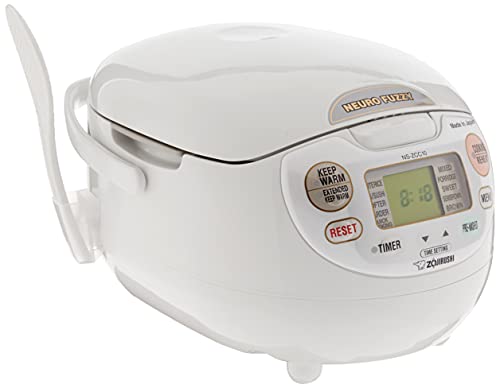
Zojirushi NS-ZCC10 Neuro Fuzzy Rice Cooker and Warmer
Badge: Best Premium Grain Precision
Strengths
- Sensor-guided cooking that adjusts to the batch rather than following a blind script
- Automatic keep warm and delay timer support morning-loaded, evening-eaten rice
- A long-running premium platform with a devoted grain-focused following
Trade-offs
- Premium-tier positioning in this group
- Slower, more deliberate cycles than a basic one-touch cooker
- Rice specialisation: no slow or pressure role is described in its listing
Key specifications (from the verified listing)
- Control: Neuro Fuzzy logic, per the verified listing
- Keep warm: automatic keep warm
- Timer: delay timer
- Finish: white; model NS-ZCC10
- Capacity: not stated in the verified listing data used for this guide, so none is printed
The Neuro Fuzzy Zojirushi is the connoisseur’s pick in this shortlist, and its verified listing is admirably restrained about why: fuzzy-logic control, automatic keep warm and a delay timer, in a white cooker-and-warmer body. Behind that restraint sits the category’s most respected idea, that rice doneness should be sensed rather than assumed. The platform watches the cook develop and adjusts its own timing, which is why households that cook short-grain, brown, mixed and sweet rice across a week describe its results with an unusual consistency of praise.
In a multi cooker guide, this model plays a specific role: it is the ceiling. It shows what the premium tier buys when it is spent on grain intelligence rather than on program count, and it sets the standard the Micom model below is judged against. The delay timer turns it into a scheduling tool as much as a cooking one, loaded before work and ready at dinner, while automatic keep warm holds the result gracefully through the ordinary chaos of a family evening arriving in stages.
Its limitations are the honest shadows of its strengths. Cycles are deliberate, menus reward a reading of the manual, and the listing describes a rice cooker and warmer, not a slow cooker and certainly not a pressure cooker. Households wanting one pot to slow cook as well should look at the Aroma three-in-one below. Households for whom rice is a daily craft will find this the most satisfying appliance in the guide.
Best for: grain-focused households that cook several rice varieties and value consistency / Not suited for: anyone needing slow cooking, pressure speed, or the fastest possible cycle

Zojirushi NS-TSC10 Micom Rice Cooker and Warmer, 5.5 Cup
Badge: Best Overall Multi Cooker Experience
Strengths
- Family-right 5.5-cup size with programmed soak, cook and rest phases
- LCD controls make programs and timers legible at a glance
- Delay timer supports load-ahead weekday rice without a warm-hold marathon
Trade-offs
- Premium-leaning tier compared with the digital and one-touch models here
- Rice-led design: no slow or pressure function in its verified listing
- Programmed cycles run longer than a basic switch cooker’s cycle
Key specifications (from the verified listing)
- Capacity: 5.5 cup / 1.0L, per the verified listing
- Control: Micom (microcomputer) control
- Display: LCD controls
- Timer: delay timer
- Model: NS-TSC10
The NS-TSC10 takes this guide’s overall badge because it balances the things real households balance: a 5.5-cup capacity, stated plainly in its verified listing alongside a 1.0L measure, that feeds a family without swallowing the counter; Micom control that sequences soaking, heating and resting instead of merely boiling until a switch trips; LCD controls that make the program state readable across a kitchen; and a delay timer that absorbs the scheduling of a workday. It is the multi cooker as a mature appliance rather than a gadget.
Against its Neuro Fuzzy sibling, the argument is value and clarity. The sensing ceiling sits slightly lower, and in exchange the controls are more legible and the proposition simpler: programmed intelligence, honestly sized, clearly displayed. For mixed households cooking white rice often, brown and mixed grains regularly, and porridge on weekends, this is the point in the range where additional spending starts buying refinement rather than capability, which is exactly where an overall recommendation should sit.
The caveats mirror the rest of the guide. This is a rice cooker and warmer of high intelligence; its listing promises neither slow cooking nor pressure, and its cycles take the time good grain cooking takes. Buy it as the grain centre of the kitchen and it will anchor meals for years. Buy it expecting a universal pot and its specialisation, like every specialisation in this guide, will eventually correct the expectation.
Best for: families wanting programmed grain intelligence in the classic family size / Not suited for: slow-cooking households, pressure seekers, or minimalists who want one button

Dash Mini Rice Cooker, 2-Cup
Badge: Best for One Person
Strengths
- Correctly sized for one: fresh small batches instead of a week of leftovers
- Ceramic nonstick pot removes for serving and easy washing
- Handles oatmeal, quinoa and grains, covering breakfast as well as dinner
Trade-offs
- Two cooked cups is a hard ceiling: no guests, no batch cooking
- No delay timer or sensor logic in its verified listing
- A specialist mini: it complements a kitchen more than it anchors one
Key specifications (from the verified listing)
- Capacity: 1 cup uncooked / 2 cups cooked, per the verified listing
- Pot: removable, ceramic nonstick
- Keep warm: keep warm function
- Foods named in the listing: rice, oatmeal, quinoa and grains
- Finish: black
The Dash Mini is the smallest honest idea in this guide: a personal rice maker whose verified listing specifies one cup uncooked, two cups cooked, a removable ceramic nonstick pot and a keep warm function, and names oatmeal, quinoa and grains among its foods. For the single cook, the student, the small-studio resident or the office kitchen, that specification solves the actual problem, which is not capacity but freshness. Small pots cook small amounts properly, where a family cooker asked to cook for one produces a thin, uneven layer and a week of reluctant leftovers.
Its pleasures are proportionate. Breakfast porridge cooks while you dress; a single serving of quinoa lands beside a salad without a saucepan; the pot lifts out to the table and then to the sink. In a multi cooker landscape obsessed with doing everything, a tool that does the small things at the right scale is quietly radical, and its black, compact body asks almost nothing of a crowded counter.
Do not ask it to grow. Two cooked cups will not feed visitors, will not meal-prep a week, and will not slow cook a stew for four, and its listing promises no timer or sensing to delegate to. It is the correct second pot for a household, or the correct only pot for a household of one, and judged in either of those roles it earns its badge without argument.
Best for: single cooks, students and small kitchens cooking fresh small grain batches / Not suited for: families, batch cooking, entertaining, or any slow or pressure job

BLACK+DECKER 16-Cup Rice Cooker RC516
Badge: Best for Big Grain Batches, Simply
Strengths
- The largest grain capacity in this guide for gatherings and meal prep
- One-touch operation that absolutely anyone can run correctly
- Steaming basket and removable bowl keep big-batch serving and washing manageable
Trade-offs
- No sensor logic, programs or delay timer in its verified listing
- Bulk output suits events better than a couple’s Tuesday
- Rice and steaming only: no slow or pressure role is described
Key specifications (from the verified listing)
- Capacity: 8-cup uncooked / 16-cup cooked, per the verified listing
- Operation: one touch
- Accessory named in the listing: steaming basket
- Bowl: removable, non-stick
- Model: RC516
Where the Zojirushi models sell intelligence, the BLACK+DECKER RC516 sells abundance with a single button. Its verified listing states the proposition plainly: eight cups uncooked, sixteen cups cooked, a steaming basket, a removable non-stick bowl and one-touch operation. For the household that hosts, meal-preps grain bases on Sundays, cooks for a team, a congregation or a large family, or runs a small food operation from a home kitchen, that plainness is the feature. Nobody needs training, nobody can misprogram it, and the output is measured in trays rather than bowls.
Simplicity at scale has a texture of its own. A one-touch pot follows the classic absorption method with a thermostat’s judgement, which means the cook’s water measuring carries more responsibility than it does in a sensor pot, and brown or mixed grains get less tailored handling. In exchange, there is nothing to configure wrongly at volume, the steaming basket puts vegetables over the batch, and the removable bowl carries the whole production to the table or the storage containers without a transfer step.
Buy it for the batches you demonstrably cook. A couple will find sixteen cooked cups a burden rather than a blessing, and grain connoisseurs will miss the sensing finesse above. But as the high-volume, low-friction end of this shortlist, it is exactly right, and its presence keeps the guide honest: not every good cooker is a smart one.
Best for: large families, hosts and meal-preppers cooking grain in volume / Not suited for: small households, brown-rice perfectionists, or slow and pressure jobs

Aroma Housewares ARC-363-1NGB Rice Cooker and Multicooker
Badge: Best Compact Multicooker
Strengths
- Explicit multicooker positioning in a genuinely compact body
- Six cooked cups suit couples and small households without waste
- Steamer role turns a grain session into a more complete meal
Trade-offs
- Compact capacity excludes family batches and entertaining
- No sensor-logic branding or delay timer is described in its listing
- Multicooker breadth at this size means modest portions of everything
Key specifications (from the verified listing)
- Capacity: 3-cup uncooked / 6-cup cooked; 2-6 cup range, per the verified listing
- Roles named in the listing: rice cooker, steamer, multicooker
- Finish: black
- Model: ARC-363-1NGB
The ARC-363-1NGB is the compact multicooker this keyword goes looking for: a 3-cup uncooked, 6-cup cooked platform whose verified listing names rice cooker, steamer and multicooker in one breath, sized across a 2-6 cup range and finished in black. In small kitchens, where every appliance must justify its footprint weekly, that combination of smallness and breadth is the entire argument, and Aroma, a brand built on this exact category, makes it convincingly.
Daily life with it is a sequence of small completions: rice for two with vegetables steaming above it, a modest soup or grain dish from its multicooker side, porridge without a pan to scour. It will not host, it will not batch for a freezer, and it does not sense its way through exotic grains the way the premium platforms do. What it does is cover the centre of small-household cooking in one body that fits a single shelf, which is a more valuable trick than most feature lists.
Consider it the small-kitchen counterpart to the ARC-150SB below: same consolidation instinct, opposite scale. Households of one or two that cook grains and steamed sides most nights will use it constantly. Households that regularly cook for five should step up in capacity rather than asking this pot to live beyond its design, because a compact multicooker cooked in relays satisfies nobody.
Best for: couples and small households wanting rice, steam and light multi cooking in one small body / Not suited for: families, batch cooking, or shoppers expecting pressure functions

Aroma Housewares ARC-150SB Digital Rice Cooker, Slow Cooker and Steamer
Badge: Best Three-in-One System
Strengths
- The only listing here naming rice, slow cooking and steaming in one body
- Huge cooked capacity for families, events and batch cooking
- Digital programs organise three appliances’ worth of work in one footprint
Trade-offs
- A large body that must earn permanent counter or cupboard space
- Grain and slow breadth trades away the sensing finesse of the premium rice platforms
- Slow cooking in a rice-shaped vessel suits soups and grains better than large oval joints
Key specifications (from the verified listing)
- Capacity: 20-cup cooked / 10-cup uncooked, per the verified listing
- Roles named in the listing: digital rice cooker, slow cooker, food steamer
- Exterior: stainless steel (SS exterior, per the listing)
- Finish: black; model ARC-150SB
The ARC-150SB closes this guide as its consolidation champion, and uniquely in this shortlist its claim is printed in its own verified listing: a digital rice cooker that is also a slow cooker and a food steamer, at a 20-cup cooked, 10-cup uncooked scale, in a stainless steel exterior. That is three appliances’ jobs in one footprint, at family-and-events capacity, and for kitchens where space is the scarcest ingredient, it is the most economical idea on this page even before any question of price tiers arises.
Its week writes itself: rice in family quantity, a slow soup or bean-adjacent pot on the weekend setting, steamed vegetables and dumplings over either. Digital programming holds the three roles together coherently, and the capacity means none of the roles is a token gesture. Against the Zojirushi platforms it concedes grain finesse; sensor-guided rice at the premium tier is a real and tasteable difference for daily rice households. Against separate appliances it wins on space, washing and simplicity every single time.
Size is the commitment. This is a large appliance that should be measured against its home, and its slow mode, delivered in a deep rice-shaped vessel, suits liquid and grain dishes better than the wide shallow braises an oval stoneware crock was born for. Households that accept those terms gain the broadest single-pot coverage in this guide, which is precisely what the multi cooker half of this keyword promises at its best.
Best for: space-conscious families wanting rice, slow cooking and steaming in one large body / Not suited for: rice purists chasing premium sensing, tiny kitchens, or pressure cooking
Comparison Table
Capacities in this table are quoted exactly as the verified listings quote them, which means grain platforms appear in cups and the three-in-one appears in cooked cups. The control column is the better guide to daily life: sensor logic forgives, digital programs organise, and one-touch simplicity never confuses anyone at breakfast.
| Pick | Badge | Capacity | Control style | Listing |
|---|---|---|---|---|
| Zojirushi NS-ZCC10 Neuro Fuzzy Rice Cooker and Warmer | Best Premium Grain Precision | Not stated in verified listing | Neuro Fuzzy sensor logic | Check on Amazon |
| Zojirushi NS-TSC10 Micom Rice Cooker and Warmer, 5.5 Cup | Best Overall Multi Cooker Experience | 5.5-cup / 1.0L | Micom with LCD controls and delay timer | Check on Amazon |
| Dash Mini Rice Cooker, 2-Cup | Best for One Person | 2-cup cooked | Simple personal cooking with keep warm | Check on Amazon |
| BLACK+DECKER 16-Cup Rice Cooker RC516 | Best for Big Grain Batches, Simply | 16-cup cooked grain | One-touch simplicity | Check on Amazon |
| Aroma Housewares ARC-363-1NGB Rice Cooker and Multicooker | Best Compact Multicooker | 6-cup cooked grain | Compact rice, steam and multicooker programs | Check on Amazon |
| Aroma Housewares ARC-150SB Digital Rice Cooker, Slow Cooker and Steamer | Best Three-in-One System | 20-cup cooked grain | Digital programs across rice, slow and steam | Check on Amazon |
How to Choose a Multi Cooker Without Paying for Imaginary Pressure
Choose first by the grain question, because for multi cookers it decides more weeks than any other. A household that cooks rice four or more times a week, across more than one variety, benefits disproportionately from fuzzy-logic or Micom control, which adjusts the cook as the pot senses absorption and temperature rather than following a blind timer. Brown rice, mixed grains and porridge are where that intelligence pays most visibly. A household that cooks plain white rice twice a week will not taste the difference enough to justify the premium tier, and a sound digital or one-touch model will serve it better for less counter commitment.
Choose second by consolidation. Count the appliances a candidate genuinely replaces in your kitchen, using its verified listing rather than its marketing adjectives. The ARC-150SB below names rice cooking, slow cooking and food steaming in one listing, which is a real three-for-one for a household that uses all three weekly. The compact Aroma multicooker replaces a small rice cooker and a steamer. A mini pot replaces nothing but a saucepan and a takeaway habit, which for a single cook may be the most valuable replacement of all. Consolidation you do not use is just size, so be severe: a function exercised monthly does not earn counter space in a small kitchen.
Choose third by capacity in working terms. Grain platforms are sized by uncooked cups, and cooked yield is roughly double the uncooked figure for most rice, so a 5.5-cup platform is a family rice engine, a 3-cup platform suits couples and small households, and a 10-cup uncooked platform, like the largest Aroma here, is a party and meal-prep tool. Steaming capacity follows the basket, not the pot, and slow capacity in a rice-shaped vessel suits soups and porridges better than large joints. Match the pot to the meal shape you cook, not to the largest meal you can imagine.
Controls and timers decide how the pot fits your schedule. A delay timer lets a household load rice in the morning and eat it at six without a warm-hold marathon. Automatic keep warm, named in the Zojirushi listings here, holds cooked grain at serving readiness gracefully, though even the best warm hold is a matter of hours, not a storage plan. LCD controls, named on the Micom platform, make multi-step programs legible. One-touch designs trade that legibility for a single decisive button, which some households, especially those cooking with children helping or grandparents visiting, will rightly prefer.
Finally, hold the pressure line. Nothing in this section, and nothing in these listings, converts a multi cooker into a pressure cooker, and the premium tier buys sensing, finish and grain quality, not pressure. Shoppers whose defining need is pressure speed should read this guide as the definitive map of what they gain alongside pressure, then make the pressure purchase itself from a shortlist of genuinely sealed models, such as the frames set out in Best Pressure Cookers Combos, where combination pressure designs are the explicit subject.
How to Get the Most from a Multi Cooker: Grains, Steam and Slow Modes
A multi cooker rewards cooks who learn its three core modes properly rather than sampling eighteen programs shallowly. Grains, steaming and slow or keep-warm work make up the overwhelming majority of real multi cooker use, and the routine below builds those modes into a repeatable weeknight system for the pots in this guide.
- Rinse rice until the water runs mostly clear, then measure with the cup and water lines the manufacturer supplies for that pot. Grain platforms are calibrated as a system; borrowing a random mug and a guessed water level defeats the sensors you paid for.
- Match the program to the grain, not the clock. Use the named settings for white, brown, mixed grain or porridge where the pot offers them, and let sensor-guided models finish their full cycle including the resting phase before you open and fluff.
- Steam above the grain when the meal allows it. Vegetables, dumplings and fish in the basket over cooking rice finish together, absorb gentle flavour from below, and turn a side dish session into a whole meal with one washing-up.
- Use slow mode for soups, porridges and sauce-based dishes sized to the vessel. Load dense ingredients low, keep liquid modest because evaporation is minimal, and give the pot its hours rather than repeatedly lifting the lid to check.
- Build flavour before the lid closes. Where a model offers a saute-style function, bloom spices and soften aromatics in the pot first; where it does not, five minutes in a pan transforms a bland grain pot into a pilaf-style dish worth repeating.
- Rest, fluff and hold briefly. Cooked grain improves with a short closed rest, fluffs best with a paddle rather than a metal spoon, and should move from keep warm to table or fridge within a sensible window rather than living on warm all evening.
- Wash the parts that flavour the next meal. Inner pots, lids, steam vents and condensation collectors carry starch films that sour quietly; a warm soak and soft sponge after use keeps tomorrow’s rice tasting like rice.
Porridge and overnight grains deserve a specific note, because they are where delay timers earn their keep. Load steel-cut oats or mixed grains with their liquid the night before, set the delay so cooking finishes at waking, and the pot does the stirring-free simmer while the house sleeps. Dairy belongs in at serving, not in the overnight load, both for texture and for food safety, and sweeteners added at the table keep the pot itself easier to clean. The Zojirushi platforms, with delay timers named in their verified listings, are the natural homes for this routine in this shortlist.
Troubleshooting grain results is mostly water accounting. Mushy rice means too much water, unrinsed surface starch, or a lid lifted during the resting phase; firm, chalky centres mean too little water or a program mismatched to the grain. Change one variable at a time, in small increments, and write the winning ratio on a note inside the cupboard door, because your rice, your water and your pot form a system no generic chart fully predicts. The same one-variable discipline fixes most multi cooker disappointments, as the bean conversions in Best Pressure Cookers For Beans show for the slow side of the family.
Troubleshooting
Problem: rice is gummy and clumped → excess surface starch and excess water are the twin causes. Rinse more thoroughly, reduce water slightly on the next batch, and let the full resting phase finish before fluffing, because early opening traps steam unevenly through the grain.
Problem: the pot boils over during porridge or soup cooking → the load is too full or too starchy for the vessel. Cook smaller batches of foaming foods, keep the steam vent and lid seal scrupulously clean, and avoid filling any grain platform to its brim with oats or lentils.
Problem: slow mode dishes taste flat → the flavour base was never built. Brown or bloom aromatics before the long cook where the model allows it, season again at the end, and add acid or fresh herbs at serving, because long gentle heat mutes top notes in any pot.
What Pressure Would Add: An Honest Accounting
Pressure cooking is not a faster version of what these pots do; it is a different thermal regime. Sealing a vessel raises the boiling point of its liquid well above what any vented multi cooker reaches, and that extra heat is what hydrates dried beans without a soak-and-simmer day, renders tough connective tissue in a weeknight window, extracts stock with real body quickly, and cooks dense grains and roots at a pace no program can imitate. If those four jobs are central to your cooking, they are not optional extras, and this guide’s advice is to buy them properly in a sealed pot.
What pressure does not add is equally worth naming. It does not improve plain rice beyond what a good fuzzy-logic platform already achieves, because rice quality is a water-management problem, not a heat problem. It does not steam more gently, brown more conveniently in most designs, or forgive a forgotten dinner the way a keep-warm grain pot does. Many experienced cooks who own both use the pressure pot for legumes, stock and tough meat, and the multi cooker for everything grain-shaped, which is why this combined search so often ends in a two-pot kitchen rather than a single winner.
Safety and attention complete the accounting. A sealed pot demands respect for fill limits, seals and release methods, and it holds its contents hostage until pressure falls. A multi cooker can be opened, tasted, adjusted and rescued at any moment, which makes it the more forgiving teacher for new cooks and the calmer tool for households cooking with distractions. Neither temperament is superior; they suit different kitchens, and naming yours is the real purchase decision.
Fuzzy Logic and Micom Controls, Explained Without the Brochure
The two premium platforms in this shortlist carry the category’s most abused vocabulary, so it deserves a plain translation. A basic rice cooker knows one thing: the temperature at the base, which rises sharply once free water is absorbed, telling a simple switch that the rice is done. Micom, short for microcomputer, control replaces that single signal with a programmed sequence of soak, heat, steam and rest phases, adjusted by grain selection. Fuzzy logic goes a step further, using sensor feedback during the cook to nudge timing and temperature when the batch behaves unusually, a small pot of rice on a cold morning, say, rather than following its script blindly.
On the plate, the difference appears at the edges of the repertoire: brown rice without a crunchy core, mixed grains where each component lands properly, porridge that neither catches nor boils over, and reheated or held rice that stays pleasant. For a household cooking one variety of white rice, the difference narrows to politeness. For a household cooking across the grain shelf, it is the difference between a pot that must be managed and a pot that manages itself, and that is what the premium tier of this category is actually selling.
The trade-offs are patience and complexity. Sensor cycles often run longer than basic cycles, because soaking and resting are built in rather than skipped. Menus deepen, and the first weeks involve the manual. Parts and lids on premium platforms reward careful washing. None of that is hidden cost; it is the visible price of delegation, and cooks who value delegation will pay it gladly while cooks who value immediacy should save their money and choose a simpler badge lower in this guide.
Common Buying Mistakes
- Assuming a multi cooker with many programs must pressure cook. Program counts describe variety at ordinary pressure. If a listing does not describe a sealed pressure function in its own words, the pot does not pressure cook, whatever the search term that led you to it said.
- Comparing capacities across different cup conventions. Uncooked cups, cooked cups and quarts all appear in this one shortlist, exactly as the listings state them. Convert before you compare, or the smallest pot on paper may be the largest in your cupboard.
- Buying premium sensing for a one-grain household. Fuzzy logic earns its tier across varieties and batch sizes. A household cooking one white rice will be served as well, and more simply, by the digital and one-touch models here.
- Filling a grain platform like a stockpot. Foaming grains, oats and lentils expand and climb. Respect the grain fill lines, which sit well below the vessel’s physical brim, or the steam vent becomes a fountain.
- Leaving cooked rice on warm indefinitely. Keep warm is a serving window, not storage. Move leftovers to the fridge in shallow containers and reheat them thoroughly; grain dishes reward prompt chilling.
- Scrubbing coated pots and sensor lids harshly. Coatings and sensing parts are the product on premium platforms. Soft sponges, warm soaks and gentle tools keep them accurate and intact for years.
Final Recommendation
For most households, the first choice here is the Zojirushi NS-TSC10: its verified listing combines 5.5-cup Micom control, LCD legibility and a delay timer in the size class that suits real family grain cooking, and it represents the multi cooker idea at its most complete without pretending to pressure. It is the pot this guide would put on a mixed-grain household’s counter first.
Choose the Neuro Fuzzy Zojirushi instead if rice quality is a genuine household value and premium sensing is the point of the purchase; choose the Aroma Housewares ARC-150SB if consolidation across rice, slow cooking and steaming matters more than grain perfection; choose the compact Aroma multicooker or the large BLACK+DECKER for small and bulk simplicity respectively, and the Dash Mini for one-person cooking. If your conclusion is that pressure itself is non-negotiable, honour it with a separate sealed purchase and let one of these pots do the grain work it is honestly best at. Start with the top pick here:
Check on Amazon: Zojirushi Neuro Fuzzy Rice Cooker Check on Amazon: Zojirushi Micom Rice Cooker Check on Amazon: Dash Mini Rice Cooker
Frequently Asked Questions
Are any of these six picks true pressure cookers?
No. Every verified listing in this shortlist describes cooking at ordinary pressure: rice cooking, steaming, slow cooking and multi-function grain work. The guide links all six as multi cookers, which is the job their listings support, and covers the pressure side in prose so you can judge whether you also need a sealed pot.
What is the difference between a multi cooker and a pressure cooker?
A multi cooker is a programmed pot offering several ordinary-pressure modes such as rice, steam, slow and porridge. A pressure cooker seals and cooks above the normal boiling point, which is what makes it dramatically faster for beans, stock and tough cuts. Some pressure cookers include multi cooker modes; no multi cooker program creates pressure in an unsealed pot.
Which pick slow cooks as well as handling grains?
The Aroma Housewares ARC-150SB, whose verified listing explicitly names slow cooker among its roles alongside digital rice cooking and food steaming, in a 20-cup cooked body. It is the consolidation pick of this guide for households that want that overlap in one appliance.
Is fuzzy logic worth choosing over a simple one-touch cooker?
For households cooking several grain varieties, brown and mixed grains, or porridge regularly, yes: sensor adjustment visibly improves consistency at the edges of the repertoire. For a single white rice cooked a couple of times a week, a one-touch model like the BLACK+DECKER 16-Cup delivers the same plate with less cost and complexity.
Which pick suits a single-person household?
The Dash Mini, whose verified listing describes a personal 1-cup uncooked format making 2 cups cooked, with a removable ceramic nonstick pot and keep warm. It cooks rice, oatmeal, quinoa and grains at a scale that avoids the leftover treadmill of full-size pots.
Can I cook dried beans in these multi cookers?
Yes, with time rather than pressure: soaked beans in slow or soup-style modes, and smaller legumes such as lentils in grain modes, both work well. What you cannot reproduce is the pressure timetable. Plan hours, season at the end, and treat the result as slow-cooked beans, which many cooks prefer on flavour anyway. Bean-heavy regional traditions get their own treatment in our guide to Best Pressure Cookers For Cuban Food.


