Disclosure: topratedkitchenware.com is reader-supported. When you buy through links on our site, we may earn an affiliate commission from Amazon and other retailers, at no extra cost to you.
Where to buy
The six listings below are the verified picks for this guide to the best pressure cookers sweethome-style editorial roundups would steer you toward. Each name links to its Amazon listing, where you can check the latest price on Amazon, confirm the current configuration, and read the newest owner feedback before you decide. Start with our top pick here: Check on Amazon.
- Instant Pot Duo 7-in-1 Mini Electric Pressure Cooker, 3 Quart
- Instant Pot Pro 6 Qt 10-in-1 Electric Pressure Cooker
- Sweetcrispy 16-in-1 Electric Pressure Cooker 8QT
- Instant Pot Duo Plus 6 Qt 9-in-1 Electric Pressure Cooker
- Sweetcrispy 16-in-1 Electric Pressure Cooker 8QT (second listing)
- COMFEE’ 12-in-1 Electric Pressure Cooker, 6 Quarts
Read the full guide ↓ for how editorial picks are actually made, the honest limitations of every model here, and one important disclosure about two listings in this very line-up.
People who search for the best pressure cookers sweethome are usually looking for something specific: the verdict of an editorial testing desk. The Sweethome — the home-focused sister publication that later folded into Wirecutter — built its reputation on a particular promise: a small number of clear picks, chosen after structured testing, with the reasoning shown and the also-rans named. That style of guide changed how kitchen gear gets bought, and its fingerprints are on this category more than most, because electric pressure cookers were one of the products the format championed early and enthusiastically. This guide honours that tradition in method as well as name: few picks, explicit criteria, honest limitations, and no hiding behind a list of twenty undifferentiated options.
So here is the editorial deal, stated plainly. We compared six verified electric pressure cookers against the criteria a testing desk would use — core cooking competence, ease of use for a first-time owner, capacity fit for real households, build and cleaning reality, and the depth of the recipe ecosystem around the machine. One disclosure belongs right here rather than buried: two of the six verified listings in this pool are the same Sweetcrispy 8QT model sold under two separate listings. We review the model once in substance and treat the second listing as what it is — an alternate listing of the same cooker — because pretending they are different products would be exactly the kind of list-padding a good editorial guide exists to prevent. You will find the full method in the open, a comparison table, a how-to section, and the questions this style of shopper asks most. Readers comparing evidence styles may also enjoy Best Pressure Cookers Tested, and the regional angle at Best Pressure Cookers Uk.
Key Takeaways
- Editorial picks are criteria made visible: this guide ranks on core cooking competence, ease of use, capacity fit, cleaning reality and recipe ecosystem.
- The 6-quart electric multi-cooker remains the editorial centre of gravity for this category — it is the size recipes assume and households use.
- An upgrade pick should add capability you will actually use, not merely more programmes; breadth you never open is not value.
- Two listings in this pool are the same Sweetcrispy 8QT model under separate listings — we disclose it and review the model, not the duplication.
- Ceramic-coated and nonstick inner pots trade tool freedom for easy release; stainless trades easy release for decades of service.
- The best pick for most people and the best pick for you differ mainly on household size and how much automation you want.
- Run the plain-water test first with any new cooker: it teaches the seal, the sounds and the release with nothing at stake.
- Accessories worth approving are few: a spare sealing ring, a second inner pot for sequential cooking, a glass lid, and a steamer basket that fits.
In this guide
Quick Picks
| Pick | Badge | Capacity | Editorial one-liner |
|---|---|---|---|
| Instant Pot Duo Plus | Best Overall | 6 Qt | The step-up version of the category’s reference design |
| Instant Pot Pro | Best Upgrade Pick | 6 Qt | Ten functions for cooks who will genuinely use them |
| COMFEE’ 12-in-1 | Best Value Pick | 6 Quarts | Twelve menus and a 24H timer in a ceramic-pot design |
| Sweetcrispy 16-in-1 | Best for Big Families | 8QT | The largest capacity here, with a ceramic pot and recipe book |
| Instant Pot Duo Mini | Best for Small Households | 3 Quart | The reference workflow in a two-person size |
| Sweetcrispy 16-in-1 (second listing) | Same Model, Alternate Listing | 8QT | Identical verified title to the listing above — buy whichever listing suits you |
How These Picks Were Chosen
Every listing here comes from a verified pick pool checked against Amazon’s catalogue data through the Creators API on 2026-11-20, so names, capacities and function lists match the current listings. We link a cooker only when the API-returned title confirms it is a genuine electric pressure cooker of the stated size. The ranking follows the editorial method this keyword invokes: define the criteria before looking at products, apply them in a fixed order — does it cook the core repertoire well, can a beginner run it confidently, does its size fit the household, is it pleasant to clean and own, and does a recipe ecosystem support it — and then publish the reasoning, including where a pick is weak.
Two honesty notes. First, this is a research-led guide, not a hands-on lab test: we compared verified specifications, manufacturer function lists and recurring owner-feedback patterns, and we say so rather than dressing research in lab language — a distinction the best editorial desks are careful about, and so are we. Second, the duplicate Sweetcrispy listing: the API returned two distinct ASINs with identical titles for the same 8QT model. Editorial honesty says review the model once, flag the duplication, and let readers choose either listing. That is what the reviews below do, and the sources file records both ASINs transparently.
The 6 Best Pressure Cookers in the Editorial Style

Instant Pot Duo Plus 6 Qt 9-in-1 Electric Pressure Cooker
Badge: Best Overall
Strengths
- Nine functions around the proven 6 Qt platform, with a stainless steel build per the listing.
- The recipe ecosystem written for this family is the deepest in the category.
- Sauté, slow cook, rice, yogurt, steam and warm cover the core repertoire without gimmicks.
Trade-offs
- It is an evolution of a familiar design, not a reinvention — owners of the base model gain little.
- Searing power remains countertop-class, not burner-class.
- Strong flavours move into the sealing ring; a spare ring is the veteran’s accessory.
Mini spec box
- Capacity: 6 Qt
- Format: 9-in-1 electric pressure cooker
- Functions: Pressure cook, slow cook, rice, yogurt, steam, sauté, warm, sterilize (per listing)
- Body: Stainless steel (per listing title)
- Recipe support: Companion app with recipes (per listing title)
Editorial desks keep returning to this family for a boring reason: it does the core job with the fewest surprises. The Duo Plus takes the reference 6-quart design and rounds it out — nine functions instead of seven, the same stainless pot that tolerates acidic sauces and proper scrubbing, the same sauté-then-pressure workflow that the modern recipe canon is written around. When a testing desk asks which single machine to recommend to a first-time buyer who will cook from the internet’s recipe library, the answer has to be the machine that library assumes, and that is this platform. The Plus trim simply makes the assumption in its most complete form.
Ownership reality is equally steady. The pot size matches standard recipes without scaling, the keep-warm behaviour suits households that eat in shifts, and the accessory ecosystem — spare rings, extra pots, lids — is the deepest in the category because the installed base is the largest. The honest limitations are the family’s known ones: countertop searing is competent rather than fierce, and the learning curve, while gentle, is real for the first week. Neither dents the verdict. If an editorial guide may only name one cooker for most people, this is the defensible name.
Best for: First-time buyers and most households wanting the reference electric cooker / Not suited for: Owners of the base model expecting a transformation, or very large families
One under-reported strength of a reference platform is repairability of routine: when a gasket tires or a pot is scorched by a distracted evening, the replacement is a commodity purchase, not a research project. Editorial desks weigh that quietly because their readers keep appliances for years, and a cooker whose wear parts are everywhere ages gracefully. Combine that with the app-guided recipe library the listing notes, and the Duo Plus asks the least of its owner at every stage — learning, cooking, maintaining, replacing. Asking little, reliably, for years is precisely what a best-overall pick is for.

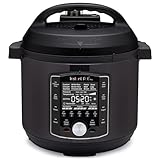
Instant Pot Pro 6 Qt 10-in-1 Electric Pressure Cooker
Badge: Best Upgrade Pick
Strengths
- Ten functions including sous vide — the widest capability in this line-up.
- Same recipe-native 6 Qt size, in a black finish.
- Covers pressure, slow, rice and grains, steam, sauté, yogurt, warm and sterilize per the listing.
Trade-offs
- Premium positioning buys breadth; soup-and-rice households may never open half of it.
- No capacity gain over the standard pick — big families should look at the 8QT model instead.
- The more a cooker does, the more its interface asks of a beginner.
Mini spec box
- Capacity: 6 Qt
- Format: 10-in-1 electric pressure cooker
- Functions: Pressure cook, slow cook, rice and grains, steam, sauté, sous vide, yogurt, warm, sterilize (per listing)
- Finish: Black (per listing title)
Every good editorial guide names an upgrade pick, and the rule for choosing one is strict: it must do something the main pick cannot, for a reader who will actually do it. The Pro passes that test with sous vide — precise, low-temperature cooking that the standard model simply does not offer — wrapped in the same 6-quart, recipe-native platform. For the cook who poaches eggs to order, cooks proteins for ramen night at exact temperatures, or runs a small fermentation and yogurt practice, the Pro consolidates two appliances into one footprint. The black finish also suits kitchens where the cooker lives permanently on display.
The counter-argument is equally editorial: most households use three functions of any multi-cooker — pressure, sauté, and rice or slow — and for them the Pro’s extra breadth is shelf dressing. A testing desk would tell that reader to buy the main pick and spend the difference on ingredients. So the Pro’s verdict is conditional by design: it is the upgrade for cooks whose repertoire already reaches for precision temperature control, and an unnecessary step for everyone else. Named honestly, that is what an upgrade pick is supposed to be.
Best for: Ambitious cooks who will use sous vide and the full programme range / Not suited for: Buyers whose cooking uses three functions and no more
There is also a workflow argument for the Pro in households that cook in courses. Sous vide proteins can hold at temperature while the same counter hosts a pressure-cooked grain or a steamed vegetable from a second vessel — or, on simpler nights, the Pro’s own slow and warm programmes stage a meal in sequence. Cooks who entertain will recognise the pattern: precision where it shows, patience where it helps. If that sounds like your kitchen’s rhythm, the upgrade premium buys genuine capability; if your meals are single-pot and weeknight-shaped, it buys decoration.

COMFEE’ 12-in-1 Electric Pressure Cooker, 6 Quarts
Badge: Best Value Pick
Strengths
- Twelve menus across a 9-in-1-style platform, with a 24H timer for scheduled cooking.
- Ceramic inner pot for easy release of rice and starchy dishes.
- Built-in safety features per the listing, in the standard 6-quart size.
Trade-offs
- Nonstick-style coated pot needs gentle tools and has a finite service life.
- Smaller recipe ecosystem than the market leader’s; preset names will not always match online recipes.
- Brand support and accessory depth are thinner than the category leaders.
Mini spec box
- Capacity: 6 Quarts
- Format: 12-in-1 electric pressure cooker
- Menus: 12 menus; 9 cookers in one (per listing title)
- Timer: 24H timer (per listing title)
- Inner pot: Ceramic inner pot (per listing title)
The value pick in an editorial line-up is not the cheapest cooker; it is the one where the capability-per-commitment ratio peaks, and the COMFEE’ makes that case with scheduling. A 24-hour timer changes how a pressure cooker fits a working household: load the pot in the morning, set the programme, and let dinner start itself. Twelve menus cover the standard repertoire, the ceramic inner pot handles the sticky end of cooking — rice, oats, congee — with easy release, and the size is the recipe-standard six quarts. For a first electric cooker in a busy household, that is a well-aimed bundle of the features that change daily life rather than the ones that fill a feature grid.
The trade-offs are the coated-pot and ecosystem ones, stated plainly. Treat the inner pot gently, expect to translate some online recipes’ button names into this machine’s menu language, and accept that the accessory shelf is smaller. None of that prevents the COMFEE’ from cooking the core repertoire well, and for the reader an editorial desk would call value-first — capability where it counts, restraint where it does not — this is the pick. Shoppers cross-checking the budget tier specifically will find the dedicated framing at Best Pressure Cookers Under $100 a useful second opinion.
Best for: Busy households wanting scheduling and easy-clean value / Not suited for: Cooks who want the deepest recipe ecosystem or a bare stainless pot
The timer deserves one more paragraph, because scheduling is the feature first-time buyers most often underrate and owners most often praise. Pressure cooking’s speed is famous, but speed matters less than timing: a cooker that can be loaded at breakfast and start itself in the late afternoon converts pressure cooking from an event into a utility. Rice ready when you walk in, a stew that began without you — that is the daily-life difference the COMFEE’ is selling, and it is a more honest value proposition than a longer programme list. Desks notice such things; so do tired households at six in the evening.

Sweetcrispy 16-in-1 Electric Pressure Cooker 8QT
Badge: Best for Big Families
Strengths
- 8QT capacity — the largest here — for family batches and entertaining.
- Sixteen functions with twelve presets, per the listing, around a ceramic pot.
- Recipe book included, a beginner-friendly touch in a big machine.
Trade-offs
- Large footprint and a lot of pot for small households or small batches.
- Sixteen functions is a menu to learn; the core four will do most of the work.
- Ceramic pot care rules apply — gentle tools, no abrasive scrubbing.
Mini spec box
- Capacity: 8QT
- Format: 16-in-1 electric pressure cooker
- Presets: 12-preset multi cooker (per listing title)
- Inner pot: Ceramic pot (per listing title)
- Included: Recipe book (per listing title)
Big households break standard cookers quietly: a 6-quart pot under the two-thirds rule serves a family dinner, but not a family dinner plus tomorrow’s lunches plus a freezer portion. The Sweetcrispy’s 8QT body answers that arithmetic. It runs the full modern repertoire the listing promises — pressure, slow cook, rice, steamer, sauté, soup and yogurt among its sixteen functions — and the ceramic pot keeps the big sticky batches (a family load of rice, a chowder for eight) releasable and rinseable. The included recipe book is a small, genuinely useful thing for a household scaling up: big-pot timings and yields differ enough from the 6-quart canon that guidance in the box saves guesswork.
Editorial honesty about the brand is due: Sweetcrispy does not carry the category leaders’ long track record or accessory depth, so this pick is a capacity-and-features judgement, made on verified specifications, for households whose size makes the leaders’ 6-quart ceiling the binding constraint. If that is your household, the trade is sound. If it is not, an 8QT pot will spend its life under-filled, pressurising slowly for small loads, and the standard pick above will serve you better.
Best for: Large families and batch-cooking households / Not suited for: Small households, small kitchens, or brand-track-record-first buyers
Think about the dishes that actually strain a 6-quart pot and the case sharpens: a whole chicken with vegetables around it, a double batch of chilli for a team supper, a holiday ham’s worth of braising liquid, soup for a multigenerational table. In each, the constraint is not power or programmes — it is litres. The Sweetcrispy removes the constraint and adds the ceramic surface that keeps big, starchy loads manageable at cleanup time. For the household that hits the ceiling of standard cookers monthly, those are the two facts that matter, and both are verified rather than promised.

Instant Pot Duo 7-in-1 Mini Electric Pressure Cooker, 3 Quart
Badge: Best for Small Households
Strengths
- The reference platform’s full workflow — sauté, pressure, slow, rice, yogurt, warm — in 3 quarts.
- Stainless steel pot with a large companion recipe library per the listing.
- Small batches cook fresh and fast; the pot stores where a big cooker cannot.
Trade-offs
- Roughly two quarts of working capacity; guests mean planning or a second batch.
- Standard recipes need halving, with liquid kept above the minimum.
- Not a stock or batch pot in any sense.
Mini spec box
- Capacity: 3 Quart
- Format: 7-in-1 mini electric pressure cooker
- Functions: Pressure cook, slow cook, rice, steam, sauté, yogurt, warm, sterilize (per listing)
- Inner pot: Stainless steel
Editorial guides for this category traditionally name a small-household pick, and the Duo Mini is the easiest such call in this line-up: it is the reference machine, faithfully shrunk. Everything a beginner learns on it — the sauté stage, the seal, the release choices, the keep-warm landing — transfers directly to the category at large, and its recipe library support is, per the listing, the largest attached to any pick here. For couples and singles it also fixes the portion mathematics that make standard cookers awkward: fresh soup for two, rice without a week of leftovers, a small braise that tastes concentrated rather than stretched.
The limits are arithmetic, not quality. Two quarts of working room is a hard ceiling; a household that entertains monthly will outgrow it, and batch cooks should not pretend otherwise. But a testing desk respects a product that knows its brief, and for the small household the Mini’s brief — full capability, honest portions, tiny footprint — is the right one. It is also the natural second cooker in a two-machine kitchen, handling grains and sides while a larger pot runs the main.
Best for: Singles, couples and small kitchens wanting the full electric workflow / Not suited for: Families, entertaining, or batch cooking
Small cookers also teach proportion, a skill the big-pot era unteaches. Cooking for two in a 3-quart pot means seasoning in grams rather than handfuls, choosing the vegetable rather than the medley, and finishing dishes instead of refrigerating ambitions. Many couples find their cooking quietly improves when the appliance stops encouraging batch thinking. Add the Mini’s tiny counter footprint — it stores in a cupboard that would reject any other pick here — and the editorial case writes itself: this is the pick for the household whose constraint is space and servings, not capability.


Sweetcrispy 16-in-1 Electric Pressure Cooker 8QT — Second Listing
Badge: Same Model, Alternate Listing
Strengths
- Identical verified title, capacity and function set to the Sweetcrispy 8QT reviewed above.
- A second listing can differ in seller, fulfilment or bundled configuration — worth comparing at checkout.
- Same ceramic pot, twelve presets and recipe book offer.
Trade-offs
- It is not a different cooker; do not count it as a sixth distinct option.
- Configuration differences between listings, if any, are only visible on the listing pages themselves.
- All the big-pot and coated-pot considerations of the model above apply unchanged.
Mini spec box
- Capacity: 8QT
- Format: 16-in-1 electric pressure cooker
- Presets: 12-preset multi cooker (per listing title)
- Inner pot: Ceramic pot (per listing title)
- Note: Verified title identical to ASIN B0GV163MMW
This entry exists because honesty requires it, not because the guide needed padding. The verified pool for this keyword returned two ASINs for the Sweetcrispy 8QT with word-for-word identical titles. Sellers list the same appliance under multiple listings for many mundane reasons — a colour or bundle variant, a refreshed product page, separate marketplace storefronts — and a reader comparing listings deserves to be told that the two doors open into the same room. Everything in the review above applies here in full: the capacity case, the ceramic-pot care, the brand-track-record caveat.
The practical advice is simple. If the Sweetcrispy is your pick, open both listings, compare the exact configuration, the seller and the delivery terms on the day you buy, and choose on those facts — listings drift, and the better door can change from week to week. What we will not do is invent a difference to justify two reviews. Editorial guides earn trust in exactly these small moments, and this guide would rather spend a slot on transparency than on theatre.
Best for: Sweetcrispy buyers comparing the model’s two listings / Not suited for: Anyone counting it as an additional distinct option
A final practical note for whichever listing you choose: photograph the box label and keep the order details with the manual. Where the same model lives under two listings, your own record of which listing, seller and configuration you bought is what makes any future warranty or accessory question answerable in minutes instead of archaeology. It is unglamorous advice, and it is the kind that separates a smooth ownership decade from a frustrating one — which is, in the end, the entire editorial promise this guide set out to honour.
Comparison Table
| Model | Capacity | Functions | Inner pot | Editorial role | Link |
|---|---|---|---|---|---|
| Duo Plus | 6 Qt | 9-in-1 | Stainless steel | Best Overall | Check on Amazon |
| Instant Pot Pro | 6 Qt | 10-in-1 | Not stated in verified title | Upgrade pick | Check on Amazon |
| COMFEE’ 12-in-1 | 6 Quarts | 12 menus | Ceramic | Value pick | Check on Amazon |
| Sweetcrispy 8QT | 8QT | 16-in-1 | Ceramic | Big-family pick | Check on Amazon |
| Duo Mini | 3 Quart | 7-in-1 | Stainless steel | Small-household pick | Check on Amazon |
| Sweetcrispy 8QT (listing 2) | 8QT | 16-in-1 | Ceramic | Alternate listing of the same model | Check on Amazon |
How to Choose in the Editorial Spirit
Write your criteria before you shop. The editorial method works for an individual buyer exactly as it works for a testing desk: decide what matters — household size, the five dishes you cook most, counter space, how much scheduling you need — and rank those before you look at a single feature grid. Most regret purchases in this category come from criteria written afterwards, around a product already chosen.
Count distinct options, not listings. This guide’s duplicate Sweetcrispy is a tidy example of a general rule: marketplaces multiply listings, variants and bundles until six options look like sixteen. Compare models, not pages. When two listings look identical, they usually are; spend your comparison energy on configuration, seller and terms instead.
Match the pick to the eater count you actually serve. Editorial rankings assume a household; yours is specific. Count the people at your table on an ordinary Tuesday, add the guests you genuinely host in a month, and let that arithmetic — not aspiration — choose between the 3-quart, 6-quart and 8-quart classes in this guide. Every other criterion refines the choice; this one decides it. A cooker matched to real servings gets used several times a week, and frequency of use is the multiplier that turns any of these picks from a purchase into a habit that pays for itself in weeknight time.
Treat programme counts as marketing, capability as fact.
Sixteen functions and ten functions and nine functions mostly describe the same core repertoire with different menu granularity. The capabilities that genuinely separate these machines are few: capacity, sous vide, scheduling timers, and inner-pot material. Rank those, in the order your cooking cares about them, and the right pick usually names itself — the same discipline that makes Best Pressure Cookers Wit Ceramic Inserts worth reading if pot material is your deciding factor.
How to Get Editorial-Grade Results From Any of These Cookers
Begin with the water test every manual describes: a cup or two of plain water, a short pressure cycle, a practice release. It teaches the sounds, the seal and the steam behaviour of your specific machine with nothing at stake, and it flushes the manufacturing residues from a new pot. Desks run it before any scored cooking; home cooks should steal the habit. Only then cook the first real dish — something forgiving and liquid-rich — and start the notebook that will become your machine’s true manual.
The testing-desk habits transfer to your kitchen.
Learn one reference dish per function: a soup for pressure, a grain for the rice programme, an egg batch for steam — repeat each until the result is boringly consistent, and you will understand your machine better than any manual teaches. Control your variables: when a dish disappoints, change one thing next time — liquid, time, or release — and write down what happened; that notebook is your personal test log. Respect the fill lines (two-thirds generally, half for foamy foods), maintain the seal (wash and inspect the ring, keep the vent clear, store the lid inverted), and finish dishes actively — pressure builds the base, but seasoning, acid and fresh elements at the end are what make food taste tested rather than merely cooked.
Troubleshooting Like a Tester
Problem: A recipe works in one cooker and fails in another → The models differ in pressure behaviour and programme definitions; treat the first run in any new machine as calibration, check early, and log the adjustment rather than blaming the recipe.
Problem: The pot reports a burn warning with starchy dishes → Liquid was too thick or settled on the base. Stir before sealing, layer thick sauces on top of thin liquid rather than under it, and deglaze the sauté stage completely.
Problem: Results are inconsistent week to week → A variable is drifting: gasket seating, fill level, or ingredient temperature. Standardise the routine, inspect the ring, and change one factor at a time until the pattern shows itself.
Accessories an Editorial Desk Would Actually Approve
Accessory marketing around this category is endless, so here is the short, defensible list a testing desk would sign. A spare sealing ring, first and always — ideally two, one reserved for mild and sweet dishes — because the ring is the wear part that decides whether the cooker seals on a tired Tuesday. A second inner pot if your cooking runs in sequence, so the rice can follow the braise without a washing interval. A glass lid for the slow-cook and sauté stages, which turns the cooker into a civilised stovetop-style pot when pressure is not wanted. A steamer basket or trivet that fits your size, for eggs, vegetables and pot-in-pot cooking. And that is close to the whole list. Everything else — the themed mitts, the novelty lids, the tenth specialty rack — is decoration until your own cooking proves a need. Buy accessories the way desks recommend cookers: by criteria, after the need appears, one at a time.
Pot-in-pot cooking deserves its own sentence, because it quietly doubles what any of these machines can do: a covered bowl on a trivet inside the pot cooks rice above a curry, reheats leftovers without drying them, and makes small desserts in a big machine practical. If you take one technique from this guide, take that one — it is the closest thing pressure cooking has to a free second appliance, and it works in every pick listed here.
What Editorial Picks Get Wrong (and How to Protect Yourself)
Even the best testing desks have blind spots, and a smart reader compensates for them. Picks optimise for the median household, so edge cases — very large families, high-altitude kitchens, cooks with limited hand strength for whom lid design is decisive — must re-weight the criteria themselves; the big-family and small-household picks in this guide exist for exactly that reason. Testing also ages: models are revised, listings change, and a verdict from a previous season may describe a configuration no longer sold, which is why this guide re-verified its pool against current catalogue data and why you should confirm the configuration on the listing before buying. Finally, no desk can test for your recipes. The most reliable sentence in any roundup is the one that tells you who should not buy the winner — read those first, in this guide and in Best Pressure Cookers Recipes, where the recipe-library angle gets the full treatment.
How a Testing Desk Would Run These Six Head to Head
It is worth showing the method concretely, because the method is the product an editorial guide sells. A desk would start with a standardised basket of dishes cooked in every machine: a pot of dried beans from dry, a whole chicken, a batch of long-grain rice, a steel-cut oat breakfast, a yogurt run where the function exists, and a tomato-based braise chosen to punish weak seals and scorched bases. Each dish gets scored on outcome (texture, flavour, doneness evenness), on process (how clear the controls were, how the release behaved, how much supervision the machine demanded), and on aftermath (cleaning time, lingering odours in the ring, how the pot looked after scrubbing). Then the desk would live with the finalists — because a cooker that wins a Saturday test can still annoy across a month of weeknights — and only then write the words top pick.
Read against that template, this guide’s order explains itself. The Duo Plus leads because nothing in its profile is worst-in-class and its ecosystem support is best-in-class; the Pro follows as the capability upgrade; the COMFEE’ wins the value argument on scheduling plus release-friendly pot; the Sweetcrispy owns the capacity corner; the Mini owns the small-household corner. You may weight the criteria differently — a desk would respect that, and so do we — but a ranking whose logic you can inspect and re-weight is worth more than a ranking that merely asserts. That transparency, more than any single verdict, is the tradition this keyword asks about.
A Short History of Why This Category Has an Editorial Canon at All
Electric pressure cookers spent decades as a niche appliance before the editorial era made them a phenomenon. The turning point was the combination of three things: a genuinely safer, self-regulating electric format; a recipe community that standardised on one platform’s size and buttons, making recipes portable between kitchens for the first time; and review publications willing to name a single winner and defend the choice in public. Once recipes became portable, the platform advantage compounded — more recipes attracted more buyers, whose numbers attracted more recipe writers. Understanding that flywheel explains the shape of this entire guide: why the reference platform still anchors the rankings, why ecosystem depth counts as a product feature, and why challengers compete on the specific axes the incumbent leaves open — capacity, coatings, scheduling, price tier. Buy with the flywheel in mind and you are buying into the support structure your cooking will actually use.
Common Buying Mistakes
- Counting listings as options. Duplicate and variant listings inflate choice; compare distinct models.
- Buying the upgrade by default. Extra programmes are value only if your cooking opens them.
- Ignoring inner-pot material. Stainless and ceramic behave differently for decades of meals; choose for your dishes and your tools.
- Trusting an old verdict blindly. Models and listings drift; verify the current configuration before you buy.
- Skipping the who-should-not-buy lines. They are the most honest sentences in any editorial guide, including this one.
- Oversizing for imaginary guests. Buy for the household you feed weekly; borrow or batch for the rare crowd.
Final Recommendation
The editorial verdict: for most people, buy the Instant Pot Duo Plus — the complete version of the platform the category’s recipes are written for. Ambitious cooks with a real use for precision cooking step up to the Instant Pot Pro; value-first households choose the COMFEE’ and its scheduling timer; large families take the Sweetcrispy 8QT under either of its listings; small households take the Duo Mini. That is the whole list, with the reasoning in the open — which is what this style of guide has always promised.
Frequently Asked Questions
What does “sweethome” mean in this search?
It refers to The Sweethome, the home-gear sister site of Wirecutter, known for short, criteria-led pick lists. Shoppers use the term to ask for that editorial style of verdict: a few clear winners, the reasoning shown, and the limitations stated. This guide follows that method and says so openly.
Why are there two listings for the same Sweetcrispy cooker?
Because the verified catalogue data returned two ASINs with identical titles for the same 8QT model — a common marketplace pattern covering variants or refreshed pages. We review the model once, flag the duplication in its own entry, and advise comparing both listings’ configuration and terms on the day you buy.
How is an upgrade pick different from the best overall pick?
The best overall pick serves the median household best. An upgrade pick adds a capability the overall pick lacks — here, sous vide and a broader programme range — that only some cooks will use. If you would not use the added capability, the upgrade is not an upgrade for you.
Should I trust editorial picks over owner reviews?
Use both for what each does well. A practical sequence: shortlist with the editorial criteria, verify with the verified catalogue data as this guide does, then read recent owner reports on your chosen model for the two or three issues that matter to your household — noise, lid handling, cleaning — before ordering. That three-step habit takes under an hour and prevents nearly every common regret in this category.
In short: editorial guides compare models against fixed criteria and explain trade-offs, while owner feedback reveals long-term, real-kitchen behaviour at scale. Read the pick for the reasoning, then scan recent owner reports for the model you are about to buy.
Does the number of functions predict cooking quality?
No. Core cooking quality comes from pressure control, sealing, heating evenness and pot material. Function counts mostly repackage the same repertoire; the differences that matter are capacity, special capabilities like sous vide or scheduling, and the inner pot’s surface.
What size do editorial guides recommend most often, and why?
Six quarts, and the reasoning is structural rather than fashionable. It is the size the recipe ecosystem standardised on, so recipes fit without scaling; it feeds a typical family under the fill rules without wasting counter space on volume that sits empty; and it is the size with the deepest accessory and replacement-part support. Deviating makes sense for clear reasons — a two-person household, a batch-cooking practice, a tiny kitchen — and this guide names a pick for each of those cases.
How often should an editorial pick be re-checked?
Whenever you actually buy — and also whenever a guide you rely on is republished or a model line is refreshed, since a pick is a snapshot of a moving market. The discipline costs a minute: open the listing, read the title and configuration as they stand today, and confirm they still match the verdict you are following. Guides, including this one, do the verification work at writing time; the final confirmation is the reader’s, and it is the cheapest insurance in the whole purchase. Models get revised and listings change configuration, so treat any verdict — including this one — as a well-reasoned starting point, then confirm the current listing’s title, size and included items before ordering. That final check takes a minute and prevents the classic wrong-variant disappointment.


