Disclosure: topratedkitchenware.com is reader-supported. When you buy through links on our site, we may earn an affiliate commission from Amazon and other retailers, at no extra cost to you.
Where to buy
The six verified countertop models below are arranged the way this guide thinks: by capacity first, because on a countertop, size is the price decision everything else hangs from. Each name links to its Amazon listing so you can check the latest price on Amazon — no figures are printed here, because countertop microwave prices move constantly and a printed number would be a stale one.
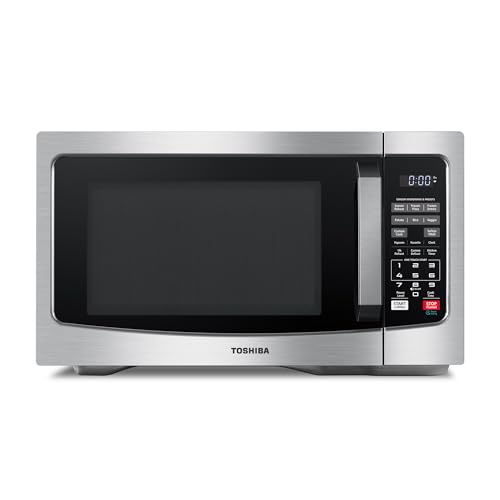
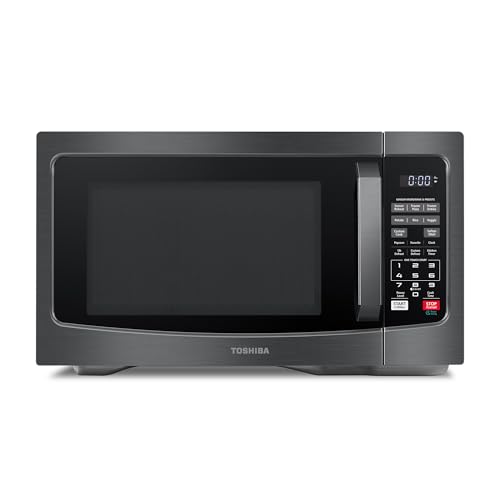
- TOSHIBA Countertop Microwave Oven with Inverter Technology, 1.6 Cu.Ft, 1250W, Black Stainless Steel — Best Large Capacity. Check on Amazon for the current listing details.
- TOSHIBA Flatbed Microwave Oven with Inverter Technology, 1.3 Cu.Ft, 1200W, Black Stainless Steel — Best for Large Dishes. Check on Amazon for the current listing details.
- Panasonic Countertop Microwave Oven, 1.2 Cu. Ft., 1250W, Inverter Technology with Genius Sensor, Stainless Steel – NN-SN67QS — Best Premium Even Heating. Check on Amazon for the current listing details.
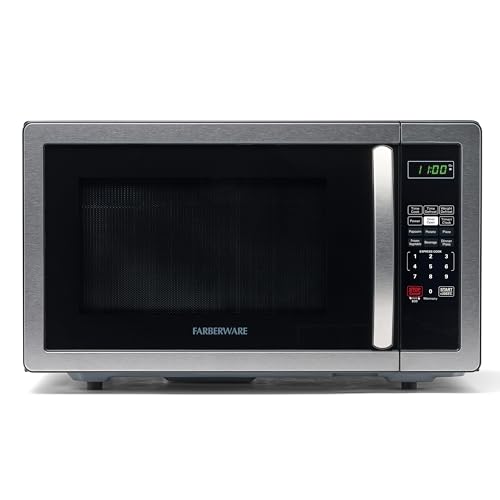
- Farberware Countertop Microwave Oven 1.1 cu.ft, 1000 Watts, Stainless Steel — Best Mid-Size Defroster. Check on Amazon for the current listing details.
- BLACK+DECKER Microwave Oven Countertop, 1.1 Cu.Ft, 1000W, Stainless Steel — Best Simple Mid-Size. Check on Amazon for the current listing details.
- Chefman Countertop Microwave Oven 0.9 Cu. Ft., 900 Watts, Black — Best Small-Counter Pick. Check on Amazon for the current listing details.
Read the full guide ↓ for the capacity ladder explained, the footprint math nobody does, and which size tier deserves your counter space and your money.
Understanding the best prices on countertop microwaves starts with a fact shoppers feel but rarely say out loud: with a countertop machine, you are buying cubic feet before you are buying anything else. Capacity decides the footprint that will live on your counter for a decade, the dishes the machine can accept, the output class it can carry, and — more than any single feature — the tier its price belongs to. A sensor can be added to almost any size; a cavity cannot be added to any machine. So this guide is organised by size from the top down: a large 1.6 cubic foot inverter flagship, a 1.3 flatbed that cheats capacity with shape, a premium 1.2, two honest 1.1 mid-sizes, and a 0.9 that earns its place by fitting the counters the others cannot. Read it as a ladder. Each rung states what the size buys, what it costs in counter and compromise, and who should stop climbing there.
Every specification below comes from the product’s verified Amazon listing, checked on 2026-11-20, and no prices are printed anywhere — the guide works in tiers and sends you to the listing for the live figure, which is the only honest way to write about prices at all. One framing note: all six machines here are countertop models by design, which means no installation cost hides behind any of them; the price conversation is purely about the machine, its size and its specification, and that purity is exactly why the capacity ladder is such a reliable guide to what each should cost relative to the others. Readers whose kitchens force the smallest footprints can cross-check the compact end of the market at Best Prices On Small Microwaves after reading the ladder here.
Key Takeaways
- Capacity is the master variable of countertop pricing: it sets footprint, dish size, output class and tier in one number.
- The 1.6 cubic foot TOSHIBA is the large-capacity benchmark — top output, inverter delivery and the only cavity that never asks for cooking in rounds.
- The 1.3 flatbed TOSHIBA buys usable space with shape instead of size, taking rectangular dishes turntable machines reject.
- The Panasonic is the premium 1.2: full top-class power and the finest low-power control in a moderate footprint.
- The two 1.1 models are the mid-size value tier, split by personality — Farberware for defrosting, BLACK+DECKER for simplicity.
- The 0.9 Chefman is the small-counter answer: near-standard cooking where the larger tiers physically cannot go.
In this guide
Quick Picks
| Pick | Badge | Capacity | Power | Standout feature |
|---|---|---|---|---|
| TOSHIBA 1.6 Cu.Ft Inverter Microwave | Best Large Capacity | 1.6 cu ft | 1250W | 13.6 inch turntable, auto defrost |
| TOSHIBA Flatbed 1.3 Cu.Ft Microwave | Best for Large Dishes | 1.3 cu ft | 1200W | No turntable, smart sensor, mute |
| Panasonic NN-SN67QS 1.2 Cu. Ft. Microwave | Best Premium Even Heating | 1.2 cu ft | 1250W | Genius Sensor inverter cooking |
| Farberware 1.1 cu.ft Microwave | Best Mid-Size Defroster | 1.1 cu ft | 1000W | Defrost by weight or time, multi-stage |
| BLACK+DECKER 1.1 Cu.Ft Microwave | Best Simple Mid-Size | 1.1 cu ft | 1000W | Push-button door, 6 presets |
| Chefman 0.9 Cu. Ft. Microwave | Best Small-Counter Pick | 0.9 cu ft | 900W | Express cook, Eco mode, mute |
How These Picks Were Chosen
The pool is a verified set of countertop microwaves checked against Amazon’s catalogue data on 2026-11-20. Every specification used — capacity, wattage, turntable diameter, named features — is taken from the product’s verified listing title and nowhere else. No dimensions have been estimated, no features borrowed from sibling models, and no prices quoted, because the guide’s entire argument is that relative tier, not a volatile figure, is the durable information.
The selection was made to build a clean capacity ladder with no rung missing and no rung duplicated in role. At the top, two genuinely different answers to the large-kitchen question: maximum cubic capacity with a turntable, and slightly less capacity with a flatbed floor that changes what shapes fit. In the premium middle, the market’s reference inverter machine at the size most counters accept. At the mid-size rung, two machines with identical headline numbers and opposite personalities, included deliberately as a pair so readers can watch finish and feature choices — not size — move within a tier. At the bottom, the smallest machine that still cooks like a microwave rather than a warmer. A ladder with a personality split on one rung teaches more than six unrelated picks.
Judgement within the ladder follows three rules. Size claims are read from the verified capacity figure, never from photographs, which flatter small machines shamelessly. Output is read as a class, not a contest — the guide cares whether a machine sits in the compact, standard or high class, because packaged food and daily patience respond to classes, not to small numerical gaps. And features are priced mentally as additions to the size tier, so a reader can always decompose a listing into what the size costs, what the automation costs and what the finish costs. That decomposition is the whole skill of judging countertop prices, and every review below practises it out loud. The feature-first retelling of this same ladder lives at Best Prices On Countertops Microwaves for readers who prefer to shop by capability rather than by size.
The 6 Best Prices on Countertop Microwaves, by Capacity Tier

TOSHIBA Countertop Microwave Oven with Inverter Technology, 1.6 Cu.Ft, 1250W
Badge: Best Large Capacity
Strengths
- The largest cavity here, on a 13.6 inch turntable that carries family dishes whole.
- Top-class 1250W output with inverter delivery — size and speed together.
- Smart sensor and auto defrost automate the big loads this size attracts.
Trade-offs
- The largest footprint here too; it will dominate a modest counter.
- Black stainless is a premium finish step over plainer large models.
- Small single portions are easy to overshoot until habits recalibrate.
Key specs from the verified listing: Capacity 1.6 cu ft; Power 1250W; Inverter technology; Smart sensor; Auto defrost; Turntable 13.6 inch; Finish black stainless steel.
The top rung of the ladder is where capacity stops being a compromise. At 1.6 cubic feet this Toshiba accepts the dishes that define family cooking — the wide casserole, the lasagne pan, the big bowl of potatoes for a crowd — and rotates them on a turntable sized to match. Just as importantly, it pairs that room with the top output class and inverter delivery, so the large loads it invites also cook quickly and, at low settings, gently. In pricing terms this is the flagship rung: the machine whose specification contains every cost driver at once — size, output, inverter, sensor, finish — and whose live price therefore anchors the top of the countertop market. Anything priced above this rung owes you an explanation in features; anything that looks like this rung at a mid-tier figure deserves your scepticism and your variant-checking skills.
The daily experience matches the specification’s ambition. Batch reheats happen in one run instead of three. Frozen family meals land on their printed times. The sensor absorbs the timing judgement that big, dense, variable loads make hardest. And the defrost — inverter-steady, sensor-assisted — handles the Sunday joint and the weekday chicken with the same composure.
The rung’s cost is measured in counter, not just money. This machine needs depth, width and breathing room, and in a small kitchen it will crowd out the toaster, the knife block and your patience. The ladder’s discipline says: buy this rung if your cooking is genuinely large and your counter is genuinely available. Otherwise the rungs below are not lesser machines; they are the same market correctly sized, which is the entire point of shopping by capacity first.
Best for: families and batch cooks with the counter to spare / Not suited for: small kitchens or single-portion households
Check on Amazon for the latest price and current listing details.

TOSHIBA Flatbed Microwave Oven with Inverter Technology, 1.3 Cu.Ft, 1200W
Badge: Best for Large Dishes
Strengths
- Flatbed floor takes rectangular and oversized dishes no turntable can rotate.
- 1200W inverter power, a small step below the flagship, with sensor cooking.
- Mute function and a wipe-clean flat floor simplify daily life.
Trade-offs
- Stationary dishes benefit from a stir or turn on long cooks.
- Slightly less capacity and power than the flagship rung.
- No removable plate: baked-on spills are cleaned in place.
Key specs from the verified listing: Capacity 1.3 cu ft; Power 1200W; Inverter technology; Flatbed, no turntable; Smart sensor; Mute function; Finish black stainless steel.
The flatbed is the ladder’s clever rung — the one that argues capacity is not only a number. At 1.3 cubic feet it sits below the flagship on paper, but its flat floor accepts the rectangular oven dishes, long platters and wide pans that a turntable machine of any size either rejects or forces into awkward rounds. For households whose cooking is casserole-shaped, usable capacity here can exceed the flagship’s, and the price conversation changes accordingly: you are paying for a floor design, not just for volume, and the design is worth its step if your dishware is rectangular.
The rest of the specification supports the argument. Inverter delivery at near-flagship output keeps stationary food cooking evenly enough that only long, dense cooks ask for a midpoint stir, and the smart sensor judges the common jobs by steam rather than by hope. The mute function suits the open-plan kitchens flatbeds usually live in, and cleaning is a flat wipe rather than a plate-and-ring wash — with the honest caveat that a spill you cannot carry to the sink must be cleaned where it lies.
Price this rung against the flagship, not against ordinary 1.3 machines: the flatbed mechanism and the inverter are both real costs, and a listing that treats this model as a generic mid-size has misread it — occasionally to the buyer’s advantage. If your dishes are round and your plates standard, the flagship’s extra volume is the better spend. If your cooking is rectangular, this is the smartest rung on the ladder.
Best for: casserole and batch cooks whose dishes are rectangular or oversized / Not suited for: cooks who never want to stir or turn anything
Check on Amazon for the latest price and current listing details.

Panasonic Countertop Microwave Oven, 1.2 Cu. Ft., 1250W, NN-SN67QS
Badge: Best Premium Even Heating
Strengths
- Flagship output and inverter control in the moderate 1.2 size most counters accept.
- Genius Sensor cooking is the most refined automation on this ladder.
- Stainless finish suits a machine that will sit on display for years.
Trade-offs
- Premium tier pricing within its size — you pay for control, not volume.
- Very wide dishes are tighter than in the two rungs above.
- Sensor-led cooking asks for trust in the machine’s judgement.
Key specs from the verified listing: Capacity 1.2 cu ft; Power 1250W; Inverter technology; Genius Sensor; Model NN-SN67QS; Finish stainless steel.
The Panasonic is the ladder’s proof that price does not climb by size alone. At 1.2 cubic feet it is smaller than both Toshibas above it, yet it belongs in their pricing neighbourhood, because what it sells is control: the top output class delivered through an inverter that can hold any level steadily, judged by a sensor system refined over generations. Defrosting, melting and delicate reheating — the jobs where microwaves usually embarrass themselves — are where this machine’s money went, and households that do those jobs weekly will find the premium easier to justify than any other on this page.
The size itself is the sweet spot of the countertop market, and that is not an accident. A 1.2 cavity takes dinner plates and medium casseroles, fits the standard counter depth of most kitchens, and leaves room beside it for the rest of a working worktop. Many buyers climbing this ladder should stop here: the rungs above buy volume and dish-shape freedom, and if your cooking does not need either, their extra cost purchases empty air. The Panasonic’s proposition is the opposite — no empty air at all, just the finest cooking in the size you actually need. Brand-focused readers can follow how this maker’s range is tiered at Best Prices On Panasonic Microwaves.
The honest limits are width and trust. Wide family dishes belong a rung or two up, and the sensor’s judgement replaces your habits — most cooks convert within a week, a few never do and should buy the simpler mid-size machines below. Judge both limits against your real kitchen, and this is either the ladder’s smartest stop or an expensive way to reheat soup.
Best for: quality-first cooks, defrosters and moderate counters / Not suited for: very wide dishes or cooks who insist on manual timing
Check on Amazon for the latest price and current listing details.

Farberware Countertop Microwave Oven 1.1 cu.ft, 1000 Watts, Stainless Steel
Badge: Best Mid-Size Defroster
Strengths
- Defrost by weight or time plus multi-stage cooking — rare depth at mid-size.
- Full-size 1000W class in a slightly trimmer 1.1 cavity.
- Stainless finish and express cooking round out a practical package.
Trade-offs
- No sensor and no mute in the verified specification.
- Six presets is a working set, not a deep menu system.
- A fraction less room than the 1.2 rung for the largest plates.
Key specs from the verified listing: Capacity 1.1 cu ft; Power 1000W; 10 power levels; Multi-stage cooking; 6 preset options; Defrost by weight or time; LED display; Express cooking; Finish stainless steel.
The mid-size rung is where most countertop money is spent, and the Farberware shows what the rung buys when it is spent on workflow rather than automation. Its defrost accepts weight or time, and its multi-stage programming lets a defrost run straight into a cook — a combination that serves freezer-led households better than a sensor serves reheat-led ones. Around that specialism sits the standard full-size power class in a 1.1 cavity that trims a little footprint from the 1.2 rung without surrendering the dinner plate.
As a pricing lesson, the Farberware teaches specialism: within a tier, machines differentiate by the job they have optimised, and the right comparison is not the whole market but the other machines optimised for your job. A defrost-heavy household comparing this against a sensor machine is not choosing between good and bad; it is choosing which weekly task gets the machine’s best effort. Priced against sensor models, the Farberware should ask for credit for its defrost depth; priced against basic mid-sizes, that depth is exactly the step you are paying for.
Liveability is plain rather than luxurious — no mute for the night shift, no sensor for the forgetful — and the stainless finish keeps it presentable on a permanent counter. For the household it suits, those are the right economies. For the household it does not, the rungs above and the twin below each offer a different answer at a similar address on the ladder.
Best for: freezer-led families who want defrost depth at mid-size / Not suited for: sensor seekers or quiet-hours households
Check on Amazon for the latest price and current listing details.

BLACK+DECKER Microwave Oven Countertop, 1.1 Cu.Ft, 1000W, Stainless Steel
Badge: Best Simple Mid-Size
Strengths
- The Farberware’s size and power class with the simplest panel on the ladder.
- Push-button door suits full hands, children and older users.
- Stainless finish at the mid-size rung’s straightforward end.
Trade-offs
- No defrost-by-weight depth and no multi-stage programming stated.
- No sensor, no mute — the specification is deliberately basic.
- Six presets cover the common jobs and nothing more.
Key specs from the verified listing: Capacity 1.1 cu ft; Power 1000W; Push-button door; Child safety lock; 6 auto cook presets; 10 power levels; Finish stainless steel.
Here is the ladder’s controlled experiment: same rung as the Farberware — same capacity class, same power class, same stainless skin — with the specialism stripped out and simplicity put in its place. Six presets, ten power levels, a push-button door, a child lock. The pair exists in this guide so you can watch a tier’s price logic with the size variable held constant: what differs is what the money buys inside the rung, and the correct choice is the one whose inside matches your household’s habits. Shared kitchens, multi-generational households and anyone buying for a less technical user should weight this model’s simplicity heavily; it is the machine nobody in the house can fail to operate.
Cooking is the standard class behaving as the standard class does: packaged meals on their times, reheats brisk, defrosting a manual and supervised affair. Nothing here rescues a mistimed plate, and nothing here confuses a guest. Over a decade of daily use, that absence of friction is a real return on the rung’s price — arguably a better return, for the right household, than features configured once and forgotten.
Compare it honestly against its twin: if your freezer works harder than your guest list, take the Farberware; if your household works harder than your freezer, take this. Either way you are buying the mid-size rung correctly, which is to say by personality rather than by headline. The way other makers slice this same size class is surveyed at Best Prices On Samsung Microwaves for readers still cross-shopping brands.
Best for: shared and multi-generational kitchens at mid-size / Not suited for: defrost specialists or automation seekers
Check on Amazon for the latest price and current listing details.

Chefman Countertop Microwave Oven 0.9 Cu. Ft., 900 Watts, Black
Badge: Best Small-Counter Pick
Strengths
- The smallest footprint on the ladder that still cooks at near-standard output.
- Express cook, Eco mode and a mute button — a complete courtesy set.
- 900W keeps packaged meals respectable where compacts make them a project.
Trade-offs
- Family dishes and the largest plates exceed this rung.
- A step slower than the full-size class on dense loads.
- Plain black finish is functional rather than decorative.
Key specs from the verified listing: Capacity 0.9 cu ft; Power 900W; 10 power levels; 6 cooking presets with one-touch express cook; Eco mode; Child safety lock; Mute button; Finish black.
The bottom rung of this ladder is a deliberate choice, not an omission: below it sits the compact class, which this guide treats as a different appliance for different rooms. The Chefman at 0.9 cubic feet is the smallest machine here that still behaves like a kitchen’s main microwave — dinner plates fit, output sits close enough to the standard class that packaged food behaves, and the courtesy set (express cook for the hungry, mute for the walls, ECO for the meter) is complete. For small counters, that combination is the rung where the price conversation should start, because every rung above it costs counter before it costs anything else.
Its pricing lesson is the mirror of the flagship’s. There, you checked that every cost driver was really present; here, you check that nothing essential was removed to reach the friendlier tier. Run the audit: plate fits, output class holds, courtesies present, maker established. The Chefman passes, which is why it is on the ladder while the true compacts are not. What it cannot do is grow with a household — couples becoming families will climb past it — and buyers in transition should weigh a mid-size rung now against a replacement later.
As a daily tool for one or two people it is genuinely well judged, and its plain finish even argues for it in rental kitchens where the machine’s job is dinner rather than display. Small-counter shopping done by capacity, not by desperation, ends here happily.
Best for: small counters, singles and couples cooking real meals / Not suited for: families or households about to grow
Check on Amazon for the latest price and current listing details.
Comparison Table
| Pick | Capacity | Power | Layout | Rung’s proposition | Link |
|---|---|---|---|---|---|
| TOSHIBA 1.6 Inverter | 1.6 cu ft | 1250W | 13.6 inch turntable | Maximum room and speed | Check on Amazon |
| TOSHIBA Flatbed 1.3 | 1.3 cu ft | 1200W | Flatbed, no turntable | Shape freedom for big dishes | Check on Amazon |
| Panasonic NN-SN67QS | 1.2 cu ft | 1250W | Turntable | Premium control, moderate size | Check on Amazon |
| Farberware 1.1 | 1.1 cu ft | 1000W | Turntable | Defrost specialism | Check on Amazon |
| BLACK+DECKER 1.1 | 1.1 cu ft | 1000W | Turntable | Simplicity specialism | Check on Amazon |
| Chefman 0.9 | 0.9 cu ft | 900W | Turntable | Smallest full-behaviour size | Check on Amazon |
How to Choose a Countertop Size Without Regretting It
Work from your dishes inward, not from the listings outward. Put your largest dinner plate and your most-used casserole on the counter and measure both. The plate must fit the turntable with room to rotate; the casserole must fit the cavity with its lid and with space for your hands. Those two measurements eliminate most of the market instantly and correctly. Next, measure the counter itself — width, depth, and the height under any wall cabinets — and subtract the breathing clearance the manual will demand; the machine that fits the shelf at the store must also fit the kitchen it is moving to. Then ask the household question: how many people, eating how many microwave-cooked meals, with how much batch cooking? Singles and couples live happily at the ladder’s lower rungs; families that reheat in volume belong in the middle; batch cooks and entertainers earn the top.
Finally, price the ladder honestly. Each rung up buys measurable things — room, output class, automation, finish — and each rung down returns counter space along with money. The mistake is not choosing any particular rung; it is choosing a rung for a household you do not have: the flagship bought for a bedsit, the compact bought for a family of five. Your dishes, your counter and your headcount are the whole method, and none of them changes with the retail calendar.
How to Place, Vent and Maintain a Countertop Microwave
- Place it on the level, with clearance. Countertop machines vent heat and steam; leave the gaps the manual specifies at the back and sides, and never push the unit flush into a corner.
- Mind the door swing and the cord. The door needs its full arc in front of your working space, and the cord should reach its outlet without stretching across the sink or the hob.
- Seat the turntable properly. Plate centred on its ring, ring on its track. A wobbling plate cooks unevenly and makes a noise that will outlast your patience.
- Flatbed owners: wipe the floor weekly. The flat cavity’s convenience is real only if the floor stays clean; spills left to bake become permanent seasoning.
- Keep the vents and door seals clean. A soft cloth weekly is the entire maintenance budget of a countertop machine, and it protects both performance and hygiene.
Troubleshooting. Problem: a new machine cooks slower than expected → check the vents are unobstructed and the turntable is seated before questioning the specification. Problem: plates will not rotate without catching → the dish exceeds the turntable; move to a smaller vessel or a flatbed design. Problem: steam fogging nearby cabinets → increase rear clearance and avoid running long, wet cooks pushed against the wall.
The Footprint Math Nobody Does
Capacity is measured in cubic feet of cavity, but you pay for a countertop machine in square feet of counter — and the exchange rate is unforgiving. A large machine does not merely occupy its own footprint; it sterilises the space around it, because hot dishes need somewhere to land and doors need somewhere to swing. In a big kitchen that tax is invisible. In a small one, the flagship’s true cost is the chopping board that no longer fits beside it. This is why the ladder’s lower rungs are not compromises but designs: the 0.9 Chefman returns prep space every single day, and prep space is a feature no specification sheet lists. Before climbing any rung, stand in your kitchen and rehearse the meal you cook most: where does the board go, where does the hot dish land, where do you stand? The machine that survives the rehearsal is the right size, and its price — whatever the listing says on the day — is the right tier to pay.
When to Buy a Size You Will Grow Into — and When Not To
Households in motion face the ladder’s hardest question. A couple expecting a family, a renter about to buy a house, a student about to share a flat: should the microwave anticipate the next kitchen or serve this one? The durable answer is to buy for the counter you have and the cooking you do now, with one exception — if a move is certain and near, and the next counter is known to be larger, buying one rung up saves a replacement. Anticipatory buying fails in both directions when it guesses: the flagship bought for a hypothetical family crowds a real bedsit for years, and the compact bought for a hypothetical small flat strands a real household. Microwaves are not heirlooms; they are appliances with a natural replacement rhythm, and the ladder will still be here, rung for rung, when the next kitchen arrives. Buy the rung that fits the life you are living, and let the next life buy its own.
Why Countertop Pricing Is Its Own Conversation
Shoppers sometimes price a countertop machine against built-in and over-the-range models and confuse themselves, because the three families buy different things. A built-in’s price includes trim kits, cabinetry tolerances and an installed look; an over-the-range model’s price includes a ventilation system and a mounting design that must hold the machine above a hob for a decade. A countertop machine’s price is almost purely the cooking appliance itself — cavity, power supply, controls, finish — plus nothing for installation, because there is none. That purity cuts both ways. It makes countertop machines the best value in microwave cooking per unit of capability, and it makes their internal ladder unusually honest: when one countertop model costs a tier more than another, the difference is in the machine, not in the fitting. It also means the countertop buyer carries responsibilities the installed buyer pays to avoid — placement, ventilation, landing space — which is why this guide spends so much of its length on footprint and so little on figures. The counter is part of the appliance. Price it that way, by imagining the machine in place for ten years of breakfasts, and the ladder’s rungs price themselves.
There is a second, quieter consequence. Because a countertop machine can be replaced without a tradesperson, its buyers replace more willingly — which makes buying the correct rung first time more valuable, not less. Every premature replacement is a second purchase of delivery, disposal and learning curves. The ladder exists to make the first purchase the only one this decade.
Finish, Doors and Panels: The Visible Third of the Price
Decompose any countertop listing and roughly three budgets appear: the cooking budget (cavity, output, delivery), the automation budget (sensors, menus, courtesies), and the visible budget — finish, door mechanism and panel. The visible third buys nothing that cooks, and it is not therefore worthless: a machine lives on display, its door is operated thousands of times, and its panel is read in bad light by tired people. But the visible third is where inattentive money goes, because it is the third a photograph can sell. Stainless over black, black stainless over stainless, a handle over a push-button — each step is priced, and each should be bought the way you would buy a picture frame: knowingly, for the looking, after the machine underneath has been chosen on its cooking and automation merits.
The six machines here map the visible third instructively. The two flagships wear black stainless, the Panasonic wears classic stainless, the mid-size pair wear stainless over identical numbers so you can isolate the finish’s role, and the Chefman wears plain black and spends its money on courtesies instead. None of these choices is the correct one in general; each is correct for a kitchen that knows what it is paying for. When you check a live price, perform the subtraction explicitly: what would this specification cost in the plainest finish, and is the difference a sum I would pay, separately, for the look and the door feel? Asked that way, the visible third stops smuggling itself into the cooking budget, and countertop pricing becomes the transparent exercise it should be.
Common Buying Mistakes
- Shopping by photograph. Listings flatter small machines and shrink large ones; the verified capacity figure is the only size that matters.
- Forgetting the landing space. A machine that fits its footprint but leaves nowhere to set a hot dish does not fit your kitchen.
- Paying flagship money for mid-size air. If your dishes are modest, the top rungs sell you volume you will never fill.
- Ignoring the turntable diameter. Cavity size alone does not guarantee your plate rotates; check the plate against the stated turntable.
- Buying the next household’s machine. Size for the counter and the cooking you have now, unless a move is certain and its kitchen is known.
Final Recommendation
Let your largest dish make the decision. If it is a family casserole and your counter can take it, the TOSHIBA 1.6 is the ladder’s top and its benchmark. If your dishes are rectangular, the TOSHIBA Flatbed converts shape into capacity more cleverly than any rival. If your cooking values control over volume, stop at the Panasonic and never look up the ladder again. At mid-size, take the Farberware for defrosting or the BLACK+DECKER for simplicity, and on a small counter take the Chefman 0.9 with confidence — it is the smallest rung that still behaves like a real microwave. Check the live price on the listing for whichever rung you choose, confirm the variant matches the capacity you measured for, and the countertop market will hold no surprises for you.
One more piece of ladder discipline is worth stating before the questions, because it is the one readers most often ask us to repeat: the rungs are about fit, not status. A household that stops at the mid-size rung has not bought less microwave than the flagship household; it has bought the correct amount of microwave, and the money it did not spend is available for the parts of the kitchen that household actually uses hard. The ladder’s purpose is to make every rung a respectable stopping point with its own logic — defrost depth here, simplicity there, shape freedom at the top — so that the only bad purchase on the page is the one made against your own measurements. Bring the measurements, and the market becomes remarkably easy to read.
Frequently Asked Questions
What countertop size suits most households?
The middle of the ladder — roughly the 1.1 to 1.2 cubic foot class — suits most households because it takes full dinner plates and medium casseroles, fits standard counter depths, and carries the standard or high power classes. Households should move up for batch cooking and large dishes, and down only when the counter, not the cooking, forces it.
Is a flatbed microwave really bigger inside than its capacity suggests?
For rectangular and oversized dishes, yes in practice: the flat floor accepts shapes a turntable cannot rotate at any size, so usable capacity for casserole-led cooking can exceed a larger turntable model. For round dishes and ordinary plates, the stated capacity compares normally. Judge by your dishware’s shapes, not by the number alone.
Why is the Panasonic priced like larger machines?
Because price follows specification, not size alone. Its inverter delivery and sensor system are flagship components in a moderate cavity, and they cost what they cost. If your cooking uses that control — defrosting, melting, delicate reheating — the premium is buying results. If it does not, a mid-size rung is the honest buy.
How much clearance does a countertop microwave need?
Follow the manual for your model, and treat the specified gaps at the back and sides as part of the machine’s true footprint when you measure. Ventilation space is not wasted counter; a machine that cannot breathe runs hot, cooks unevenly and ages early. Include the clearance in your footprint math from the start.
Should I buy a bigger microwave than I need so it lasts longer?
Size does not buy lifespan; it buys room. A correctly sized machine from an established maker, ventilated properly and cleaned occasionally, lasts as long as an oversized one — and fits your kitchen the whole time. Buy the rung your dishes and household need now, and replace on the market’s rhythm rather than your anxiety’s.
What is the smallest countertop size that still cooks properly?
In this guide’s judgement, the 0.9 cubic foot class represented by the Chefman: dinner plates fit, output sits near the standard class, and packaged meals behave. Below it, the compact class trades away plate size and cooking pace, which is fine for dorms and offices but a daily compromise as a kitchen’s only microwave.
Does a larger countertop microwave cook faster?
Only when the larger machine also carries a higher output class, as the flagship here does. Size and speed are separate specifications that happen to travel together at the top of the market. A large cavity on modest output cooks big loads slowly; a moderate cavity on top output, like the Panasonic’s, cooks ordinary loads very quickly. Read the two numbers independently, always — the ladder orders by size because size is the harder constraint, not because size is speed.
How do I know if a countertop price is fair without a reference figure?
Use the ladder as the reference. Place the machine by verified capacity, output class and automation, then compare its live figure only against machines on the same rung and the rungs beside it. Fairness in this market is relative and structural: a price is fair when it respects the rung. The moment you compare across three rungs at once, every figure looks arbitrary and none of them are.
Can I put a countertop microwave inside a cabinet or cubby?
Only with genuine ventilation, and preferably not at all. Countertop models are designed to shed heat into open room air; enclosing one traps heat and steam, shortens its life and can damage the cabinetry around it. If your kitchen plan demands an enclosed home for the machine, that is a sign to shop the built-in family instead, whose prices include exactly that engineering. Forcing a countertop model into a cupboard is the one placement decision this guide calls a mistake in every kitchen.