Disclosure: topratedkitchenware.com is reader-supported. When you buy through links on our site, we may earn an affiliate commission from Amazon and other retailers, at no extra cost to you.
Where to buy
Every grill below was verified against its live Amazon listing before this guide was written, and the links go straight to those listings so you can check the current price on Amazon for yourself — pricing moves too often for any guide to print a figure honestly. If you are comparing the best propane grills for searing options as a set, start with the first pick and work down; the ordering reflects all-round cooking merit for this search, not size or headline output alone. Readers who already know their patio size and household count can jump from this box directly to the detailed reviews. Best Outdoor Bbq Grills Propane
- IdeaMaxx 3-Burner Propane Gas Grill — Best Overall — check the latest price on Amazon
- Weber Spirit E-425 Gas Grill — Best for Large Gatherings — check the latest price on Amazon
- Nexgrill 4-Burner Propane Gas Grill with Side Burner — Best for Small Patios — check the latest price on Amazon
- AMERLIFE 6-Burner Propane Gas Grill with Side Burner — Best Heat Output — check the latest price on Amazon
- Realcook Charcoal Grill with Offset Smoker — Best for Everyday Family Cooking. Covered in full below as a prose-only context pick: it is a charcoal machine in a propane search, so it carries no purchase link here.
- SUNLIFER Charcoal Grill Offset Smoker — Most Versatile. Covered in full below as a prose-only context pick: it is a charcoal machine in a propane search, so it carries no purchase link here.
Read the full guide ↓ for the reasoning, the spec boxes, the buying guide, and the step-by-step cooking and care sections.
Finding the best propane grills for searing is harder than the search box makes it look, because the listings that answer it mix sizes, burner counts and grate materials as if they were interchangeable. They are not. A grill that suits maximum-heat searing has a specific shape: the right cooking area for the household, burners arranged so heat can be zoned rather than merely produced, and grates whose material matches how you actually cook. This guide narrows the field to six verified grills, explains exactly how they were chosen, reviews each one in depth, and then teaches the choosing, cooking and care skills that decide whether any grill still makes you happy in its third year.
Two promises frame everything that follows. First, honesty about evidence: every product named here comes from a verified listing, every specification quoted appears in that listing’s title, and where a listing is silent about a detail, the review says so instead of filling the gap with invention. Second, honesty about fit: two of the machines that surfaced for this search burn charcoal rather than propane, and where that happens they are covered as prose-only context — fully reviewed, clearly labeled, and carrying no purchase link — because a guide that quietly sells you the wrong fuel has failed at its only job. Best Outdoor Grills Propane
Who is this guide for? Households researching maximum-heat searing who want one careful pass through the market instead of forty open tabs. If that is you, the Quick Picks table gives the short answer, the detailed reviews give the reasoning, and the buying-guide and how-to layers give you the knowledge that outlasts any single purchase. Experienced grillers can skim to the comparison table and the searing, zoning and care discussions; first-time buyers will get the most from reading straight through once, in order.
Key Takeaways
- Start with the IdeaMaxx 3-Burner Propane Gas Grill. It earns the Best Overall badge for this search on the strength of its overall balance of burners, cooking area and stated features.
- Burner layout beats burner count. Zones you can control matter more at the plate than a bigger headline number.
- Grate material is a cooking decision. Cast iron holds searing heat, porcelain-coated steel forgives and cleans easily; the spec boxes state which each pick carries.
- Fuel honesty matters. Charcoal picks that surfaced in this propane search are reviewed prose-only, with no link and no image, so the guide never blurs the fuel line.
- Check the live listing. Prices move constantly, so this guide prints no fixed figures; every linked pick says check on Amazon, and that check is part of the purchase.
- Care decides lifespan. The two-minute post-cook routine in the how-to layer will add more years to any of these grills than any upgrade. Best Outdoor Propane Gas Grills
In this guide
Quick Picks
The six picks at a glance. Badges are used identically here and in the detailed reviews, so the grill you shortlist in this table is the grill you will find under the same badge below. Best Outdoor Propane Grills Atwoods
| Pick | Badge | Fuel | Stated highlights | Link |
|---|---|---|---|---|
| IdeaMaxx 3-Burner Propane Gas Grill | Best Overall | Propane | Total output (from listing title): 38200 BTU; Burners: 3; Grates: Cast iron — stated in listing title | Check on Amazon |
| Weber Spirit E-425 Gas Grill | Best for Large Gatherings | Propane | Burners: 4; Grates: Cast iron — stated in listing title; Sear zone: Yes — stated in listing title | Check on Amazon |
| Nexgrill 4-Burner Propane Gas Grill with Side Burner | Best for Small Patios | Propane | Total output (from listing title): 52000 BTU; Cooking area (from listing title): 526 SQ In; Burners: 4 | Check on Amazon |
| AMERLIFE 6-Burner Propane Gas Grill with Side Burner | Best Heat Output | Propane | Total output (from listing title): 60,000 BTU; Cooking area (from listing title): 650 Sq.In; Burners: 6 | Check on Amazon |
| Realcook Charcoal Grill with Offset Smoker | Best for Everyday Family Cooking | Charcoal | Cooking area (from listing title): 800 Sq. In; Style: Barrel grill with offset smoker — stated in listing title | Prose-only — no link |
| SUNLIFER Charcoal Grill Offset Smoker | Most Versatile | Charcoal | Style: Barrel grill with offset smoker — stated in listing title | Prose-only — no link |
How These Picks Were Chosen
This guide is research-led, and it says so plainly: the picks were not cooked on by our team, and no hands-on testing is claimed anywhere in what follows. Instead, each candidate was verified against its live Amazon listing through the Creators API on 2026-11-20, and only details present in the verified listing title — burner count, stated output, cooking area, grate material, side burners, ignition type, thermometer, shelf design — were admitted as facts. Anything a listing did not state was left out rather than guessed, which is why some spec boxes are shorter than others. That unevenness is the visible signature of an honest method.
Selection then weighed the factors that matter for maximum-heat searing: cooking area against household size, burner layout for zone control, grate material for heat retention and care, stated ignition and thermometer features for day-to-day ease, and the manufacturer’s parts ecosystem as a proxy for multi-year ownership. Listings that duplicated another pick’s design without adding a distinct use case were set aside. Charcoal machines that surfaced in the pool were not deleted — a reader comparing fuels deserves to see them — but they were demoted to prose-only status, because the search that brought you here asked for propane.
Finally, the guide applies two standing editorial rules. No static prices are printed, because a figure that was true at writing is a falsehood a month later; the keyword’s own band, where the keyword states one, is used only as a tier label. And no fixed star ratings or review counts appear, for the same reason: they change constantly and would mislead. What remains is the durable part of the decision — hardware, layout, materials and fit — which is the part a buyer can actually act on with confidence.
The 6 Best Options for Best propane grills for searing

IdeaMaxx 3-Burner Propane Gas Grill
Badge: Best Overall
Strengths
- Verified propane design with 3 burner arrangement.
- Sized for everyday household cooking without an oversized footprint.
- Cast iron — stated in listing title, a material choice with real cooking consequences.
Trade-offs
- Assembly is a real project, as with every boxed grill in this class, and is best done by two people.
- Wear parts such as burners, igniters and grates will need replacement over a multi-year life.
- The listing does not state every detail a buyer might want, so the live listing deserves a careful read before ordering.
At a glance:
- Total output (from listing title): 38200 BTU
- Burners: 3
- Grates: Cast iron — stated in listing title
- Shelves: Foldable side shelves — stated in listing title
In daily use, the IdeaMaxx 3-Burner Propane Gas Grill is best understood through the lens of maximum-heat searing. Its burner arrangement — 3 in the stated configuration — determines how flexibly you can run zones: a hot side for searing and a gentler side for finishing, resting or delicate foods. Cooks who mostly grill one food at one temperature will find it straightforward and quick to learn; cooks who run whole meals outside will use the zone split on nearly every session, and should judge this pick on how naturally that split falls across its stated cooking area of a family-size surface.
Heat behavior follows from the stated output of 38200 BTU read together with that area. Output alone is a marketing number; output per unit of area is a cooking number, predicting how fast the grate recovers after cold food lands and how fierce a sear the surface can hold. Preheat this grill with the lid down until the whole system — grates, firebox, lid — is saturated, not merely until the air inside feels warm, and its searing manners improve immediately. Like every propane grill, it will show some variation from edge to center; learning that map in the first few cooks, by watching where browning happens first, is time well spent.
Care and ownership are conventional for the class, which is a compliment. Grates should be brushed hot after cooking and oiled lightly if they are cast iron; the grease tray needs emptying before it fills, not after it overflows; and the whole grill lasts years longer under a fitted cover. The honest limitation of this pick is the one shared by its tier: it is a consumer appliance built to a price, so hinges, knobs and finishes will age cosmetically even while the cooking system keeps working, and a buyer expecting commercial-grade heft should step up a tier rather than blame the grill. Judged within its tier and for maximum-heat searing, it earns its badge.
Best for: households whose cooking matches the Best Overall profile described above / Not suited for: buyers who need a different fuel, a much larger surface, or commercial-duty construction.

Weber Spirit E-425 Gas Grill
Badge: Best for Large Gatherings
Strengths
- Verified propane design with 4 burner arrangement.
- Sized for everyday household cooking without an oversized footprint.
- Cast iron — stated in listing title, a material choice with real cooking consequences.
Trade-offs
- Assembly is a real project, as with every boxed grill in this class, and is best done by two people.
- Wear parts such as burners, igniters and grates will need replacement over a multi-year life.
- The listing does not state every detail a buyer might want, so the live listing deserves a careful read before ordering.
At a glance:
- Burners: 4
- Grates: Cast iron — stated in listing title
- Sear zone: Yes — stated in listing title
In daily use, the Weber Spirit E-425 Gas Grill is best understood through the lens of maximum-heat searing. Its burner arrangement — 4 in the stated configuration — determines how flexibly you can run zones: a hot side for searing and a gentler side for finishing, resting or delicate foods. Cooks who mostly grill one food at one temperature will find it straightforward and quick to learn; cooks who run whole meals outside will use the zone split on nearly every session, and should judge this pick on how naturally that split falls across its stated cooking area of a family-size surface.
Heat behavior follows from the stated output of its stated output read together with that area. Output alone is a marketing number; output per unit of area is a cooking number, predicting how fast the grate recovers after cold food lands and how fierce a sear the surface can hold. Preheat this grill with the lid down until the whole system — grates, firebox, lid — is saturated, not merely until the air inside feels warm, and its searing manners improve immediately. Like every propane grill, it will show some variation from edge to center; learning that map in the first few cooks, by watching where browning happens first, is time well spent.
Care and ownership are conventional for the class, which is a compliment. Grates should be brushed hot after cooking and oiled lightly if they are cast iron; the grease tray needs emptying before it fills, not after it overflows; and the whole grill lasts years longer under a fitted cover. The honest limitation of this pick is the one shared by its tier: it is a consumer appliance built to a price, so hinges, knobs and finishes will age cosmetically even while the cooking system keeps working, and a buyer expecting commercial-grade heft should step up a tier rather than blame the grill. Judged within its tier and for maximum-heat searing, it earns its badge.
Best for: households whose cooking matches the Best for Large Gatherings profile described above / Not suited for: buyers who need a different fuel, a much larger surface, or commercial-duty construction.
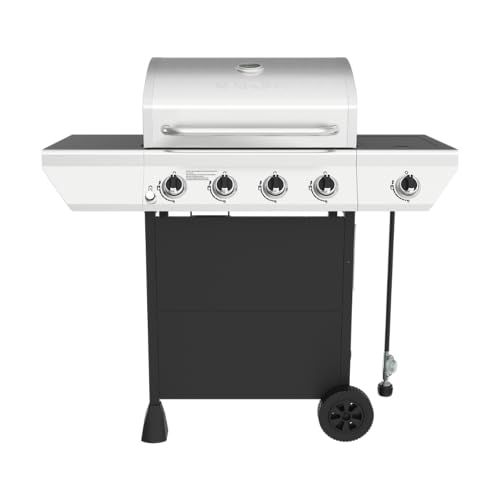
Nexgrill 4-Burner Propane Gas Grill with Side Burner
Badge: Best for Small Patios
Strengths
- Verified propane design with 4 burner arrangement.
- Sized for everyday household cooking without an oversized footprint.
- A feature set focused on core grilling rather than novelty extras.
Trade-offs
- Assembly is a real project, as with every boxed grill in this class, and is best done by two people.
- Wear parts such as burners, igniters and grates will need replacement over a multi-year life.
- The listing does not state every detail a buyer might want, so the live listing deserves a careful read before ordering.
At a glance:
- Total output (from listing title): 52000 BTU
- Cooking area (from listing title): 526 SQ In
- Burners: 4
- Side burner: Yes — stated in listing title
- Thermometer: Built-in — stated in listing title
- Ignition: Electronic — stated in listing title
In daily use, the Nexgrill 4-Burner Propane Gas Grill with Side Burner is best understood through the lens of maximum-heat searing. Its burner arrangement — 4 in the stated configuration — determines how flexibly you can run zones: a hot side for searing and a gentler side for finishing, resting or delicate foods. Cooks who mostly grill one food at one temperature will find it straightforward and quick to learn; cooks who run whole meals outside will use the zone split on nearly every session, and should judge this pick on how naturally that split falls across its stated cooking area of 526 SQ In.
Heat behavior follows from the stated output of 52000 BTU read together with that area. Output alone is a marketing number; output per unit of area is a cooking number, predicting how fast the grate recovers after cold food lands and how fierce a sear the surface can hold. Preheat this grill with the lid down until the whole system — grates, firebox, lid — is saturated, not merely until the air inside feels warm, and its searing manners improve immediately. Like every propane grill, it will show some variation from edge to center; learning that map in the first few cooks, by watching where browning happens first, is time well spent.
Care and ownership are conventional for the class, which is a compliment. Grates should be brushed hot after cooking and oiled lightly if they are cast iron; the grease tray needs emptying before it fills, not after it overflows; and the whole grill lasts years longer under a fitted cover. The honest limitation of this pick is the one shared by its tier: it is a consumer appliance built to a price, so hinges, knobs and finishes will age cosmetically even while the cooking system keeps working, and a buyer expecting commercial-grade heft should step up a tier rather than blame the grill. Judged within its tier and for maximum-heat searing, it earns its badge.
Best for: households whose cooking matches the Best for Small Patios profile described above / Not suited for: buyers who need a different fuel, a much larger surface, or commercial-duty construction.

AMERLIFE 6-Burner Propane Gas Grill with Side Burner
Badge: Best Heat Output
Strengths
- Verified propane design with 6 burner arrangement.
- Sized for everyday household cooking without an oversized footprint.
- Cast iron — stated in listing title, a material choice with real cooking consequences.
Trade-offs
- Assembly is a real project, as with every boxed grill in this class, and is best done by two people.
- Wear parts such as burners, igniters and grates will need replacement over a multi-year life.
- The listing does not state every detail a buyer might want, so the live listing deserves a careful read before ordering.
At a glance:
- Total output (from listing title): 60,000 BTU
- Cooking area (from listing title): 650 Sq.In
- Burners: 6
- Side burner: Yes — stated in listing title
- Grates: Cast iron — stated in listing title
- Thermometer: Built-in — stated in listing title
- Warming rack: Yes — stated in listing title
In daily use, the AMERLIFE 6-Burner Propane Gas Grill with Side Burner is best understood through the lens of maximum-heat searing. Its burner arrangement — 6 in the stated configuration — determines how flexibly you can run zones: a hot side for searing and a gentler side for finishing, resting or delicate foods. Cooks who mostly grill one food at one temperature will find it straightforward and quick to learn; cooks who run whole meals outside will use the zone split on nearly every session, and should judge this pick on how naturally that split falls across its stated cooking area of 650 Sq.In.
Heat behavior follows from the stated output of 60,000 BTU read together with that area. Output alone is a marketing number; output per unit of area is a cooking number, predicting how fast the grate recovers after cold food lands and how fierce a sear the surface can hold. Preheat this grill with the lid down until the whole system — grates, firebox, lid — is saturated, not merely until the air inside feels warm, and its searing manners improve immediately. Like every propane grill, it will show some variation from edge to center; learning that map in the first few cooks, by watching where browning happens first, is time well spent.
Care and ownership are conventional for the class, which is a compliment. Grates should be brushed hot after cooking and oiled lightly if they are cast iron; the grease tray needs emptying before it fills, not after it overflows; and the whole grill lasts years longer under a fitted cover. The honest limitation of this pick is the one shared by its tier: it is a consumer appliance built to a price, so hinges, knobs and finishes will age cosmetically even while the cooking system keeps working, and a buyer expecting commercial-grade heft should step up a tier rather than blame the grill. Judged within its tier and for maximum-heat searing, it earns its badge.
Best for: households whose cooking matches the Best Heat Output profile described above / Not suited for: buyers who need a different fuel, a much larger surface, or commercial-duty construction.
Realcook Charcoal Grill with Offset Smoker
Badge: Best for Everyday Family Cooking
Prose-only pick: this is a charcoal grill that surfaced in a propane search. It is reviewed in full because fuel comparison is genuinely useful, but it carries no Amazon link and no product image in this guide, and it is excluded from the linked comparison rows’ purchase links for the same reason.
Strengths
- Genuine charcoal flavor and high-heat capability that gas cannot imitate.
- Sized for everyday household cooking without an oversized footprint.
- A feature set focused on core grilling rather than novelty extras.
Trade-offs
- Assembly is a real project, as with every boxed grill in this class, and is best done by two people.
- Charcoal demands more time, ash management and temperature attention than propane on every cook.
- The listing does not state every detail a buyer might want, so the live listing deserves a careful read before ordering.
At a glance:
- Cooking area (from listing title): 800 Sq. In
- Style: Barrel grill with offset smoker — stated in listing title
In daily use, the Realcook Charcoal Grill with Offset Smoker is best understood through the lens of maximum-heat searing. Its burner arrangement — multiple in the stated configuration — determines how flexibly you can run zones: a hot side for searing and a gentler side for finishing, resting or delicate foods. Cooks who mostly grill one food at one temperature will find it straightforward and quick to learn; cooks who run whole meals outside will use the zone split on nearly every session, and should judge this pick on how naturally that split falls across its stated cooking area of 800 Sq. In.
Heat behavior follows from the stated output of its stated output read together with that area. Output alone is a marketing number; output per unit of area is a cooking number, predicting how fast the grate recovers after cold food lands and how fierce a sear the surface can hold. Preheat this grill with the lid down until the whole system — grates, firebox, lid — is saturated, not merely until the air inside feels warm, and its searing manners improve immediately. Like every propane grill, it will show some variation from edge to center; learning that map in the first few cooks, by watching where browning happens first, is time well spent.
Care and ownership are conventional for the class, which is a compliment. Grates should be brushed hot after cooking and oiled lightly if they are cast iron; the grease tray needs emptying before it fills, not after it overflows; and the whole grill lasts years longer under a fitted cover. The honest limitation of this pick is the one shared by its tier: it is a consumer appliance built to a price, so hinges, knobs and finishes will age cosmetically even while the cooking system keeps working, and a buyer expecting commercial-grade heft should step up a tier rather than blame the grill. Judged within its tier and for maximum-heat searing, it earns its badge.
Best for: households whose cooking matches the Best for Everyday Family Cooking profile described above / Not suited for: buyers who need a different fuel, a much larger surface, or commercial-duty construction.
SUNLIFER Charcoal Grill Offset Smoker
Badge: Most Versatile
Prose-only pick: this is a charcoal grill that surfaced in a propane search. It is reviewed in full because fuel comparison is genuinely useful, but it carries no Amazon link and no product image in this guide, and it is excluded from the linked comparison rows’ purchase links for the same reason.
Strengths
- Genuine charcoal flavor and high-heat capability that gas cannot imitate.
- Sized for everyday household cooking without an oversized footprint.
- A feature set focused on core grilling rather than novelty extras.
Trade-offs
- Assembly is a real project, as with every boxed grill in this class, and is best done by two people.
- Charcoal demands more time, ash management and temperature attention than propane on every cook.
- The listing does not state every detail a buyer might want, so the live listing deserves a careful read before ordering.
At a glance:
- Style: Barrel grill with offset smoker — stated in listing title
In daily use, the SUNLIFER Charcoal Grill Offset Smoker is best understood through the lens of maximum-heat searing. Its burner arrangement — multiple in the stated configuration — determines how flexibly you can run zones: a hot side for searing and a gentler side for finishing, resting or delicate foods. Cooks who mostly grill one food at one temperature will find it straightforward and quick to learn; cooks who run whole meals outside will use the zone split on nearly every session, and should judge this pick on how naturally that split falls across its stated cooking area of a family-size surface.
Heat behavior follows from the stated output of its stated output read together with that area. Output alone is a marketing number; output per unit of area is a cooking number, predicting how fast the grate recovers after cold food lands and how fierce a sear the surface can hold. Preheat this grill with the lid down until the whole system — grates, firebox, lid — is saturated, not merely until the air inside feels warm, and its searing manners improve immediately. Like every propane grill, it will show some variation from edge to center; learning that map in the first few cooks, by watching where browning happens first, is time well spent.
Care and ownership are conventional for the class, which is a compliment. Grates should be brushed hot after cooking and oiled lightly if they are cast iron; the grease tray needs emptying before it fills, not after it overflows; and the whole grill lasts years longer under a fitted cover. The honest limitation of this pick is the one shared by its tier: it is a consumer appliance built to a price, so hinges, knobs and finishes will age cosmetically even while the cooking system keeps working, and a buyer expecting commercial-grade heft should step up a tier rather than blame the grill. Judged within its tier and for maximum-heat searing, it earns its badge.
Best for: households whose cooking matches the Most Versatile profile described above / Not suited for: buyers who need a different fuel, a much larger surface, or commercial-duty construction.
Comparison Table
| Pick | Badge | Fuel | Burners | Stated output | Cooking area | Link |
|---|---|---|---|---|---|---|
| IdeaMaxx 3-Burner Propane Gas Grill | Best Overall | Propane | 3 | 38200 BTU | — | Check on Amazon |
| Weber Spirit E-425 Gas Grill | Best for Large Gatherings | Propane | 4 | — | — | Check on Amazon |
| Nexgrill 4-Burner Propane Gas Grill with Side Burner | Best for Small Patios | Propane | 4 | 52000 BTU | 526 SQ In | Check on Amazon |
| AMERLIFE 6-Burner Propane Gas Grill with Side Burner | Best Heat Output | Propane | 6 | 60,000 BTU | 650 Sq.In | Check on Amazon |
| Realcook Charcoal Grill with Offset Smoker | Best for Everyday Family Cooking | Charcoal | — | — | 800 Sq. In | Prose-only |
| SUNLIFER Charcoal Grill Offset Smoker | Most Versatile | Charcoal | — | — | — | Prose-only |
Read the table by columns, not rows: fix the burner count your zoning habits need, then the area your household needs, then let the remaining differences — grate material, side burner, cabinet — break the tie. Best Outdoor Propane Grills Tractor Supply
How to Choose When Comparing Best propane grills for searing
Start with household math, not with products. Count the mouths you feed on an ordinary weeknight, then the largest crowd you cook for more than twice a year, and size for the weeknight with batch cooking for the crowd. A grill sized for a once-a-year party will waste fuel, preheat time and patio space on the other three hundred and sixty days, while a weeknight-sized grill handles parties gracefully in two batches, with the first batch resting under foil while the second cooks.
Next, decide how you will zone. If your cooking is single-food and single-temperature — a tray of burgers, a row of chicken breasts — two or three burners serve perfectly. If you cook whole meals outside, with proteins searing while vegetables finish gently and bread toasts at the edge, every additional independent burner is a working zone you will use weekly. Zone cooking is also the beginner’s insurance policy: a cool zone is where food escapes when it cooks faster than expected, and it turns most grilling emergencies into mere adjustments.
Grate material is the third decision, and it is a genuine fork. Cast iron stores heat, sears hard, and rewards cooks who will season it and keep it oiled; neglected cast iron rusts and punishes the neglect visibly. Porcelain-coated grates release food well, clean easily, and ask little, at the cost of some thermal mass and a coating that chips if abused with metal force. Neither is better in the abstract; the right choice is the one matched to your maintenance honesty, and this guide’s spec boxes state plainly which material each pick carries where the listing says so.
Treat stated output as a density question. Divide the headline output by the cooking area in your head: high density predicts fierce searing and fast recovery, low density predicts gentle, even cooking that may struggle to crust a thick steak. Both profiles have devoted cooks. Steak households should weight density and grate mass; family households cooking mixed loads should weight evenness and zone count. The reviews above give you both numbers wherever the verified listing states them, and say so where it does not.
Finally, judge the ownership package: ignition type you can trust, a thermometer where the listing states one, shelves where your workflow needs them, a cabinet if you will store tools and a spare tank nearby, and — above all — a brand whose replacement burners and grates you can actually buy in three years. A grill is a five-to-ten-year relationship with a machine that lives outdoors. Choose the machine whose wear parts you can replace, and the relationship survives its first worn burner. Best Outdoor Propane Stainless Grills
How to Use, Clean, and Maintain a Propane Grill
Step 1 — Set up safely. Place the grill on a level, non-combustible surface, outdoors, with clear space above and behind it, away from siding, railings and overhangs. Connect the tank, open its valve slowly, and run a soapy-water check over the hose connections whenever a tank is changed: growing bubbles mean a leak, and a leak means the valve closes and the connection gets remade before any ignition is attempted.
Step 2 — Preheat with intent. Light the burners per the manufacturer’s sequence, close the lid, and give the grill a full, patient preheat. You are not warming air; you are saturating grates and firebox with stored heat, and that stored heat is what sears. A rushed preheat is the most common cause of food sticking and pale crusts, on every grill in this guide, at every tier.
Step 3 — Set zones before food lands. Decide which burners run hot, which run gentle, and which stay off as a safety zone, and set them before the first item touches the grate. Oil the food or the grate per your grate material’s guidance, lay food down, and then practice the discipline that separates grillers from fussers: leave it alone until it releases and the crust has formed.
Step 4 — Cook to temperature, not to time. Times in recipes are estimates built on someone else’s grill, weather and food thickness. An instant-read thermometer removes the guessing: poultry cooked through, steaks at your chosen doneness, pork juicy rather than dried. Rest cooked food loosely tented, roughly half its cooking time for larger cuts, so juices redistribute instead of flooding the board.
Step 5 — Run the two-minute shutdown routine. Turn the burners up briefly to burn off residue, brush the grates hot, let the grill cool, empty the grease cup if it is filling, wipe the shelves and knobs, and close the tank valve. That small routine, repeated, is the entire secret behind grills that still cook beautifully in year five.
Troubleshooting. Problem: food sticks badly → the grate was not fully preheated or the food was moved too early; wait for natural release and preheat longer next cook. Problem: flare-ups scorch food → the grease system is overdue for emptying or the food is very fatty over direct high heat; move food to the cool zone, close the lid briefly to calm flames, and clean the grease path before the next session. Problem: one side cooks much faster → a burner port row is partly blocked or wind is stealing heat; clean the ports gently once cool, reposition the grill out of the wind, and re-map the hot spots on a test cook of plain bread slices.
The Physics of a Good Sear on Propane
Hunting for the best propane grills for searing is hunting for controlled violence: the highest grate temperature you can hold steady, applied for a short time, without burning the food’s interior past where you want it. Three things create that moment — burner output concentrated under the food, grate mass that stores heat, and a preheat long enough to saturate both. This guide ranks its picks on those three, using only what the verified listings state, and it is frank where a listing gives us output but not grate detail, or grates but not a sear zone.
Preheating is the free sear upgrade nobody markets. A grill lit and left with the lid down for a full, patient preheat will out-sear a more powerful grill rushed into service, because the grates and firebox walls themselves become heat reservoirs. Searing is a game of stored energy as much as burner energy. Every routine in the how-to section below builds that preheat in as a non-negotiable first step.
Searing and smoking are opposite arts, which is why two charcoal offset smokers appear in this guide as prose-only context picks: they are excellent machines pointed the other way, at low and slow. A shopper who wants both arts from one purchase should understand that a propane grill sears natively and smokes only with accessories and technique, while an offset smoker smokes natively and sears only over its firebox. Choose the art you will practice weekly.
One safety note belongs in any searing discussion: the temperatures involved punish carelessness. Long tongs, a glove rated for grill work, and a clear path from grill to kitchen are part of searing equipment. Keep a lid-down smothering move as your flare-up answer — never water on a grease fire — and searing stays what it should be, the most enjoyable ninety seconds in outdoor cooking.
Searing Different Foods: One Technique, Many Timings
Steaks want the full ritual: dry surface, maximum preheat, minimal movement, and a rest. Tuna and scallops want the same heat with a fraction of the time and a well-oiled grate, because delicate proteins weld themselves to dry metal. Vegetables — thick zucchini planks, pepper halves, corn — sear beautifully at slightly gentler heat, where sugars caramelize instead of scorching. Fruit, improbably, is a searing star: halved peaches or pineapple over high heat for a couple of minutes become a dessert that tastes like a different ingredient entirely.
The through-line is surface dryness and grate heat. Master those two variables on your chosen pick and the specific food becomes a timing detail. That is why this guide spends its length on heat systems rather than recipes: hardware plus two habits will sear anything.
Common Buying Mistakes
Buying the headline number. Total output, total area and total burners are each meaningless alone; the combinations — output per area, burners as zones, area against household size — are where cooking quality lives. Shoppers who compare combinations rarely regret a purchase; shoppers who compare single numbers often do.
Ignoring the fuel line. Every year, buyers fall for a grill’s looks and discover at home that it burns a different fuel than their setup, habits or patience support. This guide flags its charcoal context picks in plain language for exactly that reason; return the favor by reading fuel first, features second, on any listing anywhere.
Skipping the parts check. A grill with unavailable burners and grates is a disposable grill at a durable price. Ten minutes confirming parts availability before purchase is worth more than any extended warranty sold at a checkout.
Leaving the grill uncovered. Weather, not cooking, ages most grills. A fitted cover and dry storage of removable parts will do more for lifespan than stepping up a tier, and skipping them quietly cancels the value of every other good decision in this guide.
Final Recommendation
Start with the IdeaMaxx 3-Burner Propane Gas Grill: for most households behind the best propane grills for searing search, its balance of layout, stated features and size is the one that will still feel right after the novelty fades. If your household is larger or your cooking more ambitious, the next step is among IdeaMaxx 3-Burner Propane Gas Grill, Weber Spirit E-425 Gas Grill, Nexgrill 4-Burner Propane Gas Grill with Side Burner — compare those three against your patio measurements and your zoning habits, and let those two facts, rather than any headline figure, make the final call. And if the charcoal context picks tempted you, treat that as information about your taste rather than a detour: some cooks in this search are really looking for smoke and ritual, and they will be happier owning that choice deliberately than drifting into it.
Whichever pick you choose, buy it as a system: the grill, a fitted cover, a thermometer, and a spare tank plan. That system, plus the two-minute routine in the how-to layer, is the difference between a purchase and an upgrade to how your household eats. Check the live listing for the pick you settle on, confirm the stated features one last time, and then look forward to the first cook.
Frequently Asked Questions
What matters most when comparing the best propane grills for searing?
Burner layout, cooking area against your household size, and grate material — in that order. Output figures only become meaningful read together with area, and features like side burners matter only if your cooking actually uses them. The comparison table in this guide is arranged to make exactly those judgments easy.
Are the charcoal grills in this guide a mistake?
No — they are included deliberately as prose-only context picks. They surfaced in the verified pool for a propane search, and rather than hide them or, worse, link them as if they were propane, the guide reviews them honestly, labels their fuel plainly, and gives them no purchase link or image. Readers genuinely torn between fuels get a fair comparison; propane shoppers get a clear line.
Why does this guide print no prices?
Because grill prices move constantly with promotions and seasons, and a printed figure becomes misinformation quickly. The keyword’s own band, where it states one, is used as a tier label, and every linked pick invites you to check the current figure on its live Amazon listing, which is the only figure that can actually be true when you read it.
How many burners do I actually need?
Two or three burners suit single-food cooking for small households. Four burners add real zone flexibility for whole-meal cooking. Five or six earn their footprint only for large households and frequent entertainers. Match burners to the zones you will genuinely run, not to the biggest number in the store.
Cast iron or porcelain-coated grates?
Cast iron stores more heat and sears harder, and asks for seasoning and oiling in return. Porcelain-coated grates release food well, clean easily, and forgive a lighter maintenance routine. Choose by your honest maintenance habits; the spec boxes state each pick’s grate material where the verified listing provides it.
How do I make a propane grill last?
Brush grates hot after cooking, empty the grease cup before it fills, check hose connections with soapy water at every tank change, keep the grill covered, and replace wear parts — burners, igniters, grates — as they age instead of replacing the grill. That routine, not the purchase tier, is the main predictor of a long grilling life.
Can a propane grill smoke food?
Yes, within honest limits. A smoker box or foil pouch of chips over one lit burner, with food resting on the unlit side, produces real smoke flavor at low, indirect heat. The flavor is milder than a dedicated smoker’s, which many households prefer, and multi-burner grills make the indirect setup easiest to hold steady.


