Disclosure: topratedkitchenware.com is reader-supported. When you buy through links on our site, we may earn an affiliate commission from Amazon and other retailers, at no extra cost to you.
Where to buy
The verified picks for best root cleaner for toilets are listed below. This guide prints no prices, because prices change constantly and a printed figure would mislead within weeks; for every linked pick, check the latest price on Amazon when you are ready to decide. Readers comparing adjacent options can also browse Best Toilets To Prevent Clogs alongside this guide. Read the full guide ↓
- Roebic K-97 Main Line Cleaner, 32 fl oz — 32 fl oz main line cleaner. Check on Amazon for the current listing.
- Green Gobbler Toilet Clog Defense, 60 oz — 60 oz, 5 treatments. Check on Amazon for the current listing.
- Method Antibacterial Toilet Bowl Cleaner, Spearmint, 24 fl oz — 24 fl oz antibacterial toilet bowl cleaner. Check on Amazon for the current listing.
- Green Gobbler Enzyme Drain Cleaner, 1 Gallon — 1 gallon enzyme drain cleaner. Covered prose-only in this guide, with no link and no image, for the reason given in its review below.
- Drano FlowGuard Build-Up Remover, 60 oz — 60 oz build-up remover. Covered prose-only in this guide, with no link and no image, for the reason given in its review below.
- Drano Max Gel Drain Clog Remover, 32 oz — 32 oz gel clog remover and cleaner. Covered prose-only in this guide, with no link and no image, for the reason given in its review below.
Introduction: Finding the Best root cleaner for toilets
Finding the best root cleaner for toilets is a more specific job than it first appears, and this guide treats it that way from the first paragraph. Root trouble in a toilet line announces itself as the clog that keeps coming back, the slow flush that plunging only briefly cures. This guide is honest about what pour-in products can do there: enzyme and bacteria main-line treatments digest the organic buildup and fine root hairs that narrow a line, and prevention products keep a vulnerable toilet flowing — while an established root mass remains a mechanical job. Three picks genuinely serve that maintenance role and are linked; three same-family products aimed at grease, general buildup and sink clogs are reviewed prose-only, with the difference stated plainly.
The method throughout is the main line itself: enzyme and bacteria maintenance for organic buildup in sewer and septic lines, prevention for repeat-clogging toilets, and knowing where chemistry ends and a plumber begins. Everything here is research-led guidance built from verified product information and the specifications the makers themselves list; there are no invented prices, no fixed ratings and no hands-on claims we have not made. Where a judgement rests on patterns across owner experience rather than measurement, the wording says so.
Key Takeaways
- Recurring toilet clogs with slow drainage elsewhere usually mean the main line, not the toilet.
- Enzyme and bacteria treatments are the chemical route for organic buildup: slow, scheduled and septic-friendly.
- No pour-in product removes an established root mass; a camera inspection separates maintenance from machinery.
- Prevention products earn their keep on old plumbing and low-flow toilets that clog repeatedly.
- Three picks here are prose-only because they target grease, general buildup or sink clogs rather than the toilet’s line.
In this guide
Quick Picks
| Badge | Pick | Headline spec |
|---|---|---|
| Best for Main Lines | Roebic K-97 Main Line Cleaner, 32 fl oz | 32 fl oz main line cleaner; Bacteria and enzyme formula |
| Best Prevention Pick | Green Gobbler Toilet Clog Defense, 60 oz | 60 oz, 5 treatments; Coats pipes to prevent toilet clogs |
| Best Bowl Hygiene | Method Antibacterial Toilet Bowl Cleaner, Spearmint, 24 fl oz | 24 fl oz antibacterial toilet bowl cleaner; Spearmint scent |
| Prose-Only: Grease Specialist | Green Gobbler Enzyme Drain Cleaner, 1 Gallon (prose-only) | 1 gallon enzyme drain cleaner; Breaks down oils and fats |
| Prose-Only: Build-Up Guard | Drano FlowGuard Build-Up Remover, 60 oz (prose-only) | 60 oz build-up remover; Enzymes help prevent clogs |
| Prose-Only: Clog Gel | Drano Max Gel Drain Clog Remover, 32 oz (prose-only) | 32 oz gel clog remover and cleaner; For hair, grease, soap and food clogs |
Badges reflect the angle of this guide — the main line itself: enzyme and bacteria maintenance for organic buildup in sewer and septic lines, prevention for repeat-clogging toilets, and knowing where chemistry ends and a plumber begins — and the same badges appear in the detailed reviews below so you can track each pick through the guide.
How These Picks Were Chosen
This guide is research-led, and it says so plainly: the picks come from a verified pool checked against the makers’ own listings, not from a test bench claiming scores it cannot show. Each product’s identity, brand and headline specifications were confirmed from its listing data, and only specifications present in that verified data are quoted below — where the pool confirms a product without a long feature sheet, the review says exactly that instead of filling gaps with guesses. One transparency note matters here: only 3 of the six picks genuinely match this keyword’s core, so the remaining 3 are presented prose-only — full reviews, no links, no images — with the reason stated in each review. A guide that links everything regardless of fit is selling, not guiding.
Within the pool, picks were ordered by how well they serve the keyword’s core job: the main line itself: enzyme and bacteria maintenance for organic buildup in sewer and septic lines, prevention for repeat-clogging toilets, and knowing where chemistry ends and a plumber begins. Readers who want the wider category picture can compare Best Toilets To Prevent Leaks alongside this guide.
Finally, honesty about money: no static prices appear anywhere in this guide, because prices change and a printed number would mislead within weeks. Tier language — mainstream, premium-tier, step-up — is used instead, and every linked pick invites you to check the latest price on Amazon at the moment you are actually shopping.
The 6 Best root cleaner for toilets

Roebic K-97 Main Line Cleaner, 32 fl oz
Badge: Best for Main Lines
The Roebic K-97 Main Line Cleaner, 32 fl oz is built for homeowners on septic or older lines who want scheduled, enzyme-based main-line maintenance. In the context of best root cleaner for toilets, its confirmed specification supports that job directly: 32 fl oz main line cleaner and bacteria and enzyme formula.
Beyond the headlines, the confirmed specification adds breaks down organic buildup, helps prevent sewer and septic line clogs, and those details shape daily life with the Roebic K-97 Main Line Cleaner, 32 fl oz more than any single feature does: they decide what it fits, what it handles without fuss, and what routine it asks of its owner. Read them as a set rather than a list, because in use they arrive together, every single time.
Strengths
- A main-line treatment, not a bowl cosmetic: bacteria and enzymes work on the organic buildup inside the line itself.
- Enzyme maintenance is the root-adjacent strategy for organic intrusion and paper buildup, used on a schedule rather than in a panic.
- Septic-conscious formulation suits homes that cannot throw harsh chemistry at their system.
Trade-offs
- Enzymes work over hours and repeat treatments, not in the ten minutes a chemical opener promises.
- Established physical root masses may still need mechanical cutting; no pour-in product honestly replaces a snake or a plumber.
- It prevents and maintains more than it rescues, so a fully blocked line is the wrong first job for it.
Key specs (from verified listing data)
- 32 fl oz main line cleaner
- Bacteria and enzyme formula
- Breaks down organic buildup
- Helps prevent sewer and septic line clogs
Day to day, what separates this pick within the pool is fit, not magic — the honest limitation is that it is maintenance chemistry, not demolition: severe root blockages remain a mechanical problem. Judge it by your busiest day, not your easiest one, and the verdict is usually clear. If it passes your fit test, Check on Amazon to see the current listing for this exact model.
Best for: homeowners on septic or older lines who want scheduled, enzyme-based main-line maintenance / Not suited for: anyone whose needs flatly contradict that profile — for them, another pick in this guide fits better.

Green Gobbler Toilet Clog Defense, 60 oz
Badge: Best Prevention Pick
The Green Gobbler Toilet Clog Defense, 60 oz is built for households with repeat-clogging, low-flow or older toilets that want prevention instead of emergencies. In the context of best root cleaner for toilets, its confirmed specification supports that job directly: 60 oz, 5 treatments and coats pipes to prevent toilet clogs.
Beyond the headlines, the confirmed specification adds improves flush performance, safe for septic, listed for old plumbing and low, slow flow toilets, and those details shape daily life with the Green Gobbler Toilet Clog Defense, 60 oz more than any single feature does: they decide what it fits, what it handles without fuss, and what routine it asks of its owner. Read them as a set rather than a list, because in use they arrive together, every single time.
Strengths
- A prevention product aimed squarely at toilets: it coats pipes so waste keeps moving instead of catching and building.
- Formulated for the problem toilets — old plumbing and low, slow flow models that clog repeatedly.
- Five treatments per bottle makes a scheduled prevention routine practical rather than precious.
Trade-offs
- Prevention is not rescue: an already-blocked toilet needs clearing first, by plunger or snake.
- Coating treatments need repeat applications to keep working; one bottle is a start, not a cure.
- Improving flush performance cannot fix a genuinely undersized or damaged line.
Key specs (from verified listing data)
- 60 oz, 5 treatments
- Coats pipes to prevent toilet clogs
- Improves flush performance
- Safe for septic
- Listed for old plumbing and low, slow flow toilets
Day to day, what separates this pick within the pool is fit, not magic — the honest limitation is that it defends against future clogs and does nothing for the blockage already standing in the bowl. That is the honest test: not whether it impresses, but whether it disappears into your routine. If it passes your fit test, Check on Amazon to see the current listing for this exact model.
Best for: households with repeat-clogging, low-flow or older toilets that want prevention instead of emergencies / Not suited for: anyone whose needs flatly contradict that profile — for them, another pick in this guide fits better.
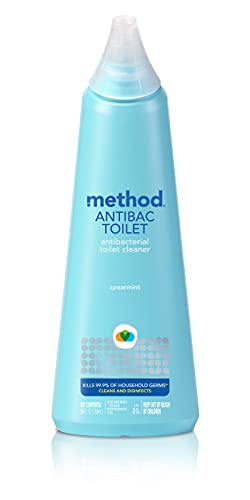
Method Antibacterial Toilet Bowl Cleaner, Spearmint, 24 fl oz
Badge: Best Bowl Hygiene
The Method Antibacterial Toilet Bowl Cleaner, Spearmint, 24 fl oz is built for households wanting a plant-forward-style, pleasant-scented bowl cleaner for regular hygiene cleaning. In the context of best root cleaner for toilets, its confirmed specification supports that job directly: 24 fl oz antibacterial toilet bowl cleaner and spearmint scent.
Beyond the headlines, the confirmed specification adds cleans and sanitizes in one step, for bowls, seats and under the rim, and those details shape daily life with the Method Antibacterial Toilet Bowl Cleaner, Spearmint, 24 fl oz more than any single feature does: they decide what it fits, what it handles without fuss, and what routine it asks of its owner. Read them as a set rather than a list, because in use they arrive together, every single time.
Strengths
- A true bowl cleaner in a pool of drain products: it cleans and sanitizes the bowl, seat and under-rim zone you actually see and touch.
- Under-rim application is where bowl cleaners earn their keep, because that is where staining and odour establish themselves.
- A spearmint scent profile suits households that avoid heavy chemical-smelling cleaners.
Trade-offs
- It cleans the bowl, not the line: it will not clear roots, clogs or buildup beyond the trap.
- Antibacterial bowl cleaning is a hygiene routine, not a plumbing intervention.
- At 24 fl oz it is a household bottle, not a bulk supply for large properties.
Key specs (from verified listing data)
- 24 fl oz antibacterial toilet bowl cleaner
- Spearmint scent
- Cleans and sanitizes in one step
- For bowls, seats and under the rim
Day to day, what separates this pick within the pool is fit, not magic — the honest limitation is that its battlefield is the bowl surface, so line problems need one of the drain-focused picks instead. Households that match the product to the routine rarely shop for its replacement. If it passes your fit test, Check on Amazon to see the current listing for this exact model.
Best for: households wanting a plant-forward-style, pleasant-scented bowl cleaner for regular hygiene cleaning / Not suited for: anyone whose needs flatly contradict that profile — for them, another pick in this guide fits better.
Green Gobbler Enzyme Drain Cleaner, 1 Gallon
Badge: Prose-Only: Grease Specialist
The Green Gobbler Enzyme Drain Cleaner, 1 Gallon is built for homes with grease-heavy kitchen drains, grease traps or septic systems on an enzyme maintenance routine. In the context of best root cleaner for toilets, its confirmed specification supports that job directly: 1 gallon enzyme drain cleaner and breaks down oils and fats.
Beyond the headlines, the confirmed specification adds for grease traps and septic tanks, anti-glug bottle, up to 8 treatments, and those details shape daily life with the Green Gobbler Enzyme Drain Cleaner, 1 Gallon more than any single feature does: they decide what it fits, what it handles without fuss, and what routine it asks of its owner. Read them as a set rather than a list, because in use they arrive together, every single time.
Strengths
- Gallon sizing with up to eight treatments makes it the bulk-maintenance value in this pool.
- Enzymes target oils and fats, the kitchen-side buildup that narrows drains over months.
- An anti-glug bottle sounds minor until you pour a gallon of anything into a small drain opening.
Trade-offs
- Its brief is drains and grease, not toilet bowls and not root intrusion in a main line.
- Enzyme pace applies: hours and repeat doses, not instant clearing.
- A gallon jug needs storage space and a steady hand for small doses.
Key specs (from verified listing data)
- 1 gallon enzyme drain cleaner
- Breaks down oils and fats
- For grease traps and septic tanks
- Anti-glug bottle
- Up to 8 treatments
Day to day, what separates this pick within the pool is fit, not magic — the honest limitation is that grease is its target, so hair, roots and foreign objects are outside its honest reach. If that profile sounds like your household, this pick has earned its place. Why this pick is prose-only: This gallon enzyme cleaner is formulated for grease traps, kitchen drains and septic tanks — it digests oils and fats, which is a different enemy from the organic buildup and root intrusion in a toilet’s main line. Useful chemistry, wrong battlefield, so it is covered prose-only with no link.
Best for: homes with grease-heavy kitchen drains, grease traps or septic systems on an enzyme maintenance routine / Not suited for: anyone whose needs flatly contradict that profile — for them, another pick in this guide fits better.
Drano FlowGuard Build-Up Remover, 60 oz
Badge: Prose-Only: Build-Up Guard
The Drano FlowGuard Build-Up Remover, 60 oz is built for organised households running a preventative enzyme routine across toilets and drains. In the context of best root cleaner for toilets, its confirmed specification supports that job directly: 60 oz build-up remover and enzymes help prevent clogs.
Beyond the headlines, the confirmed specification adds safe for pipes, septic systems and toilets, removes buildup, not for existing blockages, and those details shape daily life with the Drano FlowGuard Build-Up Remover, 60 oz more than any single feature does: they decide what it fits, what it handles without fuss, and what routine it asks of its owner. Read them as a set rather than a list, because in use they arrive together, every single time.
Strengths
- A recognised build-up prevention routine from a mainstream drain-care brand, safe across pipes, septic and toilets as listed.
- Enzyme prevention suits households that would rather dose monthly than plunge quarterly.
- The 60 oz size supports a whole-home routine across several drains.
Trade-offs
- The listing is explicit: not for existing blockages, so it cannot be the emergency purchase.
- Prevention products show their value over months, which impatient buyers misread as doing nothing.
- It removes soft buildup, not roots, scale-rock or foreign objects.
Key specs (from verified listing data)
- 60 oz build-up remover
- Enzymes help prevent clogs
- Safe for pipes, septic systems and toilets
- Removes buildup
- Not for existing blockages
Day to day, what separates this pick within the pool is fit, not magic — the honest limitation is that it is a guard, not a rescue — the name FlowGuard states the job honestly. Weigh that fit honestly and the rest of the decision makes itself. Why this pick is prose-only: FlowGuard is a general build-up prevention product for pipes and drains, and its own listing states it is not for existing blockages. It does not target the main-line, root-adjacent maintenance this keyword is about, so it is reviewed prose-only with no link.
Best for: organised households running a preventative enzyme routine across toilets and drains / Not suited for: anyone whose needs flatly contradict that profile — for them, another pick in this guide fits better.
Drano Max Gel Drain Clog Remover, 32 oz
Badge: Prose-Only: Clog Gel
The Drano Max Gel Drain Clog Remover, 32 oz is built for households facing an active sink or bath clog who need a strong gel before calling a plumber. In the context of best root cleaner for toilets, its confirmed specification supports that job directly: 32 oz gel clog remover and cleaner and for hair, grease, soap and food clogs.
Beyond the headlines, the confirmed specification adds cuts through standing water, protects against pipe corrosion, for kitchen and bath, and those details shape daily life with the Drano Max Gel Drain Clog Remover, 32 oz more than any single feature does: they decide what it fits, what it handles without fuss, and what routine it asks of its owner. Read them as a set rather than a list, because in use they arrive together, every single time.
Strengths
- The emergency pick: a thick gel that cuts through standing water to reach hair, grease, soap and food clogs.
- Gel density is the point — it sinks to the blockage instead of diluting away above it.
- Corrosion-protection positioning matters in older metal plumbing where harsh openers do damage.
Trade-offs
- It is a general drain gel, not a root treatment and not a toilet-bowl product; toilet use should follow the label exactly.
- Chemical openers are the last step before mechanical clearing, not a maintenance habit.
- Severe or recurring blockages signal a line problem that no gel will fix permanently.
Key specs (from verified listing data)
- 32 oz gel clog remover and cleaner
- For hair, grease, soap and food clogs
- Cuts through standing water
- Protects against pipe corrosion
- For kitchen and bath
Day to day, what separates this pick within the pool is fit, not magic — the honest limitation is that it attacks common household clogs, so roots and main-line failures remain professional territory. In daily use, that single fit question matters more than any feature list. Why this pick is prose-only: Max Gel is a general-purpose clog gel for hair, grease, soap and food in kitchen and bath drains. It is not a root or main-line treatment and is not aimed at toilet lines, so it appears prose-only with no link.
Best for: households facing an active sink or bath clog who need a strong gel before calling a plumber / Not suited for: anyone whose needs flatly contradict that profile — for them, another pick in this guide fits better.
Comparison Table
| Pick | Badge | Headline | Also confirmed |
|---|---|---|---|
| Roebic K-97 Main Line Cleaner, 32 fl oz | Best for Main Lines | 32 fl oz main line cleaner | Bacteria and enzyme formula |
| Green Gobbler Toilet Clog Defense, 60 oz | Best Prevention Pick | 60 oz, 5 treatments | Coats pipes to prevent toilet clogs |
| Method Antibacterial Toilet Bowl Cleaner, Spearmint, 24 fl oz | Best Bowl Hygiene | 24 fl oz antibacterial toilet bowl cleaner | Spearmint scent |
| Green Gobbler Enzyme Drain Cleaner, 1 Gallon (prose-only) | Prose-Only: Grease Specialist | 1 gallon enzyme drain cleaner | Breaks down oils and fats |
| Drano FlowGuard Build-Up Remover, 60 oz (prose-only) | Prose-Only: Build-Up Guard | 60 oz build-up remover | Enzymes help prevent clogs |
| Drano Max Gel Drain Clog Remover, 32 oz (prose-only) | Prose-Only: Clog Gel | 32 oz gel clog remover and cleaner | For hair, grease, soap and food clogs |
Read the table alongside the detailed reviews rather than instead of them: the table compares confirmed specifications, while the reviews carry the fit judgments that decide real purchases. Shoppers cross-shopping the neighbouring ground can set this beside Best Toilets To Prevent Toilet Paper Clogs to see how the options divide the work.
How to Choose: Best root cleaner for toilets Decided Properly
Match the product to the problem layer
Bathroom chemistry divides into three layers that marketing blurs: the bowl surface (stains, rings, germs), the trap and line (clogs, buildup), and the main line and sewer (roots, heavy organic load). A product honest about its layer outperforms a stronger product aimed at the wrong one, every time.
Enzyme maintenance versus chemical rescue
Enzyme and bacteria products work slowly, safely and preventatively, digesting organic buildup over hours and repeat doses; they suit septic systems and old pipes. Chemical gels work fast on active clogs. Households need to know which game they are playing before they buy the bottle.
Septic and plumbing compatibility
On septic, the cleaner becomes part of the system’s biology, so septic-safe enzyme products are the default and harsh chemistry is rationed. Old plumbing adds corrosion concerns. Read the label’s compatibility claims as seriously as its power claims.
Stain chemistry for rust and hard water
Rust and limescale are mineral problems, not dirt problems: they need stain-targeted formulas and dwell time, not scrubbing force. Products that name rust and hard water in their brief, in tablet, gel or liquid form, are the ones that move orange staining.
Finally, weigh the whole purchase, not the product alone. Consumables, replacement parts, storage space and the routine the product attaches to your week all belong in the decision. A choice that looks slightly more demanding at the shelf and easier across five years is the pattern this guide rewards throughout, and it is the pattern behind the final recommendation below. For a neighbouring perspective, see Best Toilets To Purchase.
How to Use and Care for Your Toilet and drain cleaner
- Diagnose before you dose: identify whether the problem is bowl staining, a slow or blocked toilet, a drain clog, or a main-line pattern affecting several fixtures.
- Ventilate the room, put on household gloves, and read the product label fully, including surfaces and systems it must not touch.
- Never mix products: use one cleaner at a time, flush between different products, and keep bleach-based and ammonia-based chemistry strictly apart.
- Apply as directed for the layer: bowl cleaners under the rim with dwell time before brushing; line treatments into the fixture with the water and timing the label specifies.
- Give the product its full working time. Enzyme treatments in particular are measured in hours, and judging them at ten minutes misreads the chemistry.
- Flush and assess honestly: repeat a maintenance treatment if the label allows, and escalate to a plunger, a snake or a plumber when the problem outlasts the chemistry.
Troubleshooting
Problem: Rust stains return within weeks → The stain is being removed but the iron in the water is untreated. Keep a scheduled stain routine, consider a water test, and address tank hardware that may be corroding into the bowl.
Problem: The toilet clogs again days after clearing → The blockage was partial, or buildup further down the line is catching waste. A prevention treatment on a schedule, plus honest assessment of what is being flushed, beats repeated emergency clearing.
Problem: Enzyme treatment seems to do nothing → It was judged too early or used on the wrong problem. Enzymes digest organic buildup over hours and repeat doses; they do not move foreign objects, roots of any size, or mineral scale.
For a deeper look at adjacent routines, Best Toilets To Replace Old With is a useful companion read once your own setup is dialled in.
Roots, Buildup and the Recurring Clog
A toilet that clogs once has met an accident; a toilet that clogs monthly is reporting on its line. Paper and waste catch where the pipe narrows — on scale, on organic buildup, and classically on root hairs that have entered at a joint and begun combing the flow. Each clearing that only punches a hole through the catch explains the pattern: brief relief, then the catch rebuilds. That is the situation maintenance chemistry exists for. Bacteria and enzyme main-line treatments, dosed on a schedule, digest the organic fraction of the narrowing and keep the comb from thickening. They work in hours and weeks, not minutes, and they ask for the one thing emergency products never do: a calendar. Households that adopt the schedule often go from monthly plunging to none; households facing a root mass the size of a fist need a cutter and a camera, and this guide will not pretend otherwise.
When to Stop Pouring and Start Phoning
There is a bright line between a maintenance problem and a mechanical one, and crossing it with bottles instead of tools wastes both. Call a professional when several fixtures drain slowly together, when a floor drain or lowest fixture backs up, when gurgling follows flushing elsewhere, or when a cleared line re-blocks within days. Those are the signatures of a restriction deep in the main line — roots at mass, a sagging or damaged run, or an object that chemistry cannot digest. A camera inspection, which reputable plumbers offer before quoting work, converts guesswork into a map. Spend on the map once, and every later decision, chemical or mechanical, becomes rational.
That lens also explains several rankings above that might otherwise look surprising, and it is worth holding in mind alongside Best Toilets To Save Water if you are comparing across categories before committing.
Renters, Landlords and the Chemistry Line
In rented homes, bathroom chemistry carries a second ledger: the tenancy agreement. Tenants can reasonably clean bowls, prevent buildup and clear minor clogs; the line itself, its roots and its history belong to the property. The practical discipline is documentation — report recurring drainage early, keep products to the label’s promises, and never let a landlord’s slow response turn a tenant’s minor clog into an expensive experiment in aggressive chemistry. The products in this guide serve the tenant’s side of that line well; knowing where the line sits is the actual skill.
Keeping Products Straight
Bathroom cupboards accumulate chemistry the way garages accumulate paint: half-used bottles of similar promise and different purpose. The accidents and wasted money in this category usually start there — a drain gel poured for a stain, a bowl cleaner asked to clear a line, two products meeting in the same water. The fix is a small, labelled arsenal: one bowl cleaner, one maintenance treatment, one rescue product, each stored upright in its original container, each understood. This guide’s three-layer map is the organising principle. When every bottle has one named job, the cupboard gets smaller and the results get better.
The Three Layers of Every Bathroom Problem
Every toilet complaint lives in one of three layers, and most wasted money comes from treating the wrong one. Layer one is the bowl: porcelain, waterline, under-rim jets, where stains and germs live. Layer two is the trap and branch line: the curved passage and the pipe to the stack, where paper, waste and buildup conspire into clogs. Layer three is the main line: the run to the sewer or septic, where roots enter at joints and organic load accumulates over years. The products in this guide each address a layer, and their reviews name it plainly. Diagnose your layer first — the symptoms genuinely differ — and the right bottle becomes obvious.
Roots in the Line: What Chemistry Can and Cannot Do
Tree roots enter sewer lines at joints, chasing moisture and nutrients, and they are the problem behind many recurring toilet blockages in older homes. The honest chemistry position is this: bacteria and enzyme main-line treatments digest organic buildup and fine root hairs and, used on a schedule, keep a vulnerable line flowing longer between professional visits. They do not remove an established root mass, and no pour-in product honestly can. A camera inspection tells you which situation you own. Chemistry for maintenance, machinery for masses — households that learn that sentence save both money and floods.
Enzyme Time Versus Chemical Time
The deepest difference between the products in this guide is not strength but tempo. Chemical gels promise minutes: they burn or dissolve a path through a clog now, at some cost to pipes, systems and the user’s safety margin. Enzymes promise months: dosed on a schedule, they keep lines digesting their own buildup so the emergency never forms. Neither tempo is wrong; they answer different questions. The household that only buys chemistry lives from emergency to emergency. The household that only buys enzymes has no answer when a genuine blockage lands on a Sunday. Mature plumbing care keeps both, labelled, separated, and used for their own jobs.
Rust: The Stain That Is Not Dirt
Orange-brown staining in bowls and sinks defeats ordinary cleaners because it is not soil; it is iron oxide deposited by the water itself, often with manganese and hardness minerals for company. Scrubbing harder mostly scratches porcelain and tires arms. The working approach is chemical and patient: a stain-targeted product, applied with the dwell time its label specifies, repeated on the worst deposits, then maintained on a schedule matched to your water’s iron load. Well-water households know this rhythm well. If staining arrives with metallic taste or laundry discolouration, test the water — treating the source beats treating the bowl forever.
Septic Systems Are Alive
A septic tank is not a hole in the ground; it is a bacterial workforce digesting your household’s waste, and everything poured into it is either food, neutral or poison to that workforce. This is why enzyme and bacteria products dominate the septic-safe shelf, and why harsh chemical openers carry warnings for septic homes. It is also why prevention products that coat and protect lines earn their place in septic households: a pumped-out, repaired or replaced system dwarfs a decade of cleaner costs. Read compatibility before potency, dose as directed, and remember the tank when a product promises violence.
Old Plumbing Changes the Rules
Homes with older pipes — cast iron, galvanised steel, early plastics, clay laterals — play bathroom chemistry under different rules. Corrosion protection matters because aged metal has less wall to spare. Gentle enzyme maintenance outperforms repeated chemical assaults that thin the pipe while clearing it. Low-flow and early water-saving toilets in old homes clog for design reasons that prevention products genuinely help. The reviews in this guide flag old-plumbing suitability where the listing claims it, because in an old house the wrong bottle is not merely wasted money; it is a small withdrawal from the pipe’s remaining life.
Prevention Is a Calendar, Not an Event
Every prevention product in this guide fails in the same household: the one that doses once, sees nothing dramatic, and concludes the product is inert. Prevention’s result is the emergency that does not happen, which is invisible by definition. The households that benefit treat it like the other invisible maintenance — the filter change, the smoke alarm battery — on a written schedule tied to a date they already observe. Five-treatment bottles and gallon jugs exist to make that schedule economical. If you know you will not keep a schedule, buy the rescue products honestly instead and keep a plunger you trust.
Safety Rules That Outrank Every Label
Bathroom chemistry has a short list of rules that no product benefit overrides. Never mix cleaners, above all never bleach with ammonia or acids, because the gases are genuinely dangerous. Ventilate. Glove up. Keep products away from children and pets with the same seriousness as medicines. Flush thoroughly between different products used in sequence. And store bottles upright, labelled, in their original containers, because a decanted mystery liquid helps no one at midnight. The products in this guide are household tools; treated with household respect, they are safe ones.
When Several Fixtures Complain at Once
One slow toilet is a toilet problem. A slow toilet, a gurgling bath and a floor drain that burps when the washing machine empties are a main-line problem wearing disguises. The diagnostic matters because it reroutes the whole response: bowl and branch products will polish fixtures while the real restriction grows downstream. Main-line enzyme maintenance suits the early, organic stage of that story. Sewage smells, backups at the lowest fixture, or water rising in one fixture when another drains are escalation signals — stop pouring, start phoning. Recognising the pattern early is the cheapest plumbing skill a homeowner can own.
Reading Cleaner Labels Like a Skeptic
Cleaner labels compress hard truths into cheerful claims, so read them in a fixed order. First, the layer: bowl, drain or main line, stated or implied. Second, the enemy: stains, germs, grease, hair, organic buildup or roots — a product vague about its enemy is vague about its job. Third, the tempo: minutes for rescue, hours and repeats for maintenance. Fourth, the exclusions: the systems and surfaces it must not touch, which tell you its true strength. Finally, the dose count, because a bottle’s value lives in treatments per purchase. That five-minute discipline, applied to any pick in this guide, prevents nearly every regret this category produces.
The Plunger Deserves Respect
Before any chemistry, the humble plunger solves a large share of toilet blockages with nothing but water pressure and technique: a good seal, a bowl with enough water to cover the cup, and firm, patient strokes rather than frantic ones. A flange plunger shaped for toilets outperforms the flat sink style by a wide margin. Households should own one per bathroom, stored discreetly and replaced when the rubber tires. Chemistry in this guide is for buildup, stains and prevention — the layers a plunger cannot reach — and the two tools are partners, not rivals. Reach for them in the right order and most bathroom emergencies stay small.
Common Buying Mistakes
- Mixing two cleaners in the bowl to make a stronger one, which is dangerous and never more effective.
- Using a bowl cleaner as a drain rescue, or a drain gel as a bowl stain treatment.
- Judging an enzyme maintenance product after a single rushed application.
- Pouring emergency chemistry repeatedly into a line whose real problem is mechanical — roots, damage or a foreign object.
Final Recommendation
For most shoppers, the answer to best root cleaner for toilets is the Roebic K-97 Main Line Cleaner, 32 fl oz: 32 fl oz main line cleaner in a package built for homeowners on septic or older lines who want scheduled, enzyme-based main-line maintenance. Choose the Green Gobbler Toilet Clog Defense, 60 oz instead if its profile — households with repeat-clogging, low-flow or older toilets that want prevention instead of emergencies — describes your household more precisely. The Method Antibacterial Toilet Bowl Cleaner, Spearmint, 24 fl oz is the third route worth pricing live, particularly for households wanting a plant-forward-style, pleasant-scented bowl cleaner for regular hygiene cleaning. Every recommendation here stays inside the verified pool, and every price should be checked live at the moment of decision — fit, honestly assessed, is what makes a purchase beloved instead of merely owned.
Frequently Asked Questions
What is the difference between a bowl cleaner and a drain cleaner?
They work in different places. A bowl cleaner cleans the porcelain you see — stains, rings, germs — and stops at the trap. A drain or line product travels into the pipes to digest buildup or clear clogs. Using one for the other’s job is the most common and most wasted purchase in this category.
Are enzyme cleaners safe for septic systems?
Enzyme and bacteria products are generally the septic-friendly choice, because they support the breakdown of organic waste instead of sterilising the tank’s working bacteria. Confirm the label’s septic claim for the specific product, dose as directed, and avoid following an enzyme treatment with a harsh chemical flush that undoes it.
When should I stop using chemicals and call a plumber?
When several fixtures drain slowly at once, when gurgling or sewage smells appear, when a blockage returns within days of clearing, or when you suspect roots or a foreign object. Those are line problems with mechanical causes, and professional diagnosis is cheaper than repeated bottles poured into a failing pipe.
Can a pour-in cleaner remove tree roots from a sewer line?
It can digest fine root hairs and the organic buildup around them, which keeps a vulnerable line flowing and is a legitimate maintenance strategy. It cannot remove an established root mass; that requires mechanical cutting, and often a repair conversation about the joint the roots entered through.
How often should a main line enzyme treatment be used?
On the schedule the product label sets out, which for maintenance products is typically a recurring routine rather than a single dose. The households that benefit treat it like filter changes: dated, repeated, and boring — because the success being purchased is precisely that nothing happens.
How do I choose between the picks in this guide?
Match the verdict lines to your household first, then the badges, then the specifications. For best root cleaner for toilets, fit matters more than small feature differences: the product whose strengths answer your actual routine will satisfy you longer than the product with the longest list of extras.
Why does this guide not list prices?
Because prices for these products change constantly and differ between sellers, and a figure printed in an article would mislead within weeks. Linked picks carry a check on Amazon prompt so you always see the current figure at the source, and the guide judges value by tier and by cost across years instead.
Are the prose-only picks in this guide worth considering?
Sometimes, and the reviews say exactly when. A prose-only pick differs from the keyword on a stated point. If that point does not matter in your home, the product may still serve you well; it is simply not linked here, because this guide only links picks that genuinely match the keyword as written.


