Disclosure: topratedkitchenware.com is reader-supported. When you buy through links on our site, we may earn an affiliate commission from Amazon and other retailers, at no extra cost to you.
Where to buy
The best self contained macerating toilets solve one specific problem: a real bathroom where gravity drainage cannot go. Each verified pick below is a complete system — toilet and macerator pump in one purchase — that grinds waste and pumps it up or across to the main drain, so a basement, garage or attic bathroom stops being impossible. All six picks are linked. They divide by pump class, inlet count and venting, and the reviews keep those engineering differences in front of the marketing words.
- Simple Project 750W PRO Macerating Toilet System — the strongest pump and the most inlets in this pool, in one complete basement system — check the latest price on Amazon
- SUPERFLO 750W Macerating Toilet System — a 750W system with four water inlets, titled for basements and garages — check the latest price on Amazon
- SUPERFLO Macerating Toilet System with 600W Macerator Pump (One Piece) — a one-piece upflush toilet whose three inlets are named for sink, shower and laundry — check the latest price on Amazon
- Simple Project Upgrade Macerating Toilet System with 600W Macerator Pump — a 600W system with three inlets and an AC vent in the title — check the latest price on Amazon
- Simple Project 600W Macerating Toilet System (Silent, 4-Inlet Kit) — a 600W two-piece kit with four inlets, a vent and easy assembly in the title — check the latest price on Amazon
- Simple Project 600W Macerating Toilet System (One-Piece, Rear Outlet) — a one-piece 600W system with three inlets, a vent and a rear outlet bowl — check the latest price on Amazon
Read the full guide ↓
Self contained is the phrase that defines this category, and it is worth being precise about it. A self contained macerating toilet system arrives as one coordinated purchase — the toilet, the macerator pump, the inlets for companion fixtures — designed to work together, instead of a pump bought separately and mated to a bowl it was never tested with. For a homeowner adding a bathroom below the sewer line, that coordination is the product: one throat to choke, one set of documentation, one discharge run to plan. Searching for the best self contained macerating toilets is really searching for the system whose pump class, inlet count and venting match your room and your run.
The pool divides cleanly into two pump classes. Two systems state 750W pumps — the Simple Project PRO and the SUPERFLO — for longer or higher discharge runs and four-fixture flexibility. Four systems state 600W pumps, in one-piece and kit forms, with three or four inlets and, in the Simple Project models, venting named in the title. Neither class is better in the abstract: an oversized pump on a short run is money spent on headroom never used, and an undersized pump on a long run is a strain noise you will hear for years. The buying guide below turns that into measurements you can take with a tape and ten minutes.
One scope note before the reviews: these are household systems for buildings, discharging to a building drain or a septic system. They are not vehicle equipment, and this guide does not pretend otherwise. Septic households are genuinely in scope, though, and the sections below address what a macerator does and does not change about septic practice, with deeper reading in Best Toilets For Septic Systems and Best Toilets For Well And Septic. Readers whose room is a standard above-grade bathroom with a normal drain do not need any of this — a conventional toilet from a guide like Best Round Front One Piece Toilets is the simpler tool for that job.
Key Takeaways
- Self contained means toilet and macerator pump as one coordinated system; all six picks qualify, in 750W and 600W pump classes.
- Pump class should follow your measured discharge run — vertical rise plus horizontal distance — not a bigger-is-better instinct.
- Inlet count is bathroom ambition: three inlets cover a standard small bathroom; four add flexibility for an extra fixture.
- Venting decides how the room smells in year two; three Simple Project titles name an AC vent, the others leave it to the listing.
- No title here states lift or distance figures — confirm them on the listing against your measurements before ordering any system.
- These are building systems for drains and septic tanks, not vehicle toilets; the RV category is a different product entirely.
In this guide
Quick Picks
| Pick | Badge | Form | Pump | Standout | Link |
|---|---|---|---|---|---|
| Simple Project 750W PRO | Best Overall | Complete toilet and pump system | 750W pump stated | 4-inlet, dual flush | Check on Amazon |
| SUPERFLO 750W System | Best for Garage and Workshop Bathrooms | Complete toilet and pump system | 750W pump stated | 4 water inlets | Check on Amazon |
| SUPERFLO 600W One Piece | Best Whole-Bathroom System | One-piece upflush toilet and pump | 600W pump stated | 3 inlets: sink, shower, laundry | Check on Amazon |
| Simple Project 600W Upgrade | Best Vented System | Complete toilet and pump system | 600W pump stated | 3 inlets, AC vent | Check on Amazon |
| Simple Project 600W 4-Inlet Kit | Best for Quiet and Easy Assembly | Two-piece kit, toilet and pump | 600W pump stated | 4 inlets, AC vent | Check on Amazon |
| Simple Project 600W One-Piece | Best Compact One-Piece Kit | One-piece upflush toilet and pump | 600W pump stated | 3 inlets, AC vent | Check on Amazon |
How These Picks Were Chosen
This guide is research-led. The six systems come from a pool verified through the Amazon Creators API on 2026-11-20, and every specification quoted — pump wattage, inlet counts, vent inclusion, piece count — is drawn from the API-returned title of that exact product. No system was installed, plumbed or load-tested for this article. Where titles omit the engineering figures an installer most wants — discharge lift and horizontal distance — the reviews say so and direct the reader to verify them on the listing, because inventing them would be worse than omitting them.
Eligibility turned on the keyword’s own words: self contained and macerating. Each pick is a complete toilet-and-pump system, not a bare pump or a bare bowl, and each macerates. Within that scope, the ranking weighs pump headroom, inlet flexibility, venting and the clarity of the title itself — because in a category where the buyer is also the installer, a title that names its fixtures and its vent is genuinely more useful than one that reaches for adjectives. Three systems from one maker are included because their titles describe materially different configurations, and each review names the distinguishing line to prevent checkout confusion.
All six picks are linked and carry their verified images; no prose-only handling was needed, because every pick matches the keyword’s core system type. The link pattern follows the house standard for six linked picks.
A word about what this guide deliberately does not do: it does not rank these systems by the adjectives in their titles. Powerful, quiet, silent and easy appear across the pool attached to different pump classes and configurations, and none of them is a measurement. The rankings rest on the checkable structure of each offer — stated wattage, counted inlets, named venting, piece count and named companion fixtures — because a buyer installing a pump behind a wall needs facts that survive the installation, not impressions that survive the unboxing. Where a genuinely important figure is missing from every title, the lift and distance ratings, the guide repeats the instruction to verify it on the listing rather than letting any badge imply it. That restraint is the method, and readers should apply it to any system they consider beyond this pool as well.
The 6 Best Self Contained Macerating Toilets: Detailed Reviews
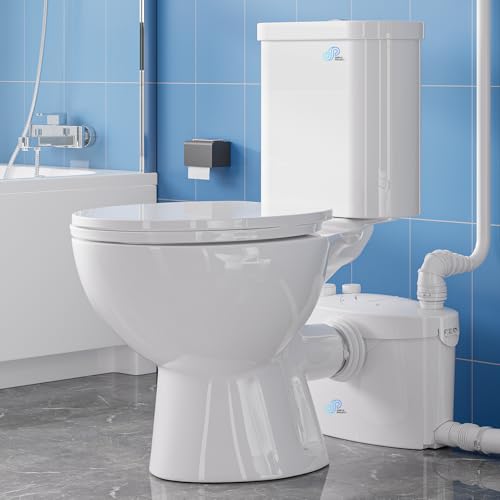
Simple Project 750W PRO Macerating Toilet System
Badge: Best Overall
Strengths
- The highest stated pump power here, giving the most headroom for higher or longer discharge runs
- Four inlets let one pump serve the toilet plus the rest of a small bathroom
- Dual flush keeps water use proportionate in a system people often assume is thirsty
Trade-offs
- The strongest pump is also the most system to install and service; small single-toilet jobs may not need it
- The title states no discharge lift or distance figure, so run calculations need the listing documentation
- Attic installations add access and leak-consequence questions a basement does not
Key specs from the verified listing title
- 750W macerator pump stated in the listing title
- 4-inlet macerator arrangement
- Upflush toilet for basements and attics
- Dual flush
- Quiet operation claimed in the title
- Space-saving positioning in the title
A self contained macerating toilet system lives or dies on whether its pump can be forgotten, and the 750W PRO makes the strongest case in this pool for forgetting. Its stated 750W pump is the highest figure here, and pump headroom is what separates a system that clears decisively for years from one that strains as the discharge run ages. Around that pump, the title describes a complete upflush toilet system with four inlets and dual flush, positioned for basements and attics and described as quiet and space-saving — the fullest household specification in the roundup.
Four inlets is the number to think with. It means the macerator can accept the toilet plus up to three other fixture connections on typical arrangements — a basin, a shower, a utility sink — so one pump and one discharge run can create a genuinely useful small bathroom rather than a toilet in a cupboard. The honest caveat is documentation: the title does not state how high or how far this pump pushes, and those two figures are the entire engineering of an upflush installation. Confirm them on the listing against your measured run before ordering. If your run is demanding, this is still the first system to check them against.
Best for: basement or attic bathrooms with demanding discharge runs and several fixtures on one pump / Not suited for: a single toilet addition with a short, easy run to the drain

SUPERFLO 750W Macerating Toilet System
Badge: Best for Garage and Workshop Bathrooms
Strengths
- Matches the pool’s strongest pump class while emphasising straightforward installation
- Four water inlets suit a workshop or garage bathroom serving several fixtures
- A second 750W option gives demanding runs a genuine comparison point
Trade-offs
- The title gives no lift or distance figures, so the demanding-run case must be verified on the listing
- Garage installations need freeze thinking in cold climates that basement installs often skip
- Less attic positioning than the Simple Project PRO
Key specs from the verified listing title
- 750W macerating system stated in the listing title
- Upflush toilet for basement use
- 4 water inlets, aimed at basements and garages
- Easy installation, powerful and quiet operation claimed in the title
SUPERFLO’s 750W system is the natural rival to the pick above: the same strongest pump class, the same four-inlet flexibility, a slightly different emphasis. Where the PRO leans toward attics and raw capability, this title leans toward basements and garages and says easy installation out loud. That emphasis matters for the large class of buyers whose project is a workshop, garage or basement bathroom they intend to install themselves over a few weekends: a system designed to be approachable, with inlets for the extra fixtures those rooms accumulate — a utility sink above all — is the system that gets finished.
The shared caveat with its rival is the missing engineering figures: no lift height and no horizontal distance are stated in the title, and a 750W badge is a class, not a calculation. Measure your run — vertical rise plus horizontal distance plus bends — and check it against the listing’s stated capabilities before this or any system is ordered. In a garage, add one more check the basement picks do not demand: if the space is unheated in winter, the pump and trap hold water that needs a freeze plan. Clear those two checks and this is as strong a self contained option as the pool offers.
Best for: garage, workshop and basement bathrooms installed by confident DIY owners / Not suited for: unheated spaces without a freeze plan, or unmeasured discharge runs

SUPERFLO Macerating Toilet System with 600W Macerator Pump (One Piece)
Badge: Best Whole-Bathroom System
Strengths
- The only title here that names its inlet fixtures, making the whole-bathroom plan concrete at a glance
- One-piece toilet form gives the cleanest bathroom-side appearance of the six
- A 600W pump is a sensible class for typical basement rises without oversizing the job
Trade-offs
- Three inlets is one fewer than the 750W systems offer
- No vent is mentioned in the title, unlike the Simple Project models below
- The title states no lift or distance figures
Key specs from the verified listing title
- 600W macerator pump stated in the listing title
- One-piece upflush toilet for a basement bathroom
- Rear outlet toilet
- 3 water inlets for sink, shower and laundry
This SUPERFLO model has the most communicative title in the pool: it tells you the pump size, the one-piece rear-outlet toilet, and exactly which fixtures its three inlets are ready for — sink, shower and laundry. That specificity turns an abstract system into a plannable bathroom. A basement laundry room that gains a toilet, a shower and a proper sink on one macerator is one of the highest-value renovations in the category, and this is the pick that describes that exact project in its own name. The one-piece toilet also keeps the visible side of the installation looking like a normal, tidy bathroom rather than equipment.
The compromises are arithmetic and air. Three inlets against the four of the 750W pair is a real, if small, reduction in flexibility, and the title mentions no vent arrangement where two rivals below make venting a headline — venting being the detail that decides how a macerating bathroom smells in year two. Neither point disqualifies it; both belong in a buyer’s comparison. For the standard basement bathroom with a moderate rise to the drain, this is the most completely imagined package here, and for many homes it will be the right size of system rather than the biggest.
Best for: basement laundry and bathroom projects wanting one pump for toilet, sink, shower and laundry / Not suited for: projects needing four inlets or a stated vent arrangement

Simple Project Upgrade Macerating Toilet System with 600W Macerator Pump
Badge: Best Vented System
Strengths
- Venting is designed in and named in the title, answering the odour question at the planning stage
- Three inlets cover the standard small basement bathroom
- The upgrade positioning suggests a revised design within the maker’s own line
Trade-offs
- One fewer inlet than the four-inlet systems
- No lift or distance figures are stated in the title
- Buyers must distinguish it from the maker’s other 600W models at checkout
Key specs from the verified listing title
- 600W macerator pump stated in the listing title
- Upflush toilet for basement use
- 3 water inlets
- AC vent included in the title
- Quiet operation claimed in the title
Ask owners of macerating bathrooms what they would spec differently and venting comes up with suspicious regularity. A macerator is a sealed pump moving waste; without a proper vent path, pressure and odour find their own routes. This upgraded Simple Project model puts an AC vent in its title — a small line that signals the maker expects the question — alongside a 600W pump and three water inlets for a basement upflush installation described as powerful and quiet. For a bathroom that will be used daily by family rather than occasionally by guests, that vent line may be worth more than a fourth inlet.
The rest of the specification is the pool’s sensible middle: 600W class, three inlets, a complete toilet-and-pump system. The familiar documentation gap applies — no lift or run figures in the title — and one more caution is specific to this brand’s corner of the pool: Simple Project fields three 600W-class systems here with overlapping titles, and the differences (vent, piece count, inlet count) are exactly the details an order can get wrong. The reviews name each model’s distinguishing line; use it as your checkout check. If venting is your deciding factor, this is your pick of the three.
Best for: daily-use basement bathrooms where odour control and venting are priorities / Not suited for: projects needing four inlets

Simple Project 600W Macerating Toilet System (Silent, 4-Inlet Kit)
Badge: Best for Quiet and Easy Assembly
Strengths
- The only 600W system here with four inlets — top flexibility without stepping up a pump class
- Vent included, matching the upgrade model’s odour answer
- Two-piece kit format and easy-assembly positioning suit phased or single-handed installation
Trade-offs
- A two-piece arrangement shows more of its working parts than the one-piece designs
- Silent is a positioning word; no decibel figure is stated in the title
- No lift or distance figures are stated
Key specs from the verified listing title
- 600W macerating system stated in the listing title
- Silent and powerful positioning in the title
- AC vent included
- 4 water inlets
- 2-piece kit, easy assembly claimed in the title
This kit is the pool’s quiet maximalist: a 600W pump with four water inlets and an AC vent, in a two-piece kit the title describes as silent, powerful and easy to assemble. The inlet count is the surprise — it matches the 750W systems while staying in the moderate pump class, which suits a bathroom with several fixtures but a discharge run that does not demand the biggest motor. The two-piece format, toilet and macerator as separate components, is also the most forgiving arrangement for installation in a tight or awkward basement corner, where manoeuvring a combined unit is the hardest part of the job.
Two cautions keep it at fifth. First, silent in this title is a claim without a number; macerator pumps are brief but audible machines, and a buyer whose basement bathroom sits under a bedroom should treat every quiet claim in this pool as unquantified until the listing provides a figure. Second, a two-piece kit asks a little more plumbing assembly of its installer in exchange for its flexibility — the easy-assembly claim and the reality meet somewhere in your own skill level. For a multi-fixture bathroom on a moderate run, installed by its owner, this is a well-judged package.
Best for: owner-installed basement bathrooms with several fixtures and a moderate discharge run / Not suited for: buyers who want the cleanest one-piece appearance or a quantified noise figure

Simple Project 600W Macerating Toilet System (One-Piece, Rear Outlet)
Badge: Best Compact One-Piece Kit
Strengths
- One-piece form plus rear outlet gives the tidiest finished look of the Simple Project trio
- Vent included, like its 600W siblings
- Three inlets cover a standard small bathroom’s fixtures
Trade-offs
- The flush figure as printed in the title is ambiguous, so water use should be confirmed on the listing
- No lift or distance figures are stated in the title
- Three inlets, where the kit above offers four in the same pump class
Key specs from the verified listing title
- 600W macerating system stated in the listing title
- One-piece upflush toilet
- Flush figure printed in the title as 1.6gbf
- 3 water inlets and AC vent
- Rear outlet toilet bowl
The third Simple Project 600W system is the appearance pick of its family: a one-piece upflush toilet with a rear outlet bowl, three water inlets and an AC vent. One-piece construction matters in a macerating bathroom because the alternative — a visible pump box behind a separate toilet — announces the machinery. Here the finished room reads as a normal bathroom, which is what most basement renovations are actually buying. The rear outlet keeps the discharge path short and hidden, and the vent inclusion matches its siblings’ attention to odour.
Its documentation carries the pool’s one genuinely ambiguous line: the flush figure is printed in the title as 1.6gbf, which reads as a flush-volume figure with a typographical quirk, and a careful buyer should confirm the actual gallons-per-flush on the listing rather than assume it — water volume matters doubly in homes on septic systems, a connection the buying guide below develops. With that confirmed, this is a balanced, tidy system for the standard job: moderate run, small bathroom, owners who want the machinery to disappear.
Best for: basement bathrooms where a clean one-piece finished look matters / Not suited for: buyers needing four inlets or a fully documented flush figure in the title
Comparison Table
| Pick | Form | Flush | Automation | Standout | Link |
|---|---|---|---|---|---|
| Simple Project 750W PRO | Complete system kit | 750W pump | 4 inlets | Dual flush, upflush for basement and attic | Check on Amazon |
| SUPERFLO 750W System | Complete system kit | 750W pump | 4 water inlets | Basements and garages, easy installation claimed | Check on Amazon |
| SUPERFLO 600W One Piece | One-piece complete system | 600W pump | 3 inlets | Rear outlet; sink, shower and laundry named in title | Check on Amazon |
| Simple Project 600W Upgrade | Complete system kit | 600W pump | 3 inlets | AC vent included, quiet operation claimed | Check on Amazon |
| Simple Project 600W 4-Inlet Kit | Two-piece kit | 600W pump | 4 inlets | AC vent, easy assembly, silent positioning | Check on Amazon |
| Simple Project 600W One-Piece | One-piece complete system | 600W pump | 3 inlets | AC vent, rear outlet bowl | Check on Amazon |
How to Choose the Best Self Contained Macerating Toilets for Your Run and Room
Measure the run before anything else, because the run chooses the pump class. An upflush discharge has two jobs: lift waste vertically from the pump to the main drain, and push it horizontally to reach it. Walk the route with a tape: the vertical rise in feet, the horizontal distance, and the number of bends, each of which costs the pump some of its strength. Then match those numbers against the lift and distance figures on the listing of any system you shortlist — figures no title in this pool states, which makes the listing check a step, not a courtesy. A 600W system comfortably inside its stated envelope will outserve a 750W system bought on a guess.
Count the fixtures the pump will serve, because that count chooses the inlets. A toilet alone needs none of the extra inlets. A toilet and basin is the classic minimum bathroom. Add a shower and the project becomes a real bathroom; add a laundry connection and it becomes the basement utility core the SUPERFLO 600W one-piece describes in its own title. Buy the inlet count for the bathroom you are actually building in this project — inlets cannot be added later, but unused inlets are simply capped, so when a renovation is phased, the four-inlet systems buy future flexibility cheaply.
Decide the venting before the walls close. A macerator moves air as well as water, and a system without a planned vent path will find an unplanned one — through a trap, with odour as the messenger. Three titles here name an AC vent as part of the package; for the others, the venting arrangement must be established from the listing and local practice before installation, not discovered after. If the new bathroom will be used daily, weight venting as heavily as pump power. A quiet, strong system that smells is a failed bathroom; a modest system that vents properly disappears into the house.
Consider noise and neighbours as a placement question, not just a product question. A macerator’s run is measured in seconds, but it happens at flushing moments, including at night, and sound travels through the discharge line and the floor structure as much as through the air. A system installed on a solid, level base with its pipework properly supported is noticeably better-mannered than the same system on a hollow platform, whatever the title claims. If the new bathroom sits below a bedroom, weight the installation quality and the room’s position as heavily as the pump class — and if a listing anywhere provides an actual decibel figure, let it outrank every adjective in this pool.
Close with the household systems around the bathroom. On a septic tank, a macerator changes the form of what arrives — finely ground, pump-delivered — but not the need for sound septic practice: sensible water volumes, no wipes or chemicals the system cannot handle, and pumping intervals respected; Best Toilets For Septic Tanks covers that ground in depth. On noise, treat every quiet claim in this pool as unquantified unless a figure is given, and think about what sits above the new bathroom. And on service: leave the pump reachable. Every system here will one day want its blade inspected or its motor replaced, and the owner who planned an access panel will bless the planner.
How to Install a Self Contained Macerating Toilet System
A confident DIY installer with plumbing experience can install these systems; everyone else should treat the pump and discharge work as a plumber’s job and the toilet setting as shared work. Either way, the sequence below is the order that avoids the classic failures — most of which are planning failures discovered one step too late.
- Before ordering: measure the discharge route (rise, distance, bends), confirm the drain connection point, decide the vent path, and verify the shortlisted system’s stated lift and distance figures exceed your measurements with margin.
- Confirm the electrical supply: a macerator pump needs its own reliable household circuit access near the installation, positioned so the pump can be isolated for service without darkening the room.
- Dry-fit everything: toilet position, pump position, inlet connections from the companion fixtures, and the discharge route, checking that the pump remains reachable after the room is finished.
- Install the discharge line with a steady rise where required, no sags where waste can settle, and a non-return arrangement as the system documentation directs, so pumped waste cannot flow back toward the pump.
- Connect the fixture inlets, cap any unused inlets properly, and connect the toilet’s water supply, checking the shut-off valve operates before it is needed.
- Connect the vent as designed — this step is part of the plumbing, not an optional finishing touch.
- Commission with water only: several flush cycles and runs of each connected fixture, watching every joint, listening to the pump’s cycle, and confirming the discharge clears fully before the room is closed up and used.
Problem: the pump cycles but the bowl clears slowly → suspect the discharge route first: a sag, a sharp bend or a partially blocked non-return valve costs more performance than the motor usually loses. Problem: odour near the pump or a fixture trap → the vent path is the first check, then the seals on unused inlet caps. Problem: the pump runs longer than it used to → treat it as an early warning of blade wear or a partial obstruction and inspect while the job is small; macerators almost always announce their failures in advance to owners who listen.
Daily discipline is short and absolute: waste and toilet paper only. Wipes — including every product labelled flushable — are the leading cause of macerator jams in this entire category, and no pump class in this pool is immune. Put a small bin in the new bathroom on day one and make the rule known to guests, because a jammed pump at a family gathering is the category’s defining bad memory and it is entirely preventable.
What Self Contained Buys You Over a Separate Pump and Bowl
The alternative to these systems is assembling the same function from parts: a standalone macerator pump behind a conventional rear-outlet toilet. That route can suit odd spaces and lets an owner choose each component, but it transfers the compatibility questions — outlet heights, connection sizes, flush volumes against pump capacity — to the buyer. A self contained system answers those questions at the factory: the bowl, pump and inlets were specified together, the documentation describes one product, and support has one throat to choke. For most homeowners doing one basement bathroom, that coordination is worth more than component freedom.
The honest counterpoint is service granularity: in a component build, a failed pump or a cracked bowl is replaced alone, while a system may tie the owner to the maker’s parts for both halves. Owners who prize long-term repairability above installation simplicity can reasonably choose the component route. Everyone else — which is most of this keyword’s audience — should take the system, and should take from this section only the discipline of asking, before purchase, what the wear parts are and how they are obtained.
Macerating Toilets and Septic Systems: What Actually Changes
A macerator in front of a septic tank changes the delivery, not the destination. Waste arrives ground fine and pumped, in surges matched to use, instead of by gravity in a bowl-shaped bolus. Septic practice absorbs that difference without drama provided the household rules hold: total water volume stays sensible — which is why a documented flush figure matters and why the ambiguous printed figure on one pick above deserves a listing check — and nothing enters the system that a tank cannot process. Wipes, harsh chemical cleaners in quantity, and grease remain the enemies, with a pump now sharing the risk your tank always carried.
Two planning notes follow. First, a basement bathroom usually adds users-equivalent load to a tank sized for the original house; a septic professional can tell you whether your tank and field absorb a new bathroom comfortably, and that conversation belongs before the renovation, not after a backup. Second, the pump’s electrical and mechanical life now sits inside your septic system’s reliability chain — another argument for the access panel and the serviceable installation the how-to section insists on. The deeper septic guidance in Best Toilets For Septic Systems applies to macerating households unchanged.
Where These Systems Do Not Belong
A self contained macerating system is a tool for a bathroom that gravity cannot serve, and it should not wander into jobs gravity already does well. An above-grade bathroom over a normal drain gains nothing from a pump: it gains a motor, a noise and a service item in exchange for solving an absent problem. Nor do these household systems belong in vehicles — their AC pumps, building scale and drain assumptions are the opposite of RV equipment, a boundary this programme’s guides maintain strictly; vehicle readers belong with cassette, composting or true 12V marine sanitation, compared in part at Best Rv Cassette Toilets.
Even within buildings, respect the run. A system asked to lift and push beyond its stated envelope will not fail dramatically; it will fail gradually — longer cycles, warmer motor, earlier wear — which is worse, because it trains the household to ignore the warnings. The category rewards the buyer who measures first and buys the middle of a system’s capability rather than its edge. That single habit separates the installations owners forget from the ones they post warnings about.
Common Buying Mistakes
Mistake one: buying pump class by instinct instead of by tape measure. The run — rise, distance, bends — is the specification; a system should be chosen to sit comfortably inside its stated figures, not at their edge. Mistake two: ordering before checking the listing for lift and distance figures, because no title in this pool states them and they are the entire engineering of the installation.
Mistake three: treating venting as optional. The systems that name a vent in the title are answering a real failure mode; the others require the buyer to establish the vent path deliberately. Mistake four: closing the pump behind finished walls with no access. Every macerator is eventually serviced, and the access panel is the cheapest decision in the whole project. Mistake five: flushing wipes. The word flushable on a wipes package is marketing, and macerator blades deliver the verdict.
Mistake six: confusing the three Simple Project 600W systems at checkout — vented upgrade, four-inlet kit, one-piece rear outlet are different products with overlapping titles; order by the distinguishing line. Mistake seven: adding a bathroom to a septic system without asking whether the tank was sized for it. The macerator does not change that arithmetic; it only delivers the load more efficiently.
Final Recommendation
Start with the Simple Project 750W PRO if your run is long, high or simply unmeasured-in-your-favour: the strongest stated pump and four inlets give the most headroom, and headroom is what an upflush installation consumes over its life. The SUPERFLO 750W stands as its equal-class alternative, particularly for garage and workshop projects and owner-installers who value an approachable installation.
For the standard basement bathroom — moderate rise, a few fixtures, daily use — the 600W systems are the right-sized answers, divided by priority: the SUPERFLO one-piece for a whole-bathroom plan named in its own title, the vented Simple Project upgrade for odour-first thinking, the four-inlet kit for maximum fixture flexibility in the class, and the one-piece rear-outlet model for the tidiest finished look. Measure the run, count the fixtures, plan the vent, leave the pump reachable — a system chosen that way will be forgotten, which is the highest praise a macerator can earn.
- Simple Project 750W PRO — Check on Amazon
- SUPERFLO 750W System — Check on Amazon
- SUPERFLO 600W One Piece — Check on Amazon
Frequently Asked Questions
What does self contained mean in a macerating toilet?
It means the toilet and the macerator pump come as one coordinated system in a single purchase — bowl, pump and fixture inlets designed and documented together — rather than a standalone pump you must match to a separate toilet yourself. All six picks here are self contained systems; they differ in pump class, inlet count, venting and form.
How high and how far can these systems pump?
That depends on the model, and it is the most important figure to verify: no title in this pool states a lift height or horizontal distance, so check the listing documentation for the exact system and compare it against your measured route — vertical rise plus horizontal distance plus bends — with margin to spare. Buy the middle of a system’s capability, not its edge.
Is a 750W pump always better than a 600W pump?
No. Pump class should follow the discharge run. A demanding run — high lift, long distance — justifies the 750W systems here. A typical basement rise with a short run is served properly by a 600W system, and the money and complexity saved are real. Oversizing buys unused headroom; undersizing buys strain, noise and early wear.
Can a macerating toilet system serve a whole bathroom?
Yes — that is what the inlets are for. Three-inlet systems here cover the toilet plus two further connections, four-inlet systems three further, and one pick’s title names its intended companions outright: sink, shower and laundry. The pump then discharges the whole bathroom’s waste through the single upflush line.
Are macerating toilets safe for septic systems?
Generally yes, with the usual septic discipline: sensible water volumes, no wipes or harsh chemical loads, and a tank sized for the home’s bathrooms — a new basement bathroom adds load an older tank may not have been sized for, so ask a septic professional before the renovation. The macerator changes how waste is delivered to the tank, not what the tank can process.
How loud is a macerator pump, really?
Audible but brief — the pump runs for seconds per flush. Titles in this pool claim quiet or silent operation without stating a decibel figure, so treat those words as positioning rather than measurement, and think about placement: a system under a bedroom floor deserves more caution than one under a workshop. Correct installation on a solid base, with the discharge properly supported, does as much for perceived noise as the motor itself.
What maintenance does a self contained macerating system need?
Mostly prevention: strict toilet-paper-only discipline, attention to changes in the pump’s cycle length or sound, and access preserved for the day the blade or motor needs service. Owners who listen to their system catch partial blockages and wear early, when the fix is small. Owners who sealed the pump behind a wall meet the same issues as renovation projects.


