Disclosure: topratedkitchenware.com is reader-supported. When you buy through links on our site, we may earn an affiliate commission from Amazon and other retailers, at no extra cost to you.
Where to buy
Deciding the best surface for bathroom sinks means deciding what your next sink should be made of — and finished in — and the six basins below are the worked examples. Every one is a ceramic-family sink, because that family owns the surface argument in bathrooms, but each shows a different surface at work: glossy porcelain, glazed ceramic, fireclay and a printed marble pattern.
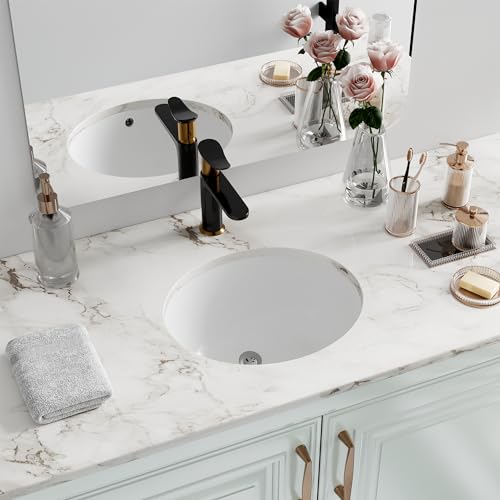
- Hugsleek Oval Undermount Bathroom Sink, Fireclay, Exterior 18 x 15 Inch — the fireclay undermount — the ceramic family’s thickest, hardest-wearing surface story
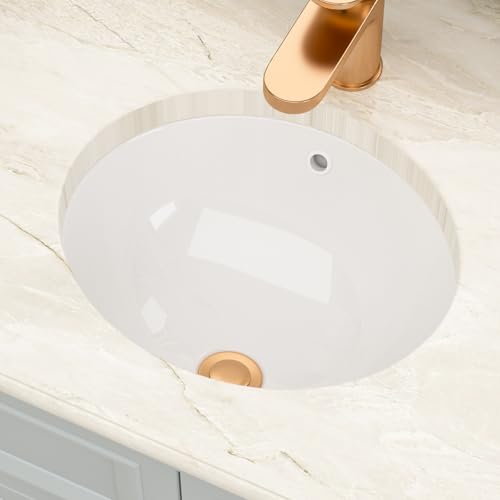
- Kohler Caxton Oval Undermount Bathroom Sink, 17 x 14 Inch — the Caxton — the long-running glazed undermount against which other sink surfaces are judged
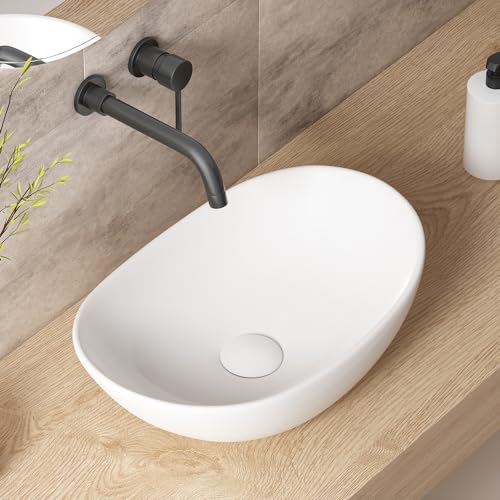
- OCEALAGOON Oval Vessel Sink, 18 x 12 Inch — the glossy porcelain oval vessel — the ceramic surface shown off above the counter
- KMOEM Vessel Sink, 16 x 13 Inch, Oval — the compact glossy porcelain oval for smaller vanities
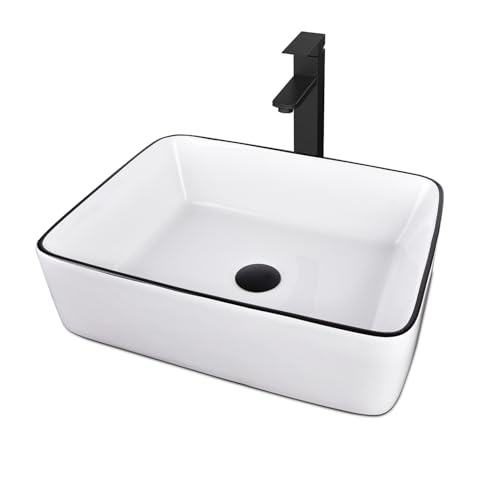
- KGAR Ceramic Vessel Sink, 18 x 13 Inch, Marble Pattern, with Faucet and Pop-Up Drain — the marble-pattern ceramic vessel — a stone look with a ceramic surface’s behavior, faucet and drain included
- Kichae Rectangular Vessel Sink, 16 x 12 Inch — the compact glossy porcelain rectangle for narrow tops
Read the full guide ↓
Asking for the best surface for bathroom sinks is asking the right question at the right time, because the surface is the part of the sink you will actually live with. The bowl’s shape is a decision for a day; the surface is what your hands touch, what toothpaste dries on, what hard water spots, what cleaning products attack and what still has to look good in ten years. Two sinks of identical shape in different surface materials are, in daily life, two different sinks.
This guide answers the surface question the concrete way: through six real basins whose materials and finishes were verified against listing data. They are all members of the ceramic family — porcelain, glazed ceramic and fireclay — because that family’s glazed surface is the benchmark every other bathroom-sink material is judged against. Along the way the guide also deals honestly with the surfaces not in this pool — stone, glass, metal, solid surface — explaining where each genuinely wins and loses, so the recommendation for glazed ceramic is a conclusion you can inspect rather than a preference you are asked to share.
You will learn how a glaze actually works, why gloss level is a maintenance decision disguised as a style one, which surfaces forgive hard water and which record it, and how to care for each without destroying the finish you paid for. Readers planning a whole-room refit may also find Best Single Basin Kitchen Sinks useful — the surface logic there is a close cousin of what follows.
Key Takeaways
- A high-fired glazed ceramic or porcelain surface is the best all-round bathroom sink surface: non-porous, stain-resistant, repairable by replacement rather than refinishing, and indifferent to normal bathroom chemistry.
- The glaze is the surface that matters — the clay body beneath it decides strength and cost, the glaze decides cleaning, staining and feel.
- Gloss finishes wipe cleanest and show water spots most; the practical sweet spot for busy bathrooms is a quality gloss glaze cleaned with soft cloths only.
- Fireclay is the ceramic family’s heavy-duty branch: thick, dense and chip-resistant, at a weight and price premium.
- Printed pattern finishes like marble-effect ceramic give a stone look with a ceramic surface’s behavior — buy them as patterns, not as stone.
- Whatever surface you choose, abrasive cleaners are its enemy: they dull glazes and void the easy-clean advantage you bought.
In this guide
Quick Picks
The six picks are ordered as a tour of ceramic-family surfaces: fireclay first, then the benchmark porcelain undermount, then glossy vessels in oval, round-friendly and patterned finishes, closing with the compact rectangle. Badges name the surface lesson each pick teaches best.
| Pick | Badge | Format | Size | Link |
|---|---|---|---|---|
| Hugsleek Oval Undermount Bathroom Sink, Fireclay, Exterior 18 x 15 Inch | Best Heavy-Duty Surface | Undermount | Exterior 18 x 15 in; interior bowl 16 x 13 in | Check on Amazon |
| Kohler Caxton Oval Undermount Bathroom Sink, 17 x 14 Inch | Best Benchmark Surface | Undermount | 17 x 14 in | Check on Amazon |
| OCEALAGOON Oval Vessel Sink, 18 x 12 Inch | Best Glossy Vessel Surface | Vessel (above counter), oval | 18 x 12 in | Check on Amazon |
| KMOEM Vessel Sink, 16 x 13 Inch, Oval | Best Compact Gloss Surface | Vessel (above counter), oval | 16 x 13 in | Check on Amazon |
| KGAR Ceramic Vessel Sink, 18 x 13 Inch, Marble Pattern, with Faucet and Pop-Up Drain | Best Patterned Surface | Vessel (above counter), rectangular | 18 x 13 in | Check on Amazon |
| Kichae Rectangular Vessel Sink, 16 x 12 Inch | Best Small Gloss Rectangle | Vessel (above counter), rectangular | 16 x 12 in | Check on Amazon |
How These Picks Were Chosen
The pool for this guide was verified on 2026-11-22, with each basin’s material and finish cross-checked against its listing data: porcelain ceramic, glossy porcelain, fireclay and marble-pattern ceramic all appear, and no pick is described with a material its listing does not support. That discipline matters for a surface guide above all, because surface claims are where sink marketing is loosest — ‘stone finish’, ‘marble look’ and ‘premium ceramic’ all needed translating into what the basin is actually made of before it could be recommended here.
Selection deliberately spans the ceramic family’s range rather than repeating one basin six times. There is a fireclay undermount for the durability argument, porcelain undermount and vessel models for the benchmark argument, glossy finishes for the cleaning argument, and a printed marble pattern for the honesty argument about decorative surfaces. Between them they let the guide compare surfaces within one material family — which is where most real buying decisions are actually made.
This is research-led guidance, not laboratory testing. We have not abraded, stained or dropped weights on these six basins, and no durability claim below depends on pretending otherwise. The conclusions rest on the verified materials themselves and on how glazed ceramic surfaces are known to behave — knowledge any ceramics manufacturer will confirm — applied carefully to each pick’s stated construction.
The 6 Best Bathroom Sink Surfaces, Shown on Real Basins
Read these reviews surface-first: each one leads with what the basin is made of and how that surface behaves, and only then covers shape and fit. The spec boxes repeat only listing-verified facts, and the verdicts are written for buyers whose priority is how the sink will clean, age and feel.
Hugsleek Oval Undermount Bathroom Sink, Fireclay, Exterior 18 x 15 Inch
Badge: Best Heavy-Duty Surface
Strengths
- Fireclay body is dense and thick — the most chip-resistant construction in the ceramic family
- Glazed surface is fully non-porous, so stains sit on it rather than in it
- Undermount format keeps the counter-to-bowl transition seamless and easy to wipe
Trade-offs
- Fireclay is heavy — the vanity and mounting must be planned for the weight
- Needs a cut countertop and undermount installation
- White gloss will show hard-water spotting between cleans, as all gloss whites do
| Format | Undermount (under counter) |
|---|---|
| Exterior size | 18 x 15 in |
| Interior bowl | 16 x 13 in |
| Material | Porcelain ceramic / fireclay per listing |
| Finish | White |
Fireclay is what happens when the ceramic idea is pushed toward durability: a clay body fired at high temperature until it becomes dense, thick and notably resistant to the knocks a bathroom sink actually receives — the dropped bottle, the metal soap dish, the hurried morning. The Hugsleek brings that construction to a compact undermount format, eighteen by fifteen inches outside with a sixteen-by-thirteen bowl, which makes it the surface-first pick for a bathroom that will be used hard for a long time.
The surface itself is the familiar glazed finish, and that is the point: fireclay’s advantage is not a different feel but a stronger substrate under the same non-porous glaze. Scratches that would matter are resisted by the glaze’s hardness; impacts that would chip a thin-walled basin meet more material. For a family bathroom or a rental expected to survive tenants, that substrate difference is the most practical surface upgrade in this guide.
The honest costs are weight and installation. Fireclay basins are heavy enough that the undermount hardware and the vanity’s structure deserve respect, and the format requires a cut counter. Buyers who can accept both get the ceramic family’s most forgiving long-term surface; buyers mid-refresh with an uncut top should look at the vessels below instead.
Best for: family bathrooms, rentals and hard-use installations on cut counters / Not suited for: uncut vanity tops, or lightweight vanities not built for a heavy basin

Kohler Caxton Oval Undermount Bathroom Sink, 17 x 14 Inch
Badge: Best Benchmark Surface
Strengths
- A mature, consistent glaze from a long-running production line — the benchmark surface in this guide
- Undermount rim means the surface story continues onto the counter with no lip to trap grime
- Classic oval proportions suit most standard counters
Trade-offs
- Requires a cut countertop and undermount fitting
- Drain and faucet are separate purchases
- Gloss white shows water spots readily in hard-water homes
| Format | Undermount |
|---|---|
| Shape and size | Oval, 17 x 14 in |
| Brand line | Kohler Caxton |
| Finish | White |
| Counter fit | For cut stone or solid-surface countertops |
If the surface question has a reference answer, it is a basin like this one: a glazed ceramic undermount from a line that has been produced for years, with a finish whose behavior is known in millions of installed bathrooms. The Caxton’s glaze is smooth, fully vitrified and non-porous, which translates into the daily experience buyers actually care about — toothpaste rinses away, makeup wipes off, and nothing in normal bathroom chemistry stains it permanently.
Consistency is the underappreciated surface virtue this pick represents. A glaze is a manufactured coating, and its quality is a quality-control story: even coverage, no pinholes, no thin spots at the rim. Long-running lines from established makers are where that consistency is most reliable, which is a genuine, if unglamorous, reason to pay for a name in a surface-led purchase.
Its limitations are format limitations rather than surface ones: a countertop must be cut, hardware bought separately, and the gloss white finish will display hard-water spotting between wipes, as every gloss white does. None of that dents the conclusion for a surface-first buyer planning new counters: this is the standard, and the rest of this guide is commentary on it.
Best for: countertop renovations wanting the proven, benchmark glazed-ceramic surface / Not suited for: uncut tops, or buyers seeking a decorative statement surface

OCEALAGOON Oval Vessel Sink, 18 x 12 Inch
Badge: Best Glossy Vessel Surface
Strengths
- Glossy porcelain surface on full display — inside and outside the bowl
- Shallow 12 in depth suits narrower vanity tops
- Curved oval interior rinses residue to the drain without corners
Trade-offs
- A vessel exposes its exterior surface to bumps and cleaning duty an undermount avoids
- Drain and faucet are separate orders
- Gloss white needs regular wiping in hard-water areas
| Format | Above-counter vessel |
|---|---|
| Shape and size | Oval, 18 x 12 in |
| Material | Porcelain ceramic |
| Finish | White |
| Style | Modern countertop bowl |
A vessel sink is a surface with nowhere to hide: the exterior of the bowl is as visible as the interior, and both are glazed porcelain on the OCEALAGOON. That makes it the best pick in this guide for buyers whose surface question is partly aesthetic — they want to see and touch the material they chose. The glossy white finish reads clean and modern, and the eighteen-by-twelve-inch oval keeps the footprint shallow enough for narrower tops.
The practical surface story is equally good. Porcelain’s glaze is the same non-porous skin as the undermounts above, so the cleaning behavior carries over: soft cloth, mild cleaner, nothing abrasive. The oval interior helps, carrying water and residue to the drain along a curve instead of stranding them in corners. The exterior adds one duty — a wipe of the outer wall during the weekly clean — which is the honest price of the format.
Choose it when the surface is meant to be part of the room’s look and the vanity top is staying uncut. Its limitation is simply the vessel format’s: rim height above the counter, a separate drain to order, and more exposed glaze to keep wiped in a hard-water home.
Best for: vanity-top refreshes that want the glossy porcelain surface on display / Not suited for: buyers who dislike wiping an exposed bowl exterior, or uncut-top projects needing a drain included

KMOEM Vessel Sink, 16 x 13 Inch, Oval
Badge: Best Compact Gloss Surface
Strengths
- Same non-porous porcelain glaze as the full-size picks, at a compact 16 x 13 in size
- Oval form rinses clean without corner seams
- Gloss surface makes a small bathroom feel brighter and cleaner
Trade-offs
- Compact bowl splashes more under vigorous use
- Drain and faucet are separate orders
- Gloss shows water spots — plan a wipe-down habit
| Format | Above-counter vessel |
|---|---|
| Shape and size | Oval, 16 x 13 in |
| Material | Porcelain ceramic |
| Finish | White |
| Style | Modern art basin |
The KMOEM makes a point worth stating plainly: surface quality does not scale with size. This sixteen-by-thirteen-inch oval carries the same glossy porcelain glaze as the largest basins in the guide, with the same non-porous, stain-shedding behavior, fitted to the compact vanities of en-suites and small bathrooms. Buyers downsizing a sink do not have to downsize its surface.
In a small room the gloss finish does double duty. It is the easiest ceramic finish to wipe truly clean — the cloth glides, residue releases — and its light return brightens a room that may have little natural light. The oval interior supports the story, rinsing to the drain without corners. The maintenance caveat is visibility: gloss shows water spots and toothpaste flecks honestly, so the KMOEM suits households whose cleaning style is little and often.
Its size limitation is the familiar compact one: enthusiastic face-washing will splash, and the faucet should be aerated and aimed at the bowl’s center. Ordered with that pairing in mind, it is the small-vanity surface pick — proof that the best surface for a bathroom sink is available at sixteen inches as readily as at twenty-four.
Best for: small vanities and en-suites wanting the benchmark porcelain surface at compact size / Not suited for: high-volume family use, or households that clean rarely and dislike visible spotting

KGAR Ceramic Vessel Sink, 18 x 13 Inch, Marble Pattern, with Faucet and Pop-Up Drain
Badge: Best Patterned Surface
Strengths
- Marble-pattern finish delivers a stone look while behaving like easy glazed ceramic
- Pattern disguises water spots and minor marks better than plain gloss white
- Faucet and pop-up drain included and matched to the bowl
Trade-offs
- The pattern is printed, not stone — it will not match real marble under close comparison
- Included faucet fixes the finish to matte black
- Rectangular corners need deliberate wiping
| Format | Above-counter vessel |
|---|---|
| Shape and size | Rectangle, 18 x 13 in |
| Material | Ceramic |
| Finish | White marble pattern |
| Included | Matte black faucet and pop-up drain included |
The KGAR is this guide’s honesty exhibit for decorative surfaces. Its white marble pattern is printed on ceramic, and the correct way to buy it is with both halves of that sentence in mind: you get the visual suggestion of marble — veining, depth, a stone-adjacent focal point — riding on a glazed ceramic surface that is non-porous, light, and cleaned with a soft cloth. Real marble, by contrast, is porous, etches under acids as mild as lemon, and wants sealing and careful chemistry for its whole life.
The pattern also has a practical surface virtue nobody advertises: it hides the evidence. Water spots, faint hard-water traces and the minor marks of daily use that shout on plain gloss white whisper on a veined pattern. For busy bathrooms, a patterned glaze can be the lowest-maintenance surface in this guide in lived terms, whatever the laboratory ranking says.
Add the included matte black faucet and pop-up drain and the KGAR is also the most complete order here. Its limitations are expectations: place it beside real marble and the print will show its nature, and the black finish is decided for you. Bought as what it is — a patterned ceramic surface with stone manners and ceramic morals — it is a genuinely smart answer to the surface question. Buyers curious how pattern-versus-material plays out elsewhere can see the same trade-off in Best Kitchen Sinks For Van Life, where compact surfaces face similar scrutiny.
Best for: buyers who want a stone look with ceramic upkeep, plus a complete one-box order / Not suited for: bathrooms with real marble to match, or non-black hardware schemes

Kichae Rectangular Vessel Sink, 16 x 12 Inch
Badge: Best Small Gloss Rectangle
Strengths
- Glossy porcelain surface in a compact rectangular form
- Shallow 12 in depth fits narrow vanity tops
- Crisp modern lines for small contemporary bathrooms
Trade-offs
- Rectangular corners interrupt rinsing and need a deliberate wipe
- Smallest bowl here — splash discipline required
- Drain and faucet are separate orders
| Format | Above-counter vessel |
|---|---|
| Shape and size | Rectangle, 16 x 12 in |
| Material | Porcelain ceramic |
| Finish | White |
| Style | Modern rectangular art basin |
The Kichae closes the tour with the surface question applied to shape. Its glossy porcelain is the same benchmark glaze as the ovals, but the rectangular interior changes the surface’s daily behavior: flat walls and corner seams interrupt the rinse, so residue settles where the walls meet the floor of the bowl. Nothing is wrong with the glaze — geometry is simply part of a surface’s lived performance, and this pick exists to make that visible.
At sixteen by twelve inches it is also the compact option for narrow tops, with a shallow depth that suits the vanities of small modern bathrooms. The crisp lines are the aesthetic argument, and in a small contemporary room they are a good one; the maintenance argument asks only for a cloth pass along the corners during the weekly clean, a few seconds that keep the rectangle looking as sharp as its photographs.
Order it with a separate drain and a faucet matched for reach and aeration, as with the other bare vessels here. Its honest limitation is the combination of small size and corners — the most cleaning attention per inch in the guide — repaid by the sharpest small-space profile. For surface purists who want the easiest rinse, the ovals above are the answer; for small rooms with a modern brief, this is.
Best for: narrow vanities and small modern bathrooms wanting a rectangular glossy surface / Not suited for: buyers who want the lowest-effort rinse, or one-box shoppers
Comparison Table
The comparison below is organized around the keyword itself: material and finish first, format and size second. Two basins can share a footprint and differ completely as surfaces — this table is built to keep that difference in view.
| Pick | Format | Size | Material / finish | Drain & overflow | Link |
|---|---|---|---|---|---|
| Hugsleek Oval Undermount Bathroom Sink, Fireclay, Exterior 18 x 15 Inch | Undermount | Exterior 18 x 15 in; interior bowl 16 x 13 in | Porcelain ceramic / fireclay, white | Not stated in verified data | Check on Amazon |
| Kohler Caxton Oval Undermount Bathroom Sink, 17 x 14 Inch | Undermount | 17 x 14 in | Ceramic (per brand line), white | Drain assembly not included | Check on Amazon |
| OCEALAGOON Oval Vessel Sink, 18 x 12 Inch | Vessel (above counter), oval | 18 x 12 in | Porcelain ceramic, white | Drain not stated as included | Check on Amazon |
| KMOEM Vessel Sink, 16 x 13 Inch, Oval | Vessel (above counter), oval | 16 x 13 in | Porcelain ceramic, white | Drain not stated as included | Check on Amazon |
| KGAR Ceramic Vessel Sink, 18 x 13 Inch, Marble Pattern, with Faucet and Pop-Up Drain | Vessel (above counter), rectangular | 18 x 13 in | Ceramic, white marble pattern | Pop-up drain and matte black faucet included | Check on Amazon |
| Kichae Rectangular Vessel Sink, 16 x 12 Inch | Vessel (above counter), rectangular | 16 x 12 in | Porcelain ceramic, white | Drain not stated as included | Check on Amazon |
How to Choose the Best Surface for a Bathroom Sink
Start by separating body from surface. A ceramic sink is a clay body wearing a glaze, and the two do different jobs. The body — porcelain, standard ceramic, fireclay — decides weight, strength and how the basin survives impact. The glaze decides almost everything you experience daily: whether stains penetrate (they cannot, on an intact glaze), how the surface feels, how light plays on it, and how it responds to cleaners. When a listing says ‘porcelain ceramic’, it is describing the body; the working surface is the glaze fused over it, and its quality is the thing to judge.
Judge that glaze on three properties. First, integrity: a fully vitrified, even glaze has no pores or pinholes for grime and pigment to enter, which is why glazed ceramic shrugs off hair dye scares and makeup that would mark porous stone. Second, hardness: a good glaze resists scratching from everyday objects, though it is not invulnerable — gritty abrasive cleaners are its one common enemy, grinding the gloss into a matte patch that then holds dirt faster, in a small tragedy of self-inflicted maintenance. Third, finish level: gloss wipes cleanest and reflects most light, and also displays water spots most faithfully; patterns and veining, like the KGAR’s, split the difference by camouflage.
Then place the alternatives honestly, because ceramic is not the answer to every surface question. Natural stone is beautiful and porous: it etches under acids, stains under pigments and wants periodic sealing — a surface for owners who enjoy stewardship. Glass vessels are non-porous and dramatic, show every water spot and fingerprint, and carry a fragility perception that changes how a household treats them. Metal sinks — stainless, copper — are light and unbreakable, can dent and drum, and develop patinas that are either the point or the problem. Solid-surface and composite basins integrate seamlessly with matching counters and can be refinished, at a cost and softness that trails glazed ceramic. Each wins somewhere; none matches glazed ceramic’s combination of indifference to chemistry, ease of cleaning and longevity at ordinary prices, which is why this guide’s picks are all ceramic-family basins.
Hard water deserves its own paragraph in any surface decision. Where water is mineral-heavy, every gloss surface will spot; the differences are in removal and disguise. On glazed ceramic, spots lift with a soft cloth and a mild acidic cleaner used occasionally and rinsed well. On stone, that same acidic cleaner is the damage. On glass, spots are merely more visible. Patterned and veined finishes hide spotting between cleans better than plain gloss. If your water is hard and your cleaning is infrequent, let those two facts steer you toward pattern within the ceramic family rather than away from the family itself.
Finally, match the surface to the room’s traffic. A powder room used by guests can carry a delicate or dramatic surface indefinitely. A family bathroom at two shifts a morning wants the most indifferent surface available: intact gloss glaze over a sturdy body, in a format that wipes fast. An en-suite sits between. The picks above are annotated with exactly this traffic logic, and our notes in Best Portable Toilets For Camping show the same material-indifference reasoning applied where surfaces are punished far harder than any home bathroom.
How to Care for a Bathroom Sink Surface Without Ruining It
Surface care is a short subject that marketing has made long. For the glazed ceramic and porcelain surfaces in this guide, the whole routine is a soft cloth, mild chemistry and the avoidance of exactly one category of product. The steps below are the complete method.
- Daily: rinse the bowl after use and wipe splashes with the hand towel’s corner or a kept microfiber cloth — thirty seconds that prevent most buildup.
- Weekly: wash the surface with warm water and a drop of mild dish soap or a bathroom cleaner labelled safe for ceramic, using a soft cloth or sponge only.
- For hard-water spots: apply a mild acidic cleaner (citric-acid based, or diluted white vinegar on glazed ceramic only), wait a few minutes, wipe and rinse thoroughly.
- For the drain area and overflow slot: use an old soft toothbrush to clear the grime line, rinsing well afterward.
- On vessels: wipe the exterior wall and the counter ring where the bowl sits — the hidden seam is where moisture lingers longest.
- Never use abrasive powders, scouring pads or melamine sponges on a gloss glaze; they micro-scratch the surface and make future dirt stick faster.
- Never leave bleach-soaked cloths or strong chemicals sitting in the bowl; rinse any strong cleaner promptly, whatever the surface.
- Dry the bowl with a soft cloth after the weekly clean if your water is hard — a dry glazed surface spots far more slowly than a wet one.
Other surfaces change the rules, which is why the surface decision precedes the care routine. Stone wants pH-neutral cleaners and periodic sealing and must be kept away from the acidic descalers that glazed ceramic tolerates. Glass wants frequent light wiping because it displays everything. Metal wants drying to manage water marks and, for copper, a decision about whether patina is welcome. Choose the surface whose care routine matches the household you actually have.
Troubleshooting
Problem: a dull patch has appeared where the bowl is scrubbed most → the glaze has been micro-scratched by an abrasive cleaner or pad; it cannot be polished back to gloss at home — switch to soft-cloth cleaning to stop it spreading, and treat the patch as a reminder rather than a defect to attack
Problem: white crusty deposits keep forming around the drain and faucet base → hard-water scale; soften with a mild acidic cleaner on a cloth laid over the deposit for a few minutes, then wipe and rinse — on glazed ceramic this is safe, on stone it is not, which is one more reason the surface choice matters
Problem: a faint color stain from hair dye or makeup will not rinse away → on an intact glaze the pigment is sitting on the surface, not in it; a paste of baking soda and water applied gently with a soft cloth usually lifts it — avoid scouring, which trades a removable stain for permanent dullness
Gloss, Matte and Pattern: Choosing the Best Surface for Bathroom Sinks by Finish
Once the material family is chosen, finish is the remaining surface decision, and it is mostly a maintenance decision wearing a style costume. Gloss glaze is the easiest surface in this guide to clean to a true shine and the most revealing of water spots and fingerprints. Matte and satin ceramic finishes hide spotting better and feel more contemporary to many eyes, while asking slightly more effort to lift greasy residue, because the micro-texture that softens reflections also gives films more to hold. Patterned finishes — the KGAR’s marble print is this guide’s example — play a different game entirely, hiding the evidence between cleans rather than resisting it.
There is no universal winner, only a match to household rhythm. Clean little and often, and gloss rewards you with the fastest wipe in the category. Clean thoroughly but rarely, and pattern or satin will look better between sessions. Have hard water and strong opinions about visible spots, and pattern is the honest recommendation. The finish should be chosen the way the material was: by behavior first and photograph second.
One caution applies to all three: finish names are not standardized across sellers. A ‘matte’ from one maker can be another’s ‘satin’, and photographs under showroom light flatter everything. Where the finish is the deciding factor, weight the description of the surface’s behavior — easy clean, glossy, patterned — more than the adjective in the title, and expect the basin’s real character to declare itself in your own bathroom’s light.
Why the Counter Surface Is Half of This Question
A sink does not sit in a vacuum; it sits in a counter, and the pair of surfaces is experienced as one. Undermounts make the relationship literal — the counter’s surface continues to the bowl’s rim, and water, toothpaste and cleaning products travel between them daily. A non-porous glazed bowl under a porous stone counter inherits the counter’s weaknesses at exactly the wettest point in the room. A vessel keeps the surfaces separate but adds its own seam, the ring where bowl meets top, which is where moisture and grime gather if the seal is poor.
The practical rule is to let the weaker surface set the care routine for both. If your counter is stone, the sink area gets stone-safe chemistry even though the ceramic bowl would tolerate stronger. If your counter is laminate or wood, the vessel’s seam and the counter’s water sensitivity deserve the attention, not the bowl’s nearly indestructible glaze. Buyers planning both surfaces together have the advantage: quartz or solid-surface counters pair with glazed ceramic bowls into a wet zone that is non-porous end to end, which is as close to a maintenance-free bathroom surface system as the market offers.
This is also why the guide’s undermount picks assume cut stone or solid-surface counters without apology. The pairing is the point. A benchmark bowl under a benchmark counter is the combination that makes the surface question disappear from daily life — and disappearing, for a bathroom surface, is the highest available praise. Planners extending that thinking across the room will find Best Toilets For Camper Van a useful companion on choosing surfaces and fixtures that tolerate real use.
Surface Myths Worth Retiring
Myth one: porcelain and ceramic are different surfaces. At the touch point they are the same thing — a glaze. Porcelain describes a denser, more vitrified body under that glaze, which matters for strength and water absorption at unglazed edges, but your hands, your cleaners and your stains meet the glaze on both. Buy porcelain for the body; judge the surface as glaze either way.
Myth two: a harder-sounding material is automatically easier to live with. Stone sounds permanent and etches under a slice of lemon left on it; glass sounds fragile and is chemically indifferent to almost everything in the bathroom cabinet. Lived ease follows porosity and chemistry, not adjectives. The glazed ceramic family’s reign in bathrooms is a behavior story, not a hardness story.
Myth three: anti-bacterial and self-cleaning surface claims change the routine. Whatever a listing claims, a bathroom sink surface still wants the same soft-cloth, mild-cleaner care, and no coating repeals the abrasive rule. Treat such claims as decoration on the listing rather than instructions for your cleaning cupboard.
Myth four: a damaged glaze can be restored with a miracle product. Chips and dull patches on ceramic are managed, not reversed, short of professional refinishing — which is why the fireclay pick’s chip-resistant body and the general rule against abrasives carry so much weight in this guide. Prevention is the entire game with surfaces, and it is a cheap game to win.
Common Buying Mistakes
Choosing a surface by photograph alone. A listing photo shows color and shape under studio light; it cannot show porosity, spot visibility or how the finish behaves under your water. Decide from material and finish behavior — the facts this guide organizes — and let photographs break ties, not make decisions.
Cleaning a gloss glaze with abrasive products. Scouring powders and pads feel effective and are quietly destroying the surface’s one great asset, its smooth non-porous gloss. Every dull patch they create holds dirt faster than the glaze around it. Soft cloths only, on every pick in this guide.
Assuming stone-look means stone behavior — in either direction. Buyers of patterned ceramic sometimes care for it as if it were delicate marble, and buyers of real stone sometimes clean it as if it were ceramic. The KGAR’s printed surface wants ceramic’s simple routine; real stone wants sealing and neutral chemistry. Know which one you own.
Ignoring hard water until the spots set the agenda. In mineral-heavy homes, surface choice and a drying habit decide whether the sink looks clean between cleans. Patterned finishes and a post-clean dry wipe are small decisions that outperform any amount of later scrubbing.
Forgetting the counter in the surface decision. The sink and counter are one wet system. Pairing a non-porous bowl with a vulnerable counter — or cleaning the pair by the bowl’s tougher rules — produces the damage this guide’s how-to section exists to prevent.
Final Recommendation
The direct answer to the search is this: choose a high-fired glazed ceramic or porcelain surface, in gloss if you clean little and often, in a pattern if you clean thoroughly but less frequently, over a fireclay body if the bathroom will be used hard for years. The Hugsleek fireclay undermount is the durability-first expression of that answer, and the Kohler Caxton is its benchmark form — either gives you the surface against which everything else in the category is measured.
Choose the OCEALAGOON or KMOEM when the surface should be on display above the counter, the KGAR when you want marble’s look with ceramic’s morals and a complete one-box order, and the Kichae when a small modern room wants the gloss surface in rectangular form. Whichever you pick, protect the glaze from abrasives and the best surface for bathroom sinks will still be performing — quietly, daily, without complaint — when every trend that surrounded its purchase has been replaced twice over.
Start your shortlist here: Hugsleek fireclay undermount sink, Kohler Caxton undermount sink, OCEALAGOON oval vessel sink.
Frequently Asked Questions
What is the best surface for a bathroom sink?
A fully glazed ceramic or porcelain surface is the best all-round answer: non-porous, resistant to stains and normal bathroom chemistry, easy to clean with a soft cloth, and durable over decades. Fireclay bodies add chip resistance for hard-use bathrooms, and patterned glazes hide water spots best between cleans.
Is porcelain better than ceramic for a sink surface?
At the surface itself, both are glaze, and behave the same to hands, stains and cleaners. Porcelain’s advantage is its denser body — strength and lower absorption at any unglazed edge. Buy porcelain for construction quality; judge the working surface as glaze in both cases.
Does a gloss or matte finish clean more easily?
Gloss releases residue most easily and wipes to a shine fastest, but shows water spots most clearly. Matte and satin hide spotting better while holding greasy films slightly more. Patterned finishes hide the most between cleans. Match the finish to your cleaning rhythm rather than to a showroom preference.
Is a marble-pattern ceramic sink a good substitute for real marble?
For most bathrooms, yes — it offers the marble look on a non-porous glazed surface that needs no sealing and tolerates normal cleaners, which real marble does not. It will not deceive anyone comparing it closely with real stone, and it should be bought as a pattern, not as a stone impersonation.
How do I remove hard-water spots from a ceramic sink?
Use a mild acidic cleaner — citric-acid based, or diluted white vinegar — on a soft cloth, allow a few minutes of contact, then wipe and rinse well. On glazed ceramic this is safe. Never use the same approach on a natural stone sink or counter, where acid causes etching.
Can a chipped or dulled ceramic surface be repaired?
Small chips can be touched up with ceramic repair compounds for appearance, and dull patches from abrasion cannot be polished back to gloss at home. Prevention — soft cloths, no abrasives, care with heavy objects over the bowl — is the real strategy, which is why chip-resistant fireclay earns its place in this guide.
Are glass or metal sinks better than ceramic?
They are better at specific things: glass at drama, metal at being unbreakable and light. Neither matches glazed ceramic’s all-round combination of non-porosity, chemical indifference, easy cleaning and longevity at ordinary cost, which is why ceramic-family basins fill this guide’s picks.