Disclosure: topratedkitchenware.com is reader-supported. When you buy through links on our site, we may earn an affiliate commission from Amazon and other retailers, at no extra cost to you.
Where to buy
All six pots in this guide to the best teapots for japanese tea are sold through Amazon, and every linked pick below goes straight to its product page so you can confirm the current capacity, infuser style, and availability before ordering. Start with the short list, then read the full guide for the temperature and steeping guidance that Japanese teas demand.
- DOPUDO Small Glass Teapot with Infuser, 18 oz — Check on Amazon
- STNTUS Glass Teapot, 40 oz, with Infuser and Strainer
- Enchanti Tea Pot, One Touch Glass Teapot with Infuser, 27 oz
- Teabloom Celebration Glass Teapot & Kettle, 27 oz
- CNGLASS Glass Teapot Stovetop Safe, 20.3 oz
- DRNKNSTX Enchanted Tea Pot with Tea Infuser, 20 oz
Read the full guide ↓
Japanese teas ask more of a teapot than almost any other tradition. Sencha wants water well below boiling and a steep measured in a minute or two, not five. Gyokuro wants cooler water still, small volumes, and concentrated flavour. Hojicha and genmaicha are more forgiving but still reward control. The best teapots for japanese tea in a modern home kitchen are therefore pots that give you three things: a removable infuser you can lift at exactly the right moment, a size matched to small, repeated infusions, and clear walls so you can watch fine, needle-like sencha leaves and judge the liquor as it colours. Every pot in this guide is a glass infuser pot for loose leaf tea, which is the practical format for brewing Japanese teas at home without a specialist setup.
Honesty about tradition matters here. The classic vessel for sencha is the kyusu, a small side-handled clay pot, and no glass pot in this guide pretends to replace that tradition for a dedicated practitioner. What these pots do offer is an accessible, versatile route into Japanese teas: one vessel that brews sencha in the morning, hojicha in the evening, and your other loose leaf teas besides, with an infuser basket that makes the short, repeated steeps of the Japanese style easy to manage and easy to clean. If you are exploring Japanese teas rather than equipping a formal practice, that versatility is the point. Readers building a broader loose leaf routine will find the general principles in Best Teapots For Loose Leaf Tea helpful alongside the Japan-specific guidance here.
Key Takeaways
- The DOPUDO 18 oz glass teapot is our first choice for Japanese teas at home: a compact pot with a removable 18/8 steel infuser, sized for the small, repeated infusions the style rewards.
- Temperature discipline matters more than the pot itself: cool the water before it touches sencha or gyokuro, whichever vessel you use.
- Short steeps need a lift-out infuser — all six picks here have one, so the leaves leave the water on time, every time.
- Smaller pots suit this tradition: four of the six picks sit between 18 and 27 ounces.
- Glass helps beginners learn Japanese teas, because leaf movement and liquor colour are visible teachers.
In this guide
Quick Picks
| Pick | Badge | Capacity from listing | Infuser noted in listing | Link |
|---|---|---|---|---|
| DOPUDO Small Glass Teapot | Best Overall | 18 oz / 530ml | Removable 18/8 steel infuser | Check on Amazon |
| STNTUS Glass Teapot | Best for Sharing | 40 oz / 1200ml, 4–6 cups | Infuser with stainless steel strainer | Check on Amazon |
| Enchanti Tea Pot, One Touch | Best for Easy Serving | 27 oz / 800ml | Glass teapot with infuser | Check on Amazon |
| Teabloom Celebration | Best for Guests | 27 oz | Removable glass infuser | Check on Amazon |
| CNGLASS Glass Teapot | Best Stovetop Option | 20.3 oz | Removable infuser | Check on Amazon |
| DRNKNSTX Enchanted Tea Pot | Best Gift Pick | 20 oz | Tea infuser / steeper | Check on Amazon |
Badges reflect how each pot fits the Japanese tea routine — small volumes, timed steeps, gentle water — rather than teapot quality in the abstract.
How These Picks Were Chosen
This is a research-led guide. We compared the verified listings in this glass teapot group, checked every specification quoted here against the listing title itself, and weighted the traits Japanese teas reward: a removable infuser for precise steep timing, capacities at the smaller end of the range, clear glass for watching fine leaves, and — where a listing states it — stovetop safety for heating water in the same vessel. Where a listing does not state a detail, such as an infuser’s material, we leave it unstated rather than guessing.
We also applied a honesty filter specific to this keyword. Japanese tea culture has dedicated vessels — kyusu, houhin, shiboridashi — and a guide that claimed a general-purpose glass pot outperforms them at their own tradition would not be trustworthy. Instead we selected for the home brewer’s reality: someone who drinks sencha, genmaicha, or hojicha regularly, wants the ritual to be manageable on a weekday, and may brew other teas in the same pot. Within that frame, the traits above are the ones that decide whether the cup tastes clean and sweet or bitter and stewed. The comparison with Chinese-style brewing in Best Teapots For Oolong is instructive: oolong rewards expansion room and repeated pouring, while Japanese greens reward temperature restraint and brevity — and a good removable infuser serves both disciplines.
Finally, we spread the sizes deliberately. Japanese brewing is usually small-batch, so compact pots lead this guide; the one 40 oz pick is included for households that brew milder teas like hojicha or genmaicha for several people at once, where a larger pot is a reasonable, honest choice.
The 6 Best Teapots for Japanese Tea

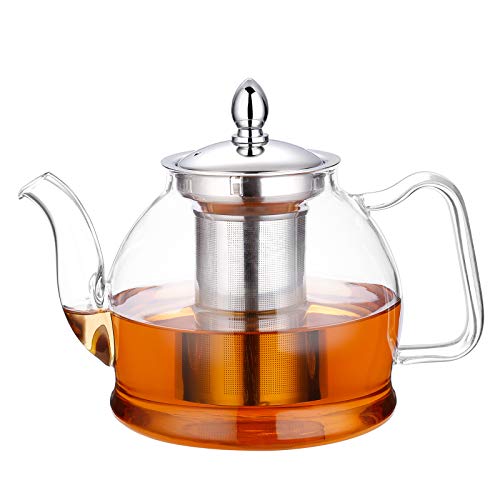
DOPUDO Small Glass Teapot with Infuser, 18 oz
Badge: Best Overall
Strengths
- Compact 18 oz / 530ml size matches the small-batch pattern of sencha and gyokuro brewing.
- Removable 18/8 steel infuser stated in the listing — precise lift-out timing for short steeps.
- Listing frames it for individual loose-leaf brewing, which is exactly the solo Japanese tea routine.
Trade-offs
- Strictly a one-to-two-person pot; a tea gathering needs a bigger vessel or repeated brews.
- No stovetop claim in the listing, so water is heated separately — which suits temperature control, but adds a step.
- The basket is smaller than a kyusu’s open interior, so very long sencha needles have less room to unfurl.
Mini spec box: Capacity 18 oz / 530ml · Borosilicate glass · Removable 18/8 steel infuser · Sized for individual brewing.
The DOPUDO leads this guide because its scale is right. Japanese green teas are brewed in modest volumes and re-steeped, and an 18 oz pot brewed part-full for one or two small cups follows that pattern naturally. The stated steel infuser lifts out cleanly at the one-minute mark, which is the single most important mechanical action in sencha brewing: leaves left sitting in the liquor while you pour a second cup will keep extracting and turn the remainder bitter. With the basket out, the brewed tea holds steady while you drink.
Who it suits: the daily sencha or hojicha drinker brewing for one or two. The honest limitation is ceremony and scale — this is a practical modern pot, not a traditional vessel, and it will not serve a table. But for learning how water temperature and steep time change a Japanese green tea, its visibility and control make it a genuinely instructive first pot.
Best for: solo and two-person Japanese tea routines / Not suited for: serving a group or formal traditional practice.

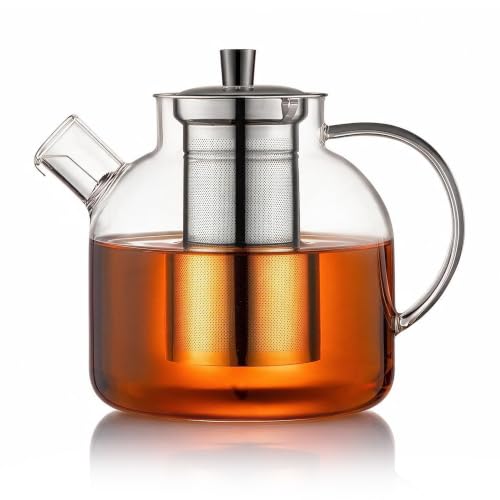
STNTUS Glass Teapot, 40 oz, with Infuser and Strainer
Badge: Best for Sharing
Strengths
- 40 oz / 1200ml capacity listed at 4–6 cups — the household option in this guide.
- Infuser plus a stainless steel strainer stated in the listing, helpful for fine fukamushi-style leaves that shed particles.
- Stovetop safe per listing, so water can be heated in the serving pot for forgiving teas like hojicha.
Trade-offs
- Large volume fights the small-batch logic of delicate greens; best reserved for hojicha, genmaicha, or kukicha for a group.
- Two filtration parts to rinse after each session.
- A big pot of sencha will over-steep for the last drinkers unless the basket is lifted promptly.
Mini spec box: Capacity 40 oz / 1200ml · 4–6 cups per listing · Infuser with stainless steel strainer · Stovetop safe per listing · For loose tea.
Not all Japanese tea drinking is delicate. A family drinking hojicha with dinner, or genmaicha across an afternoon, is better served by a honest large pot than by endless small brews. The STNTUS fills that role: stovetop-safe glass for straightforward heating, a basket for steep control, and a spout strainer that catches the fine particles deep-steamed teas release. Used with the basket lifted on time, it pours a clean, even round for four to six cups.
Who it suits: households whose Japanese tea is the roasted, everyday kind rather than the delicate kind. The honest limitation is precision — nobody should brew their finest gyokuro in a 40 oz pot. Treat it as the family vessel and keep a small pot for the special leaves, and each will do its job properly.
Best for: hojicha and genmaicha for a household / Not suited for: small, precise brews of delicate green tea.

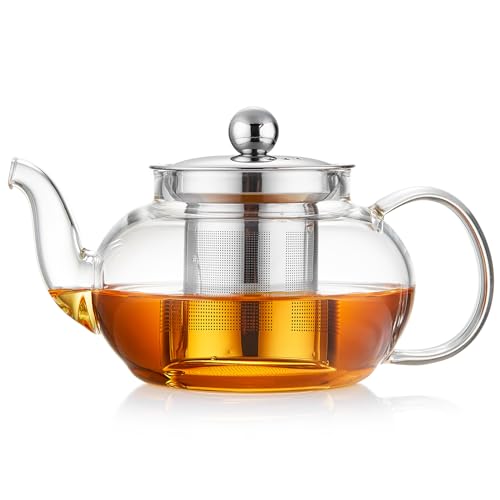
Enchanti Tea Pot, One Touch Glass Teapot with Infuser, 27 oz
Badge: Best for Easy Serving
Strengths
- Mid-size 27 oz / 800ml capacity suits two to three drinkers of Japanese tea.
- One-touch format in the listing suggests serving convenience is the design priority.
- Glass body keeps leaf and liquor visible through short, timed steeps.
Trade-offs
- The listing does not state the infuser material or a stovetop claim, so heat water separately and check the product page for basket details.
- 27 oz is a compromise size — generous for a solo gyokuro session, modest for a group.
- Listed as a gifts set, so presentation is part of what you are paying for.
Mini spec box: Capacity 27 oz / 800ml · One touch glass teapot with infuser · For loose leaf tea · Sold as a tea gifts set.
The Enchanti occupies the middle of this guide: bigger than the solo pots, smaller than the family STNTUS, and oriented toward easy serving. For a couple who drink sencha or genmaicha together, 27 oz brews a comfortable round with a small top-up, and the one-touch positioning speaks to a serving routine with minimal fuss — valuable when a steep is timed in minutes and you do not want the pour itself to become a project.
Who it suits: pairs and small households who value convenience at serving time. The honest limitation is specification certainty: the listing is spare about the infuser’s construction, so if the fineness of the basket matters to you — and with deep-steamed sencha it should — examine the product page closely before ordering. As a gift for someone beginning Japanese tea, though, its balance of size and simplicity is well judged.
Best for: two-to-three-person everyday brewing / Not suited for: buyers who need fully specified filtration details.
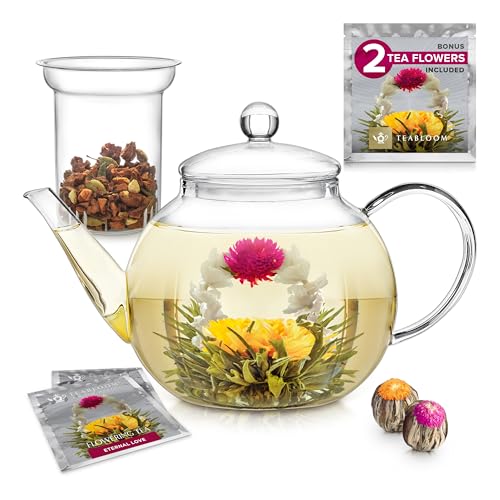
Teabloom Celebration Glass Teapot & Kettle, 27 oz
Badge: Best for Guests
Strengths
- Removable glass infuser keeps the whole brew visible — sencha’s pale gold liquor shows beautifully.
- Stovetop and microwave safe per listing, with heat-resistant glass.
- Listing includes 2 blooming teas and covers loose leaf, bagged, and blooming tea — a versatile guest pot.
Trade-offs
- A glass infuser’s slots are typically less fine than steel mesh, so the finest deep-steamed leaves may leave light sediment.
- Glass components need careful washing and handling.
- Its blooming-tea talents are a bonus for guests rather than a Japanese-tea essential.
Mini spec box: Capacity 27 oz · Removable glass infuser · Stovetop and microwave safe per listing · Heat-resistant glass · Includes 2 blooming teas · For loose leaf, bagged, and blooming tea.
Serving Japanese tea to guests is a presentation as much as a brew, and the Celebration is built for that moment. The all-glass path from leaf to liquor lets guests watch sencha needles dance and settle, and the 27 oz size pours a civilised round for three or four small cups. Its stated stovetop and microwave safety makes reheating water to order straightforward, and the included blooming teas extend the same pot to a different kind of tea theatre on another evening.
Who it suits: hosts who serve Japanese tea socially and want one versatile, presentable pot. The honest limitation is filtration fineness with powdery deep-steamed leaves — pour gently and let the pot settle for half a minute, and the cup stays respectably clear. For everyday solo brewing the DOPUDO is the sharper tool; for the table, this is the charming one. Our Best Teapots For Tea Lovers research covers more gift-oriented picks in this category.
Best for: serving Japanese tea to guests / Not suited for: drinkers who prioritise the finest possible filtration.

CNGLASS Glass Teapot Stovetop Safe, 20.3 oz
Badge: Best Stovetop Option
Strengths
- Listing states stovetop safe — water heats in the pot, simplifying the routine for robust teas.
- 20.3 oz capacity sits in the small-batch zone Japanese greens prefer.
- Removable infuser for timed steeps and easy leaf disposal.
Trade-offs
- Stovetop heating tempts a full boil; sencha still needs the water cooled before pouring over leaves.
- The listing does not state the infuser material.
- Compact size means frequent refills for more than two drinkers.
Mini spec box: Capacity 20.3 oz · Stovetop safe per listing · Removable infuser · For loose leaf and blooming tea.
The CNGLASS makes a workflow argument: one vessel heats the water and brews the tea. For hojicha, genmaicha, and kukicha — the roasted and twiggy end of Japanese tea, which tolerate hotter water — that is a genuinely convenient routine, especially in a small kitchen. For sencha, the same pot works if you respect the cooling step: boil, pour the water into a cooling vessel or an empty cup first, then brew. The pot does not remove the discipline; it removes the clutter.
Who it suits: minimalists and small kitchens brewing the robust end of the Japanese range. The honest limitation is that stovetop convenience is least relevant to the most delicate teas, which need cooled water anyway — so judge this pick by your actual tea shelf, not by the feature in the abstract.
Best for: one-vessel routines for robust Japanese teas / Not suited for: large servings or fully specified filtration.

DRNKNSTX Enchanted Tea Pot with Tea Infuser, 20 oz
Badge: Best Gift Pick
Strengths
- 20 oz size suits one-to-two-person Japanese tea sessions.
- Listing describes a loose leaf steeper format — basket brewing for timed infusions.
- Positioned in its listing as a gift for tea lovers, with a distinctive presentation angle.
Trade-offs
- The listing states no stovetop or material specifics for the infuser, so heat water separately.
- Novelty presentation may matter more to the giver than to a daily brewer.
- Small capacity, like all solo pots, means re-brewing for guests.
Mini spec box: Capacity 20 oz · Tea infuser / loose leaf steeper · Glass tea maker per listing · Gift positioning.
Every category has the pot people buy for someone else, and the DRNKNSTX is this guide’s: a 20 oz glass steeper whose listing leans into gifting. Strip away the presentation and the fundamentals are sound for Japanese tea — a right-sized volume for one or two drinkers and an infuser format that supports the short, timed steeps the tradition runs on. For a friend who has expressed curiosity about sencha or hojicha, it lowers the barrier to a first proper brew.
Who it suits: gift buyers and new Japanese tea drinkers who want an inviting first pot. The honest limitation is specification depth — the listing tells you the format and size but little else, so a buyer who cares about infuser construction should look at the DOPUDO first. As an introduction that will actually get used, though, it earns its place.
Best for: gifts and first steps into Japanese tea / Not suited for: specification-driven buyers.
Comparison Table
| Pick | Capacity | Filtration from listing | Heating noted in listing | Link |
|---|---|---|---|---|
| DOPUDO | 18 oz / 530ml | 18/8 steel infuser | Heat water separately | Check on Amazon |
| STNTUS | 40 oz / 1200ml | Infuser plus steel strainer | Stovetop safe | Check on Amazon |
| Enchanti | 27 oz / 800ml | Infuser (material unstated) | Heat water separately | Check on Amazon |
| Teabloom Celebration | 27 oz | Glass infuser | Stovetop and microwave safe | Check on Amazon |
| CNGLASS | 20.3 oz | Removable infuser | Stovetop safe | Check on Amazon |
| DRNKNSTX | 20 oz | Infuser / steeper | Heat water separately | Check on Amazon |
How to Choose a Teapot for Japanese Tea
Prioritise steep control over everything. Japanese greens punish over-steeping faster than any other major tea family: an extra minute can move a sencha from sweet and brothy to harsh. A removable infuser you can lift decisively is the mechanism of control, and it is non-negotiable in this guide. A pot that requires decanting the whole brew to stop extraction works too, but only if you always brew exactly one round.
Size for small batches. The tradition brews little and often. A pot in the 18 to 27 oz range, often brewed part-full, matches that rhythm and keeps each infusion fresh. Reserve larger pots for the roasted teas — hojicha and genmaicha — where a family round is the actual use case. Buying one huge pot for delicate greens is the most common sizing error in this category.
Plan your water, not just your pot. Sencha generally wants water that has cooled meaningfully below boiling; gyokuro wants it cooler still; hojicha and genmaicha accept water close to boiling. None of that is the pot’s job — it is yours, with a kettle and a cooling step. A yuzamashi cooling vessel is the traditional tool, but pouring water into an empty cup or jug first achieves the same cooling and pre-warms the cup as a bonus. Choose the pot for control and size; build the temperature routine around it.
Value visibility while learning. Glass shows you the leaves unfurling, the liquor colouring, and the moment fine particles begin to cloud the brew. For a drinker learning Japanese teas, that feedback shortens the learning curve more than any single specification. Experienced drinkers who already brew by feel may not need it; beginners genuinely benefit.
Think in tiers qualitatively. Compact steel-infuser pots sit at the accessible end of this category, mid-size all-rounders in the middle, and presentation or gift sets at the premium end. Spend on the infuser and the right size first; presentation extras are worth paying for only when the pot will actually be used for guests.
How to Brew Japanese Tea in an Infuser Teapot
A reliable sencha routine in any pot from this guide:
- Boil fresh water, then cool it: pour it into an empty jug or cup and let it stand until it no longer steams fiercely. For sencha you want hot, not boiling; for gyokuro, let it cool much further.
- Warm the teapot with a little of the hot water and discard it, so the glass does not steal heat from the brew.
- Add leaf to the infuser basket — Japanese greens are dosed generously relative to the small water volume, so do not be shy.
- Pour the cooled water over the leaves and start timing. A first sencha steep is short — around a minute, adjusted to taste.
- Lift the infuser out completely and let it drain for a few seconds over the pot. Pour the tea into cups in small alternating rounds so every cup tastes the same.
- Return the basket for a second steep with water a touch hotter and a shorter time. A third steep is often still worthwhile.
Troubleshooting. Problem: the tea tastes bitter and harsh → the water was too hot or the steep ran long; cool the water further and lift the basket earlier next round. Problem: the tea tastes thin and watery → use more leaf rather than more time, and check that the water was hot enough to begin with. Problem: fine particles cloud the cup → deep-steamed leaves shed dust naturally; let the pot settle briefly before pouring and pour slowly, keeping the last cloudy sip in the pot.
The Main Japanese Teas and What Each Asks of a Pot
Sencha, the everyday steamed green, is the benchmark: moderate leaf, cooled water, short steeps, two to three infusions. Any pot in this guide with a lift-out basket handles it well. Gyokuro, the shaded, premium green, concentrates everything — more leaf, less and cooler water, small cups — and therefore belongs in the smallest pots, brewed part-full; the DOPUDO pattern suits it best here. Genmaicha blends sencha with roasted rice; it is forgiving on temperature, pleasant in larger volumes, and a natural fit for the mid-size and family pots. Hojicha, roasted until the leaves turn russet, is the most relaxed of all: hot water, a straightforward steep, and a flavour that suits meals, which is why the big STNTUS pot earns its place for hojicha households. Kukicha, made from stems and twigs, brews light and sweet and behaves well at family scale too.
The practical lesson is that “Japanese tea” is not one brewing problem but a family of them, arranged along a delicacy scale. Match the pot to the end of the scale you actually drink: delicate-end drinkers should buy small and precise, roasted-end households can buy larger and simpler, and drinkers who range across the whole scale should weight the small pot first, because delicacy cannot be faked in a big vessel, while volume can always be solved with a second brew. Our steeping-focused research in Best Teapots For Steeping Tea develops the timing side of this further.
Glass Versus Traditional Vessels: An Honest Comparison
A clay kyusu does two things glass does not: its side handle and built-in spout filter are shaped by centuries of sencha practice, and seasoned clay can soften a tea’s edges in ways enthusiasts value. Against that, glass offers visibility, flavour neutrality, easy cleaning, and one-pot versatility across tea families — and it never carries yesterday’s hojicha into today’s gyokuro. For a dedicated practitioner brewing one tea style daily, the traditional vessel is a legitimate destination. For the far larger group exploring Japanese teas within a general loose leaf habit, a glass infuser pot is the more useful tool, and it teaches the fundamentals — temperature, timing, leaf observation — that transfer directly if a kyusu joins the shelf later. Neither choice is a compromise when it is made knowingly; the only poor choice is buying a traditional vessel for a routine it does not fit, or expecting a general pot to deliver ceremony it never promised.
Care and Cleaning for Pots Used With Japanese Greens
Japanese green teas leave fine, soft leaf that breaks down quickly, so the cleaning rule is promptness: empty the basket soon after the last steep, before the leaves dry into the mesh or turn sour in a closed pot. Rinse pot and basket in warm water — green tea rarely needs detergent, and avoiding it protects the clean, neutral surface that delicate teas want. A soft brush frees needle leaves from steel mesh; a brief soak loosens anything stubborn. Let everything air-dry fully before closing the lid for storage, because trapped moisture in a sealed pot is how musty notes begin. Glass itself needs the usual care against thermal shock: warm it before brewing — which the routine above already does — and never set a hot pot onto a cold stone counter. Kept this way, a glass pot stays flavour-neutral for years, which is precisely the quality Japanese greens ask of it.
Building a Japanese Tea Habit: What a Week Actually Looks Like
Understanding how these pots fit a real routine helps more than any single specification. A typical week for a home drinker of Japanese teas might run like this: sencha on weekday mornings, brewed small and re-steeped once before work; hojicha in the evenings, because its roasted character suits food and its lower caffeine suits the hour; genmaicha on a weekend afternoon when there is time to linger; and gyokuro only occasionally, when a small bag of something special justifies the full, careful ritual. Notice what that week asks of equipment: one small, precise pot does most of the work, the mid-size pots cover the relaxed sessions, and the large pot appears only when other people join. That is why this guide weights compact pots first — the frequency of use, not the impressiveness of the vessel, decides value in a daily habit.
The week also explains why a removable infuser matters more here than in most tea traditions. Count the actions: every session involves at least two steeps, each ending with the basket lifted, drained, and set aside, then returned. A pot that makes that action awkward — a basket that drips, sticks, or needs two hands and a towel — taxes the ritual a dozen times a week. A pot that makes it clean and one-handed disappears into the routine, which is exactly what everyday equipment should do. When you compare the picks above, imagine the lift-out action repeated twice a day for a year; that mental image is a better buying guide than any feature list.
Leaf Quality, Storage, and Water: The Other Half of the Cup
No teapot rescues poor leaf or careless storage, and Japanese greens are the most perishable of teas. Buy sencha and gyokuro in modest quantities, store them sealed, cool, dark, and dry, and treat an opened bag as a weeks-long proposition rather than a months-long one. The fine, steamed leaves that make these teas vivid also oxidise quickly once air reaches them, and a stale sencha brewed perfectly still tastes like a shadow of itself. If a cup disappoints, suspect the leaf’s age before you suspect the pot.
Water is the other quiet variable. Very hard water can flatten the brothy sweetness Japanese greens are prized for, while very soft water can leave them tasting thin. Most home drinkers land happily in the middle with ordinary fresh tap water, boiled fresh rather than reboiled. The discipline that matters is freshness and temperature: fresh water, heated once, cooled deliberately to the tea’s zone. Get the leaf, the storage, and the water right, and the differences between the pots in this guide become what they should be — matters of size, convenience, and preference rather than rescue equipment for a broken routine. Drinkers comparing routines across traditions may enjoy how differently Best Teapots For Loose Tea frames the same fundamentals for everyday brewing.
Cups, Cooling Vessels, and Serving Japanese Tea Well
The pot is the centre of the routine, but the supporting pieces shape the result more than beginners expect. Small cups are not an affectation: Japanese greens are brewed concentrated and drunk in modest volumes, and a small cup keeps each pour at drinking temperature while encouraging the alternating pour that equalises strength across cups. A cooling vessel — traditionally a yuzamashi, practically any small jug — gives you control of water temperature before the water ever meets leaf, and doubles as the place boiling water waits while you measure leaf. A small dish or stand for the lifted infuser basket keeps the counter clean and the basket ready for its next steep.
None of this requires a matching set or a specialist purchase. The glass pots in this guide pair happily with whatever small cups you own, and the cooling step can happen in a measuring jug. What matters is the sequence — cool the water, warm the pot, steep briefly, separate leaf from liquor, pour in rounds — and that sequence is available in any kitchen. Add the traditional pieces later if the ritual takes hold; many drinkers find that it does, precisely because the everyday version is satisfying enough to repeat.
Steaming Styles: Why Some Sencha Clouds the Pot
New drinkers are often surprised that two senchas behave completely differently in the same pot. The reason is steaming. Lightly steamed sencha keeps long, intact needles that sit neatly in a basket, pour cleanly, and reward the drinker who watches them unfurl through glass. Deeply steamed sencha is steamed longer, which breaks the leaf into smaller fragments: the liquor turns a rich, cloudy green, the flavour is rounder and less sharp, and the basket and spout have real work to do, because fine particles travel with every pour. Neither style is better; they are different expressions of the same tea, and households often settle on one as a favourite.
For pot choice, the practical consequence is filtration. If your taste runs to deeply steamed teas, weight the stated steel infusers and the STNTUS pot’s additional spout strainer more heavily, pour a little more gently, and accept a slight cloud as the style’s signature rather than a fault. If you drink lightly steamed teas, any basket in this guide will pour cleanly, and the glass infuser of the Teabloom Celebration becomes a visual pleasure rather than a compromise. Knowing which style is in your cupboard is worth more than any single product feature — it tells you which trade-offs in the reviews above actually apply to you.
A Simple Decision Walkthrough
If the six picks still feel like a crowd, walk the decision in order. First, count your drinkers: one or two points to the 18–20 oz pots; three points to the 27 oz pair; a household round points to the STNTUS. Second, name your main tea: delicate greens point to the DOPUDO’s steel basket and small scale; roasted teas forgive almost anything and reward the CNGLASS’s one-vessel convenience; a mixed shelf points back to the DOPUDO or the Enchanti as the all-rounders. Third, decide how you heat water: if a separate kettle is already your habit, stovetop claims are irrelevant; if counter space is tight, a stated stovetop-safe pot earns real value. Fourth, consider the pot’s second job — guests, gifts, blooming teas — and only then let presentation break a tie. Worked in that order, most readers land on one clear answer, and it is usually the pot whose review described their actual week of drinking rather than their most ceremonial day.
A Note on Matcha: The Japanese Tea These Pots Do Not Brew
One clarification protects buyers from a common misunderstanding: matcha is not brewed in a teapot at all. It is a powdered tea whisked directly in a bowl with hot water, and the powder is consumed rather than infused and separated. No infuser pot — in this guide or anywhere — is the right tool for it, and a reader whose Japanese tea interest centres on matcha should be shopping for a bowl and whisk instead. The pots here serve the leaf teas: sencha, gyokuro, genmaicha, hojicha, and kukicha. Many households enjoy both worlds, using a pot for leaf teas through the day and whisking matcha on occasion, but the equipment lists are separate, and a guide that blurred them would send money in the wrong direction. If your interest is leaf tea, read on with confidence; if it is matcha, let this page be the signpost that saves you a purchase.
One Last Consideration: Where the Pot Will Live
Japanese tea is a daily habit, and daily equipment earns its place by being within reach. A pot stored in a high cupboard behind other vessels will be skipped on busy mornings in favour of a tea bag, while a pot that lives beside the kettle becomes the default. Before buying, picture the pot’s home: the small models in this guide fit a crowded counter or a desk tray, the larger STNTUS needs a real shelf, and all glass benefits from a spot where it will not be knocked by heavier cookware. It is a mundane consideration, but habits are built from mundane considerations — the best pot for your Japanese tea is ultimately the one you will actually use tomorrow morning.
Common Buying Mistakes
- Brewing sencha with boiling water. The pot cannot fix this; cool the water first or every cup will be harsh regardless of equipment.
- Buying a family-size pot for gyokuro. Delicate teas are small-batch by nature. Match the vessel to the tea’s scale.
- Leaving the infuser in while drinking. The second half of the pot keeps extracting and turns bitter. Lift the basket out when the steep ends.
- Expecting a glass pot to be a kyusu. Buy glass for visibility, neutrality, and versatility — not as a replica of a traditional vessel.
- Using one long steep instead of several short ones. Japanese greens are designed for repeated infusions; a single long steep wastes their best quality.
Final Recommendation
Start with the DOPUDO 18 oz glass teapot if Japanese tea is a personal ritual: its size and steel infuser fit the small, timed brews the tradition rewards. Give any new pot a fair trial across a full bag of one tea before judging it — Japanese greens vary enough between harvests and styles that a pot should be assessed against a leaf you know well, with your water routine settled, before you decide whether the vessel or the variables were responsible for a disappointing cup. Choose the CNGLASS if you want water heated in the same vessel for the roasted teas, the Teabloom Celebration if you serve guests, the Enchanti for an easy two-to-three-person routine, and the STNTUS if your household drinks hojicha or genmaicha by the round. The DRNKNSTX is the gift that gets a curious friend started. Whichever you choose, spend your attention on water temperature and the timer — in Japanese tea, the drinker’s discipline matters more than the pot’s price tier.
Frequently Asked Questions
Can I brew sencha in a glass teapot?
Yes. Glass is flavour-neutral and lets you watch the leaves and liquor, which helps while learning. The requirements are the same as in any vessel: cooled water, a short timed steep, and removing the leaves from the liquor when the steep ends — which a removable infuser makes simple.
What water temperature is right for Japanese green tea?
Below boiling for sencha, and considerably cooler for gyokuro; hojicha and genmaicha tolerate water close to boiling. Exact preferences vary by leaf and taste, so treat those as starting points: if a cup tastes harsh, cool the water further next time; if it tastes flat, use it a little hotter.
How many times can I re-steep Japanese green tea?
Typically two to three infusions for sencha, with later steeps shorter and the water a touch hotter. Gyokuro also gives multiple small infusions. Once a steep comes out pale and thin, the leaves are spent — compost them and start fresh rather than extending times indefinitely.
Is a kyusu necessary for Japanese tea?
No. A kyusu is the traditional and delightful vessel for sencha, but the brewing fundamentals — leaf, cooled water, brief timed contact, separation — can all be honoured in a glass infuser pot. Many drinkers start with a versatile pot and add a kyusu later if the habit deepens.
Why does my sencha taste bitter?
Almost always water that was too hot, a steep that ran too long, or leaves left sitting in the liquor after pouring. Cool the water more, shorten the steep, and lift the infuser out when time is up. Bitterness from technique is fixable in a single session once the cause is identified.
What size teapot suits Japanese tea for one person?
A compact pot in the 18 to 20 oz class, often brewed part-full, matches the small volumes and repeated infusions of the style. The DOPUDO, CNGLASS, and DRNKNSTX in this guide all sit in that zone.
Can one pot serve both Japanese greens and roasted teas?
Yes — glass is neutral and rinses clean between teas. Brew the delicate greens in small batches and the roasted teas at whatever scale the pot allows. Just empty and rinse the basket promptly so fine green leaf never sits long enough to scent the next brew.
Should I pre-warm the teapot for Japanese tea?
Yes, especially for the delicate greens. Cold glass pulls heat from a small volume of carefully cooled water and can drop the brew below its intended zone before the steep even begins. A quick rinse with hot water — which also warms your cups if you pour it onward — stabilises the temperature and makes your timing repeatable from one session to the next.